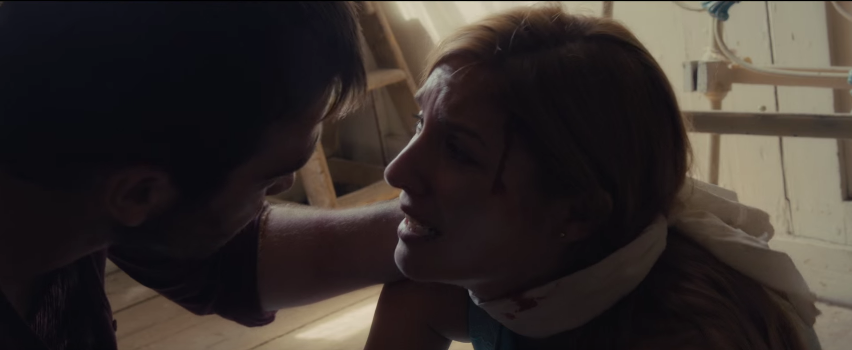
Krisha is not only a powerful character study awash in piercing intimacy, it is a stunning feature debut for Trey Edward Shults, a young writer/director with seemingly dizzying potential.
And then there’s the startling turn from Krisha Fairchild, Shults’s real-life Aunt, who after decades of scattershot film and voice work, delivers a jaw-dropping lead performance full of such raw authenticity you begin to feel you are treading where you don’t belong.
That’s no accident. Shultz draws heavily on his own painful family history to bring the story of Krisha (Fairchild), who is attending a big Thanksgiving dinner after 10 long years of estrangement from her loved ones. Slowly, we’re introduced to other family members (some also played by Shults’s relatives) and learn that Krisha is a recovering addict who has done some very bad things.
She’s come to make amends, and most importantly, to try and salvage any chance of a relationship with her son (played by Shults himself).
Expanding his own short film from 2014, Shults is remarkably assured in constructing his narrative. Nothing is spoon fed, rather we grasp what we know about Krisha and her family through guarded conversations and quiet, private moments. From the awkwardness of forced holiday small talk to the inevitable request for the “techy” relative to fix a computer, the scene is unmistakably real. Then, as old wounds become new, the film strikes with a humanity so deeply felt we expect to see our own faces in those family albums left out on the table.
The direction is equally graceful. Calling to mind recent work from Cuaron and Inarritu, Shults gently leads his camera away from character activity to linger on the surroundings, just long enough to call to mind the part they play in Krisha’s fragile psyche.
It is all an artful complement to Fairchild’s intense, blistering portrait of a woman quite literally under the influence. From the truly unnerving opening shot through the next 82 minutes, taking our eyes off of her is nearly unthinkable.
Krisha is a timely reminder what undiscovered talents can achieve despite their limitations of budget, cast or location.
At one point in I Saw the Light, Marc Abraham’s biopic of legendary country performer Hank Williams, the singer tells us, “Everybody has a little darkness in them. I show it to them and they don’t have to take it home.”
It’s a fascinating scene. Too bad it doesn’t describe the film we’re seeing.
The reliably talented Tom Hiddleston lost some pounds as well as his Brit accent to take on the role of the lanky Alabaman. While his performance is not perfect, it is quite good. Between the surprisingly effective singing and the occasionally haunted expression, Hiddleston brings Williams to charming if conflicted life.
Hiddleston is joined by the equally talented Elizabeth Olsen, and the two attempt to animate the volcanic relationship between Williams and wife Audrey. Their chemistry keeps the rocky pairing believable and fascinating, and Olsen’s spitfire performance shows fearlessness.
No, the problem with I Saw the Light is definitely not the cast. But make no mistake, there are serious problems here.
In perhaps the best scene in the film, Williams unveils his most recent effort, the iconic Your Cheatin’ Heart. Heartbroken, ill, and spent, the singer whispers the final line and Abraham cuts to his wife Billie (Maddie Hasson). This might have been a powerful choice if we had spent any time with or been given any information about this particular wife and her allegedly cheatin’ heart.
Abraham (Flash of Genius), who adapted the nonfiction book by Colin Escott, meanders through the musical legend’s personal life while entirely neglecting his music. The film never feels like it is moving forward, offers no real context or reflection on Williams’s personal struggles, and is exasperatingly slight when showcasing his artistry.
Williams tells us in the film that when a country singer sings a sad song, you know that he knows sadness.
Man, I bet that’s true. Too bad I don’t hear his sad songs, nor do I see him battle sadness. I do see him drink, show up too drunk to perform, and marry several times. That may be the fodder for a country song or two, but a satisfying biopic on one of the most influential songwriters in modern music? Nope.
We’re on a music kick. Last week we looked at the best rock star horror movies, so it seemed only natural to move on to the best horror musicals this week. At our house, this particular sub-genre might serves as a kind of bridge between the two of us, since Hope generally hates musicals while George appreciates them. And though it is true that Hope can find some love in her heart for a musical with a side of bloodletting, it turns out that George only likes actually good musicals. Which is to say, they disagree a bit on this list.
Dude, 1974 must have been nuts. Brian De Palma’s first and only musical is a Phantom of the Opera/Faust/The Picture of Dorian Gray mash up (with some Frankenstein, The Cabinet of Dr. Caligari, and more than a little Rocky Horror thrown in for good measure). That’s a heady mix, and while the film was nominated for an Oscar for its music, it isn’t exactly the classic you might expect.
A campy skewering of the soulless music industry, Phantom sees tiny Seventies staple Paul Williams as the Satan-esque Swan, a music executive with a contract for you to sign. Poor Winslow (William Finley) is just as wide-eyed about his music as all those would-be starlets are about their chances for fame and fortune in this evil world of pop super stardom.
Like many horror musicals, the film works best as a comedy, but Finley’s garish visage once he makes his transformation from idealistic musician to mutilated Phantom is pretty horrifically effective. The film as a whole is a hot Seventies mess, but that’s kind of the joy of it, really.
4. House (Hausu) (1977)
If Takashi Miike’s Happiness of the Katakuris were to marry Pee-wee’s Playhouse, this would be their offspring.
A spoof of sorts, Hausu tells the story of six uniform-clad high school girls named Gorgeous, Fantasy, Sweet, Melody, Kung Fu, and Mac. The nomenclature alone should clue you in on the film’s lunacy. The giggling sextet spend spring break at an aunt’s spooky house – or, in fact, a cheaply made set of an aunt’s spooky house. Not a single thing that follows makes sense, nor is it really meant to.
Expect puppets, random musical sequences, remarkably bad backdrops, slapstick humor, and an amazingly sunny disposition given the sheer volume of human dismemberment. The trippy nonsense wears a bit thin eventually. Luckily director Nobuhiko Obayashi’s film clocks in at under 90 minutes, so the screen goes dark before the novelty wears off.
3. Sweeney Todd: The Demon Barber of Fleet Street (2007)
Here’s a bizarre idea for a musical: The barber upstairs kills his clients and the baker downstairs uses the bodies in her meat pies. Odd for a Broadway musical, yes, but for a Tim Burton film? That sounds a little more natural.
Burton’s Sweeney Todd: The Demon Barber of Fleet Street is a full-on musical – Burton’s first – and every inch a stage play reproduction. For many films, this would be a criticism, but Burton’s knack for dark artificiality serves the project beautifully, and he achieves the perfect Dickensian Goth tone. His production is very stagy and theatrical, but never veers from his distinct, ghoulish visual flair.
As in most of Burton’s best efforts, Sweeney Todd stars Johnny Depp in the title role. Depp is unmistakably fantastic – consumed, morose, twisted with vengeance – and he’s in fine voice, to boot.
The supporting cast boasts a liltingly nefarious performance by Alan Rickman. As the judge whose sent an innocent Todd off in shackles, raped his wife, then took custody of his daughter, whom he leeringly admires, Rickman is wonderful as always. His duet with Depp on “Pretty Women” is the film’s real musical gem.
With Burton’s help, Depp found another dark, bizarre anti-hero to showcase his considerable talent. With Depp’s help, Burton gorgeously, grotesquely realized another macabre fantasy.
2. The Happiness of the Katakuris (2001)
Takashi Miike is an extremely prolific director. He makes a lot of musical films, a lot of kids’ movies, a lot of horror movies, and then this – a mashup of all of those things. Like Sound of Music with a tremendous body count.
The Katakuris just want to run a rustic mountain inn. They’re not murderers. They’re lovely – well, they’re losers, but they’re not bad people. Buying this piece of property did nothing to correct their luck, either because, my God, their guests do die.
You might call this a dark comedy if it weren’t so very brightly lit. It’s absurd, farcical, gruesome but sweet. There’s a lot of singing, some animation, a volcano, a bit of mystery, more singing, one death by sumo smothering, and love. It sounds weird, truly, but when it comes to weird, Miike is just getting started.
https://www.youtube.com/watch?v=XDfMXwRapNc
1. The Rocky Horror Picture Show (1975)
Surely you expected no other atop this list because, honestly, nothing else comes close. The most iconic of all horror musicals, The Rocky Horror Picture Show boasts the best soundtrack, the best performances, the best mad scientist, and quite possibly the most fun there is to be had (legally) at the movies.
I’m afraid you’ve touched on a rather tender subject there.
Tim Curry is utter perfection as Frank-N-Furter (A Scientist). The entire balance of the cast is also amazing, but no matter how many times you watch Curry step out of that elevator, abuse his servants, or seduce his houseguests, it never gets old.
Creator Richard O’Brien’s raucous, once controversial film about a sweet transvestite, a slut, an asshole, and a couple of domestics who sing, time warp, throw rice, animate monsters, swap partners, and finally put on a show is still as much fun as it ever was.
Once a subversive take on the classic musicals and sci-fi films of the 30s and 40s, Rocky Horror is now a high-camp icon of its own.
The rock star/horror movie crossover seems a natural extension of the darkness and cool of each, and it has happened countless times. Some of the crossovers are almost too obvious – Ozzy Osbourne in Trick or Treat or Grace Jones as an aggressive stripper/vampire in Vamp. John Mellencamp, Iggy Pop, Cherie Curie, Jon Bon Jovi, and, of course, Meat Loaf – these rockers and others have lined up to dance with the dead.
But here are the best rock star performances in horror.
Let us just get this out of the way now – we don’t care for this film. Yes, John Carpenter is a master of horror, but this film felt stale in ’87 and it has not aged well.
However, perhaps the greatest stroke of genius Carpenter had when filming was to cast Alice Cooper as the leader of the demon-possessed band of shopping cart people.
As scientists and theologians hole up inside an abandoned church in a very bad neighborhood, they begin to notice the attention of the silent, menacing homeless man outside. And every time they look, he has more friends. It is possibly the only genuinely chilling image in the film, and much of the success is due to Cooper’s effortlessly menacing presence.
Alice Cooper’s stage persona makes him a perfect fit in horror – perhaps moreso than any other rock star. Indeed, he’s gone on to play Freddy Krueger’s father, a vampire, and all manner of supernatural lowlife in film. But for his most unsettling turn, all he needed was a disheveled appearance and his own natural presence.
5. Tom Waits: Bram Stoker’s Dracula (1992)
Francis Ford Coppola took his shot at Dracula in ’92. How’d he do?
Cons: Keanu Reeves cannot act. Winona Ryder can act – we’ve seen her act – but she shows no aptitude for it here, and lord she should not do accents. Anthony Hopkins has always enjoyed the taste of scenery, but his performance here is just ham-fisted camp.
Pros: Tom Waits as Renfield – nice! Creepy yet sympathetic, with that haggard voice, Waits brings a wizened mania to the character that’s more than refreshing. Likewise, Gary Oldman, who can chomp scenery with the best chewers in the biz, munches here with great panache. He delivers a perversely fascinating performance. His queer old man Dracula, in particular – asynchronous shadow and all – offers a lot of creepy fun.
Still, there’s no looking past Ryder, whose performance is high school drama bad.
4. Henry Rollins: He Never Died (2015)
With a funny shuffle step and a blank stare, Henry Rollins announces Jack, anti-hero of the noir/horror mash up He Never Died, as an odd sort.
Jack, you see, has kind of always been here. The “here” in question at the moment is a dodgy one bedroom, walking distance from the diner where he eats and the church where he plays bingo. An exciting existence, no doubt, but this mindlessness is disturbed by a series of events: an unexpected visit, a needed ally with an unfortunate bookie run-in, and a possible love connection with a waitress.
From the word go, He Never Died teems with deadpan humor and unexpected irony. Casting Rollins in the lead, for instance, suggests something the film actively avoids: energy. The star never seethes, and even his rare hollers are muted, less full of anger than primal necessity.
Rollins’s performance is strong, offering Jack as a solitary figure who clings to all things mind numbing as a way to pass the time without complication or human interaction. As a survival mechanism, he’s all but forgotten how to behave around humanity, a species he regards without needless sentimentality.
3. Sting: Brimstone & Treacle (1982)
Easily the best acting of Sting’s career, his con man Martin turns out to be a far more malevolent presence in the Bates household than poor Norma (Joan Plowright – wonderful as always) and Tom (Denholm Elliott) could imagine.
Martin feigns a fainting spell on the street long enough to lift Tom’s wallet. When he returns it – cash light – to the address on the license, he quickly eyeballs the surroundings and claims to be the fiancé of their bedridden daughter Pattie (Suzanna Hamilton).
The film mines layer after layer of repression – societal, sexual, religious and other – as it plays on your constantly expanding sense of dread. Sting is wonderful. His playfully evil performance and the way he eyes the audience/camera gives him the air of something far more unwholesome than your run of the mill conman. Maybe even something supernatural.
2. Debbie Harry: Videodrome (1983)
As bizarre as anything he ever made – even Cosmopolis – Videodrome shows an evolution in David Cronenberg’s preoccupations with body horror, media, and technology as well as his progress as a filmmaker.
James Woods plays sleazy TV programmer Max Renn, who pirates a program he believes is being taped in Malaysia – a snuff show, where people are slowly tortured to death in front of viewers’ eyes.
Punk goddess Deborah Harry co-stars as a seductress intrigued by the slimy Renn. Harry is, as always, effortlessly sultry – a quality that works queasyingly well in this Cronenberg head trip.
But the real star is Cronenberg, who explores his own personal obsessions, dragging us willingly down the rabbit hole with him. Corporate greed, zealot conspiracy, medical manipulation all come together in this hallucinatory insanity that could only make sense with the Canadian auteur at the wheel.
Long live the new flesh!
1. Bowie: The Hunger (1983)
Tony Scott’s seductive vampire love story has a little bit of everything: slaughter, girl-on-girl action, ’80s synth/goth tunage, David Bowie. What more can you ask?
Actually the film’s kind of a sultry, dreamily erotic mess. Oh, the gauzy, filmy curtains. It looks great, but the internal logic of the vampirism as a disease doesn’t work very well. Lots of meaningless parallels with some experiment apes don’t help.
Catharine Deneuve is the old world vampire Miriam, David Bowie is her lover. But he suddenly begins aging, and she needs to find a replacement. Enter Susan Sarandon as a medical specialist in unusual blood diseases and a fine actress who’s not above smooching other girls.
There are three reasons people still watch it: Bowie, Catherine Deneuve’s seduction of Susan Sarandon (classy!), and the great dark-wave Bauhaus number Bela Lugosi’s Dead. Together it’s a Goth Trifecta! And Goths do love them some vampires.
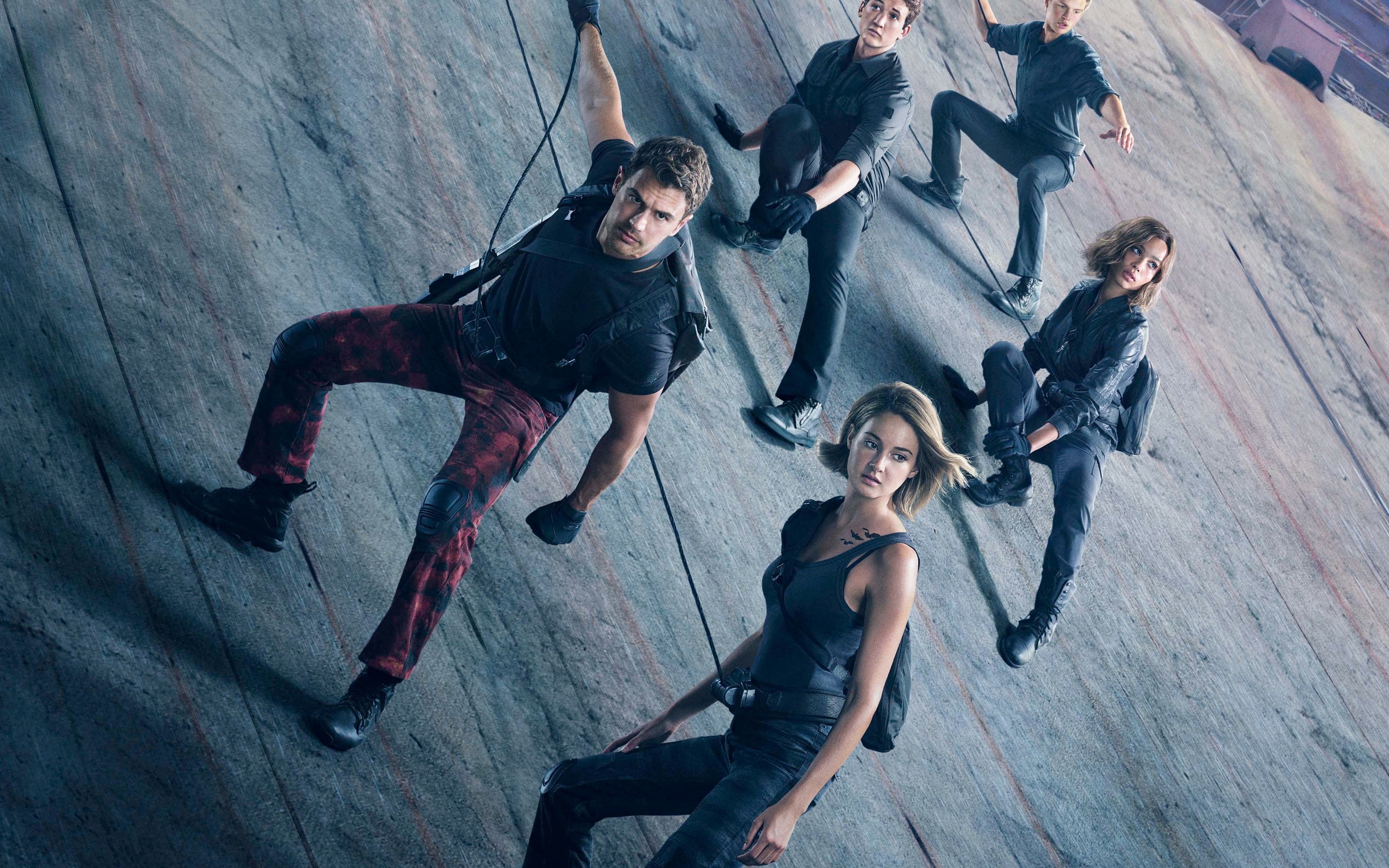
For anyone waiting with bated breath for the conclusion of Tris Pryor’s heroic quest through the Divergent series, expect to be disappointed by The Divergent Series: Allegiant. The final book in the series has been split into two films – a choice we should, by this time, expect from a cash cow-ready industry.
For anyone hoping for a bit of entertainment regardless of the split, you should also expect to be disappointed. Director Robert Schwentke’s slick but soulless third act can’t overcome the dull pacing, superficial scripting, or one dimensional characters that have plagued the series since its inception.
Tris (Shailene Woodlely) broke from the factions that kept her society separated, then toppled the dictatorship that sought to oppress her people. Now she sees the same mistakes being made, but she believes there is something more beyond the wall around the city. She and her rag tag group of friends will find what’s out there – but what if it’s just more of the same?
Unfortunately for Tris and for all of us, that is exactly what the film offers. More and more and more of the exact same – all of it handled with far more energy and integrity in the Hunger Games series.
Woodley is a genuine talent, but she doesn’t seem to have the energy to even try, and who can blame her? She’s wasted in one more film where she does little more then look ponderous, then look thoughtful, now fierce but vulnerable.
Miles Teller – another actual talent – also returns as the woefully underused opportunist, and though his dialog is just as flat and obvious as everyone else’s, he does offer the only bright spots in an otherwise endless expanse of blandness.
Schwentke’s visual style offers slapped together images from Seventies SciFi, while his direction goes the extra mile when it comes to telegraphing every line, move, or event in the film. The final product is a by-the-numbers adolescent adventure lacking all energy and imagination.
St. Patrick’s Day approaches, and thoughts turn to flowing green meadows, flowing Guinness taps, and – if you’re us – flowing Irish blood. Yes, we celebrate this holiday the way we celebrate every holiday, with carnage and shreiking. So join us over on the Emerald Isle as we count down the 5 best Irish horror movies.
5. The Hallow (2015)
Visual showman Corin Hardy has a bit of trickery up his sleeve. His directorial debut The Hallow, for all its superficiality and its recycled horror tropes, offers a tightly wound bit of terror in the ancient Irish wood.
Adam (Joseph Mawle) and Clare Hitchens (Bojana Novakovic) move, infant Finn in tow, from London to the isolated woods of Ireland so Adam can study a tract of forest the government hopes to sell off to privatization. But the woods don’t take kindly to the encroachment and the interloper Hitchens will pay dearly.
Hardy has a real knack for visual storytelling. His inky forests are both suffocating and isolating, with a darkness that seeps into every space. He’s created an atmosphere of malevolence, but the film does not rely on atmosphere alone.
Though all the cliché elements are there – a young couple relocates to an isolated wood to be warned off by angry locals with tales of boogeymen – the curve balls Hardy throws will keep you unnerved and guessing.
4. Citadel (2012)
In the colorless world of Edenstown, an Irish slumland abandoned by the police just beyond the last bus stop, an agoraphobic young father (Aneurin Barnard) struggles to remain sane and take proper care of his infant daughter. He’s plagued at night by the feral, hooded children that roam the area – the very monsters that killed his wife. Now they seem to want to take the baby, too.
Writer/director/Irishman Ciaran Foy builds dread beautifully in a picture that borrows from Cronenberg’s The Brood, among other films, but still manages to offer a fresh take on the horror of evil, faceless children. Taking shots at a lot of the underlying causes of rampant Irish urban poverty (each of which translates well across the pond), Foy is optimistic and brutal at the same time.
He spins an urban blight nightmare where fatherless children run amuck, perpetrate violence, and spread malevolence like a disease across a town too trapped by poverty to escape. An unholy Catholic church and impotent social services do more harm than good. In Foy’s parable, nothing can be changed until a father grows a pair and faces his responsibility.
A handful of predictable obstacles aside, Ciaran’s unsettling film hits a nerve, and if you follow the metaphor through to the conclusion, his image of correcting the situation is certainly provocative.
3. Byzantium (2012)
Director Neil Jordan returned to the modern day/period drama vampire yarn in 2012 with Byzantium. With more understatement and talent, he far exceeds the middling effort that was Interview with the Vampire. Thanks go to two strong leads, a lonesome atmosphere, well-handled flashbacks, and a compelling story.
A mother and daughter land in a coastal carnival town. Saoirse Ronan is the perfectly prim and ethereal counterbalance to Gemma Arterton’s street-savvy survivor, and we follow their journey as they avoid The Brotherhood who would destroy them for making ends meet and making meat of throats.
Jordan attempts a bit of feminism but the film works better as a tortured love story. A host of fascinating, dimensional supporting characters and dual storylines that work well together gel in Jordan’s most hypnotic work in years.
2. Stitches (2012)
There are a lot of scary clowns in films, but not that many can carry an entire film. Stitches can.
This Irish import sees a half-assed clown accidentally offed at a 6-year-old’s birthday party, only to return to finish his act when the lad turns 16.
Yes, it is a familiar slasher set up: something happened ten years ago – an accident! It was nobody’s fault! They were only children!! And then, ten years later, a return from the grave timed perfectly with a big bash that lets the grisly menace pick teens off one by one. But co-writer/director Connor McMahon does not simply tread that well-worn path. He makes glorious use of the main difference: his menace is a sketchy, ill-tempered clown.
Dark yet bawdy humor and game performances elevate this one way above teen slasher. Gory, gross, funny and well-acted – it brings to mind some of Peter Jackson’s early work. It’s worth a look.
1. Grabbers (2012)
This joyously Irish horror comedy contends with an alien invasion in the most logical way to deal with any problem (at least in my very Irish family): Maybe if we drink enough, it’ll just go away.
Director Jon Wright takes Kevin Lehane’s tight and fun script, populating it with wryly hilarious performances and truly inventive and impressive creatures. The FX in this film far exceeds the budgetary expectations, and between the brightly comedic tale and the genuinely fascinating monsters, the film holds your attention and keeps you entertained throughout.
Drunken fisherman Paddy (Lalor Roddy) finds something more than lobsters in his trap. Indeed, not-lobsters are making a quick horror show of the island where Paddy lives, but somehow Paddy has gone unscathed. What’s his secret? It’s his truly heroic blood alcohol content, which is poisonous to the monsters. So, all the islanders have to do is hole up in the local pub, drink til they’re blind, and wait for the sun to dry up the island so the sea creatures are immobilized.
It amounts to a surprisingly tender, sweet, and endlessly funny creature feature that pairs well with a hearty stout or a shot of Jamo.
From the moments the credits jolt onto the screen, 10 Cloverfield Lane keeps you on the edge of your seat.
More of a second cousin than a sequel to 2008’s Cloverfield, J.J. Abram’s-produced 10 Cloverfield Lane is a claustrophobic thriller. No found footage. No shaky camera. No perturbed kaiju.
Following a car crash, Michelle (Mary Elizabeth Winstead) awakens shackled in a locked basement room, attached to an IV. So she’s understandably wary when confronted with the basement’s owner Howard (John Goodman). He places a tray of food next to her and tells her his malevolent plan is to…keep her alive.
He informs her that while she was unconscious there’d been an attack and most people on the outside are either dead or heading in that direction. The air has been contaminated and they’ll have to stay underground for a year or two. Howard doesn’t know if the Russians or the Martians are to blame, but he’s pleased with his decision to build a bunker under his farmhouse.
Howard and Michelle are not alone. The other inhabitant of the bunker is seemingly easygoing Emmett (John Gallagher Jr.) whose injuries confuse Michelle as he says he sustained them in attempt to fight his way inside.
From there on out the movie asks the audience if Michelle can trust either of the two men or the situation that she thinks she has found herself in. It’s a vague enough description, I know, but to attempt to explain it in more depth would ruin a lot of the fun.
As you would hope, in a movie with this small of a cast, each of the three actors gives a strong performance. Winstead’s Michelle is delightfully observant, practical, and resourceful. Gallagher is wistful and charismatic. And Goodman shines, giving a performance reminiscent of Walter Sobchak in The Big Lebowski—bouncing from paranoid to menacing to eccentrically charming, often in the same scene.
First-time director Dan Trachtenberg ratchets up the tension as the movie progresses, finding the creepiness in even the most mundane domestic activities.
Writer/director Abner Pastoll takes his cues from existing genre efforts, but the tale he weaves with Road Games is more than fresh and intriguing enough to stand on its own.
The film opens with unnervingly effective sound editing, as we witness the disposal of a body, pulled from a car trunk on its way in pieces to the overgrown countryside. Cut to Jack (Andrew Simpson) standing roadside, his thumb proudly announcing his purpose. He stands directly in front of a roadway sign warning in French: Danger! Do not pick up hitchhikers.
We’ll soon realize that Jack doesn’t speak French.
Pastoll continually uses this type of clever shorthand to utilize language barriers and heighten Jack’s helplessness – a state Jack himself is blissfully unaware of.
Unsurprisingly, Jack’s having no luck on the road, but soon he comes to the aid of a young woman – a fellow traveler – whose ride has become belligerent. Veronique (Josephine de la Baum) and Jack make the most of the time they have to kill on the sun dappled countryside until a kindly if odd man offers both a ride to his home for the night, with the promise of a lift to the ferry in the morning. Weird things get weirder in a film with an equal volume of red herrings and road kill.
Pastoll develops atmospheric dread reminiscent of that 1970 doomed road trip through the French countryside, And Soon the Darkness. In both films, there’s plenty you don’t know, language barriers heighten tensions, and pastoral isolation amplifies the danger.
But Pastoll inverses the narrative. And Soon the Darkness asked you to participate in the unraveling of a mystery. In Road Games, you can’t quite figure out what the mystery is.
The film has its share of problems. It too often feels contrived, it relies a bit heavily on stock genre images for shock value, and its slow pace sometimes feels leaden rather than languid. But in the end, the film succeeds due to Pastoll’s slyly layered writing combined with committed, idiosyncratic performances – especially from genre favorite Barbara Crampton and French character actor Federic Pierrot, as the couple who puts up the travelers for the night.
It’s time again to celebrate the work of a great horror filmmaker. Today it’s Wes Craven, a man who reimagined the genre again and again over his career. Sometimes with graphic violence, sometimes with satirical humor, always with a vivid imagination, Craven could make the viewer feel unsafe – a great place to start if you’re making a scary movie. Do you like scary movies?
Wes Craven made his dubious feature directorial debut with this 1972 revenge fantasy. Watch the film at your own risk, and follow the tale of a trusting family whose beloved and wholesome daughter falls into the hands of evildoers. Her fate is unknown to her family until her attackers are unknowingly taken in for the night by her family in an act of kindness. Once their crime is discovered, the family abandons decency and wreaks bloody vengeance.
Craven’s interest is the brutality – of the killers, and then the family. He wallows so mercilessly in both that this picture carries a measure of notoriety missing from anything else Craven’s directed – even The Hills Have Eyes. It’s been banned in countries the world over.
His film is not a good one, and what psychological merit it has – the idea of decent people abandoning decency in favor of blood soaked revenge – isn’t Craven’s own. (Last House on the Left is, in fact, a remake of Ingmar Bertman’s Oscar winner The Virgin Spring.) Still, for all its cartoonish sadism and contempt, for its artless disgust, Last House is an interesting genre entity, particularly as the first step in Craven’s career. It’s a horror film, plain and simple. No tidy idea that violence can be resolved through violence, or that any act of brutality is justifiable. It’s an ugly film that leaves you feeling ugly, but horror is not meant to brighten your day, eh?
4. The Hills Have Eyes (1977)
Wes Craven’s original Hills – cheaply made and poorly acted – is a surprisingly memorable, and even more surprisingly alarming flick. Craven’s early career is marked by a contempt for both characters and audience, and his first two horror films ignored taboos, mistreating everyone on screen and in the theater. In the style of Deliverance meets Mad Max, Hills was an exercise in pushing the envelope, and it owes what lasting popularity it has to its shocking violence and Michael Berryman’s nightmarish mug.
The Hills Have Eyes is not for the squeamish. People are raped, burned alive, eaten alive, eaten dead, and generally ill-treated.
In fact, Craven’s greatest triumph is in creating tension via a plot device so unreasonably gruesome no audience would believe a film could go through with it. The freaks kidnap a baby with plans to eat her. But by systematically crushing taboo after taboo, the unthinkable becomes plausible, and the audience grows to fear that the baby will actually be eaten. It’s not the kind of accomplishment you’d want to share with your mom, but in terms of genre control, it is pretty good.
3. Scream 2 (1997)
Updating his celebratory meta-analysis of genre clichés, Craven checked back in on Sydney Prescott (Neve Campell) and crew a couple years later, as the surviving members of the Woodsboro murders settled into a new semester at Windsor College. The movie Stab, based on the horrors Sydney and posse survived (well, some didn’t survive) just two years ago is already out and screening on campus, but has it inspired copycat killers?
Craven, working again from a screenplay by Kevin Williamson, goes even more meta, using the film-within-a-film technique while simultaneously poking fun at horror sequel clichés in his own horror sequel.
And in the same way Scream subverted horror tropes while employing them to joyous results, the sequel – funny, tense, scary, smart, and fun – manages to find freshness by digging through what should be stale.
2. Nightmare on Elm St. (1984)
Teens on suburban Elm St. share nightmares, and one by one, these teens are not waking up. Not that their disbelieving parents care. When Tina woke one night, her nightgown shredded by Freddie’s razor fingers, her super-classy mother admonished, “Tina, hon, you gotta cut your fingernails or you gotta stop that kind of dreamin’. One or the other.”
Depositing a boogieman in your dreams to create nightmares that will truly kill you was a genius concept by writer/director Craven because you can only stay awake for so long. It took everyone’s fear of nightmares to a more concrete level.
The film was sequeled to death, it suffers slightly from a low budget and even more from a synth-heavy score and weak FX that date it, but it’s still an effective shocker. That face that stretches through the wall is cool, the stretched out arms behind Tina are still scary. The nightmare images are apt, and the hopscotch chant and the vision of Freddie himself were not only refreshingly original but wildly creepy.
1. Scream (1996)
In his career, Wes Craven has reinvented horror any number of times. When Scream hit screens in 1996, we were still three years from the onslaught of the shakey cam, six years from the deluge of Asian remakes, and nearly ten years from the first foul waft of horror porn. In its time, Scream resurrected a basically dying genre, using clever meta-analysis and black humor.
What you have is a traditional high school slasher – someone dons a likeness of Edvard Munch’s most famous painting and plants a butcher knife in a local teen, leading to red herrings, mystery, bloodletting and whatnot. But Craven’s on the inside looking out and he wants you to know it.
What makes Scream stand apart is the way it critiques horror clichés as it employs them, subverting expectation just when we most rely on it. As the film opens, Casey (Drew Barrymore) could have survived entirely (we presume) had she only remembered that it was not, in fact, Jason Voorhees who killed all those campers in Friday the 13th; it was his mother. A twisted reverence for the intricacies of slashers is introduced in the film’s opening sequence, then glibly revisited in one form or another in nearly every scene after.
We spent the next five years or more watching talented TV teens and sitcom stars make the big screen leap to slashers, mostly with weak results, but Scream stands the test of time. It could be the wryly clever writing or the solid performances, but we think it’s the joyous fondness for a genre and its fans that keeps this one fresh.
A university class at a Louisiana college decides to document a presumably haunted plantation for some extra credit. It will be their The Final Project.
Their footage is made public by a man whose voice and image are hidden. He wants us to know what really happened that night. Why we need to sit through an excruciating amount of “Oh, is the camera on?” footage during study sessions, classroom antics, and the van trip to the plantation is anybody’s guess.
The film itself feels like a student project, but not necessarily in the way it’s meant to. Clearly made on next to nothing, The Final Project is a fair if amateurish effort, the cast and crew doing what they can with no budget for blood or effects. An awful lot is left to the imagination. Unfortunately, the film doesn’t bring the suspense, the sense of foreboding, or the visual panache to keep your attention long enough to engage your imagination.
Like The Blair Witch Project and far too many other found footage films since, The Final Project pulls you through the seemingly innocent hours before the catastrophic end of an attempted documentary. Aside from the very rare window apparition or an underdeveloped plotline involving a portrait on the plantation, the film offers precious little in terms of scares or suspense.
The set-up is more like that of a slasher: six unpleasant yet attractive young people head to a disastrous location to be picked off one by one. The characters are underdeveloped, with performances ranging from mediocre to poor. The actors are not helped at all by the routinely unrealistic dialog.
The Final Project is a first effort from director Taylor Ri’chard, who also co-wrote the script, produced, and handled the visual FX. Kudos to him for handling so much and for actually producing a film, which is, in itself, a victory. Also, better luck next time.