Tag Archives: MaddWolf

Blood Red Tape

Bite Me

by Cat McAlpine

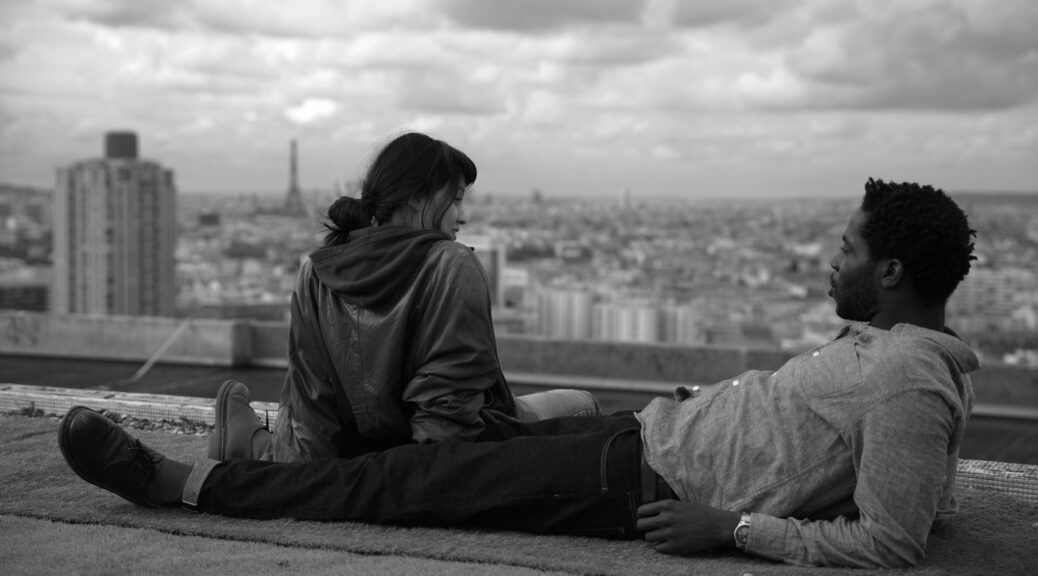
Sarah Woods is a vampire. She doesn’t turn into a bat or shy away from crucifixes. She’s just a normal human being who feels better after she’s had a few drops of blood. Her roommate Chrissy has always been transfixed by other people’s blood. Her other roommate Lily likes to drink blood because it helps her embrace her otherness. Together, the three women make up The House of Twilight. And they’re being audited by the IRS.

Naomi McDougall Jones both wrote the script and stars as Sarah, masterfully embodying a woman who is both proud of who she is and frequently uncomfortable in her own skin. Christian Coulson plays a pleasantly plain foil as James, the IRS agent. While Bite Me keeps a toe in weird at all times, it’s a cut and dry romcom. Boy meets girl, they begin an antagonistic relationship that quickly evolves into something more, boy screws it up… you’ve seen the movies.

A lot of the charm of Bite Me is that Sarah never lets you forget that she drinks blood, and that isn’t going to change. It’s both taboo and harmless, repulsive and beautiful. It’s a young pretty girl with a Mike Tyson face tattoo.

Director Meredith Edwards keeps the camera tight and allows a cast of cooky supporting characters to expand the universe. This is the second venture by the writer/star and director duo after their 2014 Imagine I’m Beautiful.

This creative team has gotten a handle on crafting honest and unique stories, best highlighted here by a surprisingly beautiful moment between Sarah and James. The IRS agent whispers his idiosyncrasies to the vampire as they have sex for the first time, and the doubling down of intimacy was a shining moment.

Edwards and Woods never take the story too seriously. James stumbles home from a vampire ball, cape secured around his neck, to find his middle-aged roommate leading her prayer group in reflection about the blood of Christ. Annie Golden is a consistently fun addition as the patronizing Faith.

In another scene, roommate Chrissy (an enigmatic Naomi Grossman) is very proud of her new fake fangs, but they make it nearly impossible for her to choke down her morning cereal.

The film is a refreshing watch with a great reminder to embrace your weird.

Wedding Bell Blues

Marry Me

by Hope Madden

Just two short years ago we thought Jennifer Lopez had a good shot at an Oscar nomination for her layered turn as stripper entrepreneur Ramona in Lorene Scafaria’s Hustlers. Would she, like Ben Affleck, build on that success with more complex, emotionally satisfying supporting roles? Or would she make Marry Me?

Sigh.

Marry Me is a Jennifer Lopez movie from the word go. Actually, director Kat Coiro’s film is even more of a JLo movie than her other countless rom coms about a wildly beautiful but down-to-earth woman who’s just a romantic at heart.

Marry Me wraps a set of music videos around a peek into the world of a globally successful if under-respected musical diva who gets married a lot. So, it’s about as meta as the latest Scream.

Lopez’s character name is Kat Valdez, and Kat’s new single “Marry Me” is a tribute to her love with fellow musical phenom Bastian (Maluma). They will be wed onstage in front of a sold-out NYC crowd and streamed for tens of millions of people around the globe.

Until she doesn’t. She picks some kid’s dad (Owen Wilson) out of the audience and marries him instead.

Premise Beach!

As idiotic and contrived as that sounds—and as the trailer made it look–Marry Me delivers some charm. That has very little to do with the plot or its obvious trajectory, and it doesn’t really have much to do with the chemistry between Lopez and Wilson (which is lacking, honestly).

Harper Dill and John Rogers’s screenplay, based on Bobby Crosby’s graphic novel, pulls you in by treading on Lopez’s public persona. Well-placed Jimmy Fallon cameos create a sense of what it must be like to live, succeed and fail so very publicly. Compare this to Charlie (Wilson) and his hum-drum life of a math teacher, and the two-different-worlds romance is set.

Lopez’s acting is as superficial as the film requires. Wilson delivers a performance as characteristically quirky and goofy as expected. (Though he never once says wow, and let’s be honest, this character would say wow.)

Supporting turns from Sarah Silverman, Chloe Coleman and John Bradley help overcome a sparsity of laughter.

Is Marry Me an opportunistic music video/hit single/Valentine’s Day date bundle orchestrated by a savvy business mogul? It is. And it’s fine. Plus, if it goes well, maybe she’ll take on another really good character next time.

Among the Missing

Catch the Fair One

by Brandon Thomas

In 2016, a study by the National Crime Information Center found that out of a reported 5,712 cases of missing American Indian and Alaska Native women, only 116 cases were in the databases of the U.S. Department of Justice. The investigations into these missing women are often impeded by the lack of communication between federal, local and tribal law enforcement.

Filemaker Josef Kubota Wladyka uses this real-life scenario to deliver a thoughtful – but thrilling – tale of guilt, regret and closure. 

Kaylee (Kali Reis) was once a promising amateur boxer. Her life fell apart though when her younger sister, Weeta (Mainaku Borrero), went missing while walking home one night. Years later, a struggling Kaylee is still searching for her sister. Desperation and guilt lead Kaylee down a dark path – one that she hopes will end with her finding Weeta alive. 

Catch the Fair One focuses on the important issue of missing indigenous women but does so through the guise of a revenge flick. This film is brutal. In the world of the movie, the innocent are prey and the villainous predators are always lurking and usually slinking back to the suburbs.

Wladyka makes his feature debut with stunning confidence. The neatness of the storytelling is as precise as it is dark. The tonal control is extraordinary as the film straddles the line between genre and drama without fully embracing either. Catch the Fair One is heavily reminiscent of Jeremy Saulnier’s terrific Blue Ruin.

The ordinary nature of the villains is chilling. Their nonchalant attitude toward dealing in sex slavery is enough to cause the hair on the back of your neck to stand up.

Wladyka gets extra mileage out of casting Kevin Dunn (Transformers) and Daniel Henshall (The Snowtown Murders and The Babadook) as father and son bad guys. Dunn is especially disarming with the baggage he brings in this type of role. He’s one of the more recognizable “Hey, it’s that guy!” actors working today, and those roles aren’t typically this bloodthirsty. 

The real standout is Kali Reis. Being Reis’s first acting role, it would be easy to sit back and nitpick every acting decision she makes along the way. Fortunately, Reis’s vulnerability mixed with sheer intensity never allows for that kind of surface scrutiny to take place. 

She’s more than capable in the physical scenes, but it’s in those softer moments where Reis shows her quiet determination that feels so in sync with the character’s state of mind and her eventual plan. 

With a thrilling story and a knock-out lead performance, Catch the Fair One announces itself as one of the best movies of the year so far.

Star Crossed

A Grand Romantic Gesture

by Rachel Willis

After losing her career, Ava (Gina Mckee) seeks fulfillment from a community drama course in writer/director Joan Carr-Wiggin’s film, A Grand Romantic Gesture.

The film opens with a confession, as we quickly learn Ava has fallen for her classmate, Simon (Douglas Hodge). Though both married, their connection grows as the two discover similar dissatisfaction with where life has brought them.

Mining the desires and dizzying highs of illicit love from Romeo and Juliet, Carr-Wiggin applies the famous love (lust?) story to a man and woman in their 50s.

Though not the first film to explore mature love, A Grand Romantic Gesture might be the first to portray Romeo and Juliet as middle-aged. Though the approach is subtly humorous in how it comments that heady love isn’t just for the young, R&J’s smoldering passion just isn’t there. There’s no doubt these characters care for each other, but when the film tries for something more passionate, even reckless, it doesn’t land. Rather than mirroring the high drama of young, forbidden love, it comes across as silly.

Layered onto the story, are Real World-style confessions. The confession room segments might have worked if they’d stayed with Ava, but the snippets become an unnecessary drag on an otherwise steadily rolling story. The things revealed in the confessionals are more artfully delivered via dialogue and body language.

The movie’s tone never decides where to settle, veering from optimism to cynicism with each changing scene. Is one too old to find love? Or does age bring freedom from the pressure of staying for the sake of children?

There are some funny moments in the story, but the dizzying shifts from rom-com to passionate drama are hard to accept. The film might have benefited from a continued light touch in its references to Shakespeare’s famous tragedy.

Though earnest in their roles, McKee and Hodge never successfully convince us of their fervor for each other. Unfortunate for a film with such an ambitious title.

2022 Academy Award Nominations

by Hope Madden and George Wolf

Not a ton of surprises in this year’s Oscar nominations. Maybe we’re lucky there were so many good films to choose from, given the brief nominating window this year. Because of Covid, last year’s contenders had 14 months to find a release. To make up for that and get us back on track, the eligibility window for 2021 was just 10 months.

Still, the academy decided to go ahead and abandon their unpopular “there could be 10 best picture nominations, but probably not) to the more easily understandable “yep, 10.” And yet, still no blockbusters made the list.

But the really important question is this: what do we think?

Best Actress in a Supporting Role

Nominees:

  • Jessie Buckley, The Lost Daughter
  • Ariana DeBose, West Side Story
  • Judi Dench, Belfast
  • Kirsten Dunst, The Power of the Dog
  • Aunjanue Ellis, King Richard

Surprises and Snubs: The biggest surprise is Caitriona Balfe, who was the front runner (and reasonably so) to get recognized in this category for Belfast. We’d have swapped Balfe in and left Dench off. But for us, Ruth Negga’s turn in Passing is just as big an oversight and as much as we loved Buckley in The Lost Daughter, we’d have given her spot to Negga.

Best Actor in a Supporting Role

Nominees:

  • Ciarán Hinds, Belfast
  • Troy Kotsur, CODA
  • Jesse Plemons, The Power of the Dog
  • J.K. Simmons, Being the Ricardos
  • Kodi Smit-McPhee, The Power of the Dog

Surprises and Snubs: While this is a solid list, we’d leave out Simmons and Hinds in favor of Mike Faist in West Side Story, Ben Affleck in The Last Duel or Colman Domingo in Zola.

Original Score

Nominees:

  • Don’t Look Up
  • Dune
  • Encanto
  • Parallel Mothers
  • The Power of the Dog

Surprises and Snubs: For us, this is the year Jonny Greenwood should have been nominated twice (maybe three times!). Great to see his deserving nod for The Power of the Dog, but we’d have bumped him in there for Spencer as well, perhaps in leu of Nicholas Britell’s work in Don’t Look Up.

Best Adapted Screenplay

Nominees:

  • CODA
  • Drive My Car
  • Dune
  • The Lost Daughter
  • The Power of the Dog

Surprises and Snubs: We were surprised not to see Tony Kushner’s update of West Side Story get noticed, and we were sad that Rebecca Hall’s insightful reimagining of Ella Larson’s novel Passing was left off the list. Joel Coen’s streamlined The Tragedy of Macbeth also deserved a spot. We would have given them the spots filled by Dune and CODA and maybe The Lost Daughter.

Best Original Screenplay

Nominees:

  • Belfast
  • Don’t Look Up
  • King Richard
  • Licorice Pizza
  • The Worst Person in the World

Surprises and Snubs: We were surprised—delighted, really—to see The Worst Person in the World and Don’t Look Up recognized. We would have left King Richard off in favor of Michael Sarnoski’s Pig or Mike Mills’s C’mon C’mon, but that’s just us.

Best Original Song

Nominees:

  • Be Alive, King Richard
  • Dos Oruguitas, Encanto
  • Down to Joy, Belfast
  • No Time to Die, No Time to Die
  • Somehow You Do, Four Good Days

Surprises and Snubs: Oh, how we wanted Ariana Grande’s Just Look Up to make this list! Man that would have been fun to hear during the broadcast. We’d have given it Reba’s spot with Somehow You Do.

Best Cinematography

Nominees:

  • Dune
  • Nightmare Alley
  • The Power of the Dog
  • The Tragedy of Macbeth
  • West Side Story

Surprises and Snubs: This had to have been the toughest category. There were so many unbelievable feats of cinematography this year. Belfast and Passing were both utterly glorious, but even we are not sure who we’d bump to fit them in.

Best International Feature

Nominees:

  • Drive My Car, Japan
  • Flee, Denmark
  • Hand of God, Italy
  • Lunana: A Yak in the Classroom, Bhutan
  • The Worst Person in the World, Norway

Surprises and Snubs: Here is the other stacked category for 2022. The fact that three of these films —Worst Person in the World, Flee and Drive My Car—are all nominated in other categories makes predicting a winner here very tough. But the surprise has to be Bhutan’s Lunana: A Yak in the Classroom. Since we haven’t seen it, we wouldn’t suggest that it is not deserving. The surprise is that Parallel Mothers from Pedro Almodovar is missing.

Best Documentary Feature

Nominees:

  • Ascension
  • Attica
  • Flee
  • Summer of Soul (…or, When the Revolution Could Not Be Televised)
  • Writing with Fire

Surprises and Snubs: Really surprised not the see The Rescue here, probably in place of Writing With Fire.

Best Animated Feature

Nominees:

  • Encanto
  • Flee
  • Luca
  • The Mitchells vs. The Machines
  • Raya and the Last Dragon

Surprises and Snubs: It would’ve been great to see Crytozoo, The Summit of the Gods or even Vivo sneak in, but this list will do.

Best Actor

Nominees:

  • Javier Bardem, Being the Ricardos
  • Benedict Cumberbatch, The Power of the Dog
  • Andrew Garfield, Tick…Tick…Boom!
  • Will Smith, King Richard
  • Denzel Washington, The Tragedy of Macbeth

Surprises and Snubs: No surprises here. We would have given Smith’s spot to Nicolas Cage for his crushing performance in Pig.

Best Actress

Nominees:

  • Jessica Chastain, The Eyes of Tammy Faye
  • Olivia Colman, The Lost Daughter
  • Penelope Cruz, Parallel Mothers
  • Nicole Kidman, Being the Ricardos
  • Kristen Stewart, Spencer

Surprises and Snubs: When Caitriona Balfe did not get a supporting actress nomination, we figured the Academy has deemed her role the lead. When she didn’t get a spot here—which we’d have given her over Kidman—we were saddened. But at least KStew made it. We were worried.

Best Director

Nominees:

  • Kenneth Branagh, Belfast
  • Ryûsuke Hamaguchi, Drive My Car
  • Paul Thomas Anderson, Licorice Pizza
  • Jane Campion, The Power of the Dog
  • Steven Spielberg, West Side Story

Surprises and Snubs: There are always reasons to complain, especially in this category. We have chosen not to this year. Well done.

Best Picture

Nominees:

  • Belfast
  • CODA
  • Don’t Look Up
  • Drive My Car
  • Dune
  • King Richard
  • Licorice Pizza
  • Nightmare Alley
  • The Power of the Dog
  • West Side Story

Surprises and Snubs: They went the full 10, even in a year with fewer candidates, and still, not one moneymaker? No Spider-Man: No Way Home. No No Time to Die. More importantly, though, where is The Tragedy of Macbeth? That’s the one we’d have made room for, probably in place of Dune or King Richard.

See who takes home the hardware on Sunday, March 27 at the 94th Academy Awards on ABC and Hulu.

Real Family Ties

The Fabulous Filipino Brothers

by Tori Hanes

The Fabulous Filipino Brothers— by writer, director, and star Dante Basco—follows the separate journeys and (sometimes misguided) decisions of four first-generation Filipino American siblings leading up to a major family wedding.

Through the use of dedicated vignettes, each brother (played by Basco’s real siblings Dionysio, Derek and Darion) showcases deep-rooted differences while shedding light on the uniformity of the first-generation immigrant experience. 

Where the film succeeds, it flourishes. It finds power in sincerity, primarily thanks to Basco’s decision to use his family as actors to mirror their real-life identities. The lack of professional acting stamina is easily forgiven when the realism contributes so heavily to the overall charm of the film.

Basco’s themes of generational identity and cultural disconnect are best explored where he least forces it. The time dedicated to the warmth and humor in the family’s interpersonal relationships is where the film finds its footing. The best example is oldest brother Dayo’s (Derek Basco) vignette. In it, Dayo dabbles in illegal activities to help finance the wedding—with his geriatric grandmother riding shotgun. The comedy from the setup is enjoyable, but pairing familial responsibilities with Dayo’s individual journey hits the tonal stride that makes this piece unique. 

Allowing vignettes to anchor the script leads to unbalance. Two of the four vignettes get lost in clunky sincerity—caused, in part, by the disproportionate amount of time they’re given. Second oldest brother Duke (Dante Basco) returns to the Philippines to explore his roots and connect to a disjunct part of his cultural identity. Here Basco concentrates too hard on overarching themes without investing in the narrative to fully connect the audience.

During brother David’s (Dionysio Basco) time, an uninteresting love story unfolds. This segment also feels overlong and again attempts too literally to represent the figurative. The concentration on ideas without narrative execution ultimately knocks the plot off track.

The film’s valleys don’t entirely diminish its peaks. When Basco is able to let the story breathe organically, the overall piece is heightened. Where The Fabulous Filipino Brothers missteps, it counterbalances with charm and warmth only family can provide.

https://www.youtube.com/watch?v=L0hHFX1pU0U

Screening Room: Jackass Forever, Sundown, Last Looks & More

The Desert of the Surreal

The Other Me

by Matt Weiner

It’s understandable that The Other Me leans heavily on its David Lynch connections. Lynch receives top billing as executive producer, and writer-director Giga Agladze also chairs the Caucasus arm of the David Lynch Foundation. It’s unfortunate, then, that the movie’s allegory on identity and gender ends up being more ponderous than meditative.

It starts with a promising enough mystery. An architect (played by Jim Sturgess and credited as Irakli, although most of the characters go nameless in the film in suitably allegorical fashion) is slowly losing his sight. As his condition in the regular world deteriorates, he begins to sense a deeper reality to the people and things in his life in a series of visions that range from illuminating to terrifying.

So far, so Lynchian enough. The Other Me unfolds as part fairytale, part metaphorical odyssey, so the stilted dialogue can get a pass. But Irakli’s visions and flashbacks never rise to match the sense of awe we’re supposed to be taking away from them.

Irakli finds himself drawn to a mysterious woman in the woods (Andreja Pejic), while drifting more and more apart from his wife (Antonia Campbell-Hughes). These women are given the thankless tasks of trying to convey a lot of emotional angst in short, inane conversational bursts.

Buried somewhere deep down in the film’s philosophical journey is the germ of a mystery that might have worked. A romcom setup that turns into a nightmare when seeing the nonstop revelations of people’s souls takes an untenable psychic toll instead of getting you laid? Now that’s a surreal thriller.

But that isn’t this film. Agladze opts for a more redemptive tone—and far more muted visuals. As far as allegories for sexual identity go, this one lacks the coherence and conviction to deliver anything more provocative than that. Inscrutability by itself is a poor substitute for depth.

Hollywood Confidential

Last Looks

by George Wolf

“I looked up and there she was, the dame I thought I’d left behind a lifetime ago. Would she find what she came back for? Well, one thing’s for sure, getting that answer was going to hurt one of us.”

Nobody says that in Last Looks. In fact, there isn’t any leading, dramatic voiceover at all, which turns out to be a pleasant surprise for a neo noir mystery that manages to entertain in spite of its missteps.

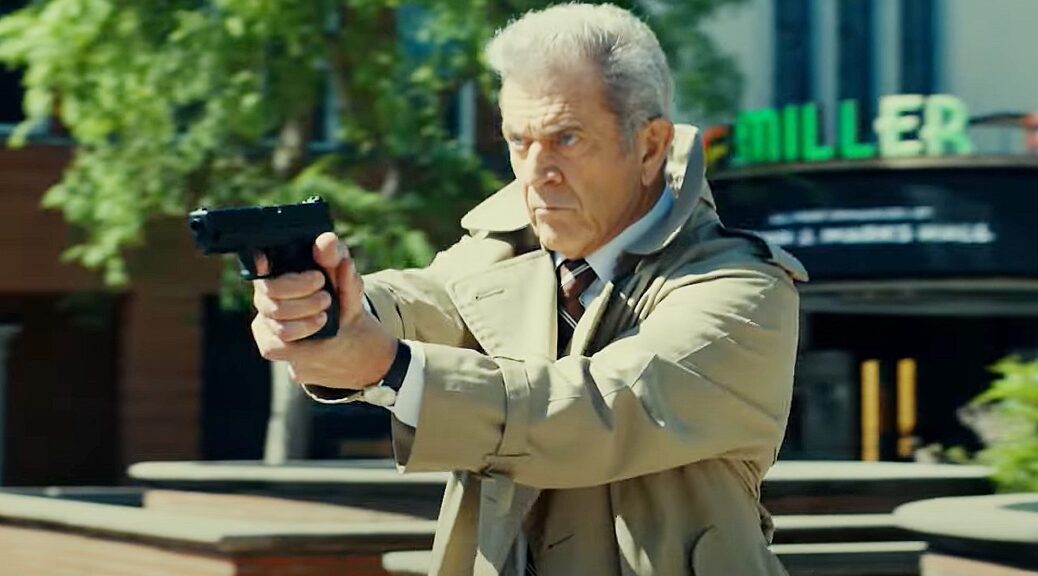
Charlie Hunnam (also an executive producer here) stars as Charlie Waldo, a disgraced ex-cop in L.A. who has retreated to a life in the woods with a vow to not own more than one hundred things.

“And you kept that hat?” asks former flame Morena Baccarin (Deadpool‘s Lorena Nascimento). She’s tracked Charlie down with a lucrative offer to get back in the game. It seems celebrated actor Alistair Pinch (Mel Gibson) has been accused of murdering his wife, and the defense team could use Charlie’s old sleuthing skills.

Charlie declines, but when word is leaked that he actually accepted, he hops on his bicycle and heads down to Hollywood to set the record straight, which of course proves harder than he imagined.

Suddenly Morena is missing and presumed dead, and Charlie suffers repeated beat downs while studio bigwig Wilson Sikorsky (Rupert Friend) throws money at him to spend just one day with Alistair before swearing off the case entirely.

Pinch is a blackout drunk who stars as a judge in a gleefully over-the-top show called “Johnnie’s Bench,” and Gibson, like him or don’t, doesn’t waste the chance to be the highlight of the film.

Leaning into lines such as “I’ve gotten married, fathered children and taken out mortgages and not remembered” and being quick to put up dukes at the slightest umbrage, Gibson seems to relish getting cheeky with his own image, and it’s a hoot to behold.

But director Tim Kirkby (Veep, Fleabag, Brockmire) and writer Howard Michael Gould (adapting his own novel) can’t quite decide just how cheeky they want Last Looks to be.

Hunnam brings a solid and sympathetic anchor while the strong ensemble surrounds him with deliciously exaggerated performances, snappy retorts and vampy character names like “Big Jim Cuppy” and “Fontella Davis.” But just when you’re thinking The Nice Guys, Kirkby overdoes the noir shadings with a turn toward L.A. Confidential.

It never reaches either destination, going at least 20 minutes out of its way to end up somewhere in the middle. But when it lands, Last Looks carves out a throwback mystery that’s engaging enough, and – whenever Gibson’s around – even devilish fun.

Light as a Breeze

Air Doll

by Hope Madden

There has always been something creepy, narcissistic and sad about the story of Pygmalion and Galatea. In the hands of Hirokazu Koreeda (Shoplifters), it becomes a soft-spoken, melancholic tale of modern isolation.

As delicate a film as Koreeda has made, his 2009 Japanese fantasy based on Yoshiie Goda’s manga shadows a sex doll who awakens to an unsuspecting — and mainly disinterested – world.

Disgruntled waiter Hideo (Itsuji Itao) can’t wait to come home from work every night to his waiting, patient, perfect girlfriend Nozomi. She listens, never says or does anything annoying, asks for nothing and is up for anything.

Nozomi (Bae Doona, Sympathy for Mr. Vengeance) is a sex doll, and after one perfectly ordinary night of servicing Hideo, Nozomi wakes up. While Hideo is at work all day, Nozomi explores the world and learns to be human.

This story could go sideways quickly. On the surface, the tale reads as cloying, sentimental and potentially unendurable— like Mannequin, with an emptiable chamber between its legs.

And yet, Koreeda’s wistful film escapes all of that. Doona’s delicate performance brings heartbreaking tenderness to the existential dread underlying the story. Nozomi aches for answers, for a purpose. Here the film tests the same waters as many, from Blade Runner to A.I.  to Toy Story.

But Nozomi’s story is decidedly female. Pygmalion didn’t want a human being, he didn’t want another messy, needful thing. He wanted Galatea precisely because she wasn’t a human woman. The moment of revelation that humanity is a woman’s greatest fault is as quietly devastating as the rest of Air Doll’s running time combined.

Periodically, Koreeda’s camera veers through the lives of a handful of tangentially related souls, each more crushed by loneliness than the last. These montages tweak the film’s tone, set it in a slightly different, more foreboding direction.  

Hirokazu Koreeda made Air Doll in 2009, but it’s never gotten a US release. It hits American theaters and streamers Friday. Don’t wait for Valentine’s Day to watch it, trust me on that one, but watch it nonetheless.