Tag Archives: MaddWolf

Into the Shallow

Into the Deep

by Isaiah Merritt

After an hour of holding it in, I began to scream at the screen. “You’re stupid. You’re stupid.”

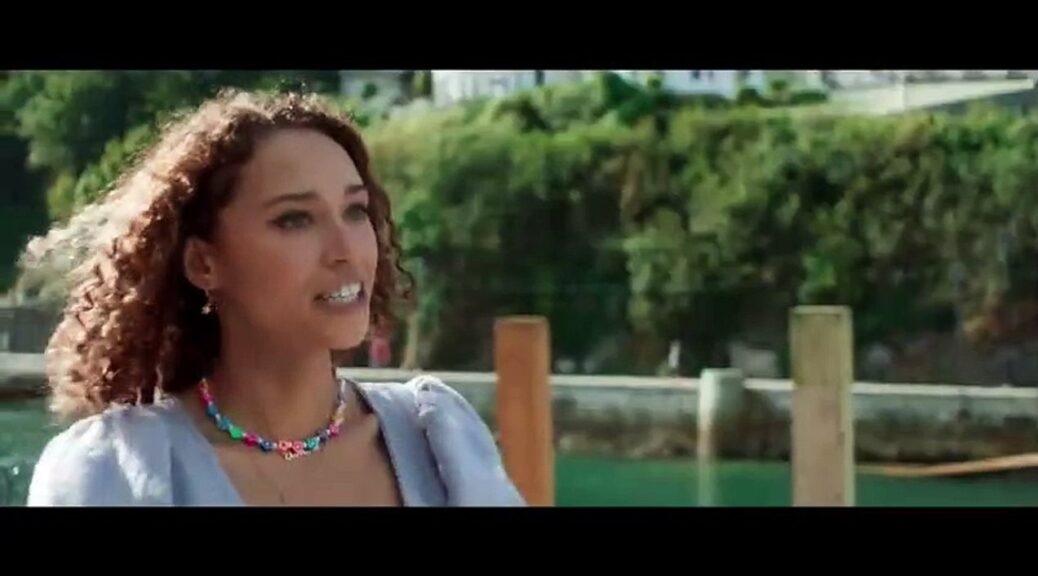
The poor decision-making of the characters in Kate Cox’s thriller Into the Deep, written by David Beton, had finally taken its toll on me. 

Into the Deep, starring Ella-Rae Smith, Jessica Alexander, and Matthew Daddario, follows the budding romance of two strangers that become shipwrecked when a mysterious third party joins their affair. 

The premise of this slow-burn thriller has so much potential: an isolated location, strangers harboring potentially criminal secrets, and twisted motives. But the film as a whole fails to bring these delicious ingredients together to create a cohesive, entertaining work. 

Problems begin with the character development of the lead, Jess (Smith). Her amazingly promising backstory ties perfectly into the setting and action of the film. However, this backstory is never effectively delved into or utilized. 

Not every mystery in a narrative needs to be spelled out. Based on the way certain mysteries were presented here, it seems as though the filmmakers did not know how to use them as devices in the film.

While there were no major plot holes, except perhaps in the very last moment, many of the decisions each lead character makes are truly nonsensical. Additionally, the characters will inexplicably overlook or ignore things directly in their faces.

For example, if you pour a gallon of gasoline around someone who has a reasonable sense of smell, you are not going to need to point out to them that they are surrounded by gasoline. That might be fine once or twice, especially in a thriller like this, but not every 15 minutes. 

Into the Deep’s runtime hovers roughly around 90 minutes, which I was excited to see at first. However, this film could have been shortened easily by 20 minutes.

Not only was there far too much pointless exposition, the action did not commence until about an hour into the runtime. No real action, mystery, or discovery in a mystery-thriller for almost two-thirds of its runtime. 

The saddest part in all of this is that it is more than evident that the cast of this movie is uber talented. I cannot wait to see what each player does next, even Nikkita Chadha, who had a supporting role. 

Unfortunately, the wasted talent could not overcome the shallow characters and muddy vision of Into the Deep.

Falling Down

Breaking

by Hope Madden

John Boyega is here to remind us that he is more than Finn.

He has been, of course. He burned right through the screen in the raucous Attack the Block. He simmered with contempt and resignation in Detroit. And he charmed as the well-meaning hero in some light galactic fluff.

He explores something entirely different in Abi Demaris Corbin’s heartbreaking true story, Breaking. The filmmaker delivers a bleak look at bureaucracy and the plight of the Black American veteran without fanfare or sentimentality. Instead, her film aches with compassion.

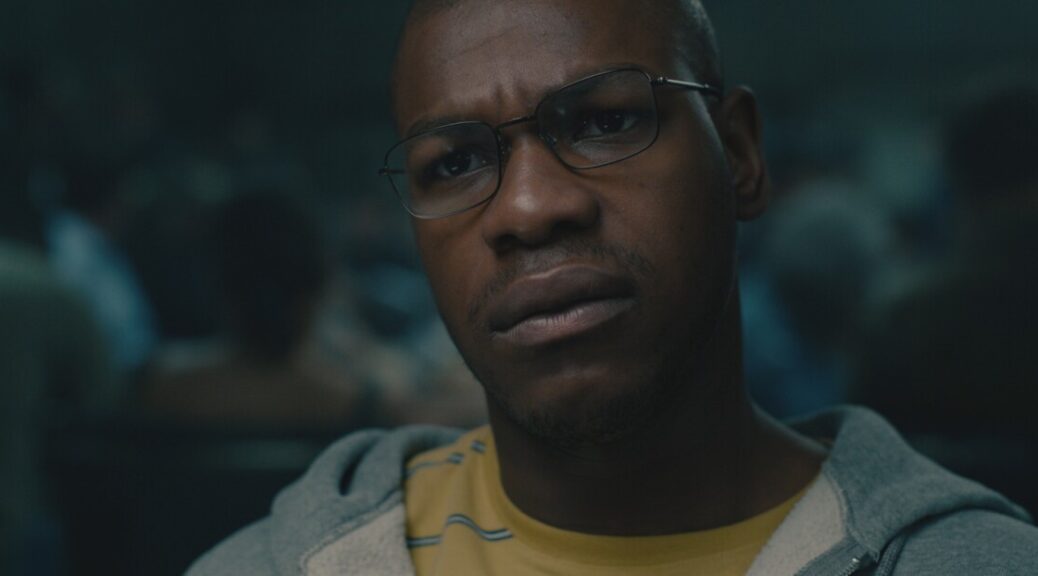
Boyega is Brian Brown-Easley, a retired Marine on the verge of homelessness due to a clerical error made by the VA. He is about to do something very rash.

The set-up is pure high drama, a tension-fueled action flick waiting to happen. And it can wait, because Demaris Corbin and her cast take a profoundly dramatic situation, one exploited for its tension for as long as we’ve made films, and drain it of hyperbole, finding something not mundane but intimate.

Films like this are loud, but Breaking is quiet. Demaris Corbin builds relentless tension with very little volume, the silences only emphasizing the fear felt by a small group of characters inside an uncomfortably intimate situation.

Boyega disarms and devastates with clarity, tenderness, and touches of paranoia. You never know exactly what to make of Brown-Easley, but any tendency to underestimate him is met with rejection.

Nicole Beharie (Miss Juneteenth) meets that performance with fierce but terrified honesty. Her fiery performance demands that the film never resign itself to Brown-Easley’s fate, and reminds us clearly that the plight of the Black veteran looks different than that of a white one.

Michael Kenneth Williams, in one of his final performances, joins mid-film, playing against-type as a thoughtful hostage negotiator. He carries a sense of optimism with him that only deepens the tragedy the film tells.

Please prepare to be heartbroken, particularly when Brown-Easley’s daughter Kiah (London Covington – oh, that little face!) reminds her panicking father to breathe, imitating the proper way to do it as if it’s a ritual the two have. Covington is wonderful, heartbreakingly natural, and the scene offers a gorgeous piece of realistic tragedy, or day-to-day struggle and resilience.

Demaris Corbin uses visuals to move seamlessly from present tense to flashback, and one particular image of a blood trail across worn bank carpet is particularly effective. For a film trapped primarily in a single space, Breaking creates something tragically universal, but it never betrays its hard-won intimacy.

Screening Room: Beast, Orphan: First Kill, Spin Me Round, Glorious, Squeal & More

Lion King

Beast

by Hope Madden

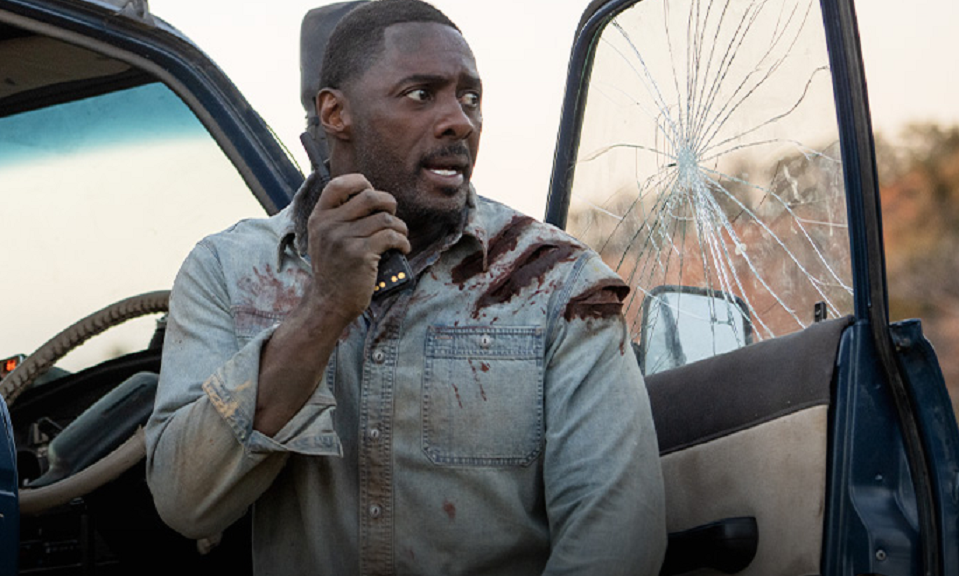
Idris Elba fights a lion. I don’t know what more you want from a movie.

Elba plays Dr. Nate Samuels, on a trip with his daughters to visit his late wife’s stomping grounds, the bush in South Africa. He and the girls (Leah Jeffries and Iyana Halley) had become somewhat estranged during their mother’s illness, and he hopes that staying with family friend Martin (Sharlto Copley) and touring the animal reserve he manages will help them all heal.

It’s more likely to kill them, as it turns out, because poachers have pissed off a really big lion and he’s gone all Jaws IV on the lot of them.

How is Mr. Elba? He’s very handsome. Dreamy, even. He’s also weirdly believable as a vulnerable widower, protective dad, capable doctor and badass who kicks lions in the face.

And he’s not the only one kicking lions, either. Halley gets some badassery in as well, as does Copley. Copley also takes a lot of abuse. Jeffries gets to be the smart one in a film unafraid to deliver teenage girls with agency.

This is not to say Beast is a great film. It borrows a great deal from a great many films: Jaws and Cujo most notably.

Director Baltasar Kormákur is an interesting filmmaker, able to produce smart, visceral thrillers like The Oath. Even his more flawed films —Contraband, 2 Guns, Everest, Adrift — make a valiant attempt at more than action for the sake of action. It helps when he writes. He doesn’t write this one.

Ryan Engle writes this one, and he’s not especially good, as a rule. He’s not terrible. His previous efforts — Non-Stop, The Commuter, Rampage, Breaking In — range from mediocre to poor. But Kormákur pulls a few tricks to elevate this material.

Firstly, he turns genre tropes on end by bringing a Black family to Africa and having their white guide be their wise mentor. Beyond that, there are not a lot of surprises, just a competent if uninspired adventure thriller in which Idris Elba fights a lion.

I’m in.

The Truth Shall Set You Free

Delia’s Gone

by Brandon Thomas

Louis (Stephan James of If Beale Street Could Talk and Race) lives a fairly idyllic existence with his sister, Delia (Genelle Williams), in rural Ohio. Despite having suffered a traumatic brain injury earlier in his life, Louis is mostly self-sufficient – even holding down a full-time job at the local hardware store. Things unravel quickly when Delia tells Louis she’s moving away for work, and the angry Louis wakes up the next morning to find a dead Delia in the kitchen and blood all over his hands. 

The plot of Delia’s Gone moves quickly and in surprising directions. What begins as a standard drama quickly morphs into a revenge thriller. By centering around a somewhat volatile protagonist, Delia’s Gone positions itself as one of the more thought-provoking thrillers in quite some time.

So many of these movies are outlets for violent vengeance. Delia’s Gone has its fair share of violent scenes, but they land heavy and with earned emotion. The violence here isn’t gratuitous nor meant to be exploitative. No, Louis’s actions throughout the latter half of the film are in search of something greater: truth.  

Director Robert Budreau (Born to be Blue, Stockholm) wisely lets his film lean on an extraordinary cast to propel it forward instead of the “by the numbers” story. Whatever twists Delia’s Gone has are revealed early and without much fanfare. The real surprises come from the characters’ decisions and how they impact one another.

As of late, it’s become quite a welcome sight to see Paul Walter Hauser (I, Tonya, Richard Jewell) show up in any movie. As one of the primary police characters in the film, Hauser plays the role a bit too comedic at times, but the humanity that exudes from the performance is too much to ignore. Hauser brings enough vulnerability to the role for the comedic tics to feel like a by-product of a man reaching for validation. 

It’s been nice seeing Marisa Tomei propelled back into the spotlight the last few years due to her involvement with the new Spider-Man movies. Tomei flexes her dramatic chops here, reminding us why she’s an Oscar winner. It’s a role that could have easily been played as stereotypical “hard-nosed cop,” but Tomei injects so much pathos into the performance that it’s hard not to come at her scenes with a heavy dose of empathy.

The real winner is James. He wowed us in 2018 in If Beale Street Could Talk, and his work here is equally impressive. This role could have gone wrong in so many ways. To say that playing a person with a traumatic brain injury is a minefield in 2022 is an understatement, but James approaches the role with sensitivity and nuance. There’s always a sense of the “old Louis” behind James’s eyes – especially in the scenes where Louis is filled with frustration. It’s heartbreaking and riveting at the same time. 

By side-stepping many of the trappings of the genre, Delia’s Gone manages to come out on the other side as a thoughtful examination of searching for truth and forgiving one’s self.

Love In the Time of Breadsticks

Spin Me Round

by George Wolf

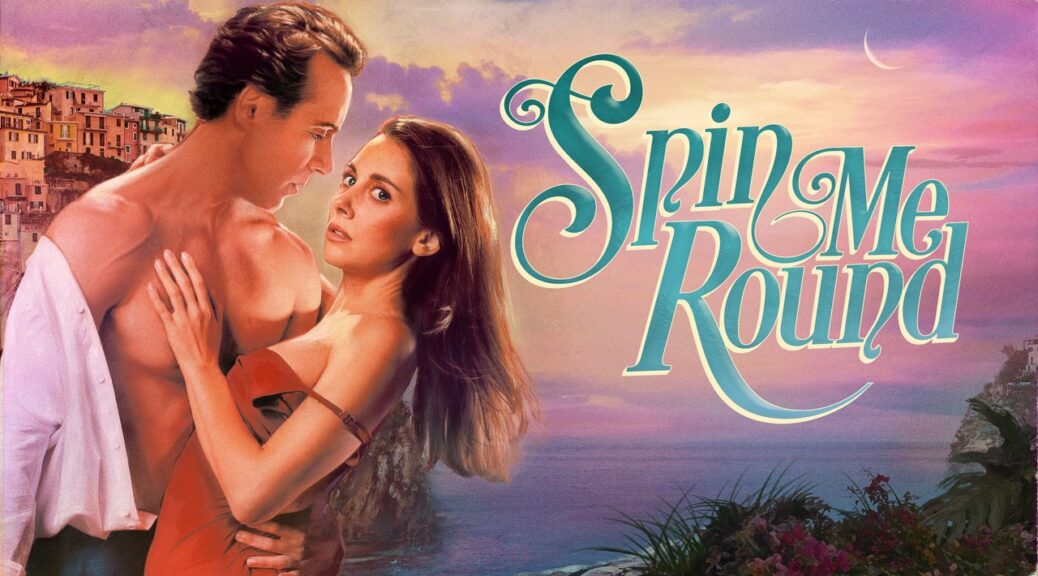
A madcap reminder that what seems too good to be true probably is, Spin Me Round finds Alison Brie and an engaging ensemble looking for love in the time of endless breadsticks.

Brie co-writes the screenplay and stars as Amber, the manager of the Bakersfield, CA branch of Tuscan Grove restaurants, an Olive Garden-type Italian chain. Single and not loving it, Amber’s luck turns when her supervisor (Lil’ Rel Howry) tells her she’s won a spot in the company’s “Exemplary Manager’s Program.” And that means a free trip to the Tuscan Grove Villa in Pisa, Italy!

Ciao, suckers, think of me when you’re rolling silverware!

Okay, so the hotel isn’t quite as nice as expected, and her fellow winning managers are a little eccentric (including the great Molly Shannon as a woman really needing the meds that were lost with her luggage), but Tuscan Grove CEO Nick Martucci (Alessandro Nivola) is here in person!

Nick’s suave and handsome, and when his assistant Cat (Aubrey Plaza, perfectly condescending but curiously underused) delivers an invite to Nick’s private yacht, it’s Amber’s head that starts swimming. Could her BFF’s (SNL’s Ego Nwodim) predictions of amore be coming true, or is this too much too soon?

Bet you can guess.

But director and co-writer Jeff Baena (The Little Hours, Horse Girl, the I Heart Huckabees screenplay) is eager to take the film off the expected rom-com path. Just when you think you’ve got it pegged, there’s wild boars, kidnapping, shady characters and plenty of suspicion.

Brie is always likable, and her wide-eyed and accommodating Amber is the perfect tour guide through this land of tonal shifts and total weirdos (including Fred Armisen, Ben Sinclair and Tim Heidecker). And while the film is never uproarious, it’s consistently amusing and never a bore.

But what’s the end game here? Pointing out how many rom-com’s find romance in sexual harassment? How day to day drudgery can easily breed unrealistic fantasy? The consistent appeal of bland comfort food?

There’s a dash of all that in Spin Me Round‘s entree. It’s light but filling, with a pleasing aftertaste. Just don’t spend too much time wondering what’s going on in the kitchen, and dig in.

Slow Drawl

The Legend of Molly Johnson

by Tori Hanes

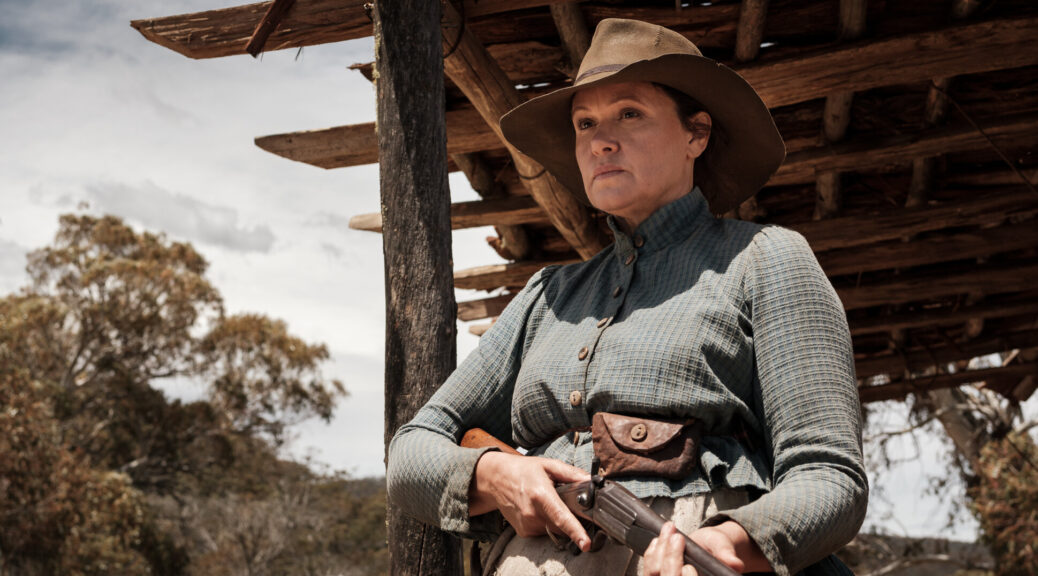
With a story almost as rugged and unforgiving as its terrain, The Legend of Molly Johnson unflinchingly saddles up to the hardship of the Australian bush. Following weathered mother and wife Molly Johnson (Leah Purcell, who also directs) awaiting the return of her Drover husband, the film examines the uncomfortable concoction of bush people with budding British laws in the foreground of generational racism and misogyny. The examination of these subjects is almost as unflinching as Molly Johnson’s resolve.

Pacing plagues the film immediately. While a story taking time to ignite isn’t inherently uninteresting, the lack of compelling character work or world-building in its absence is. Once the plot begins to move, the strained and semi-distant relationship to the characters makes the tragedies that unfold harder to embody. Eventually, the intensity of the plot connects audience and character, making the climax an emotionally engulfing moment. But the overarching lack of cohesion creates a massive, immediate block between the audience and the film.

As a filmmaker, Purcell stares down the barrel of racism, misogyny, and abuse, keenly interested in dissecting the interweaving of the three. The film flips the examination of the hardships, primarily concentrating on the view from Molly’s perspective, but also showcasing runaway Aboriginal prisoner Yadaka (Rob Collins) and the colonizing officer Sergeant Klintoff (Sam Reid) to create a full scope of range. The creation is graphic, gritty, raw, and feels authentically human.

The breathtaking visuals contribute to an intensive mood. Cinematographer Mark Wareham emphasizes the grit and is sly to reveal the beauty of the surroundings. When the beauty is shown, Purcell and Wareham are careful about letting it take control. While nature is stunning, the people inhabiting it often taint its grace – an aspect that is never forgotten.

Once The Legend of Molly Johnson finds its footing, a gut-wrenching creation is born. The question is whether audiences will comply with the self-indulgent start long enough to get there. 

She’s No Annie

Orphan: First Kill

by Hope Madden

There’s something wrong with Esther.

That was the excellent tag line for Jaume Collet-Serra’s fun 2009 surprise Orphan. Then 12-year-old Isabelle Fuhrman delivered an inspired performance buoyed by the nuanced work of two veteran talents (Vera Farmiga and Peter Sarsgaard), but it was the climactic shocker that guaranteed the film’s place in horror history.

The bigger surprise might be to make a prequel 13 years later with the same lead. Furhman, now in her twenties, reprises her role as the orphan you do not want to adopt.

In director William Brent Bell’s episode, we go back in time to meet up with our wee villain in an Estonian facility. It’s a fun, bloody start to Esther’s adventure and an early reminder (it has been 13 years) that if you wonder whether Esther’s evil, F around and find out.

That, of course, is one of the obstacles writer David Coggeshall needs to overcome. We already know Esther’s big secret and we already know what she’s capable of. What surprises are left?

Plenty!

Orphan: First Kill goes in unexpected places, many of them an absolute hoot. Bell’s film walks an impressive line between tension, horror and laughs. It works because of a tight script, but mostly because of rock-solid performances from Fuhrman and Julia Stiles.

Stiles is Esther’s new mommy, a wealthy helicopter parent with an artist husband and a teenage son. She’s magnificent.

Able support work surrounds the pair, and Coggeshall’s screenplay meshes the expected with the unexpected.

I had no idea Bell—whose previous work includes the unintentionally funny The Boy and Brahms: The Boy II­—had this in him. Yes, Orphan: First Kill may have benefitted from low expectations: a heretofore weak director, a 25-year-old trying to convince the audience she’s 12, a franchise none of us thought needed a sequel. Still, there’s no denying it entertains.

The film is no masterpiece and Fuhrman’s age does take you out of the fantasy now and again. But it is sly fun.

This Little Piggy

Squeal

by Rachel Willis

Why did the pig cross the road?

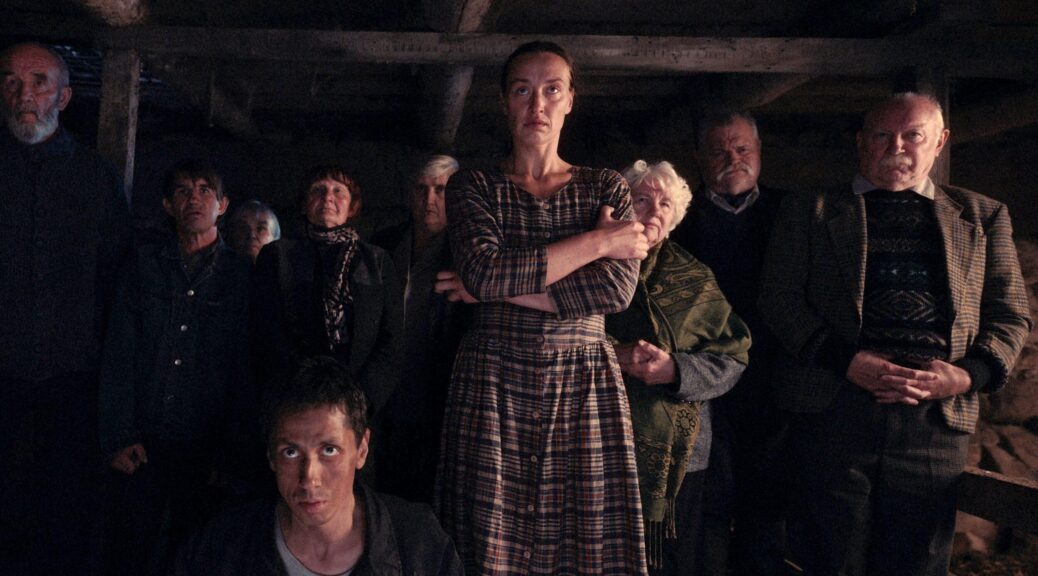
To get hit by a car and lead us into a dark and comedic fairy tale along with our hero, Chef Sam (Kevin Janssens, Revenge). Director Aik Karapetian, working from a script co-written with Aleksandr Rodionov, brings us a more funny than scary tale of a man who stumbles into a strange situation.

While searching for a father he’s never met, in a country he’s never heard of, Sam not only hits the aforementioned pig but meets Kirke (Laura Silina). Because she claims the pig was hers, Sam offers the woman a ride home. He shares a meal with her, and she offers him a bed for the night. Revealing any more of the plot would take away from the joy of experiencing it for yourself.

Though several scenes are more reminiscent of a horror film than a comedy, Karapetian never loses the element of humor. What helps maintain the lighthearted nature, despite several darker sections, is the presence of the film’s jaunty-voiced narrator. His occurrence in the film is as welcome and natural as any of the characters on-screen.

As is the presence of the many pigs who share screen time with our human characters. As with most fairy tales, the animals are as essential to the story as the humans. At times, humans play the role of animals, and animals take on near-human qualities.  

This is an unusual film, to be sure. Karapetian broadcasts early and often that what you can expect is the unexpected. It’s an accomplishment that the actors embrace their characters as naturally as if you stumbled upon them in some unnamed forest in Eastern Europe.

The score is another element that keeps things from taking a darker turn. The harp makes you feel you’re dining in a five-star restaurant, even while watching pigs covered in filth getting a shower. The fancy font for the opening credits only furthers this feeling.  Villains and heroes, pigs and wolves, this film is populated with many things strange and unusual. And it’s all the better for it.

https://www.youtube.com/watch?v=F8ywlJ5_cmg

Turning Different Screws

The Innocents

by Hope Madden

Sixty years ago, Jack Clayton and Henry James mined supernatural terror with little more than the austere atmosphere built in one spooky location and the unnerving creepiness of children.

Sure, the youngsters in writer/director Eskil Vogt’s new Norwegian horror The Innocents look more like the icy blondes of Village of the Damned, but his film shares much more than just a title with Clayton’s masterpiece.

Vogt’s first triumph is his casting. Rakel Lenora Fløttum is Ida, a cherubic blonde 9-year-old idly wandering the tower block of her family’s new apartment. She doesn’t know anyone yet and doesn’t really want to play with her older sister Anna (Alva Brynsmo Ramstad), whose nonspeaking Autism keeps Ida from seeing her as truly human.

As Ida explores the area and the looming forest just beyond, Vogt’s observant camera builds atmosphere and dread. The tower block itself is a menacing presence forever in the background, the trees on all sides penning in these children on the loose.

Unnerving cinematography from Sturla Brandeth Grøvlen (Another Round) makes tiny children appear like playthings in the foreground of towering, watching buildings. Aerials of children on bicycles, their shadows seeming to be moving the bikes, unnerve and beguile.

Slowly, Vogt unveils the reality of the situation. We learn as the children learn, and we take on their curiosity and logic as we do so. Because there are several children in this complex who have some unexpected powers. Anna discovers hers through a little neighbor girl (Mina Yasmi Bremseth Asheim) who can read her thoughts.

Ida learns that her own new friend Ben (Sam Ashraf) may not have the right temperament for his gifts.

What unfolds is an observant and often terrifying origin story of sorts. The Innocents plays like a superhero story told with none of the drama, though an awful lot of horror. These children first thrill as their abilities blossom with camaraderie and commonality. Then comes the tricky test of good and evil.

On display with unblinking eye is the casual brutality of childhood. The Innocents is a film that sneaks up on you, rattles you, and sticks around for a while after the credits roll.