Tag Archives: Madd at the Movies

Vitruvian Man

The Inventor

by Hope Madden

The Inventor, a beautifully animated lesson on the life and times of Leonardo da Vinci (voiced by Stephen Fry), offers a lot to digest, and I’m not sure who they think is eating.

Writer/co-director Jim Capobianco (directing here with Pierre-Luc Granjon) draws inspiration from his 2009 hand-drawn short, Leonardo. A delightful sketch about trying to fly, the film ran just 9 minutes and celebrated Da Vinci’s genius in the most charming way possible.

The feature looks into da Vinci’s curiosity about the existence of the human soul. This gets him into trouble with Pope Leo X (Matt Berry), so da Vinci moves from Rome to France, where he thinks he can follow his curiosity in peace.

He cannot.

Capobianco and Granjon land on a lovely mixture media. The tale is told primarily using a stop motion Claymation style that recalls the old Rankin/Bass Christmas specials of the Sixties and Seventies. (This is especially true of the pope, who’s the spitting image of Burgermeister Meisterburger.)

Scenes are often punctuated with the same hand-drawn sketch style used in Leonardo, and together the result is lovely. But that doesn’t help the storytelling as much as it should.

Even with a great cast – Daisy Ridley and Marion Cotillard co-star alongside Fry and Berry – Capobianco can’t maintain interest. He delivers so much information so superficially that it’s equally hard to keep up and care what happens.

The story takes too big a bite. Is our focus the soul? The perfect city? Weapons? Flying machines? Because each of those has its own background, implications, experiments and host of characters. Skimming over all of it gives us too much and too little at the same time.

It’s hard to determine the intended audience for The Inventor. The humor and political intrigue are a little sophisticated for children, and the history lesson is far too long and involves far too many characters to keep a child’s attention.

And though the animation is reason enough for an adult to give The Inventor a go, the simplistic storytelling and characterization will likely leave them cold.    

Spirits in the Material World

A Haunting in Venice

by Hope Madden and George Wolf

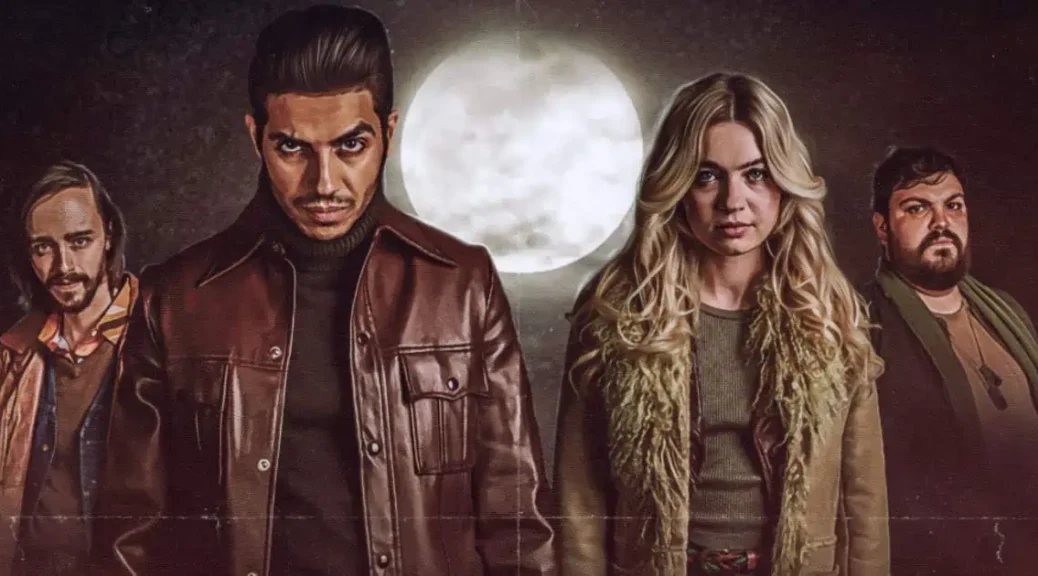
If we’re going to congratulate Rian Johnson for reviving the murder mystery, save a backslap for Kenneth Branagh. His Murder on the Orient Express came two years before 2019’s Knives Out, and though Branagh may be adapting decades-old Agatha Christie classics, he’s proven adept at giving them a stylish and star-studded new sheen.

Branagh also stars again as Hercule Poirot, the legendary Belgian detective who showed a friskier side (probably thanks to Johnson’s sublime Benoit Blanc character) in last year’s Death on the Nile. Now for the third in their mystery series, Branagh and screenwriter Michael Green embrace the season with a gorgeous and frequently engaging update of Christie’s 1969 novel “Halloween Party.”

It is 1947, when the now-retired and war weary Poirot meets up with his old friend Ariadne Oliver (Tina Fey) in Venice. Oliver is a famous writer who considers herself quite the smarty, but she needs Poirot’s help to debunk the work of Mrs. Reynolds (Michelle Yeoh), a medium whose talks with the dead are pretty damn convincing.

The setting is a Gothic manor with a disturbing past, where Poirot agrees to attend a seance on Halloween night. There, after a children’s party, Mrs. Reynolds will attempt to give Rowena Drake (Kelly Reilly) the answers she seeks about the murder of her daughter, Alicia (Rowan Robinson).

But another murder soon steals the show, with even Poirot himself questioning his own eyes as things in the night go plenty bumpy.

Branagh again teams with cinematographer Haris Zambarloukos (Belfast, Death on the Nile), enveloping the film in a haunted house vibe that is wonderfully foreboding. The camera explores the confines of the manor via angles that are often extreme and disorienting, while lingering on cloaks, masks and other various other articles of creep.

Poirot is a changed man since last we met. He’s seen too much evil, and believes in “no God, no ghosts,” as a cloud of trauma and grief that fits the film’s mood hangs over him. Branagh and his stellar ensemble (including Jamie Dornan, Camille Cottin and Belfast‘s Jude Hill) work their character edges well, making sure no one is ever quite above suspicion.

And those suspicions are easier to play with when the source material isn’t as well known. But while revamping a deeper cut is welcome, the chance for creepy surprise does come at a price.

The core mystery just isn’t as compelling. Branagh and Green make alterations that prolong the chill factor, but result in moments that seem more like a Christie disguise than the face of the master herself.

A Haunting in Venice‘s lingering impression is as a slice of well-dressed fun. It’s a Spooky Season movie for those who don’t like things too scary, and an Agatha Christie tale for those who’d rather not think so hard.

Ave Satán

Satanic Hispanics

by Hope Madden

For genre fans, a well-made anthology can be a delight. Sometimes, like Michael Dougherty’s classic Trick ‘r Treat, one filmmaker pieces together a set of related short works. More often, though, a framing story connects the tales of many different filmmakers. The Mortuary Collection is an example of a recent gem.

Satanic Hispanics falls into the second category. It’s a collection of shorts made by Latinx filmmakers. Like, really good filmmakers. Eduardo Sánchez instigated the entire found footage phenomenon with his genre classic The Blair Witch Project. Gigi Saul Guerrero delivered geriatric fun in her 2021 film Bingo Hell. Demián Rugna’s Terrified is a haunting and effective flick, and Alejandro Brugués’s Juan of the Dead is the most underseen and brilliant film of the lot.

There’s good reason to be excited about the potential of the shorts assembled for Satanic Hispanics. And, on the whole, these filmmakers deliver on that promise.

Mike Mendez (Gravedancers) starts us out with the framing story, “The Traveler.” It introduces the titular character (Efren Ramirez, Napoleon Dynamite’s Pedro), the last man standing at a crime scene where 27 are dead. As he’s interrogated by two well-meaning detectives, he shares tales meant to persuade them that a great evil is coming.

Those stories range from Rugna’s creepy and trippy “También Lo Vi” to Sánchez’s comedic “El Vampiro” to Guerrero’s creature feature, “Nahuales”, to the Brugués insanity, “Hammer of Zanzibar.” Each has its charms, and every genre fan will find at least one or two films to take their fancy.

Rugna’s mindbender about light refraction, algorithms and inadvertently opening a portal to something sinister is the standout. Brugués delivers a stylized comedic adventure – part Tarantino, part Evil Dead. And if you can get past the troubling fact that a jilted boyfriend beats his ex-girlfriend with a giant penis for laughs, you might like it. 

But the collection absolutely boasts some inspired talent having a blast, and when is that ever a bad thing to witness?

Fright Club: The Baby Made Me Do It

Pregnancy changes you. Your body betrays you, your personality takes of fin wild directions, and it can feel like there’s a little monster growing inside you. And maybe there is!

Quick shout out to the trashy options that we never seem to be able to fit in: Baby Blood and Inseminoid.

5. Antibirth (2016)

This one is nuts. Chaos reigns some blighted wasteland where Lou (Natasha Lyonne) squats in an abandoned trailer, picks up shifts as necessary cleaning a motel, and abuses her body so relentlessly that it becomes the perfect breeding ground for…something.

There’s a lot going on in this movie, most of it unrelated to the plot but aesthetically in line. Writer/director Danny Perez basically creates a fairly realistic town just this side of Street Trash.

Lyonne is unhinged, unperturbable genius in this piece of insanity.

4. Honeymoon (2014)

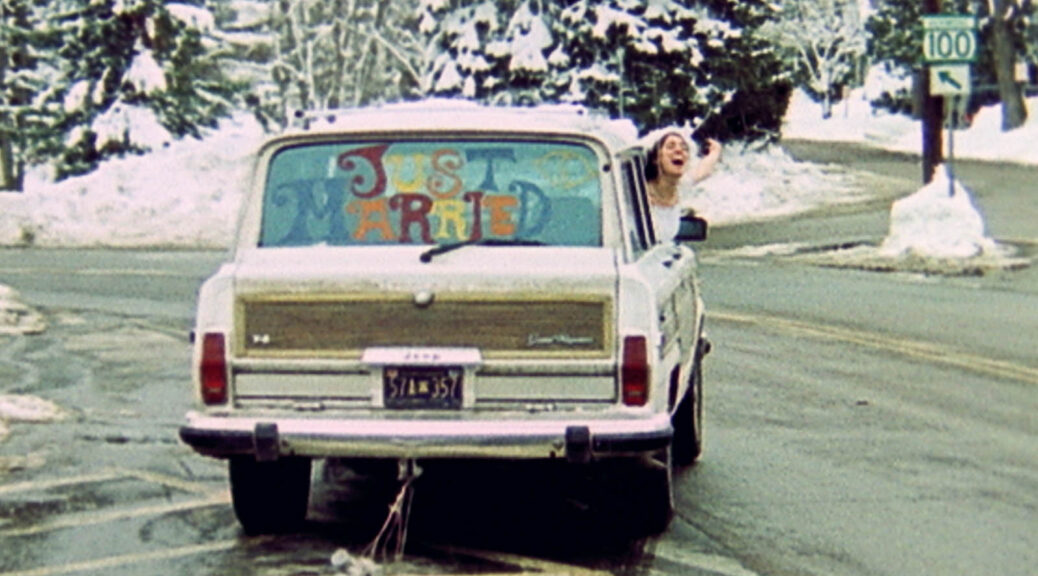
How well do you really know the person you marry? Leigh Janiak’s Honeymoon taps into that anxiety and blends it a bit with pregnancy horror to basically make everything about that new, conjoined life feel alien and weird and murdery.

Rose Leslie is particularly effective as a woman in transition. Her performance is simultaneously tender and sinister.

Janiak nails the smalltown horror, conjuring a kind of sci-fi Let’s Scare Jessica to Death.

3. Huesera: The Bone Woman (2022)

Michelle Garza Cervera’s maternal nightmare is bright and decisive, pulling in common genre tropes only long enough to grant entrance to the territory of a central metaphor before casting them aside for something sinister, honest and honestly terrifying.

While it toes certain familiar ground – the gaslighting of Rosemary’s Baby, for instance – what sets Huesera apart from other maternal horror is its deliberate untidiness. Cervera refuses to embrace the good mother/bad mother dichotomy and disregards the common cinematic journey of convincing a woman that all she really wants is to be a mom. 

Huesera’s metaphor is brave and timely. Brave not only because of its LGBTQ themes but because of its motherhood themes. It’s a melancholy and necessary look at what you give up, what you kill.

2. Prevenge (2016)

Anybody with any sense at all is afraid of pregnant women. With unassuming mastery, Alice Lowe pushes that concept to its breaking point with her wickedly funny directorial debut, Prevenge.

Lowe plays Ruth. Grieving, single and pregnant, Ruth believes her unborn daughter rather insists that she kill a bunch of people.

Why such bloodlust from Ruth’s baby? Lowe, who also wrote the script, divulges just as much as you need to know when the opportunity arises. At first, there’s just the macabre fun of watching the seemingly ordinary mum pick off an unsuspecting exotic pet salesman.

1. Swallow

Putting a relevant twist on the classic “horrific mother” trope, writer/director Carlo Mirabella-Davis uses the rare eating disorder pica to anchor his exploration of gender dynamics and, in particular, control.

Where Mirabella-Davis’s talent for building tension and framing scenes drive the narrative, it’s Bennett’s performance that elevates the film. Serving as executive producer as well as star, Haley Bennett transforms over the course of the film.

When things finally burst, director and star shake off the traditional storytelling, the Yellow Wallpaper or Awakening or even Safe. The filmmaker’s vision and imagery come full circle with a bold conclusion worthy of Bennett’s performance.

Swallow

Sister Sleuth

The Nun II

by Hope Madden

The Nun II has at least one thing going for it. If someone could figure out what to do with her, that villain is creepy as hell.

Why? Partly because no one cuts a terrifying figure quite like Bonnie Aarons. And partly because, let’s be honest, nuns are scary. Like clowns. It’s just true.

We first ran into this Bad Habit in James Wan’s adequate 2016 sequel The Conjuring 2, but the film divided its villains up: old coot in a rocking chair (“I’m Bill Wilkins!”), the Crooked Man and – well, best not to say her name. But her screentime was very limited.

Then there was the tease in another middling sequel, Annabelle: Creation (a mediocre film, but miles better than the first in that particular franchise). She finally got her own story in 2018, with Corin Hardy’s wildly mediocre The Nun.

Can this excellent idea for a villain be put to good use, finally, with Michael Chaves’s sequel, The Nun II?

Meh.

It’s fine. It’s rated R, so that’s a start, although I’m not certain how it was deemed so problematic as to deserve the “keep the kids away” rating. There are a few creative deaths, almost elegantly macabre.

Sister Irene (Taissa Farmiga) is back on the trail of the demon nun after a series of disturbing deaths. Most of our time is spent in a monastery-turned-winery-turned-boarding school where Sister’s Irene’s old friend Maurice (Jonas Bloquet) has a job as a handyman and a crush on a teacher.

And, if memory serves, an inverted cross seared into the back of his neck. That smells like trouble (and burnt skin).

The setting is spooky, stagey and often quite atmospheric. Several of the set pieces are designed gorgeously. Bloquet continues to charm, and we not only get a nun this time but a very alarming goat-man. Nice!

The perversion of religious imagery continues to be the downfall of the series. It’s hard to take seriously, of course, because the Catholic church has a history of doing that itself. (The diocese of Syracuse claimed bankruptcy this summer due to the $100 million it owes to victims of sexual abuse.) This series would be more effective if the evil nun represented the decay within the church rather than a rogue demon weakened by an emissary of the Vatican.

Alas, Chaves settles for a bit of theoretical silliness bolstered by a nice touch of feminism, which feels delightfully heretical. So at least there’s that.

Method Acting

8 Found Dead

by Hope Madden

There are a lot of important elements that come together to make a good horror movie: tension, dread, atmosphere, maybe blood and gore. But nothing is more vital than the villain.

8 Found Dead, the Airbnb etiquette horror from Travis Greene, brings the goods when it comes to villains.

It seems Liz (Rosanne Limeres, splendid) and her husband Richard (real life husband Tim Simek) don’t have much to do now that their little hometown theater closed. But they can still put on a performance. Like pretending the Airbnb is double booked. Without Wi-Fi, how can anyone prove who’s really supposed to be there? Guess they’ll all just have to make the best of it.

8 Found Dead picks the same etiquette horror scabs as Speak No Evil or Funny Games – not quite as effectively, but with a macabre sense of humor that thoroughly entertains.

Rather than taking a chronological approach, Jonathan Buchanan’s script uses nonlinear storylines to allow each set of victims its own performance. Why should anyone have to share Liz and Richard?

Influencer Sam (Alisha Sope) and boyfriend Dwayne (William Gabriel Grier) head to an isolated Airbnb to make an announcement to Sam’s many followers. Carrie (Aly Trasher) and Ricky (Eddy Acosta) expect to join them, but they run late. Meanwhile, a 911 call brings two officers – an estranged married couple – out to investigate.

Each pair could learn a thing or two about commitment from Liz and Richard. These two are in it to win it.

8 Found Dead dances around some of the obvious questions that films like Barbarian and Funny Games address head on. But it also gets points for homaging the greatest lodging horror film of all time.

The opening falls to purposeless ogling – Jenny Tran’s performance deserved better – which the film struggles to overcome. But impressive editing and that shifting storyline keep Found Dead from ever getting stale.

Plus, there’s the promise that we could get to know Liz and Richard even better.

Screening Room: Equalizer 3, Bottoms, Perpetrator & More

The Break Bones Club

Bottoms

by Hope Madden

Bottoms essentially follows a traditional teen comedy path, from the first day of senior year (with the high expectations of finally turning your popularity and romantic luck around) through that fraught homecoming football game. Our underdogs hatch a scheme to win the affections of the hot cheerleaders.

But if you saw co-writer/director Emma Seligman and co-writer/star Rachel Sennott’s uncomfortably brilliant 2020 comedy Shiva Baby, you have some idea of what you’re in for. Expect a chaotic, boundary pushing satire unafraid to offend.

PJ (Sennott) and Josie (Ayo Edebiri, so funny earlier this summer in Theater Camp) are their high school’s ugly, untalented gays. PJ is always scheming to get some cooch, and this will be their year. Her idea? Start a fight club for the girls in the school. Or, you know, a self-defense club. Where you wrestle around and hit and get excited and sweaty and close.

Josie is not down with this, but PJ usually gets her way and the next thing you know –well, you saw Fight Club, right? Because those men were only convincing themselves they were being pushed around, bullied and disempowered.

Part John Hughes, part Jennifer Reeder, part Chuck Palahniuk, Bottoms exists in a bizarre world of deadpan absurdism so littered with smart, biting commentary that you’ll need to see it twice to catch all of it.

Sennott and Edebiri are as fun a set of besties as Beanie Feldstein and Kaitlyn Dever in Booksmart. Maybe even as fun as Beanie Feldstein and Saiorse Ronan in Lady Bird. Nicholas Galitzine is a riot as the quarterback, Jeff, and Ruby Cruz delivers as the one earnest lesbian hoping to empower and create solidarity with this club.

Seligman’s tone, her image of high school and high school movies, is wildly, irreverently funny and fearless. It’s hilarious, raunchy, and so much fun.

How It Happens

Astrakan

by Hope Madden

A confounding, beautiful, effective feat of visual storytelling, Astrakan delivers a poignant study in the creation of a troubled youth.

Samuel (Mirko Giannini) has recently come to stay with foster parents Marie (Jehnny Beth, Paris, 13th District) and Clément (Bastien Bouillon, Night of the 12th) and their two sons. Director David Depesseville opens on the family’s zoo trip. All seems well until they stop at Marie’s parents’ farm for some milk.

Marie’s exhausted from chasing the boys around. Clément is angry at the amount the family spent. Samuel’s to blame, but there’s not much they can do, they need the pension he brings in. It’s a conversation ­– one of many – where a quiet, observant Samuel witnesses with some confusion his place in this world.

There’s nothing preachy or maudlin about Depesseville’s film as it shadows a year or so in the life of a boy who wants to feel loved, a boy who’s simultaneously drawn to and revolted by sex because of its confusing sense of powerlessness. Of a bullied boy, never self-pitying, who longs for some kind of protection and, without it, little by little finds ways to feel powerful and noticed.

The entire cast is sublime, but young Giannini captivates attention every moment he’s on screen.

Depesseville’s approach, based on a scrip he co-wrote with Clara Bourreau, delivers a sensitive exploration of a very rocky coming-of-age. There are few real villains here, and fewer still heroes. The physical manifestations of Samuel’s untold prior traumas are seen by Clément as rebellious outbursts requiring a beating, while Marie enlists the help of some kind of family aura reader. If Children’s Services thought the family was not doing well together, they might take Samuel from them. She immediately points out that they need the pension.

The film amounts to a series of beautifully filmed, emotionally moving sketches, tender, empathetic and tragic. The gorgeous cinematography, though welcome, feels almost at odds with the realism of the content, but Depesseville brings the entire vision to an unusual and somewhat mystical conclusion that benefits immeasurably from the almost impressionistic beauty of the entire tale.

Astrakan is an impressive, moving slice of life that understands what turns a child into something troubling.