Adam Sandler and the whole TV Funhouse bunch get together for an animated kids’ film about a classroom pet who puts his many years of observing children to good use.
Leo (Sandler) the lizard, along with terrarium pal Squirtle (Bill Burr) the turtle, has lived in the same Florida 5th grade classroom for decades. At 74, and believing his life expectancy merits it, Leo plans to make a break for freedom. Instead, he becomes a kind of life coach to 10-year-olds.
Leo has a lot going for it. Sandler’s soft-hearted comedic presence feels perfectly at home in the classroom, while Burr’s patented “get off my lawn” crankiness offsets things nicely. The story, written by Sandler along with co-director Robert Smigel as well as Sandler’s frequent writing partner Paul Sado, touches on helicopter parenting and other anxieties authentic to modern youngsters.
The premise allows for lots of fun and funny moments as, by helping each kid better understand themselves, Leo comes to recognize his own purpose. There are also wildly random moments of comedy that feel in keeping with the filmmakers’ TV Funhouse origins while helping the film stay fresh.
The downside? Leo the film cannot seem to find its own purpose. It is essentially a musical, although in between songs you will forget that entirely. Nothing about the proceedings suggests the whimsy or theatricality of a musical, and though a couple of the songs are fun, every single number feels stitched in for no reason. Very few of the singers can sing and not one of the songs is memorable enough to merit its inclusion.
Worse still, Leo feels long. Trimming the songs wouldn’t hurt the story and it would seriously benefit the run time.
Sandler’s carved out a mainly mediocre presence in family entertainment, with three Hotel Transylvania films and Hubie Halloween. Earlier this year, he produced and co-starred in the absolute charmer You Are So Not Invited to My Bat Mitzvah, also for Netflix.
Leo doesn’t reach the heights of YASNITMBM, but it aims higher than the others and frequently endears.
The Hunger Games: The Ballad of Songbirds & Snakes
by Hope Madden
If I’m honest, I didn’t need another Hunger Games. While I recognize that the history of the games, the political upheaval that pushed society toward this level of privileged inhumanity, was certainly rife with possibility. But I couldn’t muster any interest, certainly not 2 ½ hours worth.
That’s saying something, because two of my all-time favorite actors – Viola Davis and Peter Dinklage – co-star. And Davis plays a mad scientist of sorts, which is inarguably intriguing. And Dinklage plays the actual creator of the hunger games themselves, so both villains? OK, I’m not made of stone. I’m in.
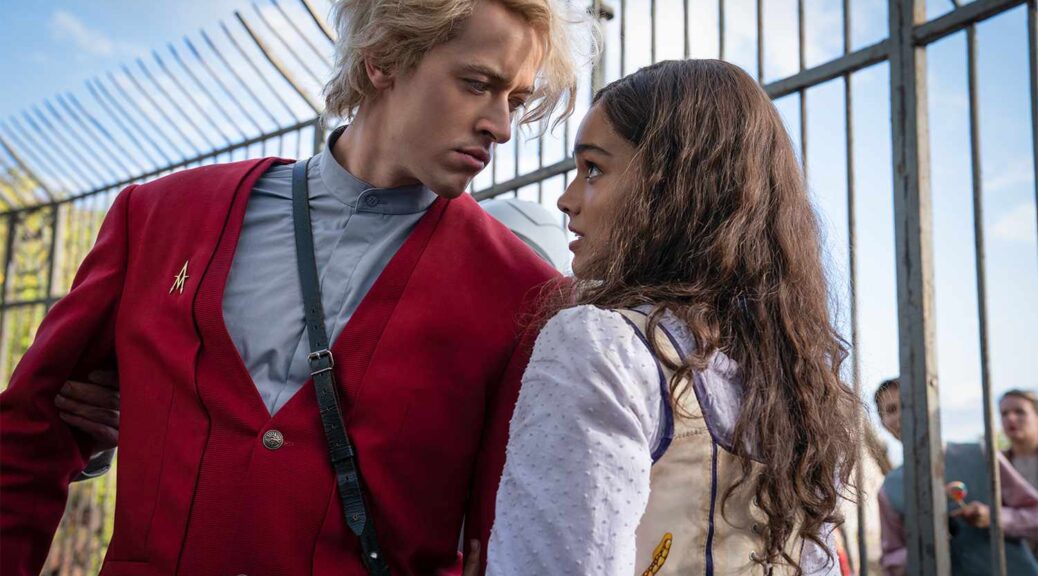
The Hunger Games: The Ballad of Songbirds & Snakes – while too long and cumbersome for a single film – delivers a scathing and pointed reflection of modern society with more precision and bite than any of its predecessors.
Coriolanus Snow (Tom Blythe) would one day rule the Hunger Games and all of Panem (played in the previous four films by Donald Sutherland), but today, he’s just trying to finish prep school and win the coveted Plinth scholarship to the university. But this year, there’s a catch. To win the scholarship, you need to mentor a tribute. They don’t have to win, they just have to make enough of an impression to draw viewers.
Again taken from a dystopian YA novel by Suzanne Collins, the latest Hunger Games holds a mirror up to society and sees power and privilege – and the lust to keep them – as cataclysmic to humanity. Collins is not wrong. And she’s not in a forgiving mood, bless her.
Davis and Dinklage are characteristically wonderful, Davis a particular delight in a weirdly sinister role while Dinklage offers a mournful, broken soul for the film.
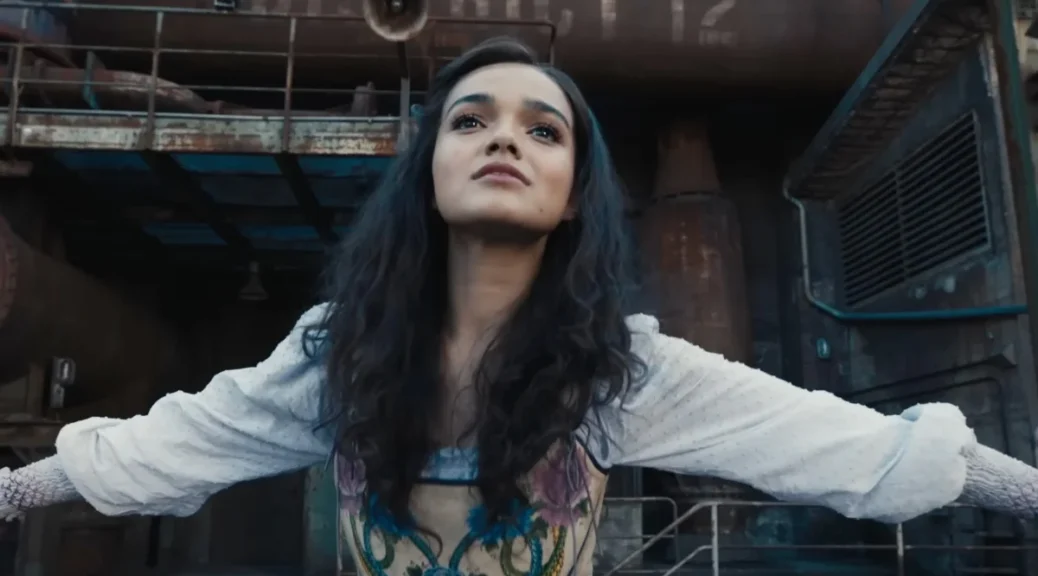
Blythe’s arc is long and tough, and he convinces with a very human turn that’s all the more chilling for its understatement. Rachel Zegler plays the tribute in question, Lucy Gray, stealing scenes with a rebellious fire and f- you attitude. Jason Schwartzman is weatherman/amateur magician and Hunger Games host Lucky Flickerman, injecting the film with humor that’s equal parts flashy and cynical.
Francis Lawrence returns to direct, after helming all but the 2012 original. While his previous efforts balanced flash with action, the latest installment loses footing as it travels from one grim reality to another. But when a protagonist’s future is not in question, it can be tough to generate real empathy, interest or tension. Lawrence, thanks to a game cast and a go-for-blood script, manages to do it.
He hasn’t gone anywhere, and I don’t mean to imply that what he’s made in recent years is bad. In 2021 he made a remarkable documentary on The Velvet Underground, and his previous two narrative features – Dark Waters and Wonderstruck – were worthwhile and interesting. They just weren’t very Todd Haynes.
Perhaps after his 2015 masterpiece Carol, the capstone to a string of magnificent and unusual films (Safe, Velvet Goldmine, Far from Heaven and I’m Not There), it was time for Haynes to find his stride with a more mainstream audience.
May December feels more like Haynes of old: a sultry situation masquerading as hum drum, populated by Tennessee Williams-esque damaged beauties wanting, wanting. Plus, Julianne Moore.
Moore, who stunned in both Safe and Far from Heaven, returns to Haynes-land as Gracie. Years back, beautiful Gracie went to prison for loving the wrong man. Well, boy. 7th grader, actually. Indeed, she had Joe Yoo’s (played in adulthood by Charles Melton) baby behind bars. But after prison, Gracie and Joe built a life together. Their oldest daughter is in college now, and their twins Charlie (Gabriel Chung) and Mary (Elizabeth Yu) are just about to graduate from high school.
Soon-to-be empty nesters, Gracie and Joe welcome (if somewhat reluctantly) TV star Elizabeth (Natalie Portman) to their home. In just a few weeks, Elizabeth will play Gracie in a new independent feature film about Joe and Gracie’s life.
Portman is magnificent, biting into a role with more salty meat than anything she’s handled since Black Swan. Elizabeth is, of course, not what she appears to be. But what’s magical in Portman’s performance is the way the actor utilizes odd moments to reveal who Elizabeth truly is.
Moore is characteristically brilliant and wonderfully enigmatic. Elizabeth’s goal is to understand Gracie, which makes that the main goal of May December, but Moore’s not giving an inch. Is Gracie the master manipulator people might believe, or is she the babe in the woods she projects? Or is human nature more complicated than that, no matter how much movies and actors and audiences try to believe otherwise?
The whole cast impresses, but it’s Melton who truly surprises. The one innocent in the film, stunted by a lifetime of repressed and lived trauma, his Joe is the heartbreaking emotional honesty in a film that flaunts insincerity.
The filmmaker, working from a script by Samy Burch and Alex Menchanik, finds wry humor in the soap opera nature of the tale. It’s a morally ambiguous, gorgeously realized character study. It’s so good to have Todd Haynes back.
Love, exciting and new! Or, ancient and blood soaked. We’re not judging. There tends to be something wrong – lonesome, desperate, twisted, star crossed – about true love in horror. Maybe that’s what makes it so much more memorable. Here are our five favorite love stories in horror.
5. Spring (2014)
Evan (a spot-on Lou Taylor Pucci) has hit a rough patch. After nursing his ailing mother for two years, Evan finds himself in a bar fight just hours after her funeral. With grief dogging him and the cops looking to bring him in, he grabs his passport and heads to the first international location available: Italy.
It’s a wise setup, and an earnest Pucci delivers the tender, open performance the film requires. He’s matched by the mysterious Nadia Hilker as Louise, the beautiful stranger who captivates Evan.
At its core, Spring is a love story that animates the fear of commitment in a way few others do. The film’s entire aesthetic animates the idea of the natural world’s overwhelming beauty and danger. It’s a vision that’s equally suited to a sweeping romance or a monster movie, and since you’ll have a hard time determining which of those labels best fits Spring, it’s a good look.
4. Bones and All (2022)
The film follows Maren (an absorbing Taylor Russell, Waves), coming of age on the fringes of Reagan-era America. She meets and slowly falls for another outcast with similar tastes, Lee (Timothée Chalamet), and the two take to the road.
Given what the handsome young lovers have in common, you might expect a sort of meat lovers’ Badlands to follow. But Bones and All is less concerned with the carnage left in a wake than in what’s awakening in these characters themselves.
Bones and All is a tough one to categorize. I suppose it’s a horror film, a romance, and a road picture – not three labels you often find on the same movie. In Guadagnino’s hands, it’s more than that, though. He embraces the strength of the solid YA theme that you have to be who you are, no matter how ugly the world may tell you that is. You have to be you, bones and all. Finding Maren’s way to that epiphany is heartbreaking and bloody but heroic, too.
3. Border (2018)
Sometimes knowing yourself means embracing the beast within. Sometimes it means making peace with the beast without. For Tina—well, let’s just say Tina’s got a lot going on right now.
Border director/co-writer Ali Abbasi (Holy Spider) has more in mind than your typical Ugly Duckling tale, though. He mines John Ajvide Lindqvist’s (Let the Right One In) short story of outsider love and Nordic folklore for ideas of radicalization, empowerment, gender fluidity and feminine rage.
The result is a film quite unlike anything else, one offering layer upon provocative, messy layer and Abbasi feels no compulsion to tidy up. Instead, he leaves you with a lot to think through thanks to one unyieldingly original film.
2. A Girl Walks Home Alone at Night (2014)
Ana Lily Amirpour has made the world’s first Iranian vampire movie, and though she borrows liberally and lovingly from a wide array of inspirations, the film she’s crafted is undeniably, peculiarly her own.
Set in Bad Town, a city depleted of life – tidy yet nearly vacant – Girl (Sheila Vand) haunts the shadowy, lonesome fringes of civilization. One by one we get to know a pimp, a prostitute, an addict, a street urchin, and handsome Arash (Arash Mirandi).
Watching their love story play out in the gorgeously stylized, hypnotic backdrop of Amirpour’s creation is among the most lonesome and lovely ways to enjoy a good bloodletting.
1. Only Lovers Left Alive (2013)
Visionary writer/director Jim Jarmusch enlists Tom Hilddleston and Tilda Swinton as Adam and Eve (perfect!), a vampire couple rekindling their centuries-old romance against the picturesque backdrop of…Detroit.
Not since the David Bowie/Catherine Deneuve pairing in The Hunger has there been such perfectly vampiric casting. Swinton and Hiddleston, already two of the most consistently excellent actors around, deliver cooly detached, underplayed performances, wearing the world- weariness of their characters in uniquely contrasting ways.
Jarmusch, as he often does, creates a setting that is totally engrossing, full of fluid beauty and wicked humor. The film moseys toward its perfect finale, casually waxing Goth philosophic about soul mates and finding your joy.
For some people, it’s not even Thanksgiving, let’s not get into Christmas movies quite yet, OK? Meanwhile, countless people have been binging Hallmark Christmas tales since July. And the rest of us are still stinging that Halloween is over.
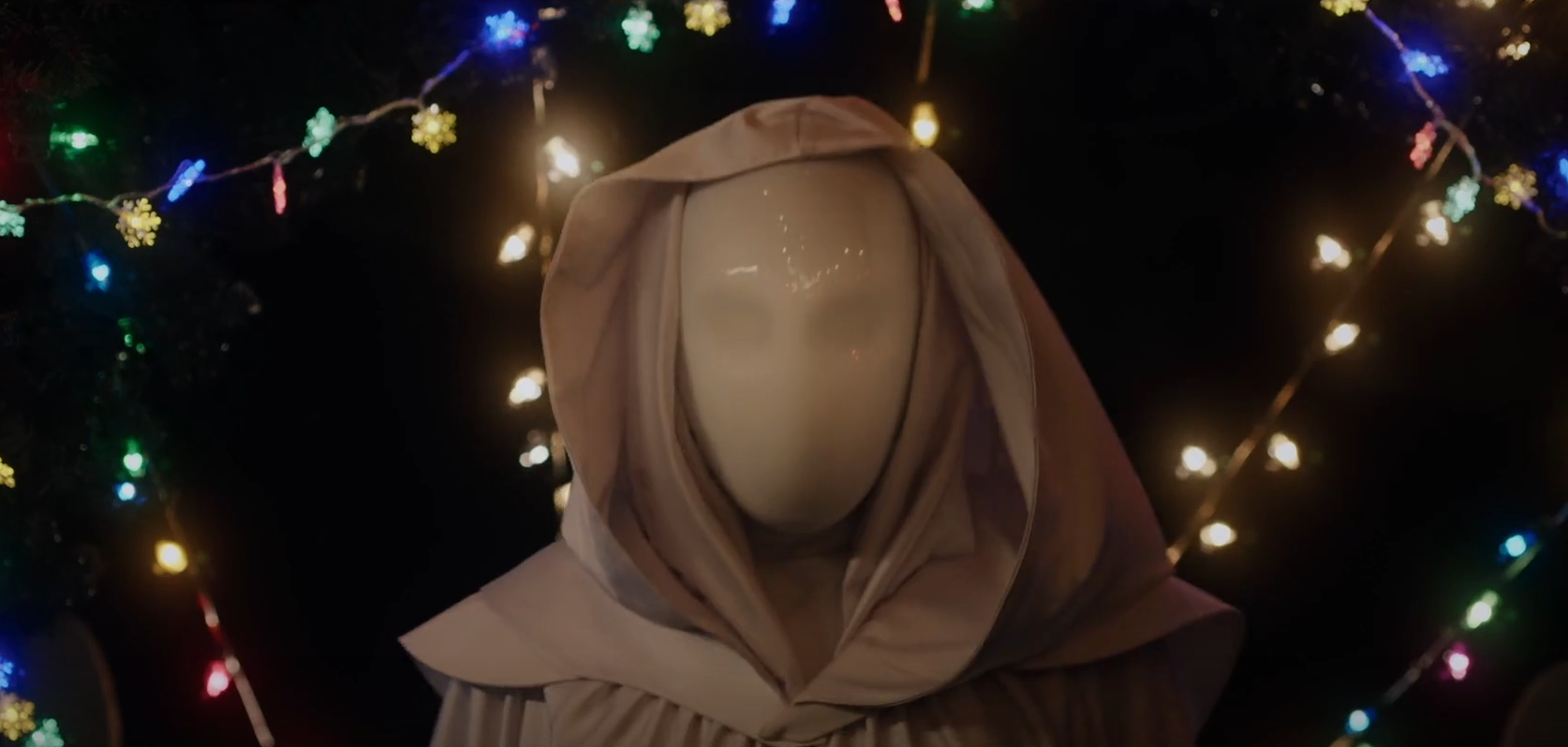
By that math, 2/3 of all viewers will be pleased with It’s a Wonderful Knife, the Christmas story with all the feel-good cheer of the classics and all the bloody knifework of a solid slasher.
The title gives away the film’s core conceit, but honestly, it bore more of a resemblance to Dolly Parton’s 2020 holiday debacle – I mean, charmer – Christmas on the Square. One small town real estate tycoon (Justin Long) intends to turn a historic strip into a shopping and dining oasis, even if it means bullying kindly old Mr. Evans (William B. Davis) into selling his family home.
But wait! No time to think about that when a white clad, knife wielding maniac is on a tear! And all this in the first ten minutes of the movie. Fast forward one year and everyone’s pretty much over those murders, except Winnie (Jane Widdop). No one cares, no one notices, it wouldn’t even matter if she’d never been born (…never been born…never been born…).
Director Tyler MacIntyre (Tragedy Girls) and writer Michael Kennedy (Freaky) have some fun piling on the holiday film cliches. And there are plenty of reasons to enjoy their movie.
First of all, Justin Long. There are few people more reliably fun to see in a horror flick, and in this one he rocks a spray tan and fake teeth. So many bonus points.
Also fun, Joel McHale (Becky), who is somehow now the go-to for horror movie supportive dad with daughter issues. Add the always welcome Katharine Isabelle, and though she’s tragically underutilized, it’s great to see Cassandra Naud (who was phenomenal in Influencer).
The story itself, with its plot twists and turns, is not as clever as it pretends to be. It is wryly funny, though, and often quite sweet. It’s not as raucous as Kennedy’s Freaky nor as badass as MacIntyre’s Tragedy Girls, but it is a bloody slice of Christmas fun.
Nicolas Cage has done the wild West before. Of course, with 116 acting credits, he’s done most everything before. But he’s done this recently – earlier this year in The Old Way, and a couple of years back in Prisoners of the Ghostland. What’s new with Butcher’s Crossing?
Cage plays Miller, a buffalo hunter. He works for himself. And he knows the stragglers with their paper thin hides around these parts ain’t nothing compared to the majestic creatures he’s seen in the thousands over in Colorado territory. If only somebody’d pony up the dough, he could put together a hunting party and bring in the biggest haul this town’s ever seen.
Well, sir, that’s just what young Will Andrews (Fred Hechinger) wants to hear. He dropped out of Harvard in search of adventure, and this looks to be that.
Co-writer/director Gabe Polsky adapts John Williams’s gorgeous 1960 novel of bitter truth and American mythology. Visually striking, the film’s untamed beauty belies its meager budget. Creating an atmosphere with limited means is an instinct Polsky has shown since his impressive feature debut, Motel Life.
Miller, Will, the hyper-religious Charlie (Xander Berkeley) and the scoundrel Fred (Jeremy Bobb) head into the Rockies in search of buffalo. What they find, along with the beasts, is themselves, and that is not pretty.
Butcher’s Crossing becomes a descent into madness film. This should be where Cage excels. Madness is essentially his brand. The character isn’t written well enough to leave an impression and Polsky’s storytelling is too tight to let the veteran madman open up. Lunacy never materializes.
Hechinger, memorably naïve in News of the World, delivers well enough as innocence turned sour. Both Bobb and Paul Raci, as the bitter entrepreneur who warned the men against the hunt, add a bit of color to the story.
Butcher’s Crossing is an ugly story of greed. It’s an ugly story of America. The shots of bison carcasses make an impression – the photography throughout is impressive, but this sickening image is particularly something. Unfortunately, Polsky’s script and cast can’t quite match the visual clarity he gives the tale.