Tag Archives: Madd at the Movies
Best Films of 2023
It is that time again! What a year 2023 was in movies – action and horror, blockbusters and indies, newcomers and veterans. Plus feminists, God bless them! We had to really prune and trim, but here are our 25 favorites.
1. Poor Things
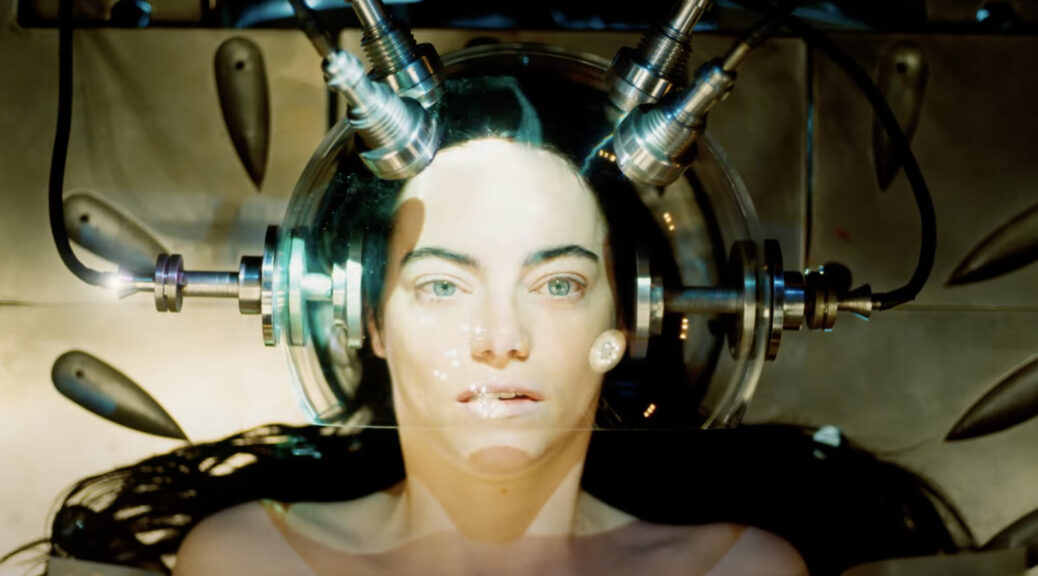
Yorgos Lanthimos creates a luscious world that is difficult to pin down. It’s part Victorian England, part Blade Runner 2049, and it is where Bella Baxter (Emma Stone, perfection) evolves to challenge the patriarchal notions that surround her.
The arc of Bella’s character is as satisfying as anything put to screen, and Stone revels in every unexpected, delightful, brash moment. And though it’s tough to pull your eyes away from Stone, along comes Mark Ruffalo to commit grand larceny with every scene of his hysterical cad Duncan Wedderburn, who indulges his ego teaching Bella about “furious jumping” (take a wild guess) but is reduced to mush when she moves past him without mercy or apology.
2. Killers of the Flower Moon
“Can you find the wolves in this picture?”
The question comes from a book on Osage Indian history that Ernest Burkhart is perusing, and it’s one that lingers throughout Martin Scorsese’s triumphant epic Killers of the Flower Moon.
Scorsese and co-writer Eric Roth adapt David Grann’s nonfiction book with an engrossing mix of true crime fact-finding, slow burning thrills and devastating heartbreak. The characters are rich in culture and in shades of human grey, each one caught in an infamous crossfire of American envy, arrogance, bigotry and greed.
3. Oppenheimer
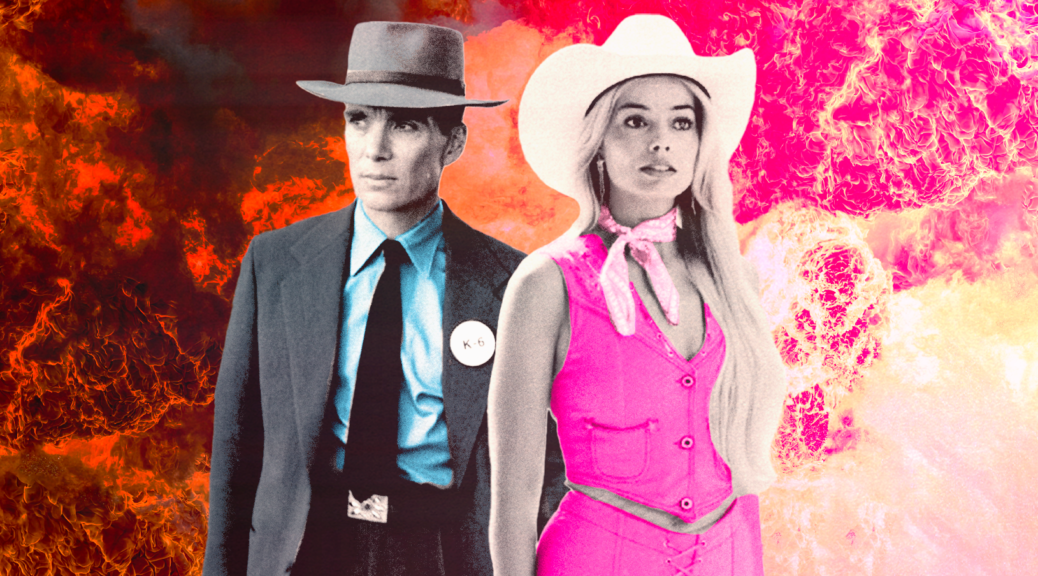
Writer/director Christopher Nolan gives Oppenheimer an engrossing IMAX treatment that serves up history lesson, character study and mystery thriller during three unforgettable hours.
Cillian Murphy is simply mesmerizing and absolutely award-worthy as Oppenheimer. Much like any film of this nature, Oppenheimer takes its liberties and leaves room for further study. But Nolan takes you inside the personal journey of one of the most important men in history, with resonant and challenging lessons on hubris, envy, blind faith and the search for redemption. And by the end of hour three, he leaves you drained but thankful for the experience.
4. Barbie
Barbie, which director Greta Gerwig co-wrote with Noah Baumbach (that slouch), delivers smart, biting, riotous comedy with more whimsy than anything this politically savvy has any right to wield. This film does not work without a tightrope of a tone, and everyone walks it with their heels off the ground.
It’s a role Margot Robbie was clearly born to play. Ryan Gosling, the man behind the tan, plays Existential Crisis Ken and it’s possible he’s never been better. Barbie is a brilliantly executed, incredibly fun, brightly colored, completely logical feminist statement that should be remembered come awards season.
5. Maestro
Bradley Cooper’s instincts for construction have grown exponentially since A Star Is Born (his stellar directing debut). Frame after frame is a wonder of style and storytelling, including an unforgettable extended take of simmering intensity and visual contrast that rivals the emotional wallop of Marriage Story‘s famous soul-baring confrontation.
Maestro is a film that soars early and often, via moments of glamorous cinematic muscle-flexing and intimate soul searching. It is as much about a great artist as it about the sacrifices great art often demands from both the artist and those who are closest to them. It’s a celebration of a legend and of a legendary bond, a sublime piece of moviemaking that deserves a standing O.
6. When Evil Lurks
Just when you thought no one could do anything fresh with a possession movie, Terrified filmmaker Demián Rugna surprises you. When Evil Lurks does sometimes feel familiar, its road trip to hell detouring through The Crazies, among others. But Rugna’s take on all the familiar elements feels new, in that you cannot and would not want to predict where he’s headed.
As choices are made and usually regretted, Rugna propels his heroes onward, each step, each choice, each misstep adding pressure and confusion, unveiling the character beneath even as bits of the brothers’ history organically comes to light. This is a magnificently written piece of horror, and Rugna’s expansive direction gives it an otherworldly yet dirty, earthy presence.
7. The Boy and the Heron
Hayao Miyazaki delivers the best Christmas gift this year with the lovely, likely swan song, The Boy and the Heron. Characteristically gorgeous, the film combines the spectacle of Spirited Away with the solemnity of The Wind Rises. Joe Hisaishi’s plaintive score never overwhelms but quietly emphasizes the sense of loss that permeates the movie. And though the painterly magic we’ve come to expect from the unparalleled filmmaker is on display in every frame, the storytelling this time is openly wistful.
The Boy and the Heron may represent Mahito’s coming of age, but as he turns his back on the imaginative world he leaves behind, it’s hard not to feel as if Miyazaki is likewise waving goodbye.
8. Godzilla Minus One
Writer/director Takashi Yamazaki tips some unmistakable hats to both Jaws and Dunkirk, and emerges with a completely satisfying Kaiju adventure. And though Yamazaki makes sure Godzilla wreaks his havoc early and often, Minus One is a film driven by characters with all-too-human complexities.
Yamazaki – who’s also credited as the VFX supervisor – gives Godzilla a wonderfully classic look, with imposing and well-defined features like those spiky scales that turn blue when he’s about to spit that fire! Hell yeah! The filmmaker deftly balances the destruction with the reflection, and Minus One raises up a welcome addition to Godzilla lore.
9. American Fiction
“White people think that they want the truth, but they don’t. They just want to feel absolved.”
Writer/director Cord Jefferson’s American Fiction takes aim at fiction – print or cinematic – and its problematic relationship with Black trauma. You might not expect a film that floats this truth so effortlessly to be a laugh riot, but American Fiction delivers an awful lot of laugh-out-loud moments.
Jeffrey Wright – an underappreciated genius of an actor if ever there was one – does what he always does. He conjures a fully formed human being, flawed but forgivable and endlessly earnest. Buoyed by a delightful ensemble and cuttingly hilarious script, he delivers one of the finest performances of his career.
10. The Color Purple
No matter how familiar you are with Alice Walker’s original novel, or Spielberg’s 1985 film, director Blitz Bazawule’s adaptation of The Color Purple Broadway musical comes to the big screen as a heartfelt and joyous experience.
Have those tissues handy, but rest assured they will all be tears of joy. Because as much suffering as Miss Celie and her family endure, that pain is not what drives this vision. Bazawule, Fantasia Barrino and a top flight ensemble make this The Color Purple an uplifting celebration of heritage and family, and an exhilarating film experience.
11. May/December
May December feels more like Todd Haynes of old: a sultry situation masquerading as hum drum, populated by Tennessee Williams-esque damaged beauties wanting, wanting. Plus, Julianne Moore.
Moore is characteristically brilliant and wonderfully enigmatic. Portman is magnificent, biting into a role with more salty meat than anything she’s handled since Black Swan. But it’s Charles Melton who truly surprises, heartbreaking emotional honesty in a film that flaunts insincerity.
12. The Iron Claw
Writer/director Sean Durkin (Martha Marcy May Marlene and The Nest) brings together his lifelong love of wrestling with a keen ability to heighten psychological tension to the breaking point and then see what fills the void that comes after that break.
The result is a mesmerizing sports movie and Oscar contention for Zac Efron. Call it a curse or call it bad luck, but Durkin’s deft handling of these events turns public tragedy into a searing meditation on familial bonds and the limits of a certain type of masculinity.
13. The Holdovers
Director Alexander Payne serves up plenty a period comedy that also finds time to unwrap some warmth and understanding.
Paul Giamatti is perfection as a man who seems to have forged a comfortable “hate-hate” relationship with life. Dominic Sessa impresses in his screen debut, giving depth to the rebellion that has brought Angus multiple expulsions from multiple schools. And Da’Vine Joy Randolph brings plenty of weary humanity, crafting Mary as a heartbroken woman still trying to understand why her Curtis was deemed more expendable than these rich white boys who are preparing for college instead of war.
14. Asteroid City
As is so often the case, director Wes Anderson, writing again with Roman Coppola, painstakingly creates a world – colorful, peculiar, emotionally tight lipped – brimming with characters (equally colorful, peculiar and emotionally tight-lipped). Brimming. About 50 speaking characters stand or sit precisely on their mark, perfectly framed, each one doing their all to keep chaos at bay.
The wordplay is succinct and witty per usual, dancing through themes of science, art, and Cold War paranoia. But while Anderson’s last film, The French Dispatch, left its procession of indelibly offbeat characters to fend for themselves, this time they’re connected with the sterile humanity that buoys the best of his work.
15. Air
If you still need proof that Ben Affleck is a damn fine director, you’ll find it, right down to how he frames the multiple telephone conversations. But the real surprise here is the script. In a truly sparkling debut, writer Alex Convery brings history to life with an assured commitment to character.
And much like his success with the Oscar-winning Argo, Affleck proves adept at a pace and structure that wrings tension from an outcome we already know. In fact, he goes one better this time, inserting archival footage that actually reminds us of how this all turned out, before leaving Mrs. Jordan’s final ultimatum hanging in the air like a levitating slam from Michael.
16. Spider-Man: Across the Spider-Verse
A reminder that multiverse films can, indeed, be made well, this story is wild but never illogical, delivering a heady balance of quantum physics, Jungian psychology and pop culture homages while rarely feeling like a self-congratulatory explosion of capitalism. Heart strings are tugged, and it helps if you’ve seen the previous installment. (If you haven’t, that’s on you, man. Rectify that situation immediately.)
A star-studded voice cast shines, but that wattage is almost outshone by the animation. Every conceivable style, melding one scene to the next, bringing conflict, love and heroism to startling, vivid, utterly gorgeous life.
17. John Wick 4
Chapter 4 is not just more of what makes the series memorable, it’s better: better action, better cinematography, better fight choreography, better framing and shot selection. Sandwiched between inspired carnage are brief moments of exposition set within sumptuous visions of luxury and decadence. This movie is absolutely gorgeous.
One of the reasons each episode of this franchise surpasses the last is that the franchise is not exactly about John Wick. It’s a love letter to a canon, a song about the entire history of onscreen assassins and their honorable, meticulous action. Genre legends arrive and we accept a backstory that isn’t detailed or necessary because the actors carry their cinematic history with them, and that’s backstory enough.
18. Showing Up
Visual poet of the day-to-day Kelly Reichardt returns to screens with a look at art as well as craft in her dramedy, Showing Up.
Michelle Williams is characteristically amazing. Her character exists as much in what she does not say as what she does, and the honesty in that performance generates most of the film’s comic moments. Reichardt invests her attention in the small moments rather than delivering a tidy, obvious structure. The result feels messy, like life, with lengths of anxiety and unease punctuated by small triumphs.
19. Sisu
Is there anything in all the world more satisfying than watching Nazis die? Perhaps not. Jalmari Helander, the genius behind 2010’s exceptional holiday horror Rare Exports, squeezes a lovechild from Leone and Peckinpah by way of Tarantino (natch). The result, Sisu, a kind of WWII-era Scandinavian John Wick.
Helander’s confident vision meshes majestically with the cinematography of Kjell Lagerroos, capturing the lonesome beauty of Lapland in one minute, the next minute bursting with the frenetic energy and viscera of action. The stunt choreography and editing in the dizzying array of carnage-laden set pieces are breathtaking. Knives, guns, fisticuffs, tank fire, regular fire, land mines, a hanging, airplanes – a seemingly endless string of magnificently crafted violent action keeps the pace breathless.
20. Anatomy of a Fall
Writer/director Justine Triet’s understated gem masquerades as a courtroom drama – a thrilling, frustrating, compelling one at that. But the tale she really tells is one of sexual politics and the way the patriarchy effortlessly vilifies women.
Sandra Hüller is perfection as a woman suspected of killing her husband. Triet’s script – a quietly powerful sermon on the power of words – tells two stories simultaneously: the one we’re hearing and the truth. It’s a masterful piece of filmmaking, frustrating in its honesty.
21. Bottoms
Bottoms essentially follows a traditional teen comedy path, from the first day of senior year. But if you saw co-writer/director Emma Seligman and co-writer/star Rachel Sennott’s uncomfortably brilliant 2020 comedy Shiva Baby, you have some idea of what you’re in for. Expect a chaotic, boundary pushing satire unafraid to offend.
Part John Hughes, part Jennifer Reeder, part Chuck Palahniuk, Bottoms exists in a bizarre world of deadpan absurdism so littered with smart, biting commentary that you’ll need to see it twice to catch all of it. Seligman’s tone, her image of high school and high school movies, is wildly, irreverently funny and fearless. It’s hilarious, raunchy, and so much fun.
22. Linoleum
If you haven’t gotten to know filmmaker Colin West, it’s high time you correct that. The writer/director follows up last year’s surreal Christmas haunting Double Walker with a beautiful look at living a fantastic life.
The effortlessly affable Jim Gaffigan plays Cameron, an astronomer in suburban Dayton, Ohio hitting a very rocky path in his middle age. The kiddie show about science that he hosts is failing. Maybe his marriage is, too. New neighbors, a mysterious woman, and increasingly bizarre events have got him wondering. What does it all mean?
23. The Killer
Writer/director David Fincher gives us The Killer as a Patrick Bateman for a new generation, managing some dark fun as he probes our descent into cold, violent narcissism. Fassbender is perfection as this meticulous, emotionless killbot, and the great Tilda Swinton’s late stage cameo brings the film more star power, plus one genuinely hilarious and insightful moment.
There are no business cards involved, but passports with increasingly funny aliases (brush up on your classic sitcoms) provide levity as scores are settled with inventive bloodshed and impressive fight choreography. And through it all, The Killer keeps preaching his mantra as a MAGA Bond, unwavering in his devotion to self and the perpetual need to feel aggrieved.
24. Priscilla
Like most stories about Elvis, this one is pretty familiar. But this point of view is not. That’s likely what interested Sofia Coppola, and she adapts Priscilla’s 1985 memoir “Elvis and Me” as a lush, compelling, and often heartbreaking portrait of the woman at the heart of a uniquely American love story.
Cailee Spaeny (On the Basis of Sex, Bad Times at the El Royale) gives a breakout performance that is utterly transfixing. With grace and ease, she is able to take Priscilla from the shy schoolgirl hiding a big secret behind her knowing smile, to a woman no longer willing to sacrifice her life to the whims of an icon.
25. Blackberry
So, a voice on the line says, “You have a collect call from ‘What the f%& is happening’!”
That’s not really the caller’s name.
He’s actually Jim Balsillie (a terrific Glenn Howerton), co-CEO of BlackBerry Limited, and he’s having yet another temper tantrum. The pairing of Balsillie’s bare-knuckled business sense with the tech genius of other CEO Mike Lazaridis (Jay Baruchel, perfectly awkward) made the company an early leader in the cell phone game, but things have started to unravel. Fast.
The colliding of worlds is engaging enough, but the delightfully sharp humor and first-rate ensemble (also including Michael Ironside) turn these based on true events into a rollicking, can’t-look-away slice of history.
Best Horror Films of 2023
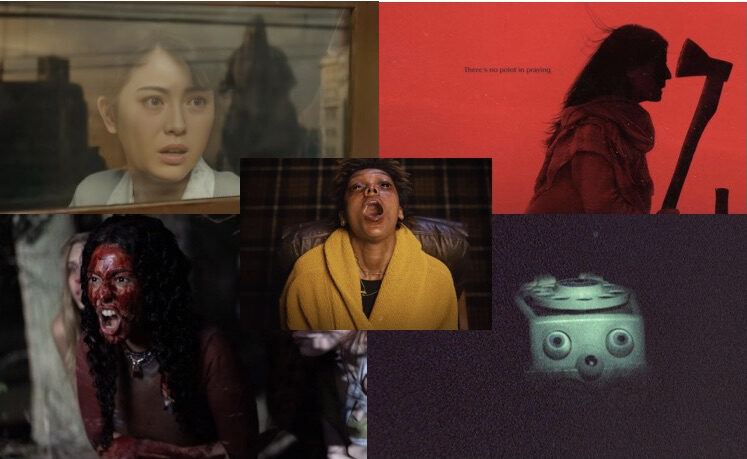
Blood soaked comedies, visceral supernatural thrillers, gory satires, haunting social commentaries, throwbacks and holidays and gore galore – that’s what was on display in the best horror films of 2023.
We’re not going to lie – our favorite horror movie of 2023 was our own Obstacle Corpse (streaming on Prime, Tubi, Vudu and Plex). And though we are wildly biased, we’re going to take the high road and not list it here. Still, you should watch it!
Besides that one – here’s a rundown of our favorite horror films of 2023.
20. M3gan
Hilarious. Gerard Johnstone – whose 2014 horror gem Housebound is a must see – displays a sly instinct for humor in a film that understands what’s creepy about dolls and toxic relationships.
Allison Williams is solid as the workaholic who just wasn’t cut out to be a parent. That would be fine, except her orphaned niece could really use a parent, not an AI caregiver whose rushed-to-production programming and unseemly backstory make her dangerous in, let’s be honest, a pretty fun way.
You remember that trailer. We could have used more dancing, but when M3GAN plays “Toy Soldiers” on the piano, we were already hooked.
19. The Blackening
Several friends from college (including Jay Pharaoh, Yvonne Orji, Sinqua Walls, Antoinette Robertson, and the film’s co-writer Dewayne Perkins) are reuniting at a remote cabin for a Juneteenth celebration. It isn’t long before they discover a talking blackface at the center of a board game called The Blackening (“probably runs on racism!”) and fall into a sadistic killer’s plan to pick them off one by one.
The game will test their knowledge of Black history and culture, and demand they sacrifice the friend they deem “the Blackest.” It’s a clever device that Perkins, co-writer Tracy Oliver and director Tim Story use to skewer both well-known horror tropes and well-worn identity politicking.
The old joke about Black people being the first to die in horror films is pretty well-worn, too, but don’t let that poster tagline convince you that the film has nothing new to say. The less “Blacker” these characters seem, the greater chance they have of surviving. That’s some fertile ground for social commentary, and what began as a viral comedy sketch lands on the screen as a refreshing new angle for a horror comedy.
18. Birth/Rebirth
Birth/Rebirth opens on two different women performing two different tasks in a hospital. Their paths will cross, but at the moment, Celie (Judy Reyes, Smile) and Rose (Marin Ireland, The Dark and Wicked) are revealing something of themselves to us.
Their story, like Barbie’s, is about how impossible it is to be a woman. Director Laura Moss moves seamlessly from short to feature with this modern take on Frankenstein and motherhood.
Tragedy strikes early in Moss’s film. Overworked and under rested, Celie blames herself for her daughter Lila’s death. And now the hospital can’t even find the girl’s body.
But Rose can.
The film amounts to a profound parenting nightmare, and each actor takes on the role of parent to create an unnerving dynamic guided by authenticity. All of it pulls the psychological scabs of exhausted parenting.
17. The Angry Black Girl and Her Monster
An awful lot of people have reimagined Mary Shelley’s Frankenstein in an awful lot of ways. What makes writer/director Bomani J. Story’s take, The Angry Black Girl and Her Monster, so effective is that it tackles a lot in very little time and handles all of it heartbreakingly well.
To say that Story situates Shelley’s tale in the context of drug violence would be to sell his film short. He’s moved the story from European castles and laboratories to the projects, where Vicaria’s (Laya DeLeon Hayes, stunning) mother fell victim to a drive-by shooting, her brother was shot to death on a drug deal gone wrong, and her father deals with his grief by using. But drugs are just part of the larger problem, the almost escapable, systemic and cyclical nature of violence and poverty.
Story’s chosen genre may feel slight, even campy, but the tropes belie some densely packed ideas, and there’s a current of empathy running through the film that not only separates this from other Frankenstein tales, but deepens the film’s genuine sense of tragedy.
16. Totally Killer
The quickest description is Back to the Future meets a mash of Scream and Happy Death Day. But Totally Killer offers a funhouse full of other genre wink-winks in a violent, raunchy, rollicking good time that often works in spite of itself.
Director Nahnatchka Khan and a writing team relatively new to features riff on everything from the Disney Channel to Sixteen Candles to Ace Ventura and beyond as a terrific Kiernan Shipka leads us on a life-saving mission back to the late 80s.
15. Thanksgiving
Hungry for a new turkey day tradition that delivers on outlandish violence? Skip the Westminster Dog Show and enjoy a helping of Thanksgiving.
Eli Roth returns to the grindhouse trailer he made in 2007 to deliver a slick, fun holiday slasher with enough old school Roth to remind you of the genre bad boy he once was.
A game cast, a heaping helping of genre tropes, gore a plenty, and a refreshing dose of cynicism make this visit to a New England town one year after its Black Friday Massacre the best horror film for this holiday.
14. Influencer
Kurtis David Harder’s approach to influencer horror leans Neo-noir thriller as the cold and calculating CW (Cassandra Naud – outstanding) spins a dangerous web for an unsuspecting social butterfly.
Harder and cinematographer David Schuurman create an absolutely gorgeous pot for boiling this mystery. From atop deserted island beaches to below crystal clear waters and inside lavish vacation homes, Harder’s nimble camera and visual aesthetics reinforce the notion that pretty pictures don’t always tell the whole story.
With sharp dialogue, skillful plotting and simmering dread, Influencer is plenty worthy of that “Like” button.
13. Huesera: The Bone Woman
Michelle Garza Cervera’s maternal nightmare is bright and decisive, pulling in common genre tropes only long enough to grant entrance to the territory of a central metaphor before casting them aside for something sinister, honest and honestly terrifying.
While it toes certain familiar ground – the gaslighting of Rosemary’s Baby, for instance – what sets Huesera apart from other maternal horror is its deliberate untidiness. Cervera refuses to embrace the good mother/bad mother dichotomy and disregards the common cinematic journey of convincing a woman that all she really wants is to be a mom.
Huesera’s metaphor is brave and timely. Brave not only because of its LGBTQ themes but because of its motherhood themes. It’s a melancholy and necessary look at what you give up, what you kill.
12. The Sacrifice Game
The Holdovers by way of Blackcoat’s Daughter, Jenn Wexler’s latest mines the Manson-esque horror of the American Seventies for a new holiday favorite.
Part of the reason The Sacrifice Game works as well as it does is the casting of the cultish murderers, each with a fully formed character and each somehow reminiscent of the kind of Satanic hippie villains that once gloriously populated trash horror.
The film looks fantastic, and though the storyline itself is clearly familiar, Wexler’s script, co-written with Sean Redlitz, feels consistently clever. There’s enough grisly material for the true horror moniker, but nothing feels gratuitous. Each scene serves a purpose, and all dialog allows characters to unveil something of themselves.
11. Malum
Equal parts Assault on Precinct 13 and The Shining by way of Charles Manson, Anthony DiBlasi’s Malum is a quick, mean, mad look into the abyss.
DiBlasi is reimagining his own 2014 flick Last Shift, although it feels more like a riff on Carpenter’s 1976 Precinct 13 than anything. Regardless, what the filmmaker does is confine the audience along with our hero in a diabolical funhouse.
Malum gets nuts, exactly as it should. Though it never feels genuinely unique, it manages to avoid feeling derivative because of DiBlasi’s commitment to the grisly madness afoot. The result is a solid, blood soaked bit of genre entertainment fully worthy of your 92 minutes.
10. Where the Devil Roams
There is macabre beauty in every frame of Where the Devil Roams, the latest offbeat horror from the Adams family. The film was co-directed and co-written by its three lead actors – Toby Poser, John Adams and Zelda Adams – who are also a family. ike their earlier efforts, Where the Devil Roams concerns itself with life on the fringes, rock music, and the family dynamic.
The ensemble convinces, particularly the sideshow performers, but the film’s most enduring charm is its vintage portrait look. It’s a gorgeous movie, the filmmakers creating the beautifully seedy atmosphere ideal to the era and setting.
Where the Devil Roams feels expansive and open, but like anything else in the sideshow, that’s all trickery. There’s more happening in this film than they let on, which is why the final act feels simultaneously “a ha!” and “WTF?!” You won’t see it coming, but in retrospect, it was there all along.
9. El Conde
Pablo Larraín has a particular gift for poetic historical retellings grounded in a singular woman’s perspective: Spencer, Jackie. But his passion for the political history of his native Chile rings through most of his films, including Naruda and No. But did we see a vampire movie coming?
El Conde reimagines Augusto Pinochet as a vampire weary of his many years on earth and ready to leave his bickering family in squalor and finally die – until the church sends a vampire slayer after him. What follows is a near-slapstick political satire, sort of The Death of Stalin meets What We Do in the Shadows.
Every moment’s a delight, and a late-film reveal is a cynical and biting reward for a gloriously spent couple of hours.
8. Dark Harvest
Dark Harvest finds filmmaker David Slade back on the big screen, and back among teens and monsters, for a gorgeous and often brutal creature feature with a winning throwback vibe. Adapting the 2006 Bram Stoker Award-winning novel with author Norman Partridge and screenwriter Michael Gilio, Slade blends the period pastiche of The Vast of Night with narrative nods to The Lottery, The Hunger Games, and a few choice slices of Pumpkinhead.
Slade leans on cinematographer Larry Smith (Only God Forgives) and the production design team to give the film a wonderful vintage look, with terrific use of backlighting that sets an imposing mood – especially deep in the corn stalks. And once ol’ Sawtooth Jack comes calling, the effects department earns that R rating, with some vicious bloodletting that proves Jack can be a very naughty boy.
7. Evil Dead Rise
Deadites hit the big city in Lee Cronin’s Evil Dead Rise, the latest instalment in the old Sam Raimi demon possession franchise. As was true with its predecessors, blood will rain, viscera will spew, chainsaws will bite, and the dead will most definitely rise.
We open, as usual, on a cabin. Despite the top-notch title sequence, though, this episode will not be a cabin-in-the-woods horror. Cronin, who’s credited with the script as well, takes the Necronomicon and all its secrets into an urban high rise to see what hell he can raise.
Cronin uses disorienting angels and shots throughout the film to beautifully bewildering effect. A fisheye-of-death through a peephole is just one of the film’s many horrifying highlights.
6. Infinity Pool
Brandon Cronenberg + Mia Goth + Alexander Skarsgård … for a very specific set of people, the sum there is hell yes.
Riding our favorite wave in horror – that rich people are unspeakably diabolical – writer/director Cronenberg takes us on a strange journey through privilege, debauchery, entitlement, boredom, narcissism, psychotropic drugs and more in his trippy new flick, Infinity Pool.
Cronenberg’s ultimate concept is clearly, wildly his own, but moments sometimes call to mind ideas from last year’s Speak No Evil, as well as Society, Kill List, Hour of the Wolf, and A Serbian Film (no, not that part). Still, the film never feels borrowed. Uncomfortable, yes. Borrowed? No.
5. Perpetrator
Jennifer Reeder’s work routinely circles back to peculiar notions of coming of age, but John Hughes she ain’t. Goofiness and seriousness, the eerie and the grim, the surreal and familiar all swim the same bloody hallways, practice the same open shooter drills, and speak up at the same assemblies honoring the latest missing girl.
As Jonny (Kiah McKirnan) approaches her 18th birthday she goes a tad out of control. Her dad (also in some kind of crisis) doesn’t know what to do with her, but an out-of-town aunt (Alicia Silverstone, a sinister delight) offers to take her in. So, Jonny goes from a fairly anonymous, if reckless, urban life to something far more noticeable in her aunt’s small town.
Reeder’s interested in the way women are raised to disregard one another, to compete with each other, to be adored and consumed, sexualized, victimized and vilified. Her reaction to this environment amounts to a reclamation of blood. Perpetrator swims in blood and gore and humor and terror and feminism galore.
4. Skinamarink
There’s probably some version of this nightmare in your past. You were just a kid, separated from your parents and trying in vain to reach them or call out for help, or maybe just escape.
Remember how scared you were? Director Kyle Edward Ball and cinematographer Jamie McRae do, and they twist that knife again and again for 100 minutes of dark, disorienting dread.
Cinematography and sound design are intertwined in an analog, cathode-ray aesthetic that recalls vintage, grainy VHS. Two children whisper to each other (“Where do you think Dad is? I don’t know.”) as they wander from room to room, with Ball’s camera never allowing you one second of relief.
3. Talk to Me
Talk to Me somehow feels familiar, but uncomfortably so. It’s a horror show always eager to deface the rulebook, and leave you with a wonderfully organic sign that this game is not over.
The script smartly stays a step or two ahead of contrivance, and is able to find some impressive psychological depth as it touches on grief, trauma, and the anxieties of leaving childhood behind.
This is R-rated horror, refreshingly light on the jump scares and false alarms, leaning instead on a parade of visual images that can truly terrify. And even when we don’t see what the game players are seeing, the fact that we’ve already had a hellish glimpse feeds a devilishly fun game within our own imaginations.
2. Godzilla Minus One
Writer/director Takashi Yamazaki returns to themes he explored ten years ago in The Fighter Pilot, tips some unmistakable hats to both Jaws and Dunkirk, and emerges with a completely satisfying Kaiju adventure.
The morals are clearly marked, but this is a crowd pleasing and often thrilling adventure, with some well-chosen moments of humor woven into a pace that rarely bogs down, despite a bit of schmaltz and one or two unsurprising surprises that dot the landscape.
And though Yamazaki makes sure Godzilla wreaks his havoc early and often, Minus One is a film driven by characters with all-too-human complexities. He gives Godzilla a wonderfully classic look, with imposing and well-defined features like those spiky scales that turn blue when he’s about to spit that fire! Hell yeah!
1. When Evil Lurks
Just when you thought no one could do anything fresh with a possession movie, Terrified filmmaker Demián Rugna surprises you. When Evil Lurks does sometimes feel familiar, its road trip to hell detouring through The Crazies, among others. But Rugna’s take on all the familiar elements feels new, in that you cannot and would not want to predict where he’s headed.
This is a magnificently written piece of horror, and Rugna’s expansive direction gives it an otherworldly yet dirty, earthy presence.
The inexplicable ugliness – this particularly foul presence of evil – is handled with enough distance, enough elegance to make the film almost beautiful, regardless of the truly awful nature of the footage. And Rugna never lets up. Each passing minute is more difficult than the last, to the very last, which is an absolute knife to the heart.

Screening Room: Poor Things, Aquaman 2, Anyone But You, Iron Claw, Color Purple, Ferrari, Boys in the Boat, Rebel Moon

Shut Up and Drive
Ferrari
by Hope Madden
My first worry as I watched Michael Mann’s long-awaited return to the screen, Ferrari, was triggered by a line delivered by Enzo Ferrari’s (Adam Driver) mother (Daniela Piperno). In recalling the death of her eldest child, she muses, “The wrong son died.”
There is, of course, no more clichéd way to begin a biopic. Just ask Walk Hard. But Mann, working from a 30-year-old by script the late Troy Kennedy Martina and Brock Yates, veers from formula immediately after that bit of dialog. His approach does not always work, but buoyed by a few remarkable performances, he recreates a compelling piece of history.
Though Driver’s accent is sometimes questionable, he sidesteps cliché in every scene. His Enzo Ferrari is a singular man, driven and emotionally careful but quietly compassionate and endlessly human. The performance is soulful and delightfully humorous, and he makes even the script’s most convenient or obligatory dialog feel authentic.
He’s got nothing on Penélope Cruz, though, who’s a solid contender for an Oscar nomination in the role of Enzo’s wife and business partner, Laura. Moody, funny, but more than anything, worn thin by years of grief and anger, Laura is a character unlike any other in this film or most any other. Cruz dials the drama back just when you’d expect an eruption, erupts at surprising moments, and refuses to make Laura Ferrari a cartoon or a villain.
With these performances at the center of the film and the specter of death in both the rear view and the headlights, Ferrari delivers an emotionally charged adventure. The real possibility of disaster – within the family, within the business, and on the racetrack – is a current running through every scene.
Mann captures the thrill and dread inside that danger with a restless camera and visceral racing action. Thanks to commitment to the human drama, the action never feels glossy or superficial – thrill for thrill’s sake. Mann’s latest embraces the compromise and corrosion that accompany success. It feels less stylish than a Michael Mann film, but more human.

Alive and Thinking
Poor Things
by Hope Madden and George Wolf
Frankenstein was a breathing, bleeding act of feminism, not because Mary Shelly’s masterpiece illuminated or elevated women’s discourse, but because Mary Shelly – an 18-year-old girl – created science fiction.
Naturally, her husband took credit.
Many, many writers and filmmakers have taken a stab at reimagining Shelly’s ideas. None is as astonishing as Yorgos Lanthimos and the triumph that is Poor Things.
Working from a script by Tony McNamara and Alasdair Gray, Lanthimos creates a luscious world that is difficult to pin down. It’s part Victorian England, part Blade Runner 2049, and it is where Bella Baxter evolves to challenge the patriarchal notions that surround her.
Bella (Emma Stone, sheer perfection) is brought back from the dead by Dr. Godwin Baxter (Willem Dafoe), a scientist with no romantic notions about polite society – or about Bella, for that matter. Dr. Baxter reanimates Bella’s adult body with the brain of a small child, and under his watch, Bella develops sans the outside pressures of conformity to societal expectations. Which is to say, she thrives.
Imagine a woman’s sense of self forming without shame, without the stifling existence of it. Lanthimos, McNamara and Gray have done just that, and the result is exhilarating.
Still, “God” (as Bella calls him) wishes to keep her safe, as does God’s beguiled assistant, Max (Remy Youssef). But Bella must experience life, and the adventure she fearlessly attacks is simultaneously hilarious, daring, lewd, ingenious and completely intoxicating.
The arc of Bella’s character is as satisfying as anything put to screen, and Stone revels in every unexpected, delightful, brash moment. And though it’s tough to pull your eyes away from Stone, along comes Mark Ruffalo to commit grand larceny with every scene of his hysterical cad Duncan Wedderburn, who indulges his ego teaching Bella about “furious jumping” (take a wild guess) but is reduced to mush when she moves past him without mercy or apology.
Expect Oscar nods for both, and they won’t be alone here.
Lanthimos’s direction is again nimble and ambitious, dipping back into his bag of angles and staging for a feast of ambitious panache. The result is a perfect visual complement to Bella’s journey of intellectual and philosophical wonder, one always buoyed by vivid cinematography from Robbie Ryan (The Favourite), and Holly Waddington’s wonderful costuming.
Poor Things may find longtime Yorgos fans spotting thematic terrain that’s similar to 2009’s Dogtooth, but these latest questions he’s pondering are even more pointed and brilliantly satirical.
What if someone could navigate the world anew, armed with the benefit of physical independence, but with a complete social naïveté that came merely from inexperience rather than isolation? And what if that someone was a woman in a man’s man’s man’s man’s world?
That someone is Bella Baxter, and Poor Things makes her gloriously alive, in ways you’ll probably wish you could be.

Fright Club: Best Drunks in Horror Movies
Whether they’re merrymakers (Grabbers), comic relief (Mrs. MacHenry, Black Christmas), tempted heroes (Dan Torrance, Doctor Sleep), or outright villains (Jane, What Ever Happened to Baby Jane), the drunk is a staple of horror. They can generate a laugh to help offset tension, or develop dread along with their temptation. They can add tragedy, comedy, lunacy and even terror. Here are our favorite horror movie alcoholics.
5. John Grant (Gary Bond), Wake in Fright (1971)
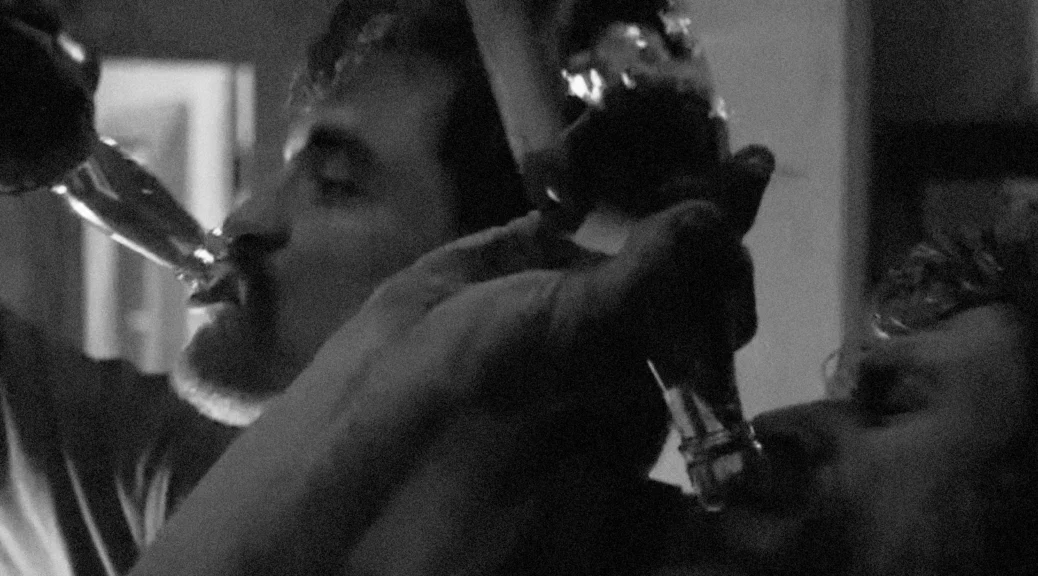
An unrelenting work of tension and sweat, Ted Kotcheff’s Outback thriller follows an aggrieved school teacher who stops over for a single night in the Yabba on his way from his consripted teaching post to Sydney for Christmas.
One bad decision later, and he (John Grant) and we are trapped, possibly forever, in drunken, mad, dangerous, almost sadistic debauchery. Donald Pleasence co stars as part of a merry band of utter lunatics whose sold purpose seems to be to trap this man in their depravity with them.
4. Sam (Larry Fessenden), Habit (1995)
Writer/director/star Larry Fessenden explores alcoholism via vampire symbolism in this NY indie. Fessenden plays Sam, a longtime drunk bohemian type in the city. He’s recently lost his father, his longtime girlfriend finally cut bait, and he runs into a woman who is undoubtedly out of his league at a party.
And then he wakes up naked and bleeding in a park.
The whole film works beautifully as an analogy for alcoholism without crumbling under the weight of metaphor. Fessenden crafts a wise, sad vampiric tale here and also shines as its lead.
3. John Marshall (Jim Cummings), The Wolf of Snow Hollow (2020)
Writer/director/star Jim Cummings is officer John Marshall of the Snow Hollow sheriff’s department. John’s father (Robert Forster, in his final role) is the longtime sheriff of the small ski resort town, but Dad’s reached the age and condition where John feels he’s really the one in charge.
John’s also a recovering alcoholic with a hot temper, a bitter ex-wife and a teen daughter who doesn’t like him much. But when a young ski bunny gets slaughtered near the hot tub under a full moon, suddenly John’s got a much bigger, much bloodier problem.
Cumming’s script, like his writing for Thunder Road, is full of life, and has hin again juggling random outbursts of absurd non-sequiturs and hilarious anger with real human issues of struggle and loss. John’s afraid of losing his father, women are being preyed upon, and a drink would sure hit the spot.
2. Wake (Willem Dafoe) & Winslow (Robert Pattinson), The Lighthouse (2019)
Robert Eggars has gone to sea. The Lighthouse strands you, along with two wickies, on the unforgiving island home of one lonely 1890s New England lighthouse.
Salty sea dog Thomas Wake (Willem Dafoe) keeps the light, mind ye. He also handles among the most impressive briny soliloquies delivered on screen in a lifetime. Joining him as second is one Ephraim Winslow (Robert Pattinson)—aimless, prone to self-abuse, disinclined to appreciate a man’s cooking. Both enjoy a bit of drink.
This is thrilling cinema. Let it in, and it will consume you to the point of nearly missing the deft gothic storytelling at work. The film is other-worldly, surreal, meticulous and consistently creepy.
And we’ll tell you what The Lighthouse is not. It is not a film ye will soon forget.
1. Jack Torrence (Jack Nicholson), The Shining (1980)
It’s isolated, it’s haunted, you’re trapped, but somehow nothing feels derivative and you’re never able to predict what happens next. It’s Stanley Kubrick’s masterpiece rendition of Stephen King’s The Shining.
Jack Nicholson outdoes himself. His early, veiled contempt blossoms into pure homicidal mania, and there’s something so wonderful about watching Nicholson slowly lose his mind. Between writer’s block, isolation, ghosts, alcohol withdrawal, midlife crisis, and “a momentary loss of muscular coordination,” the playfully sadistic creature lurking inside this husband and father emerges.
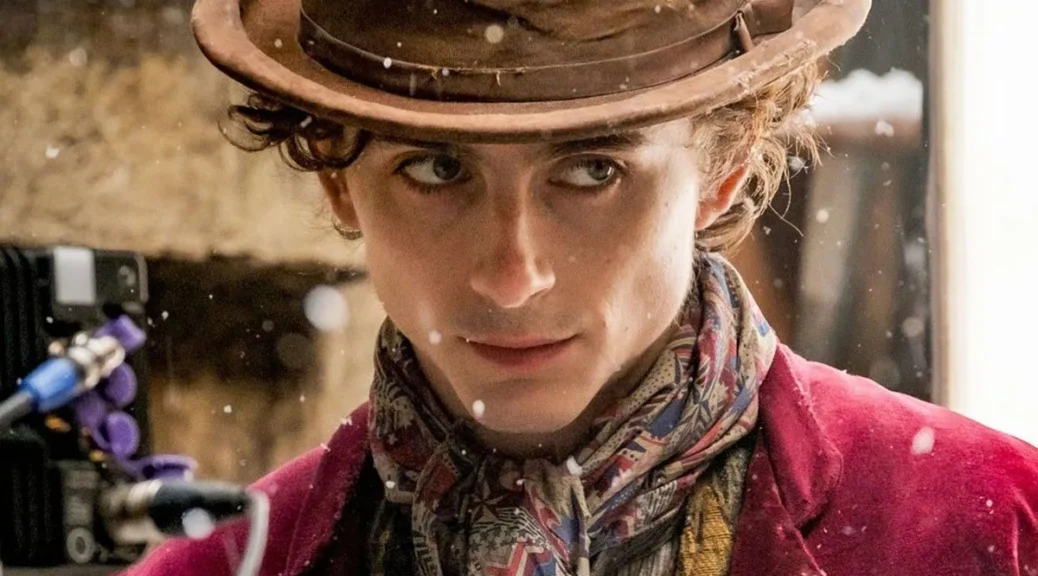
Screening Room: Maestro, Boy and the Heron, Eileen, Wonka, Sacrifice Game
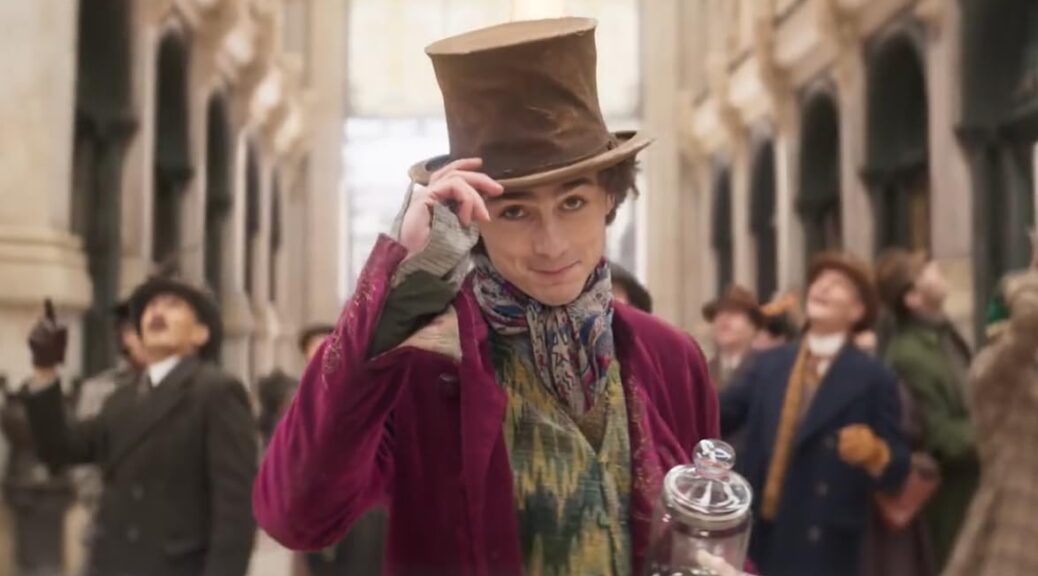
Candy Man
Wonka
by Hope Madden
Multiple generations have been simultaneously scarred and entertained by Willy Wonka. Roald Dahl’s book leapt to the screen in 1971, and if we weren’t horrified by four grandparents choosing never to leave a single bed, we were terrified by Wonka or Slugworth or the Oompa Loompas. And if not, we were pretty sure people died on this chocolate factory tour.
And then in 2005, Tim Burton took his shot. There were giant teeth and Christopher Lee, which only added to the trauma.
You know who can make a Willy Wonka story that isn’t nightmarish? That guy who does the Paddington movies. Yes, Paul King co-writes and directs a delightful, never traumatic tale of young Willy Wonka (Timothée Chalamet) out to find his fortune as a chocolatier.
There is just something about King’s low-key whimsy that sits nicely. Gone is the macabre that haunted the other two Wonka iterations, replaced with a dash of grief and a spoonful of Dickensian working conditions.
Wonka heads to the big city with little more than a hatful of dreams. But he quickly learns that “the greedy beat the needy” as nefarious types take advantage of Willy’s good nature and naïve disposition. From slumlords (Olivia Colman, Tom Davis) to corrupt constables (Keegan-Michael Key, often in an unfortunate fat suit), to the greedy chocolate cartel. Plus there’s a vengeful Oompa Loompa (Hugh Grant) on his tail. But with friends and imagination – and chocolate – things never look too dire.
Wonka is a musical, which is its weakest element. No one sings particularly well, certainly not Chalamet, and the new songs don’t leave an impression. But Chalamet is endlessly charming, and an appealing supporting cast keeps things lively.
King’s visuals are intricate, vibrant and joyous as ever, which is a key ingredient in Wonka’s success. It’s a delight to watch. Though it never reaches the heights of either Paddington film, Wonka delivers family friendly and fun without any of the scarring side effects of the last two efforts.
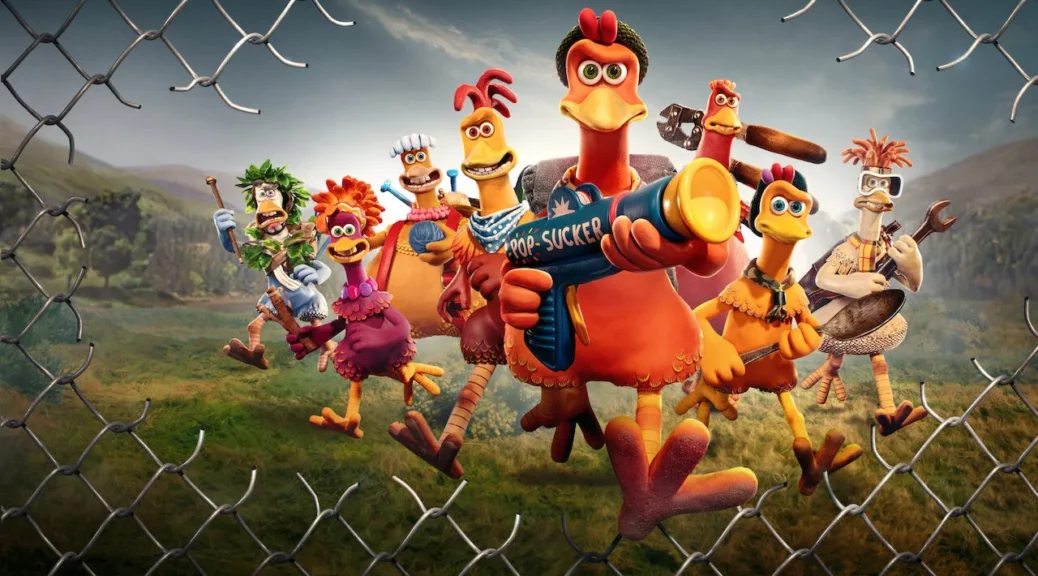
Nobody Here but Us Chickens
Chicken Run: Dawn of the Nugget
by Hope Madden
It has been 23 years since Aardman animation briefly abandoned its cheese-loving besties Wallace & Gromit in favor of a prison break caper. Chicken Run saw one plucky hen named Ginger – inspired by Rocky the Rooster’s tall tales of being able to fly – organize a leave-no-chicken-behind escape mission from Tweedy’s Farm.
Chick Run: Dawn of the Nugget finds Ginger (voiced this go-round by Thandiwe Newton) and Rocky (now Zachary Levi) some time later (though certainly not 23 years later) living in chicken paradise with their friends and their brand-new chick, Molly (Bella Ramsey). But motherhood has turned Ginger from a courageous leader to a, well, chicken. Protective and worried about little Molly, Ginger encourages the flock to hide when they see trucks hauling chickens to a high-tech factory that will turn them into nuggets.
Ginger’s attitude changes once Molly’s in jeopardy, and the whole flock rallies to save the strong-willed little chick and the day.
It may be a lot to expect viewers to recognize some of the callbacks to the original, in that the target audience for this film was born about 15 years after Chicken Run was released. Adults may notice some absent voices but are more likely to sense the absence of Nick Park.
Park co-wrote, directed, and animated most of the early Ardman masterpieces. Like the Muppets without Jim Henson, Aardman just isn’t Aardman without Park. Sam Fell directs a script by Karey Kirkpatrick, John O’Farrell (both of whom worked on the original) and Rachel Tunnard. The visuals are pretty and nearly as engaging as you expect from Ardman, but everything – including the story, dialog and gags – feels a bit standard, a bit bland.
Newton and Levi offer relatively dull performances. On the other hand, Ramsey’s a delight and the vocal ensemble – Imelda Staunton, David Gradley, Romesh Ranganathan, Daniel Mays, Jane Horrocks, Josie Sedgwick-Davies and Miranda Richardson – elevate and energize the otherwise vanilla script.
There’s nothing terribly wrong about Chicken Run: Dawn of the Nugget. But when your animation studio sets the bar so high, “nothing terribly wrong” is quite a disappointment.

