Tag Archives: Madd at the Movies

Making the Monster

A Nightmare Wakes

by Hope Madden

It’s hard not to be fascinated by Mary Wollstonecraft Shelley, who, at 18, wrote arguably the most iconic piece of Gothic horror or science fiction—or both in one—ever to be penned.

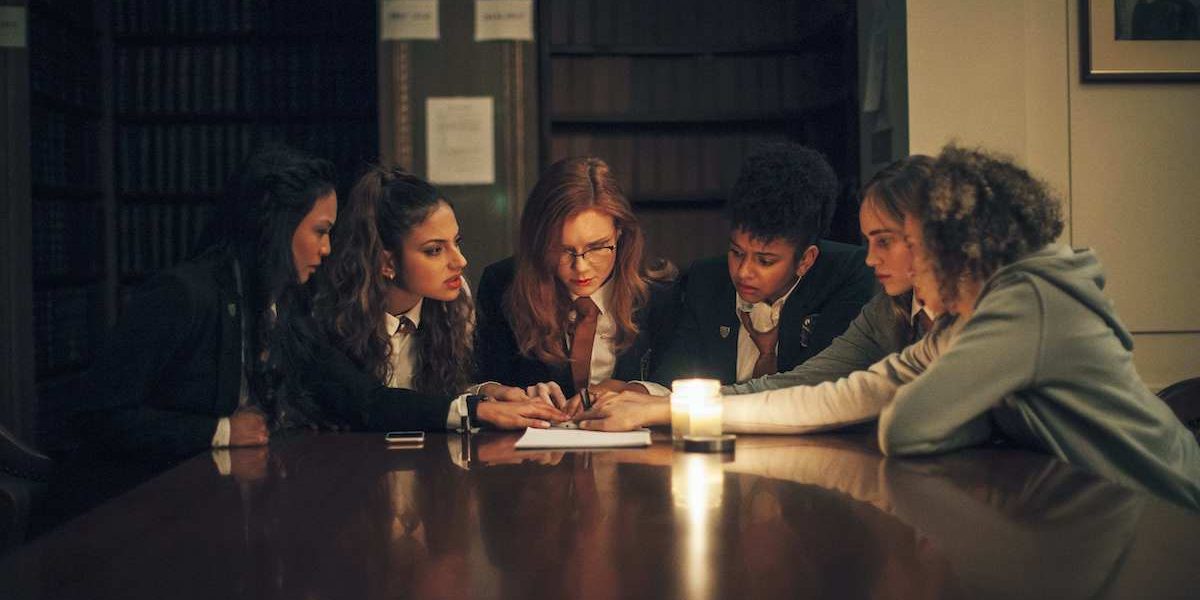
Writer/director Nora Unkel takes us back to that rainy summer night when young Mary, her lover Percy Shelley (Guillian Yao Gioiello) and his friend Lord Byron (Philippe Bowgen, over the top) participated in a challenge to write a ghost story.

We all remember what Mary came up with, right?

Alix Wilton Regan plays the young scribe. It’s an adequate performance in a fairly lifeless film that suggests writing and madness go hand in hand but plays it safe when it comes to what really haunts Mary.

As Mary Shelley suffers through indignities at the hands of a lover she believed to be a better man than he is, she escapes through writing. Aside from one particularly difficult scene, though, Percy’s behavior is largely sanitized or quarantined to offscreen antics we can only guess at.

Wilton Regan offers a needy heroine more likely to lash out at her sister (who may or may not deserve it, Unkel never really clarifies) than to stand up for herself. The performance might have delivered an intriguing central figure—unlikeable and almost impossible to root for.

It seems like a conscious creative decision between Unkel and Wilton Regan, given some of Mary’s behaviors. Creating an unlikeable female to anchor a film is an endlessly intriguing, brave and chancy decision, but the film you hang around her has to turn her performance into something worthy of the attention. Unkel can’t manage it.

Still, Mary descends into a kind of madness and soon enough, her creation takes on a life of its own.

Unkel is not the first filmmaker to conflate the writer’s life with the writer’s product. Just a few years back, Haiffa Al-Mansour’s biopic Mary Shelley convincingly drew Frankenstein as a near autobiography. That film didn’t quite deliver on its promise, either.

In Al-Mansour’s case, hero worship led to a superficial character (played soundly by Elle Fanning) with few faults and a lot of frowning. Unkel’s version is close to the opposite, but both filmmakers set out to depict what it was Mary Shelley was really trying to say when she wrote Frankenstein.

It’s a laudable goal. The problem may just be that Mary Shelley said it so much better.

Red Pill or Blue?

A Glitch in the Matrix

by Hope Madden

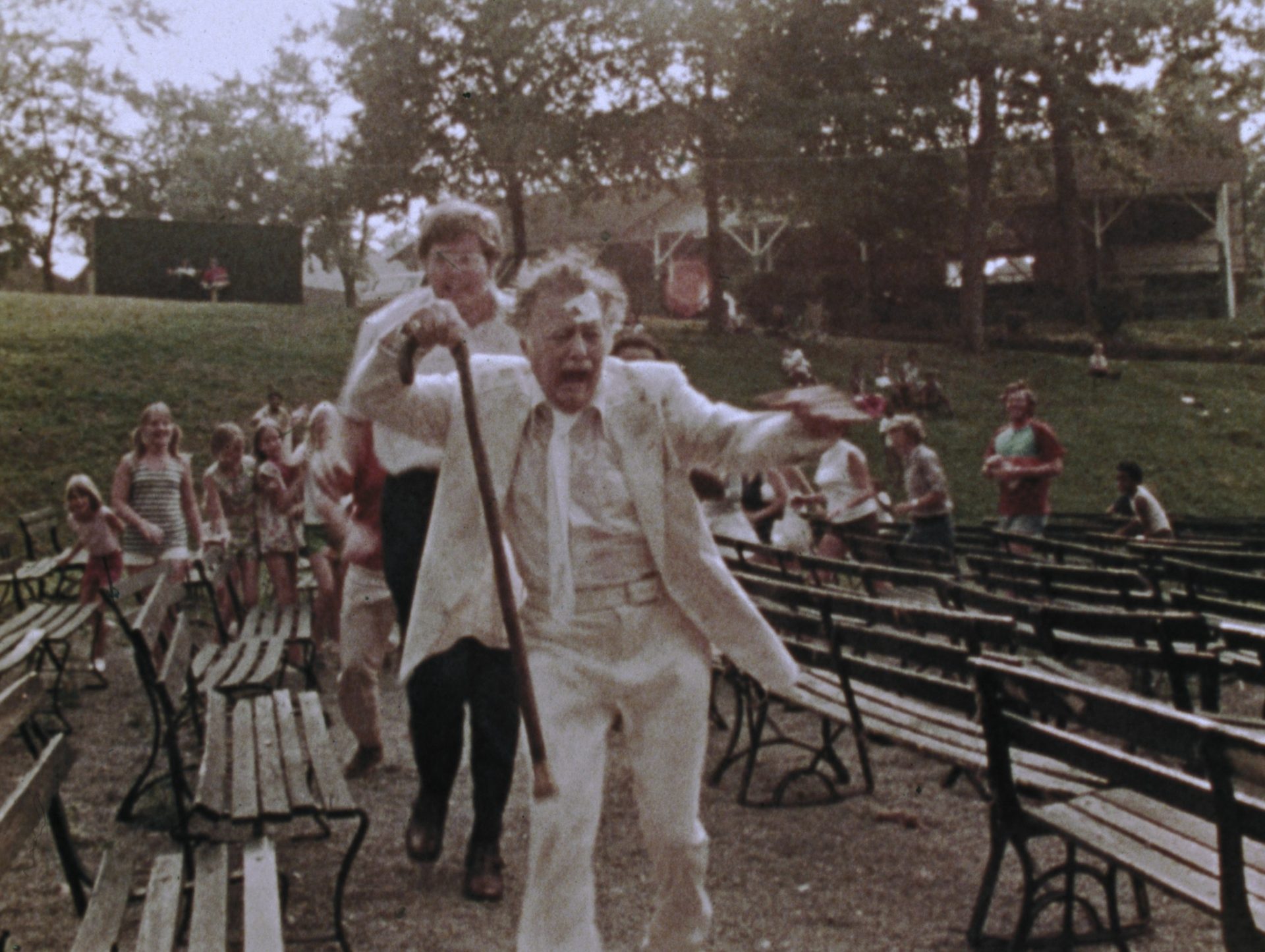
Nobody makes documentaries quite like Rodney Ascher.

You can see the 2010 short that first got him the attention of the Sundance Film Festival, S from Hell, in its entirety on YouTube right now. I think you should. It gives you just a taste of the mixture of absurd, earnest, terrifying and funny that inform his nonfiction recipes.

His 2012 documentary feature debut, Room 237, gave us a glimpse of his own fascination with personal obsessions. Ascher’s interest in the opinions and voices of his subjects clearly allows them to feel the safety necessary to share deeply held and seemingly ludicrous ideas. It also gives the film a sense of exploration rather than judgment. You are truly invited to wonder what if?

His most potent and terrifying invitation, The Nightmare, is so sincere in its sleuthing it may convince you that the film itself has infected you with a debilitating condition. So it’s no surprise that any new effort from Ascher draws awed anticipation from weirdos and cinephiles alike (not that there’s a big difference between the two).

Plus a ton of utterly fascinating footage of Philip K. Dick speaking.

A Glitch in the Matrix, premiering earlier this week at Sundance and opening digitally (appropriately enough) this weekend, explores Simulation Theory. You know, that zany notion that we’re not real, we’re all living in a simulating played by beings of a higher intelligence.

Nutty, right?   

Once again, Ascher’s meticulously built doc feels simultaneously playful and dark—two adjectives that suit the topic brilliantly. We’re reminded of Descartes attempts to prove that he exists, and before that, of Plato’s musings that we may be simply witnessing some form of life facsimile and not participating in reality at all.

So, it’s not a new idea. Perhaps the most intriguing notion the film brings up is that, when aquaducts were the height of technology, the world believed our bodies were at the mercy of our own humors. Once the telegraph became top tech, suddenly our bodies were run by electrical currents. And later, we “understood” that our brains were like computers.

It’s no surprise, then that in a virtual world, we lean toward the notion that reality is its own form of virtual reality. But Ascher digs much deeper, drawing images of a culture and personality type compelled by these ideas, and the hard potential consequences of a Matrix in the hands of someone less noble than Neo.

A Glitch in the Matrix becomes Ascher’s most complicated and poignant film.

Moon in Her Eye

The Reckoning

by Hope Madden

It’s been nearly 20 years since Neil Marshall first caught our attention with his remarkable military/lycanthropic standoff, Dog Soldiers. Just three years later, the writer/director offered his genre masterpiece, The Descent, and suddenly anticipation was high for a filmmaker who knew how to scare us.

A couple of disappointments later and the Englishman began to rebuild his reputation doing one-off TV episodes and horror shorts until possibly sinking his career forever in 2019 with the Big Box Office Bomb that was Hellboy.

The Reckoning won’t help things.

Marshall’s latest, co-written with Edward Evers-Swindell (Dark Signal) and star Charlotte Kirk, takes us back to the Dark Ages. The black plague is wiping out the English countryside, but witch hunters are a close second in terms of death toll.

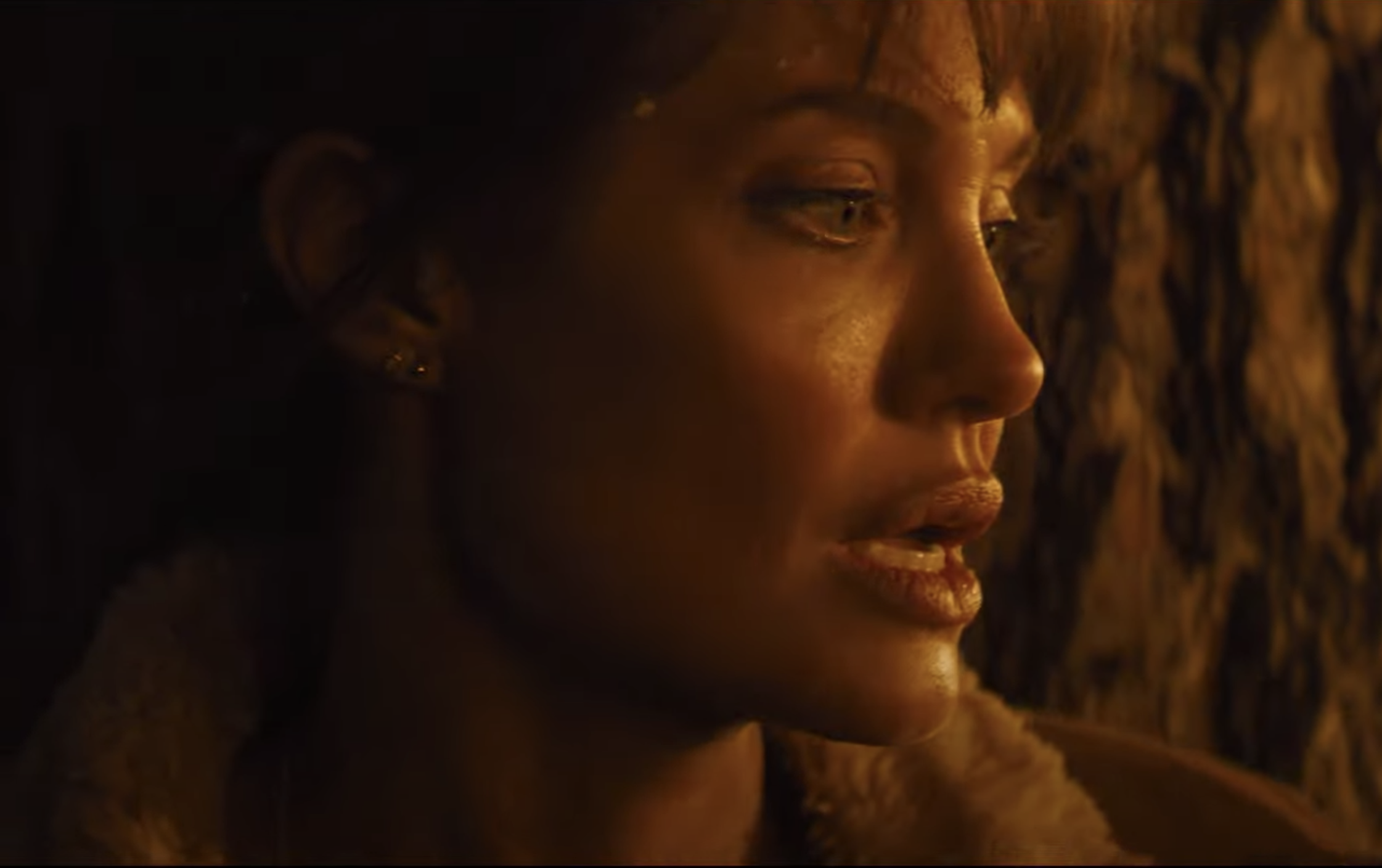
Striking images are everywhere in this film—a home burning, a horse rearing, misty moors and the like. But the first sight that will really make you scratch your head is that of Grace (Kirk), humble-but-loving wife in full, never-to-be-flawed makeup. It’s so jarring given the plague-ridden scenes surrounding her that you cannot help but notice it.

And for the next hour 50 (at least 30 minutes longer than necessary), Kirk poses. She stands firm. She yearns. She dotes. She hesitates. She resolves. Yes, I believe that runs the full gamut of Kirk’s poses.

It doesn’t help matters that The Reckoning brings so little new to the historical witch torture genre. Grace’s ordeals, once her lascivious landlord brings her up on charges of witchcraft for spurning him, lead to increasingly gratuitous and sexualized torture.

And still, that nude lip liner never smudges.

Around Kirk’s showy performance is a wide variety of talent. Sean Pertwee and Steven Waddington offer fine, villainous turns, for instance.

The writing is not a real strength, as most of the plotting and dialog serve only to create new opportunities to pose. It’s hard to call The Reckoning a wasted opportunity because, aside from some solid framing and cinematography, there’s nothing here to even exploit. It’s a superficial ripoff of a worn out genre, built entirely around a laughable performance.  

A Little Familiar

The Little Things

by Hope Madden

When you see a film whose plot synopsis exactly mirrors hundreds of other movies, it is the little things you have to look for to set it apart.

Writer/director John Lee Hancock’s The Little Things introduces plenty of those small details: a massive cross high in the Hollywood hills, a gun casing, a barrette, a radio station, a dog. Like the 1990s setting, though, they mostly amount to little more than understated flourish.

Hancock (who wrote and directed The Blind Side, but I will try not to hold that against him) introduces two cops. One, Deke (Denzel Washington, always a pleasure), is a Kern County sheriff’s deputy with bad blood back in LA. The other, Baxter (Rami Malek), is a climbing homicide detective hot shot in the big town.

When Deke is sent to the city to retrieve some evidence for a county case, Baxter inexplicably pulls him into a serial killer investigation, and there you have it: haunted veteran cop, ambitious newcomer, cold blooded killer (who may or may not be Jared Leto).

Again, that barebones description could be about 300 movies and TV series, including Netflix’s current true crime mini The Night Stalker (who is mentioned once during this film). How to elevate it?

Well, four Oscars among your three leads is a start. Perhaps that’s why this police procedural turns character study so quickly.

Washington’s worn out crime fighter offers a low key emotional center, which is a needed respite from the odd Baxter. Malek’s characterization of the by-the-books half of this duo is curiously manic, and Hancock spends frustratingly little time digging into Baxter’s motivation. Still, Malek and Washington offer quick chemistry that gives their scenes some depth.

Leto delivers a characteristically tic-heavy performance—perhaps also a tad overdone. Both he and Malek help generate a little energy with their accumulated weirdness, but it’s not enough to overcome the film’s general lack of momentum or purpose.

It doesn’t help that the color, period and low boil bring to mind two wildly superior Fincher efforts—Seven and, even more clearly, Zodiac. And however competently made (and it is) or impressively cast (obviously), The Little Things just can’t distinguish itself from the pack.

Queen of Mean

The Queen of Black Magic

by Hope Madden

Filmmaker Kimo Stamboel resurrects 70s exploitation horror with The Queen of Black Magic. Not a remake or really a sequel or reboot of the Indonesian cult classic, Stamboel’s film is more inspired by its namesake.

Fun throwbacks to Liliek Sudjio’s original over the end credits do more to remind you how comparably tame this one is.

Not that it is without merit. Or gore.

Hanif (Ario Bayu) returns to the orphanage where he grew up. The man who raised him is dying, and now Hanif and his two childhood friends reunite, families in tow, having come home to pay their respects.

But bad things haunt the old orphanage.

Of course they do! What are you, new?!

Stamboel and writer Joko Anwar can’t come up with anything particularly new when deciding what, exactly, is the problem with this orphanage. But they populate their scenes of carnage with actors who generate some empathy, and put those actors into scenes that are pretty compelling. Especially if you have a thing about crawly creatures. Or a sensitive gag reflex.

Anwar is a master of conjuring nightmarish environments, complete with nightmare logic. His 2017 remake Satan’s Slave and his 2019 original Impetigore throw narrative logic aside in favor of a denseness of dread punctuated with unseemly carnage.

The Queen of Black Magic makes more narrative sense, but somehow that seems to flatten it out a little. It feels less magically horrific and unsettling as the films Anwar directs. But strong, dimensional performances elevate every scene.

And both filmmakers know gore. They know what sounds make you wince, what sights make you look away. Between that, the performances, and a tight enough screenplay to keep your interest, they’ve pieced together a tough little horror flick worth a genre fan’s time.  

Burning Bright

The White Tiger

by Hope Madden

Rarely do we root for the social climber. Certainly not the social climber who intentionally harms others of his station, unabashedly sucks up to his masters, and disregards the family he left in poverty. But Ramin Bahrani’s sly thriller The White Tiger does a lot of things you might not expect.

His own adaptation of Aravind Agida’s prized novel, the film shadows a cunning young Indian man as he fights to rise from the abject poverty of his caste.

A deeply impressive Adarsh Gourav is Balram, entrepreneur. Bahrani opens the film as a mustachioed, suave-looking Bahrani tells us his “glorious tale” of overcoming poverty and becoming his own master. And as much as that story takes some unexpected turns, it’s the tone Bahrani develops that is especially audacious.

The White Tiger offers a blistering class consciousness that makes the filmmaker’s 2014 film 99 Homes feel positively cozy with the effects of capitalism.

Bahrani eviscerates India’s caste system along with a cinematic history of romanticizing the adoration and martyrdom of the Indian servant. He takes a not-so-subtle jab as well at dreamy redemption tales like Slumdog Millionaire.

Balram worms his way into the service of his master’s youngest son Ashok (Rajkummar Rao) and his wife Pinky (Priyanka Chopra), both back after years in America. Rao and Chopra represent a different and altogether more insidious look at class warfare—insidious because of its self-righteous and superficial beliefs in equality. Their performances are stellar and altogether slap-worthy.

Balram’s social climbing gets him only so far, and a sudden and violent shift in perspective leaves him fully aware of his own vulnerability.

Bahrani’s masterful direction makes the most of background to establish and reestablish Balram’s position and his thinking. And as utterly contemptuous as this film is concerning the wealthy and powerful, director and lead make you feel the depth and history involved in a servant’s culture of devotion.

Philadelphia Freedom

Brothers by Blood

by Hope Madden

It can be tough to find a fresh way to tell a mob story. Brothers by Blood doesn’t bother.

Director Jeremie Guez’s film, based on his own adaptation of Peter Dexter’s novel Brotherly Love, offers an intimate look at masculinity, loyalty, faith and redemption through the eyes of two men who are as close as brothers. They’re part of the criminal underground, and one (the brooding, quiet, good one) is worried that the other (the loose cannon) may have gone too far.

Like Mean Streets. Like The Drop. Eastern Promises, Casino, Legend.

Like a lot of movies.

Luckily, Guez has a strong cast with the potential of finding something uniquely human in these characters.

Matthias Schoenaerts is the quietly observant Peter, a reasonable man who isn’t proud of what he does but he keeps his head down, his mouth shut, and does the work. Michael (Joel Kinnaman), on the other hand, likes attention. He likes power and respect, and he’s quite sure he isn’t getting enough of either.

Kinnaman brings a weaselly quality to Michael that suits him. His best scenes showcase a level of insincere congeniality that really is sometimes chilling. Meanwhile Schoenaerts—a truly talented actor able to disappear into characters—is hamstrung by a role that requires little more than disappointed headshakes, askew glances and sighs.

The surrounding ensemble offers opportunities as well. Paul Schneider (nice to see you!) carves out a little authenticity as Jimmy, a restauranteur in over his head. Maika Monroe plays Jimmy’s kid sister Grace. They all grew up together—Jimmy, Michael, Peter and Grace—and now Grace has come back home.

Monroe, by the way, is fully twenty years younger than her co-stars, which makes the prospect of a love scene the single creepiest aspect of this film.

Talent be damned, Guez can’t find an original thought to explore. Everything about Brothers by Blood feels absolutely garden variety, although competently made. Except for the obligatory flashbacks, which are wedged in so poorly you almost overlook the fairly decent acting going on in them.

Mean Streets is $2.99 on Prime right now, by the way.

Fright Club: Best Cosmic Horror

Author Hailey Piper joins the club this week to tear through about 25 different cosmic horror movies, eventually landing on some fuzzy math favorites. Join us, won’t you?

6. Hellraiser

“The box…you opened it. We came.”

Man, those cenobites were scary cool, weren’t they?

Hellraiser, Clive Barker’s feature directing debut, worked not only as a grisly splatterfest suited to the Eighties horror landscape. It’s easy to see the film as an occult or supernatural horror, but it’s just as likely a cosmic tale of a dimension you could open without even trying, another reality on the other side of an afternoon’s puzzle past time.

5. Spiral (Uzumaki) (2000)

Higuchinsky’s mind bending 2000 Japanese horror went underappreciated upon release – likely because of the interest in ghosts and digital horror during that period. That’s too bad, because his adaptation of the not-yet-released Manga Uzumaki is a delight.

It starts with a snail shell. It ends with a town in chaos. If you missed it, you should remedy that now.

4. In the Mouth of Madness

Sutter Cane may be awfully close to Stephen King, but John Carpenter’s cosmic horror is even more preoccupied by Lovecraft. The great Sam Neill leads a fun cast in a tale of madness as created by the written world.

What if those horror novels you read became reality? What if that sketchy writer with the maybe-too-vivid imagination was not just got to his own page, but god for real? This movie tackles that ripe premise while ladling love for both of the horror novelists who made New England the creepiest section of America.

3. The Endless

There is something very clever about the way Justin Benson and Aaron Moorehead’s movies sneak up on you. Always creepy, still they defy genre expectations even as they play with them.

Camp Arcadia offers the rustic backdrop for their latest, The Endless. A clever bit of SciFi misdirection, the film follows two brothers as they return to the cult they’d escaped a decade earlier.

It is this story and the pair’s storytelling skill that continues to impress. Their looping timelines provide fertile ground for clever turns that fans of the filmmakers will find delightful, but the uninitiated will appreciate as well.

2. Annihilation

Alex Garland’s work as both a writer (28 Days Later…, Sunshine, Never Let Me Go) and a writer/director (Ex Machina) has shown a visionary talent for molding the other-worldly and the familiar. Annihilation unveils Garland at his most existential, becoming an utterly absorbing sci-fi thriller where each answer begs more questions.

Taking root as a strange mystery, it offers satisfying surprises amid an ambitious narrative flow full of intermittent tension, scares, and blood—and a constant sense of wonder.

Just his second feature as a director, Annihilation proves Ex Machina was no fluke. Garland is pondering similar themes—creation, self-destruction, extinction—on an even deeper level, streamlining the source material into an Earthbound cousin to 2001.

1. The Mist

David Drayton (Thomas Jane) and his young son head to town for some groceries. Meanwhile, a tear in the space/time continuum opens a doorway to alien monsters. So he, his boy, and a dozen or so other shoppers are all trapped inside this glass-fronted store just waiting for rescue or death.

Marcia Gay Harden is characteristically brilliant as the religious zealot who turns survival inside the store into something less likely than survival out with the monsters, but the whole cast offers surprisingly restrained but emotional turns.

The FX look amazing, too, but it’s the provocative ending that guarantees this one will sear itself into your memory.

Screening Room: One Night in Miami, Locked Down, Marksman, Rock Camp, MLK/FBI & More

Bad Boys for Life

Promising Young Woman

by Hope Madden

Emerald Fennell keeps you guessing.

In a riotous and incredibly assured feature debut as writer and director, she twists both knife and expectations in a rape-revenge riff that’s relevant, smart and surprisingly hilarious.

If you like your humor dark.

Carey Mulligan is flawless—when is she not?—as Cassandra. By day the one-time med student ignores customers from behind a coffee house counter. By night, she pretends to be obliterated in local clubs and dive bars.

Why would she do that? Well honestly, it’s because Cassandra’s life has lost its purpose and this is to a great degree the drug that numbs her. These opportunities to puncture the moral delusions of self-proclaimed “nice guys” who take her home provide catharsis. It’s like her own version of purgatory, as she forever tries to make amends for that one night back in med school.

And these moments are priceless as, one by one, Fennell exposes the hideous reality of gender norms and how little it takes for a man to be considered a good dude.

Mulligan is marvelous, giving Cassie the courage that comes from an utter disinterest in the opinions or well-being of others. And then a good guy from med school (Bo Burnham) stops in for coffee (in one of Mulligan’s finest, funniest scenes) and the stakes get higher.

Maybe she has a shot at turning the tables on those she considers responsible for this pain. Or maybe she’s found her one chance to put this pain behind her.

It’s a tightly wound script populated by spot on performances. Fennell has a gift for casting small roles with actors who can find the absurd humor and realistic horror of every situation: Jennifer Coolidge, Clancy Brown, Adam Brody, Laverne Cox, Alison Brie, Christopher Mintz-Plasse. But the cherry on this sundae is Burnham, who is quietly magnificent.

A pessimism runs through Fennell’s film that’s hard to ignore and even harder to criticize. But the film is true to the character of Cassie—a woman who’s profoundly dark and unforgiving but not wrong.

Fennell’s film is not a nuanced drama concerning rape culture. It’s not telling us anything we don’t honestly know already. It’s not a scalpel to the brain, it’s a sledge hammer to the testicles.

And why not?