Avenger Natasha Romanoff had to wait a while to get the green light on her own standalone origin story, and then even longer for the big screens to carry it. Now Black Widow is finally here, and Natasha’s not even the most interesting character in her own show.
And the film is better for it.
Director Cate Shortland and writer Eric Pearson surround Natasha with uniquely compelling personalities that become important parts of a whole, while surrounding star Scarlett Johansson with a supporting ensemble skilled enough to make this one of the MCU’s most character-driven successes.
Oh, there’s action, too, but we start with a prologue set in 1995 Ohio, when Natasha’s family is trying to flee the country at a moment’s notice. Father Alexei (David Harbour), and mother Melina (Rachel Weiss) were prepared for this day, so they scoop up young Natasha (Ever Anderson) and sister Yelena (Violet McGraw) and put the escape plan into action.
An overlong, Watchmen-style montage mixing music and news headlines brings us up to 2006, when the family is long estranged. Natasha is on the run since the Avengers “divorce” (between Civil War and Infinity War), Yelena (Florence Pugh) is taking names in Norway, Alexei is in prison and Melina’s loyalties seem tied to some talented pigs. Meanwhile the villainous Dreykov (Ray Winstone – nice! His accent – not so much) has plans to build an army of mind-controlled “Black Widow” assassins.
That means females only, but while the reveal lands as a clear metaphor for sex trafficking, Shortland (Berlin Syndrome, the underseen gem Lore) and Pearson (Godzilla vs. Kong, Thor: Ragnarok) never belabor any well-taken points. Even better, they fill the entire adventure with enough organic, self-aware humor about posing, too tight supersuits and the need for pockets that very few of the 133 minutes seem laborious at all.
The core foursome is uniformly terrific, as you would expect from actors of this caliber. Performances blossom and surprise, their chemistry buoying the familial longing required of every superhero backstory while anchoring action in characters you can care about.
Pugh—sympathetic, comedic and badass—is the standout, but Johansson shines, especially in a climactic bout with Winstone that lands satisfying jabs about weak men.
Shortland never forgets the point of a superhero film, though. The breathless action in Black Widow impresses as much as it entertains, whether hand-to-hand or aerial.
And it is a Marvel film, so be sure to stick around post-credits for an intriguing stinger and a welcome addition to the universe.
Back in 2014, Irish filmmaker Ivan Kavanagh wondered what to do about a dad who may be his son’s only salvation, or may be his one true danger. Canal had a lot going for it—it looked creepy, performances were solid, and it wasn’t afraid to bang up its cast.
It just couldn’t quite make the leap from good to great.
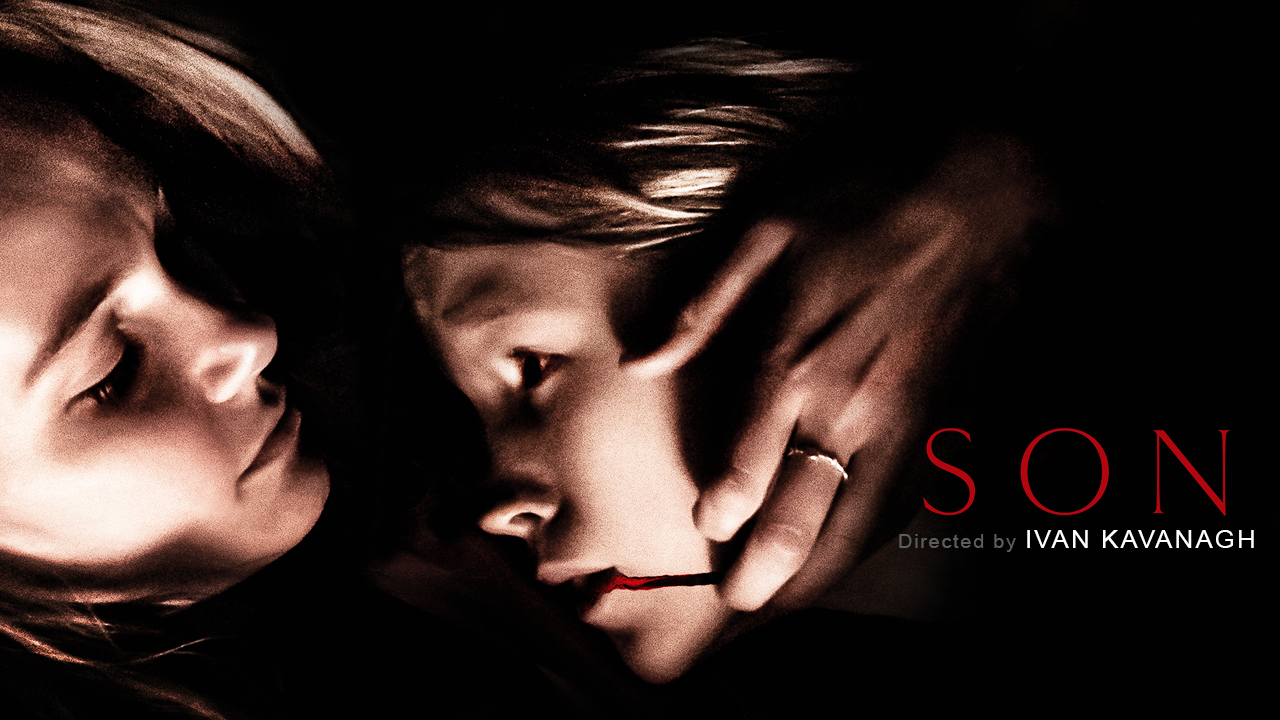
Same goes for the filmmaker’s latest, Son.
We open on a filthy, barefoot, rain-soaked young pregnant woman (Andi Matichak, Halloween) hoping to warm up with a coffee in a roadside diner. Two men walk in, she exits in a hurry.
Cut to eight years later. Same woman, clean and wholesome
now, buckles in precocious little David (Luke David Blumm) to drop him off at
school. They’re adorable. They’re happy, hard-working, loving, and about to
face some ugly stuff once Kavanagh establishes the paradise to be lost.
An awful lot of movies want to know how far a mother is
willing to go to protect the son who may or may not be the real villain. This has
been especially true in the last five years. (See The
Hole, The
Prodigy, Brahms:
The Boy 2, Z,
Brightburn
— it’s a long list.) Does anything set Son apart?
Kavanaugh roots the story in hysteria and conspiracy, sketchy memories of a cult versus police reports of sex trafficking. All of it feels mildly of-the-moment, but the real purpose is to throw skepticism toward the seemingly lucid mother and her claims.
Which is another common horror trope (is she crazy or is she right?), especially in the subgenre where a mother is trying to figure something out that may or may not be supernatural.
So, no, Kavanaugh does not bring much that’s new to the table.
Son does boast solid performances, and the filmmaker once again flexes his strong instincts for unsettling locations and atmospheres. The writing, pacing, and imagery all work together as they should to generate anxiety and dread. Son gets gory now and again, too.
It just doesn’t do anything you don’t expect it to do.
The pandemic – as it did with everything else – played havoc with our latest half-year list. Because Oscar understandably extended last year’s window of eligibility, films that would normally have been included on the list below (such as Judas and the Black Messiah) technically come down on the 2020 ledger.
Do we have to play by Oscar rules? No. But mainly to avoid confusion when it’s time for the end-of-the-year list come December, we will.
So in alphabetical order, here are our picks for the best films of March thru June, 2021:
A Quiet Place Part II
AQPII is lean, moves at a quick clip, thrills with impressive outdoor carnage sequences and yet commands the original film’s same level of tension in the nerve- janglingly quiet moments. Writer/director John Krasinski had a tough task trying to follow his 2018 blockbuster, one made even tougher now having to prove the sequel was worth saving for a theaters-only release.
On both counts, we’d say he nailed it.
Final Account
The final film for late documentarian Luke Holland, this oral history of Nazi Germany challenges rationalizations. It doesn’t accuse, doesn’t accost, but it also doesn’t let anyone off the hook. What is the difference between being complicit and being a perpetrator? It’s a question that haunts the film and its subjects. It becomes clear that it’s a question that haunts a nation.
Holler
If you seek an antidote to Hillbilly Elegy, writer/director Nicole Riegel’s feature debut has what you’re looking for. Driven by Jessica Barden’s blisteringly confident lead performance, Holler sugarcoats nothing about American poverty, patronizes no one, and does not need a Mamaw to explain the facts of life.
In the Heights
Director Jon M. Chu takes Lin-Manuel Miranda’s Tony Award-winning In the Heights from stage to screen with the magic intact, for a block party worthy of celebrating – in a theater, with a crowd.
Are we really “back to normal?” Can the American dream still be alive?
For 143 minutes, it sure feels like it.
Nobody
The one and only thing that separates Nobody from dozens and dozens of expertly crafted, wildly interchangeable “underestimated badass” films is the utter brilliance of its casting.
And by that, I mean exclusively the perfection of Bob Odenkirk in this role. His placement at the center of the film not only sells the “average guy” masquerade better than Liam Neeson ever could, but it makes his inner struggle and his displays of violence actually stand out.
Regardless of the fact that you’ve seen this exact movie a dozen times, you just don’t expect it to be this good.
Riders of Justice
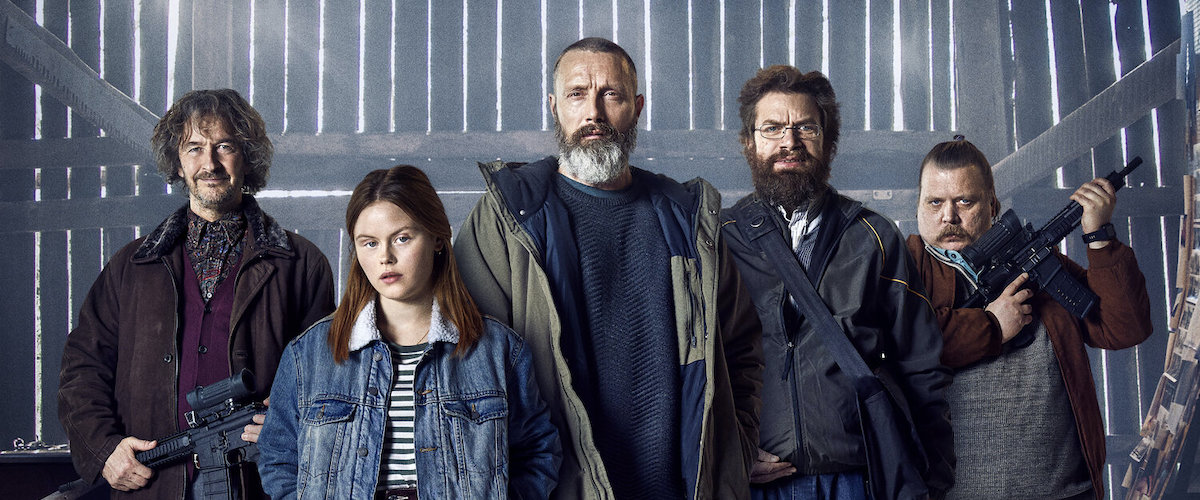
Men will single-handedly gun down an entire biker gang rather than go to therapy. That’s the premise from prolific writer-director Anders Thomas Jensen, where he reunites with Mads Mikkelsen in the dark comic revenge fantasy Riders of Justice.
But Jensen isn’t nearly as interested in the physical mayhem as the emotional wreckage his oddball characters are all coping with. Riders of Justice treats its characters with such forgiving empathy that it’s easy to forget that the group is also almost certainly responsible for the most murders in Denmark since the Vikings.
Rita Moreno: Just a Girl Who Decided To Go For it
Beyond the treasure trove of archival footage, home movies and interview praises, director Mariem Pérez Riera finds the most resonance in the personal journey told by Rita Moreno herself.
Looking back on the obstacles she faced and the successes and failures of her life and career, Moreno displays a hard-won self-worth and an honest self-awareness that she continues to probe.
This is not just an entertaining Hollywood story, it’s an inspiring American story and a hopeful human story. It’s just a damn good story, from someone worthy of celebrating while she’s still here.
Saint Maud
Maud (an astonishing Morfydd Clark) has some undefined blood and shame in her recent past. But she survived it, and she knows God saved her for a reason. She’s still working out what that reason is when she meets Amanda (Jennifer Ehle), a former choreographer now crumbling beneath lymphoma. Maud cannot save Amanda’s body, but because of just the right signs from Amanda, she is determined to save her soul.
As a horror film, Saint Maud is a slow burn. Writer/director Rose Glass and crew repay you for your patience, though, with a smart film that believes in its audience. Her film treads the earth between mental illness and religious fervor, but its sights are on the horror of the broken-hearted and lonesome.
Shiva Baby
Clearly, much of writer/director Emma Seligman’s sharp dialog comes from personal experience, and if it’s one you share this is a film that will feel like part of the family. But you didn’t have to be Greek to get caught up in that Big Fat Wedding, and you don’t have to be Jewish to see the joy in Shiva Baby.
Seligman flashes an insight that disarms you with sex and humor, keeping its hand at a subtle distance. But by the time we’re leaving the buffet, a breakout filmmaker and star (the irresistible Rachel Sennot) have delivered a fresh, funny and intimate take on the indignities of finding yourself.
Slalom
The sports movie genre is littered with tales of the could-have-been athlete who regains what legitimacy he can by shepherding the next phenom. Slalom is more interested in the havoc that can wreak on the younger athlete.
Writer/director Charlène Favier’s take on the situation is even-handed. She never stoops to melodrama, never paints young skier Lyz (Noée Abita’s) as faultless in her relationship with trainer Fred (Jérémie Renier, great). Lyz’s complexities – particularly given Abita’s assured performance – only ensure that the film leaves more of a mark.
There Is No Evil
Presenting four short films together as separately compelling variations on a theme is impressive. Make those four shorts all from the same writer/director, telling distinct stories that raise the emotional stakes in distinct ways, and you have a stunning achievement.
You have Iranian filmmaker Mohammad Rasoulof delivering a political statement of immense weight and moral conviction. You have There Is No Evil.
Each chapter of the film presents a seemingly unique paradox, then quietly mounts the tension before revealing gripping plot turns that unite the strands in memorably devastating fashion.
With four masterful bits of storytelling and the exceptional ensemble cast in There Is No Evil, Rasoulof deftly explores the wages of those decisions, as well as the immoral center of a despotic regime that makes them necessary.
This Is Not a Burial, It’s a Resurrection
Incredibly beautiful and rich with color, light, and shadow, every scene in this film is a haunting painting. The cast, mixed with actors and non-actors alike, brings you to witness the erasure of a real place and real people, and you mourn with them.
Though the people of the film’s central town of Nazareth still live, something about them will be lost forever. They are some of the last of their kind as new roads, and new buildings, and new dams continue to creep into the quiet places of the world. Progress fills up little villages with the walking dead as ways of life are washed away.
Together Together
It takes a full two minutes to get a really good feeling about Together Together. Writer/director Nikole Beckwith delivers witty, engaging dialogue from the jump, defining characters and setting the stakes in a beautifully organic manner.
There’s love and family and funny stuff here, and though none of it is quite the kind we’re used to seeing, all of it is wonderfully real. Together Together is a delivery that somehow feels comfortable and unique, both overdue and right on time.
Now, I’m not suggesting any of the Purge films were
subtle. Creator James DeMonaco wielded a blunt political instrument from the
start.
Quick recap: In the near future, a far-right government, the
New Founding Fathers, establishes a single night of lawlessness to encourage
Americans to purge themselves of all their hate and anger. And, you know, take
their frustrations out on the homeless, the poor, and the otherwise generally
oppressed.
So, a pretty easy metaphor to figure out, although most installments contained an interesting idea here, some memorable imagery there. Gerard McMurray’s 2018 The First Purge was impressively topical and prescient, and genuinely angry. In it, the filmmakers essentially looked at Trump’s America and asked: How did we get here?
In a way, all of these films have led organically to The
Forever Purge, a film with a premonition of what would have happened if Trump’s
America had been allowed to – or would ever again – continue on its natural course.
It’s hard to blame filmmakers for losing optimism in the face of the national shame of January 6. In this installment, entitled, angry white people have decided that one night is not enough, so they organize online and just take over the country.
DaMonaco returns as writer, while Everardo Gout directs. Gout’s sensibilities lean heavily toward action. The Forever Purge is essentially an action thriller with a social conscience (and about as much subtlety as you’ve come to expect from the franchise).
There is no forgiveness in this installment, and maybe there shouldn’t be. But The Forever Purge loses the humanity of the better episodes in the series. At its worst, it’s a political outcry by way of a predictable horror film that’s pretty light on horror. At its best, it’s a poignant upending of this country’s fundamental, foundational racism.
Need one more reason to be thrilled that the Wexner Center
for the Arts is reopening to the public? A new collaboration between filmmakers
Jennifer Reeder and Nancy Andrews—the delightfully spacy I Like Tomorrow—plays
through July and August in The Box.
The 11-minute short showcases Andrews’s animation prowess,
as well as the versatility of performer Michole Briana White, who delivers three
roles in one.
White plays Captain Regina Lamb, a lone astronaut who’s been
in orbit a while. Maybe a really long while. And at the moment, she’s working
through some relationship issues. With herself. Specifically, she’s navigating
her commitments to her past self (White again, as Reggie) and her future self
(White as Rae).
The I Like Tomorrow aesthetic is MST3K meets Bowie,
and who wouldn’t be wild about that? White’s performance is lonesome, slyly insightful
and very funny. She makes excellent use of Reeder and Andrews’s nimble dialog, using
space exploration to mirror relationship communication, then focusing everything
inward.
Captain Lamb’s journey toward appreciating who she is today,
this moment, is as charming as it can be. White gives each of the three versions
of Lamb age-appropriate personalities and the interplay among the three is
priceless.
As layered and insightful as the film is, Andrews and Reeder
never abandon their playful attitude. In fact, the comic in this cosmic episode
only increases as Captain Lamb’s journey wears on.
Musical interludes and animation, set design and costumes
all work together to create a mood that’s simultaneously lonely, hopeful, and
weirdly funny.
You’ll find real horror in False Positive. There’s the plot, sure—a woman desperate to conceive, in the hands of a nefarious physician with a God complex—and all the body horror and helplessness that go along with it. But that’s not the scary part.
Indeed, co-writer/director John Lee levels a more comedic
tone to the by-the-numbers premise. Where he and co-writer/star Ilana Glazer
mine unnerving dread is in their observational honesty.
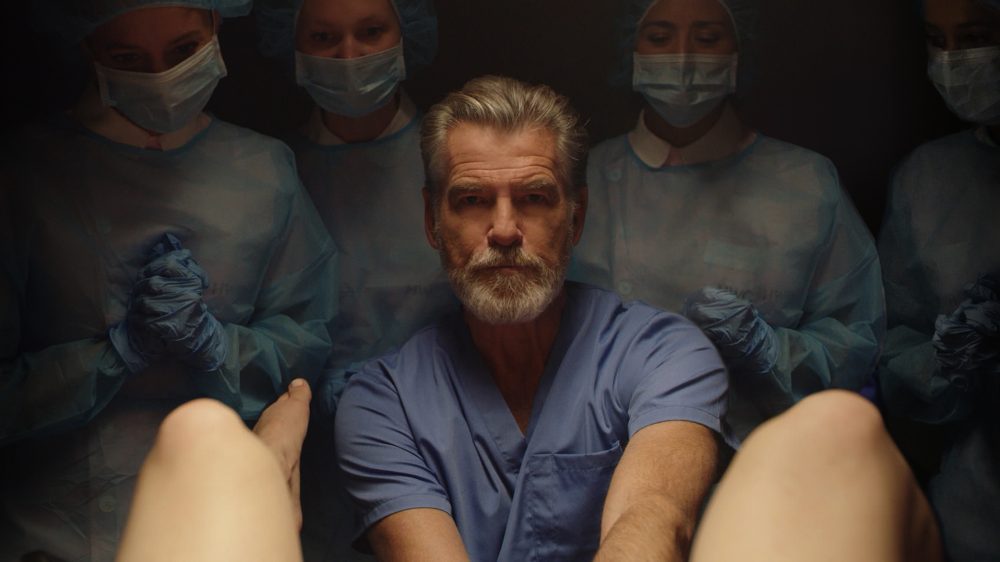
Glazer is Lucy, and she and her husband Adrian (Justin Theroux, slyly wonderful) have been trying to get pregnant for two years. As much as she wants to do this naturally, she finally caves in to Adrian’s suggestion that they visit his med school mentor, Dr. Hindle (Pierce Brosnan – perfection).
Lee’s intention is not to make you wonder whether something sinister is afoot. The Stepford-esque nursing staff and eerily meticulous clinic proclaim it. The sheer number and variety of phallic instruments to be inserted, and the volume of lubricant so very lovingly applied, plays like SNL by way of Cronenberg.
If you’ve ever seen Broad City, Glazer’s groundbreaking Comedy Central sit-com, you may not recognize the performer’s dramatic skills, but you will recognize the writer’s keen eye for everyday absurdities.
Here’s where False Positive’s horror kicks in. It’s the
authenticity, the banal realism of Lucy’s daily condescending, dismissive,
patronizing, smothering, gaslighting humiliations that really eat at you. The low-key
accuracy of it all—from the male colleagues who swear you are glowing as they
leave their lunch orders next to your laptop, to your nurse’s reassuring caresses
and terms of endearment, to your husband’s reminder whenever you’re feeling
down that we’ve been through a lot with this pregnancy.
Tensions escalate as the storyline itself dictates, although
the film is far more surefooted in its observational horror than it is in its
plot. Lucy’s pre-pregnancy character is ill-defined, which makes her descent less
satisfying. The climax is played for comedic value and the final act’s weirdness,
though welcome, holds no real meaning.
Worse of all is the under-developed character of a midwife played imposingly by Zainab Jah. Lee clearly hoped to use this character as a statement on the genre itself but the whole affair feels wrong-headed.
Those are some serious misgivings, I grant you, but there really is something subversive, honest, and horrifying worth witnessing in this movie.
Stern, driven Enid (Niamh Algar) takes her responsibilities
seriously. Unfortunately for her, they come at a high price. Enid is a film
censor in the most punishing time and place for such an endeavor: Thatcher’s
England. It’s 1985, an era when controversial films hoping to make their way to
screens big and small found themselves more butchered than their characters.
Co-writer/director Prano Bailey-Bond takes inspiration from this notion in her feature debut, Censor—an immersive era-specific horror. It is especially immersive for Enid.
She spends long hours deliberating on exactly where the line is between danger and acceptability: rewinding, examining frame by frame, if necessary, regardless of the nonchalance and casual derision of her co-workers. Enid is convinced it is her duty to protect people from these images.
As she herself drowns in repeated viewings of the most violent
and depraved material, you have to wonder whether she might be better off
protecting herself.
Bailey-Bond has other questions in mind, like why is it that
Enid is so preoccupied with this job, how might it feed her own darkness, and
what happens when her worlds blend together?
Censor is a descent into madness film—nothing new in the genre. And moments of Censor can’t help but call to mind fellow Brit Peter Stickland’s 2012 treasure Berberian Sound Studio. But Bailey-Bond and co-writer Anthony Fletcher evoke such a timestamp with this film, not just in the look and style, but with the social preoccupation.
As coincidences pile up – a definitive family decision, a horror movie-style murder spree, a film that hits too close to home — Enid seems to suspect that her real motive has been to censor her own thinking.
When she stops doing that, look out.
Algar’s prim and sympathetic, deliberate and brittle. It’s clear from the opening frame that Enid will break. But between Algar’s skill and Bailey-Bond’s cinematic vision, the journey toward that break is a wild ride.
It is incredibly rare to see a worthwhile film that deals
with American poverty. Nomadland certainly broke through, and recent
movies including Winter’s Bone, Frozen River and Little Woods
also made the case that resilience and poverty need not condescend or
patronize.
Hillbilly Elegy missed that memo.
Holler, the feature debut from filmmaker and Ohio
native Nicole Riegel, sugarcoats nothing, patronizes no one, and does not need
a Mamaw to explain the facts of life.
Instead, Ruth (a bristlingly confident Jessica Barden) figures things out on her own. A high school senior who spends most of her time collecting scrap metal with her brother – both just one step away from eviction – Ruth has very little time for contemplation, though.
Riegel’s Rust Belt winter offers a malevolent backdrop for
Ruth’s coming of age, and the illegal scrapping—the tearing down of the disused
industries that once kept Ruth’s family and town afloat—is eerily fitting.
Barden gives the film a grainy bleakness, Ruth’s red hat and her brother Blaze’s (Gus Halper) pickup the only bursts of color in the dreary Southern Ohio grey. Compelling and authentic, it all often feels mainly like a showcase for Barden’s talent.
That’s not to say that the film is in any way weak, simply
that Barden’s performance is that strong. Willful and bursting with anger, her
Ruth is a force—destructive, sure, but strong and powerfully determined.
Barden’s not alone. Her supporting ensemble delivers nuance and grit in equal measure, from Halper to Austin Amelio’s sketchy scrap metal entrepreneur to a remarkably humane turn from Becky Ann Baker. Riegel’s script, dreary though the vision can be, hints at forgiveness and hope in nearly every scene.
If you seek an antidote to Hillbilly Elegy, Riegel has what you’re looking for.
Random is good. Random is fun. It can be frustrating after a
while, but it certainly isn’t boring.
Writer/director Jack C. Newell takes us on a not-boring road
trip alongside Ted (David Sullivan) and his wife Laura’s (Marguerite Moreau)
ashes. He stole the ashes from Laura’s weird family who never did like him, but
they’d stolen the ashes from him in the first place so it probably wouldn’t
have become a police matter if Ted hadn’t stolen that car while he was at it.
The thing is, Ted keeps seeing—even talking with—Laura, and he
thinks she’s here to help him figure out what to do with her ashes.
So, that’s the gist: Ted does not know how to move on
without Laura and this road trip will move him toward some kind of closure. It
will also involve near-Lynchian dance numbers, shadow puppet displays, and no
real sense of direction.
The aimlessness suits the character—Ted is lost,
metaphorically and often literally. It works less well for the film. The final
moments of Monuments leave you with the sense that something has been accomplished.
Its meandering nature and basic structurelessness leave you wondering what.
Sullivan gives off a charming, goofy Nathan Fillion vibe—rarely a bad thing, and certainly the style of performance best suited to this laid-back, screw ball, existential comedy. Still, those are a lot of adjectives for one film, and they don’t necessarily fit together that well. Here’s where Newell gets himself in trouble.
There should be sadness here. Underneath all the zany moments and haphazard adventures, a rumble of grief should constantly threaten to break the surface. Without that genuine human soul, the humor doesn’t ring true and the random setups feel forced.
As solid as Sullivan is, when it does finally come time for Ted to mourn, to face his own desperate lonesome loss, the actor fails. Worse still, his insincerity feels like a joke itself, mocking what is ostensibly the entire core of Ted’s breakdown and the catalyst for his behavior.
If this irony led to some kind of absurdist “What’s really the point of it all?” theme, maybe it would have been worth it. Instead, it just feels random.