Tag Archives: independent film

Art for Art’s Sake

Pasolini

by Brandon Thomas

Abel Ferrera, the filmmaker behind Ms. 45, The Driller Killer, and Bad Lieutenant, was maybe too perfect of a choice to depict the final 24 hours in the life of Italian artist Pier Pasolini. While this love letter to Pasolini never quite succumbs to standard biopic syndrome, it also doesn’t fully rise above being anything more than hero worship.

After Pier Pasolini (Willem Dafoe) puts the finishing touches on his masterpiece, Salò, the provocative writer, critic, activist and filmmaker returns to Rome to visit with his family. During the course of this relatively normal day, Pasolini takes part in an interview, meets with fellow artists, and cruises the evening looking for a lover. While the day’s events seem mundane and boring for someone typically known as a notorious hellraiser, all of this leads to a tragic outcome on a beach outside of Ostia, Italy.

It’s evident early on that this movie is in awe of Pasolini. The film doesn’t depict Pasolini’s last day as much as it observes it. Ferrera treats the banal dealings of this 24-hour period with reverence. Pasolini’s life and work is church. The man himself is Jesus. 

Where the spirit of Pasolini is sincerely felt is when Ferrera brings the artist’s works to life. A segment from a novel he’s currently working on is realized with graphic depiction as Pasolini’s character, based on the author himself, has an intense sexual encounter with a young man. Another segment finds two men looking for the famed Feast of Fertility Festival where gay men and women come together for one night to procreate. Neither segment adds to Pasolini’s plot (or what exists of one), but they are so categorically Pasolini in tone, spirit and theme that the stillness of the movie is finally shaken alive.

While the lack of narrative momentum causes the film to stumble, Dafoe stuns as the titular character. He doesn’t play Pasolini as much as he channels the spirit of the late artist. Pasolini’s cool and equal indifference flows through Dafoe’s body language and speech like second nature. His Pasolini is a man equally at home with who he his, but also incredibly bored with the person he has become.

Ferrera’s biggest mistake with Pasolini is that he cares too much about the man himself. While Dafoe’s equal admiration leads to a strong anchoring performance, Ferrara’s unwillingness to push the narrative leaves the film largely lifeless and inert. 


Don’t Open Until Christmas

I Trapped the Devil

by Hope Madden

Jordan Peele is not the only one preoccupied with The Twilight Zone. First time filmmaker Josh Lobo obviously has a soft spot for one of their episodes.

Don’t look into which one, though. In fact, don’t even watch the trailer for Lobo’s indie horror I Trapped the Devil, because not knowing the outcome is half the fun.

Lobo takes us along on a Christmas visit with family. You know, those awkward gatherings where maybe your brother is a paranoid schizophrenic who keeps a man captive in his basement.

Or, maybe your brother’s right and that man is really Satan.

But let’s be honest. It’s probably the former.

As Steve (Scott Poythress) tries to convince brother Matt (AJ Bowen) and sister-in-law Karen (Susan Burke) that it’s really the latter, Lobo hovers over issues of family dysfunction, grief, and the evil in the world. He pulls none of those strings in a way that is particularly satisfying, but he is onto something.

The film’s narrative offers a nice subversion of horror’s standard “is she crazy or is there evil in the house” trope. Historically, the genre relies on some kind of common assumption about feminine hysteria to drive a tension that asks the audience to wonder whether we are witnessing a mental breakdown or whether the protagonist’s feminine intuition has led her to pick up on something malevolent.

I Trapped the Devil overturns those gender assumptions and grounds the tension in something more scientifically intriguing. Is Steve a violently disturbed man with a captive in his basement, or has he, indeed, trapped Satan?

We the audience are supposed to be weighing our options. How realistic is it that his family is kicking around the options? Not very.

Committed performances from the trio help develop a sympathetic mood. Still, Lobo struggles—as does his cast—to get reasonably from Point: There’s a Guy Locked in a Closet Downstairs to Point: No, Let’s Not Phone the Authorities Just Yet.

He also leaves too many unexplored ideas on the table: the maddening grief, the weird images on the staticky TV, how Steve got the guy down his basement in the first place.

A little ambiguity can lend to atmosphere. This much tends to feel more like lazy screenwriting.

There are flashes of real terror now and again, though, and the mystery of the man in the closet remains a tense one to the seriously creepy closing image. Lobo’s horror instincts are sound, and even though his knack for fleshing out details is lacking, his movie’s a pretty solid scare.

American Pastoral

Little Woods

by Hope Madden

If you already know the name Nia DaCosta, the likely reason may be that Jordan Peele pegged her to direct the Monkey Paws-produced remake of 1992’s horror gem Candyman that’s due next year.

What had she done to so impress the new American emperor of horror?

Little Woods.

DaCosta’s feature directorial debut, which she also wrote, is not a horror film. It’s an independent drama of the most unusual sort—the sort that situates itself unapologetically inside American poverty.

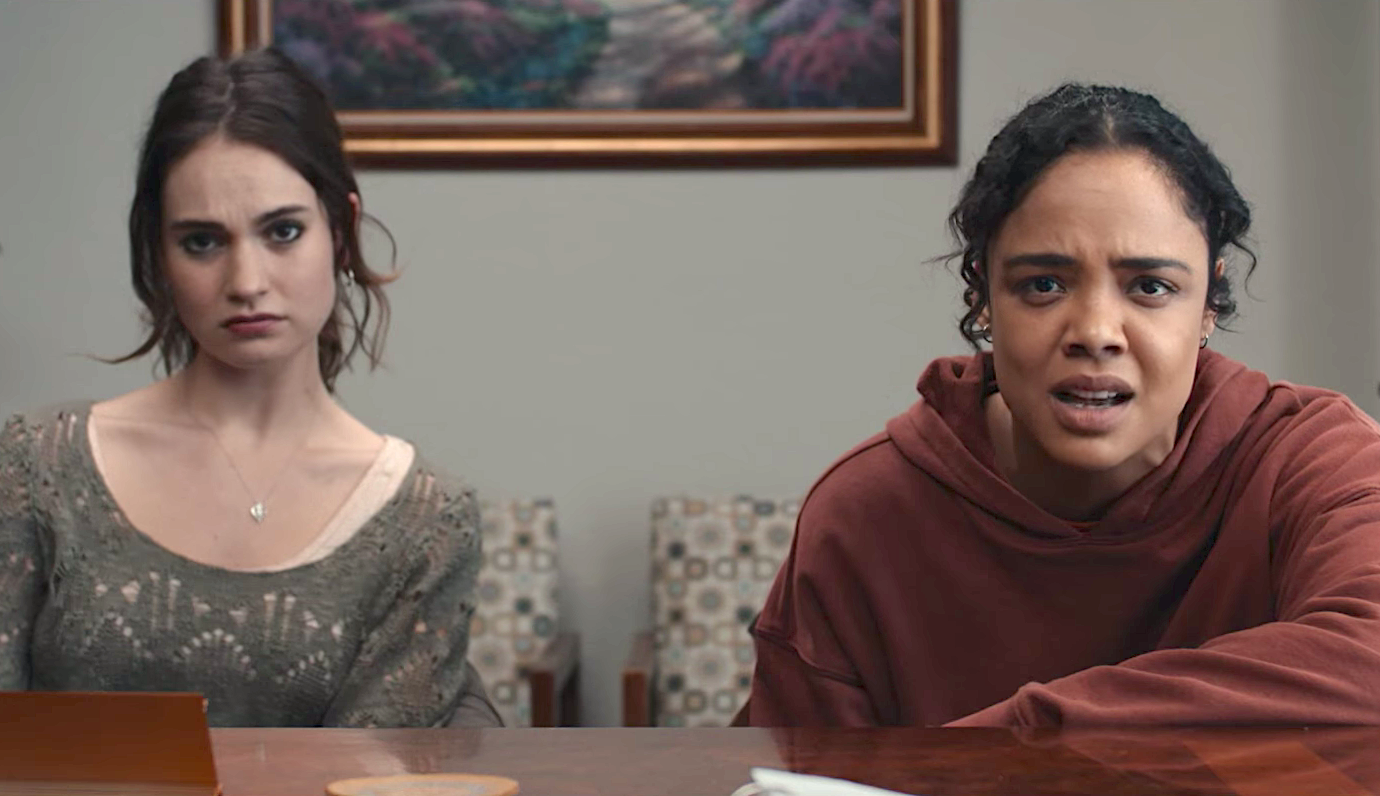
Tessa Thompson anchors the film as Oleander. She has 8 days left on her probation for running drugs across the Canadian border and she means to get the F out of her dead end town the first minute she can. Her sister Deb (Lily James) complicates things.

There is a predictability in the setup that DaCosta uses to betray your preconceived notions. While the traditionally structured narrative does its job to elevate tension, the characters within that tale veer wildly—or, authentically—from the expected.

This is less a film about the complicated pull of illegal activity and more a film about the obstacles the American poor face—many of them created by a healthcare system that serves anyone but our own ill and injured.

Films that honestly explore American poverty are scarce—The Florida Project, Frozen River, The Rider and very few others. Little Woods joins this list, all beautiful gut punch films that choose to present realistic tales with fully drawn characters rather than easy, noble tragedies.

The border crossing scene in Little Woods holds particular resonance, even more than it did back in 2008 when Courtney Hunt put Melissa Leo and her car on Frozen River‘s thin ice. Echoes of images from our own Southern border help to contextualize the nation’s narrative about saving society from the poor families and the criminals out to exploit our riches.

But politically savvy filmmaking is not the main reason to see Little Woods. See it because Tessa Thompson and Lily James are amazing, or because the story is stirring and unpredictable.

See it because it’s what American actually looks like.


Orchestral Maneuvers

Woman at War

by Rachel Willis

One of the best things about Woman at War is the hero, Halla (a superb Halldóra Geirharðsdóttir). Not often do we see a heroic middle-aged woman, but that’s exactly what we get in director Benedikt Erlingsson’s odd, charming, thrilling comedic fairy tale about a female warrior fighting against the devastating environmental effects of a local aluminum plant.

Like any superhero, by day Halla is a model citizen protecting her secret identity as the “Mountain Woman.” A choir director who rides her bicycle to work, she lives a seemingly routine life. But her inner turmoil compels her to fight the environmental destruction she sees happening in the name of greed.

A wrench is thrown into Halla’s life when she learns that her dreams of adopting a child are finally coming to fruition. A little girl in Ukraine needs a home, and Halla wants a chance at motherhood as much as she wants to fulfill her mission.

Emphasizing the film’s heroic theme, musicians play the score onscreen. In terms of stage theater, it’s reminiscent of a choir that typically opens a play by setting the scene. Then by popping up throughout the acts, they keep the audience apprised of things happening “off stage.” Erlingsson uses these musicians to similar, if not exact, effect, and it’s a unique way to demonstrate Halla’s internal conflict.

To underscore the motif of the importance of environmental preservation, we’re treated to many scenes of Iceland’s vast natural beauty. Halla uses the environment to her advantage, finding out of the way locations to sabotage power lines (skillfully using a bow and arrow), effectively cutting power to the plant. She hides from authorities in natural fissures in the ground, and earns her media-branded nickname by being of the earth that she seeks to save.

Interesting questions are raised in connection with Halla’s mission. When does activism become extremism? What actions will we accept as the effects of climate change become more and more drastic? What will we do to protect our home?

Because Woman at War is interested in these questions, and it’s time we make a serious attempt to answer them.


Dancing Queen

Gloria Bell

by Hope Madden

Six years ago, Chilean filmmaker Sebastian Lelio released a vibrant and unapologetic look at aging and living with his magnificent Gloria. He re-images that gem with Gloria Bell, his second English language film, placing the incomparable Julianne Moore at the center of a different kind of coming of age story.

Moore is Gloria, a single fiftysomething who’s starting to feel her mortality. The film itself is a character study of the type Lelio does best. His films nearly always focus unflinchingly on the struggles of a woman trying to live freely and authentically.

As with his Oscar-winning A Fantastic Woman, his underappreciated Disobedience, and the original Gloria, Lelio’s observational and unobtrusive direction trusts the lead to carry the weight of the film. Moore characteristically rises to the occasion.

In Moore’s hands Gloria is perhaps a tad more reserved, a little more tentative than the firebrand depicted by Paulina Garcia in the original, but she’s no less wonderful. As Gloria struggles between the freedom and the loneliness of independence, and as she comes to terms with her own mortality, Moore’s tenderness and vulnerability will melt you and her sudden bursts of ferocity will delight.

John Turturro offers impeccable support as Gloria’s love interest. The performance is slippery and unsettlingly believable. He’s joined by strong ensemble work from Michael Cera, Brad Garrett, Alanna Ubach and Holland Taylor, each of whom delivers the spark of authenticity despite limited screen time.

But make no mistake, Gloria Bell is Moore’s film.

Is this just another in a string of brilliant performances, one more piece of evidence to support Moore’s position among the strongest actors of her generation? No.

Gloria Bell is a beautiful film, one that fearlessly affirms the potency of an individual woman, one that recognizes the merit of her story.


Women Interrupted

3 Faces

by Rachel Willis

After receiving a distressing video from a young, aspiring actress, Behnaz Jafari’s life is thrown into turmoil. Playing herself in director Jafar Panahi’s largely fictionalized narrative about cultural differences, honor, and the dreams of a young girl, Jafari abandons the set of her current project to travel to a remote village in northwestern Iran. Haunted by this plea for help, she feels compelled to seek out the young woman.

Panahi, also playing himself, accompanies Jafari on her search. Though the director is, in fact, in the midst of a 20-year filmmaking ban imposed on him by the Iranian government, he once again manages to make a thought-provoking films examining life in his country. Here he looks at the struggles of three actresses at different points in their careers: a pre-Revolution actress named Sharzad, current star Jafari, and the young actress in need, Marziyeh Rezaei.

Rezaei’s won an opportunity to study acting, which her parents have accepted as a condition of accepting an engagement. Learning that her parents have no intention of upholding their end of the bargain, Rezaei’s desperation compels her to reach out to Jafari, whom she believes can help convince her parents to let her go.

While searching for Rezaei, Jafari and Panahi find themselves engaging with a number of villagers. Most of the exchanges are comical. The residents are at times star-struck, sometimes suspicious, and often dismissive of the “entertainers.” The conversations revolve around an excellent stud bull, the magical properties of foreskin, and the pretension of people from the city, among other things. These interactions reveal a lot about the people in Rezaei’s village, and the kind of challenges she faces.

For the majority of the film, Panahi’s camera focuses on Jafari. Even during scenes where the story seems to follow another character, our focus remains on Jafari. When Panahi does shift focus, it can’t help but draw your attention. Again, during what appear to be meaty scenes – as when Jafari speaks with Rezaei’s parents—we are not privy to the action. Instead, this time, we remain with Panahi as he wanders away from Rezaei’s house and watches Sharzad from afar as she paints. It’s only through a car alarm in the background that we understand the possibility that not everything is well back at the house.

Minimalist in style and tone, Panahi’s film still mines the deepest wells of human emotion.


Ouch

Piercing

by Hope Madden

There’s a lot that shouldn’t be said about Piercing, Nicolas Pesce’s follow up to his glorious 2016 horror, Eyes of My Mother.

Because the film’s tension relies on power exchanges, surprises and averted climaxes, the less you know about how the story progresses, the better.

Suffice it to say that new father Reed (Christopher Abbott), fighting a serious urge to stab his infant with an ice pick, concocts a plan. It involves that ice pick, a “business trip” out of town, and a prostitute (Mia Wasikowska).

The amateur murderer works out the perfect crime, practicing conversations and actions (decorated by Pesce’s remarkable knack for unsettling sound effects), only for the cosmos—or the filmmaker—to wreck those plans.

Abbott’s flat yet sympathetic would-be murderer helps Pesce achieve a peculiar, semi-comic tone, but it’s Wasikowska, playing wildly against type, who carries this film. The two share a mad and maddening chemistry, and even during moments of somewhat forced dialog, their commitment and spark keep you enthralled and guessing.

The film is an exercise in thwarted expectations wrapped up in voyeurism and lurid imagery.

The influences here are dizzying. Ryu Murakami’s source material obviously evokes his own Audition (director Takashi Miike’s classic in power shifting and poor romantic choices). The opening act wades through more modern indie sensibilities, but Pesce quickly overwhelms that flat grit with grindhouse thriller flair before simply succumbing to giallo (Goblin tuneage and all).

This drunken meandering through styles fits the narrative that forever questions the reality or unreality of each situation. Like the cityscape miniatures Pesce uses as the adventure’s out-of-town backdrop, Reed’s whole experience could simply be cool -looking but pretend.

Are those flashbacks or nightmares? Does Reed have a haunted past leaking its way into his present, or is he simply a psychotic hoping to overcome his problem by submitting to it just this once?

Pesce toys with our commitment to Reed’s reality, questionable from the moment his infant halts a crying jag to tell his father, in a demonic voice, “You know what you have to do.”

It’s not a film that will satisfy a lot of viewers, it’s more of a fascinating and forgettable sketch. Still, at under 90 minutes, it’s a weirdly fun little indulgence won’t hurt you. Well, not too much.


Eat the Soup!

Pledge

by Hope Madden

How does one create a Patrick Bateman?

On its surface, Pledge may appear to be little more than a competently made fraternity horror in the tradition of Skulls. It is a cautionary tale about hazing taken to its sadistic (if likely logical) extreme.

But director Daniel Robbins’s latest horror show, from a tight script by co-star Zack Weiner, digs into issues bigger than tribe mentality. Pledge is not just about how far you’d go to belong. It asks about compliance, cowardice, and the cost and definition of success.

Weiner plays Alex. Alex is a college freshman and a nerd. He’s joined by buddies Ethan (Phillip Andre Botello) and Justin (Zachery Byrd), the three forming a trio of losers looking for acceptance. As the day of fraternity pledge party embarrassments wears on, a pretty girl shows up from nowhere and invites the buddies to a different kind of party.

Who can say too “good to be true”? Well, anybody who’s ever seen a movie, but Pledge has some surprises hiding behind those kegs.

The film’s first obvious strength is the cast. Each of the primary trio of actors delivers a believable outcast, and their chemistry feels fresh and honest enough that you never doubt their actions.

In fact, all the performances are quite solid—the good guys occasionally unlikeable, the bad guys sometimes teetering on sympathetic—and the writing is sharp.

Once Robbins has you rooting for his sad sack heroes, the film works well enough as a straightforward exercise in bloodlust and torture. And nasty ass soup.

But where Weiner’s savvy script and Robbins’s sly direction really excel is in digging into this predictable plot (see Hostel, American Werewolf in Paris and any number of other “hot chick invites doofus guys to a party at their own peril” subgenre) to find an ugly picture of American privilege.

Pledge is no masterpiece. It is, however, a tightly packaged, insightful and mean little flick.


Hillbilly Elegy

Rust Creek

by Hope Madden

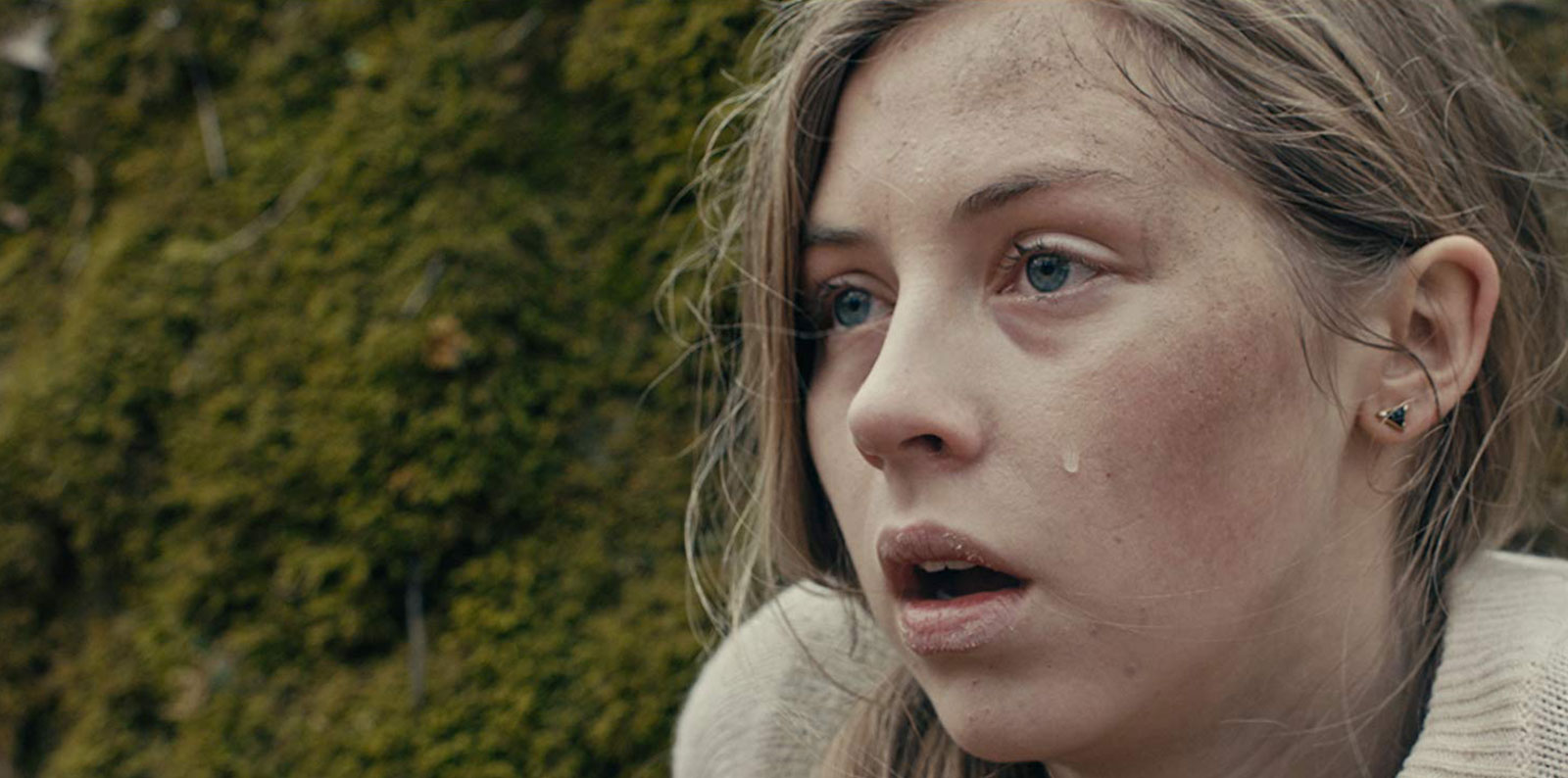
College co-ed (Hermione Corfield) follows her GPS into the backwoods of Kentucky, and hits a dead end before bumping into some less-than-helpful locals: tussle, injury, escape into the woods.

I don’t know how many times you’ve seen that very film, but I have probably seen it twice already this week. (It’s a problem, I know.)

This woman-in-peril pairing with the “city folk lost in the backcountry” formula equals one very tired experience.

The fact that filmmaker Jen McGowan, working from a script by Julie Lipson, offers us a victim/heroine who fights and thinks is not quite enough to save Rust Creek from drowning. But McGowan’s tricky, and she has more surprises packed in her double-wide than you might think.

The film, on its surface, asks us to rethink the victim in a hillbilly thriller. But Rust Creek cuts deeper when it requires that we—and the heroine, for that matter—rethink the hillbilly.

Michelle Lawler’s cinematography sets a potent mood, enveloping the proceedings in an environment that is in turns peaceful and gorgeous or treacherous and brutal, and she does it with natural, almost poetic movement.

This imagery allows the Kentucky woods to become the most vibrant character in the film, although those tree-covered hills are peopled by a few locals worthy of notice—not all, but a few.

Jay Paulson—best known to normal people for his brief stint on Mad Men, best known to my people as the porn-obsessed psychopath in Robert Nathan’s Lucky Bastard—cuts an intriguing, lanky figure as Lowell.

Slyly fascinating from the moment he takes the screen, Paulson shares an uncommon onscreen chemistry with Corfield. The smart, human relationship they build as they bide their time and cook some meth may be reason enough to see Rust Creek.

McGowan doesn’t burst as many clichés as she embraces, unfortunately. Still, the biggest obstacle facing her as she maneuvers her tropes to serve a (hopefully) unexpected purpose is that her protagonist is the least interesting character in the movie. This is not necessarily Corfield’s fault. She does what she can with limited resources. Sawyer is just the fuzziest character, and the one with the least articulated arc.

That means the resolution packs less of a wallop than it should, but certain moments and characters will linger.


From the Corners to the Council, Baltimore under a Microscope

Charm City

by Matt Weiner

If the Midwest is often treated as America’s test market for new products, Baltimore makes a good case as America’s stand-in for how our cities have been neglected, in ways both passive and pernicious. With Charm City, Marilyn Ness sketches the big picture by zooming in on one city neighborhood.

Ness centers the documentary around those most affected by the violence and lack of opportunity in the city, spending time on the streets with the irrepressible Clayton “Mr. C” Guyton. Mr. C runs a neighborhood community center, providing a mix of social services, inspirational sermons and a contagious hope that things must get better.

Also represented is the Baltimore Police Department, whose officers are buckling under constant overtime in an attempt to stem the record murder rate. Politicians get their due through the eyes of Brandon Scott, a reform-minded city councilman (and the youngest person elected to the position).

At first it seems like Ness’s framing is nuanced to a fault. She studiously highlights the interactions on all sides as an almost routine drudgery. Or as routine as life can be when you’re in a constant struggle for resources just to survive.

But haunting the periphery is the death of Freddie Gray, which took place just months before the film begins. Ness limits her interviews to the more optimistic and eager officials and officers, but even relatively benign interactions are impossible to separate from the wider conversations happening around criminal justice reform in cities and police departments all over the country.

As frustrating as it can be when Ness sticks to her granular talking head shots, there’s a still a message—even if that message to viewers is often that you’re going to need to do some extra homework on this.

And it’s effective. It’s heartbreaking when the people on Mr. C’s block abruptly suffer the loss of one of their own. It’s bracing to hear them refuse to give up even though they feel like everyone else has abandoned them. It’s useful to see how city officials view doing the right thing, and how quickly that impulse crashes against a public health epidemic that cannot be theirs alone to fix.

There have been plenty of superb recent documentaries about criminal justice in America, including Ava DuVernay’s 13th and Erik Ljung’s The Blood Is at the Doorstep. Charm City probably shouldn’t be the only film to watch if you’re looking to go deeper on the subject, but it’s a fine and no less urgent place to start.