Tag Archives: independent film

Hope Floats

Buoyancy

by Hope Madden

Hey, it’s been a pretty easy going year. Feel like a movie?

Well, first time feature filmmaker Rodd Rathjen has one for you and you’re not going to like it, but you should watch it anyway. Buoyancy shadows a 14-year-old Cambodian boy sold into slave labor on a Thai fishing trawler.

I know, but stay with me.

In his feature debut behind the camera, Rathjen wisely relies on naturalistic performances from mainly non-professional actors to recreate the circumstances rather than dramatize them.

Sarm Heng is Chakra, a put upon adolescent bristling at the limitations of his life. There’s the universal element of adolescent rebellion, here tied to far more than angst. Chakra does manual labor rather than going to school, and as kids in uniform whiz by him on bicycles, and cars on the nearby highway come and go, his stagnancy and the back breaking monotony awaiting him in adulthood press down on him.

He follows an opportunity to sneak away from home and get a ride out of the country, where he’ll make real money working in a factory. It’s OK if he doesn’t have the $500 fare to leave the country, he can work that off in his first month.

That’s not how it actually works, and we spend the rest of the film watching as Chaka’s realization comes to him in bits and pieces that he will probably never leave this rickety fishing boat.

Rathjen’s film ends with sobering facts concerning the modern slave trade in Southeast Asia, with as many as 200,000 boys and men currently missing and believed to be held in bondage on fishing boats. The filmmaker’s verité style helps us understand how this happens. There’s no boisterous villain detailing the scheme, no, “Ha! You belong to me now!” No one tells you you’re never being paid, never going home. You simply adjust to your circumstances or you die.

There’s little dialog once Chakra leaves the boys in the village behind, but Heng doesn’t need it. The evolution of this character hangs on his face. It’s a remarkable performance, especially from a kid who’s never acted before.

Heng gets an assist from two actors with some experience. An utterly heartbreaking Mony Ros is the middle aged man who falls prey to the scheme in the hopes of providing for his family. The camaraderie between these two characters is powerful, and it’s a theme Rathjen mirrors in Chakra’s relationship with the ship’s captain, played with menacing relish by Thenawut Ketsaro.

What they create together is harrowing, but it’s also a brilliant piece of filmmaking that needs to be seen.

Speaking Softly

Lingua Franca

by Hope Madden

Lingua franca is literally a language used between two people who don’t share a native tongue. But what goes unsaid in Lingua Franca carries far more weight than anything we’re actually told.

Writer/director/producer/star Isabel Sandoval has mastered cinematic understatement. Her approach, as filmmaker and performer, is never showy. Her third and most confident feature is a slice of life drama that meditates quietly on need, agency, love and capital in Brighton Beach, Brooklyn.

Olga (a perceptive Lynn Cohen) sometimes forgets where she is. She gets a little agitated and a little weary.

Olivia (Sandoval) calms her, keeps her safe, keeps her well, but has worries of her own.

Alex (Aemon Farren) just needs to catch a break, so he’s staying with his grandmother and helping out Olivia when he can. But we can’t all help each other, even when we mean to.

Sandoval’s film says so much with so few words, it’s remarkable. By way of Olga’s apartment we enter an entirely lived-in world, one that is likely to be utterly unfamiliar and yet feels as authentic as any you’ve seen. The ordinariness of extraordinary circumstances, unusual measures and extreme tensions emerges by way of Olivia’s resigned, world-wearied gaze.

There is a cultural currency to the story, one in which Olivia’s position as a transgender woman of color is actually less dangerous than her situation as an illegal immigrant in the age of ICE. That anxiety plays as a backdrop to a desperate romance between Olga’s two needy houseguests.

As Olivia’s sketchy love interest, Farren offers a nuanced and authentic turn. Alex is a man of squandered potential, dim prospects, and a fleeting if recurring notion that he can be something of value.

There’s a lonesome transience to the story, a feeling of impermanence that’s frightening, sad and just slightly freeing. Lingua Franca tells a lovely, sad story that’s very much worth hearing.

The Boy With the Thorn in His Side

Benjamin

by Seth Troyer

Benjamin is one of the most uniquely brilliant indie films I’ve come across in some time. It’s a film that could have easily been yet another Woody Allen clone, yet another romp where a director shares his thoughts on love, nervous breakdowns, and how cool and complex he is just before the film cuts to credits. Benjamin is something much more.

While the core of the film seems born from director Simon Amstell’s autobiography, what really makes it stand out is the duet Amstell has with his star. Colin Morgan’s lightning fast delivery and realistic portrayal of Benjamin, a young gay man who endlessly gets in his own way, makes the film more than just a mouth piece for a director, but a unique character study.

Benjamin is a filmmaker who recently failed to live up to the promise of his debut movie. In the aftermath, he falls in love with a beautiful French musician named Noah, but their relationship is constantly threatened by Benjamin’s increasingly erratic mental state.

In less capable hands such a plot would make for a rather unoriginal film, but here, the events that unfold feel realistically random and unpredictable. Plot points begin, end abruptly, and then pick back up all over again in surprising ways that create a true to life experience. Even the minor characters are fleshed out yet mysterious, creating unique human beings rather than lazy stereotypes.

The film’s fast paced, dark humor is never contrived or pretentious. Amstell’s incredible ear for dialogue coupled with Morgan’s gift for delivery feels like a comedic team at the top of its game.

Though far more lovable, Morgan’s portrayal of an erratic, untrustworthy protagonist calls to mind David Thewlis’s darkly genius incarnation of Johnny in Mike Leigh’s Naked. Indeed, Benjamin seems to have much in common with Leigh’s everyday dramas in the attempt to flesh out believable characters rather than convey easy moral judgements.

It is an aching portrayal of a person who seems either on the brink of transformation or immolation. Benjamin is a cry for the mind to just shut up for once, and let the heart take the wheel for a change.

Angel of Death

DieRy

by Darren Tilby

As far as psychological thrillers go, this is a peculiar one. An odd concoction of glaringly obvious plot twists and contrived diegesis; of excellent performances but inconsistent characters; of an implied take on influencer culture leading, bizarrely, into The Manchurian Candidate territory, Diery can be best described as—a bit of a mess.

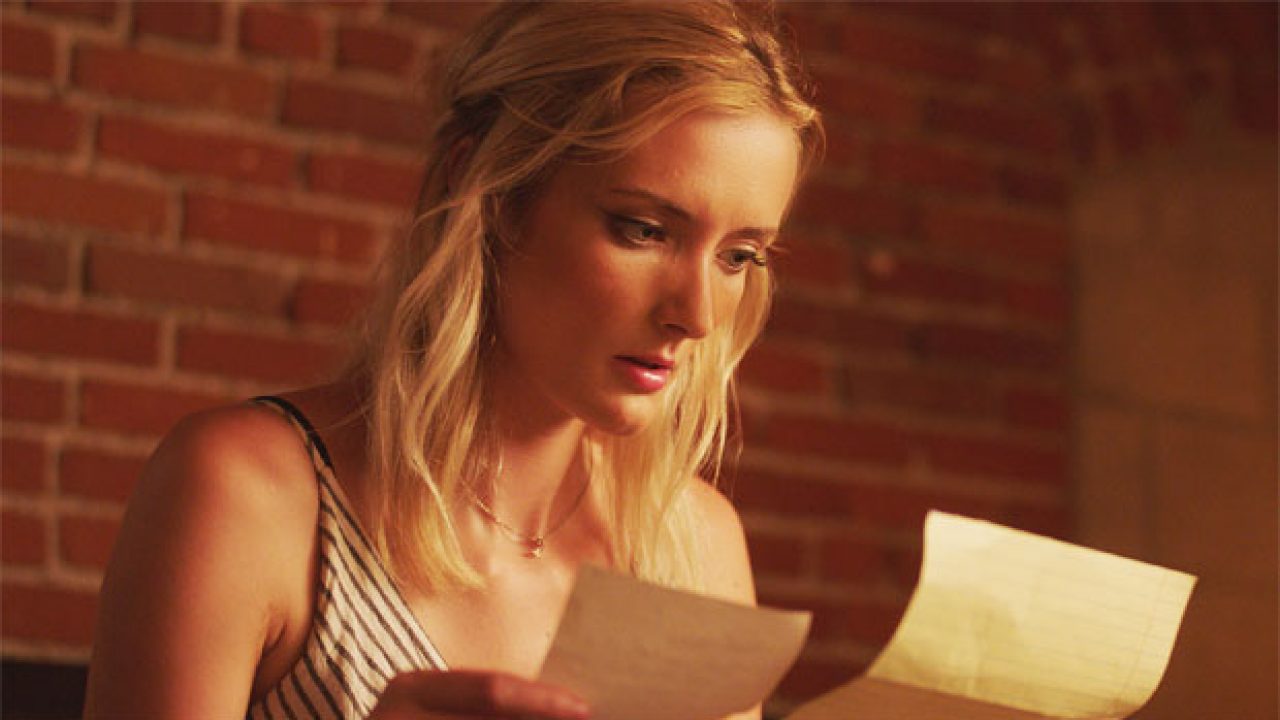
Marie (Claudia Maree Mailer), a popular Instagram model with over one million followers. She is well on her way to getting her masters degree in comparative religion, leaving an abusive relationship and moving on from childhood trauma that saw her hospitalized. She seems to have a perfect life. As, indeed, everyone keeps telling her. However, Marie is haunted still by the events of her past, and when her cherished diary goes missing and letters, seemingly from an obsessed fan, begin turning up at her apartment, things take an extraordinary and deadly turn.

My chief complaint here is John Buffalo Mailer’s writing: there’s a lot of ideas floating around, too many in fact, and nothing comes of any of them. Is this a cautionary tale about the dangers of sharing our lives on social media? Is it a tension-filled spy thriller? There’s even a suggestion of witchcraft at one point. The answer is that it’s all of those things and none of them. To be honest, I’m not overly convinced filmmaker Jennifer Geifer herself knows.

This feels like a committee has put it together, several different concepts mashed together to form some semblance of a complete narrative. It fails. And it’s a real shame, too. Performances are pretty good across the board, even if the characters are a little generic – with standout displays from Claudia Mailer, Ciaran Byrne and Philip Alexander. But very little here occurs naturally. Almost everything feels manufactured, except, maybe, for the chemistry between the central cast, which is wholly organic.

Diery certainly isn’t without its charms: the characters are likable, the performances are solid, and Julia Swain’s cinematography exudes atmosphere. But it’s let down, badly, by several plot contrivances and its inability to stay on the rails for more than 20 minutes.

And when it ended with an enormous Sleepy Hollow-like exposition dump, I was done.   

https://www.youtube.com/watch?v=0P1JRs9b6Pw

Year of the Woman?

Represent

by Hope Madden

We make up 50% of the earth’s population and 23% of the House (which is, disappointingly, an all-time high). Why is it so hard for women to take our statistically rightful place in representation?

Hilary Bachelder’s sly doc Represent eyeballs that struggle for three Midwestern women: Detroit’s indefatigable Myya Jones; Evanston, Illinois’s beleaguered Julia Cho; and Granville, Ohio’s very own Bryn Bird.

All three women are looking to make a difference in local politics. All three face more obstacles than simply their sex: Jones is only 23-years-old at the end of filming; Cho is a Republican in a highly Democratic area; Bird’s the only progressive ever to run in her township. And then there are the more obvious hurdles: Jones is a Black woman; Cho is Korean American.

It is fascinating to witness which of these particular concerns the voting populace feels most comfortable overtly reacting to and which require veiled swipes and sideways glances. When a woman at one of Cho’s stump speeches tells the politician that her children don’t mind Common Core because they are “Oriental, and all Orientals do well in school,” it’s hard not to gasp aloud.

Bechelder’s footage never glamorizes its leads. Their candor, idealism and even their missteps and shortcomings as politicians are on display, giving the film a transparency and authenticity.

Represent is most fascinating when it quietly unveils the final and most insurmountable obstacle, which is the candidates’ own parties. Is she the good kind of progressive? A real Republican? The right kind of Black woman?

And if you have to change who you are to be heard, do you really have anything left to say that’s worth hearing?

Cho, Jones and Bird are up for the battle.

“Democracy requires engagement,” Bird tells Bachelder. “We need people to fight for it.”

https://www.youtube.com/watch?v=9YCzqEy5KHs

Devil to Pay

Limbo

by Hope Madden

There’s a real thread of forgiveness, consequences and redemption in current horror. It fuels Romola Garai’s Amulet, Jayo Bustamante’s La Llorona, and now, Limbo, the cheeky neo noir from writer/director/producer Mark H. Young.

Jimmy (Lew Temple) looks like a pretty cut-and-dried case to Balthazar (Lucian Charles Collier). He shot a grandmother (Veronica Cartwright) in the head robbing a pawn shop, caught a bullet in the back and now he’s here, facing judgment. But why has the man upstairs deemed Jimmy worthy of his own defense angel (Scottie Thompson)?

Must be something big. Even the other guy’s getting in on the deal. Both sides are weirdly interested in the outcome of this one case.

Young (Feral) has a knack for efficient, low budget horror. His work is not inspired, but it definitely makes the most of its budget. And in this case, you also have to hand it to him for casting.  

Besides the always-welcome Temple and the great-to-see Cartwright, Limbo brings in familiar faces Richard Riehel (jump! to conclusions guy from Office Space), and James Purefoy as Lucifer.

Lauryn Canny (Darlin’) delivers the strongest performance as a prostitute back in real life that may or may not prove Jimmy’s worthiness of forgiveness, but everyone’s fun. Purefoy, who relishes these campy roles, chooses a hillbilly accent for Satan. Odd.

Odder still is whatever accent Collier is attempting, but that hardly sinks the film. It’s a goofy fantasy and just about anything flies.

The circular logic isn’t as tight as Young may think it is, but again, Limbo provides serviceable fun. No scares and not a ton of laughs—indeed, where Young is hoping to land on the horror-comedy spectrum is a bit muddy—but thanks mainly to a game cast, Limbo is still a pretty good time.

What the Puck?

Red Penguins

by Brandon Thomas

It’s been 35 years since Ivan Drago tried to break Rocky Balboa. While the fictional Italian Stallion may have prevailed against his Russian foe, the Americans at the heart of Red Penguins weren’t so lucky in their experience with our former Cold War nemesis. 

After the fall of the Soviet Union, the famous Red Army hockey team found itself struggling to find funding. Pittsburgh Penguins co-owner Howard Baldwin thought it would be interesting to invest in the team as a way to funnel great Russian players to his own NHL club. With marketing guru Steve Warsaw acting as the man on the ground in Russia, the new American investors sought to navigate their way through an unfamiliar culture that was tasting the free market for the first time. 

Director Gabe Polsky dives right into the absurdity of these Americans thinking they could immediately saunter into the former USSR. Baldwin and Warsaw’s eccentricities certainly caught their Russian partners off-guard, but also led the two to be unequivocally naive about many things Russian. The film’s early playfulness is fun and entertaining but also feels like a warning to the audience: a warning that the American investors never fully saw. 

At times, Red Penguins feels like a documentary version of a Coen Brothers film. It’s hard not to laugh at the darkly comic situations Warsaw finds himself dealing with. Whether it be a beer- guzzling bear biting off the finger of a drunk employee, or a spy for the Russian mob that took up residence in Warsaw’s office. Anton Chigurh would feel right at home.

More than anything, Red Penguins is a cautionary tale about American overreach. Howard Baldwin wasn’t the first American businessman to foolishly believe that he could march into Russia and woo the former communists with his business savvy. Even the backing of the Disney empire couldn’t solidify a positive outcome. 

While not coming together as a definitive hockey documentary, Red Penguins offers a unique look at a transitional time in the former Soviet Union. The beer-guzzling bears are just icing on the cake. 

Amy and the Apocalypse

She Dies Tomorrow

by Hope Madden

I smell an intriguing trend in indie horror: embracing the apocalypse.

She Dies Tomorrow is a horror film that’s one part Coherence, one part The Beach House, one part The Signal (2007, not 2014) and yet somehow entirely its own. It helps that so few people have seen any of those other movies, but the truth is that writer/director Amy Seimetz (creator of The Girlfriend Experience) is simply braiding together themes that have quietly influenced SciFi horror hybrids of late. What she does with these themes is pretty remarkable.

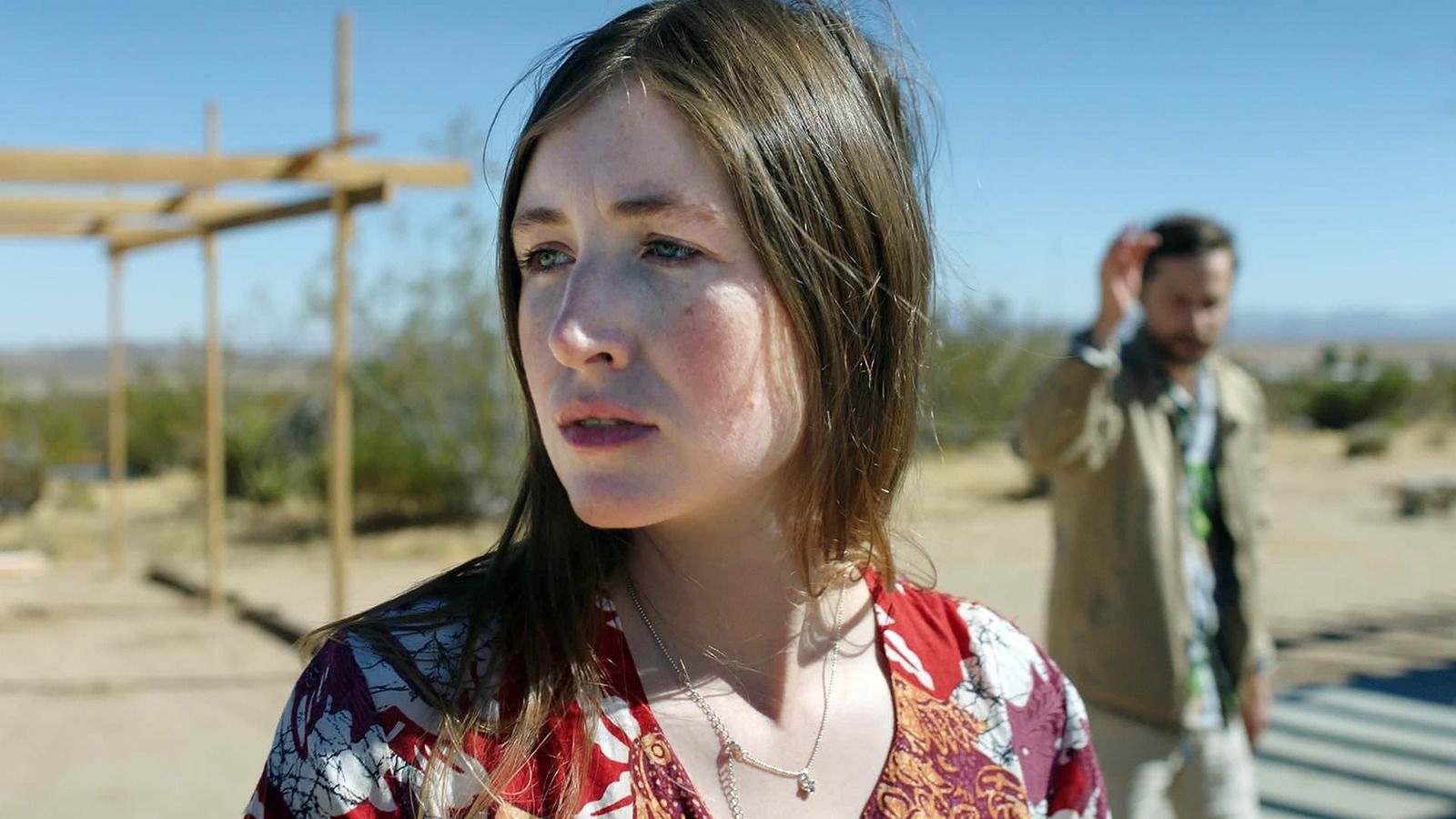
Her film weaves in and out of the current moment, delivering a dreamlike structure that suits its trippy premise. Amy (Kate Lyn Sheil) believes she is going to die tomorrow. She knows it. She’s sure.

She calls her friend Jane (the always amazing Jane Adams), who senses that Amy is not OK but has this obligation to go to her sister-in-law’s party…whatever, she’ll stop over on her way.

By the time Jane gets to the party, she’s also quite certain she will die tomorrow. It isn’t long before the partygoers sense their own imminent deaths; meanwhile, Amy is spreading her perception contagion elsewhere.

Seimetz’s horror is really only existential, although like The Signal (and The Crazies before it), She Dies Tomorrow is more than slightly interested in what individuals do with this disheartening information. What a superb way to cut directly to character development.

This gives the film an episodic quality, allowing even characters in minor roles to express their individuality. Adams is characteristically wonderful, both logical and a bit batty, lonely and strangely optimistic. Chris Messina and Katie Aselton impress with a lived-in couplehood, and both Josh Lucas and Adam Wingard are used deftly to bring an almost melancholy comic relief to a couple scenes.

Sheil anchors the film. With the most time to get comfortable with her lot, Amy drifts through the stages of grief and fear, ending on a resigned kind of anticipation that feels comfortable with the tone Seimetz creates.

From beginning to end, the film transmits a quiet, creeping dread. Seimetz can’t entirely capitalize on the intoxicating world she’s created, but hers is a unique voice and beguiling vision.

Senior Moments

Senior Love Triangle

by Hope Madden

Co-writer/director Kelly Blatz announces his presence with authority, creating a minor cinematic miracle with his feature debut, Senior Love Triangle.

Inspired by co-writer Isadora Kosofsky’s remarkable longterm photo essay of the same name, the film delivers a candid look into the intimate relationship among three elderly characters: William (Tom Bower), Adina (Anne Gee Byrd) and Jeanie (Marlyn Mason).

The film is equal parts charming, frustrating and heartbreaking. More importantly, it takes its characters seriously. In an era where veteran actors entertain us via “those crazy old people!” vehicles (watching Diane Keaton become a cheerleader in Poms sapped my will to live), Senior Love Triangle feels gloriously anarchic. The magic of Blatz’s film is that it offers a character study of the sort we simply never see.

Thanks to thoughtful writing and breathtaking performances—neither of which rely for a moment on shorthand—we get to know three unique individuals. William is an irascible, arrogant, 84-year-old charmer. His sophisticated lady love Adina indulges his ego, but when her son has him kicked out of Adina’s posh retirement high rise, William finds himself in a lower-quality establishment.

Not to worry! He’s just finishing a lucrative deal that will set him up so he can buy a mansion and get Adele away from those Nazis in her building. (That is to say, he’s being routinely scammed.) In the meantime, over at his new digs he meets exuberant flirt Jeanie. (Mason’s performance is a particular triumph.)  

Blatz, with an incredible assist from Kosofsky’s work, sees the characters’ humanity, their sexuality, their courage and weakness. He sees their loneliness, their vulnerability to outside forces and to each other, their need. These are complicated characters, vibrant and alive.

Senior Love Triangle offers an underseen perspective on aging (the perspective of the aged themselves) without romanticizing. Dangerous misconceptions about masculinity weigh as heavily on their safety and happiness as their own physical deterioration.

The film is a heartbreaker that just does what it wants to do. Just like William.

Odd Couple

Summerland

by Rachel Willis

Irascible Alice Lamb (Gemma Arterton, The Girl with All the Gifts) doesn’t care what anyone thinks of her. Called a witch by local children, pranked by schoolboys, and barely tolerated by the adults in her community, she’s resigned to her routine and to living her life alone.

Writer/director Jessica Swale, with her first feature film, Summerland, examines what it means to be a woman in a world where women had very few choices in life.   

In the early-1940’s, the British countryside of Kent is seemingly removed from the harsher realities of World War II. The residents are asked to do their part for the “war effort,” but none of this affects Alice. At least, not until a trainload of children arrive from London. Fleeing the frequent bombing raids on the city, the children have been separated from their parents and sent to live with strangers.

Conscripted to care for Frank (Lucas Bond), Alice is perturbed by this development in her life. She wants nothing to do with the boy, but with no other options, she’s forced to take him.

Though the film has a warm, light-hearted tone, there are moments that remind the audience about the harsh realities of the time. Frank is on his own with a stranger who treats him with undisguised annoyance. Through flashbacks, we learn that Alice’s past still haunts her. As Frank becomes a part of her life, we come to understand why she is angry with the world.

But it’s past trauma that allows the characters to bond, and Swale conveys this with tenderness. Though Alice doesn’t have the foggiest idea how to care for a child, she finds a companion who accepts her and treats her with kindness even when she doesn’t deserve it.

Swale explores a few themes, but she’s primarily concerned with Alice’s experiences, leaving little room for anything else. Alice is the only character with depth. The ancillary characters round out the main story, but none of them truly live and breathe. We barely scratch the surface of this complex world.

While the theme of Swale’s choosing is worthwhile, the lack of attention to the other details is distracting. Rather than serving as a thematic bookend to Alice, Frank ends up as a crutch for her growth.

The result is a middling film about love and friendship that still has enough appeal to thaw the coldest hearts.