Tag Archives: horror

Oh, Mama

Ma

by Hope Madden

Oh my God, you guys. Did you know Tate Taylor directed the new Octavia Spencer horror flick, Ma?

You know, Tate Taylor. Girl on a Train. Get On Up. The effing Help – that Tate Taylor.

No wonder Octavia Spencer is in it, and God bless her for it because she commits to a role that, in other hands, could have been utterly, laughably predictable.

In fact, were it not for a breathtakingly better-than-this-material cast, Ma would have devolved quickly into every other “get back at the popular kids – oh, wait, maybe let’s vilify and re-victimize the unpopular instead” horror.

Spencer’s Sue Ann, or Ma, as the kids call her, is just an easy mark for teens wanting alcohol. Yes, she’ll buy it as long as you drink it at her house where she knows you’re safe.

Does she have nefarious motives?

She does.

For her part, the Oscar-winner (for Taylor’s The Help) convinces, drawing both sympathy and fear. She’s joined in small roles by another Oscar winner (an almost jarringly funny Allison Janney) and an Oscar nominee (Juliette Lewis) as well as Luke Evans and a set of talented young actors led by Booksmart’s Diana Silvers.

How on earth did this by-the-numbers outsider/don’t trust the lonely older lady horror flick draw this cast?!

I do not know, because Ma has nothing really new to say, so it relies in its entirety on this cast to entertain. But there are two reasons that this story and this particular cast are actually Ma’s problems.

One is something that still surprises me about horror. On the whole, horror appeals to outcasts. And yet, from Carrie White to the coven in The Craft to Sue Ann in Ma, horror films reestablish the status quo by putting outcasts in their place. Sure, they get that grand few moments of terrorizing the beautiful, popular kids, but things end badly in horror movies for the outcast.

Here’s what troubles me even more about Tate Taylor, and to a degree, Octavia Spencer films. (Note that Spencer executive produced the racially problematic and utterly mediocre Green Book.)

Ma is racially tone deaf. I have no idea why this wealthy Southern white man insists on telling stories exclusively about African Americans, but he truly should not. A story that vilifies the lonely middle aged woman, seeing her as a broken psychotic based on her generally pathetic nature, is misogynistic. When this villain is also the only African American woman in the film, that problem is heightened dramatically.

Don’t get me wrong—I am a fanatical horror fan, and when an Oscar -winner (and multiple nominee) chooses to star, let alone star as the villain (the most important character) in a horror film, I am all in.

But this was the wrong movie.

Super Bad

Brightburn

by Hope Madden

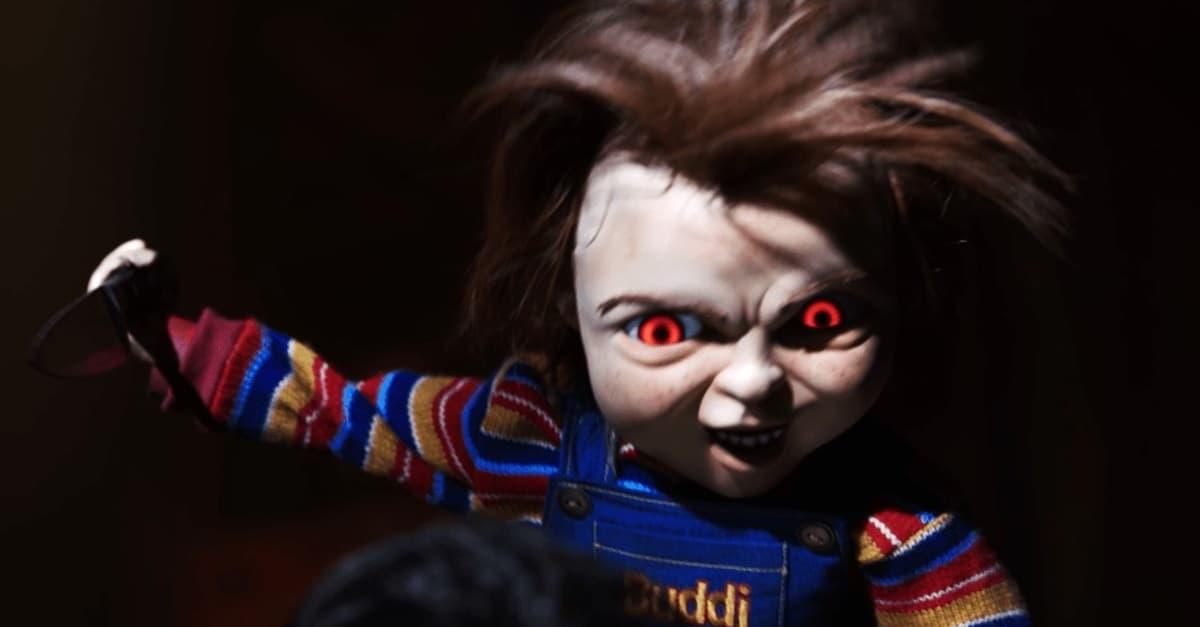
Sort of a mash up of Superman and The Bad Seed, Brightburn wonders what would happen if that special little guy you found in the crashed space ship turned out to be a super villain rather than a super hero.

But this comic book-esque origin story plays more like a straight up horror flick than an evolution of Josh Tank’s underappreciated 2012 SciFi gem Chronicle.

Elizabeth Banks stars as Tori, blue collar Kansasian. (Look it up.) She and homespun farmer husband Kyle (David Denman) always knew the day would come when they had to explain some things to their “adopted” son Brandon (Jackson A. Dunn).

While Brightburn echoes Superman in many ways, it’s far more deeply rooted in coming of age horror. It is on Brandon’s 12th birthday that he begins to change. He’s broody, more aggressive—here is where director David Yarovesky (The Hive) and Brian and Mark Gunn (brother and cousin, respectively, of producer James Gunn) abandon SciFi and dive headlong into horror.

And what we find is that, removed of their comic book splash and super hero protagonists, super villains don’t really make much of an impression in horror. Yes, Brandon has basically the same qualities as Superman—heat vision, flight, super strength—and he seems only vulnerable to his own ship (or perhaps any trace of his home planet?)—but the question is, would Evil Superman be that much more destructive than an immortal killing machine who visits you in your dreams? Or a demon from hell? Meh.

That’s is not to take too much away from Brightburn. It’s a fun B-movie with plenty of blood and gore. (It earns its R rating.) Banks is characteristically strong and Dunn does a fine job of moving from sweet boy to flat-affect sociopath.

There are definitely a couple of moments of inspired gore.

Brightburn is a capably made, well-acted piece of semi-schlock horror. It’s also the third film this year to follow a put-upon mother deciding what to do with a son whose grown almost overnight from precious baby boy to burgeoning psychopath.

And while this is a staple in the genre, Brightburn certainly taps an immediate social preoccupation with that moment that toxic masculinity ruins a boy. The film also mines the guilt that fuels insecure parents who had no real role models of their own.

The film doesn’t wind up being as clever a conceit as you might hope—again, Chronicle did it better. It’s not an entire waste of time, either.

Fright Club: Hippies in Horror

Horror has a love/hate relationship with hippies. I suppose most of us do. And while some of the greatest films in the genre were made by Sixties freaks George Romero, Wes Craven, Tobe Hooper and the like, most of the time hippies’ onscreen representation got wrapped up in Manson hysteria.

5. Children Shouldn’t Play with Dead Things (1972)

Full disclosure: George objects to including this film on the list. It’s not good.

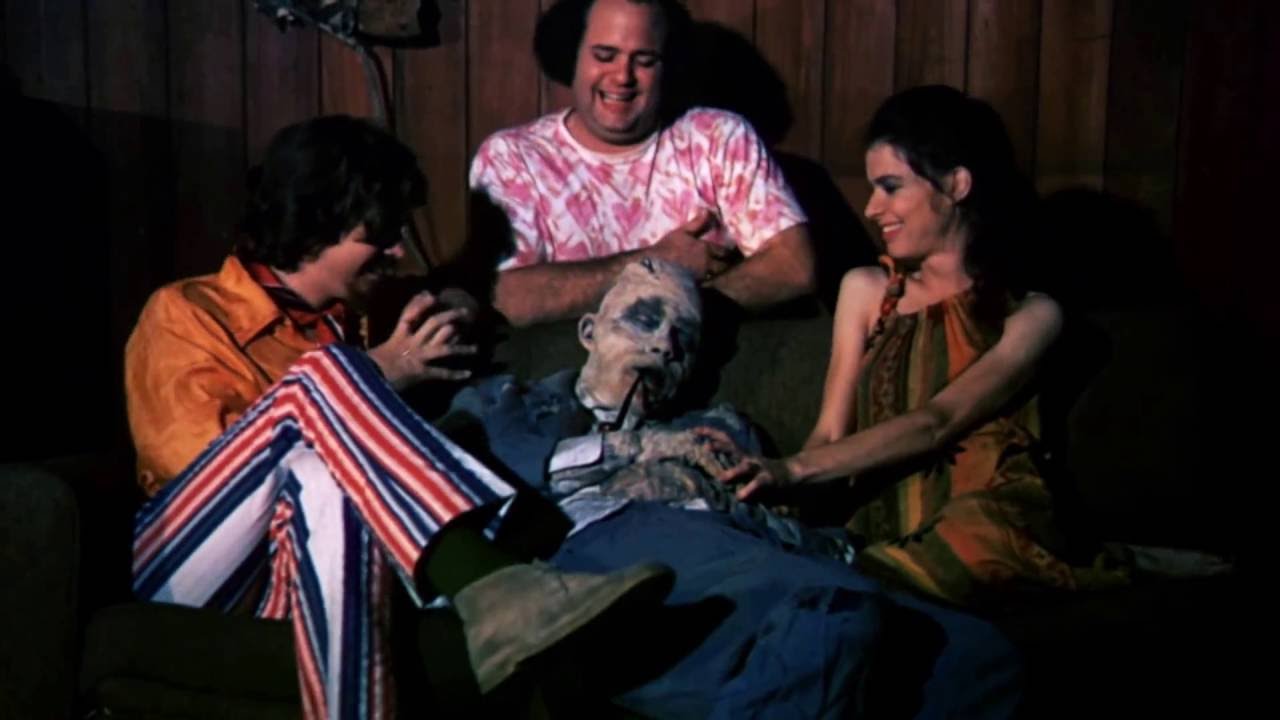
But it’s not good in such a good way! Director Bob Clark (Black Christmas, A Christmas Story) and writer/co-star Alan Ormsby seem basically to be taking out their frustrations at being part of the theatrical community.

Ormsby’s Alan is a director, and he drags his troupe of hippie thespians to a lonely island once used to bury the criminally insane. He then insists—if they ever want to work with him again—that his merry band dig up a body and perform a ritual to bring him back to life.

It’s basically theater kids making fun of theater kids. Watching a group of actors being literally eaten alive by their audience is its own stoke of genius, even if the film itself is not.

4. Let’s Scare Jessica to Death (1971)

In this Age of Aquarius riff on J. Sheridan Le Fanu’s vampire novel Carmilla, the unfortunately titled Let’s Scare Jessica to Death follows a somewhat delicate woman through what amounts to either a nervous breakdown or the seduction of a female vampire.

A married couple and their organic farmer friend move into an old, abandoned house on a New England island. They find a vagrant—long haired, pretty, can play an acoustic guitar, natch—and they ask her to stay. Why not?

Deliberately paced and boasting a genuine and sympathetic performance by lead Zohra Lampert, the film’s a slow burn, a hallucinogenic smalltown horror. The creepy townies, the spooky cemetery girl, and the moody cinematography blend with Lampert’s committed performance to make this one a dusty little gem.

3. I Drink Your Blood (1970)

David Durston’s grindhouse classic (in which no one drinks anyone’s blood, regardless of what this lying trailer tells you) marks that great divide in hippie horror: those made by and about hippies and those made by opportunists seizing upon a population’s terrified fascination with the Manson Family murders.

I Drink Your Blood is the latter. We open on a group of hippie Satan worshippers who turn out to be gang rapists. They descend on a little town almost empty of inhabitants—the menfolk all having moved to live and work in the nearby mining camp. That leaves just that scrappy family working in the bakery.

But once young, vindictive Pete injects the baker’s meat pies with rabid dog blood, them no goodnicks might learn some manners.

Actually, that’s the last thing they’ll do.

This is an extremely violent film, not very well made and certainly not well acted. It has a punch, though, and several scenes are provocative enough to warrant its inclusion on this list.

2. Mandy (2018)

A hallucinogenic fever dream of social, political and pop-culture subtexts layered with good old, blood-soaked revenge, Mandy throws enough visionary strangeness on the screen to dwarf even Nicolas Cage in full freakout mode.

Red (Cage) and Mandy (Andrea Riseborough) live a secluded, lazily contented life somewhere in the Pacific Northwest.

That contentment is shattered by a radical religious sect under the spell of Jeremiah (Linus Roache), who takes a liking to Mandy when the group’s van (of course it’s a van!) passes her walking on a country road.

Horror of the late 60s and early 70s saw hippies terrorizing good, upright citizens, perpetrating cult-like nastiness. Thanks to Charles Manson, society at large saw the counterculture as an evil presence determined to befoul conventional, Christian wholesomeness.

With Mandy, it’s as if the 70s and 80s have collided, mixing and matching horror tropes and upending all conceivable suppositions. In this case, zealots consumed with only the entitlement of their white, male leader wreak havoc on good, quiet, earth-loving people. The Seventies gave us some amount of progress, civil justice and peace that the Eighties took back under the guise of decency.

1.The Texas Chainsaw Massacre (1974)

Hippie pals pile into a van and head to Texas to double check that Grammy and Gamps still rest in peace, what with these rumors of grave robbing. Along the way they talk astrology, smoke some weed, pick up a hitchhiker–it’s all in a day’s journey for a hippie.

That hitchhiker thing goes sideways. In fact, the whole trip feels like a bad idea by the time pretty Sally Hardesty and her friends make a second trip to the cemetery. Well, what’s left of them.

https://www.youtube.com/watch?v=Vs3981DoINw

Don’t Open Until Christmas

I Trapped the Devil

by Hope Madden

Jordan Peele is not the only one preoccupied with The Twilight Zone. First time filmmaker Josh Lobo obviously has a soft spot for one of their episodes.

Don’t look into which one, though. In fact, don’t even watch the trailer for Lobo’s indie horror I Trapped the Devil, because not knowing the outcome is half the fun.

Lobo takes us along on a Christmas visit with family. You know, those awkward gatherings where maybe your brother is a paranoid schizophrenic who keeps a man captive in his basement.

Or, maybe your brother’s right and that man is really Satan.

But let’s be honest. It’s probably the former.

As Steve (Scott Poythress) tries to convince brother Matt (AJ Bowen) and sister-in-law Karen (Susan Burke) that it’s really the latter, Lobo hovers over issues of family dysfunction, grief, and the evil in the world. He pulls none of those strings in a way that is particularly satisfying, but he is onto something.

The film’s narrative offers a nice subversion of horror’s standard “is she crazy or is there evil in the house” trope. Historically, the genre relies on some kind of common assumption about feminine hysteria to drive a tension that asks the audience to wonder whether we are witnessing a mental breakdown or whether the protagonist’s feminine intuition has led her to pick up on something malevolent.

I Trapped the Devil overturns those gender assumptions and grounds the tension in something more scientifically intriguing. Is Steve a violently disturbed man with a captive in his basement, or has he, indeed, trapped Satan?

We the audience are supposed to be weighing our options. How realistic is it that his family is kicking around the options? Not very.

Committed performances from the trio help develop a sympathetic mood. Still, Lobo struggles—as does his cast—to get reasonably from Point: There’s a Guy Locked in a Closet Downstairs to Point: No, Let’s Not Phone the Authorities Just Yet.

He also leaves too many unexplored ideas on the table: the maddening grief, the weird images on the staticky TV, how Steve got the guy down his basement in the first place.

A little ambiguity can lend to atmosphere. This much tends to feel more like lazy screenwriting.

There are flashes of real terror now and again, though, and the mystery of the man in the closet remains a tense one to the seriously creepy closing image. Lobo’s horror instincts are sound, and even though his knack for fleshing out details is lacking, his movie’s a pretty solid scare.

The Hills Are Alive

Hagazussa: A Heathen’s Curse

by Hope Madden

Making a remarkably assured feature debut as director, Lukas Feigelfeld mesmerizes with his German Gothic poetry, Hagazussa: A Heathen’s Curse.

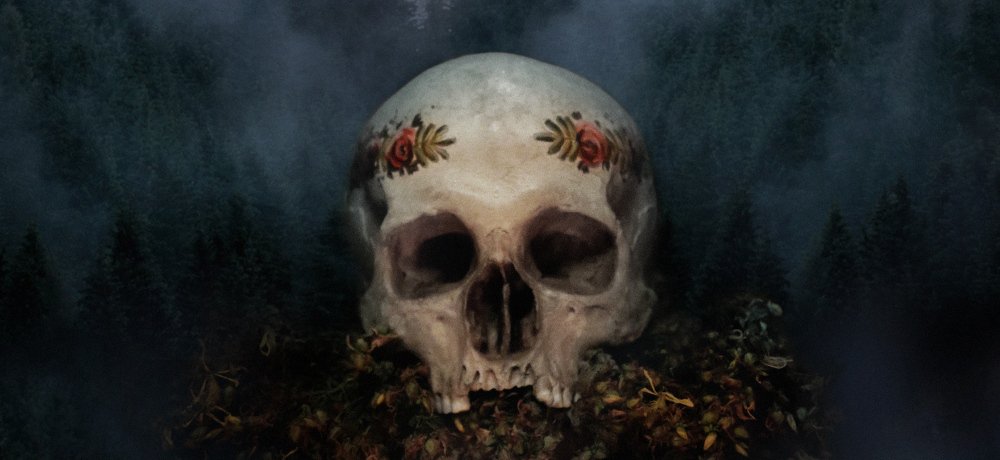
Settled somewhere in the 15th Century Alps, the film shadows lonely, ostracized women struggling against a period where plague, paranoia and superstition reigned.

Young Albrun (Celina Peter) and her mother (Claudia Martini) make their way back to their isolated cabin before darkness falls. With a minimum of dialog and a maximum of atmosphere, Feigelfeld quickly establishes the dangerous isolation facing mother and daughter.

It’s an episode that will haunt Albrun well into adulthood, where she (Aleksandra Cwen) is now the single mother, still an outsider, still isolated from the village.

It would be easy to mistake the story Feigelfeld (who also writes) develops as a take on horror’s common “is she crazy or is there malevolence afoot?” theme. But the filmmaker’s hallucinatory tone and Cwen’s grounded performance allow Hagazussa to straddle that line and perhaps introduce a third option—maybe both are true.

Isolation, shunning and bullying lead to one tragedy upon the next. The village and its priest having deemed Albrun a witch, the line that defines the reality of the situation and the spiritual ugliness blur for both Albrun and the audience.

The film lends itself to a reading more lyrical than literal. Feigelfeld’s influences from Murnau to Lynch show themselves in his deliberate pacing and the sheer beauty of his delusional segments. One goat milking episode, in particular, is both startlingly erotic and disturbingly articulate of Albrun’s state of mind.

MMD’s ominous score strengthens the film’s overall sense of hypnotic menace, echoing sounds we’re not sure will frighten or comfort this mysterious woman at the center of the film.

Albrun’s is a tragic story and Feigelfeld crafts it with a believable loneliness that bends toward madness. He’s captured this moment in time, this draining and ugly paranoia that caused women such misery, with imagery that is perplexingly beautiful.

He’s cast a spell and you should submit.


Sometimes, Reboots Are Better

Pet Sematary

by Hope Madden

There is a lot of love out there for Mary Lambert’s 1989 hit Pet Sematary.

Why, again? Was it the wooden lead performances? The adorably sinister villain? Massive Headwound Harry? Come on—there was a lot wrong with that movie and only two things were really right: The Ramones and Zelda.

Zelda was creepy AF.

Fear not! Directors Kevin Kölsch and Dennis Widmyer (Starry Eyes) were obviously also affected by Zelda because she (Alyssa Levine) delivers again. On all other items, the directing duo improve.

Except The Ramones, but they are here in spirit.

Jason Clarke leads things as Louis, big city doc transplanted to quiet, rural Maine. Apparently he and his family—Rachel (Amy Seimetz), Ellie (Jeté Laurence), Gage (Hugo and Lucas Lavoie) and Church the Cat—didn’t ask a lot of questions about that 80-acre lot they bought. Lotta nasty stuff out back.

John Lithgow takes over for the tough to replace Fred Gwynne and his over-the-top Mainer accent. Lithgow’s more subdued Grumpy Old Man neighbor falls victim again to the pull of that “sour ground” out back when his beloved little Ellie’s cat gets hit by one of those semis speeding down the nearby road.

The film really tests your ability to suspend disbelief, but it also layers a lot of history and creepiness in tidy fashion. The superior performances alone make the reboot a stronger film, although familiarity means it has to try a little harder to actually scare you.

One help is a change screenwriters Matt Greenberg and Jeff Buhler make to the story. It’s a big alteration and not everyone will be thrilled, but it limits the laughability once things turn ugly. The film also lessons spiritual guide Pascow’s (Obssa Ahmed) screen time and gives his presence a spookier, less comedic feel. There’s a new ending, too—meaner and more of a gut punch. Nice.

The movie looks good, and Clarke (playing a grieving father for the second time this weekend, after his WWII drama The Aftermath) anchors the events with a thoughtful, believable performance that helps Pet Sematary overcome some of its more nonsensical moments.

It is not a classic, but it delivers the goods.

I still missed The Ramones.


Whispers and Wails

The Wind

by Hope Madden

There are not enough horror westerns. And why not? The whole Wild West thing feels like a terrifying, isolated, dangerous adventure—especially for women.

Director Emma Tammi’s first narrative feature, The Wind, pulls together all those ideas and more into an absorbing little nightmare.

Lizzy and Isaac Macklin (Caitlin Gerard and Ashley Zukerman, respectively) are relieved to see smoke coming from a distant chimney. The only other cabin for miles has been empty a long while, and the prairie does get lonesome.

But companionship and burden go hand in hand for Lizzy, and company won’t chase away all the demons plaguing this harsh land.

Working from a spare script by Teresa Sutherland, Tammi develops a wonderfully spooky descent into madness. Throughout Lizzy’s isolation, Tammi swaps images onscreen from present moment reality to weeks earlier, to months earlier, to a present-day hallucination or specter and back again. The looping time frame and repetitive imagery turn in on themselves to create a dizzying effect that echoes Lizzy’s headspace.

Gerard spends nearly as much screen time alone as she does with co-stars, and her turn is haunting. There’s nothing showy in this performance, Gerard slyly betraying one emotion at a time through the character’s well-rehearsed stoicism and reserve.

It’s a feat of imagination and execution for both Gerard and Tammi, turning this small production—only five principle actors and two sets—into a hypnotic ordeal. Tammi’s confident pacing and Gerard’s masterful performance ensure a gripping trip through a merciless slice of prairie life.


Finished with Final Girls

by Hope Madden

I am done with the final girl.

You know why? Because it’s a diminishing title.

Laurie Strode, Ellen Ripley and Sidney Prescott were not final girls. They were heroes.

Laurie Strode, Ellen Ripley and Sidney Prescott were the point of view characters for their films, not random females we were surprised to see survive. Had any of these three perished, that would have been the surprise.

The phrase “final girl” suggests that, from a smorgasbord of victims, one female emerges victorious. How does she do it?

1. She is smarter than the rest and outwits the killer.
2. She is more virtuous than the rest, so fate is on her side.
3. She endures pain, grief, terror and hardship and comes out the other side a stronger person.

If those are not the steps in a hero’s quest, I don’t know what are. (No, seriously, I don’t know what the steps are in a hero’s quest. I should probably have looked it up, but still, I feel confident they’re similar.)

The characteristics of the final girl are simply the characteristics of the hero, and her perspective is the audience’s perspective.

She’s the lead.

To disregard this and assume that this would-be victim didn’t die because she holds in her bosom certain character traits is to actually belittle the character. John McClane outwitted terrorists, showed integrity and grit, and endured a ton of hardship in his bare feet. Is he not the hero?

What about Schwarzenegger in Predator? Not a lot of dudes made it out the other side of that one – does that make Arnold the Final Boy?

And how about Captain America? Smart, virtuous, endurance – hell, he’s probably even a virgin.

Are you here to tell me The Cap is not a hero?

So what’s the difference? Why label the badass who sends Pinhead back to hell nothing more than the last girl onscreen? Why does’t she get to be the hero? Hasn’t she proven herself? I’d like to see you try your luck with Pinhead.

I’m overgeneralizing, you think. Are there heroes who do not carry with them these vital characteristics, you wonder.

No. Those damaged, dangerous and layered leads are anti-heroes. Someday when the slutty Goth girl with a heroin jones is the last one standing, then the slasher will finally have its anti-hero. But for now, Jason and Pinhead and Leatherface and Michael Myers and all of them are undone by the hero.

Of course.


Starry Eyes

Starfish

by Rachel Willis

Still reeling from the loss of her friend, Grace, Aubrey (Virginia Gardner) finds herself facing the end of the world in director A.T. White’s film, Starfish.

After breaking into Grace’s apartment in an attempt to connect to her friend, Aubrey hears a walkie-talkie spring to life. The static coming from the device implies someone might be listening, and Aubrey is momentarily compelled to speak to whoever is on the other end. This is our first hint that not all was well in Grace’s life, with more hints coming before the film takes a deep dive into its world-ending scenario.

There’s a mystery involved that’s best not spoiled, and it isn’t always clear what’s real and what’s imagined, but it works well to us engaged, and haunting images feed the increasing unease.

As a metaphor for grief, Starfish is a curious, interesting take. Aubrey moves through the stages of grief while, outside the apartment, the world is falling apart. She spends time in an apathetic cycle, her only companions a box turtle and a couple of jellyfish (who eat desiccated starfish, apparently). Aubrey’s anger manifests in violent ways, and she’s utterly alone with her sorrow.

Gardner does an excellent job conveying the gauntlet of emotions roiling inside her character. Her performance is easily the film’s strongest element.

There are also a number of exciting and tense scares, and the effectively oppressive score amplifies the more terrifying elements. However, where the score is effective at producing tension, the soundtrack doesn’t always fit the mood. Some of the song choices are out of place. While many of them are meant to represent Aubrey and Grace’s friendship, they disrupt the film’s intensity.

The film takes risks. Some of them work, and some of them don’t, but it’s always intriguing to watch something different, something that challenges us to think outside the box on what a movie can be.