Tag Archives: horror movies

Fright Club: Best Alien Horror Movies

Aliens tend to be very scary. Whether they’re sucking blood from some unsuspecting, love struck plant store employee or leaving crop circles out behind Mel Gibson’s barn, unleashing slugs who share group consciousness or luring us into a fearsome carnival to learn the true meaning of “scary clown,” aliens are tough to trust. Just like Mulder says, and indeed, it was the fresh new look at The X-Files that inspired this week’s count down: the scariest alien movies.

Listen to the full podcast HERE.

5. The Mist (2007)

Frank Darabont really loves him some Stephen King, having adapted and directed the writer’s work almost exclusively for the duration of his career. While The Shawshank Redemption may be Darabont’s most fondly remembered effort, The Mist is an underappreciated creature feature.

David Drayton (Thomas Jane) and his young son head to town for some groceries. Meanwhile, a tear in the space/time continuum opens a doorway to alien monsters. So he, his boy, and a dozen or so other shoppers are all trapped inside this glass-fronted store just waiting for rescue or death.

Marcia Gay Harden is characteristically brilliant as the religious zealot who turns survival inside the store into something less likely than survival out with the monsters, but the whole cast offers surprisingly restrained and emotional turns.

The FX look good, too, and the film itself is best seen in via the black and white version. Regardless, it’s the provocative ending that guarantees this one will sear itself into your memory.

4. Slither (2006)

Writer/director James Gunn took the best parts of B-movie Night of the Creeps and Cronenberg’s They Came from Within, mashing the pieces into the exquisitely funny, gross and terrifying Slither.

Cutie pie Starla (Elizabeth Banks) is having some marital problems. Her husband Grant (the great horror actor Michael Rooker) is at the epicenter of an alien invasion. Smalltown sheriff Bill Pardy (every nerd girls’ imaginary boyfriend Nathan Fillion) tries to set things straight as a giant mucous ball, a balloonlike womb-woman, a squid monster, projectile vomit, zombies, and loads and loads of slugs keep the action really hopping.

Consistently funny, cleverly written, well-paced, tense and scary and gross – Slither has it all. Watch it. Do it!

3. Invasion of the Body Snatchers (1978)

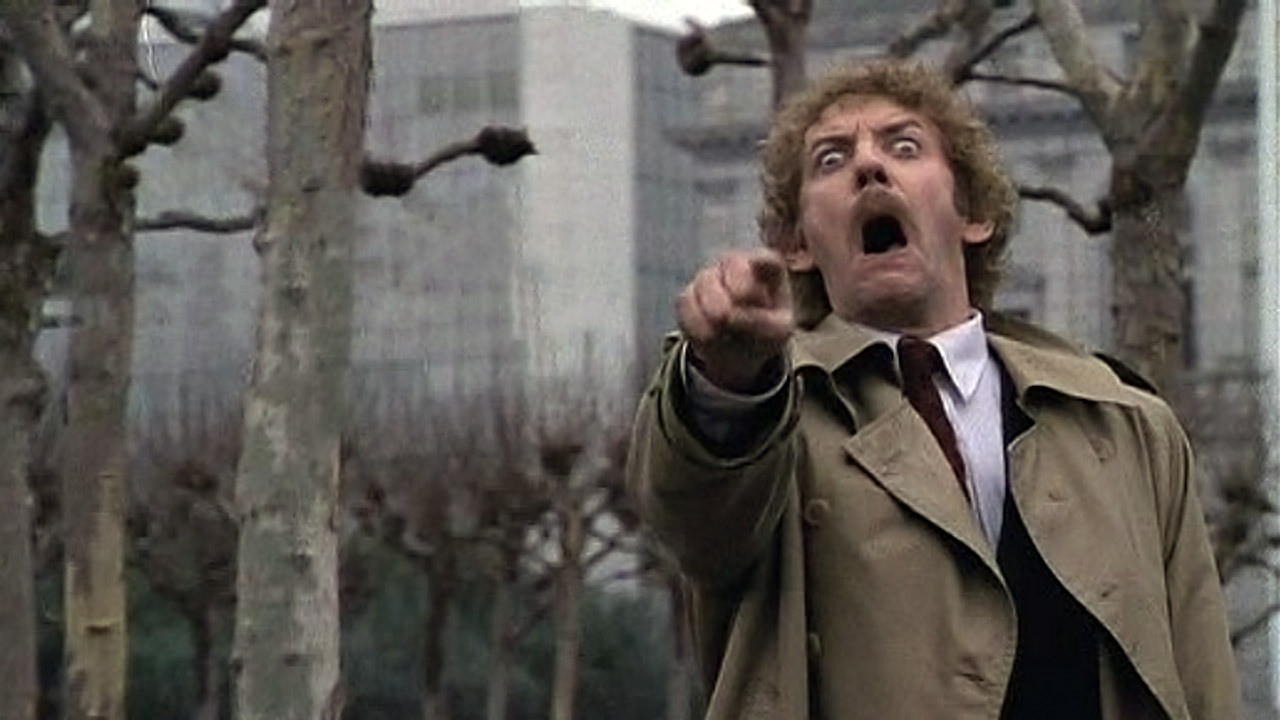
Among the best remakes of all time, Philip Kaufman’s Invasion of the Body Snatchers creates an oppressive, delirious atmosphere that will not let you go. San Francisco health department workers originally believe some friends are becoming paranoid, sensing a non-existent distance in their loved ones, but soon realize that an alien species is replacing human beings with replicas – exact duplicates, except for the lack of emotion.

The sound and visual effects are especially magnificent when compared to other films of the era, but they age well and give the film a gritty realism that feels unsettling against the fantasy storyline.

The cast is weirdly perfect – the unflappable Donald Sutherland, the naturally emotionless Leonard Nimoy, the effortlessly weird Jeff Goldblum, and Nancy Cartwright, who screams so well when aliens show themselves.

2. The Thing (1982)

John Carpenter’s remake of the 1951 SciFi flick The Thing from Another World is both reverent and barrier-breaking, limiting the original’s Cold War paranoia, and concocting a thoroughly spectacular tale of icy isolation, contamination, and mutation.

A beard-tastic cast portrays a team of scientists on expedition in the Arctic who take in a dog. The dog is not a dog, though. Not really. And soon, in an isolated wasteland with barely enough interior room to hold all the facial hair, folks are getting jumpy because there’s no knowing who’s not really himself anymore.

This is an amped up body snatcher movie benefitting from some of Carpenter’s most cinema-fluent and crafty direction: wide shots when we need to see the vastness of the unruly wilds; tight shots to remind us of the close quarters with parasitic death inside.

The story remains taut beginning to end, and there’s rarely any telling just who is and who is not infected by the last reel. You’re as baffled and confined as the scientists.

https://www.youtube.com/watch?v=F7t-919Ec9U

1. Alien (1979)

After a vagina-hand-sucker-monster attaches itself to your face, it gestates inside you, then tears through your innards. Then it grows exponentially, hides a second set of teeth, and bleeds acid. How much cooler could this possibly be?

Compare that to the crew, and the competition seems unreasonably mismatched. The sunken-chested Harry Dean Stanton, the screechy Veronica Cartwright, the sinister Ian Holm, the mustachioed Tom Skerritt, even the mulleted Sigourney Weaver – they all seem doomed before we even get to know them.

Director Ridley Scott handled the film perfectly, emphasizing the tin can quality of the futuristic vessel. These people are simply not safe – they probably were in danger before bringing the afflicted John Hurt back on board. It’s dark in there, decaying and nasty – just like some moldy old mansion. The trick here is that these people- unlike the inhabitants of a haunted house – truly cannot go anywhere. Where would they go? They’re in space.
Much ado has been made, rightfully so, of the John Hurt Chest Explosion (we loved their early work, before they went commercial). But Scott’s lingering camera leaves unsettling impressions in far simpler ways, starting with the shot of all those eggs.

Fright Club: Best Found Footage Horror Movies

It is the most tired and tiresome of all horror film gimmicks, but are there worthwhile found footage movies to be celebrated? Or are they all simply the result of an inexpensive narrative device that allows for sloppy filmmaking and weak production values? Well, we did the research and found that there are many worthwhile offerings in this field. Yes, the bad outnumber the good 10 – 1, but there are good ones. Here are our five (OK – 6!) favorites.

Listen to the whole podcast HERE.

6. Trollhunter (2010)

All ancient cultures generated fairy tales. They passed on stories that wrapped the virtues most respected at the time inside common dangers to tell tales of heroism and humor. Norway’s fairy tales all involve trolls. Indeed, their entire national culture seems weirdly identified with trolls. Why is that? Well, writer/director Andre Ovredal’s Trollhunter suggests that maybe it’s because trolls are a real problem up there.

Ovredal’s approach is wry and silly – adjectives that rarely hang out together, but maybe we haven’t seen enough of Norway’s cinematic output. The FX are sometimes wonderful, and especially effective given the otherwise verite, documentary style. Ovredal makes droll use of both approaches.

Trollhunter is definitely more comedy than horror, as at no time does the film actually seek to scare you. It’s a wild ride into a foreign culture, though, and it makes you think twice about the Norway section of Epcot, I’ll tell you what.

https://www.youtube.com/watch?v=vy2nAOdBUlw

5. Paranormal Activity (2007)

Paranormal Activity, or The Little Ghost Story That Could, opened on a handful of screens in just a few cities around the country for midnight weekend shows only. All screenings promptly sold out. Powerful word-of-mouth and an aggressive marketing campaign propelled the modest flick into multiplexes worldwide. Why the hubbub? Well, for those patient enough to let it seep in – for those who do not require a jump, a slash, or a violent act in every fifth frame – Paranormal Activity is an effective, creepy little production.

A classic ghost story, the film evolves Blair Witch-style, as a couple pestered by something spectral begin cataloguing incidents with a night vision camera. The entire film consists solely of the video footage, tracking about three weeks’ worth of rising tension, most of it captured in the couple’s bedroom while they sleep.

The couple (Katie Featherston and Micah Sloat) is annoyingly believable in their pensions for doing the wrong thing simply to cater to each other’s insecurities. This, and the simplicity in the filmmaking – limited effects, incredibly limited cast and sets, minimal backstory – create an unnerving air of authenticity. The cam-corder timestamp rolls quickly forward, providing shorthand imaging of the couple sleeping, then slows to real time tracking just as something is about to happen. This repetitive gimmick proves so succinct and effective that dread begins to build while still fast forwarding. By the time the clock slows, half the audience is holding its breath.

4. The Last Horror Movie (2003)

A clever concept handled very craftily, The Last Horror Movie is found footage in that we, the audience, have found it recorded over the VHS tape we are apparently watching. What serial killer Max (a top notch Kevin Howarth) has done, you see, is made a documentary of his ghastly habits and shared them with an audience that’s shown, by virtue of the movie it intended to rent just now, its predeliction for someting grisly.

There’s a lot of “yes, I’m a bad person, but aren’t you, too” posturing going on, and while it is an idea to chew on, it nearly outlives its welcome by the time Max applies his theory to concrete action. It’s an idea explored masterfully by Michael Haneke in 1997 (and again, ten years later) with Funny Games, and by comparison, The Last Horror Movie feels a bit superficial. (Not a huge criticism – few could withstand a comparison to Michael Haneke.)

But director Julian Richards deserves immense credit for subverting expectations throughout the film. Just when we assume we’re seeing a predator anticipating the pounce – just when we’re perhaps feeling eager to see someone victimized – the film makes a hard right turn. In doing this, Richards not only manages to keep the entire film feeling fresh and unpredictable, but he enlightens us to the ugliness of our own horror movie fascinations.

https://www.youtube.com/watch?v=McCUO5tQ5gk

3. Man Bites Dog (1992)

Oh, Belgium. How we do love your horror output. In a bit of meta-filmmaking, Man Bites Dog is a pseudo-documentary made on a shoestring budget by struggling, young filmmakers. It is about a documentary being made on a shoestring budget by struggling, young filmmakers. The subject of the documentary is the charismatic Ben – serial killer, narcissist, poet, racist, architecture enthusiast, misogynist, bird lover.

There’s more than what appears on the surface of this cynical, black comedy. The film crew starts out as dispassionate observers of Ben’s crimes – which is certainly morally questionable to begin with. Eventually their commitment to the project, fear of retaliation, bloodlust, or sense of camaraderie pushes them toward aiding Ben, and then finally, to committing heinous crimes themselves.

It’s a bitter view of their chosen industry, and – much like The Last Horror Movie – a bit of a condemnation of the viewer as well. The fact that much of the decidedly grisly content is played for laughter makes it that much more unsettling.

2. [REC] (2007)

[Rec] shares one cameraman’s footage of the night he and a reporter tagged along with a local fire department. The small news crew and two firefighters respond to a call from an urban apartment building. An elderly woman, locked inside her flat, has been screaming. Two officers are already on the scene. Bad, bad things will happen.

Just about the time the first responders realize they’re screwed, the building is completely sealed off from the outside by government forces. Power to the building is cut, leaving everyone without cell reception, cable, and finally, light. Suddenly we’re trapped inside the building with about fifteen people, some of them ill, some of them bleeding, some of them biting.

Filmmakers Jaume Balaguero and Paco Plaza make excellent use of their found footage approach, first by way of the news report, then because of the need to use the camera to see once power’s been cut. They play the claustrophobic nature of the quarantine to excellent effect, creating a kind of funhouse of horror that refuses to let you relax. The American reboot Quarantine is another excellent choice, but our vote has to go with the original.

https://www.youtube.com/watch?v=YGJ_jPKOj1c

1. The Blair Witch Project (1999)

BW is, of course, the now famous instigator of the found footage movement. Yes, Cannibal Holocaust was the first film to use the found footage conceit, but a) it sucked, and b) it didn’t show the audience this footage exclusively. Cannibal Holocaust built a narrative around the film canisters, and then looked at them. One of several truly genius ideas behind Blair Witch is that the filmmakers made the audience believe that the film they were watching was nothing more than the unearthed footage left behind by three disappeared young people.

Between the novelty of the found footage approach and the also novel use of viral marketing, the film drew a huge audience of people who believed they were seeing a snuff film. Nice.

And those two cutting edge techniques buoyed this minimalistic, naturalistic home movie about three bickering buddies who venture into the Maryland woods to document the urban legend of The Blair Witch. Twig dolls, late night noises, jumpy cameras, unknown actors, and not much else blended into an honestly frightening flick that played upon primal fears.

https://www.youtube.com/watch?v=D51QgOHrCj0

Fright Club: Oscar Nominee Skeletons in the Closet

The Oscar nominations are out, and – as is the case every year – the nominees with horror movie skeletons in their closets are fully accounted for. We’ve discussed the great Mark Ruffalo’s not-so-great The Dentist in previous podcasts, so we’ll leave that one in the closet this week. Rooney Mara just missed the cut, as well, with only a cameo in her sister Kate’s Urban Legends: Bloody Mary. The only problem with Tom Hardy was basically determining which bad horror movie to choose (which basically means Tom Hardy is filling in for George “Oh So Many” Clooney this year.)

Who made the grade? Who might take home an Oscar regardless of this horrific offense in their background? Provocative!

Listen to the whole podcast here:

5. House at the End of the Street (2012)

Jennifer Lawrence starred in three films released in 2012 – The Hunger Games (maybe you’ve heard of it?), Silver Linings Playbook (winning her first Oscar), and House at the End of the Street. One of these is not like the others.

Lawrence plays Elissa, high school badass who moves into a secluded new house with her single, doctor mother (Elisabeth Shue). Legend has it, out in the woods behind the house roams the crazy-ass, murdering sister of the cute if damaged neighbor boy, Ryan (Max Thieriot).

House at the End of the Street is a smorgasbord of ideas stolen from better films and filmmakers, although it is not a god-awful mess. Whatever success it has is thanks to Lawrence, whose talent knows no bad screenplay, no clichéd character, and cannot be overshadowed by a tight, white tank top.

4. Blood Creek (2009)

What would be more compelling viewing than Superman Meets Batman? Henry Cavill’s run-in with a Nazi zombie played by Michael Fassbender. Clearly.

A Nazi scientist finds a Viking runestone on a West Virginia farm, where blood sacrifice turns him into an ageless monster, and a weird, runestoney ritual keeps him bound in the farmer’s basement. That guy – that Nazi zombie – is played by Michael Fassbender. Whose mind is blown?

Cavill comes into the picture when his character Evan reunites with long lost and presumed dead brother Victor (Dominic Purcell). Some crazy farmers have had him locked up all this time, taking his blood for god knows what purpose.

Truth be told, Cavill offers a fine turn full of longing and regret, and Fassbender is mesmerizing. The guy cannot turn in a bad performance. He’s completely feral, totally unhinged. It’s like he has no idea that the movie he’s in is so, so, so very bad.

The effects are terrible, the medieval Viking hocus pocus is beyond ludicrous, Purcell cannot act, and the script’s lack of logic actually makes you long for director Joel Schumacher’s better efforts, like Batman and Robin or 8MM.

Seriously, that’s how bad this is.

3. Critters 3 (1991)

Long before Django Unchained, Titanic, or even What’s Eating Gilbert Grape, a barely pubescent Leo DiCaprio donned a day-glow t-shirt and a pre-teen scowl to battle Gremlin rip-offs in Critters 3.

They are furry, toothy, ravenous beasts from outer space and, until episode 3, they were content to terrify rural folk. But now they’re in the big city, and (in a clear rip off of the not-quite-as-terrible film Troll), they are pillaging a single apartment building and terrifying all those trapped inside. It’s a comedy, really, the kind with farting furballs and dunderheaded people. Which is to say, one that’s not particularly funny.

Serving up the same derivative comedy/horror pap you can find in one out of every three films made that decade, Critters 3 has a lot of hair in scrunchies, oversized blouses belted over colorful leggings, stereotypes, and actors on their careers’ last legs. And Leonardo DiCaprio, which will forever be the only reason this movie was released to DVD.

2. Minotaur (2006)

Oscar nominee Tom Hardy is truly one of the most talented actors working today, and I’m sure he’s proud of all his films. Except maybe this one.

The film plays like Jabba the Hutt’s palace set in Middle Earth, except in place of Jabba we have Candyman (Tony Todd, whose actual character name is Deucalion, but he’ll always be Candyman to us). Todd is king of the realm, and beneath his castle lives a Minotaur who requires a blood sacrifice. Periodically he rounds up youngsters from Theo’s (Hardy) village and drops them down below.

Hey – just like the Rancor!

Theo secretly takes the place of one of the sacrificial lambs and hits the underground to slay the Minotaur and reclaim his (probably long dead) love. Hallucinations, danger, and stilted medieval dialog await below the castle, while up above, Deucalion wants to get it on with his sister, who wants to get it on with Theo.

The sets are pretty terrible, as are the accents, props, costumes. Oh, and the Minotaur! He’s like an angry Muppet. But Hardy acquits himself reasonably then quickly goes on to better things.

You will, too, but why not indulge?

1. Dead Space (1991)

A distress signal from a research lab on the planet Fabon draws in maverick space cowboy Steve Krieger (Marc Singer, from such superior films as Beastmaster 3) and his cyborg shipmate Tinpan. Oscar nominee and billion-time Emmy winner Bryan Cranston plays an infected scientist more sympathetic to the creature he’s created than to the crew this merciless muppet feeds upon.

Jesus God this movie is bad.

The story is utterly nonsensical. No, not that scientists removed from earth have unwittingly created a monster. But why do they feel obligated to share all their secrets with some rando space ranger, why does he take charge of the vessel, why does everyone wear blue unitards underneath their lab coats, who on earth thought Laura Mae Tate could act – well the unanswerable conundrums are legion.

But Cranston tries. He tries to create a character, tries to generate chemistry with other actors, tries to be both villain and victim, tries not to look like a mannequin when the giant mutant tears his head clean off. He totally fails, don’t get us wrong, but damnit, he tries.

Fright Club: Best Female Vampire Movies

An aching loneliness tends to be the overwhelming theme of any vampire film that focuses primarily on the female predator – unless, of course, the focus is girl-on-girl action. But even then, aching loneliness, too. Whether evil bloodsuckers or just tragic and doomed to feed off the living, there’s something peculiarly spooky about these ladies. Here we celebrate the vampiress with our countdown of the five(ish) best female vampire movies.

Listen to the podcast, complete with a live studio audience, HERE.

5. The Hunger (1983)

Director Tony Scott’s seductive vampire love story has a little bit of everything: slaughter, girl-on-girl action, ’80s synth/goth tunage, David Bowie. What more can you ask?

Actually the film’s kind of a sultry, dreamily erotic mess. Oh, the gauzy, filmy curtains. Catharine Deneuve is the old world vampire Miriam, David Bowie is her lover. But he suddenly begins aging, and she needs to find a replacement. Enter Susan Sarandon as a medical specialist in unusual blood diseases and a fine actress who’s not above smooching other girls.

There are three reasons people will always watch this film: Bowie, Catherine Deneuve’s seduction of Susan Sarandon (classy!), and the great dark-wave Bauhaus number Bela Lugosi’s Dead. Together it’s a Goth Trifecta! And Goths do love them some vampires.

4. Daughters of Darkness (1971)

Seduction, homoeroticism, drowsy lustfulness – this one has it all.

Countess Bathory – history’s female version of Dracula – checks into an all-but-abandoned seaside hotel. The only other guests, besides the Countess’s lover, Ilona, is a honeymooning couple.

Effortlessly aristocratic, Delphine Seyrig brings a tender coyness, a sadness to the infamous role of Bathory. Seyrig’s performance lends the villain a tragic loveliness that makes her the most endearing figure in the film. Everybody else feels mildly unpleasant, a sinister bunch who seem to be hiding things. The husband, in particular, is a suspicious figure, and a bit peculiar. Kind of a dick, really – and Bathory, for one, has no time for dicks.
Caring less for the victims than for the predator – not because she’s innocent or good, but because her weary elegance makes her seem vulnerable – gives the film a nice added dimension.

The accents are absurd. The outfits are glorious. The performances are compellingly, perversely good, and the shots are gorgeous. Indulge yourself.

https://www.youtube.com/watch?v=sFRuSbykaV0

3. Only Lovers Left Alive (2013)

Leave it to visionary writer/director Jim Jarmusch to concoct a delicious black comedy, oozing with sharp wit and hipster attitude.

Great lead performances don’t hurt, either, and Jarmusch gets them from Tom Hilddleston and Tilda Swinton as Adam and Eve (perfect!), a vampire couple rekindling their centuries-old romance against the picturesque backdrop of…Detroit.

Not since the David Bowie/Catherine Deneuve pairing in The Hunger has there been such perfectly vampiric casting. Swinton and Hiddleston, already two of the most consistently excellent actors around, deliver cooly detached, underplayed performances, wearing the world- weariness of their characters in uniquely contrasting ways.

There is substance to accent all the style. The film moseys toward its perfect finale, casually waxing Goth philosophic about soul mates and finding your joy.

https://www.youtube.com/watch?v=-TbxI_oRSKI

2. Let the Right One In (2008)/Let Me In (2010)

Let’s be honest, we’ve combined these two films just to make room for an additional film in the countdown. In 2008, Sweden’s Let the Right One In emerged as an original, stylish thriller – and the best vampire flicks in years. A spooky coming of age tale populated by outcasts in the bleakest, coldest imaginable environment, the film breaks hearts and bleeds victims in equal measure. Kare Hedebrant‘s Oskar with a blond Prince Valiant cut falls innocently for the odd new girl (an outstanding Lina Leandersson) in his shabby apartment complex. Reluctantly, she returns his admiration, and a sweet and bloody romance buds.

Hollywood’s 2010 version is the less confusingly entitled Let Me In. Director Matt Reeves (Cloverfield) managed to retain the spirit of the source material, while finding ways to leave his own mark on the compelling story of an unlikely friendship.

While the original had an ominous sense of dread, a feel of bleak isolation, and a brazen androgyny that the update can’t touch, Let Me In scores points all its own. Reeves, also adapting the screenplay, ups the ante on the gore, and provides more action, scares and overall shock value.

Together the films set the standard for child vampire fare, and neither one should be missed.

https://www.youtube.com/watch?v=7Hz0x67hMcg

1. A Girl Walks Home Alone at Night (2014)

Writer/director Ana Lily Amirpour has made the world’s first Iranian vampire movie, and though she borrows liberally and lovingly from a wide array of inspirations, the film she’s crafted is undeniably, peculiarly her own.

Set in Bad Town, a city depleted of life – tidy yet nearly vacant – Girl haunts the shadowy, lonesome fringes of civilization. The image is highly stylized, with a hip quirkiness and stationary camera framings that noticeably mine Jarmusch’s early work. Indeed, Amirpour seems an avid fan of American indies of the Eighties and Nineties, as well as the films of endlessly imitated French New Wave filmmakers and Sergio Leone – so that’s a mish mash. But Amirpour effortlessly balances the homages and inspirations, the cultural nuances alive in Girl giving every scene a uniqueness that makes the whole effort surprising.

Amirpour is blessed with a cinematographer in Lyle Vincent capable of translating her theme of loneliness in a dead end town, as well as the cultural influences and Eighties pop references, into a seamless, hypnotic, mesmerizingly lovely vision. The film is simply, hauntingly gorgeous.

Fright Club: Best Silent Horror Movies

Horror movies have been around for as long as movies have been around, and we jumped into the way back machine to look at some of the earliest and most influential horror films the genre has to offer. So many fundamental genre elements – tropes the genre adheres to today – were created in these early, eerily beautiful silent gems that they deserve some attention. While there are actually loads of options – nearly everything Lon Chaney ever did, for instance – these are the five films we deem the best.

Listen to the whole podcast HERE.

5) The Unknown (1927)

When Tod Browning makes a movie about side show freaks, color us excited. In this unseemly tale, the great silent monster Lon Chaney is The Amazing Alonzo, an armless knife thrower/sharp shooter/guitar player/smoker in a circus. He has eyes for his show partner Nanon (Joan Crawford, pre-wire hanger), but the circus strongman is hot for her.

So, it all sounds a tad like Browning’s infamous Freaks. But Nanon spurns the strongman because she can’t stand to be groped by men’s hands – which makes it seem like Alonzo is a shoe-in, except that he is not what he appears to be.

Camera trickery, an actual circus performer, and Chaney’s convincing performance work together to create a believable side show character in Alonzo. Browning couples this unsettling performance with an air of seediness and some bizarre plot twists to leave a lasting impression.

4) The Phantom of the Opera (1925)

You know the story – a shadowy figure haunts the Paris opera house, demading that the object of his affection, Christine, be given the lead in Faust. In what amounts to a cautionary tale about women prioritizing career over family, the story revolves around a masked and disfigured madman and the singer who is easily duped, then saved by righteous men.

The reason this particular version of the film works so well is, of course, Lon Chaney’s now-legendary look. The actor devised his own make up and underwent painful tricks of physical contortion, succeeding in shocking audiences with a ghastly but very realistic visage. His flair as an actor is also on display, and though other versions sometimes mine for a bit of empathy or heartbreak as this hideous creature connives for a love triumphant, Chaney delivers menace and horror.

3) The Man Who Laughs (1928)

The German Expressionist director Paul Leni (Waxworks, The Cat and the Canary) worked with J. Grubb Alexander’s adaptation of Victor Hugo’s novel to cast a macabre spell with this film – one of our very favorites.

A nobleman offends the king, who kills the nobleman (iron maiden!) and has his son, Gwynplaine, disfigured by a surgeon so he can spend his life laughing at his fool of a father. The boy is tossed out, wandering in the snow. He finds a blind baby girl, and the two are saved by a traveling carny.

As is Hugo’s way, goodness is found in the tormented and hideous while the gorgeous society show themselves to be the true beasts. The film looks gloomily gorgeous, and in the hands of silent film star Conrad Veidt, Gwynplaine becomes Hugo’s most sympathetic and heartbreaking monster.

2) The Cabinet of Dr. Caligari (1920)

Few films of the silent era or any other are as visually striking as this. Another German Expressionist, director Robert Wiene uses light and shadow, exaggerated angles and shadowy spirals to envelope us in a nightmare.

In a story told in flashback we learn of Francis, who is visiting his bewitched beloved in an asylum. He tells the tale madness – a traveling hypnotist and his somnambulist, performing at a town fair; murder, magic, and lunacy.

The film’s twist ending and framed storytelling have become commonplace in horror, but the look of this film has never been truly recreated. Taken in the context of the time, Caligari becomes a metaphor and premonition of German’s mindless obedience to lunatic, homicidal authority figure. Carl Mayer and Hans Janowitz wrote it just after WWI to reflect their experiences in the war, but it mirrored a growing phenomenon in their country.

https://www.youtube.com/watch?v=Y0A0sfxM6AE

1) Nosferatu (1922)

Best vampire ever.

Not the seductive, European aristocrat, cloaked and mysterious – oh no. With Count Orlock, filmmaker F. W. Murnau explores something more repellant, casting an actor who resembles an albino naked mole rat. Given that Murnau equates the film’s vampire-related deaths with the plague, this vermin-like image fits well. But more than that, thanks to a peculiarly perfect performance by Max Schreck, Murnau mines the carnality of the vampire myth for revulsion and fear, rather than eroticism.

Murnau’s mastery behind the camera – particularly his ability to capture the vampire’s shadow – made the film a breathtaking horror show at the time. But don’t discount this as dusty history. Max Schreck is a freak, and in his bony, clawlike hands, Count Orlock remains the greatest vampire ever undone by a sinless maiden.

https://www.youtube.com/watch?v=sk70lSUqaM8

Into the Woods

The Forest

by Hope Madden

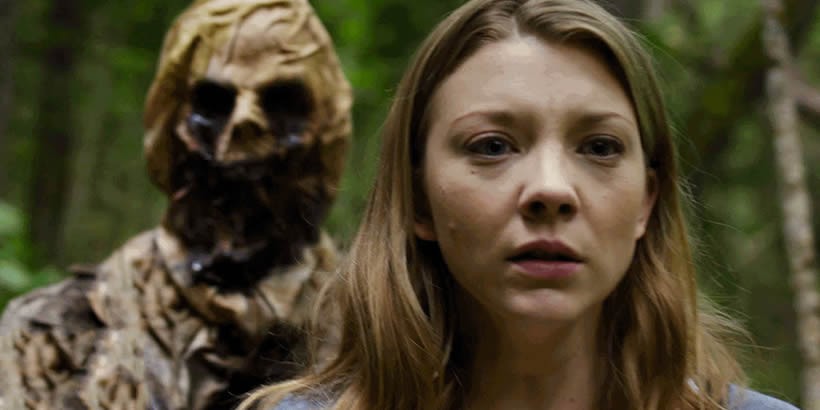
I like a good twin movie as much as the next guy – probably more – but let’s be clear. The Forest is not a good twin movie. It’s not a good movie at all.

Through her freaky twin telepathy, Sara (Natalie Dormer: Hunger Games, Game of Thrones) knows something’s wrong with her sister Jess, living in Japan. She knows she’s alive and in danger, although the authorities calling to verify Jess’s missing person status believe she is dead because she’s gone alone into the suicide forest on Mount Fuji.

Well, off to Japan Sara goes, to enter the forest alone, stray from the path, see ghosts, listen to the advice of creepy school girls who appear in the middle of the forest at night (because there’s nothing at all suspicious about that), and just generally make bad choices.

Every individual has specific buttons horror movies can push. Some people are afraid of clowns, some of enclosed spaces. Some of us have a pathological terror of the woods. Some of the same of us have a twin sister. So, the idea of getting lost in the dark in a forest full of angry ghosts and ghouls as you hunt desperately for your twin sister – well, for some of us, these are buttons that should make it really easy for a movie to be scary.

Here’s what I’m saying – I am the audience for this movie, and it was as scary as an episode of Three’s Company.

Dormer’s performance is far more lifeless than those stiffs hanging from the trees, and director Jason Zada’s overreliance on jump scares and inability to develop atmosphere guarantee a tedious walk in the woods.

Verdict-1-5-Stars

https://www.youtube.com/watch?v=Oi1wU872I-I

Fright Club: Best Horror Films of 2015

The year is over and the time has come to assess the damage. What were the best the genre had to offer in 2015? New Zealand came up big, while new filmmakers, creepy twins, and potentially contagious horrors kept us awake this year.

Not that this was an easy list to compile. We enlisted the assistance of Senior Filmmaker Correspondent Jason Tostevin for some wisdom, which led to some polite disagreement, but we thank him all the same! Listen to the whole argument, errr, podcast HERE.

5. What We Do in the Shadows

In the weeks leading up to the Unholy Masquerade – a celebration for Wellington, New Zealand’s surprisingly numerous undead population – a documentary crew begins following four vampire flatmates.

Viago (co-writer/co-director Taika Waititi) – derided by the local werewolf pack as Count Fagula – acts as our guide. He’s joined by Vladislav (co-writer/co-director Jemaine Clement), who describes his look as “dead but delicious.” There’s also Deacon (Jonathan Brugh) – the newbie at only 187 years old – and Petyr. Styled meticulously and delightfully on the old Nosferatu Count Orlock, Petyr is 8000 years old and does whatever he wants.

Besides regular flatmate spats about who is and is not doing their share of dishes and laying down towels before ruining an antique fainting couch with blood stains, we witness some of the modern tribulations of the vampire. It’s hard to get into the good clubs (they have to be invited in) or find a virgin. Forget about tolerating the local pack of werewolves (led by the utterly hilarious alpha Rhys Darby).

The filmmakers know how to mine the absurd just as well as they handle the hum drum minutia. The balance generates easily the best mock doc since Christopher Guest. It was also the first great comedy of 2015.

5. Deathgasm

That’s right – it’s a good, old fashioned Kiwi Tie for 5th place.

New Zealand teenage outcast Brodie (Milo Cawthorne) knows he and his friends are losers, so of course they start a band to get loud and be cool! But when their rocking involves playing an ancient piece of music known as the Black Hymn, they unwittingly summon an evil entity and the body count starts rising.

In his feature debut, writer/director Jason Lei Howden, a veteran of Peter Jackson’s special effects team, borrows heavily from Shaun of the Dead-style pacing and camerawork while managing to poke some blood-spattered fun at the “devil music” stereotypes often thrown at heavy metal.

You’ll find plenty of laughs, some rom-com elements, and winning performances from both Cawthorne and Kimberley Crossman as Medina, the school beauty who can also swing a pretty mean ax.

Clever and surprisingly self-aware, Deathgasm is fine excuse to feed your inner metalhead.

https://www.youtube.com/watch?v=4m6BIvN3ggM

4. Bone Tomahawk

In a year rife with exceptional Westerns, this film sets itself apart. S. Craig Zahler’s directorial debut embraces the mythos of the Wild West, populating a familiar frontier town with weathered characters, but casting those archetypes perfectly. Kurt Russell and Richard Jenkins, in particular, easily inhabit the upright sheriff and eccentric side kick roles, while Patrick Wilson’s committed turn as battered heroic lead offers an emotional center.

Zahler effortlessly blends the horror and Western genres, remaining true to both and crafting a film that’s a stellar entry into either category. Bone Tomahawk looks gorgeous and boasts exceptional writing, but more than anything, it offers characters worthy of exploration. There are no one-note victims waiting to be picked off, but instead an assortment of fascinating people and complex relationships all wandering into mystical, bloody danger.

Because the true horror is a long time coming and you’re genuinely invested in the participants in this quest, the payoff is deeply felt. This is a truly satisfying effort, and one that marks a new filmmaker to keep an eye on.

3. Goodnight Mommy

There is something eerily beautiful about Severin Fiala and Veronika Franz’s rural Austrian horror Goodnight Mommy (Ich seh, Ich seh).

During one languid summer, twin brothers Lukas and Elias await their mother’s return from the hospital. They spend their time bouncing on a trampoline, floating in a pond, or exploring the fields and woods around the house. But when their mom comes home, bandaged from the cosmetic surgery she underwent, the brothers fear more has changed than just her face.

Inside this elegantly filmed environment, where sun dappled fields lead to leafy forests, the filmmakers mine a kind of primal childhood fear. Their graceful storytelling leads you down one path before utterly upending everything you think you know. They never spoon feed you information, depending instead on your astute observation – a refreshing approach in this genre.

The film is going to go where you don’t expect it to go, even if you expect you’ve uncovered its secrets.

https://www.youtube.com/watch?v=hisSd7qyY40

2. The Nightmare

An effective scary movie is one that haunts your dreams long after the credits roll. It’s that kind of impact most horror buffs are seeking, but even the most ardent genre fan will hope out loud that Rodney Ascher’s new documentary The Nightmare doesn’t follow them to sleep.

His film explores sleep paralysis. It’s a sleep disorder – or a label hung on the world’s most unfortunate night terrors – that’s haunted humanity for eons. And dig this – it sounds like it might be contagious.

Ascher’s a fascinating, idiosyncratic filmmaker. His documentaries approach some dark, often morbid topics with a sense of wonder. His films never push an agenda, and he doesn’t seem to have made up his mind on his subject matter. Instead, his is open-mided approach which, in turn, iinvites the audience to follow suit.

It’s not all earnest sleuthing, though, because Ascher is a real showman. What’s intriguing is the way he draws your attention to his craftsmanship – like framing a shot so you see the speaker not head on, but in a large mirror’s reflection, then leaving the reflection of the cameraman’s arm in the same shot. Touches like this never feel amateurish, but they don’t really feel like a cinematic wink, either. Instead it becomes a way to release the tension, and remind you that you are, indeed, watching a movie… a heartbreaking, terrifying movie.

We spend a great deal of time watching horror movies, and we cannot remember an instance that we considered turning off a film for fear that we would dream about it later. Until now.

1. It Follows

David Robert Mitchell invites you to the best American horror film in more than a decade.
Yes, It Follows is the STD or horror movies, but don’t let that dissuade you. Mitchell understands the anxiety of adolescence and he has not simply crafted yet another cautionary tale about premarital sex.

Mitchell has captured that fleeting yet dragging moment between childhood and adulthood and given the lurking dread of that time of life a powerful image. There is something that lies just beyond the innocence of youth. You feel it in every frame and begin to look out for it, walking toward you at a consistent pace, long before the characters have begun to check the periphery themselves.

Mitchell borrows from a number of coming of age horror shows, but his film is confident enough to pull it off without feeling derivative in any way. The writer/director takes familiar tropes and uses them with skill to lull you with familiarity, and then terrify you with it.

Mitchell’s provocatively murky subtext is rich with symbolism but never overwhelmed by it. His capacity to draw an audience into this environment, this horror, is impeccable and the result is a lingering sense of unease that will have you checking the perimeter for a while to come.

Bloodying Lines

Over Your Dead Body

by Hope Madden

When you’re watching a film that blurs the line between art and reality, a story where actors in a play find that their real lives eerily begin to mirror the drama on the stage, you might think you can guess where things will take you. Unless that film was made by Takashi Miike. If that’s the movie you happen upon, all you know for sure is that things will, sooner or later, turn really ugly.

Such is the case with Miike’s 87th film, Over Your Dead Body. (He’s actually made four more since this one!)

The film begins slowly, but so did Audition, and that one eventually took audiences places we were ill-prepared to go. Something to keep in mind if you find yourself antsy during the first act.

Working from a script by frequent collaborator Kikumi Yamagishi, Miike employs unusual sound editing to immediately create a nightmarish atmosphere.

Miyuki (Ko Shibasaki) and her cheating boyfriend Kousuke (Ebizo Ichikawa) land the leads in a Kabuki style ghost story.

On stage and off, the lovers’ path is a rocky one, and Miike’s approach leaves you forever wondering whether you’re seeing any kind of reality – is this a hallucination? A descent into madness? Hell?

The ambiguity feeds the film’s horrifying dreamlike quality, but Over Your Dead Body is not all atmospherics and guessing games. The movie takes its first turn toward the supernatural when it introduces a creepy doll, but reminds you what you’ve signed up for once Miyuki starts rummaging around the utensil drawer.

Yikes!

Profoundly uncomfortable yet hypnotic and elegant, it’s a combination few manage quite like Miike. Over Your Dead Body is not the satisfying genre effort of Audition, nor is it the visceral wonder of 13 Assassins, and it lacks the macabre humor of many of the filmmaker’s previous collaborations with Yamagashi. The leaden first act doesn’t help, either, but you can expect a hell of a payoff. As always.

Verdict-3-0-Stars

Fright Club: Love Them or Hate Them

At long last, the keeper of the keys for Killumbus Horror joins Fright Club, with the topic of her own choosing. Bridget Oliver decided we should discuss the most polarizing filmmakers in horror, so here you have the Love Them or Hate Them list. Note, we are not talking about filmmakers whose personal lives make them hard to stomach. (We’re looking at you, Roman Polanski.) No, these are movie makers whose cinematic output have made them polarizing figures. The three of us have differing opinions about the 5, so be sure to check out the full podcast HERE.

5. Tom Six

After a handful of middling Dutch comedies, Tom Six stumbled upon inspiration – 100% medically accurate inspiration. Yes, we mean the Human Centipede trilogy – a set of films that doubles its ridiculous, bloody, unseemly intensity with every new episode.

For a lot of viewers, the Human Centipede films are needlessly gory and over-the-top with no real merit. But for some, Six is onto something. His first effort uses a very traditional horror storyline – two pretty American girls have a vehicular break down and find peril – and takes that plot in an unusual direction. But where most horror filmmakers would finish their work as the victims wake up and find themselves sewn together, mouth to anus, this is actually where Six almost begins.

His next two efforts in the trilogy are more consciously meta and more clearly referential of the controversy he caused with Episode 1. Much like Last House on the Left, the Centipede films seem to be addressing the abundance of almost unthinkable but true life violence available for public consumption, turning that into something so bombastic and fictional that it’s almost safe to watch.

Not everyone (George, for example) buys that theory. For many, Tom Six makes movies that people simply don’t want to sit through.

4. Ti West

Because West’s films are not, in and of themselves, particularly controversial, his inclusion in this list may seem counter intuitive. But West’s early work suggested a promise that he has failed to live up to, or so several of us seem to think.

West’s first film, The Roost, starring Tom Noonan (hooray!), was a low budget affair that worked mostly because of a peculiar style and ingenuity. It seemed to mark a filmmaker who could benefit from a little real cash flow and some time to develop an idea. For a lot of people, the filmmaker’s next effort, The House of the Devil, proved the director’s mettle.

Not for everyone, though. We see House of the Devil as one of those horror movies that people who don’t like horror really enjoy. It’s a short film extended far beyond its natural length, and though it boasts some excellent cast mates (Noonan, again, along with Mary Woronov and Greta Gerwig), it’s a long slog. The rest of West’s catalog offers a perfect example of the law of diminishing returns. While many (including Bridget) are eager to see whatever it is West is ready to put out next, MaddWolf thinks he’s outstayed his welcome.

https://www.youtube.com/watch?v=AtXtSGRV0xc

3. Rob Zombie

Here’s where the real heavy-hitters begin, because if there is one filmmaker who’s caused the most divisive response from our listeners, it’s Rob Zombie.

We enjoy Zombie’s particular knack with casting. His giddy affection for horror and other cult film genres is on full display with every minor and major piece of casting in every film, and for that reason alone, true horror fans must enjoy his work. On the other hand, his greatest successes – Halloween, for instance – are often his worst films.

Though The Devil’s Rejects is a very fine genre effort, his version of Halloween was nothing more than an arrogant correction of John Carpenter’s genre classic, and the very polarizing Lords of Salem was his ill-aimed attempt to model classic Italian horror.

2. M. Night Shyamalan

Shyamalan is clearly not known solely for horror, but he’s a tremendously polarizing filmmaker who dabbles in horror. His The Sixth Sense was not only nominated for two Oscars (directing and writing), but it was one of the most popular films of 1999. The filmmaker went on to write and direct his personal masterpiece, Unbreakable, followed by another wonderful effort, Signs, before bottoming out completely.

For the next 13 years, Shyamalan did little more than embarrass himself. But just this year he made a humble but genuine comeback with The Visit – a return to his twist ending horror shows. It’s a modest film, but refreshingly lacking the pretentiousness that has marked most of Shyamalan’s work in the last decade and a half.

Though definitely flawed, the film boasts a fine cast, a lot of creepy tension, and the kind of twist ending you should have seen coming but simply did not. That is, it marks a return to form, however low key, for a filmmaker that seemed to have all the promise in the world before he lost his way.

1. Eli Roth

Who else?

There was a thread about The Green Inferno on Bridget’s Killumbus Horror facebook page that just about broke the internet. Bridget had to remove it, not because those posting were being too hostile toward Roth, but because the comments turned a bit vitriolic toward other posters. This is a guy people love to love and love to hate.

We have to admit that we’re in Camp 2. Though both Hostel and Hostel 2 are decent efforts, Roth is a filmmaker whose timing is far superior to his actual talent. Hostel was released at a time when the world was just beginning to understand that torture was now actually on the table as an acceptable, even encouraged, strategy. Roth’s film tapped into the zeitgeist – forgive our pretentious vocabulary – and spawned a decade of horror porn followers.

But Roth has struggled to follow the popularity of his torture porn epics, and recent efforts like Knock Knock and The Green Inferno, attempts to push the genre envelope, come off more as neutered versions of Seventies films.

Join us next week as filmmaker Jaston Tostevin helps us count down the best horror films of 2015. Until then, stay frightful, my friends.

Fright Club: Best Christmas Horror Movies

It’s the holidays!! Who doesn’t want to snuggle in with their cup of nog and a nice, Christmassy bloodletting? I know we do. But with so very much to choose from – Krampus, A Christmas Horror Story, Silent Night, Deadly Night, Santa Claws, Gremlins, The Nightmare Before Christmas, The Legend of Hell House, The Children, Satan’s Little Helper, Santa’s Slay – which should you watch?

Well, none of those. I mean, they’re great in their own (sometimes awful) ways, but we have a list of 5 that may actually scare you.

Fright Club Podcast · fc47 – best Christmas horror movies

5. Saint (2010)

What is every child’s immediate reaction upon first meeting Santa? Terror. Now imagine a mash-up between Santa, a pirate, and an old school Catholic bishop. How scary is that?

Well, that’s basically what the Dutch have to live with, as their Sinterklaas, along with his helper Black Peter, sails in yearly to deliver toys and bag naughty children to kidnap to Spain. I’m not making this up. This truly is their Christmas fairy tale. So, really, how hard was it for writer/director Dick Maas to mine his native holiday traditions for a horror flick?

Allegorical of the generations-old abuse against children quieted by the Catholic Church, Saint manages to hit a few nerves without losing its focus on simple, gory storytelling.

4. Black Christmas (1974)

Director Bob Clark made two Christmas-themed films in his erratic career. His 1940s era A Christmas Story has become a holiday tradition for many families and most cable channels, but we celebrate a darker yule tide tale: Black Christmas.

Sure, it’s another case of mysterious phone calls leading to grisly murders; sure it’s another one-by-one pick off of sorority stereotypes; sure, there’s a damaged child backstory; naturally John Saxon co-stars. Wait, what was different? Oh yeah, it did it first.

Released in 1974, the film predates most slashers by at least a half dozen years. It created the architecture. More importantly, the phone calls are actually quite unsettling.

Why the girls remain in the sorority house (if only they’d had an Official Red Ryder Carbine-Action Two-Hundred-Shot Range Model Air Rifle!), or why campus police are so baffled remains a mystery, but Clark was onto something with the phone calls, as evidenced by the number of films that ripped off this original convention.

3. Sheitan (2006)

How fucked up is this one? The fantastic Vincent Cassel stars as the weirdest handyman ever, spending a decadent Christmas weekend with a rag tag assortment of nightclub refugees. After Bart (Olivier Barthelemy) is tossed from the club, his mates and the girls they’re flirting with head out to spend the weekend at Eve’s (a not shy Rosane Mesquida). Way out in rural France, they meet Eve’s handyman, his very pregnant wife, and a village full of borderline freaks.

But who cares when somebody might be knocking boots at any minute?

The film is savagely uncomfortable and refreshingly unusual. Cassel’s performance is a work of lunatic genius, and his film is never less than memorable.

2. Rare Exports: A Christmas Tale (2010)

It’s not just the Dutch with a sketchy relationship with Santa. That same year Saint was released, the Fins put out an even better Christmas treat, one that sees Santa as a bloodthirsty giant imprisoned in Korvatunturi mountains centuries ago.

Some quick thinking reindeer farmers living in the land of the original Santa Claus are able to separate naughty from nice and make good use of Santa’s helpers. There are outstanding shots of wonderment, brilliantly subverted by director Jalmari Helander, with much aid from his chubby cheeked lead, a wonderful Onni Tommila.

Rare Exports is an incredibly well put together film. Yes, the story is original and the acting truly is wonderful, but the cinematography, sound design, art direction and editing are top notch.

1. Inside (2007)

Who didn’t know this would be our #1?

This is not your usual Christmas cheer – not even for this list. No, this is a horror movie, no question about it, and it stems from the country that put out some of the most extreme yet excellent the genre had to offer in the first decade of this century. France’s 2000 – 2010 output included High Tension, Frontiers, Martyrs, Sheitan, Calvaire, Them, Irreversible, and Trouble Every Day, all of which are spectacular and challenging horror options. Inisde stands out for its exponentially developing pace, its sinister sense of humor, and one outstanding villain.

Beatrice Dalle’s insidious performance is hard to shake. Fearless, predatory, pitiless and able to take an enormous amount of abuse, her nameless character stalks a very, very pregnant Sarah (Alysson Paradis). Sarah lost her husband in a car crash some months back, and now, on the eve of Christmas, she sits, enormous, uncomfortable, and melancholy about the whole business. She’s grown cynical and despondent, more depressed than excited about giving birth in the morning.

Alexandre Bustillo’s film seeks to change her mind, make her want that baby. Because Dalle’s lurking menace certainly wants it. Her black clad silhouette is in the back yard, smoking and stalking – and she has seriously bad plans in mind.

Bustillo and directing partner Julien Maury swing the film from intelligent white collar angst to goretastic bloodfest with ease. The sadistic humor Dalle brings to the performance adds chills, and Paradis’s realistic, handicapping size makes her vulnerability palpable.

This is a mostly brilliant effort, a study in tension wherein one woman will do whatever it takes, with whatever utensils are available, to get at the baby still firmly inside another woman’s body.

Merry f’ing Christmas!

Stream episode fc47 – best Christmas horror movies by Fright Club Podcast podcast | Listen online for free on SoundCloud