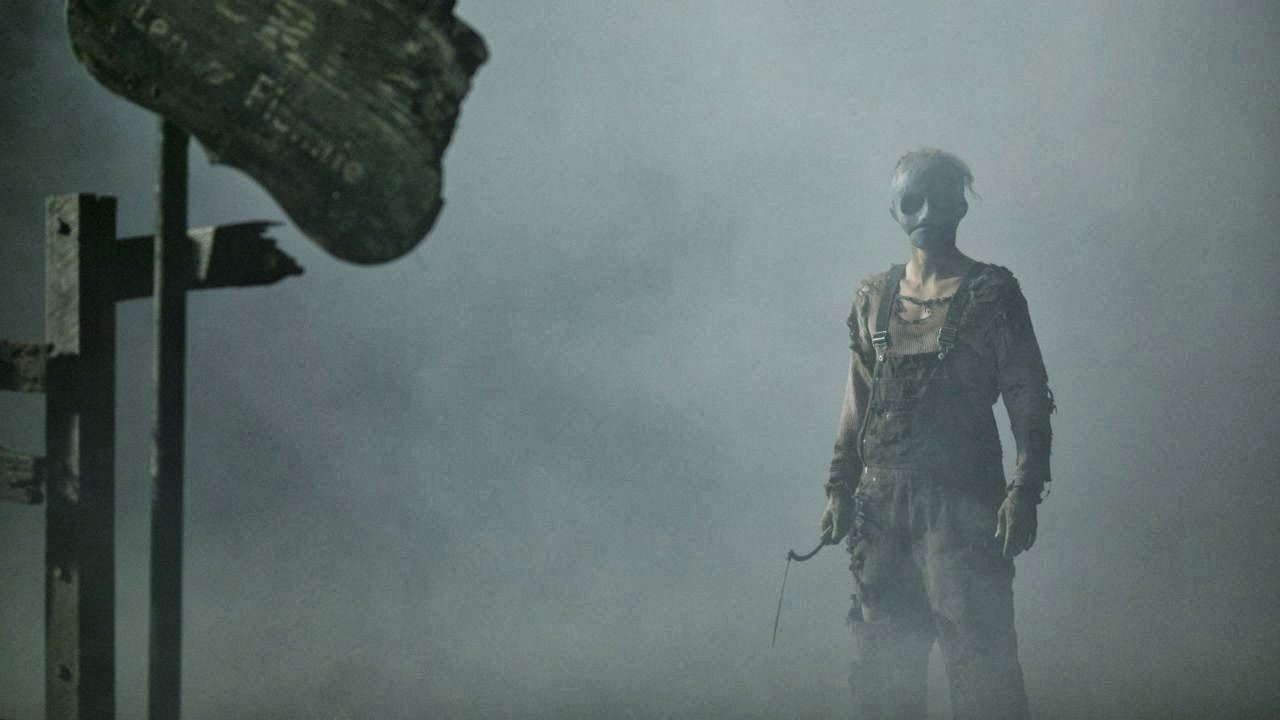
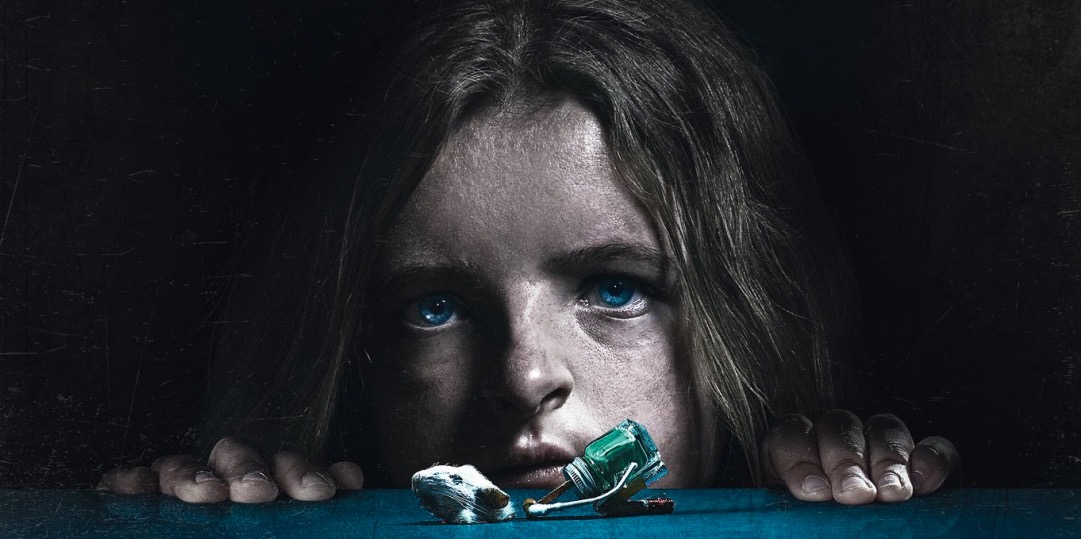
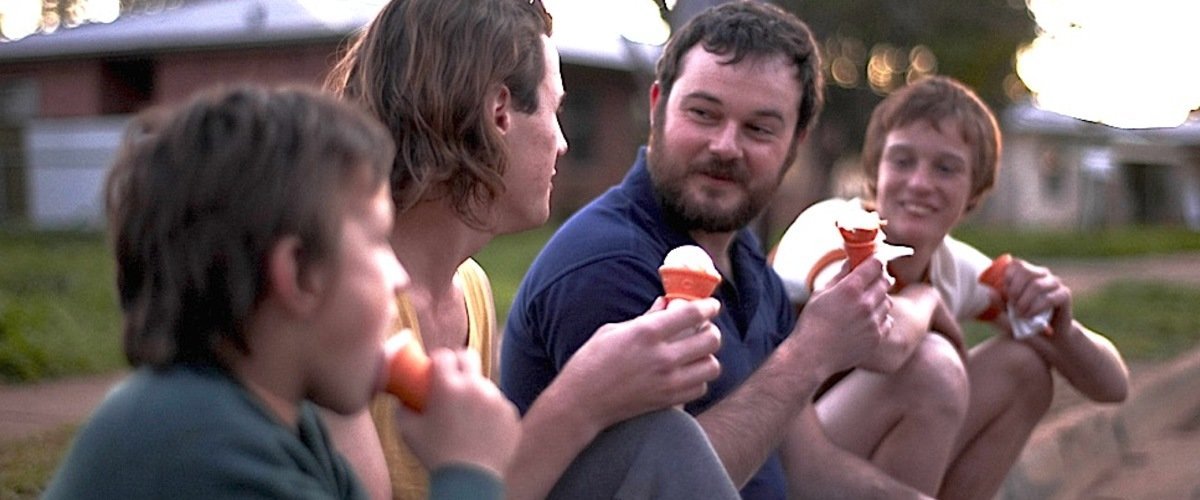
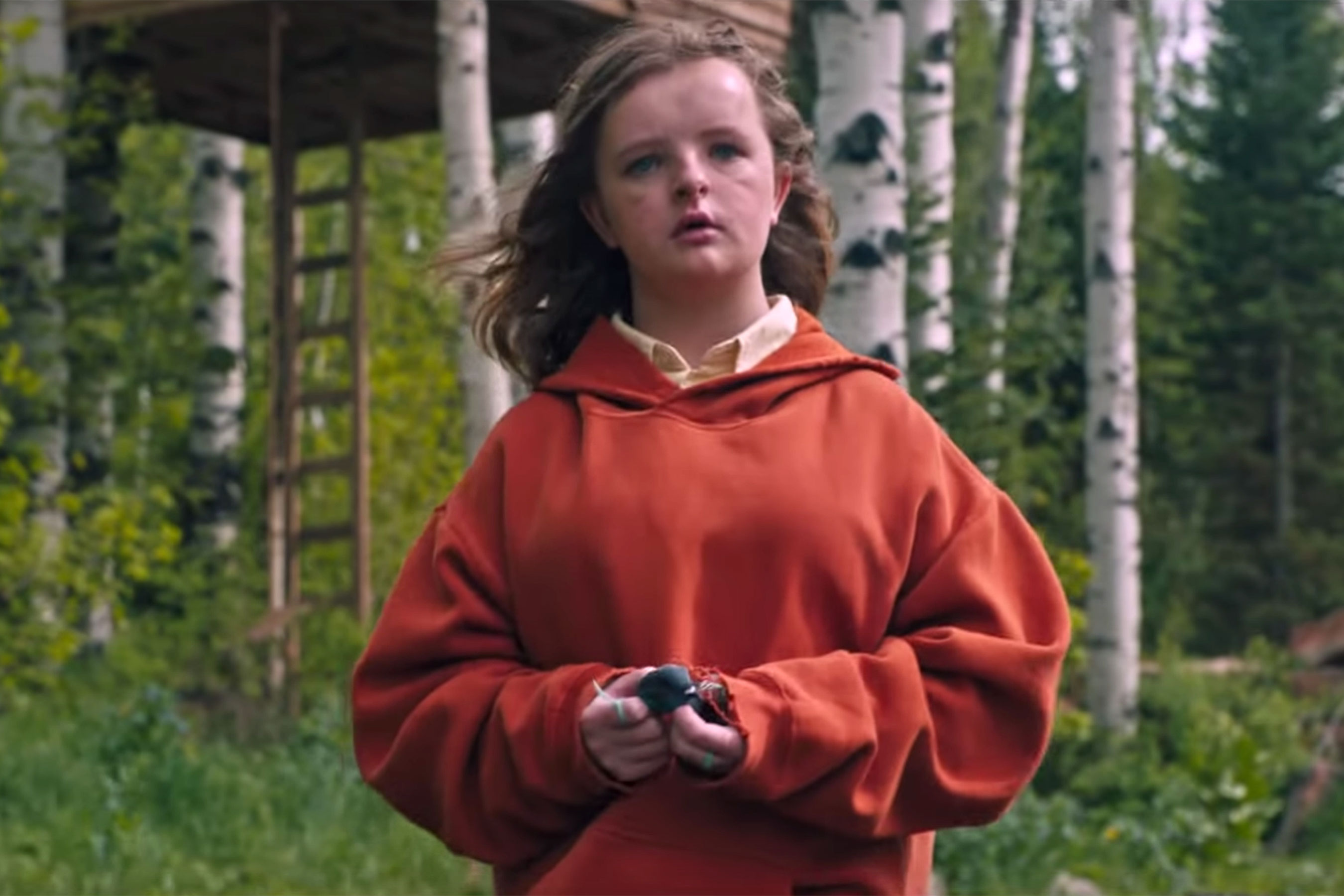
Tag Archives: horror movies

Fright Club: Realism in Horror

Part of the fun of horror is to be able to separate yourself from the images onscreen. The old “this could never really happen” thing helps us sleep at night. But there are some films that rob you of that safety net, burrowing under your skin and into your subconscious specifically because you are convinced that it could definitely happen—maybe it already has.

Today we salute realism in horror with five films to give you nightmares.

5. Nothing Bad Can Happen (2001)

This film is tough to watch, and the fact that it is based on a true story only makes the feat of endurance that much harder. But writer-director Katrin Gebbe mines this horrific tale for a peculiar point of view that suits it brilliantly and ensures that it is never simply a gratuitous wallowing in someone else’s suffering.

Tore (Julius Feldmeier) is an awkward teen in Germany. His best friend is Jesus. He means it. In fact, he’s so genuine and pure that when he lays his hands on stranded motorist Benno’s (Sascha Alexander Gersak) car, the engine starts.

Thus begins a relationship that devolves into a sociological exploration of button-pushing evil and submission to your own beliefs. Feldmeier is wondrous—so tender and vulnerable you will ache for him. Gersak is his equal in a role of burgeoning cruelty. The whole film has a, “you’re making me do this,” mentality that is hard to shake. It examines one peculiar nature of evil and does it so authentically as to leave you truly shaken.

4. Open Water (2003)

Jaws wasn’t cinema’s only powerful shark horror. In 2003, young filmmaker Chris Kentis’s first foray into terror is unerringly realistic and, therefore, deeply disturbing.

From the true events that inspired it to one unreasonably recognizable married couple, from superbly accurate dialog to actual sharks, Open Water’s greatest strength is its unsettling authenticity. Every element benefits from Chris Kentis’s control of the project. Writer, director, cinematographer and editor, Kentis clarifies his conception for this relentless film, and it is devastating.

A couple on vacation (Blanchard Ryan and Daniel Travis) books a trip on a crowded, touristy scuba boat. Once in the water, they swim off on their own – they’re really a little too accomplished to hang with the tourists. And then, when they emerge from the depths, they realize the boat is gone. It’s just empty water in every direction.

Now, sharks aren’t an immediate threat, right? I mean, tourist scuba boats don’t just drop you off in shark-infested waters. But the longer you drift, the later it gets, who knows what will happen?

3. The Snowtown Murders (2011)

John Bunting tortured and killed eleven people during his spree in South Australia in the Nineties. We only watch it happen once on film, but that’s more than enough.

Director Justin Kurzel seems less interested in the lurid details of Bunting’s brutal violence than he is in the complicated and alarming nature of complicity. Ironically, this less-is-more approach may be why the movie leaves you so shaken.

An unflinching examination of a predator swimming among prey, Snowtown succeeds where many true crime films fail because of its understatement, its casual observational style, and its unsettling authenticity. More than anything, though, the film excels due to one astounding performance.

Daniel Henshall (also in Babadook) cuts an unimpressive figure on screen – a round faced, smiling schlub. But he brings Bunting an amiability and confrontational fearlessness that provides insight into what draws people to a sadistic madman.

https://www.youtube.com/watch?v=qcoCTA2IZ7c

2. Hounds of Love (2016)

Driven by a fiercely invested and touchingly deranged performance from Emma Booth, Hounds of Love makes a subtle shift from horrific torture tale to psychological character study. In 108 grueling minutes, writer/director Ben Young’s feature debut marks him as a filmmaker with confident vision and exciting potential.

It is the late 1980s in Perth, Australia, and at least one young girl has already gone missing when the grounded Vicki (Ashleigh Cummings) sneaks out her bedroom window to attend a party. This isn’t nearly as dumb a move as is accepting a ride from Evie White (Booth) and her husband John (Stephen Curry).

As the couple dance seductively and drink to celebrate, Young disturbingly conveys the weight of Vicki’s panicked realization that she is now their captive. It is just one in a series of moments where Young flexes impressive chops for visual storytelling, utilizing slo-motion, freeze frame, patient panning shots and carefully chosen soundtrack music to set the mood and advance the dreadful narrative without a spoken word.

And then, just when you might suspect his film to wallow in the grisly nature of the Whites’ plan for Vicki, Young turns to dialog sharp enough to upend your expectations, and three vivid characters are crafted in the suffocating dread of the White’s neighborhood home.

No doubt, events get brutal, but never without reminders that Young is a craftsman. Subtle additions, such as airplanes flying freely overhead to contrast with Vicki’s captivity, give Hounds of Love a steady dose of smarts, even as it’s shaking your core.

https://www.youtube.com/watch?v=UNEurXzvHqE

1. Texas Chainsaw Massacre (1974)

Not everyone considers The Texas Chainsaw Massacre a classic. Those people are wrong. Perhaps even stupid.

Tobe Hooper’s camera work, so home-movie like, worked with the “based on a true story” tag line like nothing before it, and the result seriously disturbed the folks of 1974. It has been ripped off and copied dozens of times since its release, but in the context of its time, it was so absolutely original it was terrifying.

Hooper sidestepped all the horror gimmicks audiences had grown accustomed to – a spooky score that let you know when to grow tense, shadowy interiors that predicted oncoming scares – and instead shot guerilla-style in broad daylight, outdoors, with no score at all. You just couldn’t predict what was coming.

He dashes your expectations, making you uncomfortable, as if you have no idea what you could be in for. As if, in watching this film, you yourself are in more danger than you’d predicted.

But not more danger than Franklin is in, because Franklin is not in for a good time.

So, poor, unlikeable Franklin Hardesty, his pretty sister Sally, and a few other friends head out to Grampa Hardesty’s final resting place after hearing the news of some Texas cemeteries being grave-robbed. They just want to make sure Grampy’s still resting in peace – an adventure which eventually leads to most of them making a second trip to a cemetery. Well, what’s left of them.

http://www.youtube.com/watch?v=eY4ldz615FA

Wait—Camping Is Dangerous?

Feral

by Hope Madden

Here’s the thing about Feral. It’s a decent movie: well-paced, competently directed, solidly performed. And there is not a single interesting, novel, surprising or inspired moment in it.

Maybe one, but it’s not reason enough to make this movie.

Three handsome couples head into the woods. They get a little lost, decide to pitch tents and find the lake in the morning.

They hear a noise.

One of them goes out to pee.

There’s something dangerous in the woods.

Duh.

Co-writer/director Mark Young follows up half a dozen low budget, middling-to-poor horror and action films with this adequate take on a monster-in-the-woods tale.

The sole reason the film stands out in any way is that Young’s hero, Alice (Scout Taylor-Compton) is a lesbian. Equally refreshing, males are as likely as females to fall prey to the hungry forest beast.

Bravo the nonchalance with which this is depicted, as the film does not strain to call attention to the novelty of this final girl and hero twist.

Yes, it’s about time. And yet, maybe Feral needed at least one other thing to set it apart? Because as it is, it’s simply a checklist of cabin-in-the-woods horror tropes, faithfully rendered, right up to the waning moments of its running time.

Taylor-Compton offers a perfectly serviceable performance, as do most of the actors around her. Olivia Luccardi, Renee Olstead and Landry Allbright all work to provide something close to a second dimension to underwritten, throwaway characters.

Lew Temple is an always welcome sight as the—wait for it—hermit whose assistance in this situation is suspect.

Together, cast and director generate scares by relying less on imagination and more on your familiarity with the genre itself. Therefore, assuming you have ever seen a horror movie in your life, you will not be scared.

You’ll just be reminded for the thousandth time that camping is an undeniably stupid thing to do. That’s what I got out of it, anyway.

All in the Family

Hereditary

by Hope Madden and George Wolf

Grief and guilt color every somber, shadowy frame of writer/director Ari Aster’s unbelievably assured feature film debut, Hereditary.

The Graham family is maybe less grief-stricken over the loss of Grandma than you might expect. Daughter Annie (Toni Collette) delivers a eulogy that admits her mother was difficult, secretive. Her oldest son Peter (Alex Wolff) seems nonplussed by it all. He’s probably stoned, though.

Supportive but exhausted husband Steve (Gabriel Byrne) is almost relieved, but the loss does bother the Graham’s socially isolated younger daughter, Charlie (Millie Shapiro, in one of the more chilling performances this year).

With just a handful of mannerisms, one melodic clucking noise, and a few seemingly throwaway lines, Aster and his magnificent cast quickly establish what will become nuanced, layered human characters, all of them scarred and battered by family.

The eulogy caps a striking film opening, where serpentine camera movement intertwines the Graham family with the intricate miniatures Annie creates inside their grand, secluded house. What we see suggests a scaled-down world of its own, lifelike but lifeless.

Art and life imitate each other to macabre degrees while family members strain to behave in the manner that feels human, seems connected, or might be normal. What is said and what stays hidden, what’s festering in the attic and in the unspoken tensions within the family, it’s all part of a horrific atmosphere meticulously crafted to unnerve you.

If horror fare such as The VVitch or It Comes at Night is not your bag, then you probably don’t care for the slow, detailed burn that A24 studio regularly serves. For those that do, hooray! Here’s another “adult” horror film, one that invests more in character development than in jump scares (though there are a few, including one so jarring it awakens the potential of the device).

Aster takes advantage of a remarkably committed cast to explore family dysfunction of the most insidious type. Whether his supernatural twisting and turning amount to metaphor or fact hardly matters with performances this unnerving and visual storytelling this hypnotic.

Applause to cinematographer Pawel Pogorzelski for turning this intricately designed home into a foreboding character all its own. Like Rosemary’s Baby, The Shining, The Haunting, The Others and any number of brilliant genre hauntings, Hereditary uses its surroundings to create a space where the most mundane moments take on a diabolical chill.

The family dynamic at work here is gut-punch authentic. Collette anchors the film with a performance full of grief, insecurity, bitterness and terror. It’s another in a string of award-worthy turns, and the support she gets from the ensemble, including a game Ann Dowd, elevates the tension in every intricately detailed frame.

You will have been quietly unnerved, startled from your seat, and then unsettled by the time the supernatural elements overtake the story. The peppering of hardline genre tropes in act 3 may feel like a cop out, but Aster’s interplay with the differing family members is too careful for such an easy summation.

The web of mental states, understandable suspicions and direct bloodlines layer the brutally effective fable, and Aster wields these weapons with stealthy precision. His work here is so smartly embedded that Hereditary continually tempts potential non-believers to dismiss where it leads as something you’ve seen before.

Don’t. You haven’t.

Fright Club: Best Horror Endings, Part 2

Thanks to S.A. Bradley of Hellbent for Horror for joining us to finish out our look at the best endings in horror movie history. A tough list to finalize, for sure, this one hits on some of the most brutal and memorable parting shots on film.

5. Kill List (2011)

Ben Wheatley’s diabolical 2011 indie slides from grim Brit crime thriller into something far more sinister.

Hitman Jay (a volcanic Neil Maskell) is wary to take another job after the botched Kiev assignment, but his bank account is empty and his wife Shel (an also eruptive MyAnna Buring) has become vocally impatient about carrying the financial load. But this new gig proves to be seriously weird.

The final act offers something simultaneously fitting and surprising. Wheatley’s climax recalls a couple of other horror films, but what he does with the elements is utterly and bewilderingly his own.

4. The Mist (2007)

If there’s one thing a successful Stephen King adaptation needs, it’s a writer/director who knows how to end a story. For all of King’s many strengths, ending his tale is no a strong suit.

Frank Darabont has certainly proven to have a knack for King’s source material, having helmed among the most successful and beloved films based on King’s books. But with The Mist, he outdid himself.

Thomas Jane plays a writer who, along with his young son, finds himself trapped in a grocery store when an opening in the space/time continuum allows giant, bloodthirsty creatures into New England. What begins as a wonderful creature feature turns into a terrifying Lord of the Flies before setting us up with a gut punch of utter, devastating perfection in a horror film ending.

https://www.youtube.com/watch?v=ktqNNsVJhUE

3. Carrie (1976)

Another excellent King adaptation, Brian De Palma’s Carrie streamlines King’s sprawling ending to focus our attention where it will do the most damage.

And yes, the entirety of Act 3 is magnificent, but De Palma started something with those final, lingering images. He goes back to the cheese-cloth fuzziness of the earliest moments of the film as Sue Snell (this is really all your fault, Sue Snell!) glows with goodness and self-sacrifice. Only she truly loved poor, misunderstood Carrie.

Sue carries white flowers to the unholy ground where Carrie White lies.

And BLAM! De Palma has invented a new and forever mimicked horror movie ending.

2. Martyrs (2008)

Holy shit. This film is a brilliant and brutal test of endurance.

Writer/director Pascal Laugier’s mystifying sense of misdirection shares the aching, dysfunctional love of two best friends as one descends into madness. But that is not the point.

A couple of abrupt story turns later and we learn the point of the film and the film’s title. That’s about the time we meet Mademoiselle (Cahterine Begin, perfect).

And after ninety minutes of dread and terror, the climax Pascal and Mademoiselle have in store for you may not be satisfying, but it is perfect.

1. Night of the Living Dead (1968)

From the brightly lit opening cemetery sequence to the paranoid power struggle in the house to the devastating closing montage, Night of the Living Dead teems with the racial, sexual and political tensions of its time. An unsettlingly relevant George A. Romero knew how to push societal panic buttons.

As the first film of its kind, the lasting impact of this picture on horror cinema is hard to overstate. His inventive imagination created the genre and the monster from the ground up.

Still, the shrill sense of confinement, the danger of one inmate turning on another, and the unthinkable transformation going on in the cellar build to a startling climax – one that utterly upends expectations – followed by the kind of absolutely genius ending that guarantees the film’s eternal position in the annals of horror cinema.

Tell Me a Story

Ghost Stories

by Hope Madden

Billed as a return to the old-school British horror anthology, Ghost Stories takes us through three paranormal cases passed from the chief investigator to a colleague he’s hoping can prove them false.

Ghost Stories is based on a popular stage play written by the film’s own co-writers and co-directors, Andy Nyman and Jeremy Dyson. Nyman also stars as Professor Goodman, the paranormalist who agrees to look into the trio of cases that muddled his hero and mentor.

The movie invests far more in this set up than expected, developing a fascinating connecting tale rather than a simple framing device that holds together a handful of otherwise disconnected shorts. Instead, we get a deeper story, one that influences and is influenced by the shorts in ways more organic than the run-of-the-mill anthology.

And though the three individual shorts contain nothing extraordinary in the way of scares, each offers a richly developed world full of detail and shadow. Every short has its own personality and style, although they all contain puzzle pieces that provide a coherence to the overall story, little items that range from the peculiar to the outright spooky.

A great deal of the success lies in the wonderfully human portrayal delivered by Nyman, who conveys humility, pomposity, self-righteousness, pity and terror in turns without ever hitting a false note. Other solid performances pepper the film. Martin Freeman is particularly engaging. Paul Whitehouse and Alex Lawther also bring uniquely high-strung characters to life.

As scares go, the first short packs the biggest wallop. A night guard at a dilapidated old asylum for women sees and hears strange things, leading to horror.

If that sounds like well-worn territory, that’s because it is. In fact, the three short films themselves don’t deliver much in the way of new scares, but that isn’t Nyman and Dyson’s intention. The terror here is far less paranormal than existential, and clever clues combine with crisp writing to create a full picture that’s more satisfying than it should probably be.

Respect

Revenge

by Hope Madden

The rape-revenge film is a tough one to pull off. Even in the cases where the victim rips bloody vengeance through the bodies of her betrayers, the films are too often titillating. Almost exclusively written and directed by men for a primarily male audience, the comeuppance angle can be so bent by the male gaze that the film feels more like an additional violation.

Well, friends, writer/director Coralie Fargeat changes all that with Revenge, a breathless, visually fascinating, bloody-as-hell vengeance flick that repays the viewer for her endurance. (His, too.)

Jen (Matilda Lutz—Rings) travels with her wealthy, married boyfriend to a remote desert getaway. She’s very young, bubble-gum sweet and trusting, a sexy charmer who wants far too much to be liked and noticed.

Her lover, Richard (Kevin Janssens) is happy to oblige with that attention. Unfortunately, so are his two sketchy hunting buddies (Vincent Colombe, Guillaume Bouchede), who show up a day early, interrupting the romance and creating an unseemly tension at the house.

Fargeat’s grasp of male entitlement and the elements of a rape culture are as sharp as her instincts for visual storytelling. Wildly off-kilter close-ups sandwich gorgeous vistas to create a dreamlike frame for the utterly brutal mess of a film unfolding.

The filmmaker articulates the gender power struggle throughout the film as sights and sounds reflect and repeat—the echo of the image of a trail of blood from Act 1, for example, wordlessly emphasizes the shifting power.

Symbol-heavy but never pretentious or preachy, the film follows a traditional path—she is betrayed, she is underestimated, she repays her assailants for their toxic masculinity. But between Fargeat’s wild aesthetic, four very solid performances, and thoughtful yet visceral storytelling, the film feels break-neck, terrifying and entirely satisfying.

Fright Club: Workplace Horror

You think your job sucks? Dude, this list of movies will make you thank the lord above for your crappy gig.

5. Vampire’s Kiss (1988)

Sure, Nicolas Cage is a whore, a has-been, and his wigs embarrass us all. But back before The Rock (the film that turned him), Cage was always willing to behave in a strangely effeminate manner, and perhaps even eat a bug. He made some great movies that way.

Peter Lowe (pronounced with such relish by Cage) believes he’s been bitten by a vampire (Jennifer Beals) during a one night stand. It turns out, he’s actually just insane. The bite becomes his excuse to indulge his self-obsessed, soulless, predatory nature for the balance of the running time.

Cage gives a masterful comic performance in Vampire’s Kiss as a narcissistic literary editor who descends into madness. The actor is hilarious, demented, his physical performance outstanding. The way he uses his gangly mess of limbs and hulking shoulders inspires darkly, campy comic awe. And the plastic teeth are awesome.

Peter may believe he abuses his wholesome editorial assistant Alva (Maria Conchita Alonso) with sinister panache because he’s slowly turning into a demon, but we know better.

4. Mayhem (2017)

You know that nice lady at work who gets bronchitis every time she flies, then she coughs and hacks and spews DNA all over the office?

Let’s say you have issues with that kind of office contamination. And with office politics. And with your boss, her boss, and the way you’ve basically given up everything that makes you feel alive and happy for this stupid job you hate where germs are everywhere…

Wouldn’t it be cathartic to explode, right there, in the middle of everything, righteously and with no repercussions?

The film is an exercise in workplace catharsis, and a pretty fun one. It’s far superior to other recent attempts at office-bound carnage The Belko Experiment and Bloodsucking Bastards, partly because Lynch has a crisp sense of pace and knack for comedy.

Mayhem, the new film from director Joe Lynch, is just that emotional release. It’s fun. Especially if you’ve ever wanted to kill your boss.

https://www.youtube.com/watch?v=bhTDq2t6UpM

3. Severance (2006)

Genuinely funny and exhaustingly brutal, Christopher Smith’s British import Severance offers a mischievous team-building exercise in horror. A handful of would-be execs for global weapons manufacturer Palisade Defense are misled and slaughtered in what they believe to be a mandatory weekend excursion in Hungary to build corporate camaraderie.

Smith and co-writer James Moran’s wickedly insightful script mocks corporate culture as Smith’s direction pays homage to the weirdest assortment of films. The result is an uproarious but no less frightening visit to an area of the world that apparently scares the shit out of us: Eastern Europe. (Think Hostel, The Human Centipede, Borat.)

An epically watchable flick, Severance boasts solid performances, well-placed bear traps and landmines, a flamethrower and an excellent balance of black humor and true horror. To say more would be to give too much away, but rest assured that with every scene Smith and crew generate palpable tension. It erupts with equally entertaining measure in either a good, solid laugh or in a horrible, disfiguring dose of horror. How awesome is that?!

https://www.youtube.com/watch?v=OQ4e1558QY0

2. Compliance (2012)

Compliance is an unsettling, frustrating and upsetting film about misdirected and misused obedience. It’s also one of the most impeccably made and provocative films of 2012 – a cautionary tale that’s so unnerving it’s easier just to disbelieve. But don’t.

Writer/director Craig Zobel – who began his career as co-creator of the brilliant comic website Homestar Runner (so good!) – takes a decidedly dark turn with this “based-on-true-events” tale. It’s a busy Friday night at a fast food joint and they’re short staffed. Then the police call and say a cashier has stolen some money from a customer’s purse.

A Milgram’s experiment come to life, the film spirals into nightmare as the alleged thief’s colleagues agree to commit increasingly horrific deeds in the name of complying with authority.

Zobel remains unapologetically but respectfully truthful in his self-assured telling. He doesn’t just replay a tragic story, he expertly crafts a tense and terrifying movie. With the help of an anxious score, confident camera work, and a superb cast, Zobel masterfully recreates a scene that’s not as hard to believe as it is to accept.

1. American Psycho (2000)

A giddy hatchet to the head of the abiding culture of the Eighties, American Psycho represents the sleekest, most confident black comedy – perhaps ever. Director Mary Harron trimmed Bret Easton Ellis’s novel, giving it unerring focus. More importantly, the film soars due to Christian Bale’s utterly astonishing performance as narcissist, psychopath, and Huey Lewis fan Patrick Bateman.

There’s an elegant exaggeration to the satire afoot. Bateman is a slick, sleek Wall Street toady, pompous one minute because of his smart business cards and quick entrance into posh NYC eateries, cowed the next when a colleague whips out better cards and shorter wait times. For all his quest for status and perfection, he is a cog indistinguishable from everyone who surrounds him. The more glamour and flash on the outside, the more pronounced the abyss on the inside. What else can he do but turn to bloody, merciless slaughter? It’s a cry for help, really.

Harron’s send-up of the soulless Reagan era is breathtakingly handled, from the set decoration to the soundtrack, but the film works as well as a horror picture as it does a comedy. Whether it’s Chloe Sevigny’s tenderness as Bateman’s smitten secretary or Cara Seymour’s world-wearied vulnerability, the cast draws a real sense of empathy and dread that complicate the levity. We do not want to see these people harmed, and as hammy as it seems, you may almost call out to them: Look behind you!

As solid as this cast is, and top to bottom it is perfect, every performance is eclipsed by the lunatic genius of Bale’s work. Volatile, soulless, misogynistic and insane, yet somehow he also draws some empathy. It is wild, brilliant work that marked a talent preparing for big things.

Fright Club: Best Horror Endings, Part 1

A couple of firsts happening here! First first: spoilers aplenty! Yes, we are going to spoil some shit today. Why? Because we are covering the final moments in some horror movies, but not just any final moments and not just any horror movies. Nay, we say. We are going to talk through those final ticks of the clock that inarguably elevated each and every one of these films above all expectations.

Well, maybe we can argue since we’re joined by Hellbent for Horror’s S.A. Bradley, and we don’t always agree.

Second first: there’s an act two. Yes! It’s our very own cliffhanger. Listen to #10 – 6 today and we’ll share the top five in a few weeks.

6. Psycho (1960)
We don’t necessarily mean that surprise in the basement that changed the face of cinema almost as surely as that shower scene did. While that shocking moment has become so familiar by now that the image feels a bit—well, adorable may not be the word for it. Quaint?

For us (one of us, anyway), it’s actually that lingering shot on Norman, sitting quietly while Mother chatters away in his head. Anthony Perkins’s eerily frozen glance—such a perfect, creepy and also sad way to cap this masterpiece. The look on his face—why, he wouldn’t even hurt a fly.

7. The Shining (1980)
And while, yes, Act 3 in this film is a doozy, it’s not the entire act we want to celebrate. It’s the lingering image the film sends home with you. And here, after Jack Torrance’s slow but alarming descent into lunacy, he meets his own end.

That look on his face—we’re developing a theme! And then that spooky song straight out of one of Gatsby’s soirees draws you down an opulent hall and we close in on the framed image of one of those grand hotel parties. It’s 1921. And it looks like Jack was having a great time.

8. The Thing (1982)
Yes, when that beastie bursts out of what’s left of the outpost and Mac (Kurt Russell) blows it to smithereens—that’s cool and all. But it’s really that last conversation between Mac and Childs (Keith David). That’s the thing…

Where was Childs? Why does Mac breathe so much heavier? What will they do once that blaze dies down? How will they make it?

Maybe they shouldn’t.

9. Dawn of the Dead (2004)
Sure, act 3 is a breathless sprint at breakneck speeds because these zombies can effing move. And yes, watching as good guy Michael (Jake Webber) takes one for the team just drives home the point that this world will never be the same.

But that is hardly what leaves you rattled. Rather than tacking on a few intriguing if needless scenes to the end-of-feature credits, director Zack Snyder drove a knife into your chest by way of found footage.

Picture it: Our ragged survivors, having risked and lost nearly everything, finally make it to a yacht and head away to find a remote island where they can ride out the epidemic. Oh, look: a camera! We cut away and back again to a highlights reel of misery onboard leading to something altogether worse once land is ho.

10. Sleepaway Camp (1983)
Is it a brilliant movie? Will George be happy it made the list? That’s a lot of no right there, but honestly, how do we not acknowledge this stroke of genius?

Poor Angela (Felissa Rose)! She witnesses the death of her beloved father and, while still apparently quite traumatized, is asked to just go along with weird Aunt Martha’s (Desiree Gould—amazing!) whim.

Well, it doesn’t work out well for Angela or any of the staff or youngsters at Camp Arawak. But the damage you can do with a curling iron is hardly our concern today. No, it’s that final shot. The money shot. That face! That hairy chest! That wang!!

Films Against Humanity

Truth or Dare

by Hope Madden

Do people over the age of 8 still honestly play Truth or Dare? This idea surprises me. Aren’t there video games kids can be wasting time with?

I suppose the real surprise is that it took four years for a film to rip off It Follows. The new PG-13 horror from Blumhouse, Truth or Dare, takes a stab at it.

No, it’s not sex. But it is a curse that you pass on to other people to save yourself. A super lame curse that blends the clever concept of It Follows with the by-the-numbers structure of one of the later Final Destinations and wraps it all up in a faux-contemporary cautionary tale about the digital age.

Yawn!

I’d point out that co-writer/director Jeff Wadlow was primarily lifting from his own 2005 film Cry Wolf, but I decided to go with movies you might have seen—movies that merit imitation.

So. Goody two-shoes Olivia (Lucy Hale) plans to spend her final spring break as a college student building houses with Habitat for Humanity, but her trampy bestie Markie (Violett Beane) and their binge-drinking roomie Penelope (Sophia Ali) have other plans. They guilt Olivia into spending the time with them, their boyfriends and an ethnic minority/gay sixth wheel in Mexico.

Hooray! Six slasher stereotypes—I mean, six best friends!—head south to flirt with alcohol poisoning and make bad decisions. Like playing grade school sleepover games and going to that decaying old mission.

Truth is, there are moments when one performance or a single intriguing notion or a clever call-back threatens to save a scene, by the final reveal you realize how heavy-handed the film really is.

Performances are bland, kills lack inspiration, there aren’t even enough of the prerequisite jump scares to keep the target PG-13 audience interested.

If you are of-age, hopefully you bought some beer with that ID because you’ll need the lubrication to help you glide past the lapses in logic, sometimes comical dialog and one laugh-out-loud moment at the vending machine.

Brad (Hayden Szeto, who deserves better) hears the ominous sound of an otherworldly voice calling out his name.

Except that it sounds exactly like some stoned guy hiding on the other side of the candy machine trying out his spooky voice and stage-whispering, “Braaaaaaaaadddddd!”

My entire row laughed.

So, there you go. There is some enjoyment to be had.

https://www.youtube.com/watch?v=DLXgDaajBmw

Fright Club: Mothers and Daughters in Horror

The relationship between mothers and daughters informs an awful lot of great horror films from The Exorcist to Black Swan. Frightmare suggests that becoming your mother is inescapable. The Woman tells us that if we can’t raise our daughters right, a more alpha mom might show up and do it for us. The Ring and Mom and Dad remind us that moms aren’t perfect. They have bad days. Sometimes they may want to drop you down a well.

We focus on five horror films where that relationship between mother and daughter informs and impacts the storyline in a substantial way.

5. The Bad Seed (1956)

The minute delicate Christine’s (Nancy Kelly) husband leaves for his 4-week assignment in DC, their way-too-perfect daughter begins to betray some scary behavior. The creepy handyman Leroy (Henry Jones) has her figured out – he knows she’s not as perfect as she pretends.

You may be tempted to abandon the film in its first reel, feeling as if you know where it’s going. You’ll be right, but there are two big reasons to stick it out. One is that Bad Seed did it first, and did it well, considering the conservative cinematic limitations of the Fifties.

Second, because director Mervyn LeRoy’s approach – not a single vile act appears onscreen – gives the picture an air of restraint and dignity while employing the perversity of individual imaginations to ramp up the creepiness.

Enough can’t be said about Patty McCormack. There’s surprising nuance in her manipulations, and the Oscar-nominated 9-year-old handles the role with both grace and menace.

4. Hounds of Love (2016)

It is the late 1980s in Perth, Australia, and at least one young girl has already gone missing when the grounded Vicki (Ashleigh Cummings) sneaks out her bedroom window to attend a party. She doesn’t like staying with her mom, who left her dad and ruined the family and her life.

So she sneaks out, which isn’t nearly as dumb a move as is accepting a ride from Evie White (Emma Booth) and her husband, John (Stephen Curry).

Writer/director Ben Young’s amazing feature debut works on so many levels and showcases a master visual storyteller almost as brilliantly as it shines the light on three phenomenal performances.

What is it that may finally undo the evil the Whites have planned? One mother’s relentless devotion to her daughter and another mother’s sudden, stabbing empathy.

https://www.youtube.com/watch?v=UNEurXzvHqE

3. Eyes of My Mother (2016)

Francisca’s mother had been an eye surgeon back in Portugal.

“We used to do dissections together. She always hoped I’d be a surgeon one day.”

Though Mom appears only in Act 1 of writer/director Nicolas Pesce’s modern horror masterpiece Eyes of My Mother, her presence echoes throughout the lonely farmhouse Francesca rarely leaves.

Yes, the skills her mother imparted coupled with the trauma Francesca faced bleeds together to create a character whose splintered psyche keeps her from seeing that she’s taking some extreme measures to cure her lonliness.

This is one of the most beautifully filmed horror movies ever made, and as impeccable as the cinematography, the sound is even more important and magnificent. Together with restrained performances and jarring images, Eyes of My Mother is a film that sticks around even after it’s gone. Like a mom.

2. The Witch (2015)

There is a lot going wrong for poor Thomasin (Anya Taylor-Joy). But it all starts when the baby goes missing on her watch. Her mother (Kate Dickie) never forgives her for it and soon Mother is finding faults with Thomasin, making accusations that even Father, who knows better, won’t defend.

For The Witch to work, for us to tentatively hope that Black Philip talks back, Thomasin has to basically lose everything, and it all starts with her mother’s love and respect. Soon her mother’s bitterness turns to competition for the affection of the menfolk, accusations of all sorts of wrongoing, all of which spirals out of control until Thomasin has no one left, no one who will love her and look after her, except that goat.

Robert Egger’s unerringly authentic deep dive into radicalization, gender inequality and isolation is all sparked with one act that irrevocably ruptures one relationship.

1. Carrie (1976)

There is nobody quite like Margaret White. Oscar nominee Piper Laurie saw the zealot for all her potential and created the greatest overbearing mother film has ever seen. (We never did see Mrs. Bates, did we?)

Sissy Spacek (also Oscar nominated for her performance) is the perfect balance of freckle-faced vulnerability and awed vengeance. Her simpleton characterization would have been overdone were it not for Laurie’s glorious, evil zeal. It’s easy to believe this particular mother could have successfully smothered a daughter into Carrie’s stupor.

De Palma and screenwriter Lawrence D. Cohen streamline King’s meandering finale. Wise, because once the dance drama is done, we just want to find out what happens at home, and Mrs. White doesn’t disappoint.