Tag Archives: horror movies

Fright Club: Body Fluids in Horror Movies

Viscosity! That’s the name of the game today, and it’s a messy, messy game to play.

Today we slip and slide through the sloppiest movies we could find as we count down the most inspired use of body fluids in horror. The whole mess is recorded live at Gateway Film Center, so please listen.

And don’t forget to bring a towel!

5) Don’t Breathe (2016)

Fede Alvarez’s magnificent home invasion horror made this list, beating out the projectile vomit of The Exorcist, the melting bums of Street Trash, the medical what-not of Re-Animator and the viscosity of other films. How did it do it? It was not because of volume.

It’s really just the one scene.

The one with a turkey baster.

The one with the single hair.

Ew.

4) Dead Alive (1992)

The list doesn’t exist without Peter Jackson, let’s be honest. Any old horror director can work with blood. Jackson certainly can. That party scene? The arterial spray poor Lionel Cosgrove causes with his lawnmower is truly a site to behold.

But what Jackson can do with pus and a bowl of custard? Chef’s kiss right there.

3) We Are the Flesh (2016)

Emiliano Rocha Minter loves him some taboos. No one bursts through taboos like him – well, Takashi Miike, maybe.

He also really loves body fluids. We mean all the body fluids. His 2016 social commentary swims them all. All all all.

Taboos and body fluids. Sloppy!

2) Evil Dead (2013)

Peter Jackson’s Dead Alive held the record for most blood in a film – 1000 gallons – until 2013.

It’s a record Sam Raimi’s earlier Evil Dead franchise efforts had once held, but Fede Alvarez (making his second appearance on this list!) drenched all records when he poured out 50,000 gallons of fake blood in a single scene.

Allegedly It Chapter 2 tops that, but I don’t know how you out-soak a torrential downpour of blood.

Gozu (2003)

Who’s not afraid of taboos? Well, the great and prolific Takashi Miike has no fear of body fluids, either. Hell, Ichi the Killer’s title screen is done in semen and one of Audition’s most memorable moments sees a multiple amputee eating his mistress’s vomit.

But with Gozu, Miike’s not holding back: blood, urine, semen, lactation, pus and other discharges I’m not sure how to even categorize. Gozu is an inspired, viscous mess.

https://www.youtube.com/watch?v=4YD7Tz36wyo

Gatorcane

Crawl

by George Wolf

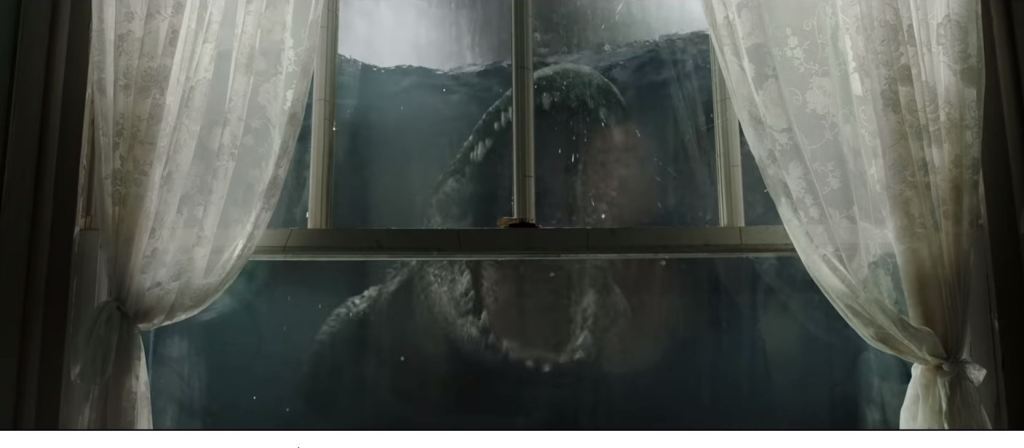
Just when you thought it was safe to explore your Florida crawlspaces during a Category 5, here comes Crawl to remind us that while Sharknadoes put tongues in cheeks, Gatorcanes are looking to remove the whole head.

Haley Keller (Kaya Scodelario) is a University of Florida swimmer (a Gator!), which comes in pretty handy when she ignores evacuation orders to look for the father that always challenged her to do better in the pool.

Dave Keller (Barry Pepper) is lying injured in a soggy basement, and even before Haley finds him, she finds that they are not alone.

Director Alexandre Aja (High Tension, Piranha 3D, The Hills Have Eyes remake) utilizes the confines of the flooding house to fine effect. Walls, pipes and tight corners create natural barriers between gator and bait, but as the water level keeps rising, Aja finds plenty of room for simmering tension and effective jump scares.

Plus plenty of bloodletting. Oh, yes, people do get eaten.

This survival tale doesn’t worry too much about suspending disbelief. It just keeps the water rising, the obstacles mounting (Haley’s “You gotta be fucking kidding me” speaks for all of us) and the visual effects nimble and nifty.

Writers Michael and Shawn Rasmussen get a bit too enamored with the father/daughter estrangements and swim team parlance (“You’re faster than they are! Swim!”), but Scodelario provides a capable anchor, giving Haley authentic layers of toughness and grit.

Aja and the effects team do the rest, enough to make Crawl an often entertaining creature and bloody fun summer feature.

Friends to the End

Child’s Play

by Hope Madden

You have to give it to the marketing team saddled with Lars Klevberg’s reboot of Child’s Play.

First came the trailers. You couldn’t see the doll, but you heard that old TV theme song, “People let me tell you ‘bout my best friend! He’s a warm boy, cuddly toy, my up, my down, my pride and joy…”

Creepy.

And then the posters. You know, still no Chucky doll in the frame, but a ripped-to-shreds cowboy doll splayed across the ground.

Well, pardner, Sheriff Woody’s got the last laugh because Child’s Play the film is not 1/10th as inspired as its marketing. It’s a tedious time waster uninterested in plumbing any of its possible themes—single parenthood, poverty, loneliness, tech—for terror. Instead it goes for the obvious prey and hopes star power will blind you to its ordinariness.

Discount those straight-to-video installments in the series if you will (and honestly, you probably should), but at least they each tried to do something different. At some point they embraced the ridiculousness of this itty, bitty freckle-faced problem and just ran with it.

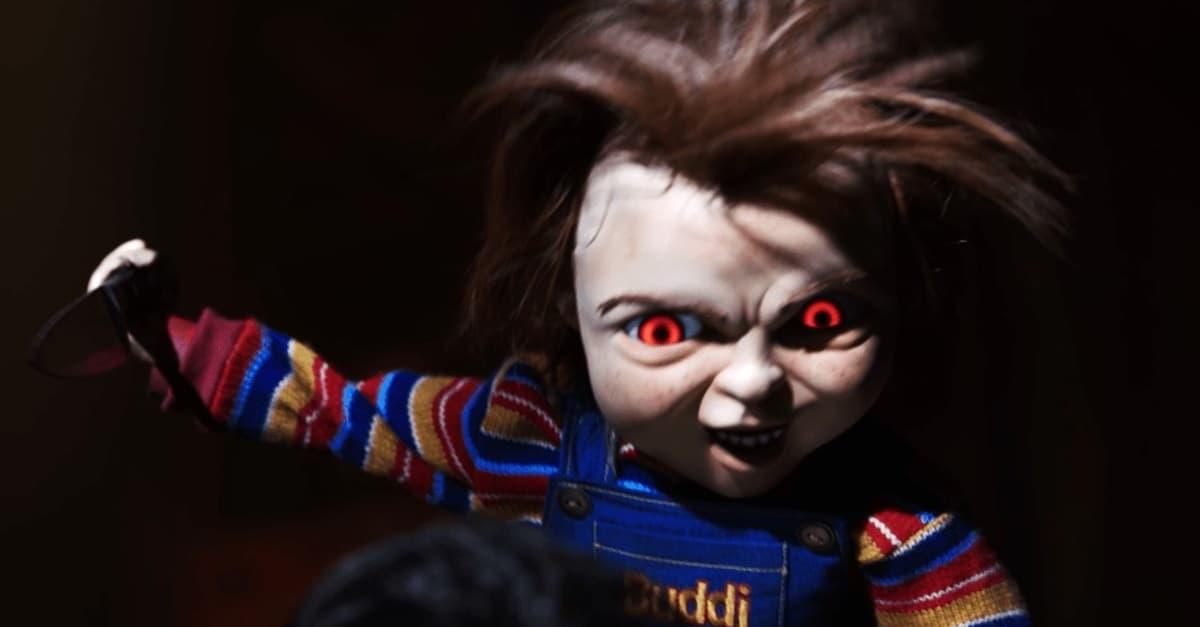
Not this time. Nope, what we have here is one deadly serious and wildly unimaginative reboot. Hell, the doll doesn’t even look good!

And yet, Aubrey Plaza, Brian Tyree Henry and Mark Hamill all signed on to star in what amounts to the 8th Chucky film.

Why?

It’s not the concept. The possessed doll conceit has been updated from the soul of a serial killer to modern technology. Imagine if google home required a super creepy doll in bib overalls to work. Admittedly, there are all sorts of Terminator/Maximum Overdrive/Demon Seed possibilities here, all of which are left entirely unmined.

Instead it’s just a defective AI doll (voiced by Hamill himself), birthday gift from a department store clerk (Plaza) to her lonely but clearly too old for the toy son, Andy (Gabriel Bateman, quite good, actually).

They’re all good, especially Henry. Too bad the film doesn’t deserve it. Aside from one kill inspired by Texas Chainsaw Massacre 2 (nice!), and performances that are all better than the material, the new Child’s Play is a pretty tedious affair.

Fright Club: Gateway to Hell Horror

Our friend is looking to buy her first home and our only advice was probably the same advice she got from everyone: check the basement for the gateway to hell. That always causes trouble for new homebuyers, doesn’t it?

Indeed, these netherworld exits and entrances don’t exist only in suburban basements. Nope, you can find them anywhere. In fact, you can even create your own. No idea why you would want to do that, but (assuming horror films are how-tos), it can be done. Which are the best gateway to hell horror movies, you ask? Luckily, we’ve done the math.

5. The Ninth Gate (1999)

A bunch of films nearly had this fifth slot: Amityville 3D (mainly so we could make fun of Laurie Laughlin), The Gate and its Harryhausen influences, Event Horizon’s blackhole to hell. But we landed on The Ninth Gate because we love Frank Langella and Lena Olin.

Johnny Depp plays a sleazy rare books dealer in Roman Polanski’s adaptation of Arturo Perez-Reverte’s novel. Depp’s Dean Corso falls into a mysterious adventure of finding and appraising three volumes allegedly co-authored by Satan himself (or herself?).

Maybe the element of this film that makes it more interesting than it might be is that, while the humans longing for the knowledge in these volumes are terrible people, the film doesn’t seem to find Satanism (the real worship of an actual Satan, not today’s activism branch) a potentially worthwhile activity. Satan (Emmanuelle Seigner, Polanski’s wife) is also an interesting character—in concept, anyway.

Plus, black masses! Love those!

4. The Beyond (1981)

Lucio Fulci was really preoccupied with the gateway to hell. He produced an entirely worthwhile trilogy on the topic. And while City of the Living Dead and House by the Cemetery have their charms (well, for one of us), The Beyond is by far the most entertaining of the three.

As is always the case in Fulci films, the dubbing is half the fun, here unintentionally aiding in the overall surreal quality of the picture. Liza Merrill (Catriona MacColl, who stars as different characters in each of the three Gateway films) has inherited an old Louisiana hotel from her dead uncle.

Guess what’s in the basement?!

Silly, gory as hell, hypnotic and oh-so-Fulci, The Beyond is a dreamy peek into hell. The clashing accents and lack of logic only strengthen the vibe.

3. Insidious (2010)

Yes, technically this one takes place in “The Further” – but we don’t buy that this creepy red guy plays organ in limbo or purgatory. We’re going with hell.

Director James Wan and writer (and co-star) Leigh Whannell launched a second franchise with this clever, creepy, star-studded flick about a haunted family.

Patrick Wilson (who would become a Wan/Whannell staple) and Rose Byrne anchor the film as a married couple dealing with the peculiar coma-like state affecting their son, not to mention the weird noises affecting their house.

But what makes this particular film so effective is that we get to go into The Further to reclaim the lost soul. It’s a risky move, but these filmmakers do what few are able to: they show us what we are afraid of.

2. The Sentinel (1977)

Journeyman writer/director Michael Winner helmed this weird little gem about a damaged young woman and her journey toward the only destiny that can save her.

It starts, as these things so often to, with the search for a new place to live. New York model Alison (Cristina Raines) is offered an incredibly great rate for a gorgeous NY brownstone apartment.

Is it the gateway to hell? Yes, but NY real estate being what it is, she takes it.

Look at this cast: Burgess Meredith, John Carradine, Christopher Walken, Ava Gardner, Jerry Orbach, Jose Ferrer, Beverly D’Angelo and Chris Sarandon, mainly playing the various and fascinating demons hoping to throw poor, fragile Alison off her path.

Meredith in particular is a magnificent Satan.

1. Baskin (2015)

Welcome to hell! Turkish filmmaker Can Evrenol invites you to follow a 5-man police squad into the netherworld, where eye patches are all the rage, pregnancy lasts well under the traditional 40 weeks, and you don’t want to displease Daddy.

The serpentine sequencing of events evokes a dream logic that gives the film an inescapable atmosphere of dread, creepily underscored by its urgent synth score. Evrenol’s imagery is morbidly amazing. Much of it only glimpsed, most of it left unarticulated, but all of it becomes that much more disturbing for its lack of clarity.

As is always the case, the real kicker is the Satan character. Here, central figure Mehmet  Cerrahoglu’s remarkable presence authenticates the hellscape. Evrenol’s imaginative set design and wise lighting choices envelope Cerrahoglu, his writhing followers, and his victims in a bloody horror like little else in cinema.

Oh, Mama

Ma

by Hope Madden

Oh my God, you guys. Did you know Tate Taylor directed the new Octavia Spencer horror flick, Ma?

You know, Tate Taylor. Girl on a Train. Get On Up. The effing Help – that Tate Taylor.

No wonder Octavia Spencer is in it, and God bless her for it because she commits to a role that, in other hands, could have been utterly, laughably predictable.

In fact, were it not for a breathtakingly better-than-this-material cast, Ma would have devolved quickly into every other “get back at the popular kids – oh, wait, maybe let’s vilify and re-victimize the unpopular instead” horror.

Spencer’s Sue Ann, or Ma, as the kids call her, is just an easy mark for teens wanting alcohol. Yes, she’ll buy it as long as you drink it at her house where she knows you’re safe.

Does she have nefarious motives?

She does.

For her part, the Oscar-winner (for Taylor’s The Help) convinces, drawing both sympathy and fear. She’s joined in small roles by another Oscar winner (an almost jarringly funny Allison Janney) and an Oscar nominee (Juliette Lewis) as well as Luke Evans and a set of talented young actors led by Booksmart’s Diana Silvers.

How on earth did this by-the-numbers outsider/don’t trust the lonely older lady horror flick draw this cast?!

I do not know, because Ma has nothing really new to say, so it relies in its entirety on this cast to entertain. But there are two reasons that this story and this particular cast are actually Ma’s problems.

One is something that still surprises me about horror. On the whole, horror appeals to outcasts. And yet, from Carrie White to the coven in The Craft to Sue Ann in Ma, horror films reestablish the status quo by putting outcasts in their place. Sure, they get that grand few moments of terrorizing the beautiful, popular kids, but things end badly in horror movies for the outcast.

Here’s what troubles me even more about Tate Taylor, and to a degree, Octavia Spencer films. (Note that Spencer executive produced the racially problematic and utterly mediocre Green Book.)

Ma is racially tone deaf. I have no idea why this wealthy Southern white man insists on telling stories exclusively about African Americans, but he truly should not. A story that vilifies the lonely middle aged woman, seeing her as a broken psychotic based on her generally pathetic nature, is misogynistic. When this villain is also the only African American woman in the film, that problem is heightened dramatically.

Don’t get me wrong—I am a fanatical horror fan, and when an Oscar -winner (and multiple nominee) chooses to star, let alone star as the villain (the most important character) in a horror film, I am all in.

But this was the wrong movie.

Fright Club: Sea Beasts

Why fear the sea? The same reason to see menace in the deep, dark unknown of space or the dense and dizzying claustrophobia of the forest: because it’s really hard to see what’s in there.

That leaves us to our imagination, and when is that ever a good idea? Here, then, are some of the most imaginative ways horror filmmakers terrorized us with tales of what lies beneath.

5. Godzilla (Gojira) (1954)

Up from the depths, 30 stories high, breathing fire…you know the rest. Surely we had to have a Fifties science run amok beastie on this list, and while there was some stiff competition, nothing really bests Godzilla.

As Japan struggled to re-emerge from the 1945 bombings of Hiroshima and Nagasaki, director Ishiro Honda unleashed that dreaded kaiju—followed quickly by a tidal wave of creature features focused on scientists whose ungodly work creates global cataclysm.

Far more pointed and insightful than its American bastardization or any of the sequels or reboots to follow, the 1954 Japanese original mirrored the desperate, helpless impotence of a global population in the face of very real, apocalyptic danger. Sure, that danger breathed fire and came in a rubber suit, but history shows again and again how nature points out the folly of man.

4. Open Water (2003)

Jaws wasn’t cinema’s only powerful shark horror. In 2003, young filmmaker Chris Kentis’s first foray into terror is unerringly realistic and, therefore, deeply disturbing.

From the true events that inspired it to one unreasonably recognizable married couple, from superbly accurate dialog to actual sharks, Open Water’s greatest strength is its unsettling authenticity. Every element benefits from Chris Kentis’s control of the project. Writer, director, cinematographer and editor, Kentis clarifies his conception for this relentless film, and it is devastating.

A couple on vacation (Blanchard Ryan and Daniel Travis) books a trip on a crowded, touristy scuba boat. Once in the water, they swim off on their own – they’re really a little too accomplished to hang with the tourists. And then, when they emerge from the depths, they realize the boat is gone. It’s just empty water in every direction.

Now, sharks aren’t an immediate threat, right? I mean, tourist scuba boats don’t just drop you off in shark infested waters. But the longer you drift, the later it gets, who knows what will happen?

https://www.youtube.com/watch?v=F4fxtHQtt4Y

3. The Lure (2015)

Here’s a great Eastern European take on reimagined Eastern European fairy tales, like Norway’s Thale (2012) and Czech Republic’s Little Otik (2000).

Gold (Michalina Olszanska) and Silver (Marta Mazurek) are not your typical movie mermaids, and director Agnieszka Smoczynska’s feature debut The Lure is not your typical – well, anything.

The musical fable offers a vivid mix of fairy tale, socio-political commentary, whimsy and throat tearing. But it’s not as ill-fitting a combination as you might think.

The Little Mermaid is actually a heartbreaking story. Not Disney’s crustacean song-stravaganza, but Hans Christian Andersen’s bleak meditation on the catastrophic consequences of sacrificing who you are for someone undeserving. It’s a cautionary tale for young girls, really, and Lure writer Robert Bolesto remains true to that theme.

The biggest differences between Bolesto’s story and Andersen’s: 80s synth pop, striptease and teeth. At its heart, The Lure is a story about Poland – its self-determination and identity in the Eighties. That’s where Andersen’s work is so poignantly fitting.

https://www.youtube.com/watch?v=vxhi_3hDUPE

2. The Host (2006)

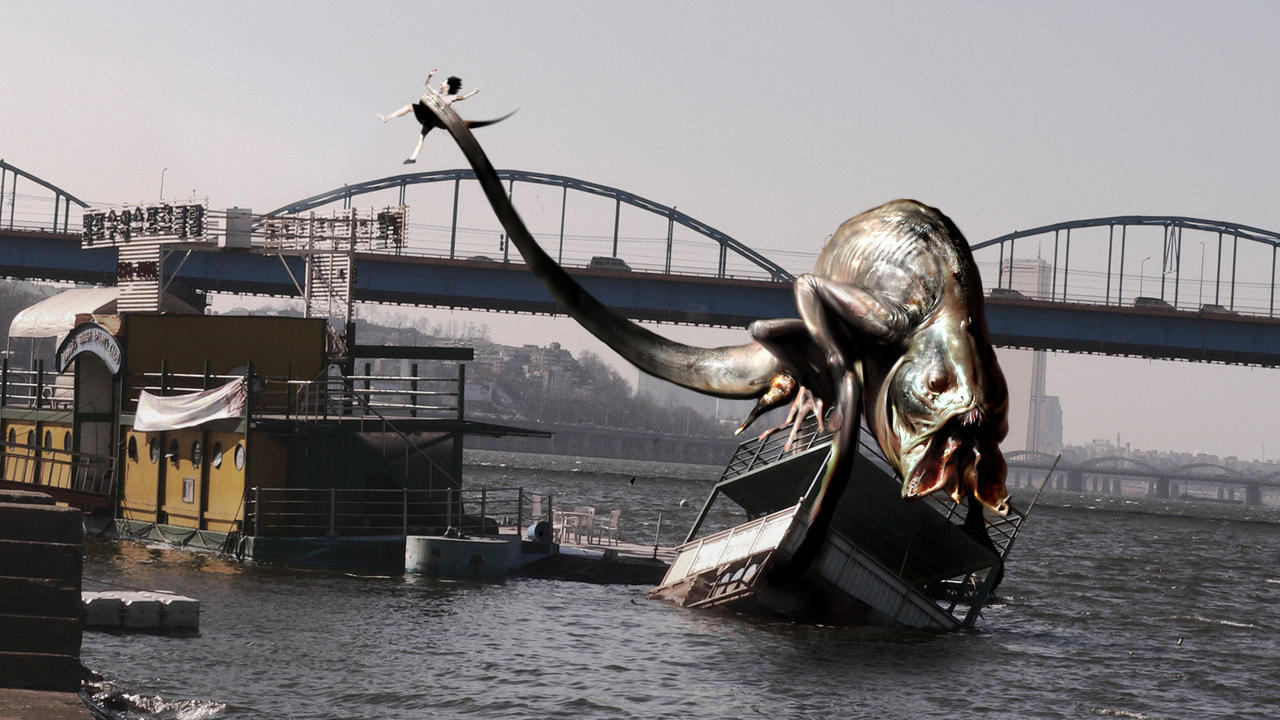
Visionary director Joon-ho Bong’s film opens in a military lab hospital in 2000. A clearly insane American doctor, repulsed by the dust coating formaldehyde bottles, orders a Korean subordinate to empty it all into the sink. Soon the contents of hundreds of bottles of formaldehyde find its way through the Korean sewer system and into the Han River. This event – allegedly based on fact – eventually leads, not surprisingly, to some pretty gamey drinking water. And also a 25 foot cross between Alien and a giant squid.

Said monster – let’s call him Steve Buscemi (the beast’s actual on-set nickname) – exits the river one bright afternoon in 2006 to run amuck in a very impressive outdoor-chaos-and-bloodshed scene. A dimwitted foodstand clerk witnesses his daughter’s abduction by the beast, and the stage is set.

What follows, rather than a military attack on a marauding Steve Buscemi, is actually one small, unhappy, bickering family’s quest to find and save the little girl. Their journey takes them to poorly organized quarantines, botched security check points, misguided military/Red Cross posts, and through Seoul’s sewer system, all leading to a climactic battle even more impressive than the earlier scene of afternoon chaos.

1. Jaws (1975)

What else – honestly?

Twentysomething Steven Spielberg’s game-changer boasts many things, among them one of the greatest threesomes in cinematic history. The interplay among the grizzled and possibly insane sea captain Quint (Robert Shaw), the wealthy young upstart marine biologist Hooper (Richard Dreyfuss) and the decent lawman/endearing everyman Brody (Roy Scheider) helps the film transcend horror to become simply a great movie.

Perhaps the first summer blockbuster, Jaws inspired the desire to be scared silly. And in doing so it outgrossed all other movies of its time. You couldn’t deny you were seeing something amazing – no clichés, all adventure and thrills and shocking confidence from a young director announcing himself as a presence.

Spielberg achieved one of those rare cinematic feats: he bettered the source material. Though Peter Benchley’s nautical novel attracted droves of fans, Spielberg streamlined the text and surpassed its climax to craft a sleek terror tale.

It’s John Williams’s iconic score; it’s Bill Butler’s camera, capturing all the majesty and the terror, but never too much of the shark; it’s Spielberg’s cinematic eye. The film’s second pivotal threesome works, together with very fine performances, to mine for a primal terror of the unknown, of the natural order of predator and prey.

Jaws is the high water mark for animal terror. Likely it always will be.

Charlie’s Angels

Charlie Says

by Hope Madden

It’s been 50 years since Charles Manson and his family effectively terminated the 1960s. Filmmaker Mary Harron (American Psycho) joins Daniel Farrands and Quentin Tarantino in commemorating the anniversary.

Earlier this year, Farrands unleashed the grim and quickly forgotten The Haunting of Sharon Tate, while Tarantino’s next likely cultural phenomenon, Once Upon a Time in Hollywood,  promises to shine some of its spotlight on the Manson family crimes as well.

Harron’s film, Charlie Says, follows Leslie Van Houton (Hannah Murray), Susan Atkins (Marianne Rendon) and Patricia Krenwinkle (Sosie Bacon), three years after their incarceration, as they reflect on Manson’s promises and their own actions.

The aptly titled film is as concerned with the women’s brainwashing as it is the crimes themselves, although it unfortunately provides no real insight into either.

Harron spends about half the film in the California Women’s Correctional Facility, where the trio is taught by dedicated grad student Karlene Faith (Merritt Wever, portraying the author of the book that inspires the film).

The eerie chorus of “Charlie says…” greets nearly every question Wever lobs at her students, which generally spurs a flashback to time on the ranch with Charlie (Matt Smith).

Here we hit a snag, because Smith lacks the charisma, the hatred, the ugliness or the psychotic aura to pull of Manson. He is never terrifying, never seductive—never convincing.

In fact, most of the flock lacks the weather beaten conviction we recognize from police tapes. The period detail and tone lack degrees of authenticity as well.

Harron’s film opens strong, but it quickly loses its footing and never really finds it again. Working from Guinevere Turner’s screenplay, Harron brings up some interesting themes—particularly questioning the point of breaking through to these women, knowing that puncturing their fantasies only means their clear-eyed horror whether looking backward or forward.

But she doesn’t really land any punches. The film never feels particularly queasying, especially enlightening or even very memorable.

I guess we still have Tarantino. Or maybe it’s just time we all moved on and stopped obsessing over what Charlie had to say.

La La La La Llorona

The Curse of La Llorona

by Hope Madden

The Conjuring Universe loves the Seventies, doesn’t it? And why not? So many patterns to distract attention from your evil, so many bell bottoms to hide beneath. It’s also a time period before Catholicism became a horror movie unto itself, which makes it a safer space to depict a more wholesome view of the Church.

Not that Anna (Linda Cardellini, Green Book) would know. Her late husband was more of the religious one. But as Fr. Perez (Tony Amendola, Annabelle) points out, “You don’t have to be religious to have faith.”

Ah, yes, Michael Chaves’s The Curse of La Llorona is burdened by some seriously obvious dialog. That’s to be expected. The two people who wrote the film (Mikki Daughtry and Tobias Iaconis) are the same two people who wrote Five Feet Apart, the latest teen tragedy porn to wheeze its Boy in a Plastic Bubble riff into the hearts of Kleenex-clutching youth everywhere.

And yet, there is something of the old school charm that marks the best films in the Conjuring universe on display here. Simple fun house scares, primarily practical effects, kids in peril—these are all invoked in a quickly paced if somewhat nonsensical and conveniently plotted ghost story.

There is also a quick Scooby-Doo reference (this being 1976). Have you ever wondered why Cardellini always looks so familiar? Because she was Velma in the film series—making her sort of my own personal hero—and I, for one, was thrilled that LLL shouted that out. Plus, good parenting.

The story unfortunately skirts the real tensions to be drawn from questioning her parenting skills. Not that  LLL had a shot at reaching the terrifying heights of The Babadook, but for a moment it takes us down the path of calling a single parent’s fitness for the job into question.

This is quickly abandoned for the safer territory of a fierce mother protecting her cubs, which is too bad because Cardellini’s understated and graceful performance could probably have carried a more challenging script.

Instead we get bits and pieces of other films in the series, stitched together by a folk tale about a murderous mother. This is not inspired horror, but it’s not ridiculous, either.

It’s a spooky time waster.

Fright Club: Lesbians in Horror Movies

Lesbians in horror have come a long way since Jesus DeFranco’s bloodthirsty nymphettes. In fact, we are now at the glorious point in history in which story leads can be lesbians for no particular reason—their sexual orientation not a metaphor for anything at all. They’re just characters. Nice!

There are so many great options that we had to leave many off. What were we looking for? Main characters whose sexuality is not showcased simply for titillation or as a twisted mark of the sinister. That doesn’t mean we’ve abandoned the villain, but if you’re looking for hot girl-on-girl action, well, yes, we have a bit of that, too, but who wouldn’t make out with Catherine Deneuve?

5. The Hunger (1983)

Director Tony Scott’s seductive vampire love story has a little bit of everything: slaughter, girl-on-girl action, ’80s synth/goth tunage, David Bowie. What more can you ask?

Actually the film’s kind of a sultry, dreamily erotic mess. Oh, the gauzy curtains. Catharine Deneuve is the old world vampire Miriam Blaylock—an inarguably awesome name for a vampire. David Bowie is her lover. But he suddenly begins aging, and she needs to find a replacement. Enter Susan Sarandon and her mullet as a medical specialist in unusual blood diseases and a fine actress who’s not above smooching other girls.

There are three reasons people will always watch this film: Bowie, Catherine Deneuve’s seduction of Susan Sarandon (classy!), and the great dark-wave Bauhaus number Bela Lugosi’s Dead. Together it’s a Goth Trifecta! And Goths do love them some vampires.

4. Thelma (2017)

We follow Thelma (Eili Harboe) through the uncomfortable, lonely first weeks of college we gather that her parents are very Christian and very protective.

Things could have gone all predictable and preachy from there, but co-writer/director Joachim Trier knows what you’re thinking and he plans to use it against you.

Thelma is a coming-of-age film at its cold, dark heart. The horror here lies in the destructive nature of trying to be something you are not, but here again, nothing in Thelma is as simple or cleanly cut as the beautiful framing and crystal clear camera work suggest.

Like Julia Ducournau’s magnificent coming-of-age horror Raw, Thelma dives into the issues swirling around post-adolescent freedoms and taboos in daring and insightful ways.

Thelma takes its time and lets its lead unveil a fully realized, deeply complex character full of contradictions—inconsistencies that make more sense as the mystery unravels. Though the result never terrifies, it offers an unsettling vision of self-discovery that’s simultaneously familiar and unique.

3. The Haunting (1963)

This may not seem like an obvious choice, but Theo (Claire Bloom) is a lesbian. And a great, badass character at that. That may not have been a widely held opinion when the great Shirley Jackson penned the novel in the fifties, or when the great Robert Wise directed the spooky and wonderful adaptation in 1963. But Mike Flanagan, director of the Netflix series based on the book, understood Jackson’s nuance and Wise’s subtlety and decided Theo would be out and proud. Good on ya, Flanagan.

In Wise’s original work, there is no overt mention of Theo’s sexuality, but there wouldn’t be, would there? It was 1963. Theodora is unmarried but refers to an “us” when discussing her home life. Her style, her confidence, her disinterest in being demure with the males, and the fact that Eleanor refers to her as “unnatural” all quietly make the case for us.

What’s great, though, is not just that a lead character is a lesbian, but that she’s a powerful and positive presence, and that she and Eleanor form a deep and supportive friendship. The Haunting (and Jackson’s magnificent novel) is about identity, and the fact that Theo is so very comfortable with hers is what makes this film an important addition to the list.

2. The Handmaiden (2016)

Director Park Chan-wook (Oldboy) mesmerizes again with this seductive story of a plot to defraud a Japanese heiress in the 1930s.

Weird is an excellent word to describe this film. Gorgeous and twisty with criss-crossing loyalties and deceptions, all filmed with such stunning elegance. Set in Korea, the film follows a young domestic in a sumptuous Japanese household. She’s to look after the beautiful heiress, a woman whose uncle is as perverse and creepy as he is wealthy.

Smart and wicked, stylish and full of wonderful twists, The Handmaiden is a masterwork of delicious indulgence.

1. Daughters of Darkness (1971)

Seduction, homoeroticism, drowsy lustfulness – this one has it all.

Countess Bathory—history’s female version of Dracula—checks into an all-but-abandoned seaside hotel. The only other guests, besides the Countess’s lover, Ilona (Andrea Rau), is a honeymooning couple.

Effortlessly aristocratic, Delphine Seyrig brings a tender coyness, a sadness to the infamous role of Bathory. Seyrig’s performance lends the villain a tragic loveliness that makes her the most endearing figure in the film. Everybody else feels mildly unpleasant, a sinister bunch who seem to be hiding things. The husband (John Karlen), in particular, is a suspicious figure, and a bit peculiar. Kind of a dick, really— and Bathory, for one, has no time for dicks.

Caring less for the victims than for the predator—not because she’s innocent or good, but because her weary elegance makes her seem vulnerable—gives the film a nice added dimension.

The accents are absurd. The outfits are glorious. The performances are compellingly, perversely good, and the shots are gorgeous. Indulge yourself.

https://www.youtube.com/watch?v=sFRuSbykaV0


Sometimes, Reboots Are Better

Pet Sematary

by Hope Madden

There is a lot of love out there for Mary Lambert’s 1989 hit Pet Sematary.

Why, again? Was it the wooden lead performances? The adorably sinister villain? Massive Headwound Harry? Come on—there was a lot wrong with that movie and only two things were really right: The Ramones and Zelda.

Zelda was creepy AF.

Fear not! Directors Kevin Kölsch and Dennis Widmyer (Starry Eyes) were obviously also affected by Zelda because she (Alyssa Levine) delivers again. On all other items, the directing duo improve.

Except The Ramones, but they are here in spirit.

Jason Clarke leads things as Louis, big city doc transplanted to quiet, rural Maine. Apparently he and his family—Rachel (Amy Seimetz), Ellie (Jeté Laurence), Gage (Hugo and Lucas Lavoie) and Church the Cat—didn’t ask a lot of questions about that 80-acre lot they bought. Lotta nasty stuff out back.

John Lithgow takes over for the tough to replace Fred Gwynne and his over-the-top Mainer accent. Lithgow’s more subdued Grumpy Old Man neighbor falls victim again to the pull of that “sour ground” out back when his beloved little Ellie’s cat gets hit by one of those semis speeding down the nearby road.

The film really tests your ability to suspend disbelief, but it also layers a lot of history and creepiness in tidy fashion. The superior performances alone make the reboot a stronger film, although familiarity means it has to try a little harder to actually scare you.

One help is a change screenwriters Matt Greenberg and Jeff Buhler make to the story. It’s a big alteration and not everyone will be thrilled, but it limits the laughability once things turn ugly. The film also lessons spiritual guide Pascow’s (Obssa Ahmed) screen time and gives his presence a spookier, less comedic feel. There’s a new ending, too—meaner and more of a gut punch. Nice.

The movie looks good, and Clarke (playing a grieving father for the second time this weekend, after his WWII drama The Aftermath) anchors the events with a thoughtful, believable performance that helps Pet Sematary overcome some of its more nonsensical moments.

It is not a classic, but it delivers the goods.

I still missed The Ramones.