HP Lovecraft has influenced horror cinema in ways too varied
and numerous to really articulate. But true Lovecraft is tough to bring to the
screen for a number of reasons, chief among them that his madness tends to
involve something indescribable: a color no one’s ever seen before, a sound
entirely new to the human ear, a shape that defies all laws of geography and
logic.
Alex Garland pulled inspiration from Lovecraft’s 1927 short Colour
Out of Space for his brilliant 2018 mindbender, Annihilation.
But for direct adaptations, Richard Stanley’s newest may be the best.
Naturally, the film’s success is due in large part to
Nicolas Cage’s performance, because who descends into madness quite as
entertainingly?
Cage plays Nathan Gardner. Nathan and his wife (Joely
Richardson), their three kids and their squatter (Tommy Chong – nice!) live a
quiet life in the New England forest not far from Arkham. A meteorite changes
all that.
Cage basically strums a favorite old tune, landing somewhere on his “nice guy gone insane” spectrum just this side of Brent (Mom and Dad) and Red Miller (Mandy). In fact, the voice that begins emerging once the meteorite hits is gleefully reminiscent of Peter Lowe from Vampire’s Kiss (a call back I can get behind).
Is that the only reason to see the movie? No. Tommy Chong is
a hoot, Richardson gets one especially creepy carrot chopping scene, and things
go a little Cronenberg just when you want them to.
There’s a lot wrong with the film, too. Scenes are sloppily
slapped together, one rarely leading to the next. The film’s budget is betrayed
by its FX and supporting performances are not especially strong.
But Stanley’s long-awaited comeback (this is his first narrative feature since being fired from The Island of Dr. Moreau in 1996) infuses Lovecraft with a much needed dark streak of comedy and entrenches his tale of madness within a loving family dynamic, offering an emotional center to the story that the author rarely delivered.
The film lacks the vibrant subversiveness of Mom and Dad and comes nowhere near the insane vision of Mandy, so Cage fans might be only mildly impressed. Lovecraft fans, though, have reason to be excited.
Ever feel like you’ve been here before? This week we celebrate that spooky feeling with some of the best horror movies to take advantage of time loop nuttiness.
5. Haunter (2013)
Nicolas Vincenzo (Cube) starts off with the standard Groundhog Day premise—surly teen Lisa (Abigail Breslin) wakes up to the walkie talkie sound of her brother playing hidden treasure with an imaginary friend. It’s not Sonny & Cher, but it’s not that far off.
But Vincenzo (working from Brian King’s screenplay) starts bending the time loop structure, blending it with a more recognizable horror trope and subverting expectations. Breslin delivers a solid performance, and Pontypool’s Stephan McHattie’s outstanding as the devilish Pale Man. Plus, excellent support work from Siouxsie Sioux’s big face on Lisa’s tee shirt!
The film does kind of collapse on itself by the third act as it gets all Frequency (or Lake House or Don’t Let Go) on us, but for a good chunk of time Haunter delivers.
4. Happy Death Day (2017)
Tree (Jessica Rothe) wakes up on her birthday in some rando’s dorm room with no memory of the night before, a raging hangover and an attitude. She’s murdered that night by a knife-wielding marauder in a plastic baby mask, only to wake up back in that same dorm room under that same They Live poster.
It doesn’t take too many déjà vu mornings before Tree decides there is a mystery to solve here and just like that, we’re off in Phil Connors territory: reliving the same day again and again gives you the chance to become a better person, right?
Director Christopher Landon (Scout’s Guide to the Zombie Apocalypse) wisely mines Scott Lobdell’s screenplay for laughs. Rothe boasts strong comic timing and a gift for physical comedy, a skill that transitions nicely to the demands of being repeatedly victimized by a slasher.
3. The Endless (2017)
There is something very clever about the way Justin Benson and Aaron Moorehead’s movies sneak up on you. Always creepy, still they defy genre expectations even as they play with them.
Camp Arcadia offers the rustic backdrop for their latest, The Endless. A clever bit of SciFi misdirection, the film follows two brothers as they return to the cult they’d escaped a decade earlier.
It is this story and the pair’s storytelling skill that continues to impress. Their looping timelines provide fertile ground for clever turns that fans of the filmmakers will find delightful, but the uninitiated will appreciate as well.
2. Timecrimes (2007)
This one is nutty, and absolutely required viewing for anyone with an interest in space/time continuum conundrums.
Writer/director/co-star Nacho Vigalondo (Colossal) mocks our desire for control and our fear of the doppelganger with a very quick and dirty trip through time. So much can go wrong when you travel just one hour backward. The less you know going in, the better.
An always clever experiment in science fiction, horror and irony, Timecrimes is a spare, unique and wild ride.
1. Resolution (2012)
Not exactly a traditional time loop horror, Resolution plays with the concept of time in ways that are baffling and eerie.
Michael (Chris Cilella) is lured to a remote cabin, hoping to save his friend Chris (Vinny Curan) from himself. Chris will detox whether he wants to or not, then Michael will wash his hands of this situation and start again with his wife and unborn baby.
But Michael is in for more than he bargained, and not only because Chris has no interest in detoxing. Directors Aaron Moorhead and Justin Benson (working from Benson’s screenplay) begin with a fascinating and bizarre group of characters and a solid story, layering on bizarre notions of time, horror and storytelling in ways that are simultaneously familiar and wildly unique. The result is funny, tense, and terrifying.
Yes, she will probably forever be first known as that girl from Twilight, unfortunately. But, in the same way her ex-vampire lover Robert Pattinson has relentlessly carved a stronger impression via challenging independent film roles, Stewart has been honing her craft and developing a reputation as a solid talent via varying roles in small budget films.
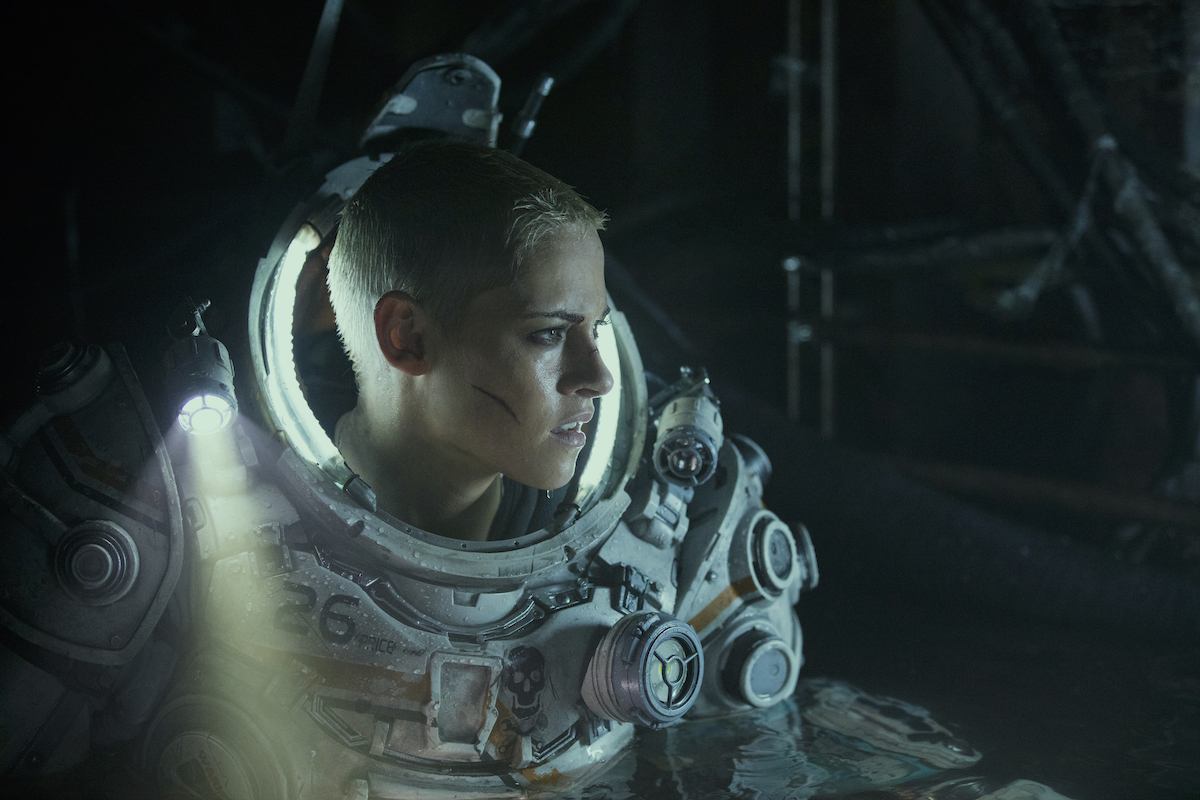
William Eubank’s deep sea horror Underwater sees Stewart as Nora, a no-nonsense, quick thinking, fast acting survivor—the kind who just might keep the remaining crew alive as they try to make their way from an irreversibly damaged deep sea drill rig to a nearby vessel that might have pods to float them to safety.
But what caused the damage in the first place and what is
making that noise?
Eubank has assembled a surprisingly solid cast for his “Alien Under the Sea” flick. Joining Stewart as the rig’s humbly heroic captain is the always excellent Vincent Cassel, while John Gallagher Jr. plays the latest in his long line of effortlessly likeable good guys, Smith. Chubby comic relief is delivered by T.J. Miller.
If that sounds like your basic set of recognizable
stereotypes assembled to be picked off one by one, you’ve detected the first
major problem with Eubank’s film: a breathtaking lack of originality.
The script, penned by Brian Duffield (The Babysitter)
and Adam Cozad (The Legend of Tarzan), offers nothing in the way of
novelty and much of the dialog is stilted, and Nora’s third act reveal of the
emotional damage she must overcome is false and forced.
Luckily, Eubanks somehow convinced a bunch of genuinely
talented actors to deliver these lines, so they mainly come off fine. And while
the director frustratingly and consistently undercuts the claustrophobic
tension he’s begun building, his monsters are pretty cool looking.
Stewart gets to try on the action hero role, and she’s not too bad. For a 95 minute sea monster movie, neither is Underwater. It’s not too good, either, but at least there are no sparkly vampires.
Any time a film is remade, you have to ask why. Not to be
cynical, but because it’s a legitimate query. Is there a compelling reason to
watch this new one?
Nicolas Pesce hopes there’s reason to watch his retooling of
The Grudge.
The Grudge began in 2000 with Takashi Shimizu’s Japanese horror Ju-on, which spawned three Japanese sequels and now four English language reworkings, two of which Shimizu directed himself. His 2004 version starring Sarah Michelle Geller became a tentpole of our J-horror obsession of the early 2000s.
Pesce, working with co-writer Jeff Buhler (The Midnight Meat Train—that was your first problem), pulls story ideas from across the full spate of Ju-on properties and braids them into a time-hopping horror.
Is there room for hope? There is, because Pesce landed on horror fanatics’ radars in 2016 with his incandescent feature debut, The Eyes of My Mother. He followed this inspired piece of American gothic in 2018 with a stranger, less satisfying but utterly compelling bit of weirdness, Piercing.
And then there’s this cast: Andrea Riseborough, John Cho,
Lin Shaye, Betty Gilpin, Jacki Weaver, Frankie Faison, Damian Bichir—all solid
talents. You just wouldn’t necessarily know it from this movie.
Pesce’s basically created an anthology package—four stories
held together by a family of especially unpleasant ghosts. But that one
sentence contains two of the film’s biggest problems.
Let’s start with the ghosts. Shimizu’s haunters—Takako Fuji and Yuya Ozeki—were sweet-faced, fragile and innocent seeming. The perversion of that delicacy is one of the many reasons Shimizu’s films left such a memorable mark. Pesce’s substitute family loses that deceptive, macabre innocence.
The way the film jumps from story to story and back again
undermines any tension being built, and each story is so brief and so dependent
on short-hand character development (cigarettes, rosaries, ultrasounds) that
you don’t care what happens to anyone.
Jacki Weaver, who seems to be in a comedy, is wildly miscast. Go-to horror regular Shaye has the only memorable scenes in the film. Riseborough, who is a chameleonic talent capable of better things, delivers a listless performance that can’t possibly shoulder so much of the film’s weight.
Jump scares are telegraphed, CGI and practical effects are unimpressive, editing is uninspired and, worst of all, the sound design lacks any of that goosebump-inducing inspiration Shimizu used to such great effect.
It’s time! The year has come to its end and we need to sift through all the glorious horror 2019 had to offer and put it in some kind of order. Four of the most promising names in horror— Peele, Eggers, Kent and Aster—join some bold newcomers including Jennifer Reeder, Issa Lopez, Lane and Ruckus Skye to lead a pack of unforgettable horrors.
Truth is, there were an awful lot of great films that we had to leave off this list. But that just means the actual list is that strong. Here you go:
10. Ready or Not
At midnight on Grace (Samara Weaving) and Alex’s (Mark O’Brien) wedding night, everyone assembles in the Le Domas family game room: Mom and Dad (Andie MacDowell and Henry Czerny), Aunt Helene (Nicky Guardagni), other siblings and in-laws. It’s a ritual. Just one quick game of hide and seek. What could go wrong?
The inky black comedy plays like a game of Clue gone mad
with arterial spray, the film’s comic moments coinciding most often with the
accidental slaughter of servants.
The filmmakers take advantage of Weaving’s grit and comic timing, skipping from one bloody comic set up to the next. The plot and the chase move quickly enough to keep you from dwelling on the shorthand character development, the errant plot hole and the occasional convenience. It’s fun, it’s funny, and it’s a bloody mess.
9. Climax
Hey, club kids, it’s a Gaspar Noe dance party!
Noe’s usual reliance on extended takes, stationary cameras and overhead shots makes the dance sequences utterly intoxicating, the performers’ energy creating exciting visual beauty and a palpable exuberance for their art. These seductive odes to dance are interspersed with sometimes graphically sexual conversations between the dancers, sharpening character edges and laying down an interpersonal framework that will soon be turned on its head.
What spurred this sea change, and who is to blame? Noe turns that mystery into a greater conversation about the opportunity of birth, the impossibility of life and the extraordinary experience of death, and as is his wont, batters your senses while doing it.
8. Reckoning
Welcome to Reckoning, Lane and Ruckus Skye’s lyrical backwoods epic, grounded in a lived-in world most of us never knew existed. One of the most tightly written thrillers in recent memory, Reckoning peoples the hills of Appalachia with true characters, not a forgettable villain or cliched rube among them. The sense of danger is palpable and Danielle Deadwyler’s commitment to communicating her character’s low key tenacity is a thing of beauty.
Reckoning remains true to these fascinating souls, reveling in the well-worn but idiosyncratic nature of their individual relationships—a tone matched by sly performances across the board. And just when you think you’ve settled into a scene or a relationship, Reckoning shocks you with a turn of events that is equal parts surprising and inevitable.
It’s a stunning film, and a rare gem that treats Appalachians not as clichés, but certainly not as people to be messed with.
7. One Cut of the Dead
For about 37 minutes, you may feel like Shin’ichirô Ueda’s One Cut of the Dead delivers, cleverly enough, on a very familiar promise.
One Cut opens as a micro-budget zombie movie, which soon reveals itself to be a film within a film when real zombies show up on set. As the bullying egomaniac director continues filming, ecstatic over the authenticity, Ueda appears to deconstruct cinema.
And though that may sound intriguing on the surface, the
truth is that what transpires after that 37 minute mark officially defines Ueda
as an inventive, gleeful master of chaos and lover of the magic of nuts and
bolts filmmaking.
6. Knives and Skin
Falling somewhere between David Lynch and Anna Biller in the under-charted area where the boldly surreal meets the colorfully feminist, writer/director Jennifer Reeder’s Knives and Skin offers a hypnotic look at Midwestern high school life.
Knives and Skin’s pulpy noir package lets Reeder explore what it means to navigate the world as a female. As tempting as it is to pigeonhole the film as Lynchian, Reeder’s metaphors, while fluid and eccentric, are far more pointed than anything you’ll find in Twin Peaks.
And everyone sings impossibly appropriate Eighties alt hits acapella. Even the dead.
5. The Nightingale
The Nightingale is as expansive and epic a film as Kent’s incandescent feature debut The Babadook was claustrophobic and internal. In it she follows Clare (Aisling Franciosi), an Irish convict sentenced to service in the UK’s territory in Tasmania.
What happens to Clare at the hands of Leftenant Hawkins (Sam Claflin), the British officer to whom she is in service, is as brutal and horrifying as anything you’re likely to see onscreen this year. It’s the catalyst for a revenge picture, but The Nightingale is far more than just that.
Kent’s fury fuels her film, but does not overtake it. She never stoops to sentimentality or sloppy caricature. She doesn’t need to. Her clear-eyed take on this especially ugly slice of history finds more power in authenticity than in drama.
4. Tigers Are Not Afraid
Lopez’s fable of children and war brandishes the same themes as Guillermo del Toro’s masterpiece Pan’s Labyrinth, but grounds the magic with a rugged street style.
Tigers follows Estrella, a child studying fairy tales—or, she was until her school is temporarily closed due to the stray bullets that make it unsafe for students. As Estrella and her classmates hide beneath desks to avoid gunfire, her teacher hands her three broken pieces of chalk and tells her these are her three wishes.
But wishes never turn out the way you want them to.
3. The Lighthouse
Director/co-writer Robert Eggers follows The Witch, his incandescent 2015 feature debut, with another painstakingly crafted, moody period piece. The Lighthouse strands you, along with two wickies (Willem Dafoe, Robert Pattinson), on the unforgiving island home of one lonely 1890s New England lighthouse.
For everything Eggers brings to bear, from the Bergmanesque lighting and spiritual undertones to the haunting score to the scrupulous set design to images suitable for framing in a maritime museum – not to mention the script itself – The Lighthouse works because of two breathtaking performances.
This is thrilling cinema. Let it in, and it will consume you to the point of nearly missing the deft gothic storytelling at work. The film is other-worldly, surreal, meticulous and consistently creepy.
2. Midsommar
In Midsommar, we are as desperate to claw our way out of this soul-crushing grief as Dani (Florence Pugh). Mainly to avoid being alone, Dani insinuates herself into her anthropology student boyfriend Christian’s (Jack Reynor) trip to rural Sweden with his buds.
Little does she know they are all headed straight for a modern riff on The Wicker Man.
Like a Bergman inspired homage to bad breakups, this terror is deeply-rooted in the psyche, always taking less care to scare you than to keep you unsettled and on edge.
1. Us
From a Santa Cruz carnival to a hall of mirrors to a wall of rabbits in cages—setting each to its own insidious sound, whether the whistle of Itsy Bitsy Spider or Gregorian chanting— writer/director Jordan Peele draws on moods and images from horror’s collective unconscious and blends them into something hypnotic and almost primal.
Loosely based on an old episode of Twilight Zone, Us is a tale full of tension and fright, told with precision and a moral center not as easily identifiable as Get Out‘s brilliant takedown of “post racial America.”
While it’s fun to be scared stiff, scared smart is even better, a fact Jordan Peele has clearly known for years.
In a land of yore, the geography forbidding, a far off
trumpet calls for the hardiest of warriors—those equipped to fight beasts.
Director Jordan Downey shows much and tells little in his
nearly wordless medieval fantasy, The Head Hunter. The filmmaker parses
out all the information you’ll need to follow this simple vengeance myth, but
pay attention. Very little in this film is without meaning—no creepy image, no
creak or slam.
In what is essentially a one man show, Christopher Rygh
delivers a quiet, brooding performance for a quiet, brooding film. He cuts an
impressive figure as the Vikingesque warrior at the center of this adventure
and his work speaks of joyless endurance.
He answers the call of the trumpet. He fights monsters. He
collects heads, which he spikes to the wall of his isolated cabin. The festering
stench that must waft from this place!
The action takes place almost entirely off screen, which is
clearly one way for Downey to keep costs down, but it does allow you to focus
on a different part of the story. By denying viewers the release of battle victory,
we get nothing but the anxiety of the preparations and the pain – physical and
emotional – of the aftermath. A prime example of making your limitations work
for you, Downey’s confident direction and strong storytelling instincts draw
your attention not to the physical horror of battle but to the emotional horror
of this existence.
Kevin Stewart’s cinematography gorgeously creates the
mythical brutality of the land. Eric Wegener’s sound design is almost equally
impressive, from the drip and splash of gore to the crackle of a flame to the
clank of armor as well as the more ghastly, hypnotic sounds of the otherworld
so savagely interrupting this one.
With so much to experience and so little to tell you what
you’re seeing, the team effort is required and it pays off. It’s a far cry from
the filmmaker’s most famous effort, 2009’s ThanksKilling (an annual
seasonal indulgence for a small segment of us).
The only thing you’ll find in common between the two films is Downey’s inspired use of practical effects—another element that helps his bold and memorable effort stand out from the pack.
There is something terrifying about being in a strange land, especially if the language is not your own. There are so many great horror flicks that take advantage of that sense of isolation and confusion that we needed a second list of stuff that didn’t make the final cut but that you should check out anyway: And Soon the Darkness (1970), Road Games (2015), Transsiberian (2008), Hostel (2005) and Hostel: Part II (2007), The Human Centipede: First Sequence (2009) and, in particular, the double shot of Spanish horror Who Can Kill a Child? (1976) and its 2012 remake, Come Out and Play.
What’s better? Here you go:
5. Suspiria (1977)
Italian director Dario Argento is in the business of colorfully dispatching nubile young women. In Suspiria, his strongest film, American ballerina Suzy Bannion (Jessica Harper) moves to Germany to join a dance academy, but the other dancers are catty and the school is staffed with freaks. Plus, women keep disappearing and dying.
As Suzy undertakes an investigation of sorts, she discovers that the school is a front for a coven of witches. But Argento’s best film isn’t known for its plot, it’s become famous because of the visually disturbing and weirdly gorgeous imagery. Suspiria is a twisted fairy tale of sorts, saturating every image with detail and deep colors, oversized arches and doorways that dwarf the actors. Even the bizarre dubbing Argento favored in his earlier films works to feed the film’s effectively surreal quality.
4. Ils (Them) (2006)
Brisk, effective and terrifying, Them is among the most impressive horror flicks to rely on the savagery of adolescent boredom as its central conceit.
Writers/directors David Moreau and Xavier Palud offer a lean, unapologetic, tightly conceived thriller that never lets up.
Set in Romania, Them follows Lucas and Clementine, a young couple still moving into the big rattling old house where they’ll stay while they’re working abroad. It will be a shorter trip than they’d originally planned.
What the film offers in 77 minutes is relentless suspense. I’m not sure what else you want.
Creepy noises, hooded figures, sadistic children and the chaos that entails – Them sets up a fresh and mean cat and mouse game that pulls you in immediately and leaves you unsettled.
3. An American Werewolf in London (1981)
Director John Landis blends horror, humor and a little romance with cutting edge (at the time) special effects to tell the tale of a handsome American tourist David (David Naughton) doomed to turn into a Pepper – I mean a werewolf – at the next full moon.
Two American college kids (Naughton and Griffin Dunne), riding in the back of a pickup full of sheep, backpacking across the moors, talk about girls and look for a place to duck out of the rain.
Aah, a pub – The Slaughtered Lamb – that’ll do!
The scene in the pub is awesome, as is the scene that follows, where the boys are stalked across the foggy moors. Creepy foreboding leading to real terror, this first act grabs you and the stage is set for a sly and scary escapade. The wolf looks cool, the sound design is fantastically horrifying, and Landis’s brightly subversive humor has never had a better showcase.
2. The Descent (2005)
A bunch of buddies head to the States for a spelunking adventure.
Writer/director Neil Marshall begins his film with an emotionally jolting shock, quickly followed by some awfully unsettling cave crawling and squeezing and generally hyperventilating, before turning dizzyingly panicky before snapping a bone right in two.
And then we find out there are monsters.
Long before the first drop of blood is drawn by the monsters – which are surprisingly well conceived and tremendously creepy – the audience has already been wrung out emotionally.
The grislier the film gets, the more primal the tone becomes, eventually taking on a tenor as much like a war movie as a horror film. This is not surprising from the director that unleashed Dog Soldiers – a gory, fun werewolf adventure. But Marshall’s second attempt is far scarier. For full-on horror, this is one hell of a monster movie.
1. Midsommar (2019)
In Midsommar, we are as desperate to claw our way out of this soul-crushing grief as Dani (Florence Pugh). Mainly to avoid being alone, Dani insinuates herself into her anthropology student boyfriend Christian’s (Jack Reynor) trip to rural Sweden with his buds.
Little does she know they are all headed straight for a modern riff on The Wicker Man.
Like a Bergman inspired homage to bad breakups, this terror is deeply-rooted in the psyche, always taking less care to scare you than to keep you unsettled and on edge.
It’s a truth universally acknowledged that a cute accent
will make even the silliest sentiment 20 percent more charming. So, it’s
fortunate that the dialogue in Kiah Roache-Turner’s action/comedy/horror is
mostly delivered in appealing Australian accents. Otherwise it’s a bit of a
mess.
A take on cell phone addiction, Nekrotronic asks the question, “What if demons got online and created a knock-off of Pokémon Go to steal our souls?”
Thankfully, Howard, a sanitation engineer/orphan, discovers
he’s the descendant of generations of necromancers (nekromancers?) with
demon-fighting superpowers, now upgraded with what look like coaxial cable
ports in the backs of their heads. Years ago, his necromancer parents split up
when mom, Finnegan, was turned to the dark side. Howard’s dad hid him with
muggles before being murdered by his ex.
Ben O’Toole delivers a decent performance in Howard. He’s
equally able to pull off his silly X-Men-style superhero suit and deliver the
occasional bit of banter that reminds us that the movie is supposed to be part
comedy. His chemistry with his tragically underused sidekick Rangi (Epine Bob
Savea) is probably the best part of the film. Too bad it’s mostly in the first
18 minutes.
After the initial setup, Nekrotronic often seems to forget the comedic slant and leans heavily into the action. The special effects and fight sequences are acceptable. But there are no stakes. What is Finnegan going to do with the power of the souls she devours through the cell phone game? Use the power to get more souls. Why? To what purpose? Unclear. What does Howard stand to lose? Little. He already seems to hate his foster family and his job. He’s not invested in random strangers. His BF Rangi might take a hit, but Howard’s powers can sorta mitigate that.
The movie mashes up Matrix, Tron and Ghostbusters and sets it to a half-hearted attempt at a Tarantino soundtrack. But there’s no focus or originality in the result.
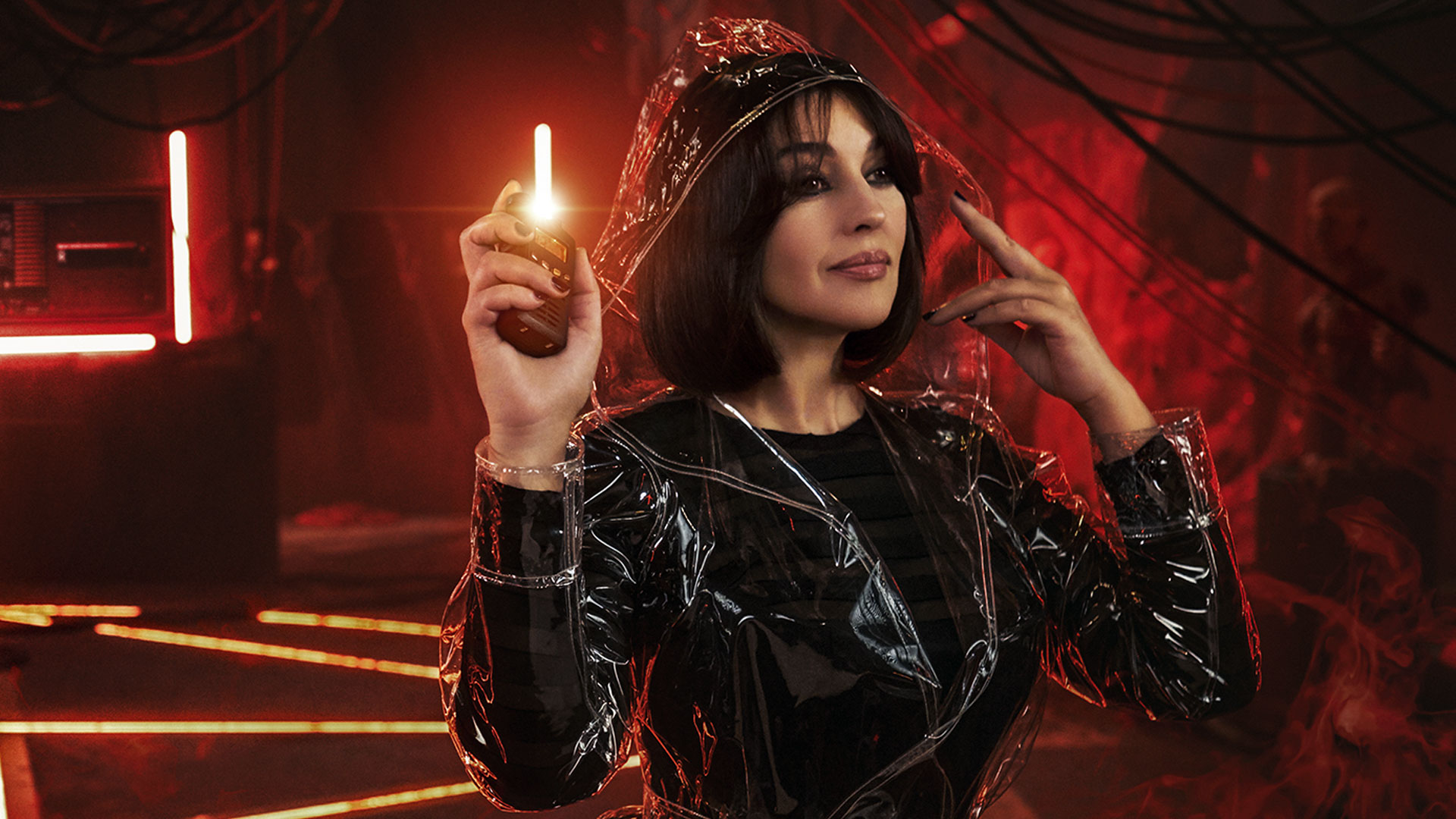
The weakest part of the movie is probably Monica Bellucci’s
Finnegan. Possessing a gorgeous Italian accent, her delivery proves the
exception to the accent-makes-it-better maxim. She struggles to enunciate the
juvenile, expletive-laden dialogue that comes much more naturally from the
other characters. It feels like when your manager researches slang on Urban
Dictionary and pulls the results out in the conference room to seem relevant.
It’s cringy and off-putting.
In the end, Nekrotronic delivers a little bit of everything, but it not enough of the right things.
Sometimes, you stumble upon a movie so farcical and so nonsensical that you can’t help but sit up and pay extra attention. With its over-the-top cast, flamboyant direction, and zany plots, Lake Michigan Monster is exactly that kind of movie.
Eccentric nautical extraordinaire, Captain Seafield (played by director, writer, producer Ryland Brickson Cole Tews), has hired a crew of professionals to help him kill the sea monster that murdered his father. Along for the ride are “weapons expert,” Sean Shaughnessy (a name that will stick with you in its repetition), “sonar person”, Nedge Pepsi, and former Nautical Athletes adVenture Yunit (NAVY – get it?) officer Dick Flynn. Together, these heroes scour the shores of Lake Michigan hoping to reel in and kill the vicious creature.
There’s a crackling energy to Lake Michigan Monster that’s reminiscent of the early films of Sam Raimi and Peter Jackson. The devil-may-care attitude that led The Evil Dead and Bad Taste to cult royalty is present in every frame of this entertaining creature feature. Tews begins his movie at a sprint and never lets up on the gags, monster attacks and cheesy jokes for the next 78 minutes.
Have I mentioned how funny this movie is? The jokes have a juvenile charm to them that keeps the tone light-hearted. Mean humor doesn’t appear to be in Tews’s vocabulary. Yes, characters die, but they do so with such whimsey way that you end up smiling and laughing more than weeping.
The characters in the film are essentially live-action cartoon characters. Leading the pack is the director himself as Seafield. Tews’s comic timing is impeccable as he plays the fearless sea captain as a mix between Popeye the Sailor and Homer Simpson.
It would be a mistake not to mention the incredible look of the film. Shot on grainy, black and white 16mm film stock, Lake Michigan Monster looks right at home next to the old school monster movies it’s paying homage to. The film’s visual effects often look way better than its $7,000 budget should allow. Sure, these aren’t Lord of the Rings level effects work, but they more than suffice for this B-movie throw-back.
Lake Michigan Monster manages to make the most out of its limited resources. What the movie lacks in budget, it more than makes up for with old fashioned ingenuity and enthusiasm.
The Shining was always going to be a hard act to follow, even for Stephen King.
But as soon as King revisited the horror with Doctor Sleep, the bigger challenge instantly fell to whomever was tasked with bringing it to the screen.
That would be writer/director Mike Flanagan, who’s trying on two pairs of pretty big shoes. His vision will not only be judged next to one of the most iconic horror films of all time, but also by the source author who famously doesn’t like that film.
While Doctor Sleep does often feel as if Flanagan is trying to serve two (or more) masters, it ultimately finds enough common ground to become an effective, if only mildly frightening return trip.
After surviving the attempted redrum, adult Dan Torrence (Ewan McGregor) is struggling to stay clean and sober. He’s quietly earning his chips, and is even enjoying a long distance “shine” relationship with the teenaged Abra (Kyliegh Curran).
But Abra and her unusually advanced gifts have also attracted the attention of Rose the Hat (Rebecca Ferguson, sweetly menacing) and her cult of undead travelers. Similarly gifted, Rose and her band seek out young shiners, feeding on their powers to remain immortal.
Flanagan breaks the spooky spell to dive into terror in a truly unnerving sequence between Ferguson’s gang and a shiny little baseball player (Jacob Tremblay). Effectively gritty and hard to shake, it is the one moment the film fully embraces its horror lineage.
Reportedly, Flanagan had to convince King that it is Kubrick’s version of The Shining that reigns in popular culture (as it should), and that their new film should reflect that. Smart move, as is the choice to hit you early with lookalike actors in those famous roles from 1980.
Is it jarring seeing new faces as young Danny, Wendy, Dick Halloran and more? Yes it is, but as the film unfolds you see Flanagan had little choice but to go that route, and better to get comfy with it by the time Dan is back among the ghosts of the Overlook hotel.
King has made it clear he needed more emotional connection to his characters than Kubrick’s film provided. McGregor helps bridge that gap, finding a childlike quality beneath the ugly, protective layers that have kept Danny Torrence from dealing with a horrific past.
Flanagan (Oculus, Hush, Before I Wake, Gerald’s Game) stumbles most when he relies on awkward (and in some cases, needless) exposition to clarify and articulate answers. Kubrick was stingy in that regard, which was one of The Shining‘s great strengths. Questions are scary, answers seldom are.
Whatever the film’s setbacks and faults, it is good fun getting back to the Overlook and catching the many Shining callbacks (including a cameo from Danny Lloyd, the original Danny Torrence). Flanagan’s vision does suffer by comparison, but how could it not? Give him credit for ignoring that fact and diving in, leaving no question that he’s as eager to see what’s around each corner as we are.
Doctor Sleep can’t match the claustrophobic nature or the vision of cold, creeping dread Kubrick developed. This film often tries too hard to please—not a phrase you’d associate with the 1980 film. The result is a movie that never seems to truly find its own voice.
It’s no masterpiece, but check in and you’ll find a satisfying, generally spooky time.