I am about as unplugged as one can be in this
hyper-connected world. I have zero social media profiles and visit around five
websites regularly (this one included). Considering my lack of presence online,
I may as well not exist.
At least, according to Kurt Kunkle (Joe Keery, Stranger
Things).
Kurt is the wannabe viral sensation at the center of
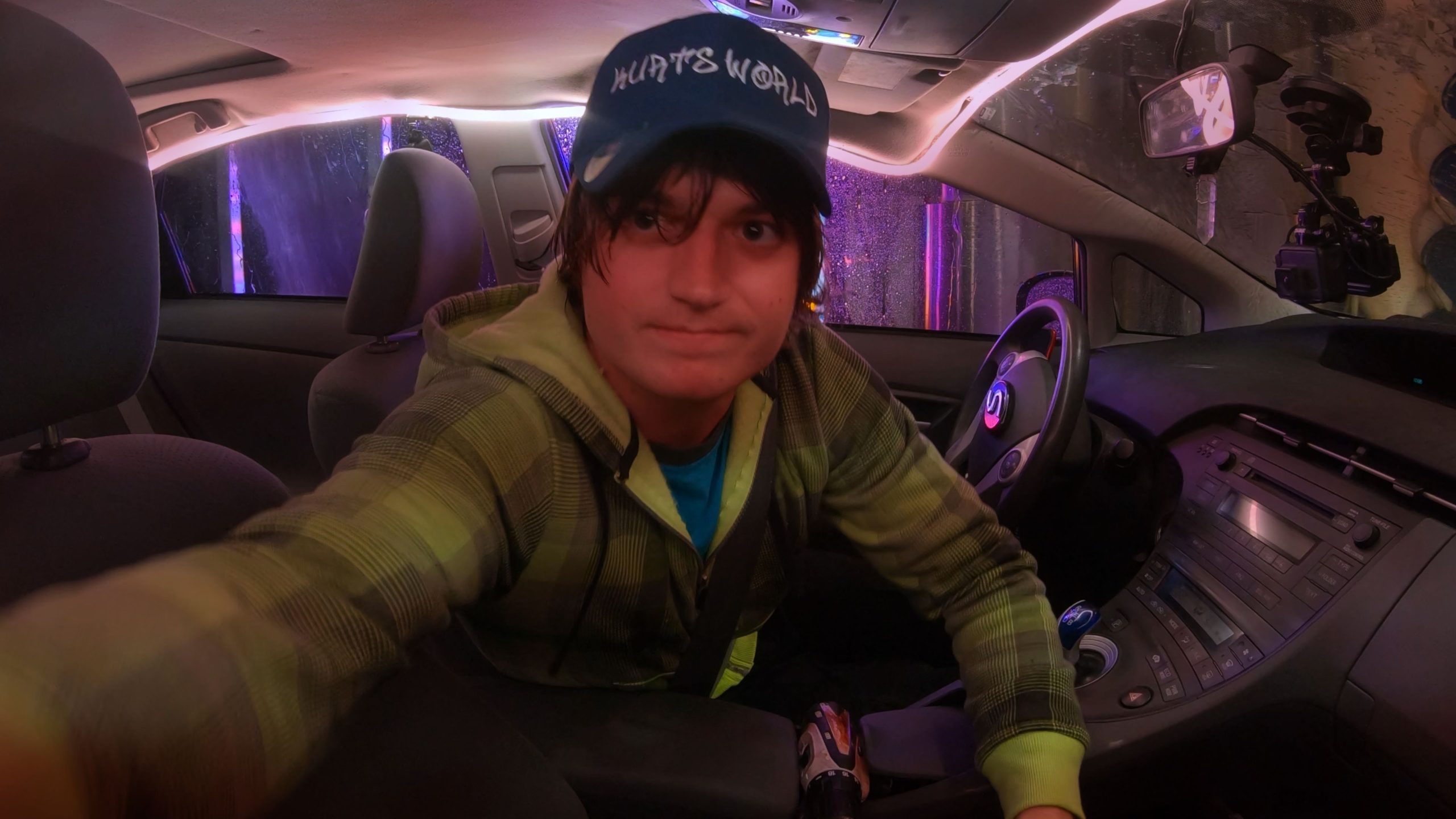
director Eugene Kotlyarenko’s latest film, Spree. Deciding to live
stream his evening as a driver for the ride-share company, Spree, Kurt – star of
@KurtsWorld96 – has a lesson to share and knows this is his ticket to fame in
the digital world.
Kotlyarenko, co-writing with Gene McHugh, wants to deliver a
comedic observation of the effects of the digital world on the real one. It’s
not a bad idea. It’s too bad the movie isn’t funny nor especially profound.
There are multiple cameras on Kurt throughout the movie –
phone camera, dash cam, window cam, security cam, body cam – at times, the
cinematography piles on the footage, using split screens to show us multiple
views. A running commentary is sometimes seen at the bottom of one or two of
the screens. This lets us know that everyone in cyberspace viewing Kurt’s night
– which involves several crimes – thinks it’s staged. Occasionally, someone
chimes in wondering if it’s real, but for the most part, they can’t discern
fact from fiction.
It’s exhausting. Aside from one, blink-and-you’ll-miss-it
shot that I couldn’t account for, every scene is delivered through a handheld
or portable device. Watching the movie, it’s hard to imagine anyone consumes
anything this way. If this is the way of the world, our attention spans will
surely dwindle closer and closer to that of a goldfish (if they haven’t
already).
The movie’s only plus is Sasheer Zamata (The Last O.G.,
Saturday Night Live). Her character, Jessie Adams, runs across Kurt early
in his night and is everything he wants to be. Zameer delivers the right amount
of comedy in a few spots that, had the movie matched her efforts, might have
helped its appeal.
While the attempt at commentary on the larger culture does
not go unnoticed, as one of Kurt’s followers says to him of his attempts to go
viral, it’s “boring and awkward.”
It was bound to happen, and no doubt the inanely titled Host
is the first in a succession of films to tap into quarantine and pandemic
frustrations to fuel horror. The fact that co-writer/director Rob Savage
employs found footage for his of-the-moment horror show seems even more
obvious.
Sometimes, though, it’s the most obvious choices that work
out. Savage taps into the real emotional gap between face-to-face and virtual
relationships as a handful of mates jump on a Zoom meeting for a bit if fun.
Separated because of lockdown, the buddies decide to create an event: an online séance. Haley (Haley Bishop) is hoping her friends will be respectful of the medium Seylan (Seylan Baxter), but those hopes are dashed when Teddy (Edward Linard) convinces the group to do a shot every time Seylan says “astro plane.”
“It’s astral plane,” Haley sighs.
Naturally, their irreverence is repaid.
Savage treads the same aesthetic as The Den or Unfriended:
Dark Web, but in many ways his effort is even more successful—perhaps
because it speaks so articulately to our immediate condition. Host is
incredibly simple and spooky in the way that it exploits our isolation and the
vulnerability that comes with that.
And while the medium itself is hardly groundbreaking and is
sometimes irritating, Savage takes advantage of the limitations of found
footage horror. The likability of the characters help you suspend disbelief during
the portions where they’d clearly have put down the damn computer, and because the
film manages to keep your interest, you get to enjoy the spook house effects. A
lot of these jump scares are old school fun.
Lean and mean, running a brisk 56 minutes, the film doesn’t busy itself too much with why or how or really even what. Instead it quickly upends our new normal with old fashioned scares.
The first thing you know about Shudder’s new original doc In Search of Darkness is that it’s an encyclopedic look at horror movies from the Eighties.
The second thing you need to know is that it’s 4 hours and
20 minutes long.
Right?!!
Why filmmaker David A. Weiner decided this had to be a standalone doc rather than a short series is beyond me. Certainly you can (and no doubt will) pause the film and come back to it, which is simple enough to do with Shudder. Still, having devoted about 1/3 of my waking day to a single documentary, I feel as if I should have learned more about Eighties horror than I did.
The bright spots: Tom Atkins is as delightful as you hope he
is, as, of course, is Barbara Crampton. John Carpenter and Larry Cohen are as
curmudgeonly; Keith David’s saucy baritone makes every anecdote extra fun; Alex
Winter makes some interesting connections between films and society at large;
and some of the industry insider talking heads seem knowledgeable.
There’s no real rhyme or reason to the specific titles discussed, but more problematic is the superficial treatment of the genre. In four and a half hours, I should have learned something, should have heard of a movie I’d never known about. In Search of Darkness refuses to connect any dots.
Some of the asides about VHS cover art, for instance, are briefly interesting, but other such tangents only emphasize the film’s overall weaknesses. The discussion of the final girl or of gratuitous nudity in 80s horror lacks any kind of insight, but when the piece on horror soundtracks did not mention Goblin, it dawned on me that in early 4 ½ hours, not a single foreign title is discussed.
No Argento,
no Fulci, no Deodado – niente.
A ninety minute doc that contents itself with a nostalgic traipse down VHS store aisles would be fun. A doc series that contextualizes the phenomenal explosion in the popularity of horror in the Eighties, digging into sexism, feminism, foreign titles, changing music, the Reagan influence, the impact of VHS and MTV – that would be amazing. In Search of Darkness is neither.
You know what, 2020 is just going to be remembered as its own horror story. I mean, filmmakers have a lot of competition if they think they can scare us more than real life right now. Still, we’ve seen a decent batch of horror: Blood Quantum, The Droving, Time Out of Space, The Hunt and more. What more, you ask? Well, we’ll tell you. Here are our favorite horror films of the first half of 2020.
5. The Invisible Man
Instead of the existential ponderings that generally underscore
cinematic Invisible Man retellings,
writer/director Leigh Whannell uses this story to examine sexual politics,
abuse, control and agency.
It’s a laudable aim, but the reason
it works is casting.
Whannell’s script is smart, with much needed
upgrades to the invisibility formula as well as the havoc wrought. But the
success of The Invisible Man is almost
entirely shouldered by Elisabeth Moss, who nails every moment of oppressed
Cecilia Kass’s arc.
At its core, The Invisible Man is an entertaining B-movie horror propped up by contrivance. Whannell’s aim is to give the story new relevance, and thanks to Moss, his aim is true.
4. The Other Lamb
The first step toward freedom is
telling your own story.
Writer
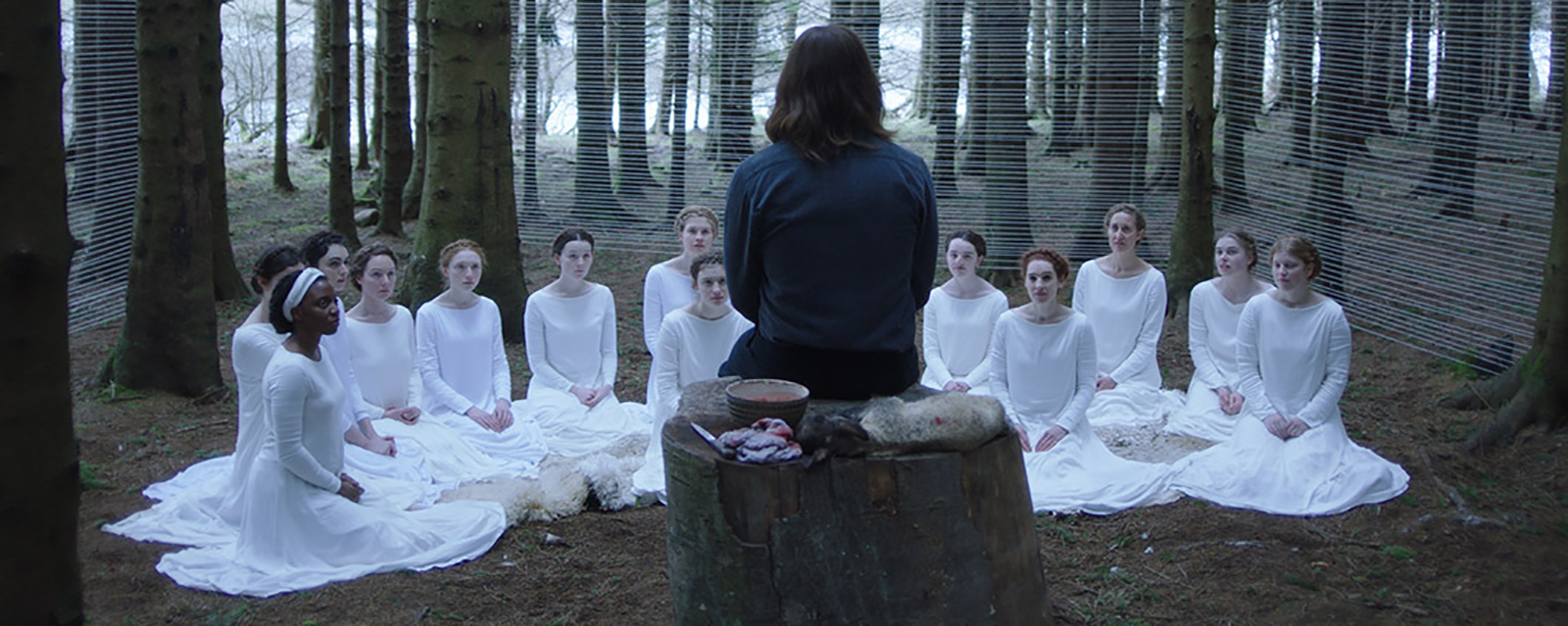
C.S. McMullen and director Malgorzata Szumowska tell this one really well.
Between McMullen’s outrage and the macabre lyricism of Szumowska’s camera, The Other Lamb offers
a dark, angry and satisfying coming-of-age tale.
Selah’s (Raffey Cassity) first period and her commune’s
migration to a new and more isolated Eden offer the tale some structure. Like
many a horror film, The Other Lamb occupies
itself with burgeoning womanhood, the end of innocence. Unlike most others in
the genre, Szumowska’s film depicts this as a time of finding your own power.
The Other Lamb does not simply suggest you question authority. It demands that you do far more than that, and do it for your own good.
3. Gretel & Hansel
Sophia Lillis (IT) narrates and stars as Gretel, the center of this coming of
age story—reasonable, given the change of billing suggested by the film’s
title. The witch may still have a tasty meal on her mind, but this is less a
cautionary tale than it is a metaphor for agency over obligation.
Alice Krige and her cheekbones
strike the perfect mixture of menace and mentorship, while Sammy Leakey’s
little Hansel manages to be both adorable and tiresome, as is required for the
story to work.
Perkins continues to impress with
his talent for visual storytelling and Galo Olivares’s cinematography heightens
the film’s folkloric atmosphere.
There’s no escaping this spell. The whole affair feels like an intriguing dream.
2. The Lodge
Several Fiala and Veronika Franz follow up
their creepy Goodnight Mommy with this “white death” horror that sees a
future stepmom having a tough time getting to know the kids during a weeklong,
snowbound cabin retreat. Riley Keough is riding an impressive run of
performances and her work here is slippery and wonderful. As the unwanted new
member in the family, she’s sympathetic but also brittle.
Jaeden Martell, a kid who has yet
to deliver a less than impressive turn, is the human heartbeat at the center of
the mystery in the cabin. His tenderness gives the film a quiet, pleading
tragedy. Whether he’s comforting his grieving little sister or begging Grace
(Keough) to come in from the snow, his performance aches and you ache with him.
There’s no denying the mounting dread the filmmakers create, and the three central performances are uniquely effective. Thanks to the actors’ commitment and the filmmakers’ skill in atmospheric horror, the movie grips you, makes you cold and uncomfortable, and ends with a memorable slap.
1. Swallow
Putting a relevant twist on the classic
“horrific mother” trope, writer/director Carlo Mirabella-Davis uses the rare
eating disorder pica to anchor his exploration of gender dynamics and, in
particular, control.
Where Mirabella-Davis’s talent for building
tension and framing scenes drive the narrative, it’s Bennett’s performance that
elevates the film. Serving as executive producer as well as star, Haley Bennett
transforms over the course of the film.
When things finally burst, director and star shake off the traditional storytelling, the Yellow Wallpaper or Awakening or even Safe. The filmmaker’s vision and imagery come full circle with a bold conclusion worthy of Bennett’s performance.
If your experience with Norwegian horror has you expecting Lake of Death to bring on the blondes and the folklore – you’re halfway there. The coifs check out, but writer/director Nini Bull Robsahm trades some homeland roots for flashes of decidedly American inspiration.
It’s a bit curious, since Robsahm (Amnesia) is updating the 1942 novel (and 1958 film) De dødes tjern– which is credited with kickstarting Norway’s interest in the horror genre. Clearly, a cabin in the woods can be creepy in any language.
A distracted Lillian (Iben Akerlie) brings a group of friends and one dog to a remote lakeside cabin for one more getaway before the place is sold. Her gang is ready for a good time, but Lillian is still haunted by the memory of her twin brother Bjorn, who disappeared one year earlier after taking a walk in these very same woods!
One of Lillian’s friends hosts a paranormal podcast, which is Robsahm’s device for filling everyone in on the local legend of the lake. You can get lost in its serene beauty, they say, lose touch with reality, and maybe even get the urge to kill.
Mysterious happenings, paranoia and suspicion ensue, but Robsahm sets the brew on a very slow boil, taking a full hour before we get one well developed visual fright. Lillian’s sleepwalking, hallucinations, and frequent nightmares lay down an overly familiar framework that’s peppered with music stabs and repeated name-dropping of horror classics from Evil Dead to Misery.
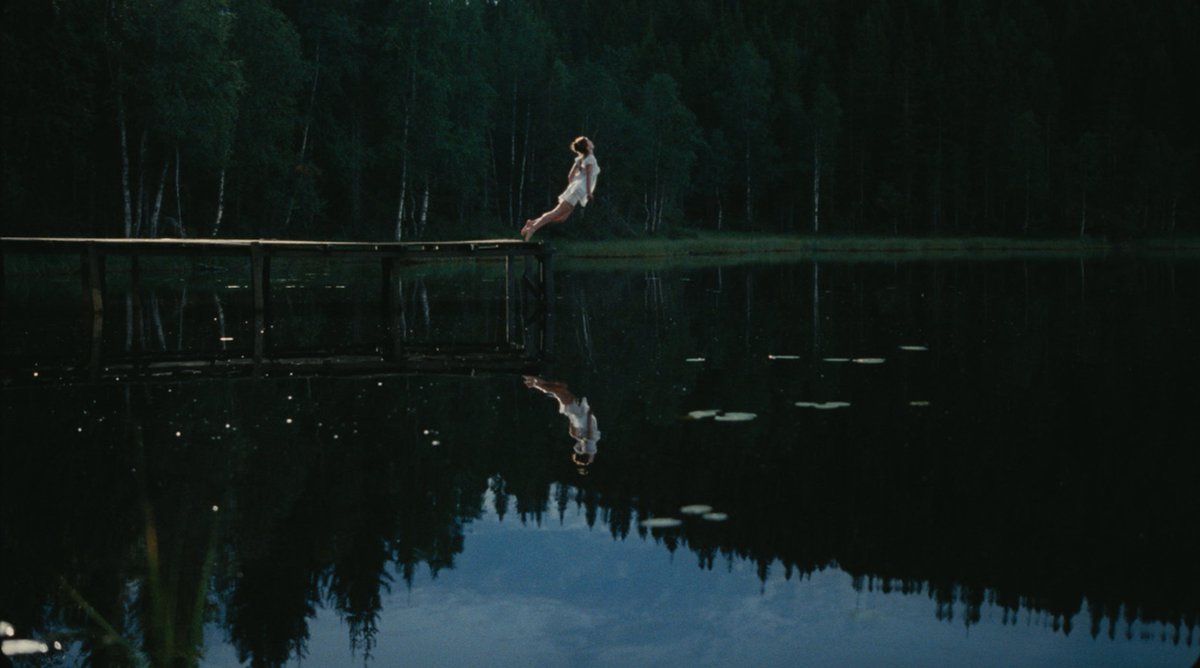
As an attempt to bridge generational horror, it’s all very commendable but little more than workmanlike. Robsahm has better success with her commitment to the lake’s spellbinding beauty, and with her repeated trust in cinematographer Axel Mustad.
Shooting in wonderfully earthy 35mm, Mustad creates a gorgeous tableau of woods and water, evoking the dreamy atmosphere required to cash the check written by the lake’s urban legend.
There may be little that surprises you in Lake of Death, but a sterling partnership between director and cameraman makes sure you have a fine souvenir from the visit.
Here’s the thing about horror movies in 2020: they have to one up 2020. This year itself is such a horror show, it’s hard for cinema to keep up.
Writer/director Eric Bress (The Butterfly Effect) does what he can with the supernatural war tale, Ghosts of War.
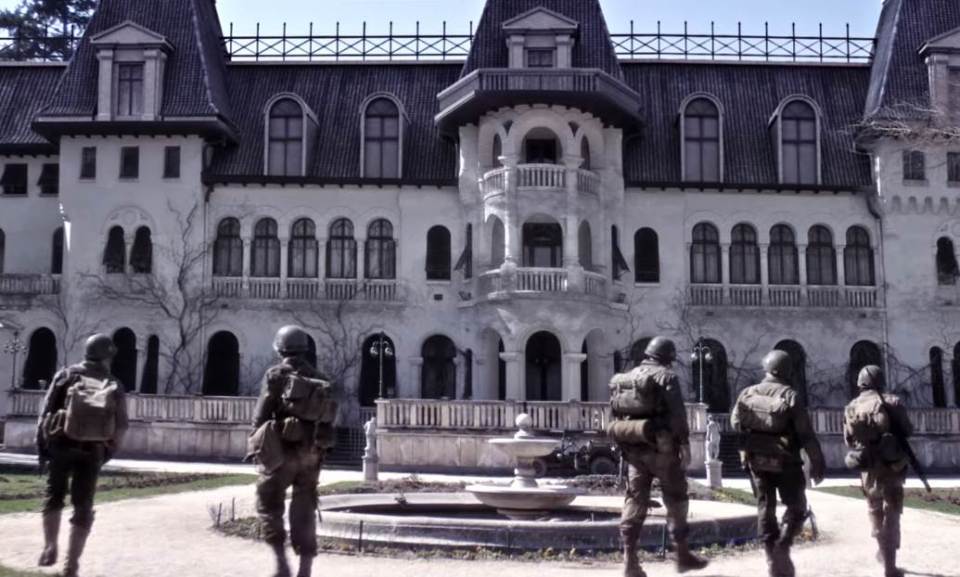
Five WWII soldiers are ordered to hold tight in a French mansion circa 1944. It’s an isolated estate, once a Nazi stronghold. Terrible things happened there, and even though the surroundings suggest luxury, the mission may be the most dangerous the platoon has ever faced.
It reminds me of that time earlier this year when COVID trapped a Bolivian orchestra inside a haunted German castle surrounded by wolves.
So the film has that to compete with. Of course, the other
thing Ghosts of War has going against it is the surprisingly engaging
and unfortunately underseen Overlord, a
WWII horror show that drops us alongside a handful of soldiers into war torn
France just in time to find zombies.
Very little is more fun than Nazi zombies.
But Bress isn’t interested in zombies. Instead, he explores
the madness that weighs on men who’ve done the unthinkable by trapping them in
a situation where they must face their demons.
Kyle Gallner delivers an appropriately haunted performance
as one of the soldiers—each of whom Bress characterizes with quick, shorthand
ideas: the nut job (Gallner), the smartypants (Pitch Perfect’s Skylar
Astin), the hero (Theo Rossi), the big talker (Alan Ritchson), the leader who’s
in over his head (Brenton Thwaites).
Gallner and Astin are the only cast members given the
opportunity to differentiate themselves from the pack as the platoon stumbles
upon evidence of the haunting. Bress and his ensemble stumble here, rarely
developing any real dread, infrequently even delivering the jumps their quick
cut scares attempt.
Ghosts of War makes an effort to say something meaningful.
That message is waylaid by confused second act plotting and a third act reveal
that feels far more lurid and opportunistic than it does resonant or haunting.
Bress tries to take advantage of the audience’s preconceived notions in order to subvert expectations, but he doesn’t have as much to say as he thinks.
A deadly curse passed from house to house. A demon that can change identities at will. A young girl possessed, and desperate parents begging experts to investigate. A priest, wracked with guilt, seeking exorcism help from an older mentor. Deadly dopplegangers.
As a patchwork repackaging of several classic horror themes, South Korean Shudder original Metamorphosis (Byeonshin) works better than you might expect. Despite familiar tropes and convenient plot turns, director Hong-seon Kim scores with creepy atmospherics, sympathetic family strife and intermittent flashes of gore.
Gang-goo (Dong-il Sung) can’t believe the deal he got on the new house for his family. No other bids, imagine that! Shortly after move-in, though, the trouble starts with a very noisy neighbor and his alarming tastes in interior design.
But confronting him only brings evil closer to home, and soon Gang-goo, his wife and three daughters are facing increasing threats from each other. Or so they believe.
Turns out Gang-goo’s brother Joong-su (Sung-Woo Bae) is a priest with a tragic past, and he may be the family’s only hope to escape the demonic force that has gripped them.
Director Kim seems unfazed by the script’s lack of originality or moments of contrivance, confident in his ability to find new frights in well-traveled neighborhoods. For the most part, he does, even managing to touch a nerve that resonates beyond the horror genre itself.
Look beyond the inverted crosses, walls dripping blood and one unsurprising twist, and you’ll see Metamorphosis carrying a layer of horror-loving metaphor. We hurt each other in so many ways, and can be easily convinced that hurt is justified, or even divine.
There’s a devil in some of the details here, but the big picture is worthy.
It’s hard to do zombies well anymore. Mainly, you have to either
come up with an entirely novel concept or hope that the bloody mayhem works in
your favor.
In Yummy, the concept is only marginally original,
but the bloody mayhem is more than on target. Co-writer/director Lars Damoiseaux
assaults your gag reflex with a viscous mess of a horror flick. Blood and
entrails, of course, but expect a pretty inspired use of pus, liquid body fat,
tendons and other tissues and goos.
It makes for some slick surfaces, I tell you what! Plus some
unexpected little monsters keep things interesting and fun.
Set inside a cut-rate Eastern European cosmetic surgery
clinic, the film follows a mother, daughter and her boyfriend into a very bad
decision. Mom (Annick Christiaens) is after a series of nips and tucks; daughter
Alison (Maaike Neuville) wants breast reduction; boyfriend Michael (Bart
Hollanders) is just a good dude willing to drive everyone even though he’s
afraid of blood.
Here is a ripe premise for horror. Mom is a Cronenberg-esque vehicle for body horror as well as vanity shaming. Alison provides comedic possibilities (no one in the clinic can begin to understand her point of view). Hemophobic Michael offers the clear hero’s arc. (Or he’ll simply die of shock by the gooey second reel.)
And no, it’s not incredibly novel—zombie movies so rarely
are. But it’s smart, witty and fun. Damoiseaux accomplishes much with his
budget. Practical effects are great, performances are delightful, and nothing
beats a little well placed Stooges. (The band, not the knuckleheads.)
Yummy represents Damoiseaux’s feature debut as
director and writer, but he’s garnered attention and awards for years with his
work in shorts. Award winning co-writer Eveline Hagenbeek (Rokjesdag)
channels her affinity for conversational comedy into a script that may follow a
familiar structure but delivers a believable, funny edge that the game ensemble
takes advantage of.
Their collaboration is no masterpiece, but it is a lot of sloppy fun.
Witches, starvation, ghouls, oppression, Church and governmental oppression—there’s a reason they call them the Dark Ages! Filmmaker George Popov (Hex, The Droving) joins us to discuss the best horror movies about the Dark Ages.
6. Black Death (2010)
What Christopher Smith (Severance) delivers with Black Death that few if any horror filmmakers tackling the same themes match is a clear eye as to the flaws and merits on both sides of the witch hunt.
Eddie Redmayne is an innocent and a believer; Sean Bean is no innocent, but he does believe. Both are part of a Christian army who get word of a village untouched by pestilence—a village where some say the dead have been raised.
What follows is a punishingly human drama about using religion to suit your own ends, about what evil we are and are not willing to accept, and about the end of innocence.
5. The Masque of the Red Death (1964)
The sixth of seven Roger Corman/Vincent Price Poe films—and maybe the best—sees Price in a role that delights in its own evil.
No Corman film has ever used color to such glorious extreme, a tactic absolutely in keeping with Poe’s text. The film works from a short story, padding with subplots (one from Poe, one from elsewhere) that work well within the story and generate a little emotional depth beneath the lurid color and debauchery.
Stay through to the end, whatever you do, but do give this one a chance.
4. Hex (2017)
Two soldiers separated from their companies during England’s Civil War chase each other into a deep forest. The rebel Thomas (William Young) is young, soft and open to the dark poetry and doom of witchcraft. He’s not long in the woods before he sees his true enemy is not the countryman behind him with his sword drawn.
Richard (Daniel Oldroyd) fights for King and Country, strident and single-minded, logic keeps him from believing until he has little choice.
There is more happening here than you realize, and it’s to the filmmakers’ credit that you only recognize the film’s purpose when they are ready for you to do so. The result is a satisfying tale with more power than just magic.
3. Army of Darkness (1992)
Easily the most fun you’ll have with a Dark Ages film, Army of Darkness is Sam Raimi’s third and silliest installment in his Evil Dead trilogy. In it, like a Connecticut Yankee, hero Ash (Bruce Campbell at his buffest) finds himself transported to dark times.
You know what he finds. Deadites.
Ash must woo the girl (and then maybe accidentally get her changed into a deadite, which will necessitate killing her), say the spell (which he may or may not entirely screw up, inadvertently raising an army of darkness), and save the day.
Endlessly quotable, utterly bananas, and just a thrill ride of Monty Python meets Three Stooges meets Ray Harryhausen fun, Army of Darkness is a treasure.
2. The Head Hunter (2018)
In a land of yore, the geography forbidding, a far off
trumpet calls for the hardiest of warriors—those equipped to fight beasts.
Director Jordan Downey shows much and tells little in his
nearly wordless medieval fantasy, The Head Hunter. The filmmaker parses
out all the information you’ll need to follow this simple vengeance myth, but
pay attention. Very little in this film is without meaning—no creepy image, no
creak or slam.
In what is essentially a one man show, Christopher Rygh
delivers a quiet, brooding performance for a quiet, brooding film. He cuts an
impressive figure as the Vikingesque warrior at the center of this adventure
and his work speaks of joyless endurance.
https://www.youtube.com/watch?v=5ZqtRbifT6Q
1.Hagazussa (2017)
Making a remarkably assured feature debut as director, Lukas Feigelfeld
mesmerizes with his German Gothic poetry, Hagazussa: A Heathen’s Curse.
Settled somewhere in the 15th Century Alps, the film shadows lonely, ostracized women struggling against a period where plague, paranoia and superstition reigned.
It would be easy to mistake the story Feigelfeld (who also writes) develops as a take on horror’s common “is she crazy or is there malevolence afoot?” theme. But the filmmaker’s hallucinatory tone and Aleksandra Cwen’s grounded performance allow Hagazussa to straddle that line and perhaps introduce a third option—maybe both are true.
The film lends itself to a reading more lyrical than literal. Feigelfeld’s influences from Murnau to Lynch show themselves in his deliberate pacing and the sheer beauty of his delusional segments. He’s captured this moment in time, this draining and ugly paranoia that caused women such misery, with imagery that is perplexingly beautiful.
Basing a horror film around the “scariest movie ever made” premise is ambitious. Is it smart?
Well, it’s ambitious. Because at some point, you’re going to have to show at least a snippet of this deadly frightening flick your film is referencing, and your audience is already poised to dismiss the impact.
Remember the “killer” tape in the The Ring? We had to see it, and if it didn’t totally creep us out when we did, the entire movie would have crumbled. But that video WAS creepy as Hell, giving The Ring the anchor it needed to stand as one of the best PG-13 horror flicks ever made.
Shudder’s Warning: Do Not Play remembers The Ring/Ringu quite well, building a familiar mystery around some urban legendary long lost film footage.
Mi-Jung (Ye-ji Seo) is a “film festival prodigy” on a two week deadline from a big South Korean studio to come up with a great horror script or she’s out.
She needs inspiration!
Film students at the local university hip Mi-Jung to the legend of a graduation film from years earlier. They can’t remember the title, but it supposedly screened once, with repercussions so dramatic the film was rumored to be directed….by a ghost.
Mi-Jung asks for help in an online forum and is instantly met with an ominous demand to cease the inquiries, which only draws her deeper into the mystery.
Writer/director Kim Jin-won provides some nifty atmospherics in the early going, but little else to demand your attention. While Kim doesn’t rely on cheap jump scares (thank you), he pushes the unreliable narrator trope via enough “waking from a dream” sequences to quickly become tiresome.
But the blood and the body count pick up in act two, as the film adopts some Blair Witch tactics – and openly cops to it, which is nice. Mi-Jung finds herself deep inside the cursed production, and we’re left to sort out the psychological strands of her experience.
The film-within-a-film may never grasp the elusive Ring ambitions, but hang in past the setup and Warning delivers a competent mystery and some fun terror in the aisles.