Creepy twins! Librarians! Drag queens! These are a few of my favorite things…
The long-lost 2010 cult-film-in-the-making All About Evil brings all this and more to its Shudder debut this week. What’s it about?
The business of show!
Natasha Lyonne is Deborah Tennis, anxious librarian. Deb inherits her dad’s beloved single-screen San Francisco theater and vows to keep it afloat, no matter how. Her plan of action: make grisly, hyper-realistic horror shorts with literary puns for titles.
You’d be surprised how well it works.
Writer/director Joshua Grannell (aka Peaches Christ, who co-stars) surrounds Lyonne with some underground heavy-hitters including Mink Stole and Cassandra Peterson. Between that and the Herschel Gordon Lewis love, All About Evil is a mash note to camp.
Performances and writing fall right in line. It’s community theater bad, but in the best way. Lyonne is in her element, hamming her arc from mousy literary type to vampy directress with Gloria Swanson skill. She’s even more fun when she’s directing her fine crew (Jack Donner, Noah Segan, and Nikita and Jade Ramsey – all so fun).
The underlying story that we need to stop assuming every troubled, white high school boy is a danger to society has not aged well. But Grannell also hits on timeless lessons about cell phone use during a movie (never OK!) and Elvira’s hotness (eternal!).
All About Evil offers clever midnight-movie fun from start to finish. The filmmaker is clearly a devotee of cult and kitsch, a love that brightens every frame of the film. Plus, the film memorabilia! Come for the movie posters, stay for more movie posters, enjoy some madcap campy mayhem in between.
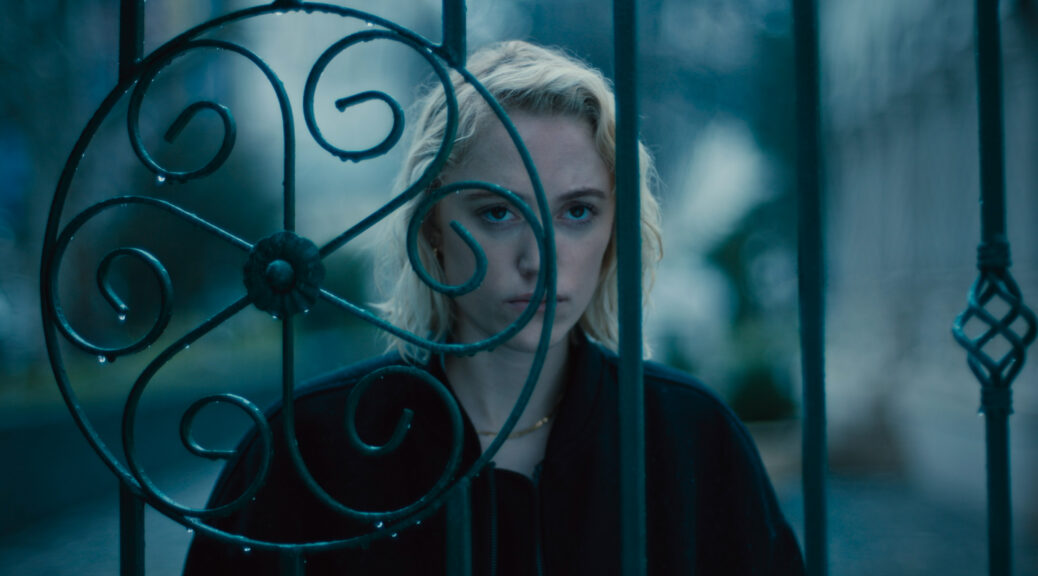
If you’re a fan at all of genre films, chances are good Watcher will look plenty familiar. But in her feature debut, writer/director Chloe Okuno wields that familiarity with a cunning that leaves you feeling unnerved in urgent and important ways.
Maika Monroe is sensational as Julia, an actress who has left New York behind to follow husband Francis (Karl Glusman) and begin a new life in Bucharest. With a mother who was Romanian and a fluent grasp on the language, Francis instantly feels at home.
Julia does not, and her feelings of vulnerability are compounded by her trouble communicating, the news reports of a serial killer, her husband’s late nights at the office…and the man in the window across the street (the effortlessly creepy Burn Gorman) who is constantly watching her.
And as soon as Julia makes accusations, the games begin.
Is the watcher really a threat? Is he stalking Julia, or is she the one who’s following him?
None of these beats are new, and as events escalate, others are pretty clearly telegraphed. But it’s the way Okuno (who helmed the impressive “Storm Drain” segment from V/H/S /94) slowly twists the gaslighting knife that makes the film’s hair-raising chills resonate.
She finds a perfect conduit in Monroe, who emits an effectively fragile resolve. The absence of subtitles helps us relate to Julia immediately, and Monroe never squanders that sympathy, grounding the film at even the most questionably formulaic moments.
Even as Julia pleads to be believed, the mounting indignities create a subtle yet unmistakable nod to a culture that expects women to ignore their better judgment for the sake of being polite.
And from the friendly bystander who jokes about the creeper’s “crush” to Francis’s weak-willed humoring, Okuno envelopes Julia in male gazes that carry threats of varying degrees, all building to a bloody and damn satisfying crescendo.
Not everyone is going to enjoy Crimes of the Future, David Cronenberg’s latest and perhaps most Cronenberg film. But Cronenberg fans will find plenty to enjoy.
Well, enjoy might not be the right word.
In a dreary world where “surgery is the new sex,” two performance artists (Viggo Mortensen, Léa Seydoux) turn one’s mutant organs into art.
If that doesn’t sound like a Cronenberg movie, nothing does.
Saul Tenser (Mortensen) has evolutionary derangement, a common problem these days. The human body has started simply sprouting new organs, Tenser more than most. But he and his partner Caprice (Seydoux) expel them from his body, which is okey dokey with the New Vice squad and the New Organ Register’s office, run by a couple of people passionate about new organs: Timlin (Kristen Stewart) and Wippet (Don McKellar).
From there, Crimes of the Future turns into a kind of science fiction detective thriller. In the cons column, it moves at times too slowly and there is one uncharacteristically weak kill sequence. In the pros, it’s unusually funny for the filmmaker. Also, there is still no one who delivers visceral, physical horror quite like David Cronenberg.
The king of corporeal horror hasn’t really made a horror film since 1988. He’s made moody, disturbing indies (Naked Lunch, Crash, eXistenZ, Spider) before producing two massively successful mainstream(ish) films: 2005’s A History of Violence and 2007’s Eastern Promises. Both earned Oscar nominations. Both were brilliant.
Cronenberg had a little more trouble finding his footing after that, never reaching the same degree of commercial or critical success and essentially retiring in 2014.
But more than 30 years after his last horror flick, Dead Ringers—one preoccupied with organ mutations, sex and surgery—Cronenberg returns to the ground that was most fertile in his early career. Literally, his latest effort concerns organ mutations, sex and surgery.
Crimes of the Future—like Crash and Videodrome—is specifically, grotesquely sexual. It plays like an ecological fable, though the theme, as stated by Lang Daughtery (Scott Speedman) remains the same: “It’s time for human evolution to synch up with modern technology.”
Turns out, it’s a theme that hasn’t outstayed its welcome. But it often feels like the movie is more about the filmmaker himself than it is about his thematic preoccupations. Indeed, Crimes of the Future is so Cronenberg it’s almost meta.
The film references, directly or indirectly, The Brood, Dead Ringers, The Fly, Naked Lunch, Crash, and most frequently and obviously, Videodrome. Like his main character, Cronenberg has long been an “artist of the inner landscape.” And after several decades of excising that tendency from his work, Cronenberg has come full circle to accept what was inside him all along.
Since the day Hollywood realized that teens spent a lot of money on movies, films have depicted high school angst. Often enough those movies offer suggestions, simple enough remedies to the woes inside those hallowed halls.
A makeover, perhaps? Saturday detention? Karate lessons?
Director Marcus Dunstan’s darkly comedic Unhuman thinks maybe an apocalyptic field trip could do the trick.
A high school science class and one teacher who’s no better than the worst of the teens set off on an extra-credit adventure. And before you know it, you’re eyeball deep in a zombie flick, redneck menace film and John Hughes movie all rolled into one.
Briannae Tju (TV’s I Know What You Did Last Summer) plays Ever, who keeps her head down, her mouth shut and tries not to make waves. She and bestie Tamra (Ali Gallo) are having a moment—it’s that moment when the cool kids want only one of you for their clique and you pretend you aren’t both aware of it.
But suddenly, after a bus crash, scary radio broadcast and a throat-biting murderous attack, Ever and Tamra must team up with those cool kids and whoever else escaped the bus to survive the field trip.
Expect more than you bargain for, including solid performances from Tju, Gallo, Benjamin Wadsworth and a busload of actors finding ways to color outside the lines.
This is the same writing team that launched into the horror scene with Project Greenlight winner Feast. Unhuman shares an irreverent tone with that early work.
Dunstan, co-writing with longtime partner Patrick Melton, sees a darling simplicity in old-school teen movies. At one point, Randall (Wadsworth) tells us, “It’s a microcosm for life. High school doesn’t end. It spreads.”
The filmmakers sell that kind of 80s influence well, but don’t assume Melton and Dunstan buy it.
There’s real cynicism lying under the viscera, although the surface-level laughs and shocks help Unhuman masquerade as simple bloody levity.
Heartbreak, hardship, hard living and broken dreams — that sounds like a country song.
How well does it work for a horror movie? Director Brea Grant (12 Hour Shift) finds out, with an assist from effortless badass Katey Sagal in the Music City thriller Torn Hearts.
Sagal plays Harper Dutchess, country music legend and what remains of the Dutchess sisters, a duo that made it big in the 90s, before tragedy hit. Now a recluse in her Nashville mansion, Harper is none too happy to see upstarts Jordan (Abby Quinn) and Leigh (Alexxis Lemire) show up at her door hoping to record a song with her that will put them on the path to stardom.
Screenwriter Rachel Koller Croft stumbled into something fresh with the country music angle. Horror is no stranger to rock music, disco, techno, metal, punk, but country? That’s new.
Unfortunately, she repackages a lot of familiar ideas inside that Western fringe. But Grant finds ways to keep things interesting.
An authentic soundtrack of music penned by Brittany Allen grounds Torn Hearts in authenticity, while Yaron Levy’s cinematography works the creepy Dutchess mansion for all its gothic, garish Nashville weirdness.
Both Lemire and Quinn fit their roles well. As Harper picks away at the young duo’s insecurities, each performer gets the chance to show some range, both physically and emotionally.
Sagal steals the show, though. The picture of hard living, Harper manipulates the young musicians with sometimes sadistic ease. Sagal relishes the contempt, crafting a formidable central figure and ensuring rapt attention, no matter what weaknesses the film has in store.
Torn Hearts layers its somewhat rote plot points with context about the harsh misogyny of country music, points Sagal’s performance drives home.
Spooky buddies! What’s what we’re talking about, that’s who we’re talking to.
5. The Ritual (2017)
David Bruckner has entertained us with some of the best shorts in horror today, including work from V/H/S, Southbound, and one of our favorites, The Signal. Directing his feature debut in The Ritual, Bruckner takes what feels familiar, roots it in genuine human emotion, takes a wild left turn and delivers the scares.
Five friends decide to mourn a tragedy with a trip together into the woods. Grief is a tricky, personal, often ugly process and as they work through their feelings, their frustration quickly turns to fear as they lose themselves in a foreign forest where danger lurks.
The film works for a number of reasons, but its greatest triumph is in making the woods scary again. That environment has become such a profound cliché in horror that it is almost impossible to make it feel fresh, but there is an authenticity to the performances, the interaction among the characters, and the frustration and fear that grounds the horror. And then there is horror—intriguing, startling, genuinely frightening horror. Yay!
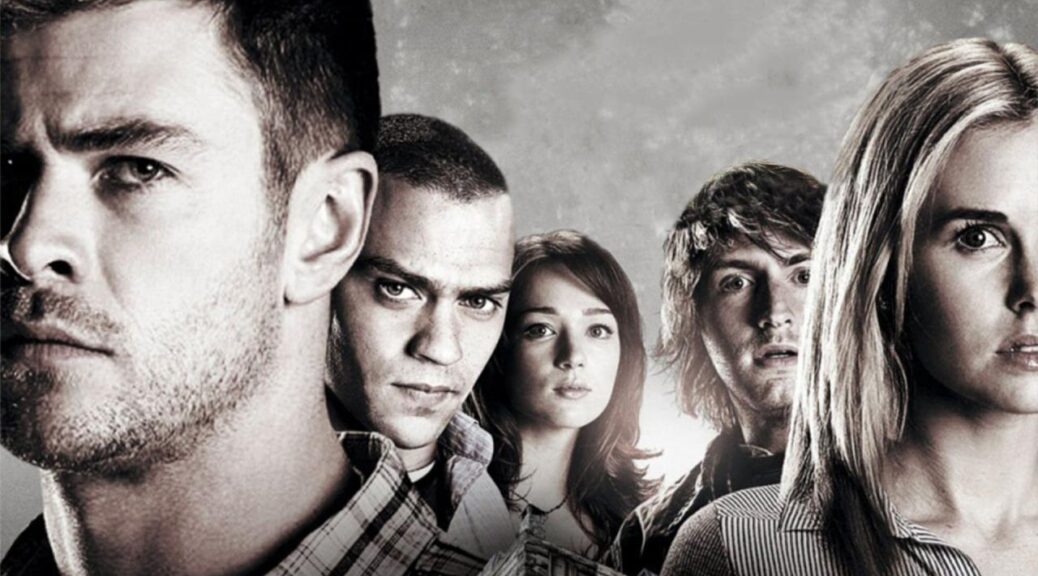
4. The Cabin in the Woods (2011)
You know the drill: 5 college kids head into the woods for a wild weekend of doobage, cocktails and hookups but find, instead, dismemberment, terror and pain. You can probably already picture the kids, too: a couple of hottie Alphas, the nice girl, the guy she may or may not be into, and the comic relief tag along. In fact, if you tried, you could almost predict who gets picked off when.
But that’s just the point, of course. Making his directorial debut, Drew Goddard uses that preexisting knowledge to entertain holy hell out of you.
Cabin is not a spoof. It’s not a satire. It’s sort of a celebratory homage, but not entirely. What you get with this film is a very different kind of horror-comedy.
3. Tigers Are Not Afraid ( 2017)
Issa Lopez’s fable of children and war brandishes the same themes as Guillermo del Toro’s masterpiece Pan’s Labyrinth, but grounds the magic with a rugged street style. One pack of feral children have only each other and their imaginations to keep them safe.
Tigers follows Estrella, a child studying fairy tales—or, she was until her school is temporarily closed due to the stray bullets that make it unsafe for students. As Estrella and her classmates hide beneath desks to avoid gunfire, her teacher hands her three broken pieces of chalk and tells her these are her three wishes.
But wishes never turn out the way you want them to.
2. The Descent (2005)
Adventuring buddies get together for a bit of spelunking. Writer/director Neil Marshall begins his film with an emotionally jolting shock, quickly followed by some awfully unsettling cave crawling and squeezing and generally hyperventilating, before turning dizzyingly panicky before snapping a bone right in two.
And then we find out there are monsters.
The grislier the film gets, the more primal the tone becomes, eventually taking on a tenor as much like a war movie as a horror film. This is not surprising from the director that unleashed Dog Soldiers – a gory, fun werewolf adventure. But Marshall’s second attempt is far scarier. For full-on horror, this is one hell of a monster movie.
1. It Follows (2014)
It Follows is a coming-of-age tale that mines a primal terror. Moments after a sexual encounter with a new boyfriend, Jay discovers that she is cursed.
As Jay’s close-knit crew does what they can to help her evade the shapeshifting horror that follows her, Mitchell captures that fleeting yet dragging moment between childhood and adulthood and gives the lurking dread of that time of life a powerful image. There is something that lies just beyond the innocence of youth. You feel it in every frame and begin to look out for it, walking toward you at a consistent pace, long before the characters have begun to check the periphery themselves.
We dig deep into the history of horror to pay tribute to some of the true cinematic breakthroughs – films that defined horror and are still imitated and adored today.
5. Dracula (1931)
Oh, Bela. When Lugosi took the screen in 1931, no one was yet tired of Dracula. It was still a literary property only made once into a film, albeit illegally and under a different title by F.W. Murnau. (If you haven’t seen the masterpiece that is Nosferatu, please do.)
Bela, alongside director Tod Browning, got to create the image that would forever define the most mimicked, reworked, revamped – if you will – monster in cinema.
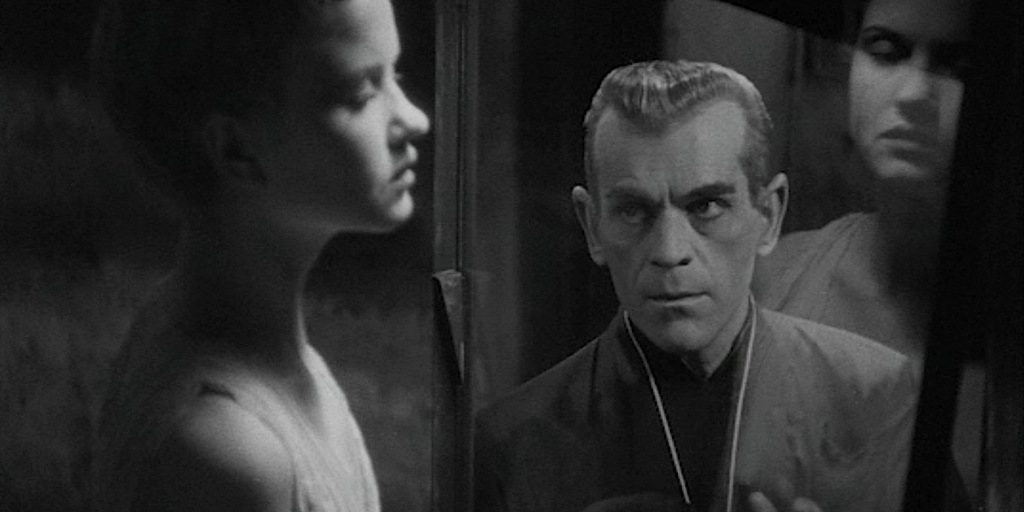
4. The Black Cat (1934)
Rocky Horror owes a tremendous debt to Edgar G. Ulmer’s bizarre horror show. The film – clearly precode – boasts torture, tales of cannibalism, and more than the hint of necromancy.
Plus Bela Lugosi and Boris Karloff?! What is not to love? It looks great, as does Karloff, whose lisp is put to the most glorious use. What a weird, weird movie. So good!
3. Vampyr (1932)
The well-groomed if aimless dreamer wanders with what appears to be a fishnet to a secluded little inn. But trouble’s afoot.
And dig those crazy shadows!
The great Carl Theodor Dreyer co-wrote and directed this gorgeous black and white fantasy. The painterly quality of Dreyer’s frames and the bizarre character behavior give the film a surreal atmosphere you can’t shake. His decision to limit dialog to a minimum and craft the movie with traditional silent film gimmicks benefitted the dreamscape atmosphere.
2. Freaks (1932)
Short and sweet, like most of its performers, Tod Browning’s controversial film Freaks is one of those movies you will never forget. Populated almost entirely by unusual actors – midgets, amputees, the physically deformed, and an honest to god set of conjoined twins (Daisy and Violet Hilton) – Freaks makes you wonder whether you should be watching it at all. This, of course, is an underlying tension in most horror films, but with Freaks, it’s right up front. Is what Browning does with the film empathetic or exploitative, or both? And, of course, am I a bad person for watching this film?
Well, that’s not for us to say. We suspect you may be a bad person, perhaps even a serial killer. Or maybe that’s Hope. What we can tell you for sure is that this film is unsettling, and the final, rainy act of vengeance is truly creepy to watch.
1. Frankenstein (1931)/Bride of Frankenstein (1935)
James Whale’s brilliant take on Mary Shelley’s novel looked at Frankenstein’s monster and saw the cruelty humanity was capable of committing. For him, the monster was the central and most interesting figure. Unlike Shelley’s antihero, Whale’s creature was utterly sympathetic, an oversized child unable to control himself, making him simultaneously innocent and dangerous.
Barons and aristocracy, the European setting – the film distrusts scientists and public officials as fools unable to reign in their own ambitions no matter the dire consequences.
Four years later, James Whale and Boris Karloff – with tag along make-up man Jack Pierce – returned to Castle Frankenstein for another tale of horror. What makes this one a stronger picture is the dark humor and subversive attitude, mostly animated by Frankenstein’s colleague Dr. Pretorius (Ernest Thesiger).
The sequel casts off the earnestness of the original, presenting a darker film that’s far funnier, often outrageous for its time, with a fuller story. Karloff again combines tenderness and menace, and Elsa Lanchester becomes the greatest goth goddess of all film history as his Bride.
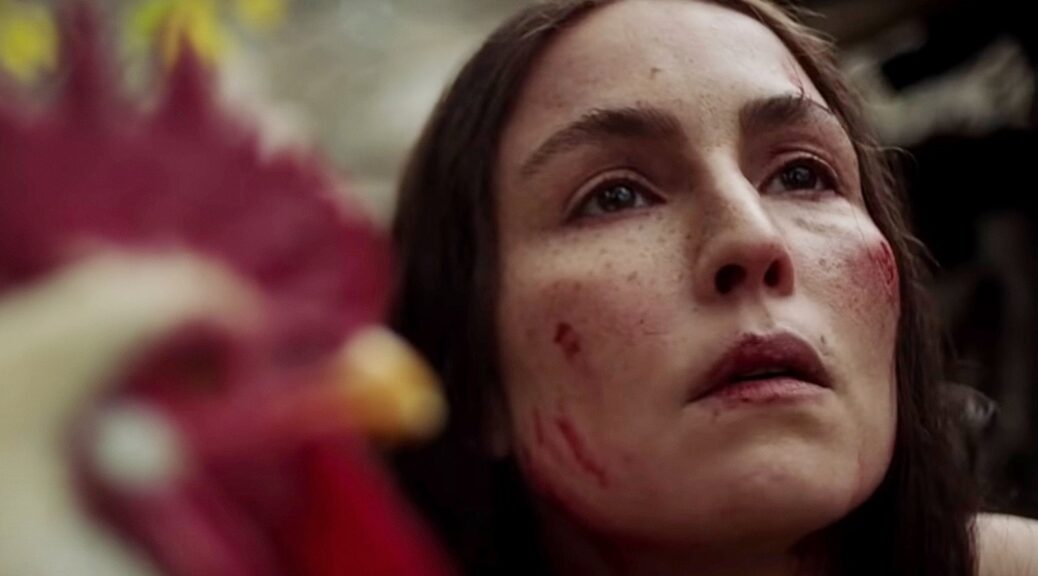
To suppose that filmmaker Goran Stolevski is a fan of Terrence Malick seems fair. His tale of 19th century Macedonian witchery offers the same type of visual aesthetic, whispery voiceover and absence of dialog in much of Malick’s work, especially 2018’s A Hidden Life.
You Won’t Be Alone follows Neneva (Sara Klimoska), a teenager raised in isolation, hidden from the Wolf-eatress (Anamaria Marinca) who’s claimed her. Freed from hiding, the teen shapeshifter takes on different forms (Noomi Rapace, Felix Maritaud, Alice Englert) and learns of life.
The vast majority of the film’s spoken language comes in the form of Neneva’s thoughts via voiceover. Having grown up alone and unable to speak, Neneva’s language is disjointed and poetic, her musings untouched by traditional socialization.
These reflections are periodically punctuated by the bitter logic of her lifelong tormentor, the Wolf-eatress, whose own upbringing among the human race has left her horribly scarred, literally and metaphorically.
Sections of the film are quite lovely. Admirable performances all around help to keep you engaged. Klimoska’s physical performance reflects the primal beginnings of Neneva’s explorations. Rapace brings an awkward adolescence feel to the character’s early interpretations of normal human behavior. Englert carries the character into adulthood with quiet curiosity, never losing that animalistic inquisitiveness carried throughout the earlier performances.
Stolevski’s cast gives him all he could have hoped. Unfortunately, he doesn’t entirely deliver on his end. The story free floats, its style often overwhelming its substance. You feel every minute of its running time.
That’s not to say Stolevski’s approach is a failure, only that it’s taken too far. His fractured storytelling suits his purposes of exploring gender identity and the nature of humanity. He builds dread well and his fluid camera allows his tale to cast a spell.
The result is mainly entrancing, but too often frustrating.
Working from a screenplay by Robert Dean Klein, director Craig Singer brings us the time loop horror film, 6:45.
Bobby (Michael Reed) and Jules (Augie Duke) are trying to work through some issues, so they visit the quaint island of Bog Grove for a relaxing vacation. What the couple doesn’t know is that their visit to the island falls on the anniversary of a traumatic, unsolved murder. Because of this, the ferry service doesn’t run, and they’re stuck – or so they’re informed by the nosy, odd proprietor for the inn where they’re staying.
A slow opening that follows the couple exploring Bog Grove, its tourist shops and oddball residents, doesn’t take advantage of the opportunity to build tension. When the tragedy occurs, it comes as a relief rather than a shock.
Soon, Bobby descends into a nightmare he must relive over and over. Being forced to relive the day alongside Bobby is a horror in itself.
No one else experiences the loop, so we get to see Duke in a range of roles: some days she wishes could last forever, others see her trying to rein in an increasingly unstable boyfriend. Reed, on the other hand, is stuck playing a man who doesn’t seem to know how to handle himself each day. Every time the crucial event occurs, he seems constantly taken by surprise.
The cast of locals has little to do, often repeating lines from previous loops. They fill mostly stereotypical roles: small-town friendly and welcoming or weirdly creepy. There isn’t middle ground, and it makes for uninteresting characters.
Rather than differentiate itself from similar time loop films through storytelling, 6:45 instead focuses on camerawork and distracting split screens. Anywhere from four to six screens will litter the frame, some focusing on banal details, others on more interesting visuals. Days are relegated to montages,
Flashbacks detailing the couple’s history sometimes punctuate the flashbacks. It’s here that Singer cleverly injects moments that help us understand why the couple has been fighting. It’s clear that the fight revolves around infidelity, but these fleeting moments offer hints of violence, which reveals something more sinister.
The film does take an interesting turn, but it comes too little, too late. It also fumbles any message it’s trying to get across. Instead of offering a strong look at a troublesome relationship, it embraces shock over commentary. In the end, we’re not shown anything new or astute.
Filmmaker Mariama Diallo’s episodic and short film work has explored — in comedic and dramatic form — the impact of living within a culture of micro- and not-so-micro-aggression. Her feature debut Master dives deeper, taking themes in more horrific directions.
Regina Hall plays Gail Bishop, the first Black residence hall “master” in the long and storied history of New England’s Ancaster College. In her first year on campus, she’ll meet another newcomer, freshman Jasmine (Zoe Renee), the only Black student in her dorm.
Jasmine has the bad luck of being assigned to the dorm’s spookiest room, where a student haunted by campus’s legendary witch once killed herself. As freshman year progresses, both Jasmine and Gail begin seeing menace around every corner.
Diallo sets up shop at the intersection of racism and misogyny. While her story tells of a history of racism that’s clearly alive and well, the filmmaker’s comment on institutional and historical contempt for women is more sly but ever-present.
The result for this particular position in the crosshairs is a palpable, inescapable sense of loneliness. If there’s one thing Master communicates it’s the isolation and aloneness both Gail and Jasmine face at this institution and, more broadly, in this world. The effect is poignant and sincerely scary.
It’s always great to see Hall at the center of a film. The veteran has provided reliable support, both comedic and dramatic, in films for ages. Her frustrating but sympathetic lead offers the perfect balance to Renee’s vulnerability.
Amber Grey’s turn as confidant Liv Beckman is superbly brittle and narcissistic. Likewise, a sea of white faces (Talia Balsam, Will Hochman, Bruce Altman, D.C. Anderson) hit varying degrees of condescension and hostility to create a drowning pool with little chance of escape.
Diallo struggles at times balancing allegory and horror story. On occasion, genre tropes become too obvious. At other times, the obviousness of political points overtakes cinematic narrative. But the underlying horror of reality ably depicted by Hall and a game cast make sure these minor issues remain minor.