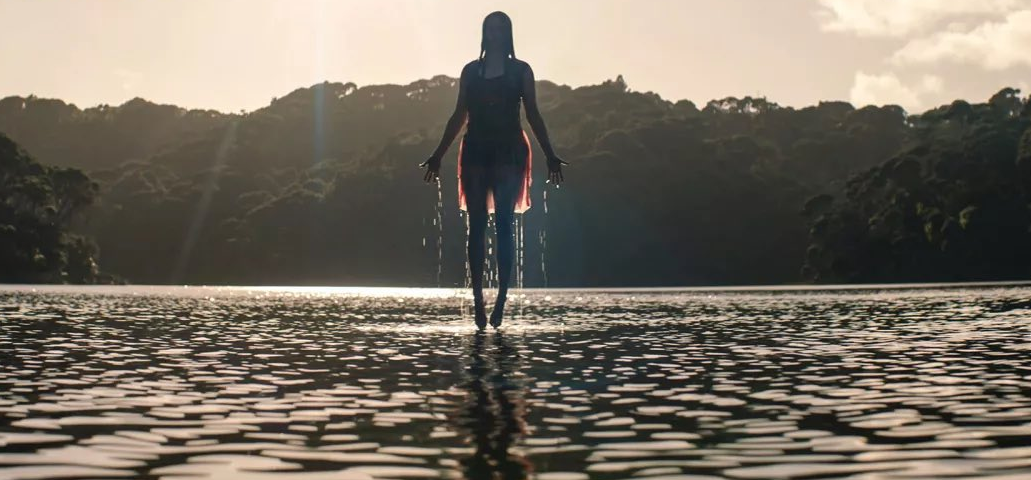
On the heels of that evil nun’s return to theaters, Deliver Us arrives with a sexy nun, a horny priest, one ancient prophecy and two incredible claims.
In a Russian convent, sister Yulia (Maria Vera Ratti) is pregnant – with twins. Not only is Yulia claiming immaculate conception instead of virgin birth (remember kids, the immaculate conception was of Mary, not Jesus), but she says one of her unborn children is the Messiah, and the other is the Anti-Christ.
The Church promptly reaches out to the handsome Father Daniel Fox (Lee Roy Kunz) for an investigation (Father Joseph McDreamy was apparently busy). Though the American priest has a history of success with these “demonic” cases, he also has a high level of skepticism and a belief that most can be explained through natural science.
Father Fox is also expecting a child with a prominent Russian bussinesswoman, and is planning on leaving the Church to start a family. Still, he accepts this last assignment, and soon uncovers a secret society’s plan to kill sister Yulia before her twins can fulfill that centuries-old prophecy.
The ancient order/prophecies fulfilled stuff is fertile ground for horror films. And though Kunz – who also co-writes and co-directs – is shaky on religion (the film also has a Catholic bishop trying to talk Father Fox out of leaving the Priesthood by arguing that celibacy is merely a “tradition”), a brutal opening sequence and the resulting mystery combine to set an intriguing hook.
Cinematographer Isaac Bauman gives the film a dark, gorgeously foreboding aesthetic, using stark confines and snowy landscapes to great effect. Candlelit rooms and steam heat in winter air are framed with a fine construction that adds to the feeling of isolation once Father Fox, sister Yulia and the twins set out on the run.
Sacrifices are demanded, and blood is spilled, but as the mystery unfolds, the unfortunate layer of silliness that plagues many films in this demonic subgenre begins to creep in. Even worse, two incredulous Shining references appear to nearly comedic effect, derailing the mood in an instant.
The writing and directing teams also seem overly concerned with the lack of eroticism in the exorcism game. And though Deliver Us can be a horny little devil, some fine production elements are ultimately let down by a script too distracted to satisfy.
What happens if a woman reconsiders Rosemary’s Baby?
This is not to say that writer/director Kjersti Helen Rasmussen’s Nightmare is the masterpiece of Polanski’s 1968 Oscar winner. It is not. But this Norwegian horror delivers an intriguing pregnancy nightmare, one that benefits from a somewhat merciless female perspective.
Eili Harboe (Thelma) is Mona. She and boyfriend Robby (Herman Tømmeraas, Leave) just bought an apartment. It needs a lot of work, but it’s all theirs and now they can be grown-ups. Mona isn’t sure she and Robby have the same definition of grown up, though, and here’s where things begin to break down.
Mona begins having nightmares that escalate into sleepwalking, sleep paralysis and hallucinations. Could it be stress over abandoning a burgeoning career to focus on renovations and – if Robby has a say in things – starting a family? Or maybe it’s the creepy neighbors and their screeching infant?
Whatever the case, Robby’s sexy, shirtless doppelganger comes to Mona every night. The relentlessness of it all has Mona questioning reality.
So do we. Rasmussen rarely clarifies what is really happening and what is nightmare. She mines the dreamy fact that what we see in our sleep is often an image of our waking troubles, particularly those we hide from ourselves. Mona wants to please, as so many women do, and the men around her take casual advantage of this. One scene in a doctor’s office pinpoints the moment Mona finally is moved to begin to act on her own.
Microagressions blend into bigger dangers as Mona’s life blurs with her nightmares. Rasmussen fills the reality with details and beautifully executed moments that fully outline Mona’s struggle.The darker fantasy world of the nightmares is given far less attention, and the medical world that bridges the two feels slapped together.
But Harboe’s understated turn, particularly in a handful of breathtaking scenes, helps Rasmussen blisteringly articulate an everyday horror women face.
Birth/Rebirth opens on two different women performing two different tasks in a hospital. Their paths will cross, but at the moment, Celie (Judy Reyes, Smile) and Rose (Marin Ireland, The Dark and Wicked) are revealing something of themselves to us.
Celie’s environment: chaotic, human. A prenatal nurse used to comforting and nurturing patients in need while navigating an emergency, Celie is a tight balance of empathy and control.
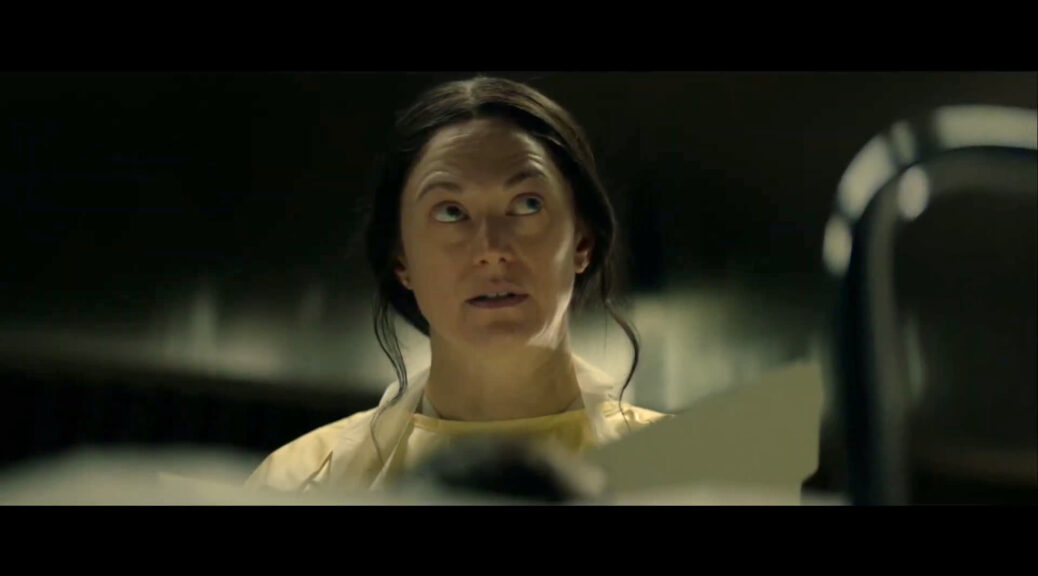
Rose – alone with a cadaver in a pathology lab in the bowels of the hospital – is a fastidious loner, cold, logical. She is pure science.
Their story, like Barbie’s, is about how impossible it is to be a woman. Director Laura Moss moves seamlessly from short to feature with this modern take on Frankenstein and motherhood.
Tragedy strikes early in Moss’s film. Overworked and under rested, Celie blames herself for her daughter Lila’s death. And now the hospital can’t even find the girl’s body.
But Rose can.
Little by little, with motives simultaneously opposed and identical, Celie and Rose become a duo. An odd couple, if you will, each with her own responsibilities, both with the same goal: bring Lila back.
Ireland’s Rose is an exceptional ghoul because her every behavior feels rooted in reality, which makes her both repugnant and sympathetic. However cold her behavior seems, there’s logic behind it. Her joy, those rare flashes, hit harder. She’s like a macabre Spock.
Reyes is her equal and opposite, compassionate but hard-headed. And as their relationship thickens, you see each woman changing thanks to exposure to the other. Rose slowly warms and becomes more human. Celie inches closer and closer to ghoul.
The film amounts to a profound parenting nightmare, and each actor takes on the role of parent to create an unnerving dynamic again guided by authenticity. All of it pulls the psychological scabs of exhausted parenting.
Moss can’t quite stick the landing, but their shoestring Frankenstein fable feels closer to the truth than most of them.
Talk to Me doesn’t waste much time before escalating the conversation.
And while the shocking prologue isn’t the only reminder you’ll get of similarly structured films such as The Ring or It Follows, Australian brothers Danny and Michael Philippou carve out a timely teen horror update that is often chilling and consistently engaging.
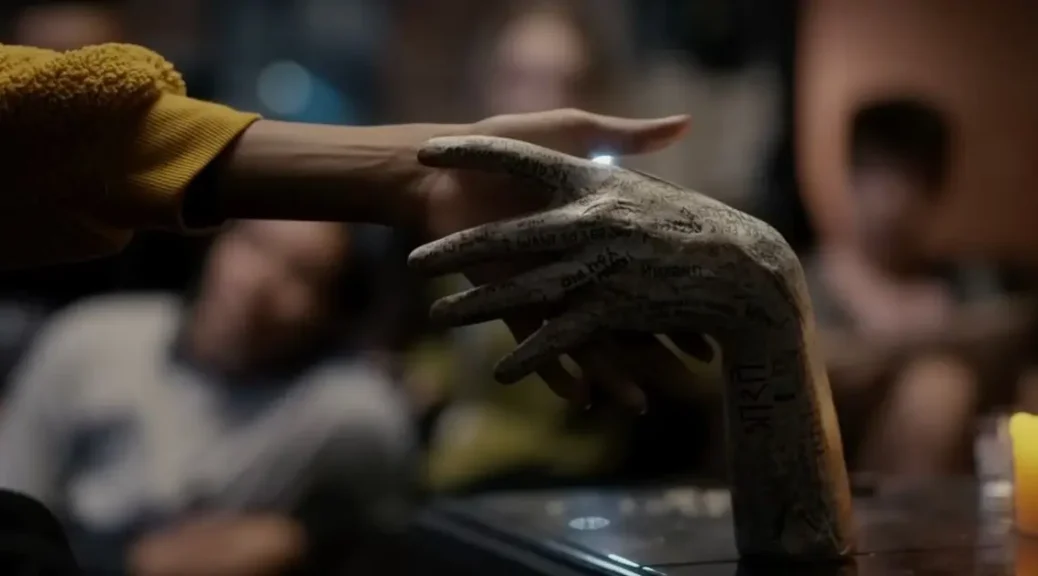
BFFs Mia (Sophie Wilde from The Portable Door) and Jade (Alexandra Jensen) are eager to hang out with the edgy kids at the local parties. And lately, that means getting in the room with Joss (Chris Alosio) and Hayley (Zoe Terakes), because they let you talk to the hand.
Where did Joss get it? Was it the hand of a satanist, or maybe a long dead medium? Details are sketchy. But if you’re game, you grip it, say “talk to me” and take the ride. And everyone else, of course, films the experience.
The Philippou brothers (both direct, Danny also co-writes) worked in TV, YouTube videos and on the camera department for The Babadook before this first feature, and it’s a debut that shines with a confident vision. We’ve seen some of these threads before, but this fresh take is able to capture the current zeitgeist without any desperation for hipness.
Viral fame isn’t the lure here, it’s the high of glimpsing the other side and the enlightened feeling it gives you. But for Mia, it’s also the gateway to a very personal journey that could answer questions from her past while saving the life of Jade’s little brother Riley (Joe Bird).
The script smartly stays a step or two ahead of contrivance, and is able to find some impressive psychological depth as it touches on grief, trauma, and the anxieties of leaving childhood behind.
Plus, come on, the creepy “embalmed hand” gimmick is effective from the start. It gives the Philippou brothers a great anchor for building an aesthetic of ethereal dread while they score time and again with wonderful practical effects.
This is R-rated horror, refreshingly light on the jump scares and false alarms, leaning instead on a parade of visual images that can truly terrify. And even when we don’t see what the game players are seeing, the fact that we’ve already had a hellish glimpse feeds a devilishly fun game within our own imaginations.
Talk to Me somehow feels familiar, but uncomfortably so. It’s a horror show always eager to deface the rulebook, and leave you with a wonderfully organic sign that this game is not over.
Sure, the Losers Club leaps to mind. But the truth is that horror films are littered with lovable losers – often their corpses. Why? It’s easy to root for an underdog, and nothing packs an emotional wallop like watching that bumbling, vulnerable sweetheart meet a grim end.
We love them all: Sean & Ed, Viago & Vladislav, Melvin Juno and 100 Bloody Acres‘s Reg & Angus Sampson. But these are our favorites.
5. Oskar, Let the Right One In (2008)
In 2008, Sweden’s Let the Right One In emerged as an original, stylish thriller – and the best vampire flicks in years. A spooky coming-of-age tale populated by outcasts in the bleakest, coldest imaginable environment, the film breaks hearts and bleeds victims in equal measure.
Kare Hedebrant‘s Oskar with a blond Prince Valiant cut needs a friend. He finds one in the odd new girl (an outstanding Lina Leandersson) in his shabby apartment complex. She, as it turns out, needs him even more.
This is a coming-of-age film full of life lessons and adult choices, told with a tremendous atmosphere of melancholy, tainted innocence, and isolation. Plus the best swimming pool carnage scene ever.
The unsettling scene is so uniquely handled, not just for horrifying effect (which it certainly achieves), but to reinforce the two main characters, their bond, and their roles. It’s beautiful, like the strangely lovely film itself.
4. Lionel Cosgrove, Dead Alive (1992)
Rated R for “an abundance of outrageous gore,” Dead Alive is everything the early Peter Jackson did well. It’s a bright, silly, outrageously gory bloodbath.
Lionel Cosgrove (Timothy Balme) secretly loves shopkeeper Paquita Maria Sanchez (Diana Penalver), but she has eyes for someone less milquetoast. Until, that is, she’s convinced by psychic forces that Lionel is her destiny. Unfortunately, Lionel’s milquetoast-iness comes by way of decades of oppression via his overbearing sadist of a mother, who does not take well to her son’s new outside-the-home interests. Mum follows the lovebirds to a date at the zoo, where she’s bitten (pretty hilariously) by a Sumatran rat-monkey (do not mistake this dangerous creature for a rabid Muppet or misshapen lump of clay).
Braindead is so gloriously over-the-top that nearly anything can be forgiven it. Jackson includes truly memorable images, takes zombies in fresh directions, and crafts characters you can root for. But more than anything, he knows where to point his hoseful of gore, and he has a keen imagination when it comes to just how much damage a lawnmower can do.
3. Katakuri Family, The Happiness of the Katakuris (2001)
Takashi Miike is an extremely prolific director. He makes a lot of musical films, a lot of kids’ movies, a lot of horror movies, and then this – a mashup of all of those things. Like Sound of Music with a tremendous body count.
The Katakuris just want to run a rustic mountain inn. They’re not murderers. They’re lovely – well, they’re losers, but they’re not bad people. Buying this piece of property did nothing to correct their luck, either because, my God, their guests do die.
You might call this a dark comedy if it weren’t so very brightly lit. It’s absurd, farcical, gruesome but sweet. There’s a lot of singing, some animation, a volcano, a bit of mystery, more singing, one death by sumo smothering, and love. It sounds weird, truly, but when it comes to weird, Miike is just getting started.
2. Evil Ed, Fright Night (1985)
Fright Night takes that Eighties, Goonies-style adventure (kids on an adult-free quest of life and death) and uses the conceit to create something tense and scary, and a bit giddy as well. The feature debut as both writer and director for Tom Holland, the film has some sly fun with the vampire legend.
Roddy McDowall got much deserved love at the time for his turn as a washed-up actor from horror’s nostalgic past, and Chris Sarandon put his rich baritone to campy, sinister use.
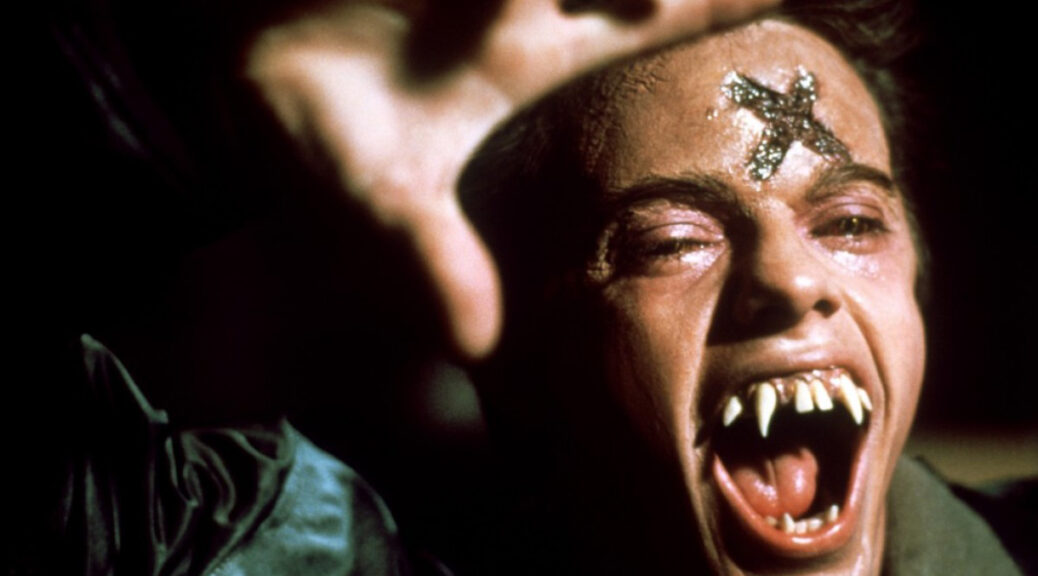
Still, everyone’s favorite character was Evil Ed, the manic, pitiful loser turned bloodsucking minion. Credit Stephen Geoffreys for an electric and, at least in one scene, heartbreaking performance.
1. Tucker& Dale, Tucker and Dave vs. Evil (2010)
Horror cinema’s most common and terrifying villain may not be the vampire or even the zombie, but the hillbilly. The generous, giddy Tucker and Dale vs. Evil lampoons that dread with good-natured humor and a couple of rubes you can root for.
In the tradition of Shaun of the Dead, T&DVE lovingly sends up a familiar subgenre with insightful, self-referential humor, upending expectations by taking the point of view of the presumably villainous hicks. And it happens to be hilarious.
Two backwoods best buds (an endearing Tyler Labine and Alan Tudyk) head to their mountain cabin for a weekend of fishing. En route, they meet some college kids on their own camping adventure. A comedy of errors, misunderstandings and subsequent, escalating violence follows as the kids misinterpret every move Tucker and Dale make.
T&DVE offers enough spirit and charm to overcome most weaknesses. Inspired performances and sharp writing make it certainly the most fun participant in the You Got a Purty Mouth class of film.
In 1974, master of horror Tobe Hooper unleashed The Texas Chain Saw Massacre upon the world, giving it one of the most influential films in the annals of cinema history. It wasn’t the first rural terror flick centered around folks poking their heads where they shouldn’t, but it set into place a permanent subgenre mold that much of what has come since has been cast from. This includes the Nicolas & Luciano Onetti’s 2017 slash and torture film, What the Waters Left Behind.
Five years later, Nicolas Onetti returns to the world of that film with a sequel, Scars. The first film followed a small documentary crew as they ventured into a remote, abandoned town in Argentina called Epecuen. This is a real town that was destroyed in a flash flood during 1985 and remained under water for decades, before the flood finally receded and left ruins in its wake. Both films were shot on location in Epecuen, with the resulting production value being their most striking aspect.
Scars trades in a film crew for a metal band, with our doomed musicians merely passing through their area as they finish their bar gig tour. Once they find themselves in Epecuen, they are quickly set upon by the same cannibal family that dispatched the documentarians in the previous entry. A couple cast members carry over on the villain front, with some fresh faces mixed in as well.
The Onettis’ initial claim to fame came in the form of a trio of neo-giallo films (Deep Sleep, Francesca, and Abrakadabra) that have delighted many fans of that subgenre. Unfortunately, their grasp on rural slashers isn’t as strong. The good news is that if you were a fan of the first film, you’re likely to find a lot to enjoy within Scars, as it is a step up in almost every way. The bad news is that it’s effectively the exact same movie over again, so if you weren’t buying what the first was selling, you’re unlikely to want to partake in seconds.
Their stalking setpieces, torture sequences, and excessive rape scenes repeat over and over with little variation or visual ingenuity, leaving us with an 85-minute film that still feels like it is a solid 15 minutes too long. Scars is for the curious only. All others should stick with the original Texas Chain Saw Massacre or either version of The Hills Have Eyes.
Back in 2023, Chris Kentis crafted one of the most nerve-wracking explorations in tension ever filmed. Open Water dropped you in the middle of the ocean with a married couple and, eventually, as day turns to night and their scuba boat never comes back for them, a lot of sharks.
Few survival tales have stripped away so much and still left you so frazzled. Andres Beltran follows the minimalist tourism of doom path with his Colombian hiking misadventure, Quicksand.
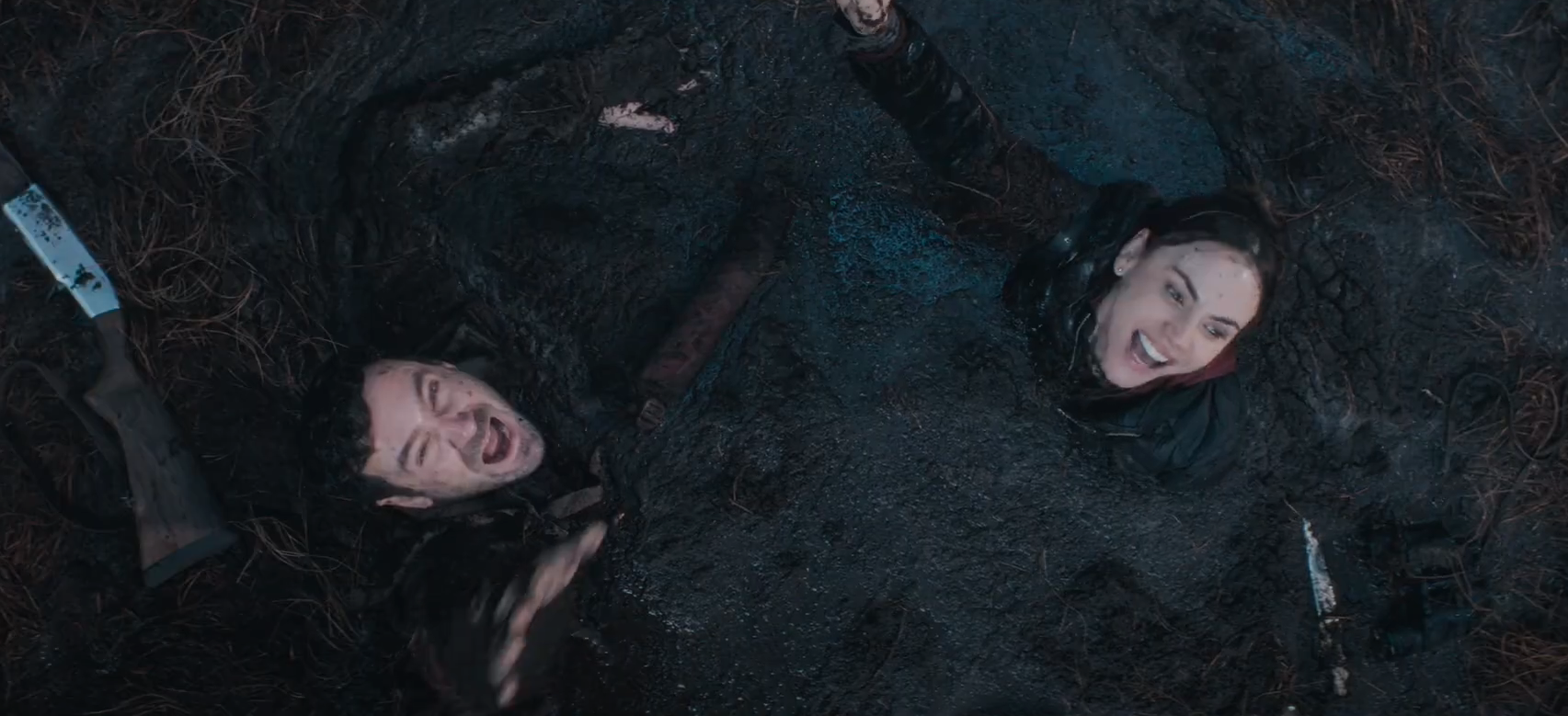
Although Sofia (Carolina Gaitan) and Nick (Allan Hawco) are separated and heading toward divorce, they accept friend Marcos’s invitation to speak at his medical convention. During some down time, they go for a hike, run into trouble, and flee for their lives in the wrong direction – into a part of the rainforest known for quicksand.
Here is where we spend most of the film: stuck chest deep in Colombian mud with an unhappy married couple. No one will realize they’re missing for at least a day, and even then, they’re miles away from where anyone might look for them.
The quicksand isn’t their only problem, naturally. Trapped as they are, they’re vulnerable to predators – fire ants, snakes – but they’ll still have time to hash out their own issues.
A film this limited, done well, can keep you in the moment, your head on a swivel, your mind working along with the characters’ to find a solution. Adam Green’s 2010 skiing horror Frozen succeeded, as, to a degree, did the 2010 Ryan Reynolds date with claustrophobia, Buried.
Given the extremely limited cast, action and locations, a film like this lives and dies on performances since there’s almost nothing else to look at. Hawco delivers layered, vulnerable work that surprises.
Gaitan is less convincing, partly because the performance is superficial and partly because Sofia’s internal journey feels inauthentic and manipulative.
Beltran’s direction, though competent, lacks inspiration. He never manages to mine tension, and his actors rarely feel truly stuck. Uncomfortable, sure. Dirty and wet, definitely. Trapped and panicked, nope.
The fact that the film’s blandly obvious, wildly outdated message is all we get from our efforts doesn’t do Quicksand any favors, either.
One of our favorite parts of the trauma of accepting that half the year is behind us is our therapy of celebrating so much great horror cinema! Did you forget these treasures? Already?! Well, here are (in alphabetical order) the ten best horror flicks so far this year.
The Angry Black Girl and Her Monster
An awful lot of people have reimagined Mary Shelley’s Frankenstein in an awful lot of ways. What makes writer/director Bomani J. Story’s take, The Angry Black Girl and Her Monster, so effective is that it tackles a lot in very little time and handles all of it heartbreakingly well.
To say that Story situates Shelley’s tale in the context of drug violence would be to sell his film short. He’s moved the story from European castles and laboratories to the projects, where Vicaria’s (Laya DeLeon Hayes, stunning) mother fell victim to a drive-by shooting, her brother was shot to death on a drug deal gone wrong, and her father deals with his grief by using. But drugs are just part of the larger problem, the almost escapable, systemic and cyclical nature of violence and poverty.
Story’s chosen genre may feel slight, even campy, but the tropes belie some densely packed ideas, and there’s a current of empathy running through the film that not only separates this from other Frankenstein tales, but deepens the film’s genuine sense of tragedy.
The Blackening
Several friends from college (including Jay Pharaoh, Yvonne Orji, Sinqua Walls, Antoinette Robertson, and the film’s co-writer Dewayne Perkins) are reuniting at a remote cabin for a Juneteenth celebration. It isn’t long before they discover a talking blackface at the center of a board game called The Blackening (“probably runs on racism!”) and fall into a sadistic killer’s plan to pick them off one by one.
The game will test their knowledge of Black history and culture, and demand they sacrifice the friend they deem “the Blackest.” It’s a clever device that Perkins, co-writer Tracy Oliver and director Tim Story use to skewer both well-known horror tropes and well-worn identity politicking.
The old joke about Black people being the first to die in horror films is pretty well-worn, too, but don’t let that poster tagline convince you that the film has nothing new to say. The less “Blacker” these characters seem, the greater chance they have of surviving. That’s some fertile ground for social commentary, and what began as a viral comedy sketch lands on the screen as a refreshing new angle for a horror comedy.
Evil Dead Rise
Deadites hit the big city in Lee Cronin’s Evil Dead Rise, the latest instalment in the old Sam Raimi demon possession franchise. As was true with its predecessors, blood will rain, viscera will spew, chainsaws will bite, and the dead will most definitely rise.
We open, as usual, on a cabin. Despite the top-notch title sequence, though, this episode will not be a cabin-in-the-woods horror. Cronin, who’s credited with the script as well, takes the Necronomicon and all its secrets into an urban high rise to see what hell he can raise.
Cronin uses disorienting angels and shots throughout the film to beautifully bewildering effect. A fisheye-of-death through a peephole is just one of the film’s many horrifying highlights.
Huesera: The Bone Woman
Michelle Garza Cervera’s maternal nightmare is bright and decisive, pulling in common genre tropes only long enough to grant entrance to the territory of a central metaphor before casting them aside for something sinister, honest and honestly terrifying.
While it toes certain familiar ground – the gaslighting of Rosemary’s Baby, for instance – what sets Huesera apart from other maternal horror is its deliberate untidiness. Cervera refuses to embrace the good mother/bad mother dichotomy and disregards the common cinematic journey of convincing a woman that all she really wants is to be a mom.
Huesera’s metaphor is brave and timely. Brave not only because of its LGBTQ themes but because of its motherhood themes. It’s a melancholy and necessary look at what you give up, what you kill.
Infinity Pool
Brandon Cronenberg + Mia Goth + Alexander Skarsgård … for a very specific set of people, the sum there is hell yes.
Riding our favorite wave in horror – that rich people are unspeakably diabolical – writer/director Cronenberg takes us on a strange journey through privilege, debauchery, entitlement, boredom, narcissism, psychotropic drugs and more in his trippy new flick, Infinity Pool.
Cronenberg’s ultimate concept is clearly, wildly his own, but moments sometimes call to mind ideas from last year’s Speak No Evil, as well as Society, Kill List, Hour of the Wolf, and A Serbian Film (no, not that part). Still, the film never feels borrowed. Uncomfortable, yes. Borrowed? No.
Influencer
Kurtis David Harder’s approach to influencer horror leans Neo-noir thriller as the cold and calculating CW (Cassandra Naud – outstanding) spins a dangerous web for an unsuspecting social butterfly.
Harder and cinematographer David Schuurman create an absolutely gorgeous pot for boiling this mystery. From atop deserted island beaches to below crystal clear waters and inside lavish vacation homes, Harder’s nimble camera and visual aesthetics reinforce the notion that pretty pictures don’t always tell the whole story.
With sharp dialogue, skillful plotting and simmering dread, Influencer is plenty worthy of that “Like” button.
Malum
Equal parts Assault on Precinct 13 and The Shining by way of Charles Manson, Anthony DiBlasi’s Malum is a quick, mean, mad look into the abyss.
DiBlasi is reimagining his own 2014 flick Last Shift, although it feels more like a riff on Carpenter’s 1976 Precinct 13 than anything. Regardless, what the filmmaker does is confine the audience along with our hero in a diabolical funhouse.
Malum gets nuts, exactly as it should. Though it never feels genuinely unique, it manages to avoid feeling derivative because of DiBlasi’s commitment to the grisly madness afoot. The result is a solid, blood soaked bit of genre entertainment fully worthy of your 92 minutes.
M3GAN
Hilarious. Gerard Johnstone – whose 2014 horror gem Housebound is a must see – displays a sly instinct for humor in a film that understands what’s creepy about dolls and toxic relationships.
Allison Williams is solid as the workaholic who just wasn’t cut out to be a parent. That would be fine, except her orphaned niece could really use a parent, not an AI caregiver whose rushed-to-production programming and unseemly backstory make her dangerous in, let’s be honest, a pretty fun way.
You remember that trailer. We could have used more dancing, but when M3GAN plays “Toy Soldiers” on the piano, we were already hooked.
Renfield
They totally made a movie with a very saucy Nic Cage as Dracula. And a saucy Nic Cage is the best Nic Cage.
There’s at least one bloody toe in waters that send up rom-coms, satirize narcissistic relationships and homage a classic horror character while it’s also modernizing the themes that built him.
But experiencing Count Nicula alone is worth it. Plus, Nicholas Hoult is perfect as the put-upon sad boy with access to anti-hero superpowers and Awkwafina can wring plenty of humor from simply telling a guy named Kyle to F-off.
Renfield might be bloodier than you expect, but it’s just as much fun as you’re hoping for. Call it bloody good fun.
Skinamarink
There’s probably some version of this nightmare in your past. You were just a kid, separated from your parents and trying in vain to reach them or call out for help, or maybe just escape.
Remember how scared you were? Director Kyle Edward Ball and cinematographer Jamie McRae do, and they twist that knife again and again for 100 minutes of dark, disorienting dread.
Cinematography and sound design are intertwined in an analog, cathode-ray aesthetic that recalls vintage, grainy VHS. Two children whisper to each other (“Where do you think Dad is? I don’t know.”) as they wander from room to room, with Ball’s camera never allowing you one second of relief.
The subject of aging has become a popular trope in the world of horror. Films like M. Night Shyamalan’s Oldand the Aussie favorite Relic used our own fears of natural mortality to tap into something more supernatural. Ti West’s X comments on how aging – and the supposed loss of beauty – can have deeper psychological implications. Director Anubys Lopez’s Aged may not reach the highest highs of the aforementioned films, but what it lacks in originality it more than makes up for with old school things that go bump in the night.
Veronica (Morgan Boss-Maltais) has recently taken a temporary job as a caregiver for the elderly Mrs. Bloom (Carla Kidd). Shortly after arriving at Mrs. Bloom’s remote home, Veronica begins to sense a presence in the house. As the strange events in the house escalate, Veronica also begins to suspect that Mrs. Bloom herself might be harboring a sinister secret.
Aged checks a lot of low-budget horror boxes right off the bat.
Single location? Check.
Small cast? Check.
Simplistic story that requires little in the way of production value and special effects? That would be a check.
These aren’t detriments by any means. The simplicity of Aged is actually the film’s greatest asset… well, except for Kidd’s old-age makeup. That gag is right out of a Spirit Halloween and pretty wince-inducing.
Lopez aims high with the film’s visuals. The low-budget still manages to shine through here and there, but the emphasis on production design and shooting every nook and cranny of the desolate farm house helps create a real sense of place. Lopez has a good eye – so good, in fact, that it’s a shame much of Aged was filmed in the brightness of day.
Boss-Maltais and Kidd spend nearly all of their scenes together. Kidd chews up an enormous amount of scenery as the venomous Mrs. Bloom. Boss-Maltais’s Veronica is your standard bland non-personality-having lead. Veronica’s role is to walk the audience through the plot of the movie and not to have any real arc of her own.
Aged isn’t the first movie you should seek out this weekend – heck it might not even be the 10th – but it is an entertaining enough haunted house flick that’ll keep your attention for 90 minutes.
You see that a new horror flick is PG-13, and you might begin making some assumptions.
There will be jump scares, some dream sequence fake-outs, maybe a conveniently placed box ‘O clues. It’s hard to blame you for these expectations, and The Boogeyman does little to upend them.
Therapist Dr. William Harper (Chris Messina) recently lost his wife in a car accident. His teenage daughter Sadie (Yellowjackets‘ Sophie Thatcher) is withdrawing, while his younger one, Sawyer (supercute Vivien Lyra Blair from Bird Box and the Obi-Wan Kenobi series), has developed a strong fear of the dark.
And just when the family is trying to get back into some sort of routine, the troubled Lester Billings (David Dastmalchian) crashes the Dr.’s office with a wild claim.
Lester didn’t kill his three kids like the cops are claiming. A monster did it. A monster that lives in the darkness. A monster that follows you to places like home offices.
Writers Scott Beck and Bryan Woods help adapt a Stephen King short story with little of the tension or thrills that drove their script for A Quiet Place. Director Rob Savage (Host) has some visual fun with Sawyer’s round nite lite rolling through dark spaces, but it isn’t long before the familiar beats, questionable internal logic and middling creature effects bog the film’s 98 minutes down in tedium.
The cast (including Marin Ireland as a battle-weary Mrs. Billings) is strong and willing, but the darkened playground of The Boogeyman is only for the scaredy-est of cats. And for horror fans wanting another PG-13 gem like The Ring, or a grief metaphor as deeply felt as The Babadook, the long wait just gets longer.