Bonus episode! We sit down with filmmaker Florian Frerichs, joining us from one of Germany’s most legendary film studios! We discuss his latest feature, Dream Story, as well as his other films and his novel, They Will Claim that I Was Dead.
Bonus episode! We sit down with filmmaker Florian Frerichs, joining us from one of Germany’s most legendary film studios! We discuss his latest feature, Dream Story, as well as his other films and his novel, They Will Claim that I Was Dead.
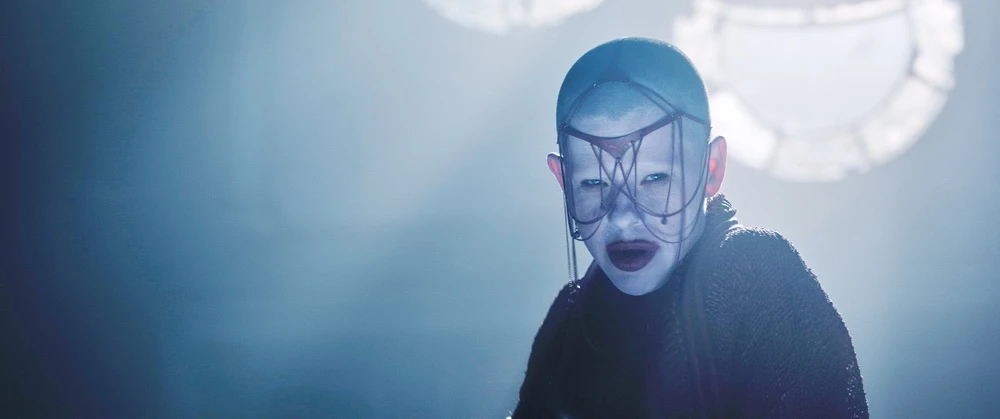
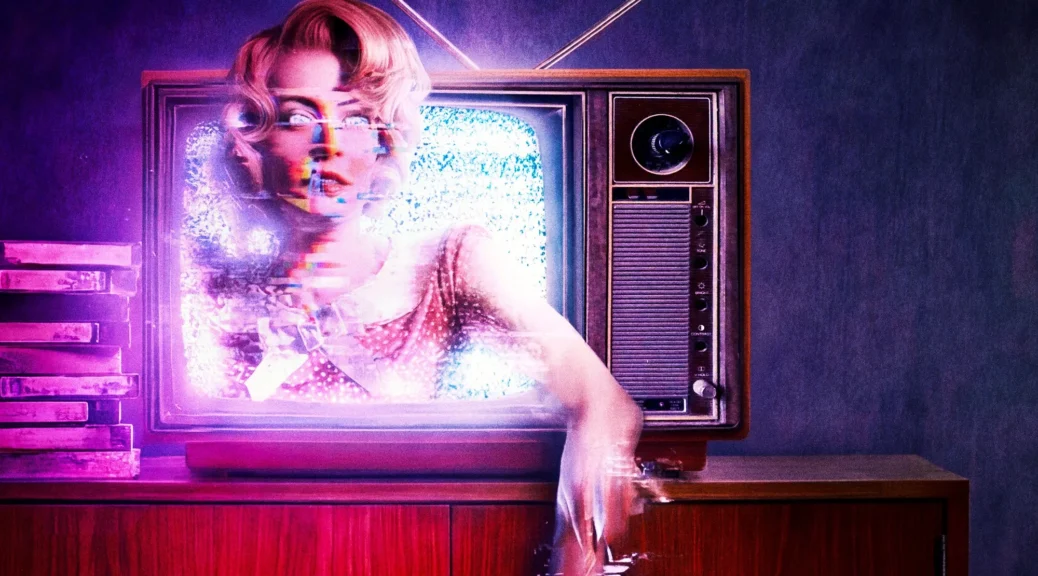
This week, Hope & George review Project Hail Mary, Ready or Not 2: Here I Come, Vampires of the Velvet Lounge, By Design, 1000 Women in Horror, and The Well.
by Hope Madden
Back in 2019, filmmakers Matt Bettinelli-Olpin and Tyler Gillett released Ready or Not. This tale of scrappy hero Grace (Samara Weaving) delivered a giddy, action-oriented, splatter-fueled horror comedy with the relatable central message that rich people are evil.
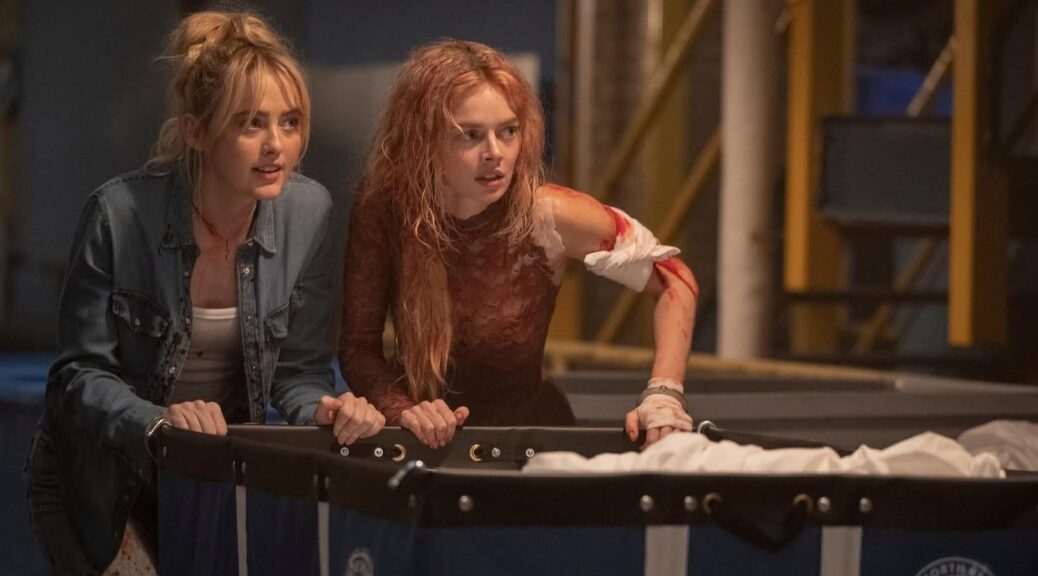
Weaving is back for the sequel Ready or Not 2: Here I Come. Grace is paired with her sister and reluctant sidekick Faith (Kathryn Newton), as both are forced to endure Round 2. Last go round, newlywed Grace had to survive until dawn on the evening of her wedding while her husband’s family tried to kill her. There were rules, specific weapons—they aren’t savages. They’re Satanists.
Well, in surviving the Le Domas family’s game of hide and seek, Grace triggered a second game. And what this game teaches us is that the entire world is run by a bunch of billionaires, each of whom is unspeakably, irredeemably evil.
Just like real life!
But in the movie, the evil billionaires face consequences. So Ready or Not 2 is a cathartic joy.
Weaving and Newton share a fun, funny, bickering chemistry. Their backstory becomes the spine of a film that, like the original, delivers series of entertaining, bloody set pieces.
Bettinelli-Olpin and Gillett surround the sisters with a great ensemble, including the legendary David Cronenberg as the Danforth family patriarch.
Elijiah Wood is an understated hoot as Satan’s lawyer, reteamed for the first time since The Faculty with Shawn Hatosy, effortlessly psychotic and endlessly familiar as that white guy born into loads and loads of money. (Titus is his name.)
Sarah Michelle Gellar also stars as Titus’s twin sister Ursula Danforth. Geller’s turn is a manipulative delight, a billionaire convinced that a little evil is OK in the grand scheme of things if you do good stuff too.
Kevin Durand, Nester Carbonell, Maia Jae and the whole set of entitled hangers on are also spot on and fun. The entire film feels a little like therapy, honestly.
If you enjoyed Ready or Not, I’m hard pressed to believe its sequel won’t also leave you smiling.

by Hope Madden
It takes chutzpah to choose to follow Stanley Kubrick, but Florian Frerichs is undeterred. His Dream Story, based on the same novel as Kubrick’s 1999 film Eyes Wide Shut, mines the sordid tale of high society orgies for a few different ideas.
We are still focused on the bored, rich, and horny, though.
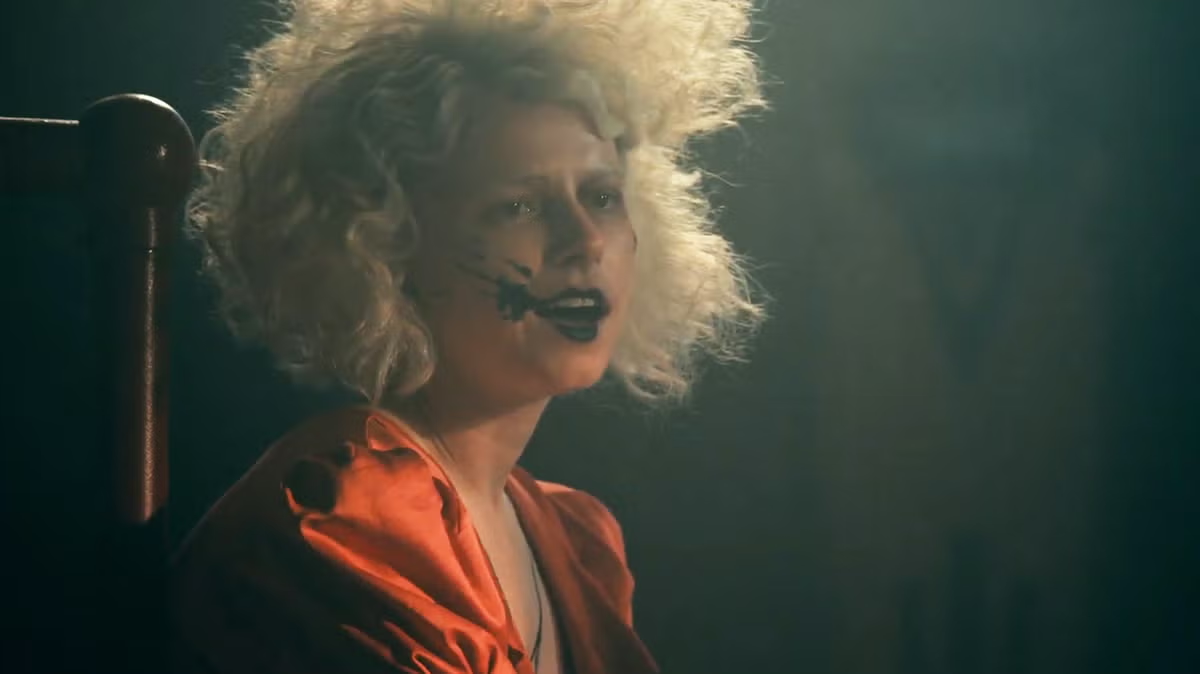
Set in Berlin, where it does feel at home, Dream Story follows Jakob (Nikolai Kinski), a wealthy doctor. After putting their precocious, opera loving son to bed, Jakob and his wife Amelia (Laurine Price) reminisce about a recent night out.
When Amelia admits to a powerful, unfulfilled longing for a stranger, Jakob’s marital contentment begins to feel like foolishness.
What’s a guy to do but visit a secret, cloak-and-mask orgy?
While most of the story beats echo those from ’99, there are some clear differences. Dream Story is indifferent to Kubrick’s themes of the grotesque heartlessness of the wealthy. In Eyes Wide Shut, the rich are so accustomed to treating everyone as a commodity and everything as a transaction that they’ve lost their humanity.
Frerichs is more concerned with the “dream” in Dream Story (a title derived from the English translation of writer Arthur Schnitzler’s original title). Upon hearing of his wife’s unsatisfied lust, it’s as if Jakob wakes from the dream of a loving bond. Now, insecure and hurt, he wanders as an almost childlike outsider looking to be a bad boy.
Frerichs amplifies the dreamy quality of the film with fanciful moments—Jakob’s operatic fantasies and instances when he breaks the fourth wall, for example. There’s also a trippy animated sequence to deepen the spell.
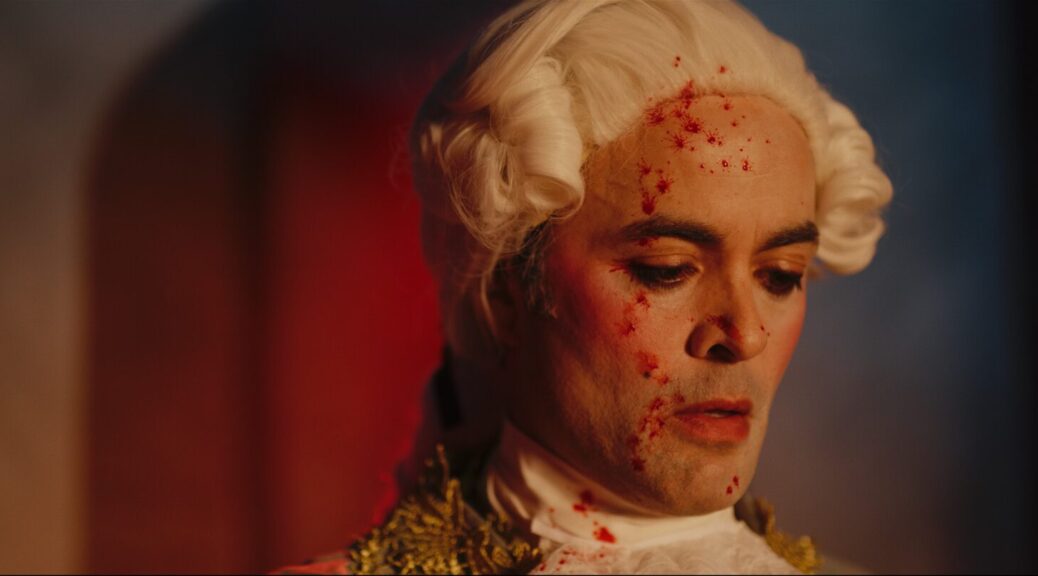
Frerichs, who adapts Schnitzler’s 1929 novella Traumnovelle with frequent collaborator Martina van Delay, also enlists bloody imagery. This he does less for the sake of horror and more to signal Jakob’s own mortality. Frequent callbacks to the death of a patient in Act 1 keep the doctor’s preoccupation with his own morality top of mind. His quest to do something debauched, springs from a sudden sense of all he’s wasted being faithful to a woman who may not even want him.
Dream Story is, in the end, more of a love story. In carving out so clearly a new path with the material, Frerichs delivers a whole new reason to watch.
by Hope Madden
Shudder has produced some fascinating and enlightening documentaries about the genre they serve. Both the film Horror Noire: A History of Black Horror and the series Queer for Fear: The History of Queer Horror shine overdue light on the history of films and filmmakers genre lovers need to know.
In that vein comes Donna Davies’s 1000 Women in Horror. The doc is written for the screen by Alexandra Heller-Nicholas, on whose nonfiction book it’s based. Longtime film critic and genre expert, Heller-Nicholas contributed brilliantly to Alexandre O. Phillipe’s 2024 Texas Chain Saw Massacre doc Chain Reactions, as well as Kier-La Janisse’s 2021 doc Woodlands Dark and Days Bewitched. She knows her way around a horror documentary, is what I’m saying.
So does Davies, for that matter, whose 2009 TV doc Pretty Bloody: The Women of Horror swam similar waters.
The title is an intentional joke. As the film makes clear, women have been a driving creative force in horror films for more than a century. But the film doesn’t spend much time focusing on individual women as much as it does basic genre themes that relate to women: childbirth, the depiction of women on screen at different stages of their lives, and rape, for example.
We do hear from some powerful creators, though. Mary Harron (American Psycho), Nikyatu Jusu (Nanny), Jenn Wexler (The Sacrifice Game),Gigi Saul Guerrero (Bingo Hell) and loads more shed light on how women create and are reflected in horror cinema.
The interviews are sometimes fascinating and often ferocious. Kate Siegel expresses the conflict underlying childbirth in horror better than most could. Throughout, it’s such a joy to deconstruct certain tropes with women, to hear how these tropes—for better or worse—influenced these filmmakers.
A little more of a history lesson would have been appreciated. I’d love to have made myself a list of vintage horror and, more importantly, early pioneers to dig into after the film was through. But when I think of the number of documentaries on cinema I’ve seen over the decades that included solely the voices of men, having just one that asks the opinions of only women experts feels revolutionary in itself.
Those teenage years can be beastly! A lot of vampire movies channel the alienation, hormones, angst and general misbehavior into a cautionary tale about teeth. Here are some of our favorites.
5. Buffy the Vampire Slayer (1992)
Back in ’92, Rutger Hauer and Paul Reubens played vampires (thank you!) bent on draining a California town. But one superficial mean girl at the local high school happens to be the Chosen One, the Slayer, or so says Donald Sutherland, and it generally seems like a fine idea to listen to him. Kristy Swanson then flirts with Luke Perry while training to stake some bloodsuckers.
Swanson is joined by Ben Affleck and Hilary Swank as vacuous teens in a highly dated but no less fun horror comedy. Reubens was a huge inspiration for our own short film Drunkula. Plus, anytime you crown Rutger Hauer prom king, you can count us in.
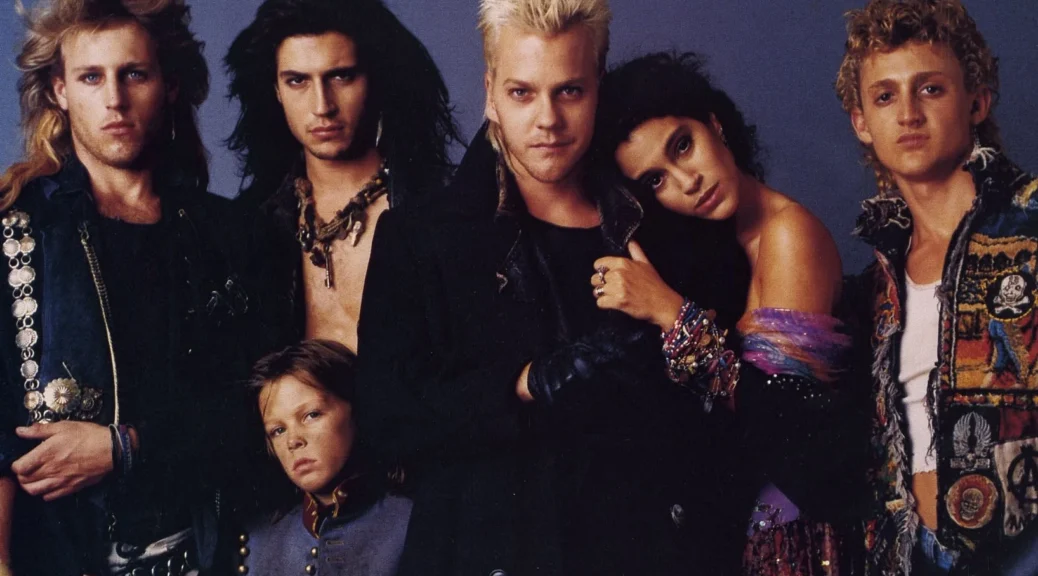
4. The Lost Boys (1987)
Out and proud Hollywood director Joel Schumacher spins a yarn of Santa Carla, a town with a perpetual coastal carnival and the nation’s highest murder rate. A roving band of cycle-riding vampires haunts the carnival and accounts for the carnage, until Diane Weist moves her family to town. While hottie Michael (Jason Patric) is being seduced into the demon brethren, younger brother Sam (Corey Haim) teams up with local goofballs the Frog brothers (Corey Feldman and Jamison Newlander) to stake all bloodsuckers.
Michael’s a recent high school grad, and the coven of vampires seems to also be allegedly the same roundabout age. Certainly Sam and the Frog Brothers would be high school age, although none of them turn. (Spoiler!)
What’s most fun about this movie is how gloriously gay it is, from the “will he or won’t he” chemistry between Michael and David to Sam’s Rob Lowe poster to the grinding sax man, Schumacher’s film finds sexuality in the vampire tale that swings.
3. Fright Night (1985)
Fright Night takes that Eighties, Goonies-style adventure (kids on an adult-free quest of life and death) and uses the conceit to create something tense and scary, and a bit giddy as well. The feature debut as both writer and director for Tom Holland, the film has some sly fun with the vampire legend.
Roddy McDowall got much deserved love at the time for his turn as a washed-up actor from horror’s nostalgic past, and Chris Sarandon put his rich baritone to campy, sinister use.
Still, everyone’s favorite character was Evil Ed, the manic, pitiful loser turned bloodsucking minion. Credit Stephen Geoffreys for an electric and, at least in one scene, heartbreaking performance.
2. My Heart Can’t Beat Unless You Tell It To (2020)
Making an unnervingly assured feature film debut, writer/director Jonathan Cuartas commingles The Transfiguration’s image of lonely, awkward adolescence with Relic’s horror of familial obligation to create a heartbreaking new vampire tale.
Many things are left unsaid (including the word “vampire’), and My Heart Can’t Beat Unless You Tell It To confines itself to the daily drudgery of three siblings. Dwight (Patrick Fugit) longs to break these family chains, but sister Jessie (Ingrid Sophie Schram) holds him tight with shame, love, and obligation to little brother, the afflicted Thomas (Owen Campbell).
What could easily have become its own figurative image of the masculine longing for freedom mines far deeper concerns. Cuartas weaves loneliness into that freedom, tainting the concept of independence with a terrifying, even dangerous isolation that leaves you with no one to talk to and no way to get away from yourself.
1. The Transfiguration (2016)
Milo likes vampire movies.
So, it would seem, does writer/director Michael O’Shea, whose confident feature debut shows us the relationship between the folklore and the life of a forlorn high school outcast.
Eric Ruffin plays Milo, a friendless teen who believes he is a vampire. What he is really is a lonely child who finds solace in the romantic idea of this cursed, lone predator. But he’s committed to his misguided belief.
O’Shea’s film borrows ideas from George Romero’s Martin, Tomas Alfredson’s Let the Right One In, and openly gushes over Murnau’s Nosferatu. Inside and out, the film draws on the best in vampire cinema to help Milo deal with a world in which he is a freak no matter what he decides to do.
by Hope Madden
A couple of years back, director Vanessa Caswill leaned affectionately into cliché, cast well, and elevated Love at First Sight above its tired romcom streamer roots. Can she do the same with the Nicholas Sparks style tearjerker Reminders of Him?
She can. But here’s the more important part. Caswill isn’t trying to exit the sobby romance genre. She is trying to make a movie that will please the same people who loved A Walk to Remember, The Longest Ride, and of course, novelist Colleen Hoover’s last feature adaptation, It Ends with Us. She’s just also trying not to make utter crap.
Caswill succeeds to a degree on both counts, again by casting well and embracing cliché.
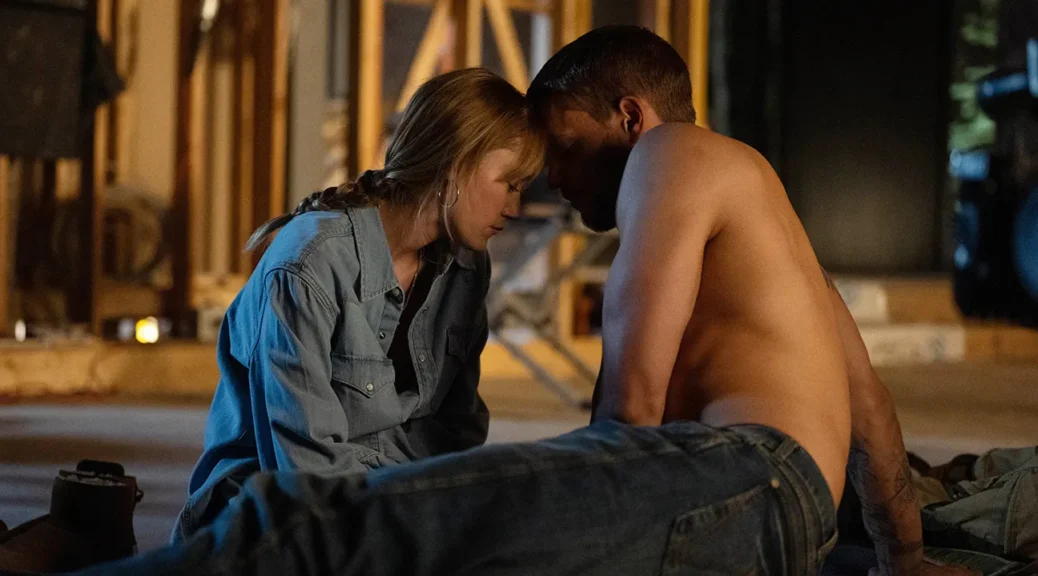
The effortlessly woebegone Maika Monroe is Kenna, who’s just returned to her small hometown after a 6-year stint in prison for involuntary manslaughter. All Kenna wants to do is rebuild her life and meet the daughter she gave birth to in prison. Too bad that daughter lives with the parents of the Kenna’s boyfriend, who died in that crash that sent her to prison.
So, the stage is set for a work-ethic driven story of redemption. Which is, of course, just an excuse for the romance. Kenna falls for Ledger (Tyriq Withers), her late boyfriend Scotty’s childhood bestie who returned to the neighborhood five years ago to help raise Scotty’s daughter.
Monroe’s performances tend to be internal, so she wears Kenna’s misery more than performs it. There’s a naturalness to it that helps the often unrealistic dialog and plot choices feel more believable.
Caswill also does not pretend that poverty—which is what Kenna lives in as a felon who’s lucky to get a job bagging groceries—looks at all glamorous. And though she may make poverty look a lot safer than it is, she surrounds Kenna with some fun ensemble players and a bit of needed joy.
Withers is primarily there to be inarguably handsome, but he and Monroe do share enough chemistry to make the romance somewhat compelling. And though Lauren Graham and Bradley Whitford suffer with woefully underwritten characters, both veterans have talent enough to enrich what the script lacked.
Does Reminders of Him do exactly what you expect it to do, scene after scene? It does. But it’s supposed to. It just does it a little better than it really had to.

by Hope Madden
Ian Tuason’s paranormal podcast feature Undertone offers a lot of reasons to be impressed. It’s a single location shoot, and almost a one-hander. Aside from a catatonic mother (Michéle Duquet) and a variety of voices, Nina Kiri is on her own.
Kiri plays Evy, who is recording her paranormal podcast Undertone from her dying mother’s house. Evy’s been staying at Mom’s for a while now, and if she’s honest about it, she’d like it to just be over with. Evy’s waiting for the death rattle.
She loves Mama, but the relationship is thorny with Catholic guilt and shame. We sense this more than see it as Tuason crowds his set design with Catholic iconography. It’s a busy if impressive set, and Tuason makes great use of it with fascinating camera work. He uses mainly stationary cameras, often set off-angle so they feel more like a voyeur’s or ghost’s point of view, or even a security camera. The movement reinforces that sense. On the rare occasion that the camera does move, it does so in an obviously mechanical way that even more closely resembles security footage.
This gives the film a Paranormal Activity vibe—fitting, as Tuason is slated to write and direct the next installment in the found footage franchise.
But Undertone is less about what you see and more about what you hear. The somewhat oppressive sound design is intentional, of course, and frequently effective.
Kiri delivers a heroic performance. Not only has she no conscious actor to react to, but the vast majority of her performance is simply Evy, in headphones, listening to something.
The film falls apart at the story level. Evy and her podcast co-host Justin (voiced by Adam DiMarco) decide to listen to a set of 10 audio files emailed to them anonymously. The files conjure up something supernatural that, combined with Evy’s isolated, spooky, guilt-laden environment, starts affecting her headspace.
But the sound files and podcast are silly. The mythology within the house—Evy’s relationship with Catholicism and her mother, the demonic yarn being revealed by the audio files—none of it comes together into a coherent horror story. And worst of all, nothing happens.
Undertone is an impressive technical achievement but the story’s just not there.

Who ya got: “Sinners” and its record-setting 16 nominations or “One Battle After Another” and 13 nods?
There are other deserving nominees, to be sure, but these two films have dominated the movie year 2025 and much of Awards Season 2026. There is no reason to think it won’t continue come Oscar night.
Which is better? Wow. What day is it? Let’s just say we have extra love for the split in the Best Screenplay category this year, where they both can collect the hardware.
And what a great year for Horror! Don’t forget del Toro’s visionary “Frankenstein” nabbed 9 nominations, Amy Madigan’s Aunt Gladys gets recognition for “Weapons” and “The Ugly Stepsister,” Emilie Blichfeldt’s beautifully brutal debut, is up for the Best Makeup and Hairstyling award. All well deserved.
So let’s dig in:
Should win: “Sinners” or “One Battle After Another”
Will win: “Sinners”
Should win/Will win: Buckley. Probably the surest bet this year.
Should win/Will win: Jordan
Should win: Mosaku
Will win: Madigan
Should win: Lindo – how does he not have an Oscar by now?
Will win: Penn*
*Hope disagrees. Her last shred of faith in humanity says Lindo will pull it out.
Should win: PTA or Coogler
Will win: PTA
Should win/Will win: “I Lied to You”
Should win/Will win: Göransson – the integration of music in Sinners was masterful.
Should win/Will win: “Little Amélie or the Character of Rain”
Should win/Will win: “Sentimental Value” in a category so stacked that neither “No Other Choice” or “The President’s Cake” could crack it.
Should win/Will win: “The Perfect Neighbor“
Should win: “Sinners” or “OBAA”
Will win: “OBAA”
Should win: “Sirāt”
Will win: “F1”
Should win/Will win: “Train Dreams” in another category brimming with excellence.
Should win/Will win: Coogler
Should win/Will win: PTA
Should win/Will win: “Two People Exchanging Saliva”
Should win: “The Girl Who Cried Pearls”
Will win: “Butterfly”
Should win/Will win: “Avatar: Fire and Ash”
Should win/Will win: “Frankenstein”
Should win/Will win: “F1”
Should win/Will win: “Frankenstein”
Should win/Will win: “Sinners”
The 98th Academy Awards will take place March 15th, 2026.
Hope & George review this week’s new releases: The Bride!, Hoppers, Peaky Blinders: The Immortal Man, Billy Idol Should Be Dead, For Worse, War Machine and Heel.