There is something eerily beautiful about Severin Fiala and Veronika Franz’s rural Austrian horror Goodnight Mommy (Ich seh, Ich seh).
During one languid summer, twin brothers Lukas and Elias await their mother’s return from the hospital. They spend their time bouncing on a trampoline, floating in a pond, or exploring the fields and woods around the house. But when their mom comes home, bandaged from the cosmetic surgery she underwent, the brothers fear more has changed than just her face.
Franz and Fiala owe a great debt to an older American film, but to name it would be to give far too much away, and the less you know about Goodnight Mommy, the better.
Inside this elegantly filmed environment, where sun dappled fields lead to leafy forests, the filmmakers mine a kind of primal childhood fear. There’s a subtle lack of compassion that works the nerves beautifully, because it’s hard to feel too badly for the boys or for their mother. You don’t wish harm on any of them, but at the same time, their flaws make all three a bit terrifying.
The filmmakers’ graceful storytelling leads you down one path before utterly upending everything you think you know. They never spoon feed you information, depending instead on your astute observation – a refreshing approach in this genre.
Performances by young brothers Lukas and Elias Schwarz compel interest, while Susanne Wuest’s cagey turn as the boys’ mother propels the mystery. It’s a hypnotic, bucolic adventure as visually arresting as it is utterly creepy.
The film is going to go where you don’t expect it to go, even if you expect you’ve uncovered its secrets.
Listen weekly to MaddWolf’s horror podcast FRIGHT CLUB. Do it!
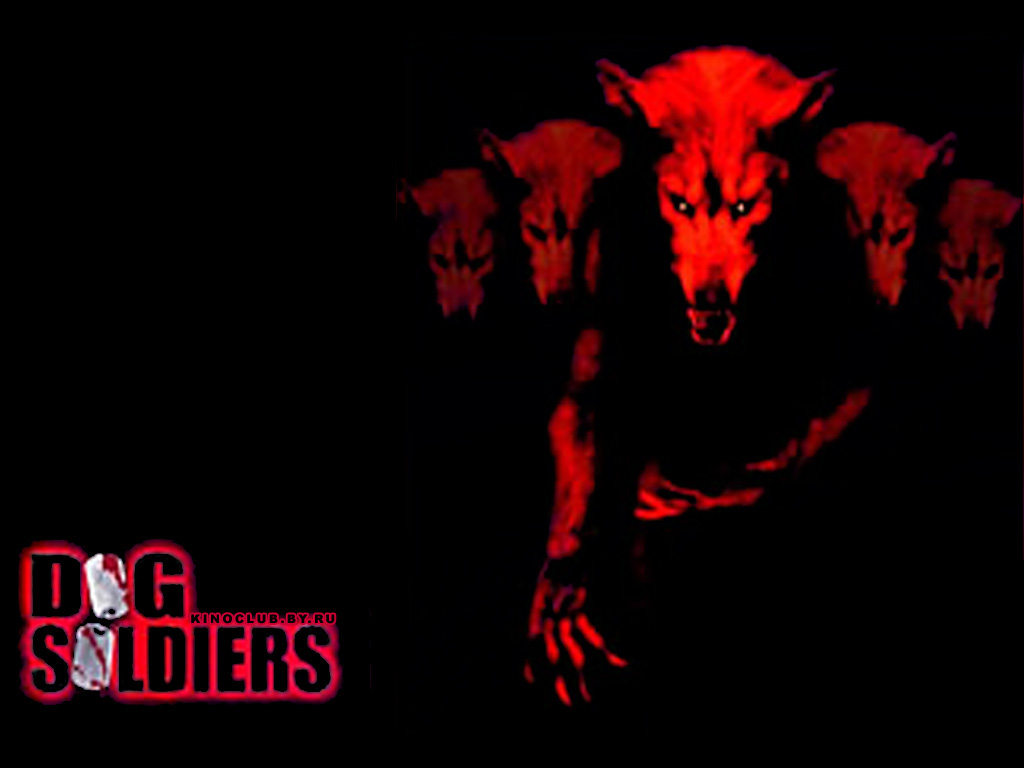
Let’s celebrate October with a fun, bloody, exciting trip to the Scottish highlands. Wry humor, impenetrable accents, a true sense of isolation, and blood by the gallon help separate Neil Marshall’s (The Descent) Dog Soldiers from legions of other wolfmen tales.
Marshall creates a familiarly tense feeling, brilliantly straddling monster movie and war movie. A platoon is dropped into an enormous forest for a military exercise. There’s a surprise attack. The remaining soldiers hunker down in an isolated cabin to mend, figure out WTF, and strategize for survival.
This is like any good genre pic where a battalion is trapped behind enemy lines – just as vivid, bloody and intense. Who’s gone soft? Who will risk what to save a buddy? How to outsmart the enemy?
But the enemies this time are giant, hairy, hungry monsters. Woo hoo!
The fantastically realized idea of traitors takes on a little extra something-something, I’ll tell you that right now.
Though the rubber suits – shown fairly minimally and with some flair – do lessen the film’s horrific impact, solid writing, dark humor, and a good deal of ripping and tearing energize this blast of a lycanthropic Alamo.
Listen weekly to MaddWolf’s horror podcast FRIGHT CLUB. Do it!
Who wants a little romance? How about the tale of a wallflower, the blossom of new love, the efficient use of veterinary surgical equipment, and a good sized freezer?
Few horror films are as touching, funny, heartbreaking, or bloody as May.
Lucky McKee’s 2002 breakout is a showcase for his own talent as both writer and director, as well as his gift for casting. The entire ensemble surprises with individualized, fully realized, flawed but lovable characters, and McKee’s pacing allows each of his talented performers the room to breathe, grow, get to know each other, and develop a rapport.
More than anything, though, May is a gift from Angela Bettis to you.
As the title character, Bettis inhabits this painfully gawky, socially awkward wallflower with utter perfection. McKee’s screenplay is as darkly funny as it is genuinely touching, and we’re given the opportunity to care about the characters: fragile May, laid back love interest Adam (a faultless Jeremy Sisto), hot and horny Polly (a wonderful Anna Faris).
Plus there’s a creepy doll! Hooray!
By day Polly flirts with a confused but needy May during their workday as veterinary assistants, and by night May pines for her tragically hip and beloved Adam. There’s nary a false note here, and those expecting a makeover that will turn May into the blooming rose we always knew she could be have tuned into the wrong film.
May’s vulnerability is painful yet beautiful to watch, and it’s impossible not to hope that cool outsider Adam is telling the truth when he reassures her, “I like weird.”
He’s not a liar, really. It’s just that he couldn’t possibly know how weird things would get.
Adam’s epiphany about May is not just the turning point in the film, but one of the most honestly heartbreaking moments in horror cinema.
McKee’s film pulls no punches, mining awkward moments until they’re almost unendurable and spilling plenty of blood when the time is right. He deftly leads us from the sunny “anything could happen” first act through a darker, edgier coming of age middle, and finally to a carnage laden climax that feels sad, satisfying, and somehow inevitable.
Listen weekly to MaddWolf’s horror podcast FRIGHT CLUB. Do it!
Rated R for “an abundance of outrageous gore,” Dead Alive is everything the early Peter Jackson did well. It’s a bright, silly, outrageously gory bloodbath.
Lionel Cosgrove (Timothy Balme) secretly loves shopkeeper Paquita Maria Sanchez (Diana Penalver), but she has eyes for someone less milquetoast. Until, that is, she’s convinced by psychic forces that Lionel is her destiny. Unfortunately, Lionel’s milquetoast-iness comes by way of decades of oppression via his overbearing sadist of a mother, who does not take well to her son’s new outside-the-home interests. Mum follows the lovebirds to a date at the zoo, where she’s bitten (pretty hilariously) by a Sumatran rat-monkey (do not mistake this dangerous creature for a rabid Muppet or misshapen lump of clay).
The bite kills her, but not before she can squeeze pus into some soup and wreak general havoc, which is nothing compared to the hell she raises once she comes back from the dead.
Mama’s boy that he is, Lionel can’t bring himself to do what he must until it is spectacularly too late. He chains up an entirely unwholesome family down the basement, which works out well enough as long as he keeps from being bitten, and keeps conniving Uncle Les (Ian Watkin) out of there.
Braindead is so gloriously over-the-top that nearly anything can be forgiven it. Jackson includes truly memorable images, takes zombies in fresh directions, and crafts characters you can root for. But more than anything, he knows where to point his hoseful of gore, and he has a keen imagination when it comes to just how much damage a lawnmower can do.
Listen weekly to MaddWolf’s horror podcast FRIGHT CLUB. Do it!
A lurid Korean fairy tale of sorts – replete with dreamy cottage and evil stepmother – Kim Jee-Woon‘s A Tale of Two Sisters is saturated with bold colors and family troubles.
Kim would go on to direct the also outstanding, although entirely different, I Saw the Devil, but where Devil breathes masculinity, Tale of Two Sisters is a deep, murky, and intensely female horror.
A tight-lipped father returns home with his daughter after her prolonged hospital stay. Her sister has missed her; her stepmother has not. Or so it all would seem, although jealousy, dream sequences, ghosts, a nonlinear timeframe, and confused identity keep you from ever fully articulating what is going on. The film takes on an unreliable point of view, subverting expectations and keeping the audience off balance. But that’s just one of the reasons it works.
The director’s use of space, the composition of his frame, the set decoration, and the disturbing and constant anxiety he creates about what’s just beyond the edge of the frame wrings tensions and heightens chills. The composite effect disturbs more then it horrifies, but it stays with you either way.
Tale masters the slow reveal in large and small ways. Whether you’ve begun to unravel the big mystery or not, Tale always has something else up its sleeve. Or, under its table.
Listen weekly to MaddWolf’s horror podcast FRIGHT CLUB. Do it!
Senior Aussie Correspondent Cory Metcalfe makes a return trip, because he is a slasher junky and we needed the assist. Together we walk through the five best slashers in cinematic history, but first we had a couple of arguments to settle.
There are millions of potential films in this category, so we defined the term slasher for our purposes. Well, Hope defined it and George grumbled about it. Definition: A group is stalked in a neighborhood/woods (not a single, isolated location) by a seemingly indestructible killer with a blade of some kind. So, no Texas Chainsaw Massacre, Psycho, Maniac.
On to our second argument – one of Cory’s all-time favorites (and likely a film you expect to see here) did not make the list. Again, blame Hope, though Cory was a great sport about it.
With that out of the way, it’s time: Fright Club counts down the five best slashers!
5. Bay of Blood (1971)
Here is where you might have seen Friday the 13th, but won’t. In fact, nearly every campground slasher – The Burning, Sleepaway Camp, the wonderful new Belgian horror Cub – all owe a debt, not really to Friday the 13th, but to Mario Bava’s Bay of Blood (also known as Twitch of the Death Nerve).
If you’re familiar with Bava (and you should be), it’s probably because of his more romantic, visually lovely films like Black Sunday, but in ’71 he made his bloodiest film and created nearly every gimmick we’d soon see across the slasher subgenre.
The story is basically nonsensical. There’s a murder early on that sets up a fight for an inheritance; meanwhile four nubile youths stumble into the same inheritable bayside cottage, where they have sex, skinny dip, die, etc. You will notice entire scenes lifted directly for use in Friday the 13th, but the film is also fun because, as it predates the genre, it often feels like it’s somehow veered off the path (because there was no path yet). So Bay of Blood gets the nod because it did it first.
4. Black Christmas (1974)
The other foundational work in the genre, like Bay of Blood, Black Christmas created the architecture for the slasher. Fun trivia: director Bob Clark made two Christmas-themed films in his erratic career, including the iconic A Christmas Story (You’ll shoot your eye out, kid!). Black Christmas is remembered less well.
Sure, it’s another case of mysterious phone calls leading to grisly murders; sure it’s another one-by-one pick off of sorority stereotypes; sure, there’s a damaged child backstory; naturally John Saxon co-stars. Wait, what was different? Oh, yeah, two things. Maybe three. The story veers off on a red herring chase that’s utterly ludicrous. Also, the actors – Margot Kidder, in particular – show more commitment than you’d normally see in this kind of film. Most importantly, the phone calls are actually pretty scary. There’s something unseemly about them, unsettling.
Why the girls remain in the sorority house (if only they’d had an Official Red Ryder Carbine-Action Two-Hundred-Shot Range Model Air Rifle!), or why campus police are so baffled remains a mystery, but Clark was onto something with the phone calls, as evidenced by the number of films that ripped off this original convention.
3. A Nightmare on Elm Street (1984)
Teens on suburban Elm St. share nightmares, and one by one, these teens are not waking up. Not that their disbelieving parents care.
Depositing a boogieman in your dreams, creating nightmares that will truly kill you, was a genius concept by writer/director Wes Craven because you can only stay awake for so long. It took everyone’s fear of nightmares to a more concrete level.
Plus, Craven had plenty of iconic kills and images up his sleeve. That face that stretches through the wall is cool, the weirdly long arms out behind Tina are still super scary. The nightmare images are apt, and the hopscotch chant and the vision of Freddie himself were not only refreshingly original but wildly creepy. All of that plus an iconic villain, brought to glorious life by Robert Englund’s darkly comical performance, and you have a real keeper.
2. Scream (1996)
A dozen years after recreating the genre with Nightmare, Wes Craven did it again. When Scream hit screens in 1996, we were still three years from the onslaught of the shakey cam, six years from the deluge of Asian remakes, and nearly ten years from the first foul waft of horror porn. In its time, Scream resurrected a basically dying genre, using clever meta-analysis and black humor.
What you have is a traditional high school slasher – someone dons a likeness of Edvard Munch’s most famous painting and plants a butcher knife in a local teen, leading to red herrings, mystery, bloodletting and whatnot. But Craven’s on the inside looking out and he wants you to know it.
What makes Scream stand apart is the way it critiques horror clichés as it employs them, subverting expectation just when we most rely on it. As the film opens, Casey (Drew Barrymore) could have survived entirely (we presume) had she only remembered that it was not, in fact, Jason Voorhees who killed all those campers in Friday the 13th; it was his mother. A twisted reverence for the intricacies of slashers is introduced in the film’s opening sequence, then glibly revisited in one form or another in nearly every scene after. It could be the wryly clever writing or the solid performances, but I think it’s the joyous fondness for a genre and its fans that keeps this one fresh.
1. Halloween (1978)
No film is more responsible for the explosion of teen slashers than John Carpenter’s babysitter butchering classic.
From the creepy opening piano notes to the disappearing body ending, this low budget surprise changed everything. Carpenter develops anxiety like nobody else, and plants it right in a wholesome Midwestern neighborhood. You don’t have to go camping or take a road trip or do anything at all – the boogeyman is right there at home.
Michael Myers – that hulking, unstoppable, blank menace – is scary. Pair that with the down-to-earth charm of lead Jamie Lee Curtis, who brought a little class and talent to the genre, and add the bellowing melodrama of horror veteran Donald Pleasance, and you’ve hit all the important notes. Just add John Carpenter’s spare score to ratchet up the anxiety. Perfect.
Horror cinema’s most common and terrifying villain may not be the vampire or even the zombie, but the hillbilly. The Hills Have Eyes, Texas Chainsaw Massacre, Deliverance and hundreds of others both play upon and solidify urban dwellers’ paranoia about good country folk. The generous, giddy Tucker and Dale vs. Evil lampoons that dread with good natured humor and a couple of rubes you can root for.
In the tradition of Shaun of the Dead, T&DVE lovingly sends up a familiar subgenre with insightful, self-referential humor, upending expectations by taking the point of view of the presumably villainous hicks. And it happens to be hilarious.
Two backwoods buddies (an endearing Tyler Labine and Alan Tudyk) head to their mountain cabin for a weekend of fishing. En route they meet some college kids on their own camping adventure. A comedy of errors, misunderstandings and subsequent, escalating violence follows as the kids misinterpret every move Tucker and Dale make.
Director Eli Craig’s clever role reversal screenplay, co-written with Morgan Jurgenson, recreates the tension-building scenes that have become horror shorthand for “the hillbillies are coming.” From the bait and tackle/convenience store encounter with bib overall clad townies, to the campfire retelling of likeminded teens lost forever in the wooded abyss, the set up is perfect.
Each punchline offers the would-be killers’ innocent point of view – expressing their increasingly baffled take on what appears to them to be a suicide pact among the coeds.
T&DVE offers enough spirit and charm to overcome most weaknesses. Inspired performances and sharp writing make it certainly the most fun participant in the You Got a Purty Mouth class of film.
Listen weekly to MaddWolf’s horror podcast FRIGHT CLUB. Do it!
Psycho may have asked us to look at the weird relationships possible with mothers and sons, but fathers and daughters can develop dangerously close bonds, as well. For proof, just gander at this Aussie freakshow.
Writer/director/Tasmanian Sean Byrne upends high school clichés and deftly maneuvers between angsty, gritty drama and neon-colored, glittery carnage in a story that borrows from other horror flicks but absolutely tells its own tale.
Brent (Xavier Samuel) is dealing with guilt and tragedy in his own way, and his girlfriend Holly tries to be patient with him. Oblivious to all this, Lola (a gloriously wrong-minded Robin McLeavy) asks Brent to the school dance. He politely declines, which proves to be probably a poor decision.
Byrne quietly crafts an atmosphere of loss and depression in and around the school without painting the troubles cleanly. This slow reveal pulls the tale together and elevates it above a simple work of outrageous violence.
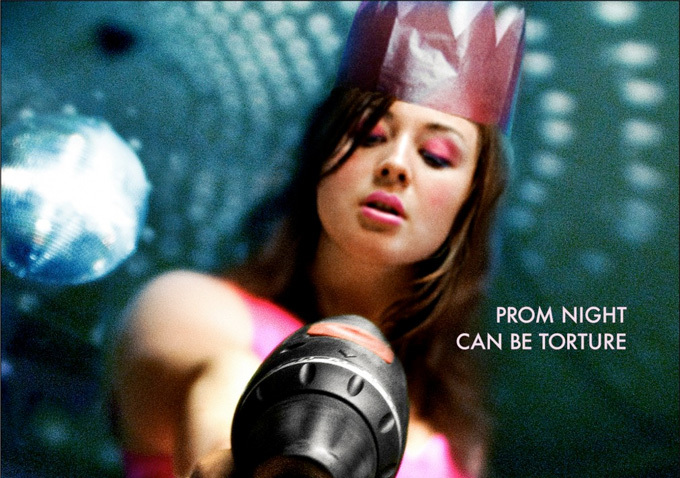
Inside Lola’s house, the mood is decidedly different. Here, we’re privy to the weirdest, darkest image of a spoiled princess and her daddy. The daddy/daughter bonding over power tool related tasks is – well – I’m not sure touching is the right word for it.
The Loved Ones is a cleverly written, unique piece of filmmaking that benefits from McLeavy’s inspired performance as much as it does its filmmaker’s sly handling of subject matter. It’s a wild, violent, depraved way to spend 84 minutes. You should do so now.
Listen weekly to MaddWolf’s horror podcast FRIGHT CLUB. Do it!
Ariel Kleiman casts a spell with his feature film debut Partisan, an enigmatic effort concerning a tribe of juvenile assassins and their surrogate – and sometimes biological – father, Gregori.
A captivating Vincent Cassel stars as the mentor, guru, and unyielding leader of the group. The film opens on Cassel, ragged and alone, building from hand and refuse what will become a sprawling, hidden fortress. Here he will house and educate a dozen or more children and their world-wearied mothers.
This is a cult, of sorts, and Gregori’s methods are deceptively paternal, but as his eldest and first protégé approaches adolescence, the limits of Gregori’s control begin to appear.
Kleiman’s measured storytelling offers as many questions as answers, enthralling with this alien yet believable scenario. He creates an atmosphere of near-wholesomeness and dubious nurturing that chills you.
Cassel’s performance is both restrained and bursting. Though the French actor has portrayed scads of villains in his impressive career, none are as thoughtfully drawn as Gregori. Cassel plumbs the character for self-delusion, tenacity, faux tenderness, and icy psychosis all at once. Gregori is exactly the charismatic figure who could command from nothing just such a bizarre family.
His chemistry with the young cast is both frightening and lovely – particularly his fragile onscreen bond with Jeremy Chabriel as prepubescent killer Alexander. Chabriel shoulders much of the film’s emotional heft, and he’s able to communicate the especially complicated coming of age facing this character with the skill of an actor twice his age.
Chabriel’s scenes with his mother and baby brother are layered, as the boy grapples with his own youthful – though not exactly innocent – view of the world, family, patriarchy, and devotion.
The unanswered questions, though often provocative, sometimes make the film feel unfinished. Still, Kleiman is a confident storyteller, and even with some missing pieces, he’s composed a taut, chilling, and unique vision of a particularly fraught journey toward adulthood.
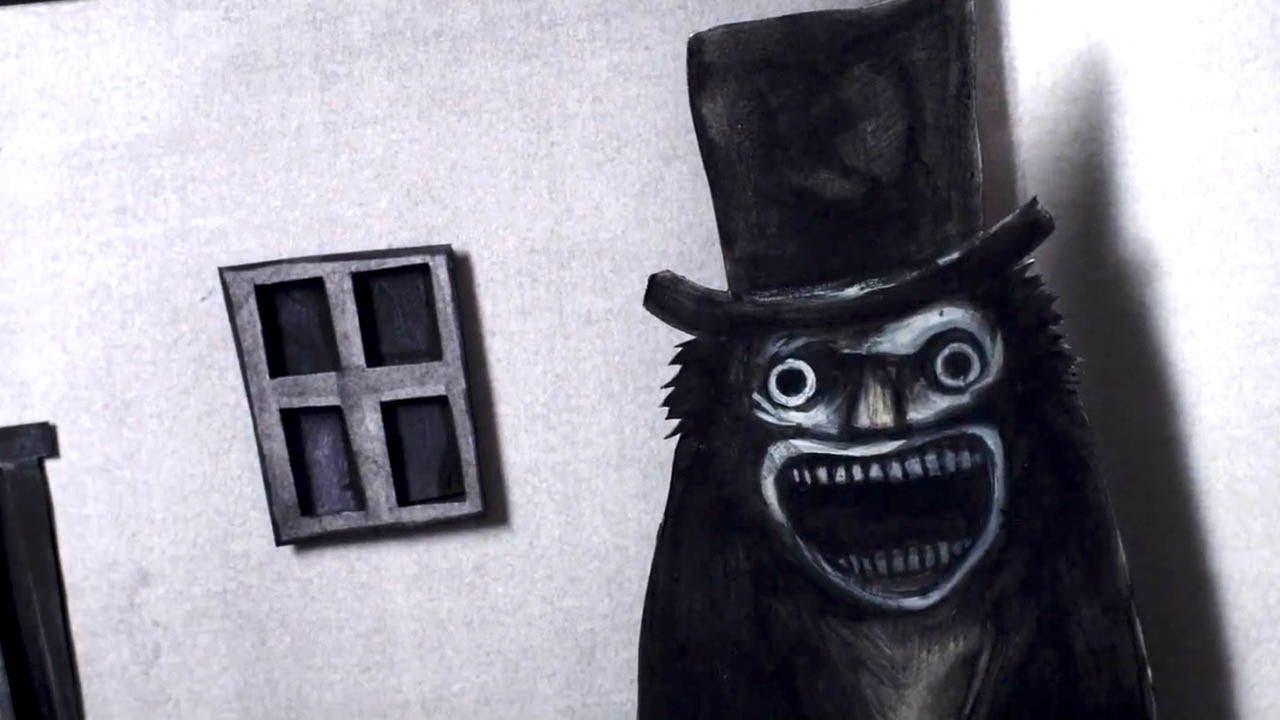
You’re exhausted – just bone-deep tired – and for the umpteenth night in a row your son refuses to sleep. He’s terrified, inconsolable. You check under the bed, you check in the closet, you read a book together – no luck. You let him choose the next book to read, and he hands you a pop-up you don’t recognize: The Babadook. Pretty soon, your son isn’t the only one afraid of what’s in the shadows.
It’s a simple premise, and writer/director Jennifer Kent spins her tale with straightforward efficiency. There is no need for cheap theatrics, camera tricks, or convoluted backstories, because Kent is drilling down into something deeply, frighteningly human.
Like a fairy tale or nursery rhyme, simplicity and a child’s logic can be all you need for terror.
Kent’s film is expertly written and beautifully acted, boasting unnerving performances from not only a stellar lead in Essie Davis, but also the alarmingly spot-on young Noah Wiseman. Davis’s lovely, loving Amelia is so recognizably wearied by her only child’s erratic, sometimes violent behavior that you cannot help but pity her, and sometimes fear for her, and other times fear her.
Likewise, Wiseman delivers as a tender, confused, dear little boy you sometimes just want to throttle. Their naturalistic performances genuinely showcase the baggage that can exist between a parent and a child.
Radek Ladczuk’s vivid cinematography gives scenes a properly macabre sense, the exaggerated colors, sizes, angles, and shadows evoking the living terror of a child’s imagination.
Much of what catapults The Babadook beyond similar “presence in my house” flicks is the allegorical nature of the story. There’s an almost subversive relevance to the familial tensions because of their naked honesty, and the fight with the shadowy monster as well as the film’s unusual resolution heighten tensions.
The film’s subtext sits so close to the surface that it threatens to burst through. Though that does at times weaken the fantasy, it gives the film a terrifying urgency. In the subtext there is a primal horror, a taboo rarely visited in film and certainly never examined with such sympathy. Indeed, the compassion in the film may be the element that makes it so very unsettling.
Eerily familiar yet peculiar and unique, The Babadook immediately ranks among the freshest and more memorable films the genre has to offer. It also marks a filmmaker to keep an eye on.
Listen weekly to MaddWolf’s horror podcast FRIGHT CLUB. Do it!