Dude, it’s the heat of the summer. No better way to escape all that hair-frizzing humidity than by lounging about in your own home watching movies. We understand. This week, you can choose from new indie comedies, horror, dramedies and straight up trash. Let us help.
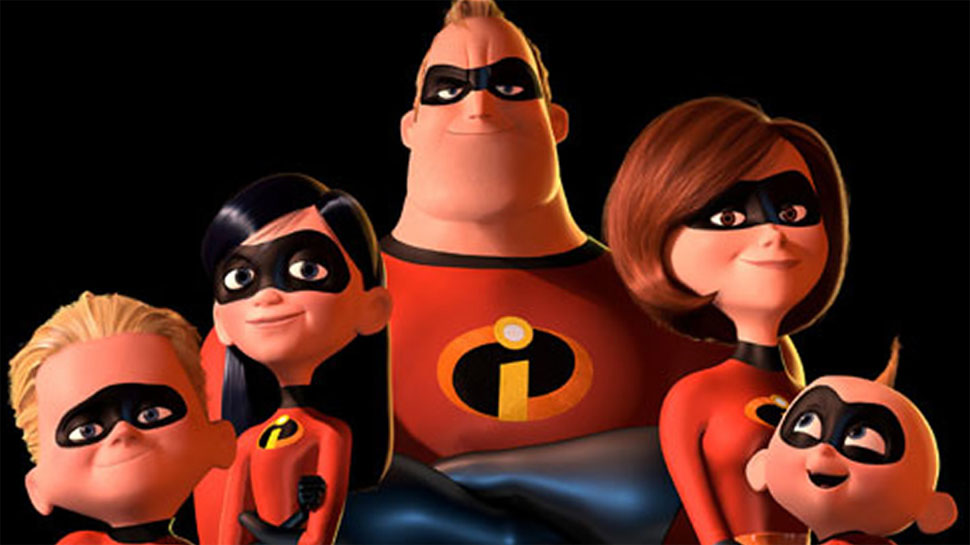
On this week’s podcast, Hope and George disagree about Pixar’s latest, Incredibles 2. They also talk through Tag, SuperFly, A Kid Like Jake, Feral, The Seagull and what’s new in home entertainment.
Part of the fun of horror is to be able to separate yourself from the images onscreen. The old “this could never really happen” thing helps us sleep at night. But there are some films that rob you of that safety net, burrowing under your skin and into your subconscious specifically because you are convinced that it could definitely happen—maybe it already has.
Today we salute realism in horror with five films to give you nightmares.
5. Nothing Bad Can Happen (2001)
This film is tough to watch, and the fact that it is based on a true story only makes the feat of endurance that much harder. But writer-director Katrin Gebbe mines this horrific tale for a peculiar point of view that suits it brilliantly and ensures that it is never simply a gratuitous wallowing in someone else’s suffering.
Tore (Julius Feldmeier) is an awkward teen in Germany. His best friend is Jesus. He means it. In fact, he’s so genuine and pure that when he lays his hands on stranded motorist Benno’s (Sascha Alexander Gersak) car, the engine starts.
Thus begins a relationship that devolves into a sociological exploration of button-pushing evil and submission to your own beliefs. Feldmeier is wondrous—so tender and vulnerable you will ache for him. Gersak is his equal in a role of burgeoning cruelty. The whole film has a, “you’re making me do this,” mentality that is hard to shake. It examines one peculiar nature of evil and does it so authentically as to leave you truly shaken.
4. Open Water (2003)
Jaws wasn’t cinema’s only powerful shark horror. In 2003, young filmmaker Chris Kentis’s first foray into terror is unerringly realistic and, therefore, deeply disturbing.
From the true events that inspired it to one unreasonably recognizable married couple, from superbly accurate dialog to actual sharks, Open Water’s greatest strength is its unsettling authenticity. Every element benefits from Chris Kentis’s control of the project. Writer, director, cinematographer and editor, Kentis clarifies his conception for this relentless film, and it is devastating.
A couple on vacation (Blanchard Ryan and Daniel Travis) books a trip on a crowded, touristy scuba boat. Once in the water, they swim off on their own – they’re really a little too accomplished to hang with the tourists. And then, when they emerge from the depths, they realize the boat is gone. It’s just empty water in every direction.
Now, sharks aren’t an immediate threat, right? I mean, tourist scuba boats don’t just drop you off in shark-infested waters. But the longer you drift, the later it gets, who knows what will happen?
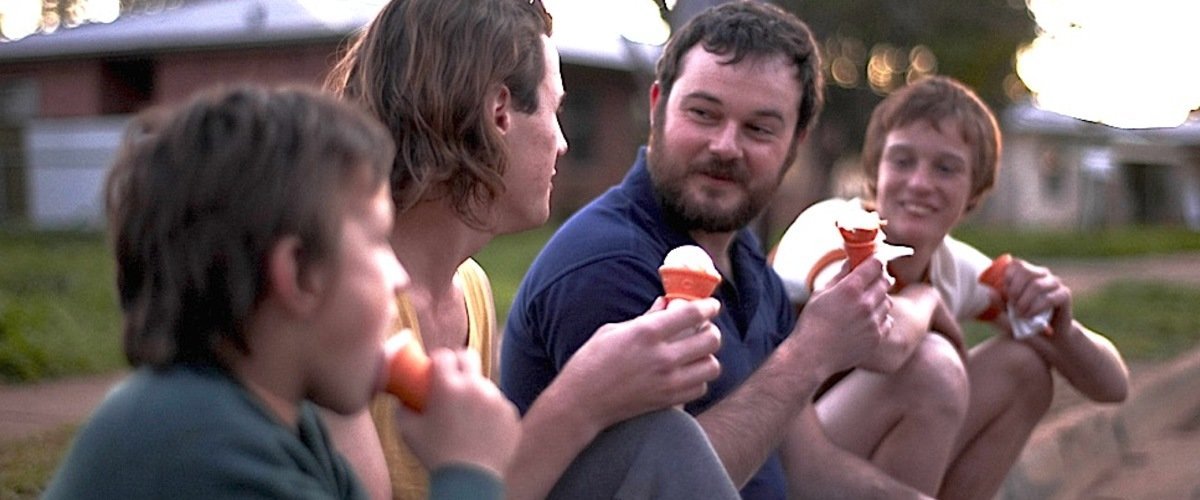
3. The Snowtown Murders (2011)
John Bunting tortured and killed eleven people during his spree in South Australia in the Nineties. We only watch it happen once on film, but that’s more than enough.
Director Justin Kurzel seems less interested in the lurid details of Bunting’s brutal violence than he is in the complicated and alarming nature of complicity. Ironically, this less-is-more approach may be why the movie leaves you so shaken.
An unflinching examination of a predator swimming among prey, Snowtown succeeds where many true crime films fail because of its understatement, its casual observational style, and its unsettling authenticity. More than anything, though, the film excels due to one astounding performance.
Daniel Henshall (also in Babadook) cuts an unimpressive figure on screen – a round faced, smiling schlub. But he brings Bunting an amiability and confrontational fearlessness that provides insight into what draws people to a sadistic madman.
https://www.youtube.com/watch?v=qcoCTA2IZ7c
2. Hounds of Love (2016)
Driven by a fiercely invested and touchingly deranged performance from Emma Booth, Hounds of Love makes a subtle shift from horrific torture tale to psychological character study. In 108 grueling minutes, writer/director Ben Young’s feature debut marks him as a filmmaker with confident vision and exciting potential.
It is the late 1980s in Perth, Australia, and at least one young girl has already gone missing when the grounded Vicki (Ashleigh Cummings) sneaks out her bedroom window to attend a party. This isn’t nearly as dumb a move as is accepting a ride from Evie White (Booth) and her husband John (Stephen Curry).
As the couple dance seductively and drink to celebrate, Young disturbingly conveys the weight of Vicki’s panicked realization that she is now their captive. It is just one in a series of moments where Young flexes impressive chops for visual storytelling, utilizing slo-motion, freeze frame, patient panning shots and carefully chosen soundtrack music to set the mood and advance the dreadful narrative without a spoken word.
And then, just when you might suspect his film to wallow in the grisly nature of the Whites’ plan for Vicki, Young turns to dialog sharp enough to upend your expectations, and three vivid characters are crafted in the suffocating dread of the White’s neighborhood home.
No doubt, events get brutal, but never without reminders that Young is a craftsman. Subtle additions, such as airplanes flying freely overhead to contrast with Vicki’s captivity, give Hounds of Love a steady dose of smarts, even as it’s shaking your core.
https://www.youtube.com/watch?v=UNEurXzvHqE
1. Texas Chainsaw Massacre (1974)
Not everyone considers The Texas Chainsaw Massacre a classic. Those people are wrong. Perhaps even stupid.
Tobe Hooper’s camera work, so home-movie like, worked with the “based on a true story” tag line like nothing before it, and the result seriously disturbed the folks of 1974. It has been ripped off and copied dozens of times since its release, but in the context of its time, it was so absolutely original it was terrifying.
Hooper sidestepped all the horror gimmicks audiences had grown accustomed to – a spooky score that let you know when to grow tense, shadowy interiors that predicted oncoming scares – and instead shot guerilla-style in broad daylight, outdoors, with no score at all. You just couldn’t predict what was coming.
He dashes your expectations, making you uncomfortable, as if you have no idea what you could be in for. As if, in watching this film, you yourself are in more danger than you’d predicted.
But not more danger than Franklin is in, because Franklin is not in for a good time.
So, poor, unlikeable Franklin Hardesty, his pretty sister Sally, and a few other friends head out to Grampa Hardesty’s final resting place after hearing the news of some Texas cemeteries being grave-robbed. They just want to make sure Grampy’s still resting in peace – an adventure which eventually leads to most of them making a second trip to a cemetery. Well, what’s left of them.
The 70s blaxploitation classic Super Fly was no masterpiece, but it was a provocative time capsule of flash, style and soulful soundtrack. Any attempt to recapture the spirit seems doomed to failure.
But Director X, with a decades-long career in flashy music videos showcasing the same kind of decadent lifestyle first glamorized by films like Super Fly, has the cred to take a good swing.
Plus, he throws in some Curtis Mayfield just when you missed him the most.
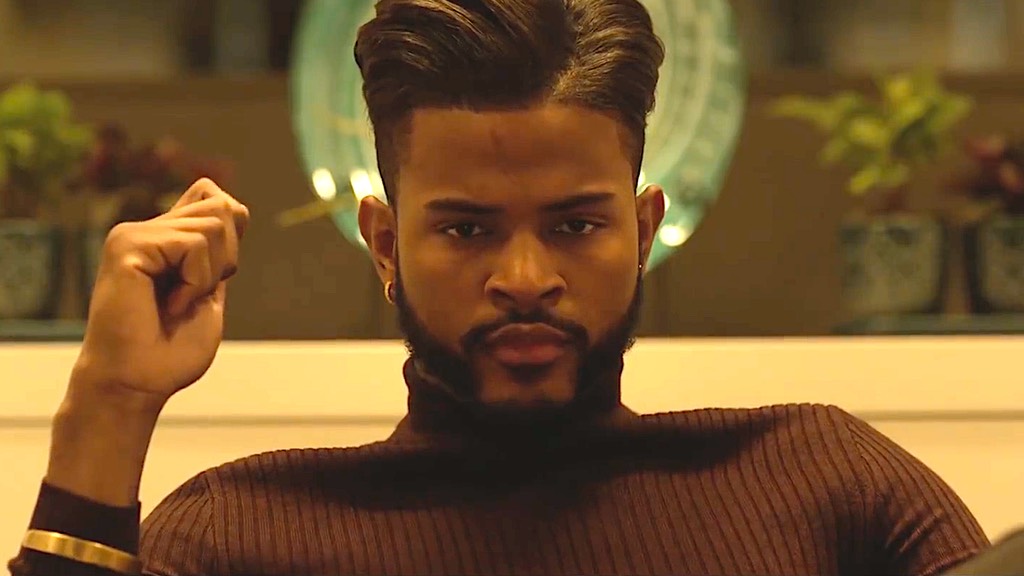
It’s clear X and screenwriter Alex Tse (Watchmen) are fans of Gordon Parks Jr.’s first and most important film. Tse is mostly, surprisingly faithful to the original. Youngblood Priest (Trevor Jackson) is a successful drug dealer who wants out while he still looks good, but The Man and an assortment of less-controlled colleagues complicate an already difficult process.
Less provocative than the original by a wide margin, X’s vision still takes some hard-earned enjoyment in scenes of comeuppance that are, unfortunately, as timely today as they were when Ron O’Neal outwitted corrupt New York detectives 46 years ago.
The update is marginally more respectful of women and boasts an impressive supporting cast including the always welcome Jason Mitchell, the always intimidating Michael Kenneth Williams, and a great turn by Esai Morales.
Oddly enough, that splashy support, which enlivens the film immeasurably, also helps to showcase its weakness—Jackson. There’s no conflicted soul inside that leather duster and skinny jeans, no tormented mind beneath that pompadour. Sure, O’Neal’s karate and cape now seem embarrassingly of-the-moment, but his performance evoked a restlessness and internal conflict that Jackson cannot manage.
A clever new image built on the skeleton of the groundbreaking ’72 film, SuperFly does not manage to provoke, intrigue or satisfy in the same way as the original. It does have style, though, and something relevant to say.
Here’s the thing about Feral. It’s a decent movie: well-paced, competently directed, solidly performed. And there is not a single interesting, novel, surprising or inspired moment in it.
Maybe one, but it’s not reason enough to make this movie.
Three handsome couples head into the woods. They get a little lost, decide to pitch tents and find the lake in the morning.
They hear a noise.
One of them goes out to pee.
There’s something dangerous in the woods.
Duh.
Co-writer/director Mark Young follows up half a dozen low budget, middling-to-poor horror and action films with this adequate take on a monster-in-the-woods tale.
The sole reason the film stands out in any way is that Young’s hero, Alice (Scout Taylor-Compton) is a lesbian. Equally refreshing, males are as likely as females to fall prey to the hungry forest beast.
Bravo the nonchalance with which this is depicted, as the film does not strain to call attention to the novelty of this final girl and hero twist.
Yes, it’s about time. And yet, maybe Feral needed at least one other thing to set it apart? Because as it is, it’s simply a checklist of cabin-in-the-woods horror tropes, faithfully rendered, right up to the waning moments of its running time.
Taylor-Compton offers a perfectly serviceable performance, as do most of the actors around her. Olivia Luccardi, Renee Olstead and Landry Allbright all work to provide something close to a second dimension to underwritten, throwaway characters.
Lew Temple is an always welcome sight as the—wait for it—hermit whose assistance in this situation is suspect.
Together, cast and director generate scares by relying less on imagination and more on your familiarity with the genre itself. Therefore, assuming you have ever seen a horror movie in your life, you will not be scared.
You’ll just be reminded for the thousandth time that camping is an undeniably stupid thing to do. That’s what I got out of it, anyway.
Movies, movies and more movies out this week for those of us too lazy to leave the damn house. You can watch a movie that will tear your heart out, or watch an about-effing-time teen romance. Middling horror and action also await your loungy ass, so dig right in!
H&G talk through their most anticipated film of the summer, Hereditary, along with Ocean’s 8, Hotel Artemis, First Reformed, Mary Shelley, On Chesil Beach and what’s what this week in home entertainment.
In a world where the U.S. government stops supplying bottled water to Flint, Michigan residents while international asshats Nestle are allowed to increase their pumping of clean water from just 100 miles away…
Well, that may not have been the inspiration for Hotel Artemis—the inspiration was probably that cool hotel in John Wick—but it is the kind of social disaster that will lead to the Mad-Max-like rebellion that backdrops writer/director Drew Pearce’s crime thriller.
Los Angeles, 2028, and the bloodiest riots the city has ever known have broken out over the privatization of water. With the police very, very busy, it’s a perfect time for a bank heist. But timing isn’t everything—skill helps—and soon a trio of wounded nogoodnicks are headed to the one place they can safely receive emergency care: the exclusive, subscription-based, criminal-only hospital, Hotel Artemis.
It may have a staff of only two—the nurse (Jodie Foster) and the orderly (Dave Bautista)—but it is chock full of high tech medical equipment, old-school security and strict rules. It may also be the best place to ride out these riots. Unless the tensions inside the hotel reach the same height as those outside.
It’s an intriguing premise, one rife with tense and bloody opportunity. A collection of bad people is trapped in an enclosed, retro-seedy space hoping to survive the storm.
If the story intrigues, the cast convinces. Jodie Foster nails the wearied, accepting, down-to-business Nurse. Though the dialog throughout is not as savvy as Pearce thinks it is, Foster delivers it beautifully and her physical mannerisms are even more convincing.
Bautista charms as her tender strongarm. Sterling K. Brown does no wrong ever, here again radiating an intensity that mingles sadness, obligation and moral authority.
Luckily for the entire ensemble, Pearce is more invested in character development than action. He creates a moody tension inside the walls, exacerbated by the explosion of rage and violence outside.
All of which hits fever pitch when LA crime boss the Wolf King (Jeff Goldblum as Jeff Goldblum) shows up wanting to break the rules.
Pearce and his top-to-bottom impressive cast deserve credit for sidestepping expectations and instead crafting a contained, absurd-yet-believable drama. Things get away from the filmmaker when he tries to complicate the plot with backstory, and there are two minor side plots that serve as little more than a distraction.
It’s also an awful lot of tension-building with little in the way of a final release. But Pearce and team have done something remarkable in the summer months: delivered a fresh, imaginative, original film.
Grief and guilt color every somber, shadowy frame of writer/director Ari Aster’s unbelievably assured feature film debut, Hereditary.
The Graham family is maybe less grief-stricken over the loss of Grandma than you might expect. Daughter Annie (Toni Collette) delivers a eulogy that admits her mother was difficult, secretive. Her oldest son Peter (Alex Wolff) seems nonplussed by it all. He’s probably stoned, though.
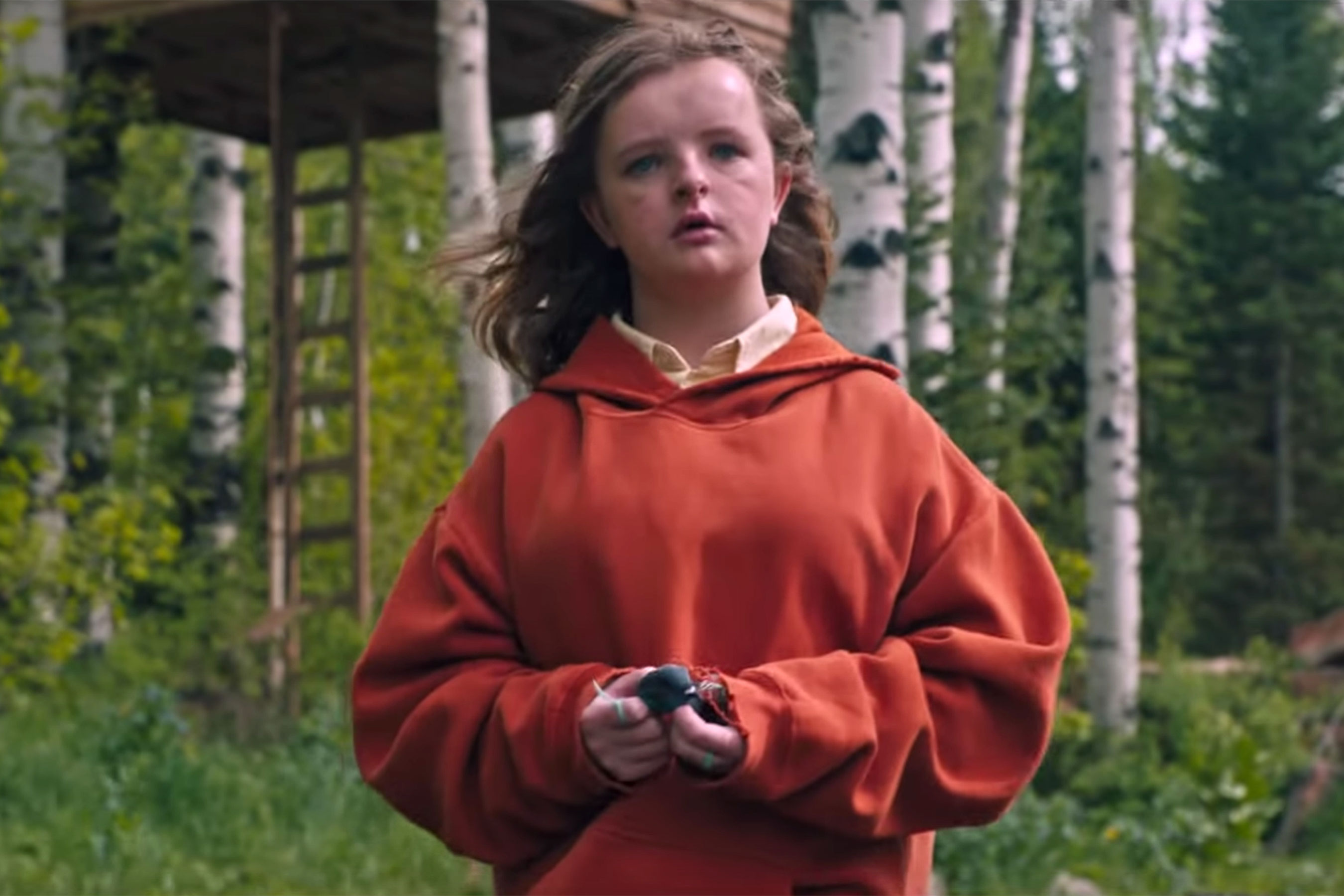
Supportive but exhausted husband Steve (Gabriel Byrne) is almost relieved, but the loss does bother the Graham’s socially isolated younger daughter, Charlie (Millie Shapiro, in one of the more chilling performances this year).
With just a handful of mannerisms, one melodic clucking noise, and a few seemingly throwaway lines, Aster and his magnificent cast quickly establish what will become nuanced, layered human characters, all of them scarred and battered by family.
The eulogy caps a striking film opening, where serpentine camera movement intertwines the Graham family with the intricate miniatures Annie creates inside their grand, secluded house. What we see suggests a scaled-down world of its own, lifelike but lifeless.
Art and life imitate each other to macabre degrees while family members strain to behave in the manner that feels human, seems connected, or might be normal. What is said and what stays hidden, what’s festering in the attic and in the unspoken tensions within the family, it’s all part of a horrific atmosphere meticulously crafted to unnerve you.
If horror fare such as The VVitch or It Comes at Night is not your bag, then you probably don’t care for the slow, detailed burn that A24 studio regularly serves. For those that do, hooray! Here’s another “adult” horror film, one that invests more in character development than in jump scares (though there are a few, including one so jarring it awakens the potential of the device).
Aster takes advantage of a remarkably committed cast to explore family dysfunction of the most insidious type. Whether his supernatural twisting and turning amount to metaphor or fact hardly matters with performances this unnerving and visual storytelling this hypnotic.
Applause to cinematographer Pawel Pogorzelski for turning this intricately designed home into a foreboding character all its own. Like Rosemary’s Baby, The Shining, The Haunting, The Others and any number of brilliant genre hauntings, Hereditary uses its surroundings to create a space where the most mundane moments take on a diabolical chill.
The family dynamic at work here is gut-punch authentic. Collette anchors the film with a performance full of grief, insecurity, bitterness and terror. It’s another in a string of award-worthy turns, and the support she gets from the ensemble, including a game Ann Dowd, elevates the tension in every intricately detailed frame.
You will have been quietly unnerved, startled from your seat, and then unsettled by the time the supernatural elements overtake the story. The peppering of hardline genre tropes in act 3 may feel like a cop out, but Aster’s interplay with the differing family members is too careful for such an easy summation.
The web of mental states, understandable suspicions and direct bloodlines layer the brutally effective fable, and Aster wields these weapons with stealthy precision. His work here is so smartly embedded that Hereditary continually tempts potential non-believers to dismiss where it leads as something you’ve seen before.
Saoirse Ronan is a treasure. The fact that she follows up one raucous, very American coming of age film (Lady Bird) with a delicate, very British coming of age film (On Chesil Beach) without hitting a false note is hardly a surprise. She is maybe the most versatile talent of her generation.
On Chesil Beach reunites the performer with novelist Ian McEwan, whose Atonement garnered Ronan her first Oscar nomination back at the tender age of 13.
Adapting his own novella this time around, McEwan deliberates on the romantic struggle of two young lovers, Florence Ponting (Ronan) and Edward Mayhew (Billy Howle, who also co-stars with Ronan in an upcoming adaptation of Chekhov’s The Seagull).
Florence is a highly-strung classical musician from money. Edward comes from less, hopes to write history books and sometimes behaves rashly. Regardless of their differences, they are endearingly in love.
They are also identifiably at an age where a person may see this very moment in time as the only moment, the only way it will ever be, the only way they will ever feel. This terrifying, ignorant, innocent moment is something Howle, Ronan, McEwan and director Dominic Cooke capture effectively.
Elsewhere, they falter.
The film and its story revolve around one night on Chesil Beach where the two newlyweds contemplate their present and future while we’re given a glimpse of their past. For a number of different reasons (some explained, some just suggested) Florence has an abiding revulsion of sex.
Edward does not.
Expectations, yearnings and dread come to a boil on their wedding night, when a lack of wisdom and an abundance of insecurity convince the two (one of them quite rashly) to make a questionable decision.
Though Ronan’s performance perfectly captures both Florence’s love and her reticence, Howle struggles to convince as an impetuous, even volatile young lover. He seems nervous and sweet, and every sudden outburst feels out of place.
Director Dominic Cooke, known primarily for stage work, has trouble creating a welcoming atmosphere. Cooke keeps you at arm’s length from the lovers, less likely to empathize with them than to judge.
The gravity of one rash decision weighs heavily on both, and though McEwan’s beloved pages may make that felt, Dominic’s film does not, so when we revisit Edward years after that pivotal moment at the beach, it’s tough to buy his situation or feel much for him.
On Chesil Beach is a pretty film and a nice story, but never finds the depth to break your heart.