Six years ago, Chilean filmmaker Sebastian Lelio released a vibrant and unapologetic look at aging and living with his magnificent Gloria. He re-images that gem with Gloria Bell, his second English language film, placing the incomparable Julianne Moore at the center of a different kind of coming of age story.
Moore is Gloria, a single fiftysomething who’s starting to feel her mortality. The film itself is a character study of the type Lelio does best. His films nearly always focus unflinchingly on the struggles of a woman trying to live freely and authentically.
As with his Oscar-winning A Fantastic Woman, his underappreciated Disobedience, and the original Gloria, Lelio’s observational and unobtrusive direction trusts the lead to carry the weight of the film. Moore characteristically rises to the occasion.
In Moore’s hands Gloria is perhaps a tad more reserved, a little more tentative than the firebrand depicted by Paulina Garcia in the original, but she’s no less wonderful. As Gloria struggles between the freedom and the loneliness of independence, and as she comes to terms with her own mortality, Moore’s tenderness and vulnerability will melt you and her sudden bursts of ferocity will delight.
John Turturro offers impeccable support as Gloria’s love interest. The performance is slippery and unsettlingly believable. He’s joined by strong ensemble work from Michael Cera, Brad Garrett, Alanna Ubach and Holland Taylor, each of whom delivers the spark of authenticity despite limited screen time.
But make no mistake, Gloria Bell is Moore’s film.
Is this just another in a string of brilliant performances, one more piece of evidence to support Moore’s position among the strongest actors of her generation? No.
Gloria Bell is a beautiful film, one that fearlessly affirms the potency of an individual woman, one that recognizes the merit of her story.
Jordan Peele loves horror movies. How cool is that?
It’s evident from the strangely terrifying opening moments of Us, when a little girl watches what is probably MTV from her suburban couch, the screen flanked by stacks of VHS tapes including C.H.U.D., and you’re pulled in to an eventful birthday celebration for this quiet, wide-eyed and watchful little girl (Madison Curry).
From a Santa Cruz carnival to a hall of mirrors to a wall of rabbits in cages—setting each to its own insidious sound, whether the whistle of Itsy Bitsy Spider or Gregorian chanting— Peele draws on moods and images from horror’s collective unconscious and blends them into something hypnotic and almost primal.
Then he drops you 30 years later into the Wilson family truckster as they head off for summer vacation. The little girl from the amusement park, Adelaide (Lupita Nyong’o – beyond spectacular) is now a protective mom.
And that protective nature will be put to a very bloody test.
A family that looks just like hers – doppelgängers for husband Gabe (Wnston Duke), daughter Zora (Shahadi Wright Joseph), son Jason (Evan Alex) and Adelaide herself – invade the Wilson’s vacation home, forcing them to fight for their lives while they wonder what the F is going on.
Even as Peele lulls us with familiar surroundings and visual quotes from The Lost Boys,Jaws, then Funny Games, then The Strangers and Night of the Living Dead and beyond, Us is far more than a riff on some old favorites. A masterful storyteller, Peele weaves together these moments of inspiration not simply to homage greatness but to illustrate a larger, deeper nightmare. It’s as if Alice’s Adventures in Wonderland turned into a plague on humanity.
Loosely based on an old episode of Twilight Zone (which, not surprisingly, Peele is rebooting), Us is a tale full of tension and fright, told with precision and a moral center not as easily identifiable as Get Out‘s brilliant takedown of “post racial America.”
Do these evil twins represent the darkest parts of ourselves that we fight to keep hidden? The fragile nature of identity? “One nation” bitterly divided?
You could make a case for these and more, but when Peele unveils his coup de grace moment (which would make Rod Serling proud), it ultimately feels like an open-ended invitation to revisit and discuss, much like he undoubtedly did for so many genre classics.
While it’s fun to be scared stiff, scared smart is even better, a fact Jordan Peele has clearly known for years.
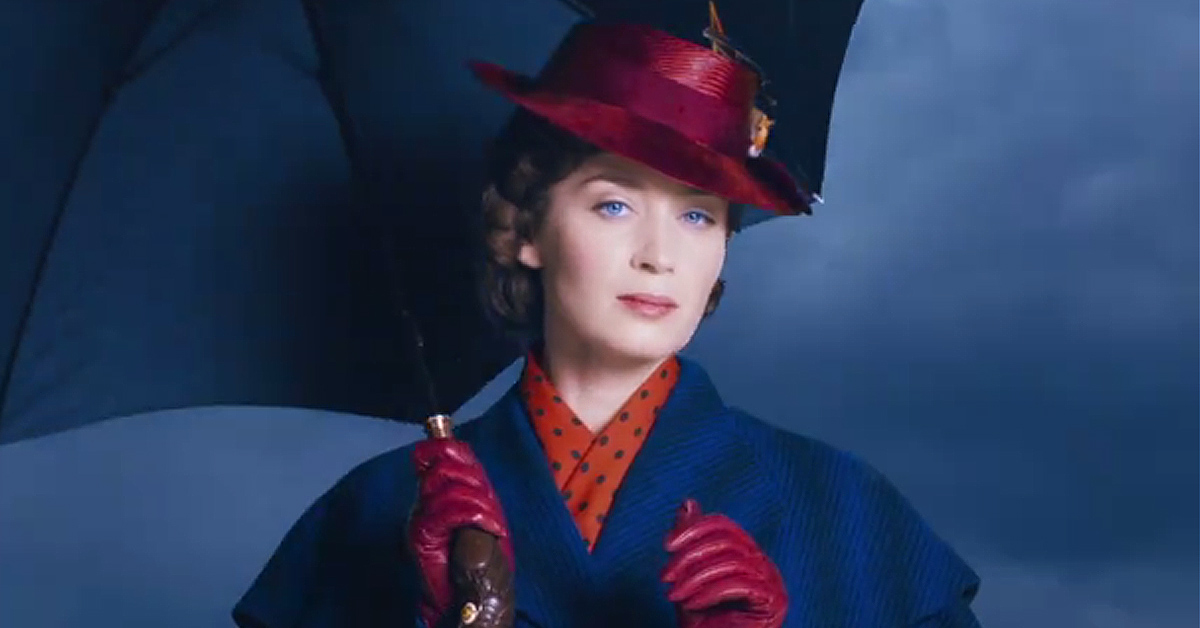
A couple of excellent options this week in home entertainment. The year’s best super hero movie expands its home release to DVD, and the strangely underappreciated Mary Poppins Returns comes home (so get that bedroom cleaned up!)
This week in the Screening Room we run through the many little movies that come out the week after Captain Marvel: Climax, Captive State, Five Feet Apart, Wonder Park, Birds of Passage, Ruben Brandt Collector plus everything new in home entertainment.
Imagine, if you will, that someone bullied their way to a takeover of the government. Imagine that they exploited the poor for labor while gutting Earth’s natural resources for their own gain, leaving a husk of a planet behind.
Imagine that they enacted blunt order with no thought to human rights, as they built walls, separated families and cordoned off neighborhoods to keep the poor a safe distance from the wealthy.
Let’s say they also passed themselves off as some almost holy enterprise that rewarded compliance and adoration.
Right, not such a stretch.
Oh, it’s aliens? That would actually be a lot easier to accept.
Filmmaker Rupert Wyatt returns to the theme of his greatest success, Rise of the Planet of the Apes, with his latest SciFi adventure, Captive State.
Wyatt drops us into the heart of Chicago some ten or so years after an alien invasion. Earth has long since accepted the aliens as their new legislature, and terrestrial natives are now either blindly following command with the hope of reward, or they are not.
Gabriel Drummond (Ashton Sanders, Moonlight) can’t quite make up his mind. His brother Rafe (Jonathan Majors) is the symbol of the revolution, but Gabriel just wants to get out of Dodge and try for a new life.
Lawman William Mulligan (John Goodman, wonderful as always) won’t let him. What emerges is an intricate and often clever thriller about submission and resistance.
Though Wyatt’s allegory is clear, it doesn’t drown the story itself. Even the most thinly drawn character has purpose and dimension, the ensemble talent assembled here delivering memorable but understated turns.
Vera Farmiga offers a particularly poignant performance, though her screen time can’t reach past 2 minutes. Likewise, James Ransone, Alan Ruck and Lawrence Grimm balance desperation, courage and hope in brief episodes that help Wyatt create the bleak but almost optimistic tone.
The look is a bit murky, the 1984-style occupations a tad convenient and the lack of one single point of view character limits audience investment in character, and therefore, in the outcome. But the aliens look pretty cool, John Goodman offers a twisty, melancholy performance that’s worth seeing, and there’s rarely a bad time to be reminded of the power of resistance.
Credit any film that can tap into the audience’s sense of wonder.
Wonder Park is that movie. I wonder why the film was called Wonder Park when the amusement park at the center of the film—and of little June’s imagination—is actually called Wonderland.
I wonder who directed the film, because there’s no one listed on imdb or the film’s own credits.
I wonder if there was no director at all, and that’s why the first act runs for 35 minutes, dumping us headlong into a second act full of characters we don’t feel connected to, regardless of the fact that they are the talking animals we’ve been trained to love and want to purchase.
(Fun fact: Wonder Park may or may not have been directed by David Feiss, who reportedly took over after Dylan Brown was fired over sexual misconduct allegations but is uncredited here. Makes you wonder.)
I also wonder how that bear ended up at the top of the roller coaster hill, because there is literally no explanation for it at all and yet it leads to a climactic scene. I wonder if the filmmaker – whoever that might have been – knows that there is no payoff, no matter the visual wonder, if there is no set up. The bear can’t just be at the top of the roller coaster hill. If he can magically wake up there without having to get up there, then he can magically wake up at the bottom, so where’s the fun in that?
There’s not a lot of fun in this movie. There is a lot of talent: Jennifer Garner, Mila Kunis, John Oliver, Ken Jeong, Kenan Thompson, Matthew Broderick. And the animation looks good. There is also an admirably nerdy underpinning that encourages kids—girls, in particular—to appreciate the excitingly destructive qualities of math and science.
As is often the case with powerful and memorable animated films – Up, Bambi, Dumbo – Wonder Park is also about grief. It’s grief and fear that cause mischievous little genius June (Sofia Malie and Brianna Denski, depending on the age of the character) to lose her spark.
With the help of science, math, girl power and imagination, she can face her grief and fear and come out the other side.
Wait, is that how it works?
No. Math and science can help with a lot of things, but grief is grief and it just needs to be accepted. This trickery to overcome it is a cheat, as is the film’s ending, not to mention that roller coaster bear moment.
The Law figures heavily in horror films. Most of them depict crimes. Bloody, bloody crimes. So, in many cases, the authorities must be brought in. And there are some outstanding genre films depicting a law enforcement officer as hero—Jaws and Slither spring to mind. They are also villains as often as bumbling side characters (we’re looking at you Inside and Last House on the Left).
Today we want to celebrate the films that dive into the police work, that focus squarely on The Law and its investigators. And, again, bloody, bloody crimes.
6. Baskin (2015)
Welcome to hell! Turkish filmmaker Can Evrenol invites you to follow a 5-man police squad into the netherworld, where eye patches are all the rage, pregnancy lasts well under the traditional 40 weeks, and you don’t want to displease Daddy.
The serpentine sequencing of events evokes a dream logic that gives the film an inescapable atmosphere of dread, creepily underscored by its urgent synth score. Evrenol’s imagery is morbidly amazing. Much of it only glimpsed, most of it left unarticulated, but all of it becomes that much more disturbing for its lack of clarity.
The further along the squad gets, the more often you’ll look in horror at something off in a corner, that sneaking WTF? query developing along with your upset stomach.
The central figures in this nightmare are one eye-patch wearing helper who enjoys tossing his or her hair over one shoulder, and the breathtaking father figure played by Mehmet Cerrahoglu. There is no one quite like him.
Cerrahoglu’s remarkable presence authenticates the hellscape. Evrenol’s imaginative set design and wise lighting choices envelope Cerrahoglu, his writhing followers, and his victims in a bloody horror like little else in cinema.
5. Se7en
Serpentine and dark as the sin it depicts, David Fincher’s Se7en marked him as a director willing to work your subconscious and take you to unseemly places. The film compares the strict and merciless justice of an old school God with the rotting corpse of NYC police work as two homicide detectives – one a grizzled veteran (Morgan Freeman), one a hot headed rookie (Brad Pitt) – try to keep up.
Fincher shrouds the mystery in some of the most memorably horrific images set to film. Who can forget that first victim, facedown in his spaghetti? How about Lust? “Get it off me! Get it off me!”
Let’s not even discuss Sloth. Still trying to recover from that, and the film came out in 1995.
Great performances and sleight of hand keep the story itself breathless as you work toward the now legendary climax.
What’s in the box?!!!
4. The Wailing
“Why are you troubled,” Jesus asked, “and why do doubts arise in your hearts? Look at my hands and my feet. It is I myself. Touch me and see — for a spirit does not have flesh and bones, as you see I have.”
Though the true meaning of this quote won’t take hold until the final act, it presents many questions. Is this film supernatural? Demonic? Or, given the corporeal nature of the quote, is it rooted in the human flesh?
Yes.
That’s what makes the quote so perfect. Writer/director Hong-jin Na meshes everything together in this bucolic horror where superstition and religion blend. The film echoes with misery, as the title suggests. The filmmaker throws every grisly thing at you – zombies, pustules, demonic possession, police procedural, multiple homicides – and yet keeps it all slippery with overt comedy.
3. I Saw the Devil (2010)
Min-sik Choi (Oldboy) plays a predator who picks on the wrong guy’s fiancé.
That grieving fiancé is a police investigator played by Byung-hun Lee (The Magnificent Seven), whose restrained emotion and elegant good looks perfectly offset Choi’s disheveled explosion of sadistic rage, and we spend 2+ hours witnessing their wildly gruesome game of cat and mouse.
Director Jee-woon Kim (A Tale of Two Sisters) breathes new life into the serial killer formula. With the help of two strong leads, he upends the old “if I want to catch evil, I must become evil” cliché. What they’ve created is a percussively violent horror show that transcends its gory content to tell a fascinating, if repellant, tale.
Beneath the grisly violence of this unwholesome bloodletting is an undercurrent of honest human pathos – not just sadism, but sadness, anger, and the most weirdly dark humor.
If you can see past the outrageously violent images onscreen, you might notice some really fine acting and nimble storytelling lurking inside this bloodbath.
2. Big Bad Wolves (2013)
A mixture of disturbing fairy tale and ugly reality, Israel’s Big Bad Wolves takes you places you really don’t want to go, but damn if it doesn’t keep you mesmerized every minute.
The particularly vulgar slaughter of several little girls sets events in motion. One teacher is suspected. One cop is driven. One father suffers from grief-stricken mania. It’s going to get really ugly.
Filmmakers Aharon Keshales and Navot Papushado (Rabies) implicate everyone, audience included. They create intentional parallels among the three men, pointing to the hypocrisy of the chase and making accusations all around of a taste for the intoxicating bloodlust that comes from dominating a weaker person.
Their taut and twisty script keeps surprises coming, but it’s the humor that’s most unexpected. Handled with dark, dry grace by Lior Ashkenazi (the cop) and Tzahi Grad (the father) – not to mention Doval’e Glickman (the grandfather) – this script elicits shamefaced but magnetic interest. You cannot look away, even when the blowtorch comes out. And God help you, it’s hard not to laugh now and again.
1. The Silence of the Lambs (1991)
It’s to director Jonathan Demme’s credit that Silence made that leap from lurid exploitation to art. His masterful composition of muted colors and tense but understated score, his visual focus on the characters rather than their actions, and his subtle but powerful use of camera elevate this story above its exploitative trappings. Of course, the performances didn’t hurt.
Hannibal Lecter ranks as one of cinema’s scariest villains, and that accomplishment owes everything to Anthony Hopkins’s performance. It’s his eerie calm, his measured speaking, his superior grin that give Lecter power. Everything about his performance reminds the viewer that this man is smarter than you and he’ll use that for dangerous ends.
Demme makes sure it’s Lecter that gets under our skin in the way he creates a parallel between Lecter and FBI investigator Clarice Starling (Jodie Foster). It’s Clarice we’re all meant to identify with, and yet Demme suggests that she and Lecter share some similarities, which means that maybe we share some, too.
It’s difficult to imagine a fresh cartel story, a novel approach to the rise-and-fall arc of a self-made kingpin. And though scene after scene of Birds of Passage recalls that familiar structure, reminding you of what’s to come, you have never seen a film quite like this.
To begin with, directors Cristina Gallego and Ciro Guerra set this narco-thriller and its tale of the corrupting lure of luxury deep inside Colombia’s indigenous Wayuu culture. And though anyone who’s seen Scarface can guess how tides may turn for Rapayet (Jose Acosta), the entrepreneur at the heart of this saga, the tragic difference in this film is the way the same insidious rot destined to eat Rapayet alive also seeps into and destroys the Wayuu culture itself.
Spanning twenty years, Birds of Passage opens with Rapayet participating in a ritual, beautiful and peculiar. He proposes, but his gift is inappropriate – it’s a luxury, a thing. He’s already begun to lose touch with his roots, and yet he is determined to earn the dowry and his bride, Zaida (Natalia Reyes).
Rapayet straddles two existences, never truly fitting into either. He’s the bridge for the two ecosystems to meet, but Acosta’s performance is intriguing. Hardly the ambitious firebrand who builds an empire, he’s quiet and perhaps even weak, bringing an end to his culture accidentally, like an infected animal who doesn’t know what he’s brought home with him.
David Gallego’s cinematography renders an absurdly beautiful desolation, colors splashing and popping against bleached sandy neutrals. Naturalistic performances from the entire cast aid in the film’s authentic feeling, but the poetry of the directors’ use of long shots and the singing voiceover give Birds of Passage the tone of folklore.
It’s a fitting balance —the story itself being both intimate and epic. Like Guerra’s Oscar-nominated Embrace the Serpent, this film again examines the moment when an indigenous people watch the death of their culture in favor of something more globally acknowledged and yet clearly inferior.
Man, remember the boon of movies released for home viewing last week?! Well, don’t get greedy, I guess. This week contains a fun little psycho-sexual thriller plus two bloated SciFi blunders. Here is the skinny.
Big week in theaters and crowded week in home entertainment. In this week’s Screening Room we talk (spoiler free!) about Captain Marvel, Apollo 11, The Hole in the Ground and I’m Not Here. Then we hit the lobby to give you a sense of what’s worth your while in home video.