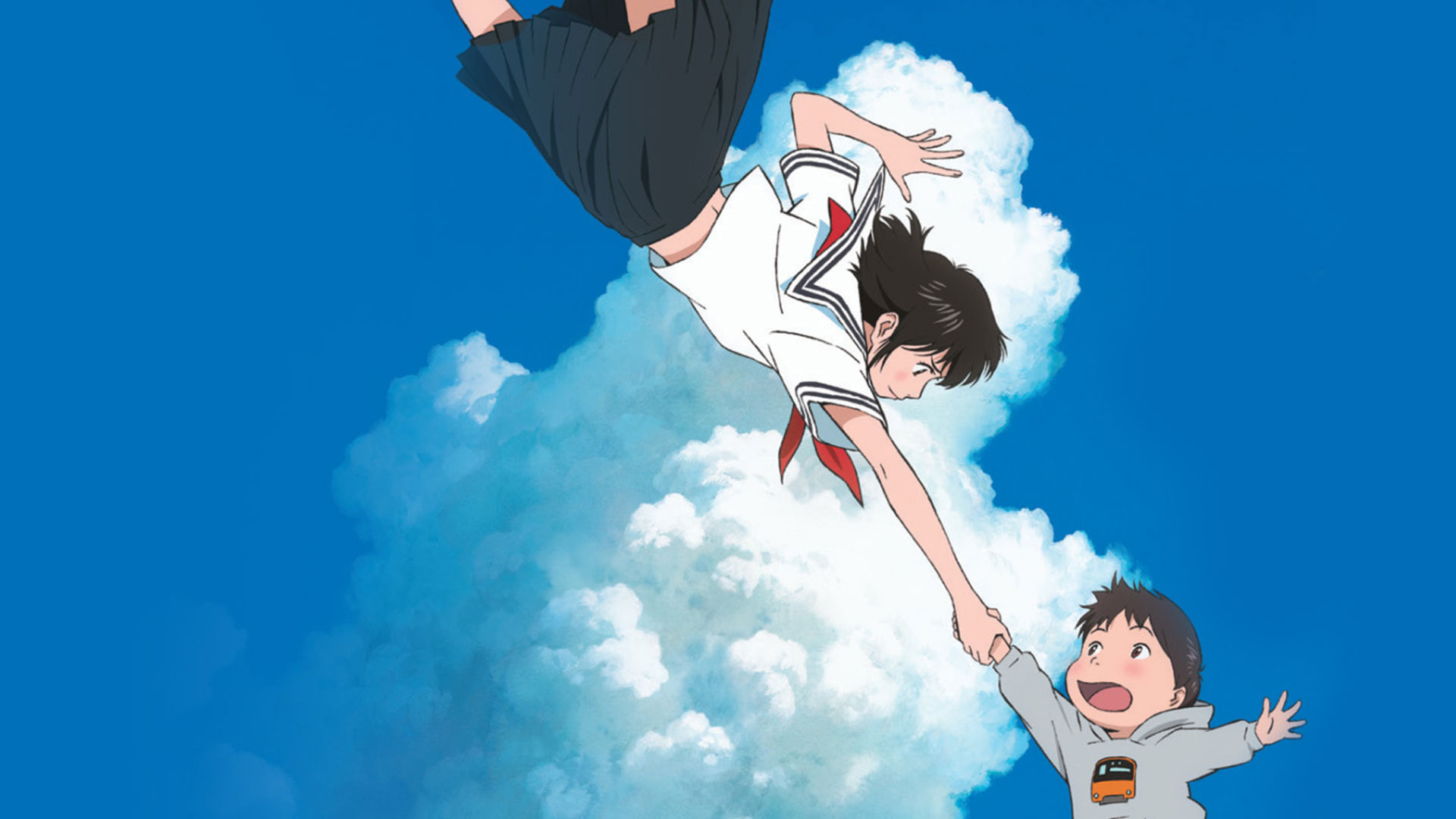
Three years ago, Elle Fanning starred in The Neon Demon, Nicolas Winding Refn’s take on the soul devouring business of show. She played an innocent hoping her natural talent would be enough to carry her far away from her one-horse town.
It’s a threadbare storyline and Refn couldn’t find the same inspiration that drove his earlier efforts Drive and Bronson to such dizzying heights. And yet, for its faults, The Neon Demon is a bold, imaginative and bracingly fresh take on a familiar song.
Writer/director Max Minghella is no Nicolas Winding Refn.
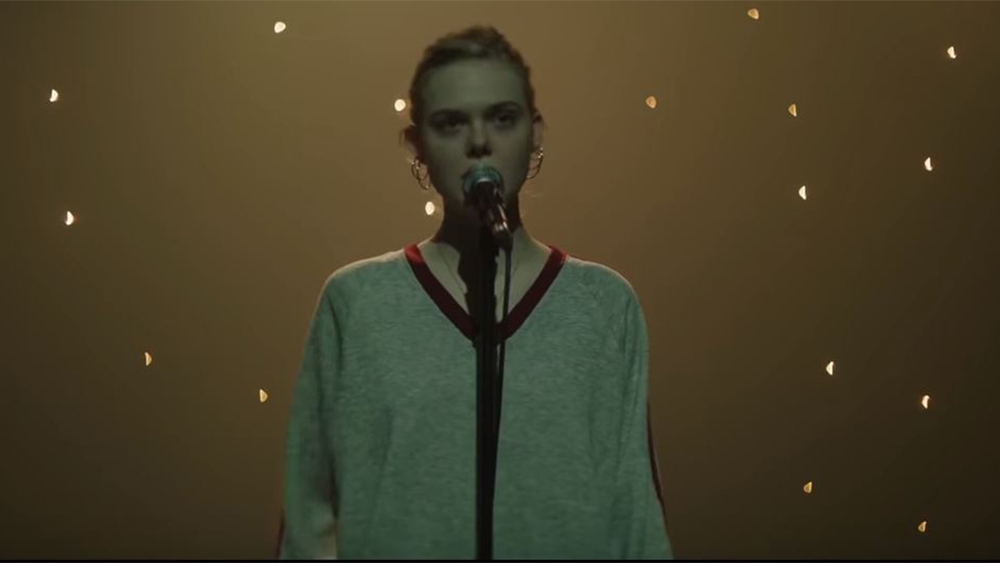
Minghella’s Teen Spirit sees Fanning as Violent, raw singing talent wasting away on the Isle of Wight. When an American Idol-style singing competition hosts auditions on the island, Violet sees her opportunity.
Awash in daddy issues, blatantly judgmental of showmanship (God forbid a girl wear makeup or wigs) and too dependent on Fanning’s mediocre voice, Minghella’s look at the dark side of the entertainment industry can’t find its groove.
Teen Spirit is not a complete misstep. Fanning’s acting is characteristically spot on. Rather than casting Violet as the bashful townie, Fanning presents a sullen, unlikeable character whose aloneness has as much to do with her own adolescent misanthropy as anything.
Equally appealing in his unappealing way is Zlatko Buric playing Vlad, the unsightly mess of a drunk that an underaged Violet drafts into posing as her guardian so she can audition.
The crusty sympathy the two form creates a welcome change to the ordinary—which is what the rest of Teen Spirit bathes in. Catty divas, soulless and posh record execs, temptation, disloyalty, pop songs—all of it’s here in some neutered form or other.
Teen Spirit not only plays like a toothless version of Neon Demon, it also bears an eerie resemblance to Leap, the 2016 animated adventure in which Fanning plays an orphan who longs to dance in the Paris ballet.
She’s also an alien turned punk rocker—with far more interesting performance sequences—in John Cameron Mitchell’s How to Talk to Girls at Parties from 2016.
No wonder Teen Spirit feels so derivative. You haven’t just seen this movie before, you’ve seen Elle Fanning in this movie before.
The Conjuring Universe loves the Seventies, doesn’t it? And why not? So many patterns to distract attention from your evil, so many bell bottoms to hide beneath. It’s also a time period before Catholicism became a horror movie unto itself, which makes it a safer space to depict a more wholesome view of the Church.
Not that Anna (Linda Cardellini, Green Book) would know. Her late husband was more of the religious one. But as Fr. Perez (Tony Amendola, Annabelle) points out, “You don’t have to be religious to have faith.”
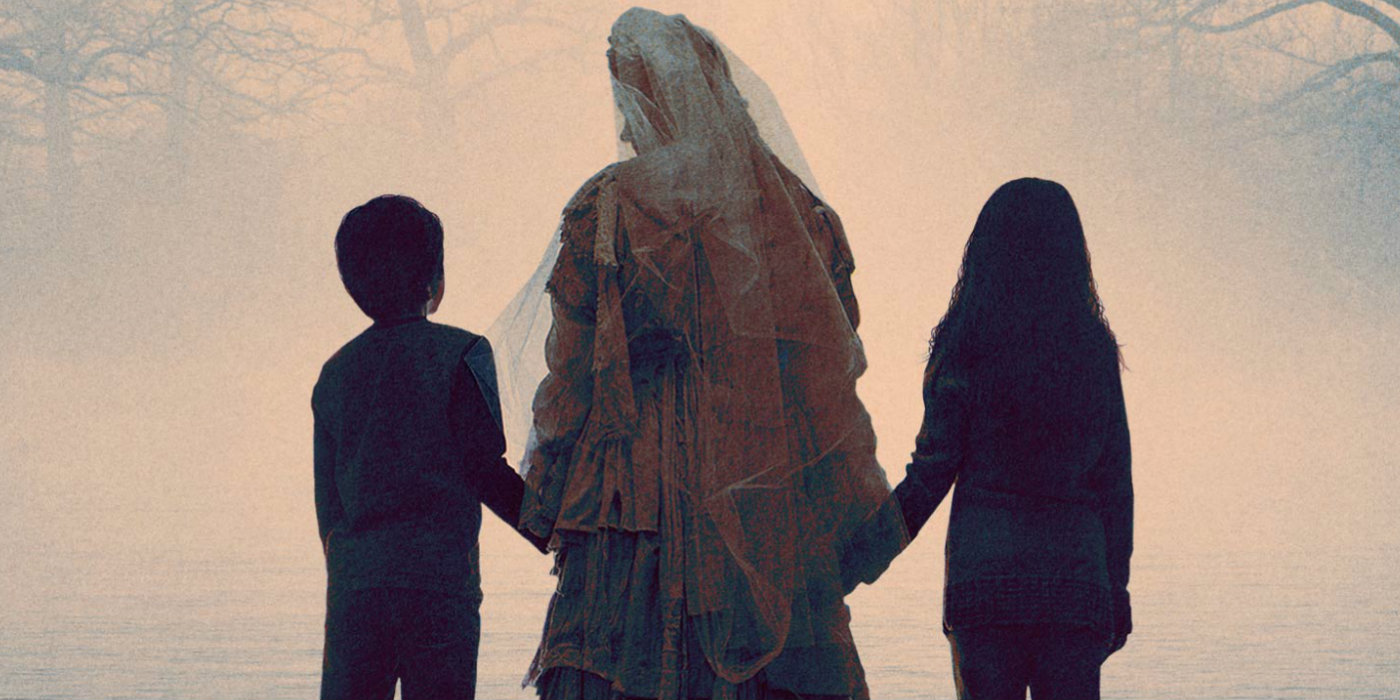
Ah, yes, Michael Chaves’s The Curse of La Llorona is burdened by some seriously obvious dialog. That’s to be expected. The two people who wrote the film (Mikki Daughtry and Tobias Iaconis) are the same two people who wrote Five Feet Apart, the latest teen tragedy porn to wheeze its Boy in a Plastic Bubble riff into the hearts of Kleenex-clutching youth everywhere.
And yet, there is something of the old school charm that marks the best films in the Conjuring universe on display here. Simple fun house scares, primarily practical effects, kids in peril—these are all invoked in a quickly paced if somewhat nonsensical and conveniently plotted ghost story.
There is also a quick Scooby-Doo reference (this being 1976). Have you ever wondered why Cardellini always looks so familiar? Because she was Velma in the film series—making her sort of my own personal hero—and I, for one, was thrilled that LLL shouted that out. Plus, good parenting.
The story unfortunately skirts the real tensions to be drawn from questioning her parenting skills. Not that LLL had a shot at reaching the terrifying heights of The Babadook, but for a moment it takes us down the path of calling a single parent’s fitness for the job into question.
This is quickly abandoned for the safer territory of a
fierce mother protecting her cubs, which is too bad because Cardellini’s
understated and graceful performance could probably have carried a more
challenging script.
Instead we get bits and pieces of other films in the series,
stitched together by a folk tale about a murderous mother. This is not inspired
horror, but it’s not ridiculous, either.
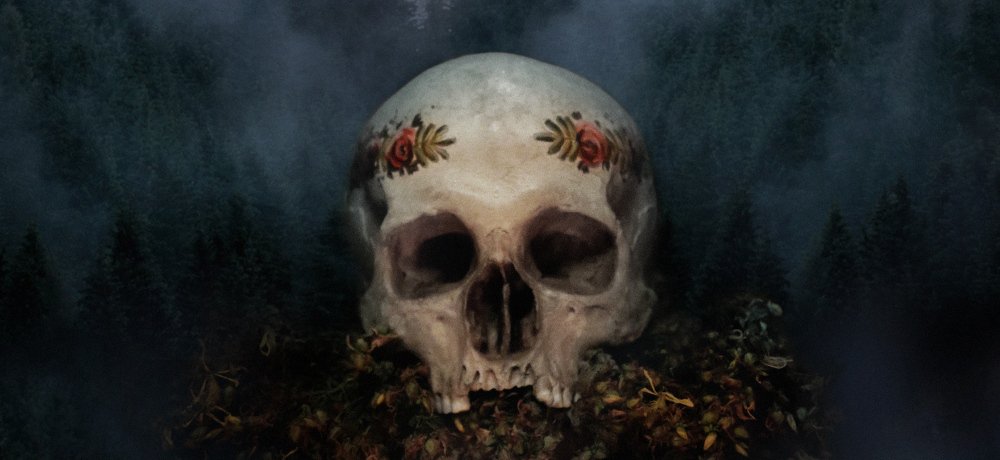
Making a remarkably assured feature debut as director, Lukas Feigelfeld mesmerizes with his German Gothic poetry, Hagazussa: A Heathen’s Curse.
Settled somewhere in the 15th Century Alps, the film shadows lonely, ostracized women struggling against a period where plague, paranoia and superstition reigned.
Young Albrun (Celina Peter) and her mother (Claudia Martini) make their way back to their isolated cabin before darkness falls. With a minimum of dialog and a maximum of atmosphere, Feigelfeld quickly establishes the dangerous isolation facing mother and daughter.
It’s an episode that will haunt Albrun well into adulthood, where she (Aleksandra Cwen) is now the single mother, still an outsider, still isolated from the village.
It would be easy to mistake the story Feigelfeld (who also writes) develops as a take on horror’s common “is she crazy or is there malevolence afoot?” theme. But the filmmaker’s hallucinatory tone and Cwen’s grounded performance allow Hagazussa to straddle that line and perhaps introduce a third option—maybe both are true.
Isolation, shunning and bullying lead to one tragedy upon the next. The village and its priest having deemed Albrun a witch, the line that defines the reality of the situation and the spiritual ugliness blur for both Albrun and the audience.
The film lends itself to a reading more lyrical than literal. Feigelfeld’s influences from Murnau to Lynch show themselves in his deliberate pacing and the sheer beauty of his delusional segments. One goat milking episode, in particular, is both startlingly erotic and disturbingly articulate of Albrun’s state of mind.
MMD’s ominous score strengthens the film’s overall sense of hypnotic menace, echoing sounds we’re not sure will frighten or comfort this mysterious woman at the center of the film.
Albrun’s is a tragic story and Feigelfeld crafts it with a believable loneliness that bends toward madness. He’s captured this moment in time, this draining and ugly paranoia that caused women such misery, with imagery that is perplexingly beautiful.
If you already know the name Nia DaCosta, the likely reason may be that Jordan Peele pegged her to direct the Monkey Paws-produced remake of 1992’s horror gem Candyman that’s due next year.
What had she done to so impress the new American emperor of horror?
Little Woods.
DaCosta’s feature directorial debut, which she also wrote, is not a horror film. It’s an independent drama of the most unusual sort—the sort that situates itself unapologetically inside American poverty.
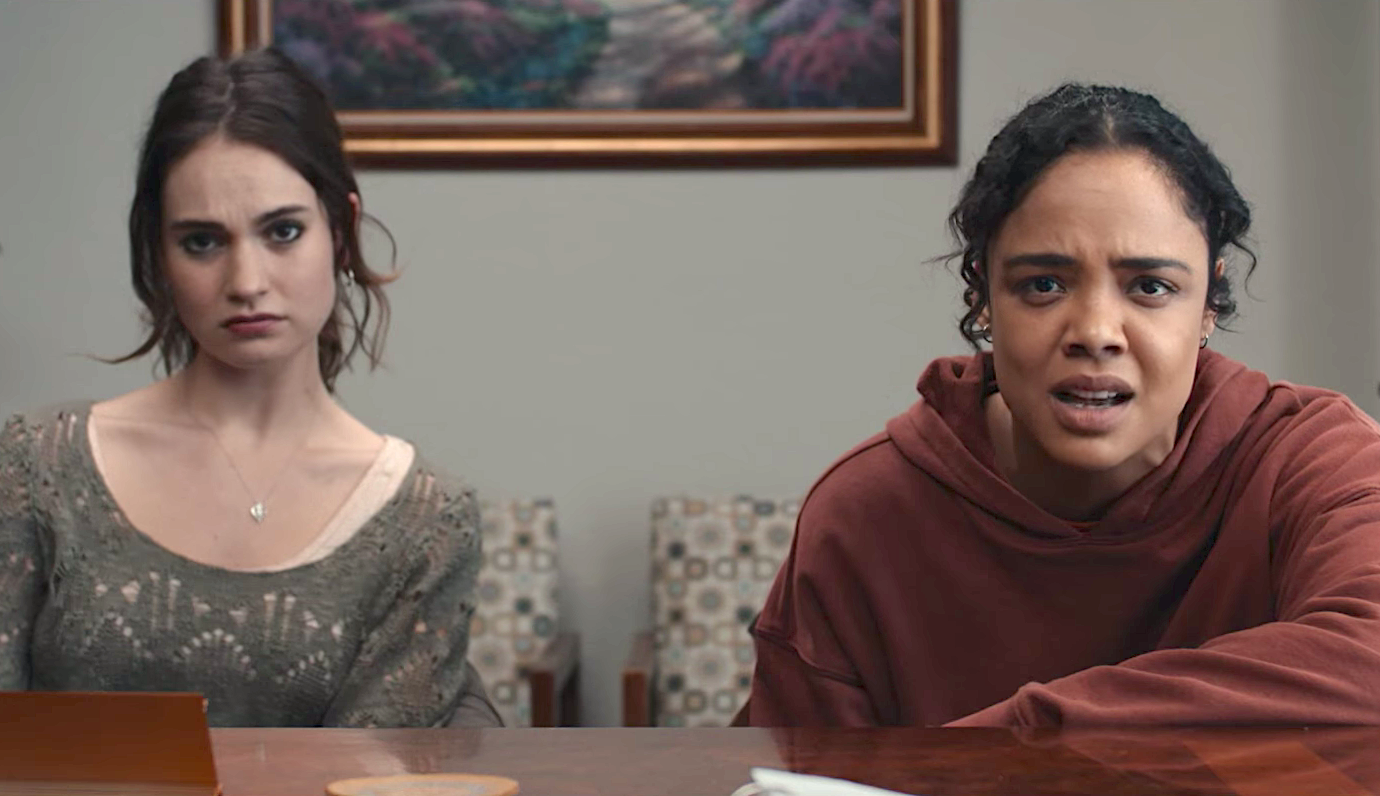
Tessa Thompson anchors the film as Oleander. She has 8 days left on her probation for running drugs across the Canadian border and she means to get the F out of her dead end town the first minute she can. Her sister Deb (Lily James) complicates things.
There is a predictability in the setup that DaCosta uses to betray your preconceived notions. While the traditionally structured narrative does its job to elevate tension, the characters within that tale veer wildly—or, authentically—from the expected.
This is less a film about the complicated pull of illegal activity and more a film about the obstacles the American poor face—many of them created by a healthcare system that serves anyone but our own ill and injured.
Films that honestly explore American poverty are scarce—The Florida Project, Frozen River, The Rider and very few others. Little Woods joins this list, all beautiful gut punch films that choose to present realistic tales with fully drawn characters rather than easy, noble tragedies.
The border crossing scene in Little Woods holds particular resonance, even more than it did back in 2008 when Courtney Hunt put Melissa Leo and her car on Frozen River‘s thin ice. Echoes of images from our own Southern border help to contextualize the nation’s narrative about saving society from the poor families and the criminals out to exploit our riches.
But politically savvy filmmaking is not the main reason to see Little Woods. See it because Tessa Thompson and Lily James are amazing, or because the story is stirring and unpredictable.
See it because it’s what American actually looks like.
It’s the week of one-word movie titles. One of these couldn’t meet the high bar it set for itself, but it’s not such a bad movie. The other one is a bad movie. No question. Which is which? We’re here to clarify.
Lots and lots to cover in the Screening Room this week: Missing Link, Hellboy, Little, After, and Master Z: Ip Man Legacy. Plus just as many new home entertainment releases. Strap in!
It has been 15 years since Guillermo del Toro and Ron Perlman first brought Mike Mignola’s cat loving, iron fisted, soft hearted son of Satan to the big screen. You’ve got to feel for any filmmaker tasked with following in del Toro’s steps, especially when the film in question is a monster movie brimming with innocence and wonder. That is really his wheelhouse.
But Neil Marshall is no slouch. His first film out the gate back in 2002, Dog Soldiers, offered a wickedly funny war movie with werewolves. This gem he followed in 2005 with what may be contemporary horror’s scariest monster movie, The Descent.
Since then? Nothing to write home about. But that means he’s due for a comeback, eh? And Hellboy’s ready for a reboot. Right?
No to both.
The first difference you’ll note, maybe 15 words into the film with the first of many f-bombs, is that Neil Marshall’s Hellboy is rated R.
It’s also a horror movie, make no mistake. Hellboy is lousy with limb severing, blood gushing, intestine spilling action.
Also, it’s just lousy.
Hellboy (Stranger Things’s David Harbour, who does an admirable job) struggles against a prophesy and a lifetime in the shadows to decide his destiny for himself. Milla Jovovich is a witch. There is a boar monster, a scrappy teen medium, a were-cheetah and some seriously sketchy CGI.
Yikes, this movie looks bad.
There are those who will complain about Marshall’s gleeful gorefest, but not me. Demons ripping the flesh from the faces of innocents? Others may be hiding their eyes from the carnage, but what they’re mercifully missing is digital animation on par with Disney’s The Haunted Mansion (the 2003 film or the amusement park ride, take your pick).
Aside from two creepy images—one of Jovovich’s Blood Queen in flowing red robes beneath a shadowy, skeletal tree; the second a quick sideways glance into Baba Yaga’s pantry—Marshall’s vision is weak.
His storytelling is not much stronger. Working from a script by Andrew Cosby, the film opens with exposition, repeats that exact exposition midway through Act 2, and halts at least three additional times for one character to stand still and articulate a big block of story for us.
Often that character is dead and attached to the mouth of a young girl via a long, gurgly, worm-like body, which probably the most laughable element of the film.
Lesbians in horror have come a long way since Jesus DeFranco’s bloodthirsty nymphettes. In fact, we are now at the glorious point in history in which story leads can be lesbians for no particular reason—their sexual orientation not a metaphor for anything at all. They’re just characters. Nice!
There are so many great options that we had to leave many off. What were we looking for? Main characters whose sexuality is not showcased simply for titillation or as a twisted mark of the sinister. That doesn’t mean we’ve abandoned the villain, but if you’re looking for hot girl-on-girl action, well, yes, we have a bit of that, too, but who wouldn’t make out with Catherine Deneuve?
5. The Hunger (1983)
Director Tony Scott’s seductive vampire love story has a little bit of everything: slaughter, girl-on-girl action, ’80s synth/goth tunage, David Bowie. What more can you ask?
Actually the film’s kind of a sultry, dreamily erotic mess. Oh, the gauzy curtains. Catharine Deneuve is the old world vampire Miriam Blaylock—an inarguably awesome name for a vampire. David Bowie is her lover. But he suddenly begins aging, and she needs to find a replacement. Enter Susan Sarandon and her mullet as a medical specialist in unusual blood diseases and a fine actress who’s not above smooching other girls.
There are three reasons people will always watch this film: Bowie, Catherine Deneuve’s seduction of Susan Sarandon (classy!), and the great dark-wave Bauhaus number Bela Lugosi’s Dead. Together it’s a Goth Trifecta! And Goths do love them some vampires.
4. Thelma (2017)
We follow Thelma (Eili Harboe) through the uncomfortable, lonely first weeks of college we gather that her parents are very Christian and very protective.
Things could have gone all predictable and preachy from there, but co-writer/director Joachim Trier knows what you’re thinking and he plans to use it against you.
Thelma is a coming-of-age film at its cold, dark heart. The horror here lies in the destructive nature of trying to be something you are not, but here again, nothing in Thelma is as simple or cleanly cut as the beautiful framing and crystal clear camera work suggest.
Like Julia Ducournau’s magnificent coming-of-age horror Raw, Thelma dives into the issues swirling around post-adolescent freedoms and taboos in daring and insightful ways.
Thelma takes its time and lets its lead unveil a fully realized, deeply complex character full of contradictions—inconsistencies that make more sense as the mystery unravels. Though the result never terrifies, it offers an unsettling vision of self-discovery that’s simultaneously familiar and unique.
3. The Haunting (1963)
This may not seem like an obvious choice, but Theo (Claire Bloom) is a lesbian. And a great, badass character at that. That may not have been a widely held opinion when the great Shirley Jackson penned the novel in the fifties, or when the great Robert Wise directed the spooky and wonderful adaptation in 1963. But Mike Flanagan, director of the Netflix series based on the book, understood Jackson’s nuance and Wise’s subtlety and decided Theo would be out and proud. Good on ya, Flanagan.
In Wise’s original work, there is no overt mention of Theo’s sexuality, but there wouldn’t be, would there? It was 1963. Theodora is unmarried but refers to an “us” when discussing her home life. Her style, her confidence, her disinterest in being demure with the males, and the fact that Eleanor refers to her as “unnatural” all quietly make the case for us.
What’s great, though, is not just that a lead character is a lesbian, but that she’s a powerful and positive presence, and that she and Eleanor form a deep and supportive friendship. The Haunting (and Jackson’s magnificent novel) is about identity, and the fact that Theo is so very comfortable with hers is what makes this film an important addition to the list.
2. The Handmaiden (2016)
Director Park Chan-wook (Oldboy) mesmerizes again with this seductive story of a plot to defraud a Japanese heiress in the 1930s.
Weird is an excellent word to describe this film. Gorgeous and twisty with criss-crossing loyalties and deceptions, all filmed with such stunning elegance. Set in Korea, the film follows a young domestic in a sumptuous Japanese household. She’s to look after the beautiful heiress, a woman whose uncle is as perverse and creepy as he is wealthy.
Smart and wicked, stylish and full of wonderful twists, The Handmaiden is a masterwork of delicious indulgence.
1. Daughters of Darkness (1971)
Seduction, homoeroticism, drowsy lustfulness – this one has it all.
Countess Bathory—history’s female version of Dracula—checks into an all-but-abandoned seaside hotel. The only other guests, besides the Countess’s lover, Ilona (Andrea Rau), is a honeymooning couple.
Effortlessly aristocratic, Delphine Seyrig brings a tender coyness, a sadness to the infamous role of Bathory. Seyrig’s performance lends the villain a tragic loveliness that makes her the most endearing figure in the film. Everybody else feels mildly unpleasant, a sinister bunch who seem to be hiding things. The husband (John Karlen), in particular, is a suspicious figure, and a bit peculiar. Kind of a dick, really— and Bathory, for one, has no time for dicks.
Caring less for the victims than for the predator—not because she’s innocent or good, but because her weary elegance makes her seem vulnerable—gives the film a nice added dimension.
The accents are absurd. The outfits are glorious. The performances are compellingly, perversely good, and the shots are gorgeous. Indulge yourself.
Based on a concept by 14 year-old executive producer and star Marsai Martin (Black-ish), the comeuppance comedy Little flips the script on the Tom Hanks Eighties adventure in manhood, Big.
We open with Martin as Jordan Sanders at 13, a science nerd who takes a chance at the talent show to win over the Windsor Middle School student body. When she fails, she pins her dreams on one day being an adult who bullies everyone else before they can bully her.
Flash forward 25 years. Jordan (now Regina Hall) is a monster boss, terrorizing the developers at her tech firm and making life especially miserable for her assistant, April (Insecure‘s Issa Rae). Can some carbs and a little magic return Jordan to her adolescent form so she can unlearn the lesson that sent her life in the wrong direction?
It’s a slight story, penned from Martin’s idea by director Tina Gordon and co-writer Tracy Oliver (Girls Trip). The two choose not to represent bullying as anything other than a fact of life to be tolerated, but they do layer in some silly fun and spots of surprising humor, mainly thanks to the strength of the two leads.
Rae charms throughout the film. Her smile and energy shine, and she offers natural chemistry with both adult and teen versions of her boss. Rae brings a reluctant but earnest sense of compassion to the role, and her comic timing is spot on.
Martin is the film’s real star. She carries scenes with a clever knack for portraying an adult brain inside a child’s form. The physical performance amuses, but it’s really the way she delivers sly lines with a saucy look or toss of the head that brings a chuckle.
It would be tough for this film to be more predictable, but several side characters—a social services agent (Rachel Dracht) and dreamy 7th grade teacher (Justin Hartley) work wonders with their odd characters and limited screen time.
The plotting is pretty sloppy and at no point does the comedy draw more than a chuckle, but Little is an amusing if forgettable waste of time. Martin is someone to remember, though.
Movie and more movies out this week in home entertainment. A couple are great, a couple are near misses, at least one is a real head-scratcher. No worries, though, we’ll sort through it with you.