I was cautiously optimistic about director Scott Derrickson’s sequel to his creepy 2021 Joe Hill adaptation, Black Phone. And lo and behold, within the first ten minutes, Black Phone 2 had worked three of my favorite things into its tale: Pink Floyd, Duran Duran, and extreme profanity from children.
I’m listening.
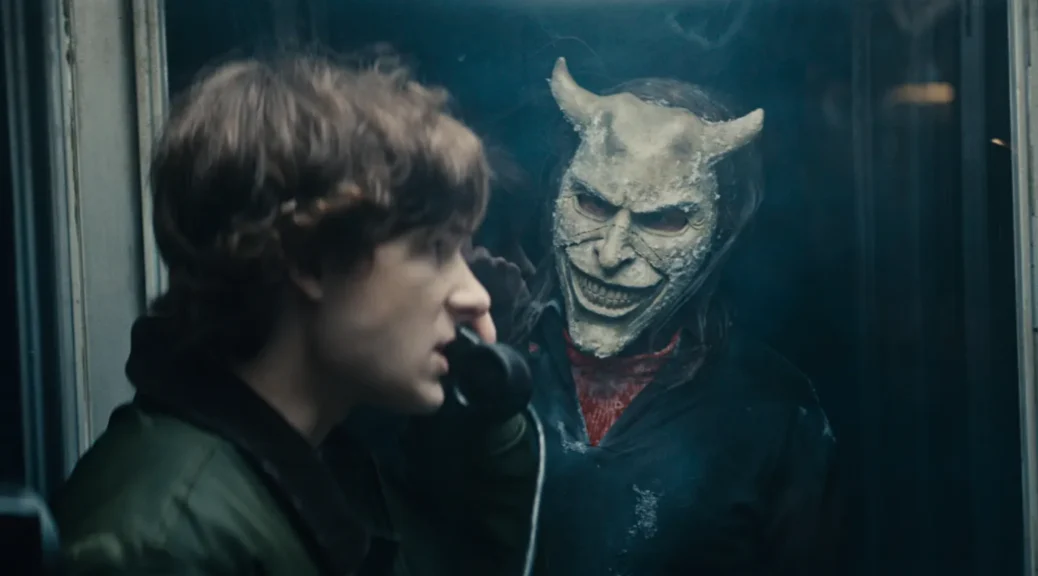
Finney (Mason Thames) and his little sister Gwen (Madeleine McGraw) are struggling to find a new normal after Finney killed serial killer The Grabber (Ethan Hawke) a few years back. What Finn doesn’t want to admit is that he still sees that masked demon in a top hat everywhere he looks. Meanwhile, Gwen’s dreams have taken a decidedly sinister turn.
Last time out, Derrickson, writing with longtime collaborator C. Robert Cargill, filled out Hill’s short story with a just-strong-enough b-story about Gwen and her dreams. It gave the film a larger world to live in and enhanced the supernatural elements of Hill’s original nicely.
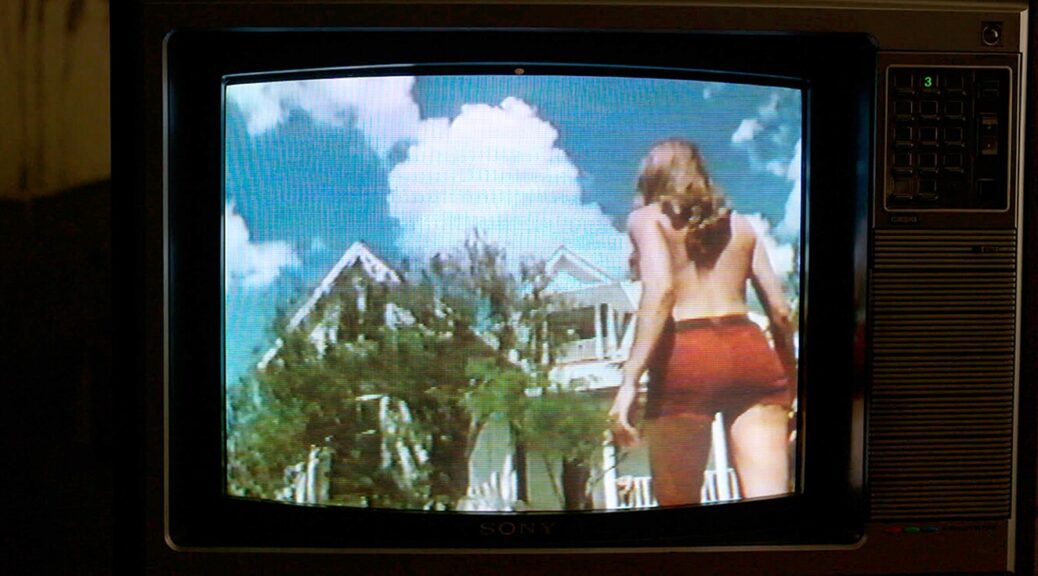
For the sequel, Cargill and Derrickson mine Gwen’s abilities for the bulk of the story, as her dreams lead the two siblings to a Christian sleepaway camp called Alpine Lake. Derrickson’s early 80s timeline allows for an analog look that lets him artfully conjure Friday the 13th, of course, as well as A Nightmare on Elm Street (the original and episode 4). There’s even a little Curtains thrown in there. Fun!
The script tries to close too many circles, find too many coincidences, and the story collapses on itself. Worse, a perfectly grotesque and bloody climax is kneecapped by an unfortunately saccharine ending.
Still, there is plenty of bloodshed and gore, and Hawke still cuts an impressive figure in that mask. We don’t see or hear enough of him in a story that feels rushed, but you don’t need much of The Grabber to be creeped out.
My real worry was that if Gwen and crew didn’t figure out what’s what and get home from camp in time, she might miss the Duran Duran show. Talk about tension!
Luca Guadagnino likes a provocative tale of challenging relationships, opportunists and lovers. With lush visuals. And sometimes peaches. His fruit free triangle of sorts, After the Hunt, considers and reconsiders a “he said/she said” in the ever-fluctuating moral landscape of higher education.
Julia Roberts is Yale philosophy professor Alma Imhoff. She and her husband, Frederik (Michael Stuhlbarg), are awaiting word on Alma’s tenure, alongside her very close colleague, Hank (Andrew Garfield). But when star student Maggie (Ayo Edebiri) makes an accusation, Alma faces a conundrum. She should believe Maggie, but does she? She should come to her aid, but will that be a risk to her tenure?
That barely scratches the surface of all the pathos and conniving, manipulation and secrecy, and above all, opportunism afoot in this fascinating but cumbersome thriller.
First time screenwriter Nora Garrett bites off more than she can chew, but her commitment to looking at every angle is both laudable and often fascinating. It’s rarely satisfying, but the densely textured characters provide rich opportunities for this talented cast.
Sure, these are caricatures of academia – like those dinner party people on South Park who like to smell their own farts – but Guadagnino, Garrett and cast are so entrenched in the melodrama you can’t help but be sucked in.
Roberts is an effective mix of conflict and entitlement, and Garfield is especially good as a man so sure of his superiority that an accusation against him seems like an affront to human evolution itself. Stuhlbarg finds his usual ways to make a supporting role memorable, especially when Frederik takes offense to Maggie’s suggestion that he may be a wee bit out of touch.
And ironically, that’s as issue that dogs the film. It wants to lead and provoke, but the worthy issues it raises are so malleable that much of verbal sparring already feels a half step behind the conversation. An epilogue that shrugs at the whole affair only neuters the search for clarity.
Like Ari Aster’s Eddington, After the Hunt is bound to offend people because of its absolute refusal to take sides or tidy up motivations. Like Aster’s film, Guadagnino’s latest is far more interested in philosophy and the muddy concept of morality in the context of success—particularly when everyone involved is damaged in one way or another.
David Moreau makes enough really fascinating horror movies that there’s always reason for optimism when a new one releases. The filmmaker often plays with the language of film to refocus attention and generate dread. Last year’s MadS used point of view filmmaking and the concept of a single, unbroken shot to remarkably tense results.
Other, Moreau’s latest feature, is another opportunity for narrative experimentation. Olga Kurylenko plays Alice, a veterinarian called back to Minnesota to deal with her estranged mother’s remains. Alice hasn’t been home in many, many years and the house, isolated in the middle of the woods and surrounded by surveillance cameras and barb wire fencing, is no more inviting than it was when she left.
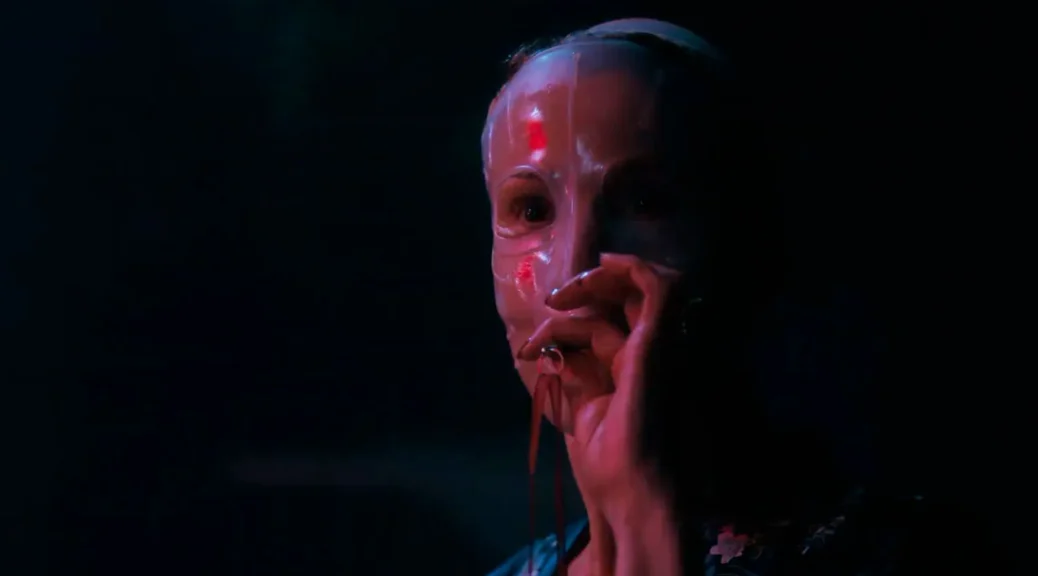
Kurylenko has a lovely face, which is good because it’s the only one we see clearly in the entire film. There are other characters, but their faces are obscured, either by broken screens or odd point of view, or masks, which many of the characters wear. Moreau is making points about a surveillance state, the objectification of women, and identity with this move. It’s an interesting idea, or set of ideas, but he never manages to pull them together into a cohesive or rewarding theme.
Because you see no faces clearly, Moreau isn’t obligated to use dialogue from any of the actors, aside from Kurylenko. And he doesn’t. The result is the kind of dreamily absurd voiceover work Lucio Fulci was known for: adult women doing voicework of young boys and European actors badly attempting American accents. In the context of the delightfully nonsensical logic of a Fulci film, this can be acceptable, even entertaining. But Moreau is taking his film and its mystery seriously, so the painfully unrealistic Minnesota accents feel comical.
Not that American actors would have had much better luck with this script. There’s too little for Kurylenko to work with for two thirds of the film, leaving her to her own devices to compel interest, and she’s just not strong enough an actor to pull that off. When the film falls off its rails in Act 3, Kurylenko’s shortcomings and the silly voiceovers just seem par for the course.
Not every experiment works, and Moreau deserves credit for once again stretching. But I’d recommend watching or rewatching his 2006 masterwork Them instead of Other.
We are horror movie superfans. Maybe you are too. So today, let’s celebrate our own. Would we eat the object of our affection just to keep them close? No – think of the cholesterol! But we can get behind some of these behaviors, we’re not going to lie.
5. The Fan (1982)
The first thing Eckhart Schmidt’s film has in its favor is that the audience is meant to empathize with the fan, Simone (Désirée Nosbusch). Generally, we see the fanatical from the celebrity’s point of view, but this makes more sense because every member of the audience is more likely to have lost their shit over a teen idol than they’ve been worshipped themselves.
And yet, Simone clearly has a screw loose. Schmidt’s approach to her obsession as seen through the eyes of worried parents, apologetic postmen and other adults is confused and compassionate. Teenage girls – who can understand them? The tone is ideal to set up the explosive heartbreak you know is coming, as well as a third act you couldn’t possibly see coming.
4. Perfect Blue (1997)
This psychosexual thriller might feel garden variety if it had been made into a live action film. A young woman trades in her innocent image to take on more suggestive roles as an actress, only to find her fans turning on her in violent ways. Or is it an internal conflict over the way men and the media need to sexualize her that’s fragmenting her own mind?
In director Satoshi Kon’s anime vision, those familiar thriller tropes take on an unseemly dreamy quality. The animation style suggests more about the way mass media consumes a sexualized idea of innocence than any live action film could muster, and the hallucinatory quality achieved in the film would never have played this well in any other style.
3. Play Misty for Me (1971)
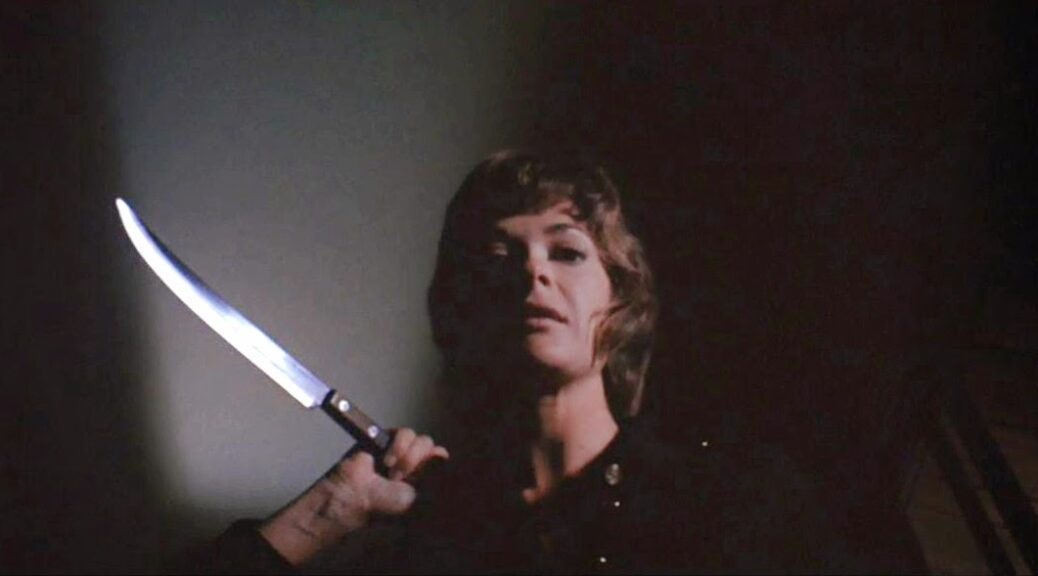
Clint Eastwood made his directorial debut with this cautionary tale. Free-wheeling bachelor and jazz radio DJ Dave Garver (Eastwood) picks up a fan (Julie Walter) in a local bar, but it turns out she’s an obsessive and dangerous nut job.
You can see this film all over later psycho girlfriend flicks, most notably Fatal Attraction, but it was groundbreaking at the time. To watch hard edged action hero Eastwood – in more of a quiet storm mode – visibly frightened by this woman was also a turning point. We’re told the shag haircut sported by Donna Mills also became quite the rage after the film debuted in ’71.
Eastwood capitalizes on something that all the rest of the films on this list pick up – that voice on the radio is actually a person who’s somewhat trapped. You can hear him, but you can’t necessarily help him. He’s both public and isolated. Eastwood’s slow boil direction and Walter’s eerie instability infuse the soft jazz sound with an undercurrent of danger that generates unease in every frame.
2. Chain Reactions (2024)
Not everyone believes Tobe Hooper’s The Texas Chain Saw Massacre is a masterpiece of American filmmaking. I find those people suspicious. Luckily, those are not the people filmmaker Alexandre O. Philippe (Memory: The Origins of Alien, 78/52) talks to for his latest documentary, Chain Reactions.
Philippe’s approach is that of a fan and an investigator. When Patton Oswalt compares Hooper scenes to those from silent horror classics, Philippe split screens the images for our consideration. When Karyn Kusama digs into the importance of the color red, Chain Reactions shows us. We feel the macabre comedy, the verité horror, the beauty and the grotesque.
What you can’t escape is the film’s influence and its craft. The set design should be studied. Hooper’s use of color, his preoccupation with the sun and the moon, the way he juxtaposes images of genuine beauty with the grimmest sights imaginable. Chain Reactions is an absolute treasure of a film for fans of The Texas Chain Saw Massacre.
1.Misery (1990)
Kathy Bates had been knocking around Hollywood for decades, but no one really knew who she was until she landed Misery. Her sadistic nurturer Annie Wilkes – rabid romance novel fan, part-time nurse, full-time wacko – ranks among the most memorable crazy ladies of modern cinema.
James Caan plays novelist Paul Sheldon, who kills off popular character Misery Chastain, then celebrates with a road trip that goes awry when he crashes his car, only to be saved by his brawniest and most fervent fan, Annie. Well, she’s more a fan of Misery Chastain’s than she is Paul Sheldon’s, and once she realizes what he’s done, she refuses to allow him out of her house until she brings Misery back to literary life.
Caan seethes, and you know there’s an ass-kicking somewhere deep in his mangled body just waiting to get out. But it’s Bates we remember. She nails the bumpkin who oscillates between humble fan, terrifying master, and put-upon martyr. Indeed, both physically and emotionally, she so thoroughly animates this nutjob that she secured an Oscar.
Dallas Richard Hallam’s mesmerizing, beautifully shot, and quietly audacious feature Interaction lulls you, then hypnotizes you. But you have no idea what you’re in for.
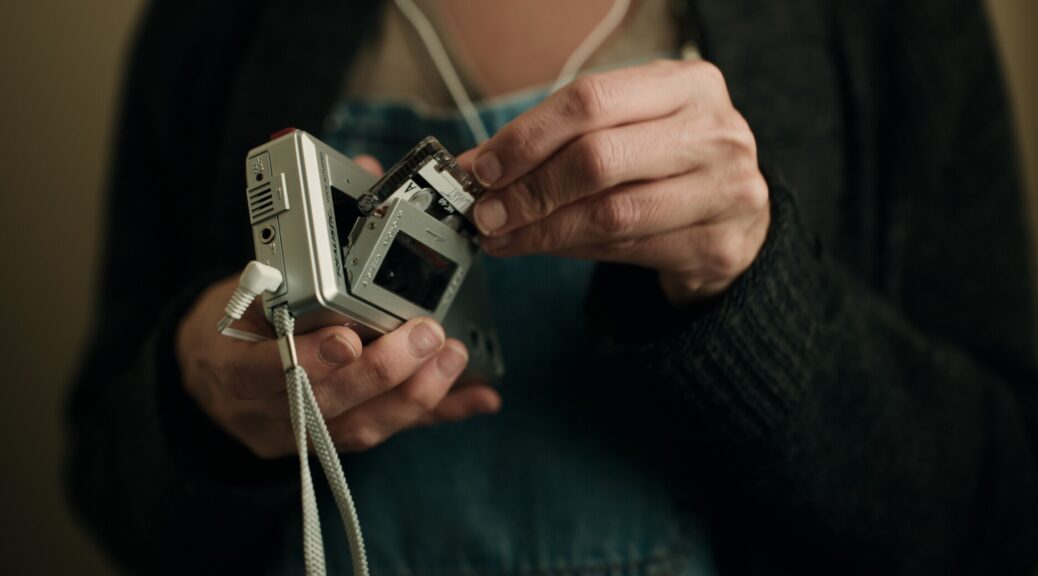
House cleaner Rebecca (Suziey Block) hides little recording devices in all the homes she cleans. Never without her headphones, and right under the noses of clients with the means to pay for housekeeping, she listens to their most banal and most intimate moments.
But she listens all the time—in the car, in bed at night. The keepers are even labeled, for when she needs to relax, when she needs to laugh, when she needs a good cry. And for quite a while, this unapologetic invasion of privacy plays like a poetic reflection of modern social isolation.
The quietly beautiful image of loneliness and disconnect is a sleight of hand, though, and the film slowly – with zero exposition – turns more and more sinister.
Nearly the only dialog in the entire film comes from these recordings. When someone does speak, it feels like an invasion. This, too, suggests a director in absolute command of his medium. Though we may believe we have nothing in common with Rebecca, we come to connect with her. We worry when she seems too at home in someone else’s living space, fear that she should remove the headphones before she commits to certain acts, in case someone is around the corner, or returns home unexpectedly.
Hallam tightens tensions minute by minute, so quietly and efficiently you may not even recognize your own anxiety. He’s helped immeasurably by a masterpiece of understatement from Block, whose performance is unnervingly authentic and, for that reason, shocking when it needs to be.
Filmmaker Claire Denis has built an immaculate career making movies about the moments in the story other directors ignore or leave out. The same story is told, she just uses different beats within the same tale to tell it. Hallam, who co-wrote the script with A.P. Boland, approaches the film in much the same way.
At no point does his choice feel like a gimmick, which is success in itself. But when the film begins to veer toward true thriller, when it turns genuinely mean, it’s unsettling in the way a Denis or even a Michael Haneke film might be. Interaction is hard to forget.
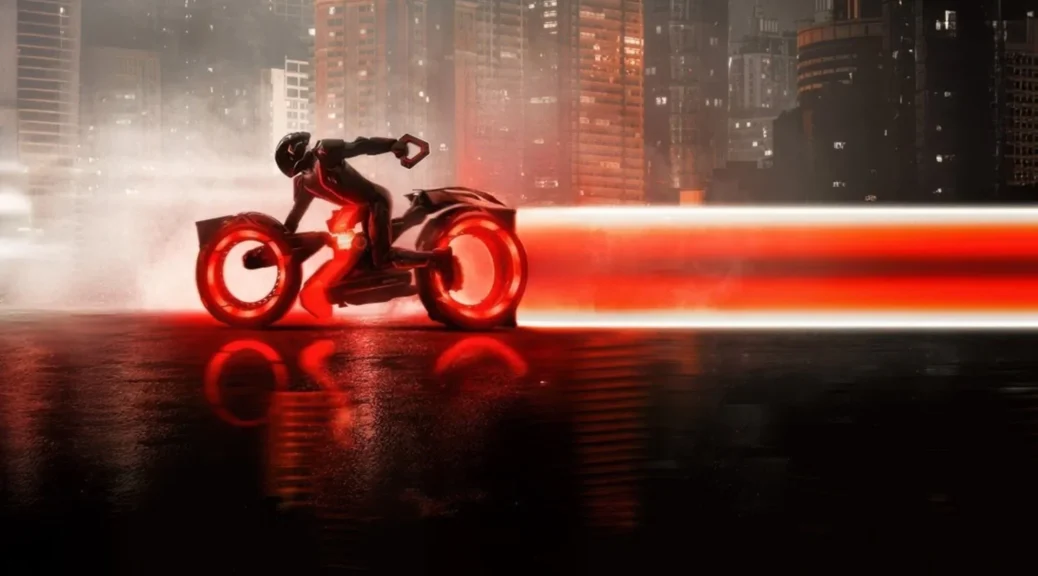
Tron was a fun idea in 1982. What director Joachim Rønning’s Tron: Ares gets very right is its commitment to simplicity, impressive yet simple visual effects, and soundtrack.
Greta Lee is Eve Kim, head of ENCOM, a tech industry whose whiz kid founder vanished back in the 80s. Kim’s been working on AI that can materialize into something concrete—like an orange tree. But she’s missing the string of code that will make the thing permanent, helping her eradicate hunger and do so many other good things AI will clearly never actually be used to do.
Meanwhile, megatech competitor Julian Dillinger (Evan Peters) is materializing soldiers, of course. But their impermanence is a stickler for him as well.
The race is one to own the permanence code! Natch, Dillinger sends one of his soldiers (Ares, played by Jared Leto) to nab Kim, leading to adventures inside and out of “the grid”.
Is it dumb? Of course it is. Is it fun? Sometimes it really is! There’s a motorcycle chase that looks amazing, a gorgeous opening sequence, and visuals that manage to be both forward thinking and adorably retro—kind of a highly polished version of a tech world as imagined in the early 1980s.
Supporting turns from effortless badass Jodie Turner-Smith and ever glorious Gillian Anderson class up the joint. And did I mention the characteristically jarring, distorted and sorely missed sounds of Nine Inch Nails?
Jared Leto does his best Jared Leto, handsome and wise and weirdly stiff. Whatever. But Greta Lee is clearly better than the material, which can’t help but elevate the few scenes requiring true acting. She runs well too. And Peters is a bit of fun as our favorite punching bag, the spoiled, entitled, weak tech billionaire playboy. (He’s no Nicholas Hoult, but the performance is still solid.)
Is Tron: Ares great? It is not. But it doesn’t suck, either.
It’s been nine years since Derek Cianfrance directed a feature, but he’s still drawn to beautifully impossible tenderness and insurmountable longing. This time, though, the story is true.
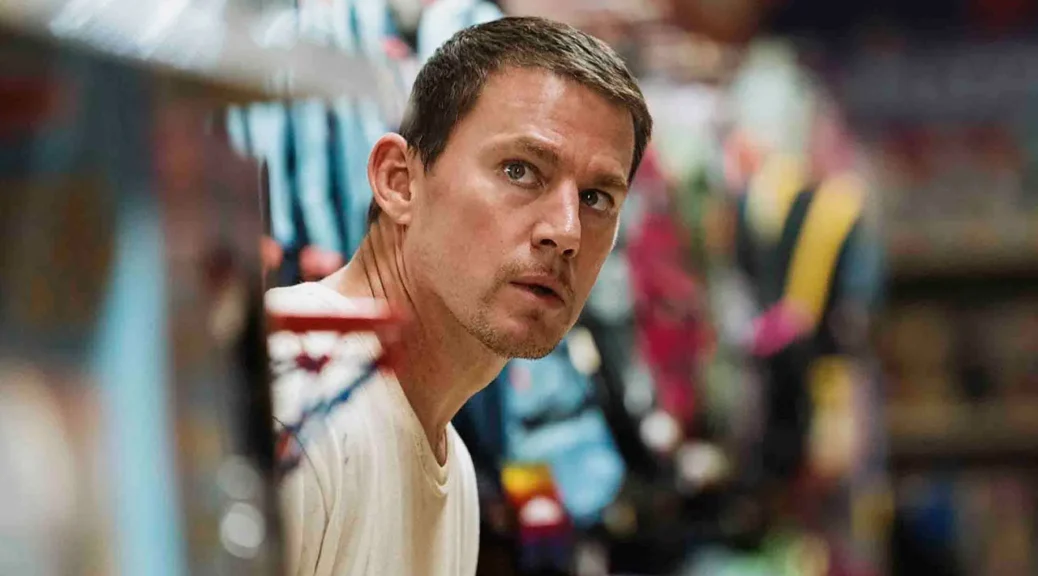
Roofman, which Cianfrance co-wrote with Kirk Gunn, tells the somehow delightful story of Jeffrey Manchester (Channing Tatum). In 2000, Manchester was convicted of breaking into a series of McDonald’s locations by drilling through the roof. Like the gentlemanly true-life bandit of Old Man and the Gun, Manchester is remembered by his victims exclusively as a good guy.
That didn’t lighten his sentence, but no matter, because by the beginning of Act 2, the real story begins with Manchester on the run and living inside a Toys-r-Us.
Cianfrance and Gunn keep pretty close to the real details of the case, perhaps because the story’s nutty enough as is, or maybe because it’s not the story beats they’re looking to explore. Roofman is a film more fascinated by the human than the criminal, and Tatum’s characterization brims with humanity.
Channing Tatum can be hit or miss, but his strongest performances are those that allow him to find both vulnerability and humor in a character. He’s never been better than in Zoë Kravitz’s Blink Twice, where he tinged his techbro narcissist with just enough amiable doofus to be truly terrifying. But his turn in Fly Me to the Moon sank because he was the handsome, brilliant straight man—not funny, not dumb, not broken.
Luckily, Cianfrance understands Tatum’s strengths and Roofman offers the actor ample opportunity to be all three of those things. The result is an affable, broken sweetheart of a crook you can’t help but root for, even though you know he’ll probably shoot himself in the foot.
Tatum’s not alone. Kirsten Dunst is steal-the-show wonderful as Leigh, the Toys-r-Us employee Jeffrey falls for. Peter Dinklage is a ton of fun as Mitch, unfeeling store manager with a weakness for No Doubt. Ben Mendelsohn turns up in a small but entertainingly off-brand character. And as Jeffrey’s army buddy Steve, LaKeith Stanfield’s weary, wiry performance offsets Tatum’s lovable dumbassedness as a stark reminder of the type of person who can survive as a criminal.
Like Blue Valentine and A Place Beyond the Pines, Roofman is another romantic look at good dads who make bad decisions. Cianfrance may be preoccupied with one story, but he does tell it well.
Not everyone believes Tobe Hooper’s The Texas Chain Saw Massacre is a masterpiece of American filmmaking. I find those people suspicious. Luckily, those are not the people filmmaker Alexandre O. Philippe (Memory: The Origins of Alien, 78/52) talks to for his latest documentary, Chain Reactions.
The film is a celebration of 50 years of TCM. The celebrants are five of the film’s biggest fans: Patton Oswalt, Takashi Miike, Alexandra Heller-Nicholas, Stephen King, and Karyn Kusama. It’s a good group. Each share intimate and individual reminiscences and theories about the film, its impact on them as artists, and its relevance as a piece of American cinema. What their ruminations have in common is just as fascinating as the ways in which their thoughts differ.
Heller-Nicholas, an Australian film critic and writer, creates a fascinating connection between Hooper’s sunbaked tale of a cannibal family with desert-set Aussie horrors like Wake in Fright and Wolf Creek. Meanwhile, Kusama sees the story as profoundly, almost poignantly American.
And Miike, genre master responsible for some of the most magnificent and difficult films horror has to offer, including Ichi the Killer and Audition, credits The Texas Chain Saw Massacre with inspiring him to become a filmmaker. And all because a Charlie Chaplin retrospective was sold out!
Philippe’s approach is that of a fan and an investigator. When Oswalt compares Hooper scenes to those from silent horror classics, Philippe split screens the images for our consideration. When Kusama digs into the importance of the color red, Chain Reactions shows us. We feel the macabre comedy, the verité horror, the beauty and the grotesque.
It’s fascinating what the different speakers have in common. So many talk about Leatherface, worry about him, pointing out that from Leatherface’s perspective, TCM is a home invasion movie.
What you can’t escape is the film’s influence and its craft. The set design should be studied. Hooper’s use of color, his preoccupation with the sun and the moon, the way he juxtaposes images of genuine beauty with the grimmest sights imaginable.
Each of these artists came to the film from a different perspective—some having seen it early enough in their youth to have been left scarred, others having taken it in as adults and still being left scarred. But each one sees layers and importance—poetry, even—in Hooper’s slice of savage cinema.
Chain Reactions is an absolute treasure of a film for fans of The Texas Chain Saw Massacre.
From the Saturday morning lunacy of Psycho Goreman to the puppet chaos of Frankie Freako, Steven Kostanski has mastered the art of recreating the most ridiculous entertainments of Eighties youngsters. He wasn’t always this way. His 2016 film The Void was an outright, non-satirical horror, and it was great, kind of Halloween 2 by way of H.P. Lovecraft.
But Manborg (2011) and Father’s Day (also 2011) suggested early that Kostanski’s heart is with silly, juvenile retoolings of the crap we watched as kids in the 80s.
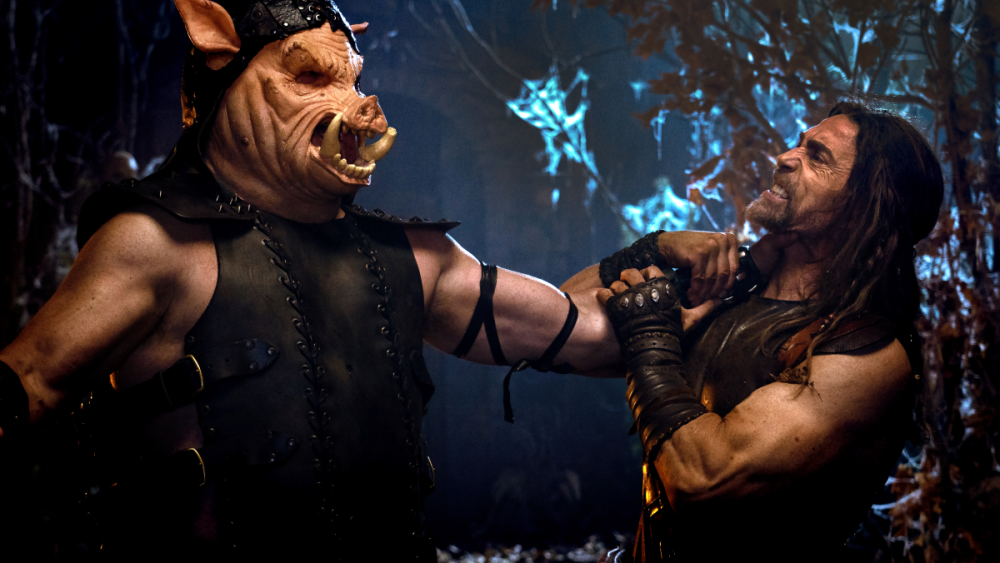
His latest, Deathstalker, is another reminder of how we wasted our mornings, middays and late nights. A loose and intentionally silly remake of the 1983 Barbi Benton vehicle, Deathstalker returns to a time when special fx were ludicrous, costumes were Spirit Halloween level authentic, and drama was high.
Like any of those earnest swords and sorcery fantasies, there’s a barely clothed and begrudging hero, a magical sidekick mainly there for exposition and comic relief, and a young one to mentor and learn from.
And, again, really bad masks and Halloween decorations.
Our reluctant hero is the titular Deathstalker, played by longtime action character actor Daniel Bernhardt, who’s played a soldier/assassin/villainous athlete in everything from Bloodsport 2 throughand Nobody 1 & 2.
His soldiering behind him, Deathstalker contents himself with scavenging from dead knights fighting an unholy army. But an amulet he takes from one not-quite-dead knight compels him on a journey to save the universe from endless darkness and torment.
Naturally, he’ll need the help of a wizard who can translate the runes on the amulet and explain long lost history and curses and what not. Doodad’s the name, voiced by Patton Oswalt and performed by Laurie Field. The diminutive wizard is a perfect ode, but two wheels is hardly enough. A brash young upstart is required, and Brisbayne (Christina Orjalo) fits the bill.
Kostanski’s touch is so spot on, and his chosen subgenre is so ridiculous to begin with, that you may forget this is a spoof, or at least a fun romp. His work is too loving to be truly spoof, but there’s little room in this type of film to go over-the-top with anything. There’s no top. Even for all its wild nonsense, Deathstalker could pass for an honest reboot rather than a comedic retooling.
Nothing will ever match Psycho Goreman for inspired lunacy. Deathstalker certainly doesn’t, but it definitely offers a bit of fun.