Tag Archives: Ayo Edebiri

Belief Systems

After the Hunt

by Hope Madden and George Wolf

Luca Guadagnino likes a provocative tale of challenging relationships, opportunists and lovers. With lush visuals. And sometimes peaches. His fruit free triangle of sorts, After the Hunt, considers and reconsiders a “he said/she said” in the ever-fluctuating moral landscape of higher education.

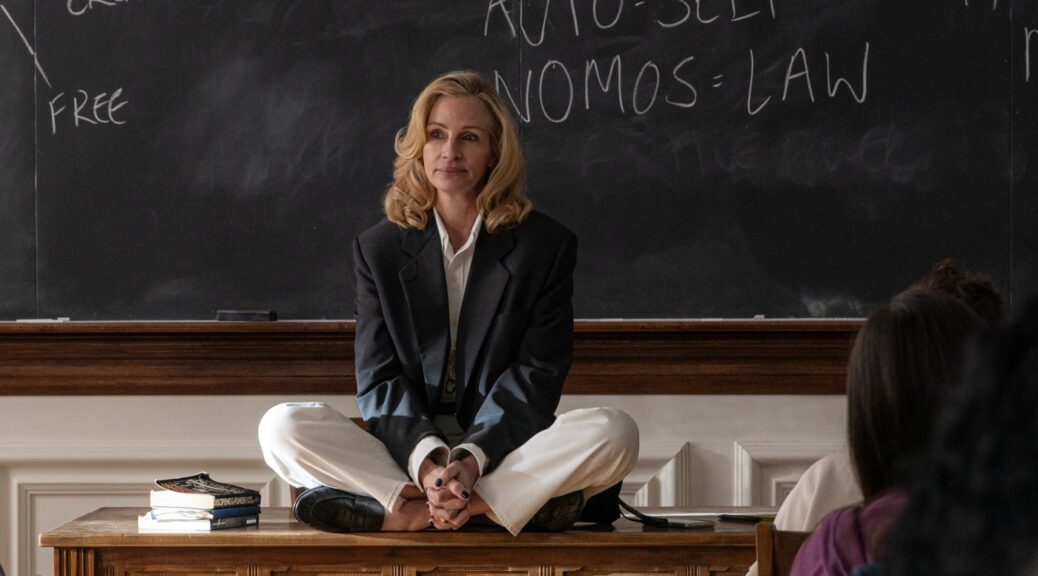
Julia Roberts is Yale philosophy professor Alma Imhoff. She and her husband, Frederik (Michael Stuhlbarg), are awaiting word on Alma’s tenure, alongside her very close colleague, Hank (Andrew Garfield). But when star student Maggie (Ayo Edebiri) makes an accusation, Alma faces a conundrum. She should believe Maggie, but does she? She should come to her aid, but will that be a risk to her tenure?

That barely scratches the surface of all the pathos and conniving, manipulation and secrecy, and above all, opportunism afoot in this fascinating but cumbersome thriller.

First time screenwriter Nora Garrett bites off more than she can chew, but her commitment to looking at every angle is both laudable and often fascinating. It’s rarely satisfying, but the densely textured characters provide rich opportunities for this talented cast.

Sure, these are caricatures of academia – like those dinner party people on South Park who like to smell their own farts – but Guadagnino, Garrett and cast are so entrenched in the melodrama you can’t help but be sucked in.

Roberts is an effective mix of conflict and entitlement, and Garfield is especially good as a man so sure of his superiority that an accusation against him seems like an affront to human evolution itself. Stuhlbarg finds his usual ways to make a supporting role memorable, especially when Frederik takes offense to Maggie’s suggestion that he may be a wee bit out of touch.

And ironically, that’s as issue that dogs the film. It wants to lead and provoke, but the worthy issues it raises are so malleable that much of verbal sparring already feels a half step behind the conversation. An epilogue that shrugs at the whole affair only neuters the search for clarity.

Like Ari Aster’s Eddington, After the Hunt is bound to offend people because of its absolute refusal to take sides or tidy up motivations. Like Aster’s film, Guadagnino’s latest is far more interested in philosophy and the muddy concept of morality in the context of success—particularly when everyone involved is damaged in one way or another.

Feels Like Teen Spirit

Inside Out 2

by George Wolf

It’s been nine years since Pixar’s Inside Out took us on that wonderful ride through a young girl’s feelings. Almost a decade, and I’m still not over what happened to Bing Bong.

Revisiting Riley (voiced by Kensington Tallman) when she hits her teen years seems like a natural exercise. And beyond that, Inside Out 2 delivers enough warmth, humor and insight to make the sequel feel downright necessary.

Riley’s now turning 13, and all seems status quo. Joy (Amy Poehler) keeps the reins on Anger (Lewis Black), Fear (Tony Hale), Sadness (Phyllis Smith) and Disgust (Liza Lapira) as Riley gets set to head to the Bay Area hockey skills camp.

Then, overnight, the puberty alarm goes off. Oh Lord.

Director Kelsey Mann and writers Meg LeFauve (returning from part one) and Dave Holstein unleash this emotional onslaught with a mix of laughs and empathy that sets the perfect catalyst for another winning Pixar trip into a secret world.

And this world is more chaotic than ever. Anxiety (Maya Hawke) turns up with a plan to take over, leaning on Envy (Ayo Edebiri), Embarrassment (Paul Walter Hauser) and Ennui aka Boredom (Adèle Exarchopoulos) to steer Riley away from who she is and toward “who she needs to be”.

Will Riley abandon her BFF teammates Bree (Sumayyah Nuriddin-Green) and Grace (Grace Lu) to cozy up to star player Val (Lilimar) and the other older girls? Will Riley’s belief that “I’m a good person” crumble under doubt and desperation?

In his feature debut, Mann proves adept at showcasing what Pixar does best: meaningful stories for kids that are also emotional for parents. From the demo crew that arrives with puberty to the “sar-chasm”, this is another very clever romp through all that builds the sense of self. The film’s battle between joy and anxiety is relatable for all generations, and it’s filled with levels of creativity, humor, and visual flair that are undeniably fun.

And while it may not be Toy Story 4 funny, it is funny, especially when a leftover memory from Riley’s favorite kiddie show turns up to help our heroes out of “suppressed emotions” exile. His name is Pouchy (SNL’s James Austin Johnson). He’s a pouch. He’s hilarious. Trust me on this.

Could we now be moving closer to a Disney-fied treatment of Paul Almond’s Up series? Well, June Squibb’s charming cameo as Nostalgia just might be a peek at things to come. Either way, Inside Out 2 is a completely entertaining two-hour guide toward understanding – or appreciating – the messy emotions of growing up.

The Break Bones Club

Bottoms

by Hope Madden

Bottoms essentially follows a traditional teen comedy path, from the first day of senior year (with the high expectations of finally turning your popularity and romantic luck around) through that fraught homecoming football game. Our underdogs hatch a scheme to win the affections of the hot cheerleaders.

But if you saw co-writer/director Emma Seligman and co-writer/star Rachel Sennott’s uncomfortably brilliant 2020 comedy Shiva Baby, you have some idea of what you’re in for. Expect a chaotic, boundary pushing satire unafraid to offend.

PJ (Sennott) and Josie (Ayo Edebiri, so funny earlier this summer in Theater Camp) are their high school’s ugly, untalented gays. PJ is always scheming to get some cooch, and this will be their year. Her idea? Start a fight club for the girls in the school. Or, you know, a self-defense club. Where you wrestle around and hit and get excited and sweaty and close.

Josie is not down with this, but PJ usually gets her way and the next thing you know –well, you saw Fight Club, right? Because those men were only convincing themselves they were being pushed around, bullied and disempowered.

Part John Hughes, part Jennifer Reeder, part Chuck Palahniuk, Bottoms exists in a bizarre world of deadpan absurdism so littered with smart, biting commentary that you’ll need to see it twice to catch all of it.

Sennott and Edebiri are as fun a set of besties as Beanie Feldstein and Kaitlyn Dever in Booksmart. Maybe even as fun as Beanie Feldstein and Saiorse Ronan in Lady Bird. Nicholas Galitzine is a riot as the quarterback, Jeff, and Ruby Cruz delivers as the one earnest lesbian hoping to empower and create solidarity with this club.

Seligman’s tone, her image of high school and high school movies, is wildly, irreverently funny and fearless. It’s hilarious, raunchy, and so much fun.

Greasepaint Is the Word

Theater Camp

by Hope Madden

There are certain comedies that feel lovingly, mockingly plucked from experience. The School of Rock. Wet Hot American Summer. Theater Camp.

The premise of the latter is relatively familiar: a summerlong theater camp will be foreclosed on or snapped up by a spendier competitor unless somehow, some way, a little inspiration and a little fairy dust help the lights and the show go on.

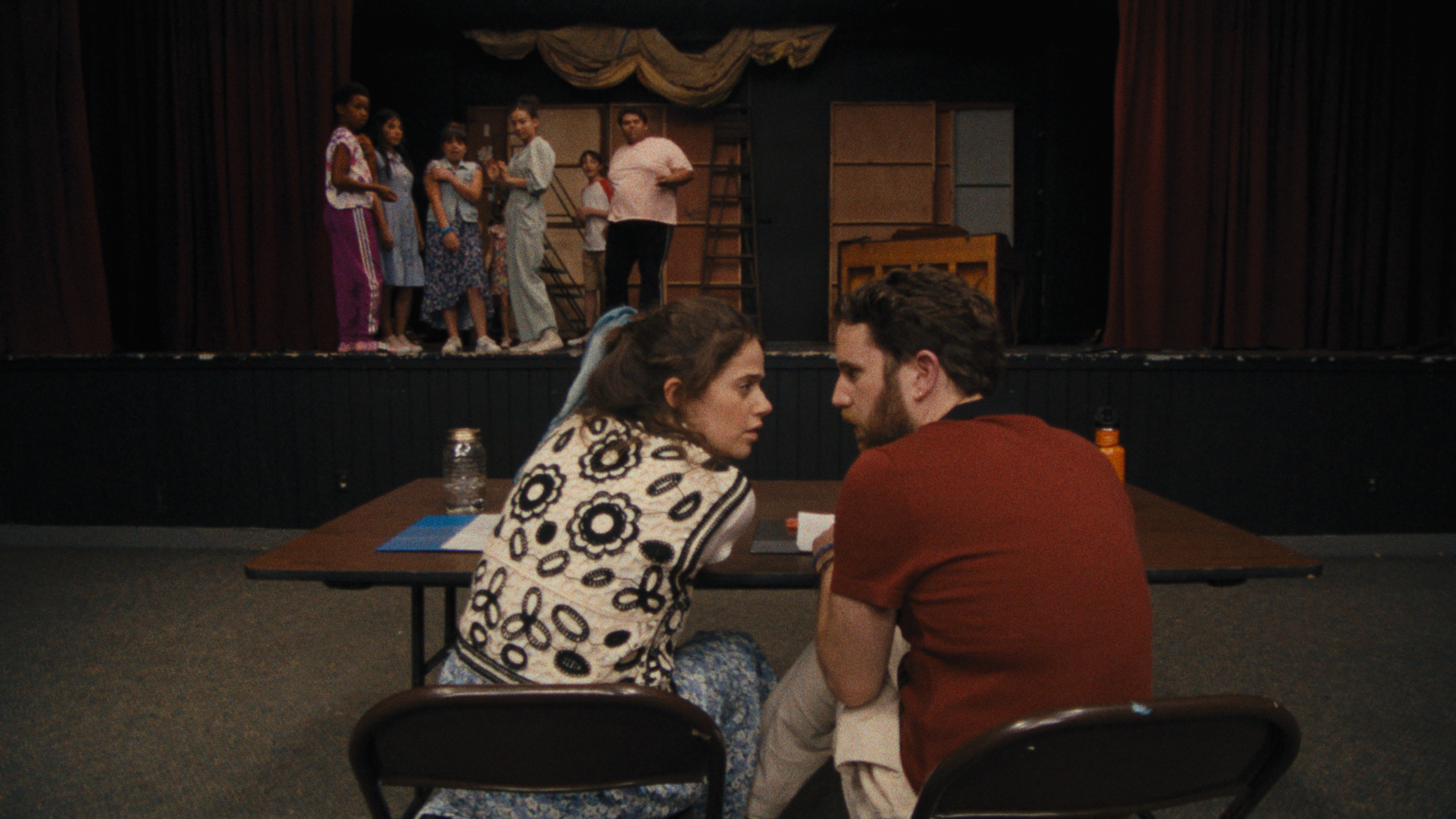
At the center of the crisis: Amos (Ben Platt) and Rebecca-Diane (Molly Gordon, who also co-writes and co-directs). Amos instructs in drama, Rebecca-Diane reads auras, conducts seances, and teaches musical theory. The pair has been inseparable since childhood – a conceit made all the more believable with the actual archival footage of wee Gordon and Platt, both 4-years-old, dancing together onstage.

Touches like this help to develop the feeling that this is a lived-in love, a mash note to the awkward, petty, ridiculous, glorious, accepting, embracing, creative community that forms artists.

Both Platt and Gordon deliver touching, flawed, funny performances. The balance of the ensemble shines as well.

Jimmy Tatro nails the earnest dumbass bro pegged to run the camp while his mother (Amy Sedaris – genius as always) is in a coma. Co-writer Noah Galvin offers a sneaky comic presence from his opening moments and eventually steals the show (and the show within the show).

I would have loved to see the Janet (Ayo Edebiri) side story developed. Edebiri’s every moment of screentime is an understated riot. Likewise Sedaris, with little more than a cameo, was missed when she was off screen. But the large cast, most with limited screen time, manages to craft memorably eccentric characters who come together to create a community.

This is the film’s real magic, something the cast and filmmakers – including Gordon’s co-writer and co-director, Nick Lieberman – convey with mockery borne of familiarity and love.

Theater kids are bound to see themselves here, and the loose structure and inside jokes may weaken the experience for everyone else. But underneath the affectionate mockery lurks a moving testament to the nurturing effect of belonging.