Screening Room: The Wretched, Blood Quantum, Deerskin, What She Said
by George Wolf
Even with the fragmented and ubiquitous nature of film criticism in the social media age, Pauline Kael’s summation may still be the best.
Kael believed it was her job to “alert or interest people,” and without critics, “it’s all advertising.”
Falling into a movie reviewing gig almost by accident in the 1950s, Kael rode her obvious passion and expressive prose to a seat of tremendous power in the film industry. Many credit her positive review of Bonnie and Clyde with saving the film from ruin, while her negative reaction to Lawrence of Arabia made director David Lean question his future.
For What She Said: The Art of Pauline Kael, writer/director Rob Garver gathers interviews with Kael, her daughter and various film industry faces, weaving in passages from Kael’s writings amid snippets – with occasionally cheesy placement – from hundreds of movies.
It’s a spirited, engaging celebration of not only Kael, but of film itself as a source of entertainment, inspiration and discussion.
Garver supplies pertinent biographical info, showcasing Kael’s unlikely rise through sexist attitudes and editors uneasy with a critic unafraid to buck popular sentiment. And though it never quite feels as if we get to know Kael well, Garver makes sure we are aware of her complexities and contradictions.
She was grateful to be “paid for thinking,” not caring much about dissenting opinions or any hurt feelings on the other end of her sharpest barbs. She championed American New Wave cinema, but openly dismissed arthouse elitism for a populist lean, favoring sentences with the “sound of a human voice.”
It is that voice that speaks loudest in What She Said, with clear illustrations of how her self-assurance (and yes, self-promotion) elicited hatred, praise, and even the respect of those whose work fell below her standards.
And though Kael died in 2001, the film’s parting shot shows her approach as one both original and prescient. Putting some of Kael’s memorable thoughts inside imagined tweets, Garver leaves little doubt her following today would be impressively large.
That’s what she said.

by George Wolf
If you’re the parent of a current high school senior, you’ll find some extra poignancy in Pahokee, an observational doc that follows four small town Florida teens through their last year at the predominantly African-American Pahokee High School.
B.J. is the football star on a team dreaming of a D1 State Championship. Jacobed is the Salutatorian who helps out at her parents taco stand. Junior already has a child at home. Na’kerria is running for “Miss PHS” and weighing community college vs. the full university experience.
For their first documentary feature, directors Patrick Benson and Ivete Lucas take a hands off, leisurely approach that gives the events plenty of room to breath – sometimes a little too much room. Some obvious questions (where’s the mother of Junior’s child?) are ignored in favor of following strands that could have been trimmed in a tighter edit.
But the film still finds its resonance in moments both large and small. From the face of the older white Harvard rep at the college fair, to Jacobed’s emotional description of her parents’ sacrifice, to the prom dress adorned with pictures of Trayvon Martin and other victims of excessive force, Pahokee serves plenty of subtle, evocative sequences that will make you care about these kids.
The further you are away from high school, the easier it is to dismiss what the class of 2020 has lost this year. Pahokee‘s class of 2017 serves a tender and truthful reminder of a crossroads unlike any other.
by George Wolf
Planting its flag unapologetically at the corner of accuracy and myth, The True History of the Kelly Gang reintroduces a legendary 1870s folk hero through consistently bold and compelling strokes.
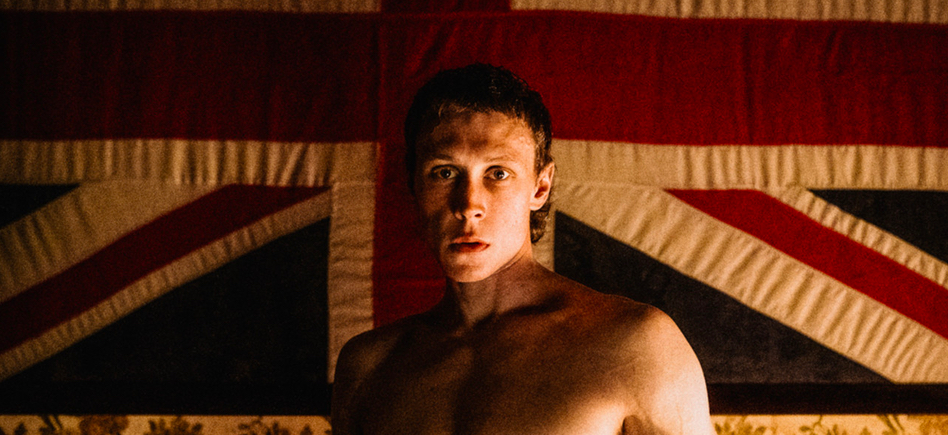
His death imminent, Australian outlaw Ned Kelly (1917‘s George MacKay in another impressive turn) is writing a letter to the daughter he will most likely never see. With a promise to “burn if I speak false,” Kelly wants his child to separate fact from fiction in the family history.
It’s an audacious, somewhat cheeky opening from director Justin Kurzel, considering that the film itself is based on a historical novel. Kurzel and screenwriter Shaun Grant – the duo behind the true crime shocker The Snowtown Murders nine years ago – go bigger this time, trading spare intimacy for a tableau of grand visual and narrative ideas.
After a heroic act in childhood, Ned gets the chance at a proper education. That offer is spurned by his angry and defiant mother (Essie Davis, terrific), who instead passes Ned off to notorious Aussie bushranger Harry Power (Russel Crowe in a sterling cameo) for an intro into the outlaw life.
With a direct nod to the moment when “the myth is more profitable than the man,” Kurzel spins an irresistible yarn that manages to balance the worship of its hero with some condemnation for his sins. And as the road to Kelly’s guns-blazing capture unfurls, the film incorporates elements of both a tense crime thriller and a Nightingale-esqe reminder of savage colonialism.
Does the legend of Ned Kelly owe more to history or myth? Hero or murderer? True History…. aims higher than one word answers, with storytelling that often soars before landing.

by George Wolf
Imagine it’s 1984.
One of the members of Banarama has joined one of the members of Duran Duran in the cast of a new horror movie. That movie is assembled with the ideas and scenes from much better films, but young pop music fans probably haven’t seen any of ’em, so who cares?
Now, put on your mask and join us back in 2020. A similar mindset seems to propel 0.0 Mhz, a Shudder original that brings two stars of the South Korean K-Pop phenomenon to the screen.
Jung Eun-ji, lead singer of the band Apink, also takes the lead here as So-hee, the newbie in a teen team of ghost-chasers known as “Club 0.0 Mhz.” See, that’s the best frequency to call ghosts (don’t argue), and So-hee’s first outing with the group is to a supposedly haunted house in the woods where the kids aim to dial up a little necromancy.
But what Sang-Yeob (Lee Sung-yeol from the band Infinite) and the rest of the gang don’t know is…their new recruit comes from a long line of dead people-seers.
The local at the general store who tells them all not to go to there is just the first in a string of heavily borrowed narrative checkpoints. Pulling from The Grudge to Elm Street to The Conjuring to The Exorcist, first time director Sun-Dong Yoo adapts Jang Jak’s popular webcomic with barely a whisper of originality or visual flair.
But 0.0 Mhz is clearly aimed a notch below anyone who has seen those films. This is strictly teenage fare, content to provide good-looking idols to swoon over and warmed-over scares for kids who want to scream but not have nightmares.
It accomplishes that, and not much else.
So when get-togethers are all good again, 0.0 Mhz will be more than ready to slumber party!

It is creepy when you can’t see someone’s face, unless it’s hidden behind one of those big horse masks, which forever tickle George. But whether the voice on the other side of that mask is asking if Tamra’s home or is telling you where to find your missing daughter, whether that mask is made of burlap, human flesh or the NHL standard fiberglass/Kevlar mix, murder is highly likely.
Here are our favorite masks in horror.
There are so many reasons to love this movie, but the fact that it started that incredibly effective trend in horror movies: the anonymity of the group mask.
It was done again and to magnificent effect in The Purge films, Strangers, and You’re Next. But what Robin Hardy does with it gooses the macabre, medieval nuttiness of his story. A bunny has rarely looked so menacing.
What made Tobe Hooper’s 1974 classic the unnerving, even scarring, savage film that it was? The meat hook? The slam of that heavy metal door? The sound of the chainsaw?
There are so very many moments of terror, so many reasons to scream, you can almost overlook the fact that the main character, though he delivers no lines at all, is wearing somebody else’s face. In fact, depending on the scene (or his mood? his outfit?) he could be wearing any one of three different faces.
How messed up and genius is that?
Director Georges Franju casts a spell with the haunting Christiane (Edith Scob). Graceful and lifeless, the mask hides Christiane’s flaws and her humanity. She is otherworldly.
Unlike the grotesque image often drawn by a mask in a horror film, Christiane’s smooth, colorless visage is as lovely and melancholy as it is terrifying.
Thematically, it makes sense. Young Michael Myers is wearing a mask, looking through those little false eye holes, when he commits his first, soul-deadening murder. So when he comes home to pick up where he left off, naturally he’d need another costume.
But what John Carpenter created with his altered William Shatner mask was the prototypical boogeyman for all slashers to follow and for all retro horror after that. The soulless, colorless, unmoving face perfectly matched the lifeless killing machine, transforming Michael Myers into The Shape and changing the shape of horror as it did.
First of all, the sack head Jason from Part 2 is so much creepier than the hockey mask Jason of Parts 3 – X and beyond. That burlap sack has been a terrifying look in horror movies (from The Town that Dreaded Sundown to Nightbreed to The Orphanage to Trick or Treat).
But it’s the hockey mask you remember. That’s the image that became iconic. Hell, it even made goalies seem cool. (Yes, they stole the idea from the old Martin Landau/Jack Palance/Donald Pleasance film Alone in the Dark, released earlier the same year), but still, who wore it better?
Jason did.
The original Phantom’s mask may not be the coolest. In fact, his mask has evolved over the decades and iterations into something way, way cooler looking. But back in 1925, it was the mask and its removal that made this film a heart attack in the making.
Director Rupert Julian and star Lon Chaney used that mask and its removal to deliver one of cinemas first great scares.
by George Wolf
When does the guise of self discovery collapse under the reality of self absorption? Endings, Beginnings unwittingly toes that line for most of its running time, ultimately rescued by the sheer earnestness of its lead performance.
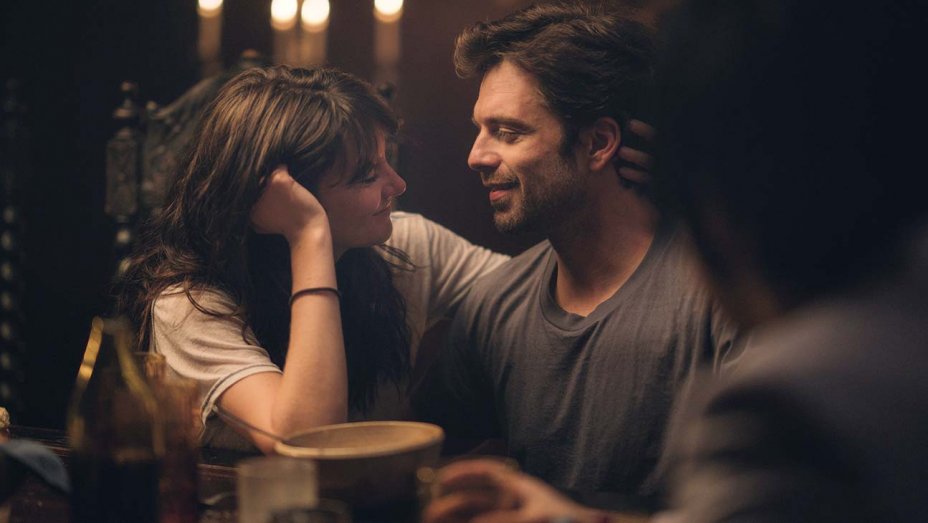
Shailene Woodley shines as Daphne, an aspiring artist who’s living in her sister’s LA pool house after quitting her job and longtime boyfriend to go find herself.
But first, she finds Frank (Sebastian Stan) and Jack (Jamie Dornan), two good friends who don’t try very hard not to let Daphne come between them. Frank’s the impulsive bad boy and Jack’s the reliable good guy, with Daphne bouncing between them while the film pretends it’s because the two men see her differently.
It’s Daphne who sees herself differently, and her inability to choose is just one of the ways Daphne’s newly-stated goal of doing good for others rings with as much authenticity as her winning the claw game at the arcade (really, she wins!).
Don’t get me wrong, an unlikeable protagonist can be more than okay, it can be a bold and challenging narrative choice. But here, director/co-writer Drake Doremus (Like Crazy) is desperate to sell us personal growth and “music to suffer to” playlists when all we keep seeing are excuses for selfishness.
The always reliable Woodley still manages to make Daphne an interesting train wreck. Her vulnerability and confusion at facing this premature midlife crisis does feel real, and Woodley elevates the film by making sure Daphne – likable or not – is a complex personality forgotten by a litany of romance fantasies.
The chemistry between Woodley, Stan and Dornan is solid, seemingly bolstered by improvisational trust amid Doremus’s abrupt cuts and flashback sketches.
Endings, Beginnings has all the parts of a consistently competent and watchable affair. But the resonant character study it aspires to be – much like the character itself – slips away simply from pretending to be something it’s not.

Frank Darabont really loves him some Stephen King, having adapted and directed the writer’s work almost exclusively for the duration of his career. While The Shawshank Redemption may be Darabont’s most fondly remembered effort, The Mist, an under-appreciated creature feature, is our vote for his best.
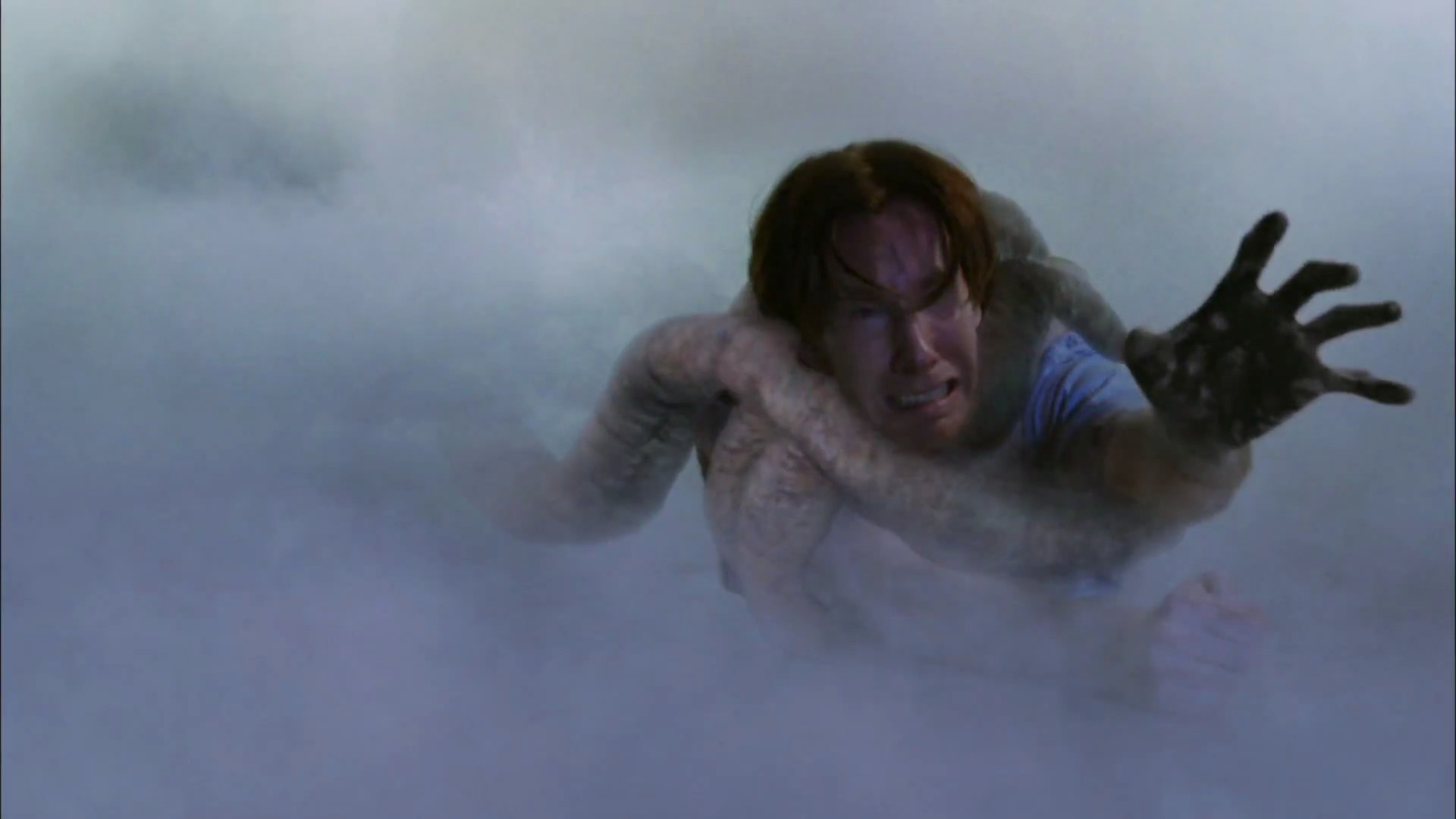
David Drayton (Thomas Jane) and his young son head to town for some groceries. Meanwhile, a tear in the space/time continuum (who’s to blame?!) opens a doorway to alien monsters. So Drayton, his boy, and a dozen or so other shoppers all find themselves trapped inside this glass-fronted store just waiting for rescue or death.
Marcia Gay Harden is characteristically brilliant. As the religious zealot who turns survival inside the store into something less likely than survival out with the monsters, she brings a little George Romero to this Stephen King.
In a Romero film, no matter how great the threat from the supernatural, the real monsters tend to be the rest of the humans. King does not generally go there, but he does so with The Mist and it’s what makes this one of his most effective films.
While Harden excels in a way that eclipses all other performances, the whole cast offers surprisingly restrained and emotional turns – Toby Jones is especially effective.
The FX look good, too, and let’s be honest, a full-on monster movie with weak FX is the lamest. The way Darabont frames the giants, in particular, gives the film a throw-back quality to the old matinee creature features. But he never gives into cheekiness or camp. The Mist is a genuinely scary film – best seen in the black and white version if you can find it.
Regardless, it’s the provocative ending that guarantees this one will sear itself into your memory. Though this is likely what kept The Mist from gaining an audience in theaters, it is a brilliant and utterly devastating scene that elevates the film from great creature feature to great film.
by George Wolf
Miles Davis, the original cool? Well, at the very least, he’s in the team picture.
And part of that iconic allure, along with groundbreaking talent, was his elusiveness. Until that unexpected 1980s stretch of pop collaborations, art exhibitions and Miami Vice appearances, Davis was the prickly genius you could not pin down.
Enough talk, his every glance seemed to sneer (behind the coolest of sunglasses, of course). Just stand back and let me play.
With Birth of the Cool, director Stanley Nelson weaves archival footage, first-person interviews and Davis’s own words (read by actor Carl Lumbly) into a captivating career retrospective buoyed by important historical context.
Longtime aficionados will relish the dive into early stints with Dizzy, Bird and Coltrane as much as the later mentorships of Shorter and Hancock. The amount of respect and adoration here is healthy, indeed, but the darker layers of Davis’s drug use and abusive relationships are treated as part of his human complexity rather than mere whispers on a scandal sheet.
Birth of the Cool is an obvious must for any Davis fans wanting to feel as close to the legend as they’ve ever been. And for anyone using the film as intro to Miles 101, it’s a fine primer on road to Bitches Brew and beyond.