Screening Room: Minions: The Rise of Gru, Mr. Malcolm’s List, The Forgiven, Official Competition
The halfway mark of 2022 is upon us. You know what that means! Well, maybe you don’t — it means a list! It’s at this point in the year that we look back and celebrate the best films we’ve seen so far. A Top 10, of sorts, except it’s really a Top Baker’s Dozen and it’s in alphabetical order.
On Apple TV
Dakota Johnson is the unquestioned star of indie darling coming-of-age drama Cha Cha Real Smooth, but it’s writer/director/co-star Cooper Raiff who’s shining bright enough to blind you.
Solid support from Leslie Mann and Brad Garrett offers Raiff opportunities to subvert tropes with surprising compassion. There are also more than enough laughs to balance the drama.
Johnson’s greatest strength as a performer is the almost preternatural chemistry she shares with everyone else on screen. That connection with Raiff aches with human tenderness, as does the entire film.
Cha Cha Real Smooth, which won Sundance’s dramatic competition this year, overflows with charm and warmth. More than that, it points to a remarkable cinematic voice that’s just getting started.
On Prime Video
In a dreary world where “surgery is the new sex,” two performance artists (Viggo Mortensen, Léa Seydoux) turn one’s mutant organs into art.
If that doesn’t sound like a David Cronenberg movie, nothing does.
The film references, directly or indirectly, The Brood, Dead Ringers, The Fly, Naked Lunch, Crash, and most frequently and obviously, Videodrome. Like his main character, Cronenberg has long been an “artist of the inner landscape.” And after several decades of excising that tendency from his work, Cronenberg has come full circle to accept what was inside him all along.
On VOD
It’s not often you watch a film about a fire starting, drug dealing, lying man on the run from police and his romance with a woman with special needs and think, this is delightful.
But it is. Dinner in America is a delight.
Writer/director Adam Rehmeier delivers an unexpected comedy, sometimes dark, sometimes broad, but never aimless. Simon (Kyle Gallner, remarkable) is a punk rocker hiding from the cops. Patty (Emily Skeggs) is a 20-year-old punk rock fan who lives at home and isn’t allowed to run appliances when she’s alone.
Rarely does a film feel as genuinely subversive and darling as Dinner in America, the punk rock rom-com you never knew you needed.
On Prime Video
Take two longtime friends on the verge of going their separate ways, and throw in one night of epic partying before they graduate. There will be hijinks, conflict, feelings expressed, and resolution.
We know this formula, right?
Not so fast. Expanding their Emergency short from 2018, director Carey Williams and writer K.D. Dávila run those familiar tropes through a tense, in-the-moment lens that upends convention while still delivering a consistent layer of laughter.
So we get the two friends ready to explore the future, searching for their place in the world. But this wild night of partying holds more sobering lessons than we’re used to seeing.
For these young men, it’s about how quickly their perception of the world can change forever, and the unrelenting weight of navigating how the world sees them.
In theaters and streaming
Directors Dan Kwan and Daniel Scheinert are back with their brand of sweet-natured lunacy for Everything Everywhere All at Once. The result is an endlessly engaging, funny, tender, surprising, touching maelstrom of activity and emotion.
This is a hard movie not to love.
At the heart of the insanity lurks Michelle Yeoh and a spot-on depiction of a midlife crisis. Yeoh’s Evelyn arcs as no character has arced before.
The real stars are the Daniels, though, who borrow and recast and repurpose without even once delivering something derivative.
On Hulu
If we’re boiling down film narratives to heroes and quests, it won’t take long to define Good Luck to You, Leo Grande.
Nancy (Emma Thompson, glorious as always) is our hero, and sex is her quest. So she hires handsome young Leo Grande (Daryl McCormack) for a tryst.
Nancy’s journey is, of course, an intimate one, and director Sophie Hyde doubles down on the intimacy, rarely leaving the privacy of the hotel room. Regardless, the film is never claustrophobic and always cinematic, framing even the most sexual moments with a refreshing honesty that the characters (and these two impeccable performances) deserve.
And you know what? We deserve it, too. Good Luck to You, Leo Grande is a simply wonderful look at embracing who you are and what you want.
On Shudder
Phil Tippett’s demons take center stage in his stop motion head trip 30 years in the making, Mad God. It’s like a Bosch painting and a Tool video accusing each other of being too lighthearted.
Mad God delivers a nightmare vision like little else, overwhelming in its detail and scope. Tippett plumbs cycles of mindless cruelty.
Mad World revels in Tippett’s vulgar, potent fantasy without belaboring a clear plotline. The world itself resembles hell itself. Tippett peoples this landscape with figures and images that also feel reminiscent: a doll’s befouled face, a fiendish surgeon, a cloaked figure.
Traveling theatrically
If you are in the mood for something decidedly different, let Apichatpong Weerasethakul’s meditative wonder Memoria beguile you. Or bewilder you. Or both.
The film becomes a mystery of sorts, but one that dredges up more questions than answers. On the filmmaker’s mind seems to be concepts of collective memory and isolation, sensory experience and existence.
Jessica’s (Tilda Swinton) travels through Colombia in search of answers to a confounding sound following her becomes an entrancing odyssey. Akritchalerm Kalayanamitr’s sound design heightens the experience, almost becoming a second character in the way that the sound supports Swinton’s performance.
And what a performance. Quiet and precise as if always listening and careful not to disturb, Swinton once again disappears wholly into a role.
On Prime Video
Jessie Buckley (flawless, as always) plays Harper, a woman in need of some time alone. She rents a gorgeous English manor from proper country gentleman Geoffrey (Rory Kinnear) and plans to recuperate from, well, a lot.
Filmmaker Alex Garland unveils Harper’s backstory little by little, each time slightly altering our perception of the film. The more about Harper we learn, the more village folk we meet: vicar, surly teen, pub owner, police officer, and a naked man in the woods. Each is played by Kinnear—or by actors sporting Kinnear’s CGI face—although Harper never mentions this, or even seems to notice.
Is she seeing what we’re seeing?
Garland’s bold visuals—so precise in Ex Machina, so surreal in Annihilation—create a sumptuous environment just bordering on overripe. The verdant greens and audacious reds cast a spell perfectly suited to the biblical and primal symbolism littering the picture.
Rather than clarifying or summing up, the film’s ending offers more questions than answers. But if you can make peace with ambiguity, Men is a film you will not likely forget.
On Peacock
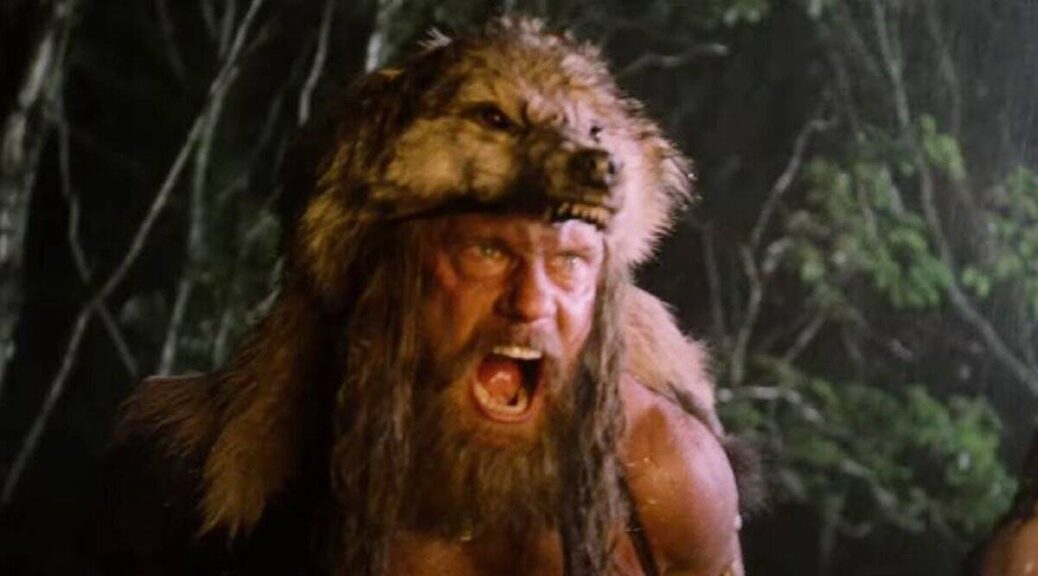
Robert Eggers released his third feature this year, a Viking adventure on an epic scale called The Northman.
What you have is a classic vengeance tale: prince witnesses royal betrayal and the murder of his father. He loses his mother and his crown and vows revenge.
Alexander Skarsgård is cut to play a Viking. His performance is primarily physical: blind rage looking for an outlet. He’s believably vicious, bloodthirsty, single-minded and, when necessary, vulnerable. The entire cast around him is equally convincing.
Classic is exactly how The Northman feels. The story is gritty and grand, the action brutal and the storytelling majestic. As is the case with Eggers, expect a fair amount of the supernatural and surreal to seep in here and there, but not enough to outweigh the meticulously crafted period realism.
At Gateway Film Center
Directors Noah Dixon and Ori Segev, working from Dixon’s script, drop you into the indie music scene you may never have realized existed in Columbus, Ohio. Lennon (Sylvie Mix) wants to change that with her podcast. She may not have a lot of listeners, but she promises those who do listen a deep dive into the scene, with interviews and performances from the best bands you’ve never heard of.
Mix’s open stare and stealthy movement — a technique she used to great effect in her haunted Christmas flick Double Walker — here feels slyly deceptive. Lennon’s an introvert, a fan, an artist herself. Or is she?
Like a cagey, pink-haired Jena Malone, Kitten commands the screen playing a version of herself. The singer from Columbus-based indie band Damn the Witch Siren, Kitten performs along with bandmate Z Wolf, whose presence adds a fascinating air of whimsy, danger and apathy.
On Disney+
Turning Red – Pixar’s twenty-fifth – keeps the winning streak alive with a frisky, meaningful and culturally rich update of a well worn message.
Director Domee Shi (who also co-writes with Julia Cho) has much to offer in her feature debut. Here, the often generic moral of “be true to yourself” plays out with stakes that will feel authentic to both kids and parents. Pixar has a long history of finding true poignancy amid big laughs, but Turning Red feels like a turning point.
Not only is it the first Pixar film with a female director, women are also in leadership roles throughout most areas of the production. The mission was clearly to begin speaking to a slightly older target, with a tender honesty that adolescents – girls especially – could appreciate.
Respect the past, but embrace the possibilities of the future. That future is going to include parts of your true self that are messy, and that’s okay. In fact, accepting those awkward, messy parts is the first step to being okay.
On VOD
It’s not just that it’s the role he was born to play. It’s also that it feels like precisely the right moment for him to be playing it, as if the cosmos themselves are aligning to deliver us some rockin’ good news.
How good? Well, for starters, The Unbearable Weight of Massive Talent gives him about a minute and a half just to name check himself as “Nic f’innnnnnnnnnggggggggow!WoahCage!”
And while we’re loving all manner of Cage, here comes Pedro! More natural and endearing than he’s ever been, Pascal starts by channeling the fan in all of us, and then deftly becomes the film’s surprising heart. Yes, there are nods to Hollywood pretension, but they’re never self-serving, and the film is more than content to lean all the way in to a madcap adventure buddy comedy spoof.
On VOD
The Texas Chain Saw Massacre meets Boogie Nights?
Yes, please!
Filmmaker Ti West delivers an utterly unexpected and absolutely inspired horror show like nothing he’s made before. A group of good-natured pornographers descends upon an out-of-the-way ranch to shoot a movie, unbeknownst to the owners. Mia Goth leads a thoroughly entertaining cast, each actor making the most of the humor crackling throughout West’s script.
West explores some common themes, upending every one without ever betraying his clear love of this genre. Blending homages of plenty of Tobe Hooper films with a remarkable aesthetic instinct, West fills the screen with ghastly beauty.
No way the year’s half over! Just you shut up with that nonsense!
To cheer ourselves up we decided to walk back through the best this half of the year had to offer us in terms of horror movies. And you know what? It’s already been one hell of a year. Listed in alphabetical order, here are our 10 favorite horror flicks of the first half of 2022.
In theaters
Ethan Hawke plays the Grabber in Scott Derrikson’s take on the Joe Hill short story. With his top hat, black balloons and big black van, Grabber’s managed to lure and snatch a number of young boys from a small Colorado town. Finney (Mason Thames) is his latest victim, and for most of the film, Finney waits for his punishment down a locked cement basement.
Time period detail sets a spooky mood and Derrickson has fun with soundtrack choices. But the film’s success—its creepy, affecting success—is Hawke. The actor weaves in and out of different postures, tones of voice, movements. He’s about eight different kinds of creepy, every one of them aided immeasurably by its variation on that mask.
Derrickson hasn’t reinvented the genre. But, with solid source material and one inspired performance, he’s crafted a gem of a horror movie.
On Prime Video
In a dreary world where “surgery is the new sex,” two performance artists (Viggo Mortensen, Léa Seydoux) turn one’s mutant organs into art.
If that doesn’t sound like a David Cronenberg movie, nothing does.
The film references, directly or indirectly, The Brood, Dead Ringers, The Fly, Naked Lunch, Crash, and most frequently and obviously, Videodrome. Like his main character, Cronenberg has long been an “artist of the inner landscape.” And after several decades of excising that tendency from his work, Cronenberg has come full circle to accept what was inside him all along.
On Shudder
Phil Tippett’s demons take center stage in his stop motion head trip 30 years in the making, Mad God. It’s like a Bosch painting and a Tool video accusing each other of being too lighthearted.
Mad God delivers a nightmare vision like little else, overwhelming in its detail and scope. Tippett plumbs cycles of mindless cruelty.
Mad World revels in Tippett’s vulgar, potent fantasy without belaboring a clear plotline. The world itself resembles hell itself. Tippett peoples this landscape with figures and images that also feel reminiscent: a doll’s befouled face, a fiendish surgeon, a cloaked figure.
On Prime Video
Jessie Buckley (flawless, as always) plays Harper, a woman in need of some time alone. She rents a gorgeous English manor from proper country gentleman Geoffrey (Rory Kinnear) and plans to recuperate from, well, a lot.
Filmmaker Alex Garland unveils Harper’s backstory little by little, each time slightly altering our perception of the film. The more about Harper we learn, the more village folk we meet: vicar, surly teen, pub owner, police officer, and a naked man in the woods. Each is played by Kinnear—or by actors sporting Kinnear’s CGI face—although Harper never mentions this, or even seems to notice.
Is she seeing what we’re seeing?
Garland’s bold visuals—so precise in Ex Machina, so surreal in Annihilation—create a sumptuous environment just bordering on overripe. The verdant greens and audacious reds cast a spell perfectly suited to the biblical and primal symbolism littering the picture.
Rather than clarifying or summing up, the film’s ending offers more questions than answers. But if you can make peace with ambiguity, Men is a film you will not likely forget.
On VOD
In 1996, Martin Bryant murdered 35 people, injuring another 23 in Port Arthur, Tasmania. The horror led to immediate gun reform in the nation, but director Justin Kurtzel is more interested in what came before than after.
Playing the unnamed central figure (Nitram is Martin spelled backward), Caleb Landry Jones has never been better, and that’s saying something. He is one of the most versatile actors working today, effortlessly moving from comedy to drama, from terrifying to charming to awkward to ethereal. There is an aching tenderness central to every performance. (OK, maybe not Get Out, but that would have been weird.)
Nitram looks at how nature and nurture are to blame. Socialization plus parenting plus bad wiring is exacerbated by the isolation and loneliness they demand. Everyone is to blame. It’s a conundrum the film nails.
But it’s Landry Jones you’ll remember. He’s terrifying but endlessly sympathetic in a bleak film that’s a tough but rewarding watch.
On VOD
Matt Bettinelli-Olpin and Tyler Gillett (Ready or Not) return us to Woodsboro for the franchise’s fifth installment. This go-round comments blisteringly (and entertainingly) not just on horror, but on the post-internet realities of cinema in general.
They really have a good time with that.
The filmmakers, along with writers James Vanderbilt and Guy Busick, fill scenes with nostalgia too cheeky to be simple fan service. Their clear affection for the franchise (a surprisingly strong set of films, as horror series go) is evident and infectious.
You do not have to know the 1996 original or any of its sequels to enjoy Scream. It’s a standalone blast. But if you grew up on these movies, this film is like a bloody message of love for you.
In theaters and on VOD
If you’re a fan at all of genre films, chances are good Watcher will look plenty familiar. But in her feature debut, writer/director Chloe Okuno wields that familiarity with a cunning that leaves you feeling unnerved in urgent and important ways.
Maika Monroe is sensational as Julia, an actress who has left New York behind to follow husband Francis (Karl Glusman) and begin a new life in Bucharest.
Monroe emits an effectively fragile resolve. The absence of subtitles helps us relate to Julia immediately, and Monroe never squanders that sympathy, grounding the film at even the most questionably formulaic moments.
Mounting indignities create a subtle yet unmistakable nod to a culture that expects women to ignore their better judgment for the sake of being polite. Okuno envelopes Julia in male gazes that carry threats of varying degrees, all building to a bloody and damn satisfying crescendo.
On VOD
Every so often you come across a movie and think it must have been made specifically for you. In our case, that film is Kier-La Janisse’s 3-hour documentary Woodlands Dark and Days Bewitched: A History of Folk Horror.
Yes, that does seem like a very big time commitment to folk horror, but Janisse’s film repays your undertaking with not only an incredibly informative documentary but an engaging, creepy and beautifully made film.
Janisse presents an intriguing global history that unveils universal primal preoccupations from England to Argentina, the US to Lapland and beyond.
Dry as that may sound, between the snippets of the movies themselves and the fluid, often creepy presentation, Woodlands Dark and Days Bewitched becomes as transfixing a film as those it dissects. And it digs deep, into obscure titles new and old. Border! White Reindeer! Onibaba! Viy! Prevenge!
On VOD
The Texas Chain Saw Massacre meets Boogie Nights?
Yes, please!
Filmmaker Ti West delivers an utterly unexpected and absolutely inspired horror show like nothing he’s made before. A group of good-natured pornographers descends upon an out-of-the-way ranch to shoot a movie, unbeknownst to the owners. Mia Goth leads a thoroughly entertaining cast, each actor making the most of the humor crackling throughout West’s script.
West explores some common themes, upending every one without ever betraying his clear love of this genre. Blending homages of plenty of Tobe Hooper films with a remarkable aesthetic instinct, West fills the screen with ghastly beauty.
On VOD
To suppose that filmmaker Goran Stolevski is a fan of Terrence Malick seems fair. His tale of 19th century Macedonian witchery offers the same type of visual aesthetic, whispery voiceover and absence of dialog in much of Malick’s work, especially 2018’s A Hidden Life.
You Won’t Be Alone follows Neneva (Sara Klimoska), a teenager raised in isolation, hidden from the Wolf-eatress (Anamaria Marinca) who’s claimed her. Freed from hiding, the teen shapeshifter takes on different forms (Noomi Rapace, Felix Maritaud, Alice Englert) and learns of life.
Klimoska’s physical performance reflects the primal beginnings of Neneva’s explorations. Rapace brings an awkward adolescence feel to the character’s early interpretations of normal human behavior. Englert carries the character into adulthood with quiet curiosity, never losing that animalistic inquisitiveness carried throughout the earlier performances.
by George Wolf
When we first meet the idly rich people that populate the opening minutes of The Forgiven, they seem laughably idle and cartoonishly rich, more fitting for a satirical comedy than a searing sociopolitical thriller.
But it isn’t long before you appreciate the purposeful precision in writer/director John Michael McDonagh’s adaptation of Lawrence Osborne’s bestseller. The excess is this wretched for a reason, as the contrast between privilege and honor takes on a classic, Hemingway-esque flavor.
Flamboyant couple Richard (Matt Smith) and Dally (Caleb Landry Jones) are hosting an annual weekend bacchanal at their lavish retreat in the middle of the Moroccan desert. As numerous Westerners are attended by a staff of native Moroccans, unhappily marrieds Jo and David Henniger (Jessica Chastain and Ralph Fiennes) are making the long drive to the party.
The couple argues about which turnoff is correct, David takes his eyes off the road and strikes a Moroccan teen named Driss (Omar Ghazaoui) – killing him. Richard helps to smooth things over with the local police captain (Ben Affan), but word spreads to the villagers, and soon Driss’s father (Ismael Kanater) is demanding that David follow custom and make the long journey to the boy’s burial.
David agrees, setting up McDonagh’s fascinating examination of worlds colliding.
Jo instantly indulges the attention of Tom, a playboy financial analyst (Christopher Abbot), which gives the servants yet another affirmation of their guests godless natures. The wealth of the expats guarantees a life free of consequence, but David is learning that the Moroccans offer no such promises.
McDonagh (Calvary, The Guard) is such an insighftul writer, and he’s able to turn shallow first impressions into complexities as skillfully as he brings authentic depth to what easily could have been the magic brown people.
As a director, McDonagh’s touch here can feel sluggish in spots, but this first-rate ensemble (also including Abbey Lee, Mourad Zaoui and an excellent Saïd Taghmaoui) always keeps things compelling. At the top, Chastain and Fiennes slowly craft competing moral compasses, and The Forgiven lands as an intelligent reconsideration of a seemingly timeless lesson.

by George Wolf
Who’s more full of it: The cinema snob who dismisses whatever’s popular, or the escapist fan wary of any whiff of highbrow? Awards shows, or those who protest them too much? Film festival agenda twisters, or film festival attention whores?
Official Competition is here to nominate them all. Co-directors Mariano Cohn and Gastón Duprat (both also co-write with Andrés Duprat) come armed with plenty of knives, and their mischievous and wonderfully witty satire has them out for pretty much everyone involved in movie making.
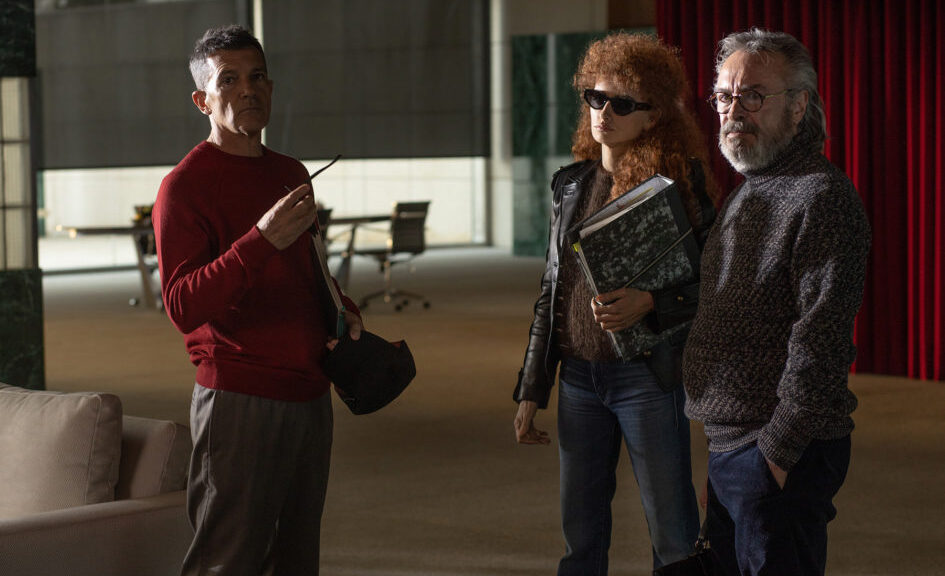
When an 80 year-old millionaire (José Luis Gómez) decides his legacy should involve producing the film version of a Nobel prize-winning novel, critic’s darling Lola Cuevas (Penélope Cruz) gets the call to direct. But Lola insists on adapting “La Rivalidad” with a unique vision, one that starts with casting polar opposites in the lead roles.
Félix Rivero (Antonio Banderas) is the worldwide box office star, while Iván Torres (Oscar Martinez) is the legendary thespian. They will play warring brothers, while their own philosophical clashes grow more volatile – and more dryly hilarious – by the day.
And don’t bother looking to Lola for cool-headed problem-solving. She’d rather provoke the tension with a variety of creative exercises – such as wrapping her two stars in restraints and threatening to destroy their most prized awards right in front of their panic-stricken faces.
Subtle it ain’t, but funny it is.
And even when a joke or two lingers a beat past its expiration, this sublime trio of actors makes nearly every frenzied interaction a joy to behold.
Is Lola a motivational genius or a complete fraud? Does Félix have the chops to go toe-to-toe with the prestigious Iván? And does Iván secretly admire Félix’s success? Cruz, Banderas and Martinez are clearly having as much fun acting it out as we are trying to sort it out.
And like much of the best satire, Official Competition is talking about one thing, but saying something else. Its barbs aimed at the movie business may be silly, acerbic and insightful, but none can hide the respect this film has for the entirely mad nature of the creative process.
Call it a love letter, with a completely entertaining ‘smidge of hate.
We’re thrilled to welcome filmmaker George Popov back to Fright Club. His Sideworld docuseries explores different supernatural whatnot the world over, beginning with the Haunted Forests of England. So, we thought we’d comb through our favorite haunted forests together. Here’s what we came up with!
Visual showman Corin Hardy has a bit of trickery up his sleeve. His directorial debut The Hallow, for all its superficiality and its recycled horror tropes, offers a tightly wound bit of terror in the ancient Irish wood.
Adam (Joseph Mawle) and Clare Hitchens (Bojana Novakovic) move, infant Finn in tow, from London to the isolated woods of Ireland so Adam can study a tract of forest the government hopes to sell off to privatization. But the woods don’t take kindly to the encroachment and the interloper Hitchens will pay dearly.
Hardy has a real knack for visual storytelling. His inky forests are both suffocating and isolating, with a darkness that seeps into every space. He’s created an atmosphere of malevolence, but the film does not rely on atmosphere alone.
Though all the cliché elements are there – a young couple relocates to an isolated wood to be warned off by angry locals with tales of boogeymen – the curve balls Hardy throws will keep you unnerved and guessing.
Haunting and hallucinatory, this Irish gem develops a menacing presence you cannot shake. Director Lorcan Finnegan (Vivarium) leads surveyor Eric (AlanMcKenna) into the Irish woods with no real hope of finding his way back.
Like The Hallow, this film braids ecological horror with the supernatural, all of it rooted in Irish folklore. The’s an understanding that not everything was pushed out once Catholicism took over, the two sides just kept their distance. But now that it’s big companies making the decisions, a lack of reverence in the presence of the past is more than one man can survive.
A meditation on grief and sexual politics, it’s not until Antichrist moves into its second act that you know the kind of film Lars von Trier has actually made. It’s a cabin in the woods horror show, and one of the very best.
Grief becomes something supernatural, a hellish nightmare perfectly suited to the type of woods Shakespeare wrote of. The forest is a lurking, magical place where danger and enchantment frolic.
In this case, they frolic perhaps too close to the tool shed.
Blair Witch may not date especially well, but it scared the hell out of a lot of people back in the day. This is the kind of forest adventure that I assume happens all the time: you go in, but no matter how you try to get out – follow a stream, use a map, follow the stars – you just keep crossing the same goddamn log.
One of several truly genius ideas behind Blair Witch is that filmmakers Daniel Myrick and Eduardo Sanchez made the audience believe that the film they were watching was nothing more than the unearthed footage left behind by three disappeared young people. Between that and the wise use of online marketing (then in its infancy) buoyed this minimalistic, naturalistic home movie about three bickering buddies who venture into the Maryland woods to document the urban legend of The Blair Witch. Twig dolls, late night noises, jumpy cameras, unknown actors and not much else blended into an honestly frightening flick that played upon primal fears.
Ideas of gender inequality, sexual awakening, slavish devotion to dogma, and isolationism roil beneath the surface of the film, yet the tale itself is deceptively simple. One family, fresh off the boat from England in 1630 and expelled from their puritanical village, sets up house and farm in a clearing near a wood.
Every opportunity writer/director Roger Eggers has to make an obvious choice he discards, though not a single move feels inauthentic. Rather, every detail – whether lurid or mundane – feels peculiarly at home here. Even the most supernatural elements in the film feel appallingly true because of the reality of this world, much of which is owed to journals and documents of the time, from which Eggers pulled complete sections of dialog.
You are trapped as they are trapped in this inescapable mess, where man’s overanxious attempt to purge himself absolutely of his capacity for sin only opens him up to the true evil lurking, as it always is, in the woods.
by George Wolf
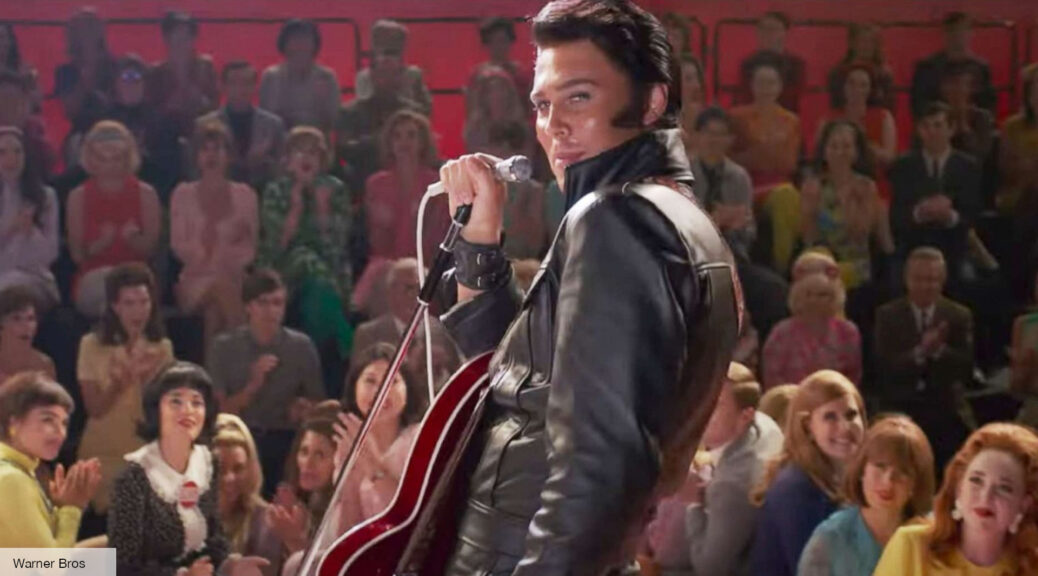
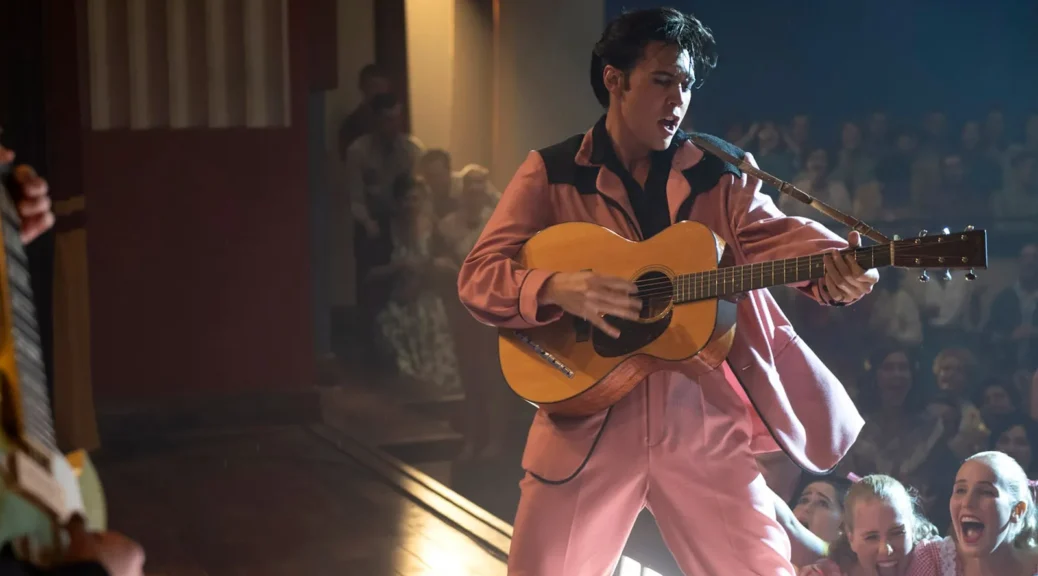
If you’re looking for someone to bring a fresh perspective to the Elvis Presley story, Baz Luhrmann would seem like a no brainer. Though he can certainly lean too hard toward style and away from substance (Australia), he can also fill a screen with tremendous energy, visual pizazz and musical exuberance (Moulin Rouge!).
And by now, any by-the-numbers take on Elvis would just be silly. Think more Rocketman, less Bohemian Rhapsody.
Luhrmann’s Elvis succeeds – to a point, as inspired choices often push the film forward while others seem to hold it back.
At the top of the win column is Austin Butler’s mesmerizing performance as The King. Beyond capturing the smoldering good looks and iconic speech pattern, Butler finds power in the raw physicality of role, an essential part of believing how this one man’s sexuality shook the world. No doubt Butler will be remembered comes awards season.
And yet, this film is only partially about Elvis.
GD national treasure Tom Hanks – an awards contender himself under layers of impressive makeup and prosthetics – narrates the film as Elvis’s longtime manager, Col. Tom Parker. Ill and seemingly nearing his end, Parker wants to tell us his side of story, and why he’s maybe not as bad as we’ve been told.
And while focusing on the perspective of the “Snowman” (Parker’s term for a master of the snow job) without legitimizing it is an interesting approach, it also keeps us detached from the Showman.
Even when depicting Elvis’s childhood, Luhrmann (co-writing as well as directing) frames him as akin to a comic book hero. So as we follow the meteoric rise, the Hollywood floundering, the comeback and the Vegas rot, the film is more interested in holding Presley up as a mythical figure than holding him accountable as a mere mortal.
There are moments with show-stopping visuals and stand-up-and-cheer performances (especially the “If I Can Dream” sequence from Elvis’s TV special in 1968), but they never feel like enough. Luhrmann drops in occasional clips of the real King, and peppers the impressive cast with Kelvin Harrison, Jr. (as B.B. King), Gary Clark, Jr. (Big Boy Crudup) Yola (Sister Rosetta Tharpe) Kodi Smit-McPhee (Jimmie Rodgers Snow) and more, gearing you up for a gloriously indulgent showcase that never comes.
Elvis is stylistic, well-performed and often highly entertaining. But with an overlong running time of 2 1/2 hours plus, you’d think there would be at least a little room left to go full Luhrmann.

by George Wolf
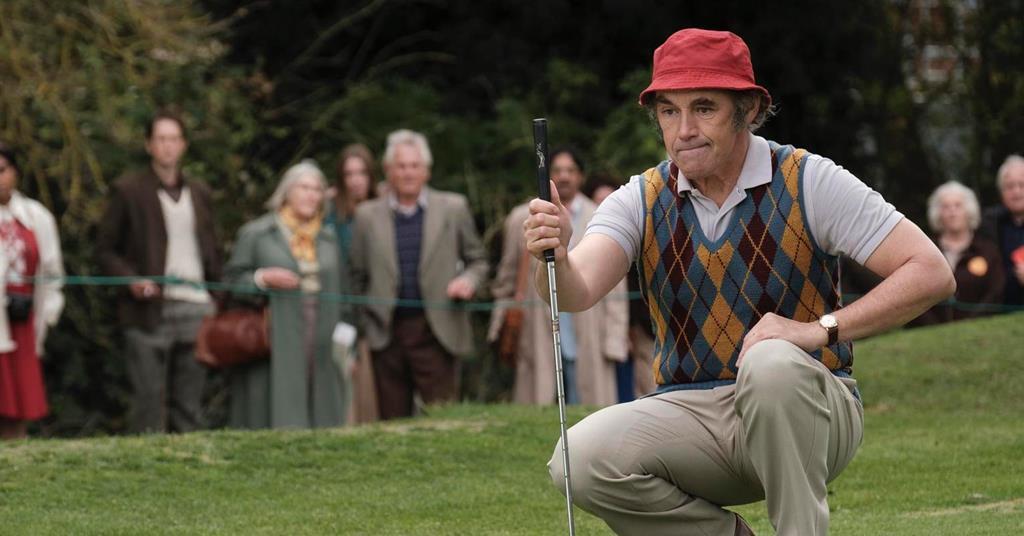
Olympic ski jumping found its unlikely warrior in Eddie the Eagle. Championship golf has a similar everyman hero in Maurice Flitcroft, and while Maurice still needs a catchy nickname, his tale finally gets the big screen treatment with The Phantom of the Open.
Maurice actually made his name years before Eddie, when he qualified for the British Open back in 1976.
And?
Up until that time, Maurice was a crane operator at a British shipyard who had never played even one full round of golf.
Cinderella story, meet Cinderella boy.
Well, not exactly, as Maurice shoots the worst round in Open history and quickly runs afoul of the course director (Rhys Ifans).
But a legend is born, and right from the film’s storybook-styled opening, director Craig Roberts (Eternal Beauty) and writer Simon Farnaby (Paddington 2) adapt Scott Murray’s book on Maurice’s often hilarious exploits with a whimsical, endlessly optimistic treatment. It fits like a pair of plaid pants at the 19th hole.
And what perfect casting. Oscar-winner Mark Rylance effortlessly brings Maurice to lovable life as a gentle, indefatigable dreamer. He’s also a soft-spoken family man, devoted to his wife (an equally perfect Sally Hawkins), the older stepson who’s embarrassed by him (Jake Davies) and his twin sons obsessed with disco (Christian and Jonah Lees).
His wife supports him, so why shouldn’t Maurice take a stab at the Open? Why can’t his friend at the shipyard open that pub he’s always wanted? And who says his boys can’t be disco dance champions? The world is your oyster, go find that pearl!
The film may not always share Maurice’s grand ambitions, but it has plenty of good humor and nearly overflows with crowd-pleasing charm. An unassuming ode to staying committed to what – and who – you love, The Phantom of the Open plays to the gallery with an awkward, sweater-vested panache that makes one history-making slouch seem pretty tremendous.