Tag Archives: George Wolf

Screening Room: Turning Red, The Adam Project, Fear, The Seed & More

New Kid in Town

Fear (Strah)

by George Wolf

Okay, Fear. So what are we afraid of?

Writer/director Ivaylo Hristov takes a measured, confident approach in attacking the question at its roots, ultimately arriving at answers that are as universal as they are intimate, as tragic as they are timely.

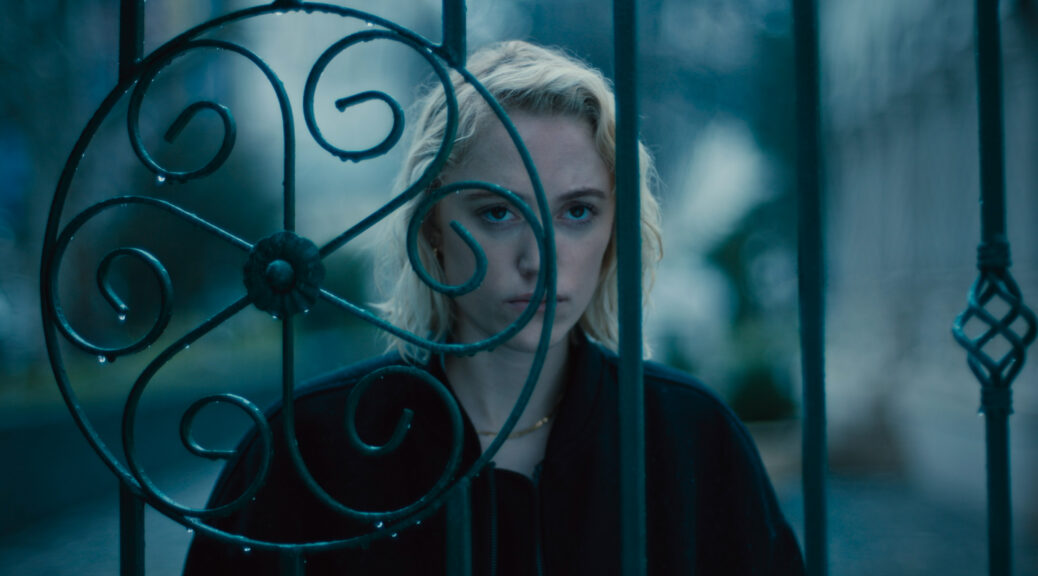
Svetla (Svetlana Yancheva, terrific) is a widow who lives alone in Bulgaria, very close to the Turkish border. Her sour mood is not improved by the loss of her job at the local school, or by the threat of refugees arriving in her village.

Armed with her hunting rifle when she crosses paths with Bamba (Michael Flemming, warm and wonderful), Svetla takes him prisoner. Bamba is a refugee from Africa, traveling on foot to Germany in search of a peaceful life. Svetla’s plan is to turn Bamba over to the border police, but a recent roundup of several Afghan refugees means they have no room in their modest quarters .

So Svetla takes him home.

The language barrier between them leads to some sweetly humorous moments, and of course Svetla comes to find Bamba is a gentle, intelligent soul who is fleeing a horrific situation, and who poses a threat to no one.

The village full of white faces feels differently.

“We are a hospitable people, but Bulgaria belongs to the Bulgarians.”

And what the village folk fear is more than just people who aren’t like them. Anyone who doesn’t share in their fear is also not to be trusted, and also deserving of whatever provocation it takes to make the villagers feel justified in their bigotry.

You’ll recognize early some of the places Hristov is taking you, but his touch is understated, which always makes the punches land that much harder. And while Fear is a film that doesn’t pretend to have the answers to the global issues on its mind, it does seem to have a firm grip on the basic question at the heart of these matters.

And that’s a start.

My Panda, My Choice

Turning Red

by George Wolf

With baseball still on hold for this year, it’s safe to say the most impressive batting average out there still belongs to Pixar. Twenty-four films in, and seeing that name at the top of the poster still has me expecting excellence.

Turning Red – Pixar’s twenty-fifth – keeps the winning streak alive with a frisky, meaningful and culturally rich update of a well worn message.

Meilin Lee (voiced by the completely captivating Rosalie Chiang) is a 13 year-old honor student in Toronto circa 2002. She loves math, her besties (Miriam, Priya and Abby), and the 5 singers in “4-Town” (the boy band craze is the most likely reason for the early 2000’s time stamp).

But above all, Mei lives by one rule: honor your parents!

Yeah, um…that rule is going to get tested when 4-Town comes to Toronto just as Mei’s world turns completely upside down.

Mother Ming (Sandra Oh) has never disclosed the “quirk” in their family history, and now it’s staring back at Mei from the bathroom mirror. The mystical powers wielded by ancient ancestor Sun-Ye promised that one day Mei would awaken as a giant red panda. That day has come, and once Ming understands it’s not that other red visitor that has her daughter locking doors in panic, Mom explains.

Strong emotions will release Mei’s inner panda, so she must keep a calm demeanor until the family can gather and perform the ancient Chinese ritual that will banish that bear forever.

Stay calm? Now? The 4-Town show is coming up, and the girls have to score some tickets without helicopter Ming finding out! And there’s this bully at school that needs to be taught a lesson! Plus, that dreamy Devon at the Daisy Mart has Mei feeling some strange new feelings…

Sure, the panda is a cute metaphor for the raging hormones of puberty, but director Domee Shi (who also co-writes with Julia Cho) has much more to offer in her feature debut. Here, the often generic moral of “be true to yourself” plays out with stakes that will feel authentic to both kids and parents. Pixar has a long history of finding true poignancy amid big laughs, but Turning Red feels like a turning point.

Not only is it the first Pixar film with a female director, women are also in leadership roles throughout most areas of the production. The mission was clearly to begin speaking to a slightly older target, with a tender honesty that adolescents – girls especially – could appreciate.

Mei’s feelings of pressure and confusion are laughed with, not laughed at, and her first fantasies of physical romance are presented with a refreshing, relatable warmth.

There’s also fresh air blowing through the animation department, realizing Shi’s self-described “Asian ‘tween fever dream” with an aesthetic that yearns for the big screens the film is not getting. Mei’s world is alive with modern vibrancy, yet full of bursts that recall more classic animation styles, including hand-drawn and slo-motion sequences, as well as eyes and mouths that suddenly pop open wide with anime homages.

Effervescent pop songs by Billie Eilish and Finneas O’Connell (who also voices 4-Town’s Jesse) blend joyously alongside Ludwig Göransson’s more traditional score, completing the film’s perfect ecosystem of subtext.

Respect the past, but embrace the possibilities of the future. That future is going to include parts of your true self that are messy, and that’s okay. In fact, accepting those awkward, messy parts is the first step to being okay.

Really, the most disappointing thing about this film is that it’s going straight to Disney+. A theater experience might make the promise of mother-daughter bonding feel even more memorable, if not downright eventful (as the trips to see the first Toy Story were for my son and me).

But Turning Red finds Pixar with a healthy and welcome new approach to its lineup. So wherever it’s found, that’s more than okay.

Love Story

Lucy and Desi

by George Wolf

You’ll see famous faces expressing some well deserved admiration for the legendary subjects of Lucy and Desi, but none come close to eclipsing the voice of the face you never see: director Amy Poehler.

The love and respect Poehler has for Lucille Ball and Desi Arnaz is evident in every frame, as she leans on a goldmine of archival footage to inform, entertain, and giddily geek out.

And the key to the family vault comes from daughter Lucie Arnaz Luckinbill, interviewed poolside while explaining her parents’ fondness for filling countless audio tapes with thoughts and recollections.

What a gift for Poehler and veteran documentary writer Mark Monroe, who weave Lucy and Desi’s own voices around home movie footage, news reports, both classic and rarely seen TV clips, and those raves from admirers to cast a spell that nearly glows with warmth.

Poehler, in her debut doc, shows a fine instinct for knowing killer from filler. She’s able to remind us of Lucy and Desi’s trailblazing show biz greatness, teach us some things we may not know (they aired the first “re-runs”), and take us behind the scenes of both their work and home life, without wasting even one of the film’s ninety some-odd minutes.

And yet, whether or not you’ve seen Aaron Sorkin’s Being the Ricardos (and if you have, this is a necessary companion), it’s hard not to feel like Poehler is pulling one big punch. Here, the end of Lucy and Desi’s marriage is attributed to the pressures of running their iconic DesiLu studios. Desi may admit to late nights “at the track” and a general lack of moderation in life, but the rumors of his affairs are never addressed.

But it’s clear that to Arnaz Luckibill, her parents’ journey together (one that ends with a very touching phone call) is only about “unconditional love.” So it may be that getting her on board (Desi, Jr. is heard from briefly, and seen only in old clips) came with a stipulation.

If so, that’s a deal Poehler had to take. Much like Linda Ronstadt’s first person storytelling made The Sound of My Voice so compelling despite a refusal to discuss her relationships, seeing and hearing Lucille Ball and Desi Arnaz narrate their own lives is what gives the film the intimacy that enables it to soar.

Two people loved each other deeply, ’til the end. Those two people are legends for some damn good reasons. That’s the point of Lucy and Desi, and it’s one well taken.

The Darkest Knight

The Batman

by Hope Madden and George Wolf

The question is plenty familiar.

“Who are you?”

But the answer isn’t the one we’re expecting, and it’s an early declaration that there’s a new cape in town.

“I am…vengeance.”

Talk about your dark knights. Director/co-writer Matt Reeves and star Robert Pattinson make Mr. Nolan feel like Mister Rogers in comparison. Anyone looking for the recent superhero giddiness of No Way Home will find none, while comic purists may finally discover the treatment they’ve been clamoring for all along.

For the rest of us, The Batman delivers a defiant, somewhat overstuffed vision, one that embraces darkness of theme and palette while crafting several truly dazzling visual set pieces.

Reeves (Cloverfield, Let Me In, Dawn of and War for the Planet of the Apes) wisely skips the backstory intro, giving us Bruce Wayne (Pattinson) some two years into his “Gotham Project.” Alfred (Andy Serkis) worries about the family finances, while Master Wayne is only interested in feeding his vigilante alter ego.

But while Bruce is watching the city, the mysterious Riddler (Paul Dano, taking the legendarily comic villain in a terrifying new direction) is watching The Batman, leaving personalized messages with each new assassination.

His puzzles draw Batman, Commissioner Gordon (Jeffrey Wright) and a resourceful waitress with hidden talents of her own (Zoë Kravitz as Selina Kyle) deep into the Gotham organized crime scene run by Carmine Falcone (John Tutturo ) and Oswald “The Penguin” Cobblepot (Colin Farrell under some astounding makeup). There is no shortage of characters at play, and Reeves struggles to justify all of them in one film.

At stake are long-held secrets about Gotham that the Riddler wants “brought into the light,” some of which will challenge what you think you know about the birth of the Bat. And that seems only appropriate for a film that challenges expectations of its genre with a narrative more reminiscent of Seven than anything we’ve seen from DC or Marvel.

So dark, and so rainy.

Pattinson’s Emo Batman works well within the structure and aesthetic Reeves develops. He carves out a very different crusader, one more introspective and heartbroken than righteous. This Bruce Wayne views the bat signal as both a call and a warning, and Pattinson is able to effectively keep the tortured soul’s head above self-pitying water.

Dano’s exceptional, Farrell’s fun, and Kravitz develops an intriguing antihero of her own. People talk about Joker’s lineage, but Catwoman is another iconic villain. Eartha Kitt, Julie Newmar, Michelle Pfeiffer and Anne Hathaway have all left their mark, but Kravitz sidesteps broad stroke villainy in favor of something nuanced and human.

But ultimately, what makes this film most interesting is the way Bruce Wayne struggles to justify the consequences that The Batman has had on Gotham, and the surprising side of hero worship. Where is the line separating savior and sinner? And who gets to draw it?

Reeves isn’t the first to pull Batman into these relevant questions, but he raises them with a commitment fierce enough to generate excitement for yet another trilogy. And though there’s no surprise waiting after the credits here, keep an eye out for a villain to be named later.

Fright Club: Skeletons in the Closet 2022

It’s the most wonderful time of the year! Yes, each spring we get to dig around Oscar nominees’ closets to find the bad horror lurking behind those glittery ball gowns. And this year it’s a fine season!

Here are five of our favorite bones from Oscar nominee skeletons.

5. Aunjanue Ellis (Best Supporting Actress, King Richard): The Resident (2011)

Ellis alone is reason to see King Richard. She’s breathtaking. But she hasn’t always had such luck with roles. In Antti Jokinen’s lifeless voyeur horror The Resident, she gets little to do but be the supportive bestie while a slumming Hilary Swank struggles with her new landlord.

Christopher Lee makes an appearance in what might be the only interesting thing about the film – not his performance as much as his presence. This was one of Hammer Studios modern releases, reuniting Lee with the studio that made him (or was it Lee who made the studio?).

Other than that, Jeffrey Dean Morgan misses the mark, Swank degrades herself and Ellis goes underutilized.

4. Ciarán Hinds (Best Supporting Actor, Belfast): The Rite (2011)

Veteran character actor Ciarán Hinds gets his first Oscar nomination this year for Belfast. No stranger to horror, Hinds has starred in the good (The Woman in Black), the bad (Mary Reilly) and the underseen (The Eclipse).

He does what he can to class up Mikael Hafstrom’s pedestrian 2011 possession flick The Rite.

Hoping to help a seminarian find his faith, Hinds’s Father Xavier sends him to learn exorcism from the best: Hanibal Lecter. No, it’s Anthony Hopkins as Father Lucas Trevant, but they know what you’re thinking.

Hopkins hams it up, trying to resuscitate Michael Petroni’s script with as much bombast as he can muster. It doesn’t work. Hinds is wasted, but so too are Rutger Hauer, Alice Braga and Toby Jones.

3. JK Simmons (Best Supporting Actor, Being the Ricardos): The Snowman (2017)

If we were weighing by disappointment, The Snowman would be #1. Tomas Alfredson followed up Let the Right One In and Tinker Tailor Soldier Spy with this Norwegian crime thriller and he packed his cast with heavy hitters: Michael Fassbender, Rebecca Ferguson, Charlotte Gainsbourg, Val Kilmer, Toby Jones, Chloe Sevigny, and 2022 nominee for Best Supporting Actor in Being the Ricardos, JK Simmons.

Why does it feel like there are gaping holes in the plot? Because the film was released, but they didn’t shoot the entire script. Who needs all the pieces to a mystery, anyway?

The actors do what they can, but the source material trades in darkness for misogyny and nonsense. Gainsbourg, Sevigny and Ferguson all play thankless roles while Simmons’s character appears, seems like a bad guy, disappears and never makes a dent in the storyline.

Nonsense.

2. Kirsten Dunst (Best Supporting Actress, The Power of the Dog): The Crow: Salvation (2000)

Sure, we could have gone with fan-favorite Interivew with the Vampire because, after all, it was not very good. Kirsten Dunst, Oscar-nominated this year for The Power of the Dog, was great in it, though.

She’s the best thing bout The Crow: Salvation, too, but that’s not saying a lot.

The third installment sees a surprisingly stacked cast (including Walton Goggins and Fred Ward) conspire to let a scapegoat die for their sins. He comes back as the single blandest Crow ever.

Dunst is the victim’s sister and she does what she can, but the writing is god-awful, the makeup is laughable, the staging, action, set design and direction are all just sad. It made us sad she took the role.

1. Kristen Stewart (Best Actress, Spencer): Twilight: Breaking Dawn – Part 2 (2012)

Before we start, we want to point out that, like her Twilight co-star Robert Pattinson, Kriten Stewart has proven to be a dependable, remarkable talent. She’s shown adaptability and range across a ton of great indie films, some of them very solid genre efforts. We were thrilled to see her nab her first nomination for Spencer.

But before all that, there was Twilight. This series could be the whole podcast. Do you know why? They SUCK. Shiny vegetarian vampires? Mopey, special teens? YA fodder with the most profoundly backwards, disempowering message? Yes to all four films, so which is the worst?

The last one is the worst one because of 1) that creepy baby, 2) the imprinting. The CGI on that fast-growing Renesme is diabolically bad, but not nearly as heinous as the plotline where a grown man chooses an infant for his future spouse and that infant’s parents are good with it. So wrong.

Real Time Nightmare

The Desperate Hour

by George Wolf

With a main character spending most of the film alone, interacting with other characters only through a cell phone, The Desperate Hour (previously titled Lakewood) has the look of a production born out of quarantine.

But writer Chris Sparling is just returning to his framework for Buried from 12 twelve years ago, and tweaking the specifics with some sadly recognizable plot points.

Naomi Watts is Amy, a suburban mom who’s taken a personal day off from work as the anniversary of her husband’s fatal car accident approaches. Amy sets off on a long jog to clear her head, and as she winds deeper through the wooded area surrounding her neighborhood, multiple police sirens give the fist clue that another tragedy has occurred.

Veteran director Phillip Noyce (Rabbit Proof Fence, The Quiet American, The Bone Collector) sets a nice hook, layering disorienting camera movements and increasingly frantic cell phone calls to convey Amy’s growing panic as more details become available.

There’s a shooter at her son Noah’s (Colton Gobbo) high school, the area is on lockdown, and the police want to know if Amy keeps any guns in the house.

It’s difficult to overstate how quickly this premise would collapse with a lesser talent than Watts in the lead. She’s emoting with a smart phone and voice actors, but damned if she doesn’t make Amy’s desperation downright palpable, subtly conveying the chilling realization that a uniquely American epidemic is no longer happening somewhere else.

As the real time ticks by, though, the organic tension gives way to increased contrivance and emotional string pulling more befitting a TV movie-of-the-week. And with a mid-credits epilogue that is well-meaning but simplistic and preachy, the final minutes of The Desperate Hour comes dangerously close to undercutting the seriousness of the film’s intentions.

But there’s no doubting Watts. It is her commitment that won’t let us turn away from Amy, or completely give up on this film.

The Oscar Nominated Live Action Shorts

by George Wolf

Fair warning: you’re not going to find many laughs in this year’s crop of Live Action nominees. But these fantastic short films come from all over the world to deliver important and consistently compelling statements.

Ala Kachuu (Take and Run)

Kyrgyzstan 38 mins. Writer/director: Maria Brendle

A young Kyrgyz woman (Alina Turdumamatova, excellent) has dreams of pursuing higher education with a scholarship. But when she’s kidnapped and forced to marry, her quest for freedom runs counter to long held traditions. Filmmaker Maria Brendle calls attention to a shockingly common practice with a stirring, sympathetic narrative.

The Dress

Poland 30 mins. Writer/director: Tadeusz Lysiak

In rural Poland, Julka (Anna Dzieduszycka, heartbreaking) works as a maid and dreams of a better life. A handsome truck driver (Szymon Piotr Warszawski) stirs hopes for romance, so Julka searches for the perfect dress for date night. In just 30 minutes, writer/director Lysiak delivers a fully crafted take on loneliness with a devastating final shot.

The Long Goodbye

United Kingdom/Netherlands 13 mins. Director: Aneil Karia Writers: Aneil Karia, Riz Ahmed

During a busy, laughter-filled family gathering, a TV news report delivers subtle foreshadowing about the brutality that will soon be at the family’s front door. The question is “Where are you from?” Karia and Ahmed deliver the answer is blistering, defiant fashion.

On My Mind

Denmark 18 mins. Writer/director: Martin Strange-Hansen

Henrick (Rasmus Hammerich) stops in to a nearly empty bar for some badly-needed shots of whiskey. He spots a karaoke machine, and will not be denied the chance to be filmed singing “Always on My Mind.” Have the tissues handy for this lovely take on love, death, and the power of great song.

Please Hold

United States 19 mins. Director: KD Davila Writers: KD Davila and Omer Levin Menekse

In the near (very near?) future, a young man named Mateo (Erick Lopez) is walking to work when he’s arrested by a police drone threatening force. Unaware of the charges and desperate to talk to a human being, Mateo is thrust into a completely automated justice system with a focus on profit and proficiency. It’s thought-provoking, darkly comic and completely terrifying.