Tag Archives: Sophie Hyde

Generational Drama

Jimpa

by Rachel Willis

Director Sohpie Hyde’s film, Jimpa, opens with a narrative that lays the groundwork for a family drama about what acceptance truly means.

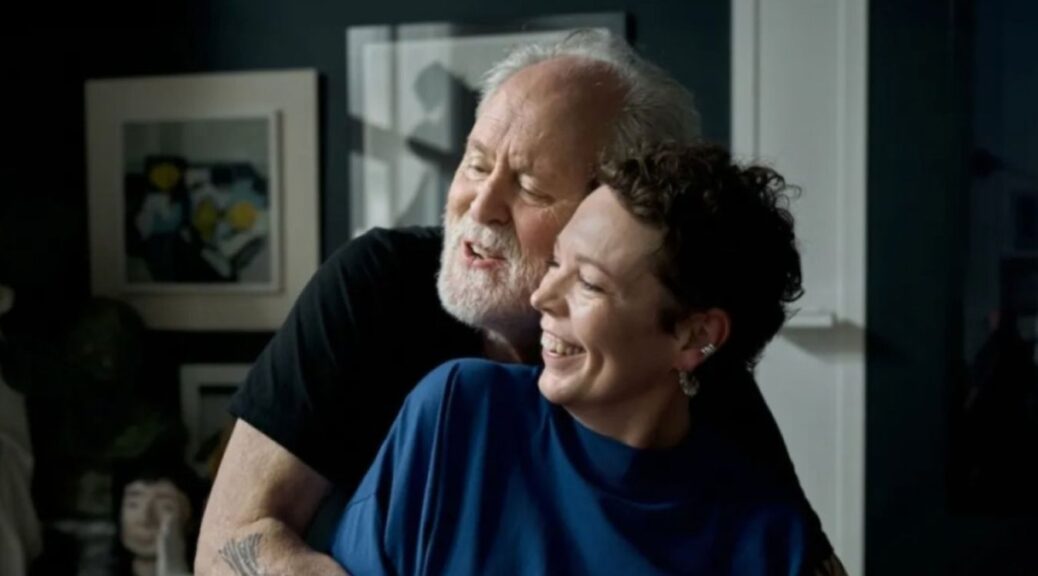
Jimpa (John Lithgow) is an older gay man who left his family in Adelaide, Australia to move to Amsterdam during the height of the AIDS epidemic. There’s a recap of this history from two perspectives, Jimpa’s daughter, Hannah (Olivia Colman), and his nonbinary grandchild, Frances (Aud Mason-Hyde).

The film centers around Hannah and Frances spending time with Jimpa, as Hannah looks to make a film about her parents and their conflict-free partnership when Jimpa came out as gay.  

Colman and Hyde make it clear that Hannah is afraid of conflict, so much so, she rushes to mitigate everyone’s words. Her explanations for others may sound good, but in her urgency to avoid conflict, she steals their agency. And yet, there are times when Hannah fails to step in when it could most help her teenager.

Jimpa is disrespectful of Frances’s choice to identify themselves as non-binary. He introduces them as his “grandthing” and mocks their “sudden” lack of gender. Though grandthing is said with a certain amount of affection, it’s painful to watch because Frances looks up to their grandfather as a hero.

There’s also a collision of age. The older gay men have trouble understanding the younger generation’s motivations and language, fail to recognize the struggles of feeling like an outsider when things are (in their minds) so much better now.

Jimpa feels more like a lesson in gender and sexual politics than a cohesive narrative film. This can be done gracefully, but Hyde’s approach is too heavy handed.

Jimpa‘s second half takes an unexpected path that serves the film well. Hannah confronts and addresses her true feelings, allowing Coleman and Mason-Hyde to shine. Hyde finally gives Mason-Hyde the opportunity to be more than their gender identity.

Though the film’s opening act is defined by a kind of clunkiness, Jimpa’s final moments are handled with enough tenderness to make up for a lot of that.

The Pleasure Principle

Good Luck to You, Leo Grande

by George Wolf

If we’re boiling down film narratives to heroes and quests, it won’t take long to define Good Luck to You, Leo Grande.

Nancy is our hero, and sex is her quest.

And she would like good sex, thank you, although she can’t quite bring herself to expect the elusive release that she spent decades faking for her husband’s benefit.

But now Nancy (Emma Thompson) is an aging widow, fidgeting nervously in a hotel room and second-guessing her decision to hire handsome young escort Leo Grande (Daryl McCormack) for a tryst.

Thompson is, of course, glorious. And as much fun as it always is to see her command those in-charge characters spitting ruthlessly droll asides, Nancy reminds you how equally adept Thompson is with self-effacing humor, vulnerability and longing.

Writer Katy Brand’s script is filled with delightful wordplay, subtle wit and insightful details, one of the most resonant being Nancy’s history as a religious education teacher. We see her as a woman not only desperate to learn things she was never taught (and she has a list!), but also now regretting some of the lessons she passed down to young girls in her classrooms.

To Nancy, Leo represents more than just lust. He is the power of youth, and all the possibilities of a different generation that have long felt shameful to many from her generation.

McCormack is terrific, worthy of extra kudos for not shrinking from the prospect of simply being the “other half” of a two-hander led by a rarified talent. Leo has some issues of his own beneath his suave demeanor, and McCormack reveals them with subtlety and heart.

But back to our hero.

Nancy’s journey is, of course, an intimate one, and director Sophie Hyde doubles down on the intimacy, rarely leaving the privacy of the hotel room. Regardless, the film is never claustrophobic and always cinematic, framing even the most sexual moments with a refreshing honesty that the characters (and these two impeccable performances) deserve.

And you know what? We deserve it, too. Good Luck to You, Leo Grande is a simply wonderful look at embracing who you are and what you want. It’s funny and empowering, warm and touching, even heartbreaking at times.

Let’s hope it finds the audience it deserves.
