It may not be a textbook Rashomon approach, but director/co-writer Benjamin Caron leans on a similar structure in his impressive feature debut for Apple Originals, Sharper.
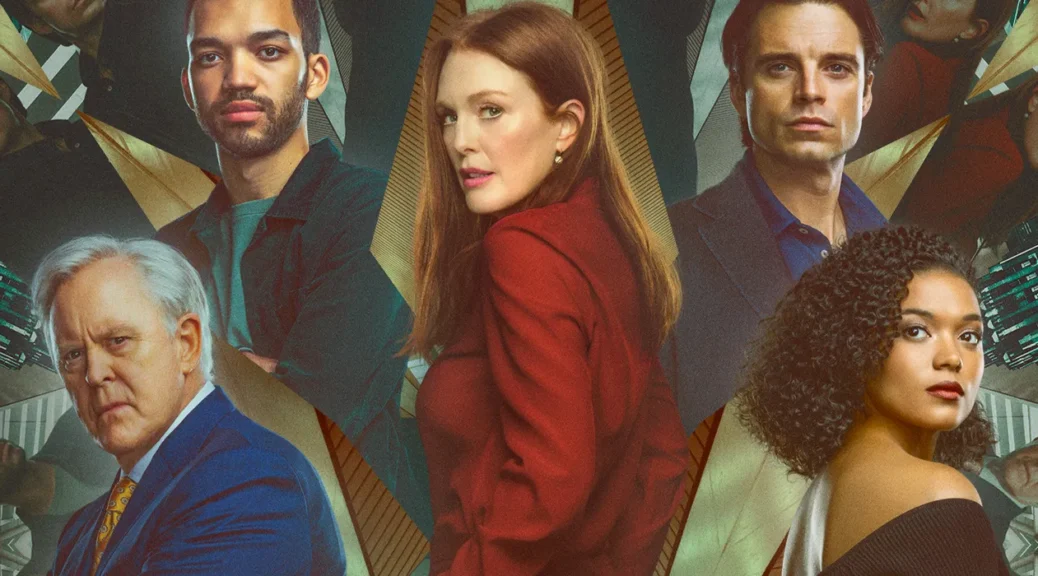
Set up in chapters named for the main personalities, the film first introduces us to Tom (Justice Smith, from Jurassic World: Fallen Kingdom and Pokémon: Detective Pikachu). Tom owns a struggling bookstore in NYC, and is mostly estranged from his billionaire father, Richard (John Lithgow) and his new wife, Madeline (Julianne Moore).
But when Tom sells a book to PhD student Sandra (The Tender Bar‘s Briana Middleton), a relationship begins. And a few weeks later, Tom is offering to give Sandra thousands of dollars to settle her troubled brother’s debts with some bad guys. He gives her the satchel full of cash, and watches her walk away. Yeah.
So, right away, we’re on Tom’s side. But then, we get Sandra’s backstory, which includes some important details about her life before walking into that bookstore, and about her shady brother.
And then there’s the relationship between Richard and Madeline, which gets plenty complicated with the sudden arrival of Madeline’s ne’er-do-well son, Max (Sebastian Stan).
Caron, from TV’s The Crown, Andor and Sherlock, weaves the agendas together with a fine hand, revealing mysterious secrets just when they can add the most fun to the journey.
And this is an entertaining slice of life on the grift, one leaning more toward gloss and polish than neo and noir. The performances are all stellar, which ironically adds to the film’s slight stumble at the finish line. That final twist will not be hard to sniff out, even for mildly experienced film buffs. But we believe these people know all the angles, and when a character calls out a con midway through, it should only increase the chance that their antenna would be up for this same play later on.
But cons are just fun, aren’t they? And Sharper is a well-crafted and clever one, even with a finale that dulls its edges a bit.
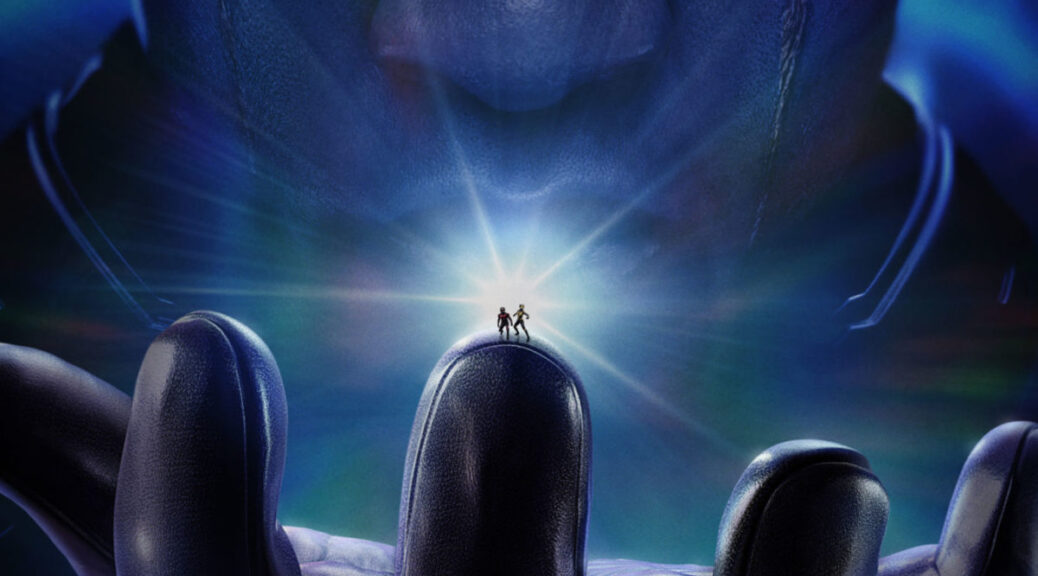
Time to set your phasers to “5” Marvel Fans, and hope for better days ahead. Because Ant-Man & The Wasp: Quantumania is a messy, lackluster kick-off to the new stage.
After the prologue and before the two end stingers, Quantumania is bookended by two winning sequences, both set to the theme from “Welcome Back, Kotter.” They’re self-effacing and full of the unique charm that has defined Paul Rudd’s Ant-Man/Scott Lang character since the first installment. And the rest of the film can never quite measure up.
While Scott has been off Avenging, his daughter Cassie (Kathryn Newton) has grown into an impressive young scientist herself. In fact, the new sub-atomic telescope she invented seems pretty nifty, until a family pizza party ends with Scott, Cassie, Hope/Wasp (Evangeline Lilly), Hank (Michael Douglas) and Janet (Michelle Pfeiffer) all sucked back into the Quantum Realm.
And it turns out, there’s plenty Janet didn’t let on about the 30 years she spent down there. Some of it involves Krylar (Bill Murray, channeling Criswell). But the life-threatening details revolve around how Kang the Conqueror (Jonathan Majors) wound up there, and why he must never make his way out.
Director Peyton Reed returns from parts 1 and 2, but his powers are more limited in the quantum realm than Kang’s. Without city landmarks and average Joes to ground the comedy, the Ant-Man dorkishness falls flat.
The writing doesn’t help, although it’s tough to blame series newcomer Jeff Loveness in his feature debut. The first film was written by Edgar Wright, Joe Cornish and Adam McKay, for Pete’s sake. But Loveness cannot find a groove, throwing comedy bits that suit Aqua Teen Hunger Force into hyper-serious melodrama with a Barbarella backdrop.
Much of the film is blatantly Star Wars, with attempts at Ragnorak humor that run headlong into extended exposition and Kang’s quest for dominating multiple plexes. None of it works.
Rudd’s a doll, per usual, and Newton’s a charmer. Pfeiffer continues to have charisma to burn, which is a good thing because Lilly’s as engaging as a paper sack and Douglas is mainly wasted. But the real pity is Majors, another profound talent floundering in an underwritten villain role that relies on speechifying rather than acting.
There are some big ideas here, and the attempts at world building are ambitiously borrowed, but much the same as its unlikely Avenger, Quantumania comes up small.
Killer crushes, literally – that’s what we’re talking about this time. We also run down our own biggest celebrity crushes, because why not? And we talk about the best horror films to capture the moment obsession turns dangerous.
5. Be My Cat: A Film for Anne (2015)
Adrian is a Romanian filmmaker who likes girls and cats. He does not like dogs or boys. His favorite thing? Anne Hathaway as Cat Woman.
He was so inspired by her performance that he knew he had to make a film with her. To convince her, he’s lured three actresses to shoot a film with him. That film is really just to convince Anne, his beloved, that she should star in the real movie.
She’s not going to want to.
This movie works on the sheer, weird charisma of writer/director/star Adrian Tofei. He is pathetic and charming and terrifying as he documents his direction as a kind of “behind the scenes” for Anne, so she can understand how truly perfect she is for his film and he is for her artistic future. The result is unsettling, unique and wildly entertaining.
4. The Phantom of the Opera (1925)
You know the story – a shadowy figure haunts the Paris opera house, demading that the object of his affection, Christine, be given the lead in Faust. In what amounts to a cautionary tale about women prioritizing career over family, the story revolves around a masked and disfigured madman and the singer who is easily duped, then saved by righteous men.
The reason this particular version of the film works so well is, of course, Lon Chaney’s now-legendary look. The actor devised his own make up and underwent painful tricks of physical contortion, succeeding in shocking audiences with a ghastly but very realistic visage. His flair as an actor is also on display, and though other versions sometimes mine for a bit of empathy or heartbreak as this hideous creature connives for a love triumphant, Chaney delivers menace and horror.
3. The Fan (1982)
The first thing Eckhart Schmidt’s film has in its favor is that the audience is meant to empathize with the fan, Simone (Désirée Nosbusch). Generally, we see the fanatical from the celebrity’s point of view, but this makes more sense because every member of the audience is more likely to have lost their shit over a teen idol than they’ve been worshipped themselves.
And yet, Simone clearly has a screw loose. Schmidt’s approach to her obsession as seen through the eyes of worried parents, apologetic postmen and other adults is confused and compassionate. Teenage girls – who can understand them? The tone is ideal to set up the explosive heartbreak you know is coming, as well as a third act you couldn’t possibly see coming.
2. Antiviral (2012)
If you could catch Kim Kardashian’s cold, would you?
This is the intriguing concept behind writer/director Brandon Cronenberg’s seething commentary on celebrity obsession, Antiviral.
Young Syd March (Caleb Landry Jones) works for a clinic dealing in a very specific kind of treatment. They harvest viruses from willing celebrities, encrypt them (so they can’t spread – no money if you can’t control the spread), and sell the illnesses to obsessed fans who derive some kind of bodily communion with their adored by way of a shared herpes virus. Gross.
But the ambitious Syd pirates these viruses by injecting himself first, before the encryption. Eventually, his own nastiness-riddled blood is more valuable than he is, and he has to find a way out of quite a pickle. Maybe vitamin C?
1. Misery (1990)
Kathy Bates had been knocking around Hollywood for decades, but no one really knew who she was until she landed Misery. Her sadistic nurturer Annie Wilkes – rabid romance novel fan, part-time nurse, full-time wacko – ranks among the most memorable crazy ladies of modern cinema.
James Caan plays novelist Paul Sheldon, who kills off popular character Misery Chastain, then celebrates with a road trip that goes awry when he crashes his car, only to be saved by his brawniest and most fervent fan, Annie. Well, she’s more a fan of Misery Chastain’s than she is Paul Sheldon’s, and once she realizes what he’s done, she refuses to allow him out of her house until she brings Misery back to literary life.
Caan seethes, and you know there’s an ass-kicking somewhere deep in his mangled body just waiting to get out. But it’s Bates we remember. She nails the bumpkin who oscillates between humble fan, terrifying master, and put-upon martyr. Indeed, both physically and emotionally, she so thoroughly animates this nutjob that she secured an Oscar.
It’s been a few hundred years since Emily Dickinson wrote “Hope is the thing with feathers,” but the Oscar-nominated All That Breathes shows there are at least two people in the world who still believe it.
For the past twenty years, as the city of Delhi has deteriorated around them, brothers Mohammad Saud and Nadeem Shehzad have devoted their lives to the rescue of the Black Kite, a bird they say can “swim, like a lazy dot in the sky.”
We witness that swimming in the film’s opening minutes, just one of the countless images that director Shaunak Sen presents with a bittersweet majesty. Aided by stellar craftsmanship from Ben Bernhard’s cinematography team and editors Charlotte Munch Bentsen and Vedant Joshi, Sen drives home the devastating effects of climate change and pollution with an ironically gorgeous display of shot-making.
Sen’s approach is immersive from the start, letting quiet conversations and sobering landscapes outline the roadblocks to the brothers’ commitment. But in the midst of their search for the funds to open a true rescue hospital, Saud and Nadeem give voice to concerns of rising societal fractures, including the marginalizing of Muslims and outbreaks of street violence.
Sen weaves these themes together with grace and restraint, letting the focus at work in this basement mission of mercy speak in universal terms. The belief that “Delhi is a gaping wound, and we are just a Band Aid” reflects the unyielding hope that drives the two brothers. We share our “community of air” with every living thing that relies on it. And as long as there is value given to All That Breathes, then all cannot truly be lost.
Even if you know nothing of acclaimed Iranian filmmaker Jafar Panahi, No Bears (Khers nist) should be an absorbing and compelling experience.
But when you consider that Panahi (This Is Not a Film, Taxi, Closed Curtain) not only shot the film in secret, but currently sits in a Tehran prison, and is barred from writing, directing, giving interviews or traveling outside Iran until 2030, his continued commitment to agitation through artistic expression grows immeasurably inspirational.
With No Bears, Panahi uses the parallel lives of two Iranian couples to comment on the struggles of that expression, and on the powerful forces that conspire to restrict free will.
Panahi plays himself, arriving at a small village near the Turkish border to set up a base where he can direct his latest film remotely, joining the set through internet connection. While two actors in his cast (Mina Kavani and Bakhtiyar Panjeei) are trying desperately to land fake passports and flee Iran, Panahi quickly becomes a person of interest in the village.
Word has spread that Panahi may have unwittingly snapped a photo of a young Iranian woman (Darya Alei) with a man (Amir Davari) other than the one who has “claimed” her. Villagers are demanding the photo as proof of a grave misdeed, while the woman in question fears the bloodshed that will come from the photo’s existence.
Despite numerous reassurances to Panahi about “honorable” intent, the pressure from the villagers only increases, much like the desperation of his actors looking to start a new life.
Panahi films in a style that is understandably guerilla, but stands in sharp contrast to the dense, and thrillingly complex storytelling at work. He is deftly calling out both the oppressors and the enablers, while he weighs the rippling effect of his own choices amid a deeply ingrained bureaucracy of fundamentalism and fear, superstition and gossip.
No Bears is a brave and bold blurring of fact and fiction, with Panahi embracing the gritty authenticity of the most urgent first person documentary and the layered storylines of a political page-turner. It may be his most daring project to date, accentuated by a defiant final shot that teeters on the line between ending and beginning.
You’ve seen those close-ups on a movie character pouring out their feelings, right? The ones where the camera pulls back to reveal that the person being spoken to has fallen asleep and missed every word?
If that’s still funny to you, 80 for Brady will deliver some laughs. If not, there’s at least the charm of seeing four legendary ladies coming together for some big screen hi-jinx.
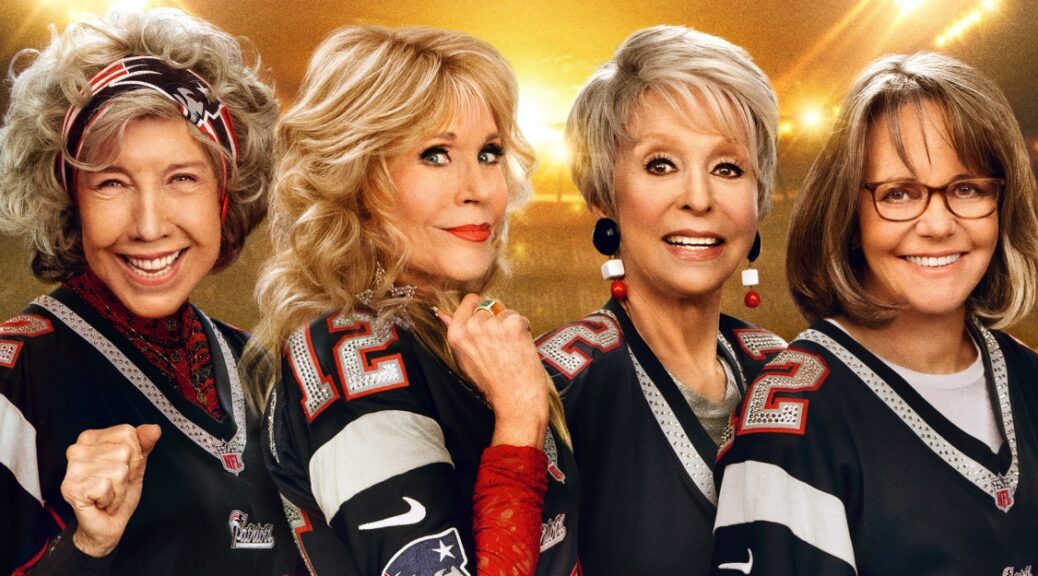
Inspired by the real-life “Over 80 for Brady” fan club, the film follows elderly besties off to see Tom Brady and the New England Patriots take on the Atlanta Falcons back in Super Bowl 51.
Maura (Rita Moreno) is a widow living in a senior center. Betty (Sally Field) is “only 75” and a former M.I.T mathematician, Lou (Lily Tomlin) is a cancer survivor and Trish (Jane Fonda) is a divorcee who writes erotic Rob Gronkowski fan fiction (on one book cover: “football all isn’t the only game of inches!”)
But when Lou gets a new message to call her doctor, she calls an audible instead. Fearing this might be her last chance to see Brady win a title, Lou springs for four Super Bowl tickets, and the gang heads off to Houston.
Thankfully, the film centers on their time actually at the big game. But while this isn’t technically a road movie, writers Emily Halpern and Sarah Jenkins fill it with all the same type of very loosely connected skits that often make that genre so tiresome.
Betty enters a spicy wing-eating contest. Lou throws a football for prizes. They all get invited to a pre-game bash and accidentally take drugs. They get in the coach’s box. And of course there is a dance number. Even the promising cameos from Rob Corddry and Alex Moffat, as a pair of Masshole superfans with a call-in show, come up empty.
It’s all such lazy, old-fish-in-younger-waters humor that’s only mildly amusing at best, which is surprising considering Halpern and Jenkins penned the sly and very funny Booksmartin 2019. They are done no favors by the sitcom-ready treatment from first-time feature director Kyle Marvin, with artificial stadium segments rendered all the more amateurish next to the bounty of actual game film provided by the NFL.
Isn’t it just great to see these icons together, though, in anything? Sure it is, and by the time Brady himself (also a producer here) makes an appearance that manages a nod to his own mother’s cancer battle, you can’t deny the warm fuzzy footballs taking flight.
But as a comedy worthy of this Hall of Fame starting lineup, 80 for Brady feels like a personal foul.
By now, we’ve moved past the “it’s nice to see longtime supporting player Frank Grillo in the lead” phase, haven’t we? He’s established himself as a charismatic actor more than capable of carrying a film.
And while he’s still a reliably galvanizing presence in Little Dixie, the movie itself struggles to carve out its own identity as it vacillates between a generic crime narrative and some seedy sexual underbellies.
Grillo stars as Doc, a no-nonsense intermediary between Texas Gov. Richard Jeffs (Eric Dane) and a ruthless Mexican cartel run by Lalo Prado (Maurice Compte). But when the Gov. goes rogue and ignores the truce that Doc has brokered, Lalo’s bloodthirsty brother Cuco (Beau Knapp) crosses the border looking for payback – and his search starts with Doc’s daughter (Sofia Bryant).
So yes, expect plenty of “If you touch her I swear to God I’ll….,” but also writer/director John Swab’s penchant for hard turns.
This time Swab goes searching for subversion inside a Sicario-like setup, an approach similar to how he attacked truck stop horror in the recent Candy Land. But while that film managed to uncover something surprisingly human amid all the brutality, the persistent posturing and lurid details in Little Dixie do little to raise the resonance of characters or choices – and in at least one instance end up bordering on blood-soaked parody.
But the attempt to firebomb expectations almost works, more evidence that Swab may just need a little more seasoning to find his uniquely compelling voice. Until then, Little Dixie stands as a cluster of eyebrow-raising campaign promises drowned out by a standard stump speech.
You check in. You assume the best. You’d never think, as you doze off in total helplessness, that maybe the last guest is still lingering in spirit, or was fed to gators, or that the hotel itself may be the doorway to hell.
In all likelihood the worst thing you’ll bring home with you is bedbugs, but I’ll take the gators.
For this episode we’re joined by our dear friend Jamie Ray from the Fave Five from Fans podcast and, at his behest, we will run through horror cinema’s best – or worst? – hotels.
Listed below are our five favorites, but honorable mentions go to Eaten Alive‘s Starlite Hotel, Basket Case‘s Hotel Broslin, Hotel Quickie from Killer Condoms and Slausen’s Oasis from Tourist Trap.
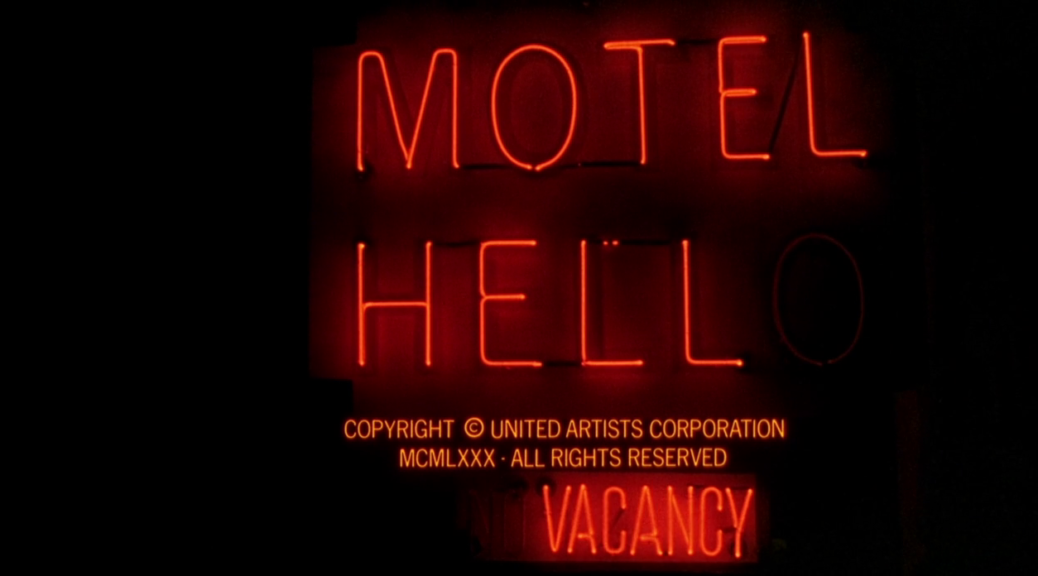
5. Motel Hello (Motel Hell, 1980)
It takes all kinds of critters to make Farmer Vincent’s fritters, so swingers looking for a cheap motel in which to swing – be warned! Fifties heartthrob Rory Calhoun plays Farmer Vincent, who, along with his sister Ida (a super creepy Nancy Parsons) rid the world of human filth while serving the righteous some tasty viddles. Just don’t look under those wiggling, gurgling sacks out behind the butcherin’ barn!
Motel Hell is a deeply disturbed, inspired little low budget jewel. A dark comedy, the film nonetheless offers some unsettling images, not to mention sounds. Sure, less admiring eyes may see only that super-cheese director Kevin Connor teamed up with Parsons and Calhoun – as well as Elaine Joyce and John Ratzenberger – for a quick buck. But in reality, they teamed up to create one of the best bad horror films ever made.
4. White Lovers’ Inn (The Happiness of the Katakuris, 2001)
Guests rarely come and a strange fate awaits them.
Takashi Miike is an extremely prolific director. He makes a lot of musical films, a lot of kids’ movies, a lot of horror movies, and then this – a mashup of all of those things. Like Sound of Music with a tremendous body count.
The Katakuris just want to run a rustic mountain inn. They’re not murderers. They’re lovely – well, they’re losers, but they’re not bad people. Buying this piece of property did nothing to correct their luck, either because, my God, their guests do die.
You might call this a dark comedy if it weren’t so very brightly lit. It’s absurd, farcical, gruesome but sweet. There’s a lot of singing, some animation, a volcano, a bit of mystery, more singing, one death by sumo smothering, and love.
3. Hotel Ostend (Daughters of Darkness, 1971)
Seduction, homoeroticism, drowsy lustfulness – this one has it all.
Countess Bathory – history’s female version of Dracula – checks into an all-but-abandoned seaside hotel. The only other guests, besides the Countess’s lover, Ilona, is a honeymooning couple.
Effortlessly aristocratic, Delphine Seyrig brings a tender coyness, a sadness to the infamous role of Bathory. Seyrig’s performance lends the villain a tragic loveliness that makes her the most endearing figure in the film. Everybody else feels mildly unpleasant, a sinister bunch who seem to be hiding things. The husband, in particular, is a suspicious figure, and a bit peculiar. Kind of a dick, really – and Bathory, for one, has no time for dicks.
Caring less for the victims than for the predator – not because she’s innocent or good, but because her weary elegance makes her seem vulnerable – gives the film a nice added dimension.
The accents are absurd. The outfits are glorious. The performances are compellingly, perversely good, and the shots are gorgeous. Indulge yourself.
2. Bates Motel (Psycho, 1960)
It doesn’t look like much, but the old Bates place used to be something before the new highway. Now it’s really just Norman, some dusty bungalows, that ice machine, swamp out back, some stuffed birds and, of course, Mother.
Anthony Perkins was the picture of vulnerability in Hitchcock’s horror classic, but the motel itself is also about as benign as a spot can be. Hardly the downcast, shadowy, menacing lodging you think of today when you think of low-rent motels. It’s bright, clean and empty. Lonesome, but hardly frightening. Just like Norman.
1. The Overlook Hotel (The Shining, 1980)
You know who you probably shouldn’t hire to look after your hotel? Jack Nicholson.
A study in atmospheric tension, Kubrick’s vision of the Torrance family collapse at the Overlook Hotel is both visually and aurally meticulous. It opens with that stunning helicopter shot, following Jack Torrance’s little yellow Beetle up the mountainside, the ominous score announcing a foreboding that the film never shakes.
The hypnotic, innocent sound of Danny Torrance’s Big Wheel against the weirdly phallic patterns of the hotel carpet tells so much – about the size of the place, about the monotony of the existence, about hidden perversity. The sound is so lulling that its abrupt ceasing becomes a signal of spookiness afoot.
Nicholson outdoes himself. His early, veiled contempt blossoms into pure homicidal mania, and there’s something so wonderful about watching Nicholson slowly lose his mind. Between writer’s block, isolation, ghosts, alcohol withdrawal, midlife crisis, and “a momentary loss of muscular coordination,” the playfully sadistic creature lurking inside this husband and father emerges.