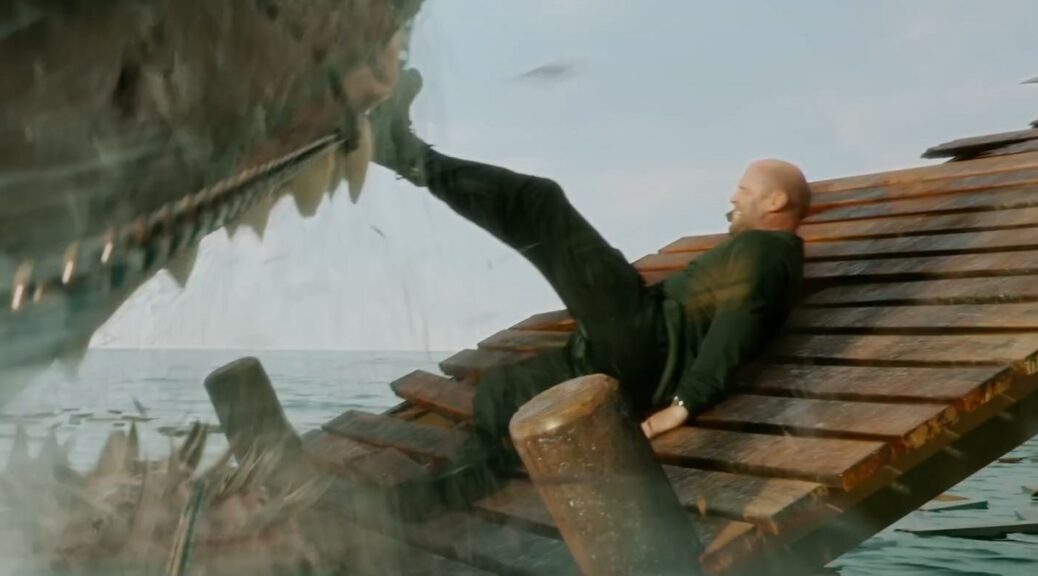
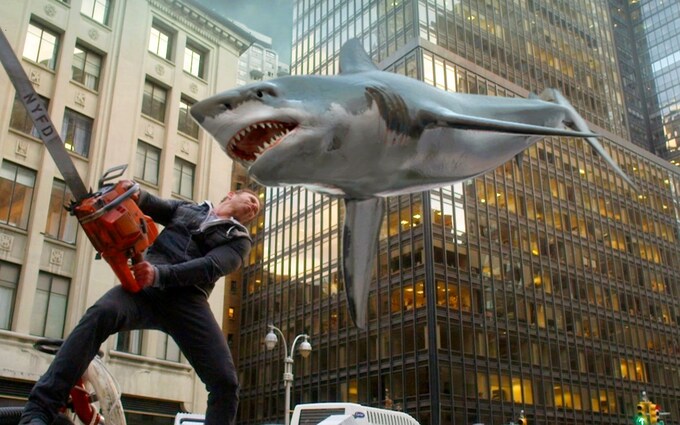
That’s a great tag line, one that promises just the kind of campy fun that Meg 2: The Trench delivers…….eventually.
But for the first 60 minutes, director Ben Wheatley treads water with a cliche-riddled setup that could easily pass for an undersea Aliens knockoff.
Jason Statham returns as Meg-conquering hero Jonas Taylor, who’s since become an eco-warrior out to shut down the dumping of toxic waste. But a visit to the research lab quickly escalates into Jonas joining a team that’s diving through the Thermocline and into “the Trench” – home to many dangerous creatures and one illegal mining operation.
And, of course, some Megs.
And the Megs are looking to mate.
And they have lasers on their heads. No, they don’t, but you’re wishing they did, because by this time Wheatley (Kill List, Sightseers, Free Fire) and screenwriters Erich Hoeber, Jon Hoeber and Dean Georgaris (all back from part one) are playing it much too straight.
“This is some dumbass shit,” says our old buddy DJ (Page Kennedy) as we nod in agreement.
But once Jonas and team are left for dead by some double-crossing scene chewers, Meg 2 leans into its ludicrous groove and starts to have some fun.
The trench is breached! And the escaping horde turns an exclusive beach resort into an all-inclusive Skull Island as Jonas becomes some sort of water-breathing superhero who can ride waves on a Jet Ski and hunt Megs with a helicopter blade!
Damn right he can! Plus, DJ has been taking lessons on badassery and catch phrases since the first adventure, and Mac (Cliff Curtis) is as reliable as ever because Cliff Curtis.
Did I mention the Gaspar Noe-approved POV shot from inside the Meg’s maw as it’s enjoying the all-you-can-eat beach buffet?
At the halfway mark, The Trench is a water-logged snooze. But if you ride it out, Wheatley delivers a second half rally that becomes a funny, over-the-top romp with multiple wink winks to Jaws, Jurassic Park, Piranha and more.
The police work on display in The Night of the 12th (La nuit du 12) is methodical, committed, and sometimes intense. You can say the same about the filmmaking.
Director and co-writer Dominick Moll introduces his latest as a retelling of a “based on true events” unsolved case that still haunts a veteran French police captain. But as he unveils the facts of the investigation in an intimate and calculating manner, Moll deftly brings more universal concerns to the forefront.
Yohan Vives (Bastien Bouillon) rises to Le capitaine after a retirement on the force, and it’s at the going-away party for the retiree that we first glimpse the signs of a generational divide.
Not long after Yohan’s promotion, 21-year old Clara Royer (Lula Cotton-Frapier) is attacked and killed while walking home from a party. And as Yohan digs into the details of the life Clara had been living, he starts to realize that something’s also “amiss” between men and women.
Moll (With a Friend Like Harry…, Lemming, Only the Animals) pulls off a tricky balancing act here. He brings a detached, documentary-like approach to the investigation itself, but adds layers of humanity through Yohan’s growing obsession with the case, and the B story involving an older investigator named Marceau (Bouli Lanners).
Marceau’s marriage is suddenly in serious trouble, and the effect this has on his approach to Clara’s case brings the narrative threads together with a weary resignation. Bouillon and Lanners are terrific leads amid a first-rate ensemble that includes Pauline Serieys as Clara’s grieving best friend and Anouk Grinberg as a sympathetic judge who urges Yohan not to give up on the case.
Cinematographer Patrick Ghiringhelli immerses us in the imposing beauty of the French Alps, while Moll’s Memories of Murder setup gradually adopts a more Cormac McCarthy worldview, but it’s one more focused on how that world views women, young or old.
This is a completely absorbing crime drama, and one that is not afraid to reach beyond its local jurisdiction. By the end of The Night of the 12th, Moll has drawn us into a tragic mystery and left us searching for answers to questions beyond the identity of Clara’s killer.
Talk to Me doesn’t waste much time before escalating the conversation.
And while the shocking prologue isn’t the only reminder you’ll get of similarly structured films such as The Ring or It Follows, Australian brothers Danny and Michael Philippou carve out a timely teen horror update that is often chilling and consistently engaging.
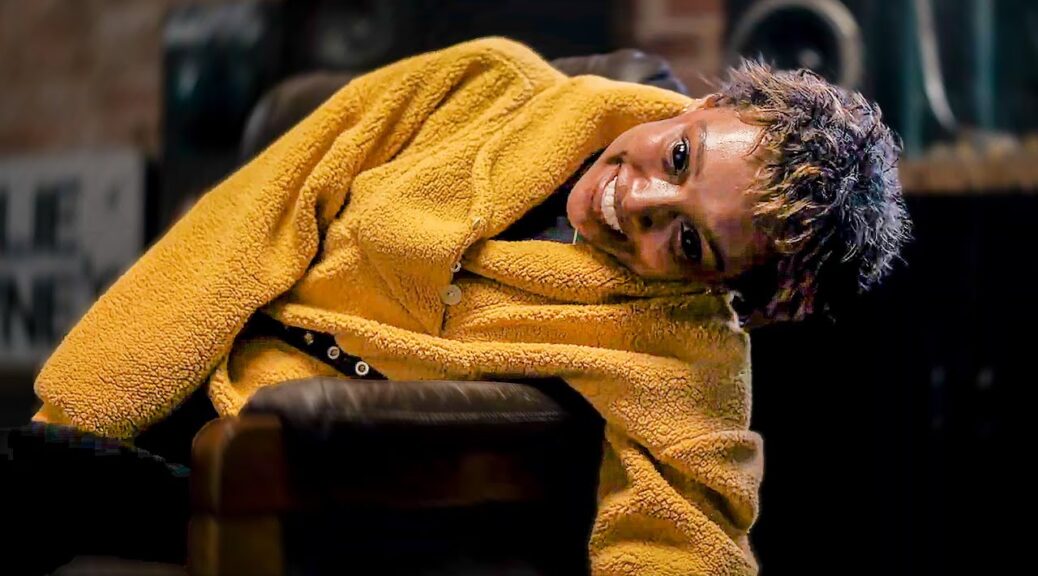
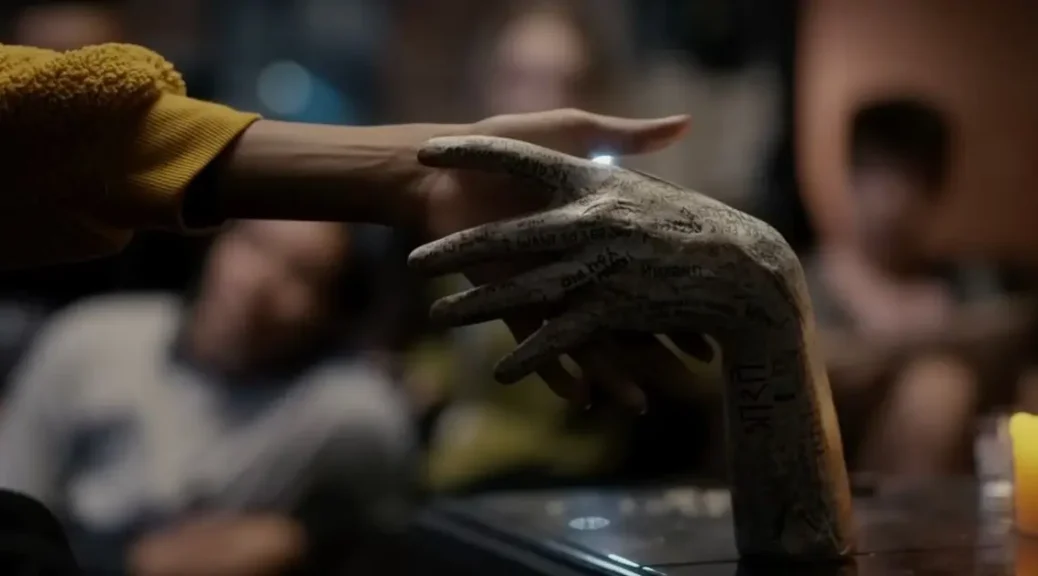
BFFs Mia (Sophie Wilde from The Portable Door) and Jade (Alexandra Jensen) are eager to hang out with the edgy kids at the local parties. And lately, that means getting in the room with Joss (Chris Alosio) and Hayley (Zoe Terakes), because they let you talk to the hand.
Where did Joss get it? Was it the hand of a satanist, or maybe a long dead medium? Details are sketchy. But if you’re game, you grip it, say “talk to me” and take the ride. And everyone else, of course, films the experience.
The Philippou brothers (both direct, Danny also co-writes) worked in TV, YouTube videos and on the camera department for The Babadook before this first feature, and it’s a debut that shines with a confident vision. We’ve seen some of these threads before, but this fresh take is able to capture the current zeitgeist without any desperation for hipness.
Viral fame isn’t the lure here, it’s the high of glimpsing the other side and the enlightened feeling it gives you. But for Mia, it’s also the gateway to a very personal journey that could answer questions from her past while saving the life of Jade’s little brother Riley (Joe Bird).
The script smartly stays a step or two ahead of contrivance, and is able to find some impressive psychological depth as it touches on grief, trauma, and the anxieties of leaving childhood behind.
Plus, come on, the creepy “embalmed hand” gimmick is effective from the start. It gives the Philippou brothers a great anchor for building an aesthetic of ethereal dread while they score time and again with wonderful practical effects.
This is R-rated horror, refreshingly light on the jump scares and false alarms, leaning instead on a parade of visual images that can truly terrify. And even when we don’t see what the game players are seeing, the fact that we’ve already had a hellish glimpse feeds a devilishly fun game within our own imaginations.
Talk to Me somehow feels familiar, but uncomfortably so. It’s a horror show always eager to deface the rulebook, and leave you with a wonderfully organic sign that this game is not over.
Right from the opening minutes of Afire, we know that Leon (Thomas Schubert) isn’t very perceptive. But if you know anything about writer/director Christian Petzold, then you know Leon’s plight is only a means to a deeply resonate end.
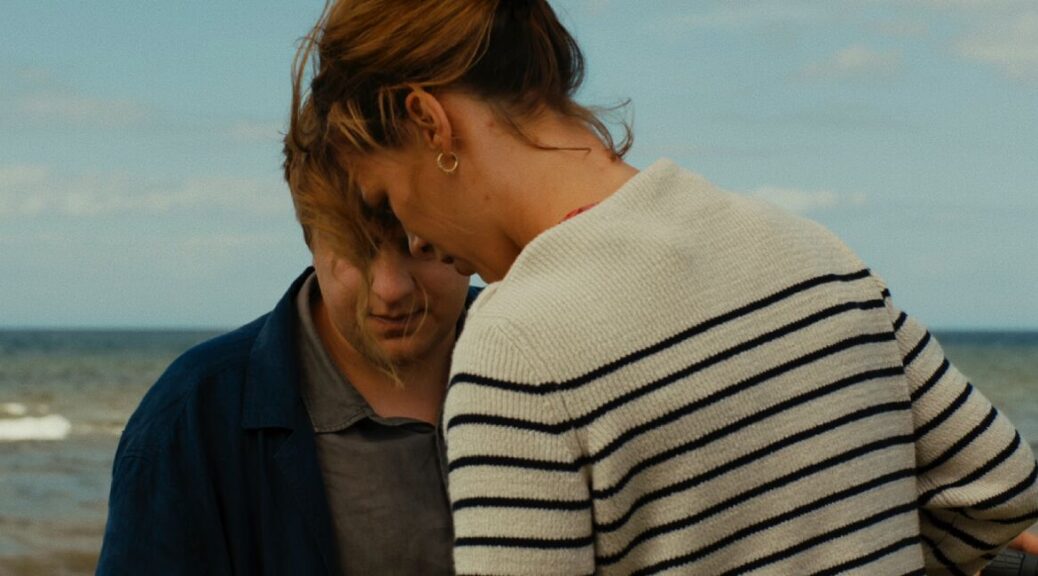
Leon and his friend Felix (Langston UIbel) have come to a vacation home by the Baltic Sea for a working holiday. Leon must put the final touches on his latest book before a meeting with his publisher, while Felix needs to ready his photo portfolio for art school.
But the boys find they are not alone on the spacious property. Nadja (Petzold favorite Paula Beer) is staying there as well, and keeping Leon awake via vocal late night trysts with Devid (Enno Tebbs), a lifeguard at the nearby beach.
So the three become friends, while Leon keeps to spying from a distance and declining all offers of fun or relaxation because “work won’t allow it.”
Except, Leon’s never really working. He spends the days as the pooper of this party, too self-absorbed to notice anything outside of his own sad sack, not even the increasing threat of nearby wildfires.
For a time, Petzold (Transit, Undine, Phoenix) crafts an amusing dramedy of awkwardness, one that’s noticeably lighter than his usual fare. But as Leon’s publisher (Matthias Brandt) arrives, more personal details are revealed and the fires grow closer, the film’s third act becomes heavy with timely resonance.
A creative life – a fulfilling life – requires participation. Fear of failing is fear of living, and even the deepest heartaches can come to serve a greater purpose. Indeed, the film itself may be Petzold’s answer to unprecedented recent history.
The small ensemble (stellar) and remote location are common traits of a pandemic production. Are the fires here a winking nod to Leon’s blindness to every forest around him, or a more direct metaphor to the worldwide plague?
The film works either way. Petzold excels with characters like these, yearning to break from whatever may be holding them back. Afire finds him working on a smaller, more comedic scale, but never lacking the keen insight we’ve come to expect.
And from Megs to ‘Nados to super sharks eating Samuel L. Jackson in the middle of a Samuel L. Jackson speech, we clearly cannot get enough shark movies.
Shudder’s Sharksploitation takes a…wait for it…deep dive into the titular subgenre, building a scattershot timeline for how sharks have been depicted in cinema, both BJ (before Jaws) and AJ (after Jaws.)
First-time director Stephen Scarlata rolls out a respectable array of film historians and pop culture commentators, interspersing the requisite film clips, and sometimes bunching several together via split screens.
Scarlata doesn’t always follow a strict chronology, which can be a bit distracting as the approach sometimes groups the shark films by era, and other times by a similar theme.
Still, there is some solid info here, such as the progression of sharks being held as Gods in the 1931 Murnau film Tabu, to being held by evil geniuses in Bond films, to being hunted for harassing a small New England town over 4th of July weekend.
And, of course, once Jaws practically invented the “blockbuster” as we know it, shark mania was cranked up to eleven while stoking a fear that wasn’t exactly based on fact. Jaws author Peter Benchley came to regret this, and the film is careful to show how he later would devote his time and energy to ocean conservation.
But in the decades since, the laws of shark physics (“shar-sics”!) have been willingly ignored by shark films, and Scarlata achieves a fun sense of mischief by often following a film synopsis with a quick cut to an increasingly exasperated marine biologist.
There’s also an enlightening and funny look behind that infamous line from Shark Attack 3: Megalodon, a revisit to the influx of sharks on 70s TV (lookin’ at you, Fonzie), and a nod to the relative “cooling off” period before an eventual rebirth via 1999’s Deep Blue Sea and the emergence of SyFy channel originals
But along with the low-budget “mockbusters” of The Asylum and the intentional ridiculousness of the Sharknado franchise, Scarlata reminds us that there are more recent entries (Open Water, TheShallows) that found ways to thrill with new rules for an old game.
The film’s a little rough around the edges, and it suffers from a wandering nature that can seem like treading water, but Sharksploitation is an entertaining trip through the history of a beloved subgenre. And ultimately, it feels both welcome and overdue.
Now if you’ll excuse me, I have to shop for Mom’s Shark Week gift.
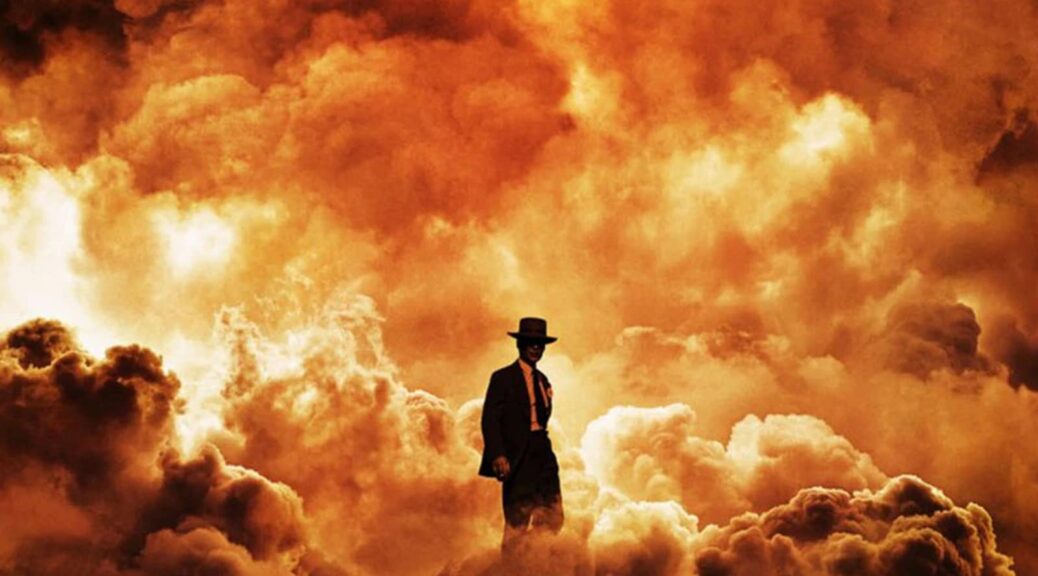
I love that “Barbenheimer” has become a thing. Why are people so excited that two films open in theaters on the same weekend? The polar contrast of tones is certainly a fun mashup, but it’s also the confidence we have in two uniquely visionary filmmakers.
Christopher Nolan reportedly became invested in making a film about “the father of the atomic bomb” when Robert Pattinson gave Nolan a collection of J. Robert Oppenheimer’s speeches. In adapting two source books, writer/director Nolan gives Oppenheimer an engrossing IMAX treatment that serves up history lesson, character study and mystery thriller during three unforgettable hours.
Cillian Murphy is simply mesmerizing and absolutely award-worthy as Oppenheimer, who – years after his Manhattan Project delivered the bomb that ended WWII – is facing the possible loss of his security clearance and thus, career. With his wife Kitty (Emily Blunt) seated nearby, Oppenheimer endures grueling interrogation on his past associates and activities from an Atomic Energy Commission security board led by Roger Robb (Jason Clarke) and Gordon Gray (Tony Goldwyn).
In the film’s first two acts, Nolan uses this questioning as the anchor to chart Oppenheimer’s rise through academia to become not “just self important, but actually important.” On the campus of Berkeley, he embraces revolution in both physics and the world, enthralling his students, supporting “left wing causes” and carrying on an intense affair with avowed communist Jean Tatlock (Florence Pugh) before being hand-picked by no-nonsense General Leslie Groves (Matt Damon) to lead the team tasked with inventing a nuclear weapon before the Nazis do.
From the outset, Nolan and Murphy craft Oppenheimer as an endlessly fascinating creature, a man unable to turn off his mind from constantly questioning beyond this world. Murphy never shrinks from the close-ups that pierce Oppenheimer’s soul, and his body language and manner are often awkward and brusk, revealing an intellectually tireless man with little regard for alienating those not on his level, including AEC Chairman Lewis Strauss (Robert Downey, Jr., never better).
But Oppenheimer’s commitment is total, as is Nolan’s. With strategic use of black and white (an IMAX film stock developed exclusively for the film) to contrast cinematographer Hoyt Van Hoytema’s eye-popping detail, Nolan utilizes impeccable visual storytelling that enhances his script’s ambition without overshadowing it. Ludwig Göransson’s score dances beautifully with production design from Ruth De Jong, totally immersing us in the manufactured town of Los Alamos, where three years of development finally led to a successful bomb test (a breathless sequence that alone should land sound designer Randy Torres an Oscar nod).
For two hours, the historical tale is assembled through precision and care by a master craftsman with the finest tools at his disposal (including a spotless ensemble that also includes Kenneth Branagh, Rami Malek, Casey Affleck, Tom Conti, Matthew Modine, Olivia Thirlby, David Dastmalchian, James Remar and Benny Safdie), and then Nolan digs into the human failings, moral ambiguities and philosophical grappling that surround a man and his mission.
As Oppenheimer realizes that “genius is no guarantee of wisdom,” and his superiors only want to expand America’s nuclear arsenal, the film’s final act becomes a dizzying mix of JFK, Amadeus and The Tell Tale Heart.
Haunted by the devastation the bomb brought to both the “just and unjust,” Oppenheimer ignores his wife’s pleas to fight back as his character is assassinated, and a naive senate aide (Alden Ehrenreich) starts to piece together the puzzle about who is pulling the strings.
As the film races toward a tense and satisfying reveal, some of the dialogue does flirt with needless explanation, but these sensational actors never let a word of it land as completely false.
Much like any film of this nature, Oppenheimer takes its liberties and leaves room for further study. But Nolan takes you inside the personal journey of one of the most important men in history, with resonant and challenging lessons on hubris, envy, blind faith and the search for redemption. And by the end of hour three, he leaves you drained but thankful for the experience
There’s no Barbie here, but you will find a cinematic dream world with so very much to offer.
Sure, the Losers Club leaps to mind. But the truth is that horror films are littered with lovable losers – often their corpses. Why? It’s easy to root for an underdog, and nothing packs an emotional wallop like watching that bumbling, vulnerable sweetheart meet a grim end.
We love them all: Sean & Ed, Viago & Vladislav, Melvin Juno and 100 Bloody Acres‘s Reg & Angus Sampson. But these are our favorites.
5. Oskar, Let the Right One In (2008)
In 2008, Sweden’s Let the Right One In emerged as an original, stylish thriller – and the best vampire flicks in years. A spooky coming-of-age tale populated by outcasts in the bleakest, coldest imaginable environment, the film breaks hearts and bleeds victims in equal measure.
Kare Hedebrant‘s Oskar with a blond Prince Valiant cut needs a friend. He finds one in the odd new girl (an outstanding Lina Leandersson) in his shabby apartment complex. She, as it turns out, needs him even more.
This is a coming-of-age film full of life lessons and adult choices, told with a tremendous atmosphere of melancholy, tainted innocence, and isolation. Plus the best swimming pool carnage scene ever.
The unsettling scene is so uniquely handled, not just for horrifying effect (which it certainly achieves), but to reinforce the two main characters, their bond, and their roles. It’s beautiful, like the strangely lovely film itself.
4. Lionel Cosgrove, Dead Alive (1992)
Rated R for “an abundance of outrageous gore,” Dead Alive is everything the early Peter Jackson did well. It’s a bright, silly, outrageously gory bloodbath.
Lionel Cosgrove (Timothy Balme) secretly loves shopkeeper Paquita Maria Sanchez (Diana Penalver), but she has eyes for someone less milquetoast. Until, that is, she’s convinced by psychic forces that Lionel is her destiny. Unfortunately, Lionel’s milquetoast-iness comes by way of decades of oppression via his overbearing sadist of a mother, who does not take well to her son’s new outside-the-home interests. Mum follows the lovebirds to a date at the zoo, where she’s bitten (pretty hilariously) by a Sumatran rat-monkey (do not mistake this dangerous creature for a rabid Muppet or misshapen lump of clay).
Braindead is so gloriously over-the-top that nearly anything can be forgiven it. Jackson includes truly memorable images, takes zombies in fresh directions, and crafts characters you can root for. But more than anything, he knows where to point his hoseful of gore, and he has a keen imagination when it comes to just how much damage a lawnmower can do.
3. Katakuri Family, The Happiness of the Katakuris (2001)
Takashi Miike is an extremely prolific director. He makes a lot of musical films, a lot of kids’ movies, a lot of horror movies, and then this – a mashup of all of those things. Like Sound of Music with a tremendous body count.
The Katakuris just want to run a rustic mountain inn. They’re not murderers. They’re lovely – well, they’re losers, but they’re not bad people. Buying this piece of property did nothing to correct their luck, either because, my God, their guests do die.
You might call this a dark comedy if it weren’t so very brightly lit. It’s absurd, farcical, gruesome but sweet. There’s a lot of singing, some animation, a volcano, a bit of mystery, more singing, one death by sumo smothering, and love. It sounds weird, truly, but when it comes to weird, Miike is just getting started.
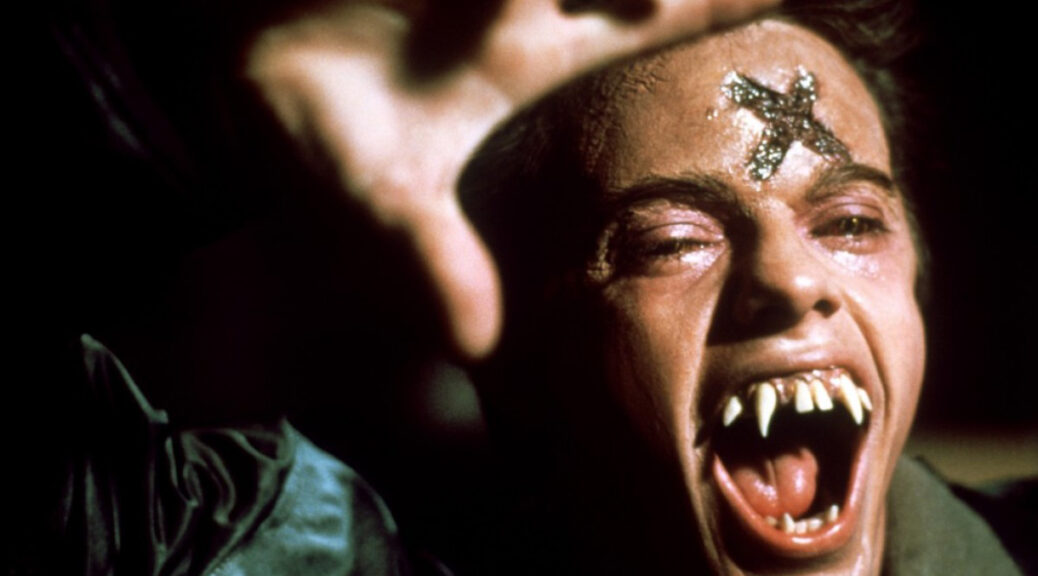
2. Evil Ed, Fright Night (1985)
Fright Night takes that Eighties, Goonies-style adventure (kids on an adult-free quest of life and death) and uses the conceit to create something tense and scary, and a bit giddy as well. The feature debut as both writer and director for Tom Holland, the film has some sly fun with the vampire legend.
Roddy McDowall got much deserved love at the time for his turn as a washed-up actor from horror’s nostalgic past, and Chris Sarandon put his rich baritone to campy, sinister use.
Still, everyone’s favorite character was Evil Ed, the manic, pitiful loser turned bloodsucking minion. Credit Stephen Geoffreys for an electric and, at least in one scene, heartbreaking performance.
1. Tucker& Dale, Tucker and Dave vs. Evil (2010)
Horror cinema’s most common and terrifying villain may not be the vampire or even the zombie, but the hillbilly. The generous, giddy Tucker and Dale vs. Evil lampoons that dread with good-natured humor and a couple of rubes you can root for.
In the tradition of Shaun of the Dead, T&DVE lovingly sends up a familiar subgenre with insightful, self-referential humor, upending expectations by taking the point of view of the presumably villainous hicks. And it happens to be hilarious.
Two backwoods best buds (an endearing Tyler Labine and Alan Tudyk) head to their mountain cabin for a weekend of fishing. En route, they meet some college kids on their own camping adventure. A comedy of errors, misunderstandings and subsequent, escalating violence follows as the kids misinterpret every move Tucker and Dale make.
T&DVE offers enough spirit and charm to overcome most weaknesses. Inspired performances and sharp writing make it certainly the most fun participant in the You Got a Purty Mouth class of film.