Much like early 80s music video directors adjusting to the possibilities afforded by the power of MTV, it’s taken current filmmakers some time to craft nuanced statements on the rise of social media.
But then, we’ve yet to see evidence that ZZ Top’s “Legs” swung an election, so clearly, we’re all still adjusting.
Searching is the latest reminder that for social media-themed movies, at least, things are looking up.
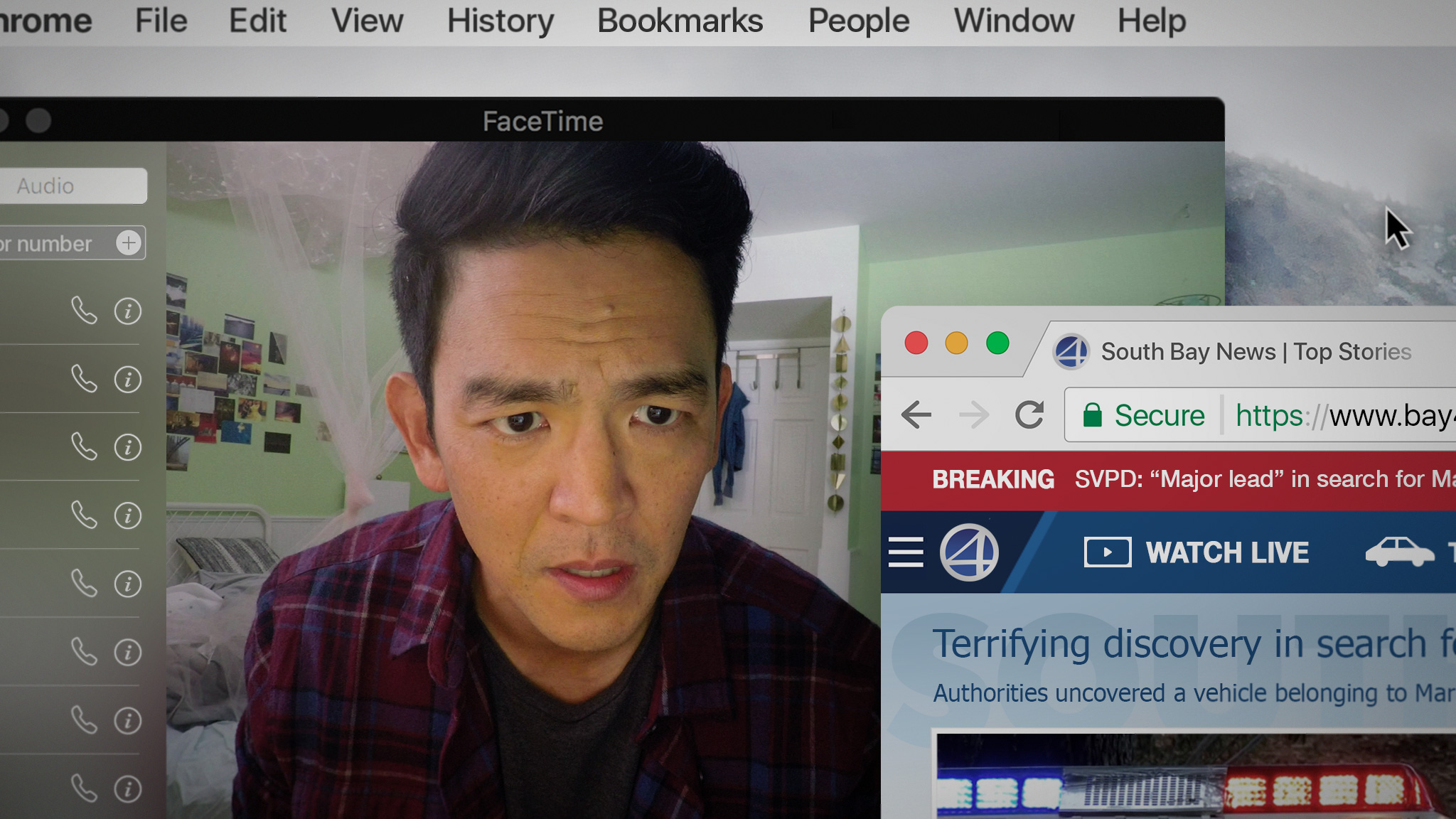
In his debut feature, director/co-writer Aneesh Chaganty crafts a smart, fast-moving internet mystery that plays out on the screens of various platforms. Dropping sly clues among its plot twist head fakes, the film becomes a surprisingly satisfying B-movie potboiler, a terrifically tense race against time that reminds us how tech-entrenched we are without resorting to any heavy-handed judgments.
Busy father David Kim (a perfect John Cho) is annoyed when his 15-year-old daughter Margot (Michelle La) won’t answer his texts or face time requests. Annoyance turns to desperation when it becomes clear Margot is a missing person.
Detective Vick (Debra Messing, effectively understated and against type) is on the case, and as David follows her advice to scour Margot’s online history for clues, we learn along with Dad that Margot had secrets.
Right from a nifty opening montage that serves to bond us with the Kim family while it wistfully reminds us how our own connections to technology have grown, Chaganty establishes a commitment to narrative momentum that rarely lets up. Very little time feels wasted because, natch, there’s no time to waste.
The integrity of the “real-time computer screen” device is richly detailed, organically sound and beautifully constructed, drawing a strange contrast in authenticity with the TV news segments covering Margot’s disappearance.
Did Changanty not bother sweating those details, or is it his nod to “old media” being out of step? I’m guessing the latter.
At least one plot twist seems a bit of a reach, and the final reveal stops just south of Scooby Doo inspired explanation, but Searching has brains and heart enough to rise above.
Though Chaganty assembles the film with the latest in frame wizardry, he surrounds it with familiar thriller elements that bring a subtle throwback feel to the astute look at how we live now.
Ultimately, Searching is a mystery with as much to say about parenting as posting, and a remarkably in-the-moment statement.
It’s like an end-of-summer fire sale this week. So many movies! All available to watch from the couch in unwashed yoga pants and Alf tee shirts. I mean, that’s how we imagine you watching these, but really, wear whatever you want. The important thing is to let us help you decide where to spend your valuable time.
The Harvey Weinstein story is a horror film all its own, but there are echoes of it across the genre. When you are desperate to accomplish something and there are those with power who can manipulate your success, victimization is the likely result in horror. We salute the best films that see Hollywood ambition as death and corruption in the making.
5. The Neon Demon (2016)
“Beauty isn’t everything, it’s the only thing.”
So says an uncredited Alessandro Nivola, a fashion designer waxing philosophic in Nicolas Winding Refn’s (Bronson, Drive) nightmarish The Neon Demon.
Jesse (Elle Fanning) is an underaged modeling hopeful recently relocated to a sketchy motel in Pasadena. Will she be swallowed whole by the darker, more monstrous elements of Hollywood?
Hollywood is a soulless machine that crushes people. The world objectifies women, a toxic reality that poisons everyone it touches. Small town girl gets in trouble following her dreams in Tinseltown. There’s nothing new here. To manufacture something, it’s as though Refn replaces fresh ideas with bizarre imagery.
The film is not without its charms. Like Only God Forgives, the longer you wander through this nightmarish landscape, the more outlandish the dream becomes.
And you know what? Keanu Reeves isn’t bad. Huh!
4. Starry Eyes (2014)
Sarah (Alex Essoe) is an aspiring actress in LA and a bit of a delicate flower. She lives in a complex full of other aspiring actors, but she doesn’t hang out with them or participate in their low budget indie circle – they believe she thinks she’s too good for them. Then she auditions for a part, does some things on camera for the audition she regrets, behaves weirdly in the bathroom, and is invited to meet The Producer.
On the one hand, Starry Eyes offers an obvious plot about selling your soul for success, dressed in a cautionary tale about Hollywood. But the writing/directing team of Kevin Kolsch and Dennis Widmyer are much more sly than that. Yes, the insights they provide about the backbiting lowest rungs of the Hollywood ladder abound, but they are far more compassionate than what you routinely see.
Also fascinating is the clever use of the protagonist Sarah – she begins as our empathetic heroine, our vehicle through the daily degradation of trying to “make it.” But the filmmakers have more in store for her than this, and Essoe uncomfortably peels layer after layer of a character that is never fully what we expect.
Look for outstanding, witchy appearances by genre veteran Maria Olsen, as well as a spot-on Louis Dezseran. They will make you uncomfortable.
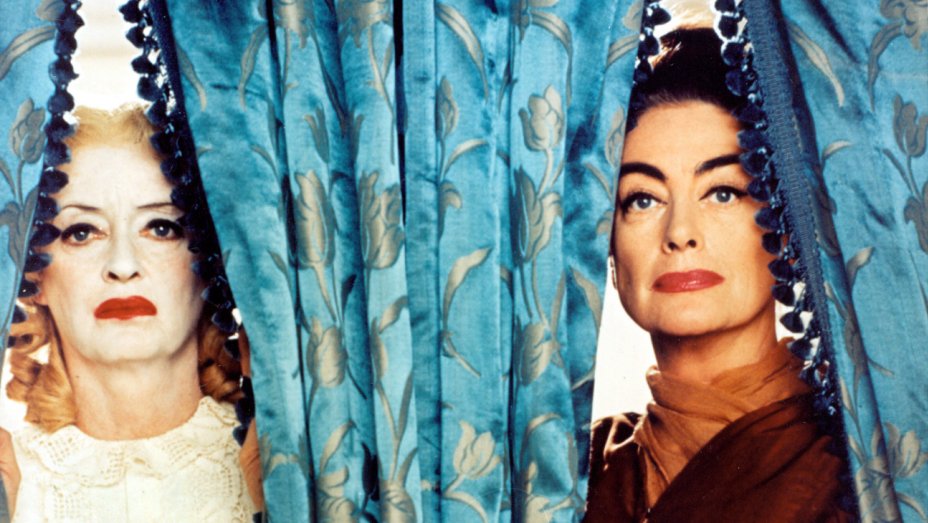
3. What Ever Happened to Baby Jane? (1962)
Bette Davis and Joan Crawford? Yes, please!
The two then-aging (just barely, if we’re honest) starlets played aging starlets who were sisters. One (Davis’s Jane) had been a child star darling. The other (Crawford’s Blanche) didn’t steal the limelight from her sister until both were older, then Blanche was admired for her skill as an adult actress. Meanwhile, Jane descended into alcoholism and madness. She also seemed a bit lax on hygiene.
Blanche winds up wheelchair bound (How? Why? Is Jane to blame?!) and Jane’s envy and insanity get the better of her while they’re alone in their house.
Famously, the two celebrities did not get along on set or off. Whether true or rumor, the performances suggest a deep, authentic and frightening hatred borne of envy that fuels the escalating tension.
Davis is at her unhinged best in a performance that earned her an Oscar nomination. Crawford pales by comparison (as the part requires), but between the hateful chemistry and the story’s sometimes surprising turns, this is a movie that ages well, even if its characters did not.
2. Shadow of the Vampire (2000)
Not Hollywood – Germany. But actors are putting their fate in the wrong hands for the sake of stardom nonetheless.
E. Elias Merhige revisits F. W. Murnau’s masterpiece Nosferatu with smashing results in Shadow of the Vampire. Wickedly funny and just a little catty, ‘Shadow’ entertains with every frame.
This is the fictional tale of the filming of Nosferatu. Egomaniacal artists and vain actors come together to create Murnau’s groundbreaking achievement in nightmarish authenticity. As they make the movie, they discover the obvious: the actor playing Count Orlok, Max Schreck is, in fact, a vampire.
The film is ingenious in the way it’s developed: murder among a pack of paranoid, insecure backstabbers; the mad artistic genius Murnau directing all the while. And it would have been only clever were it not for Willem Dafoe’s perversely brilliant performance as Schreck. There is a goofiness about his Schreck that gives the otherwise deeply horrible character an oddly endearing quality.
Eddie Izzard doesn’t get the credit he deserves, reenacting the wildly upbeat performance of Gustav von Wagenheim so well. The always welcome weirdness of Udo Kier balances the egomaniacal zeal John Malkovich brings to the Murnau character, and together they tease both the idea of method acting and the dangerous choice of completely trusting a director.
https://www.youtube.com/watch?v=uAn5uLNMmjk&t=10s
1. Rosemary’s Baby (1968)
Again, not Hollywood, New York. But how genius is this movie?
Rosemary’s Baby remains a disturbing, elegant, and fascinating tale, and Mia Farrow’s embodiment of defenselessness joins forces with William Fraker’s skillful camerawork to cast a spell.
Working from Ira Levin’s novel, Roman Polanski spins a tale of mid-run actor Guy Woodhouse (John Cassavetes) who sells his wife’s womb for success. Dude!
Like so many of these films, Rosemary’s Baby sees the Faustian dilemma not in terms of carnal or intellectual pursuits, but the desperate drive for stardom. The fact that Guy doesn’t even have to sacrifice anything himself actually makes the evil that much more frustrating and horrifying.
Of course, Mia Farrow’s embodiment of helplessness and Ruth Gordon’s Oscar-winning turn as rouged busybody Minnie Castavet only give the film more and surprising layers. It’s a masterpiece of atmosphere and storytelling.
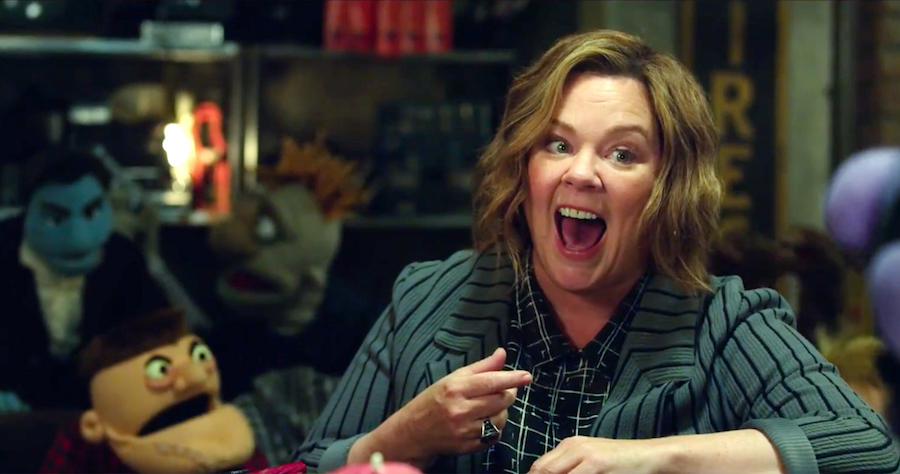
Hey, friends of puppetry! What did we think about the Melissa McCarthy puppetmania that is The Happytime Murders? How about Charlie Hunnam’s Pappilon remake? And did you hear the dish on all those Hollywood celebrities? If not, you clearly haven’t seen Scotty and the Secret History of Hollywood, but we did and we’ll tell you what we thought about those three flicks plus all that’s fit to watch in new home entertainment.
Don’t expect wholesale changes to the classic survival tale from 1973. Instead, Danish director Michael Noer makes a subtle shift in tone, moving the focus away from the physical, and more toward the mental, philosophical and spiritual toll levied by years in a brutal penal colony.
Like the Steve McQueen/Dustin Hoffman original, this new Papillon is based on Henri Charriere’s book detailing his ordeal in a French Guyana prison camp, a sentence that began in the 1930s. Though the questionable authenticity of many of the book’s details earned it a “biographical novel” classification, Henri’s tale of primal struggle still commands attention.
As Henri (nicknamed “Papillon” after his butterfly tattoo), Charlie Hunnam finds McQueen’s big shoes a surprisingly comfortable fit. Showing more commitment than he has to date, Hunnam turns in a fierce performance that caters to Noer’s vision of an outside/in character arc.
Rami Malek is even better as the soft-spoken Louis, a wealthy counterfeiter who leans on the bruising Henri to provide safe haven from the savagery of other inmates. Keeping the basics of Hoffman’s characterization, Malek adds his own shading for a compelling take on a man drawn to his friend for the defiant commitment lacking within himself.
Noer sets a compelling contrast between two worlds, both visually impressive. The prison interiors are draped in blood, sweat and dark despair, while the colorful, expansive vistas just outside taunt the inmates with constant reminders of a freedom they are not likely to taste again.
The parts are all here and competently assembled, but the punch of the bigger themes Noer and screenwriter Aaron Guzikowski (Prisoners, Contraband) are aiming for never land flush. The ordeal is tense, brutal and sometimes pulse-pounding, but this new Papillon can’t fully expose the nerve it was digging for.
Beyond physical toughness, what was it that drove Henri to merely bend where other men were breaking?
We get some fine glimpses, but none with depth enough to truly transcend the journey.
Ahoy! This we talk through the pros and cons (mostly cons) of The Meg, as well as (mostly pros) BlackKklansman and (entirely cons) The Slenderman. We also run through what’s worth it and what’s not in home entertainment.
A lot of horror romances don’t work out. Whether it’s the demon/internet connection hoping to impregnate you, the stalker/voyeur/vampire obsessed with you, or that dreamy girl who turns into a hungry panther every time she’s aroused – finding Mr. or Ms. Right in a horror movie can prove dangerous.
Let’s not even talk about prom dates.
Here are five of our favorite examples of the dire, bloody, terrifying reason that following your heart is not always your best bet.
5. Scream (1996)
Oh, poor Sidney Prescot (Neve Campbell). Her boyfriend Billy (Skeet Ulrich) is practically Johnny Depp levels of hot, but ever since that thing with her mom, Sid can’t get intimate. Plus, Billy Loomis might be the town’s serial killer.
No, love doesn’t turn out great for Sid and Billy. Or for Tatum (Rose McGowan) and Stu (Matthew Lillard). Or for Mr. and Mrs. Prescott. In fact, the only romance that seems to flourish at all ends up giving one guy a terrible limp.
4. It Follows (2014)
Moments after a sexual encounter with a new boyfriend, Jay (Maika Monroe) discovers that she is cursed. He has passed on some kind of entity – a demonic menace that will follow her until it either kills her or she passes it on to someone else the same way she got it.
Writer/director David Robert Mitchell has captured that fleeting yet dragging moment between childhood and adulthood and given the lurking dread of that time of life a powerful image. There is something that lies just beyond the innocence of youth. You feel it in every frame and begin to look out for it, walking toward you at a consistent pace, long before the characters have begun to check the periphery themselves.
Mitchell’s provocatively murky subtext is rich with symbolism but never overwhelmed by it. His capacity to draw an audience into this environment, this horror, is impeccable, and the result is a lingering sense of unease that will have you checking the perimeter for a while to come.
3. Trouble Every Day (2001)
Backed by a plaintive, spooky soundtrack by Tindersticks, Clair Denis’s metaphorical erotic horror examines gender roles, sex and hunger. Denis is one of France’s more awarded and appreciated auteurs, so a one-time voyage into horror should not be dismissed.
A newlywed American couple head to Paris, ostensibly to honeymoon, but Shane (Vincent Gallo) is really there to re-establish connection with old colleagues Coré (Béatrice Dalle) and her husband, Léo (Alex Descas). The three scientists once participated in an experiment, and Shane needs to find them.
The film is a startling work of biologic-horror, but its existential riffs on intimacy, dominance and violence—common fare in the genre—are clearer-headed and more disturbing here than in anything else that swims the same murky waters.
https://www.youtube.com/watch?v=oz5VlZc8tC4
2. Get Out (2017)
Writer/director Jordan Peele crafts an impeccable horror based in social anxiety, articulating something more relevant and powerful than anything horror had undertaken in decades. His is a brilliant take on modern racism, cultural appropriation and horror.
On a less metaphorical level, it’s also a look at a really, really bad romance. Poor Chris (Daniel Kaluuya) agrees to spend the weekend with his girl Rose (Allison Williams) and her parents, meeting the family and participating in a big, rich-white-people party.
But Rose’s relationships don’t turn out so rosy. Just ask Georgina and Walter.
1. Audition (1999)
The prolific director Takashi Miike made more than 70 movies in his first 20 or so years in film. Among the best is Audition, a phenomenally creepy May/December romance gone very, very wrong.
Audition tells the story of a widower convinced by his TV producer friend to hold mock television auditions as a way of finding a suitable new mate. He is repaid for his deception.
Nearly unwatchable and yet too compelling to turn away from, Audition is a remarkable piece of genre filmmaking. The slow moving picture builds anticipation, then dread, then full-on horror.
By the time Audition hits its ghastly conclusion, Miike and his exquisitely terrifying antagonist (Eihi Shina) have wrung the audience dry. She will not be the ideal stepmother.
A little something called Avengers: Infinity War finally comes home this week. Heard of it? Well, you should have. You can also pick up a fun misfire of a punk rock flick.
You didn’t think Great White-invested tornados meant the pool of shark movie premises was running dry, did you? Not so long as someone is just conscious enough to mumble “Statham fights a shark” in a drunken pitch meeting!
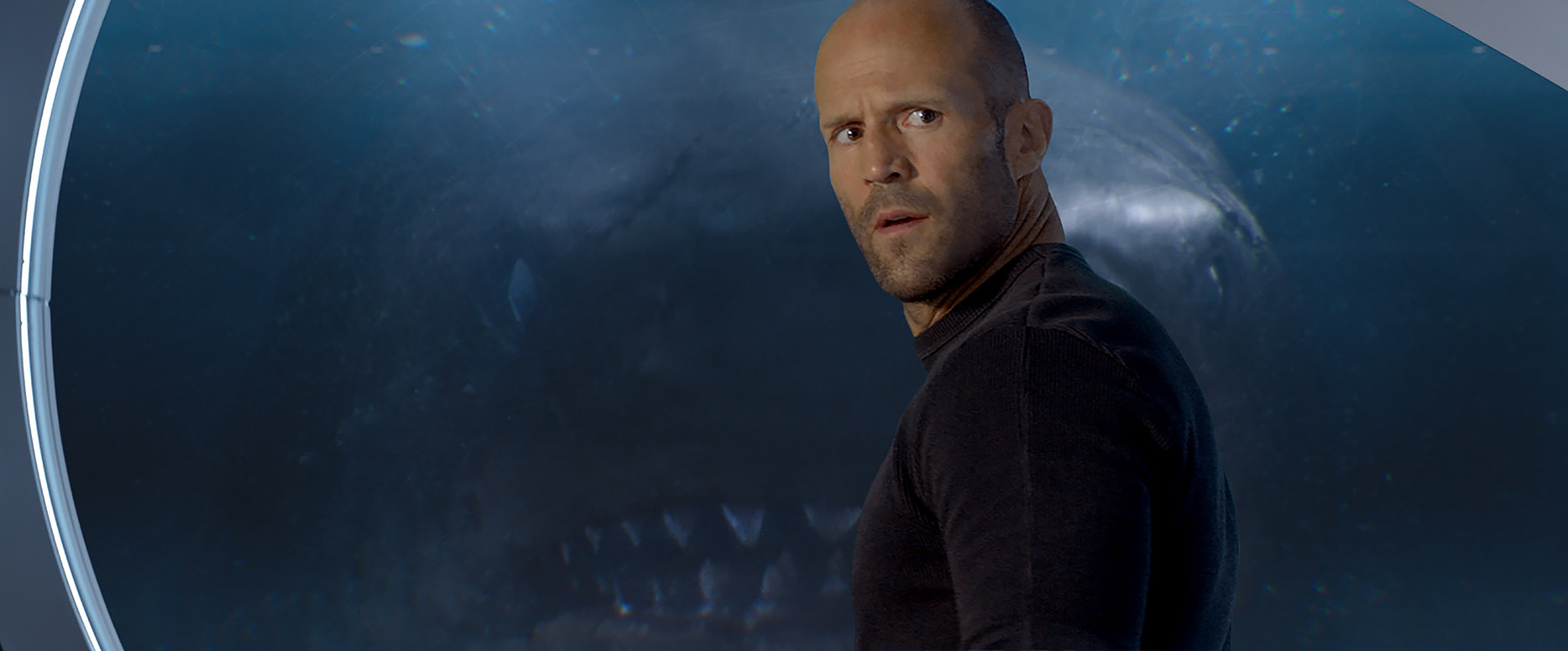
The Meg brings that premise to 3-D life, with Statham wet-suitting up as Jonas, the reluctant hero with a haunted past. After a tragic encounter with a giant underwater beast, Jonas hangs up the scuba mask to drink away his days in the bars of Thailand.
But five years later, his ex-wife is part of an undersea research team at the mercy of the legendary Megaladon, a 70-foot long “living fossil” of a shark thought to be extinct for over 200 million years. Jonas, of course, knew it wasn’t, and now he must tell everyone “I told you so” with his most steely glare, go back on his vow to never dive again, and take everything much too seriously.
And that’s the biggest misstep weighing down the entire film. You get the feeling that with a knowing, “Kong: Skull Island” type of monster vibe, this could have been fun, but director Jon Turteltaub (National Treasure) can’t settle on one charted course.
Turteltaub and his team of writers adapt the first of Steve Allen’s “Meg” novels with a host of changes, presumably meant to bolster Statham’s damaged hero quotient. The dramatics are overdone by nearly all involved (though Rainn Wilson, as the billionaire behind the research, finds a mark), and when a nicely subtle hat-tip to Jaws opens the gates for all out scene stealing, The Meg becomes a water-logged mess.
A Chinese co-production with a clear eye on international markets, the film has moments of promise that are quickly snuffed out by exposition that’s neither needed, wanted or interesting. Where’s the fun, sharky nonsense promised by the trailer? That movie might have been a guilty pleasure.