Tag Archives: George Wolf

Fright Club: Bars in Horror

We needed a drink, so we threw back a few and brainstormed the best bars in horror movies. Some of them were dives we’d love to haunt. Others were just really, seriously scary. All of them set the stage for something important in horror.

Who wants a cocktail?

6. The Slaughtered Lamb (An American Werewolf in London, 1981)

What is going on with these guys?! How hard would it have been to just ignore the yanks and let them hang around? What harm could have come of it? But no! They ask one silly question and the next thing you know…

“Enoof!”


5. The Gold Room (The Shining, 1980)

“Little slow tonight, isn’t it Lloyd?”

Great line, even better delivery, in a scene—and a room—that haunts Stanley Kubrick’s masterpiece interpretation of Stephen King’s best novel.

https://www.youtube.com/watch?v=HJVVGzEbJC0

4. Mahers (Grabbers, 2012)

Sea monsters have come to Ireland. They crave the water but they hate alcohol. The only way to save yourself is to get blind drunk and stay inside the pub.

Most Irish movie ever.


3. The Winchester (Shaun of the Dead, 2004)

It’s familiar, you know where the exits are, and you can smoke. It’s The Winchester, best place to hole up and wait out the zombipocalypse.

How’s that for a slice of fried gold?

2. Titty Twister (From Dusk Till Dawn, 1996)

A couple of nogoodnik brothers go from frying pan to the pit of vampire hell as they and the family they kidnapped wait out the night at a strip club of death.

1. Green Room (2015)

You may not catch its name, but that’s OK by the clientele. This Boots & Braces establishment likes its music loud, its patrons white and its dogs bloodthirsty.


The Shapes of Water

Aquarela

by George Wolf

“We swam out through the trunk!”

Those are six of the very few spoken words in Aquarela, and they quickly establish the stakes in Victor Kossakovsky’s immersive documentary. His aim is to get you startlingly close to the world war between man and water.

There is power, there is beauty, there is death. And there’s some death metal, which isn’t as out of place as you might think.

In case you haven’t noticed, this is a great time to be a documentarian, and thus, a fan of documentaries. This year alone, we’ve seen technological breakthroughs make possible the wonders of Apollo 11, They Shall Not Grow Old and Amazing Grace.

Like those, Aquarela (“watercolor” in Portuguese) employs cutting-edge wizardry for an experience that begs for the biggest screen you can find.

Monstrous ocean waves build and crash, huge chunks of ice fall prey to rising global temperatures, and a hypnotic narrative emerges. Mankind has battled the shapes of water for centuries, in hopes of lessening its dangers and harnessing its power, and Kossakovsky feels it’s time to hear from the other side. The few humans who speak feel like party crashers.

Don’t expect explanations, you won’t get any. What you will get in Aquarela is an utterly astounding profile of a living, breathing, dying force of nature.

Born in a Trunk

Judy

by George Wolf

Call it a comeback, a re-introduction or a friendly reminder, but Renee Zellweger’s channeling of Judy Garland is an awards-worthy revelation.

Since winning an Oscar for Cold Mountain over fifteen years ago, Zellweger’s resume has been scattershot and curious enough to make seeing her name on top of the marquee a rather nostalgic blast from the past.

But here, she’s just a blast, bringing a can’t-look-away magnetism to every moment she’s on screen, and leaving a noticeable absence when she’s not.

Based on Peter Quilter’s stage play The End of the Rainbow, Judy shows us a legend struggling to get work and fighting to retain custody of her children. By the late 1960s, daughter Liza was off starting a career of her own, but Judy’s two young kids with producer Sid Luft needed a stable home that Garland could not provide.

Accepting a lucrative offer for a string of concerts in London, Judy leaves her son and daughter with their father in hopes that the British engagement will give her the resources needed to take them back full-time.

Focusing on this late, sad period in Garland’s life is a wise move by director Rupert Goold (True Story) and screenwriter Tom Edge (The Crown). A limited scope can usually provide biopics with a better chance for intimacy, and true to form, Judy’s false notes arrive with the flashbacks to Garland’s days as a child star.

Showcasing her mistreatment as a young cog in the MGM studio system is well-intentioned but unnecessary, the blunt forcefulness of this thread adding little more than jarring interruption.

Zellweger is all we need to feel the tragedy of Garland’s fall. Her portrayal comes fully formed, as both remarkable outward impersonation and a nuanced glimpse into a troubled soul. Nary a movement seems taken for granted by Zellweger, and her delivery of Edge’s memorable dialog is lush with an organic spontaneity.

And though she barely sang publicly before her training for Chicago, Zellweger again shows impressive vocal talent. Of course she can’t match the full richness of the real Judy (who could?), but Zellweger’s style and phrasing are on-point bullseyes, never shrinking from Goold’s extended takes and frequent closeups during some wonderfully vintage musical numbers.

In one of the film’s best moments, Judy joins two male superfans (Andy Nyman, Daniel Cerqueira) for a late night dinner at their apartment. I won’t spoil what happens, but have some tissues handy. It’s a beautifully subtle and truly touching ode to Garland’s status as an early gay icon, and to the universal pain of loneliness.

Ironically, this brilliant performance should bring Zellweger the second act that Judy didn’t live long enough to enjoy. I’m guessing she’ll appreciate it, and I know she’s earned it.

Living Out Loud

Raise Hell: The Life & Times of Molly Ivins

by George Wolf

Even if you know nothing of Molly Ivins, you won’t be long into Raise Hell before you’re wondering: WWMID?

After a lifetime of speaking truth to power was ended by cancer in 2007, what would Ivins do – or more pointedly, what would she say – about the cesspool of blatant corruption that is American politics in 2019?

And as entertaining as Janice Engel’s documentary is, its biggest takeaway is just how badly Ivins is missed in a profession now facing unprecedented threat.

Engel is clearly a fan, but her portrait of Ivins as one of a kind is hard to rebut. A six-foot-tall Texas native who could out-drink the Bubbas while she skewered their elected reps, Ivins blazed a gender trail through newsrooms across the country.

Ivins even covered Elvis’s obit and funeral for the New York Times before settling in as a Pulitzer-nominated political columnist and author, the role that brought her legions of what one longtime colleague called “not readers…constituents.”

Her writing was smart, informed, and extremely opinionated, laced with acerbic wit, a passion for civil liberties and an undeniable voice. And Engel, as director and co-writer, makes sure you realize how unnervingly prescient it was, as well.

Of course, all this also brought Ivins plenty of haters, and though Engel isn’t preaching to that choir, she doesn’t completely shy away from the personal demons that dogged Ivins throughout her life.

Like its subject, the film is fast-paced, smart, fun and funny, as Engel deftly uses Ivins’s timeline as a microcosm of shifting political landscapes. But more importantly, Raise Hell is a fitting tribute to a woman who wasn’t afraid to, and an urgent call to follow her lead.

Head Space

Ad Astra

by George Wolf

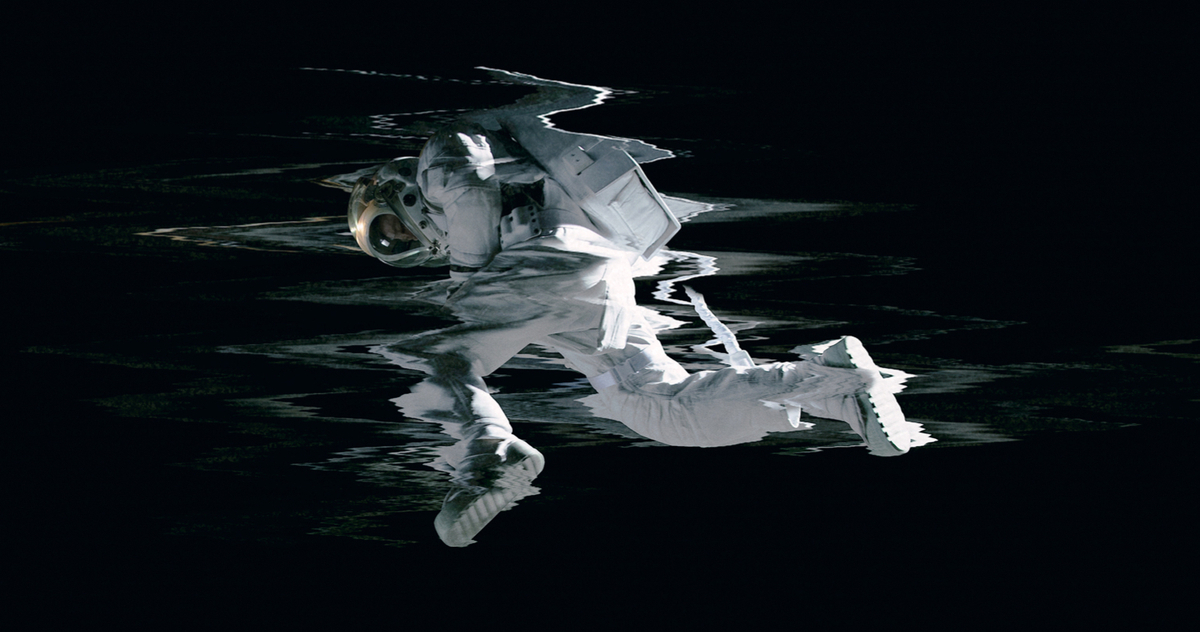
In a near future world full of wondrous space travel, the presence of t-shirt vendors and war zones on the moon provides apt bookends for the struggle to balance both hope and conflict.

The continued search for intelligent alien life keeps mankind gazing “to the stars” (Ad Astra in Latin), but that search has hit a dangerous snag.

Strange electrical surges are amassing casualties all over the globe, and a top secret briefing blames the Lima Project, a deep space probe led by hero astronaut Clifford McBride (Tommy Lee Jones) that hasn’t been heard from in years.

McBride’s son Roy (Brad Pitt) is a decorated astronaut himself, so who better to task with finding out just what happened to dad and his crew?

Daddy issues in zero gravity? There’s that, but there’s plenty more, as a never-better Pitt and bold strokes from writer/director James Gray deliver an emotional and often breathless spectacle of sound and vision.

The film’s mainly meditative nature is punctured by bursts of suspense, excitement and even outright terror. Gray (The Lost City of Z, We Own the Night) commands a complete mastery of tone and teams with acclaimed cinematographer Hoyte Van Hoytema (Dunkirk, Interstellar, Let the Right One In) for immersive, IMAX-worthy visuals that astound with subtlety, never seeming overly showy.

And speaking of subtle, Pitt is a marvel of piercing restraint. Flashback sketches of an estranged wife (Liv Tyler, effective without dialog) and reflective voiceovers help layer Roy as a man lauded for his lack of emotion, but lost in a space devoid of true connection. Though the role is anchored in common masculine themes, Pitt’s take never succumbs to self pity. A new tux for award season would be wise.

We’ve seen plenty of these elements before, from Kubrick to Coppola and beyond, but it is precisely in the beyond that Ad Astra makes its own way. It’s a head trip, and a helluva rocket ride.

Screening Room: Hustlers, Brittany Runs a Marathon, Tigers Are Not Afraid, Haunt, Depraved

She-Wolves of Wall Street

Hustlers

by George Wolf

“You don’t have to believe me. I’m used to people not believing me.”

“Destiny” (Constance Wu) is telling her tale to Elizabeth (Julia Stiles), a writer in the midst of a story on a gang of high-end strippers who were busted for drugging clients and fleecing them for thousands.

The disclaimer is a clear yet-not-overbearing sign that our window into the world of Hustlers may not necessarily be the most clear and reliable. It’s one of many wise choices made by writer/director Lorene Scafaria in her adaptation of Jessica Pressler’s article on “The Hustlers at Scores.”

Wu is terrific as the naive newbie, overshadowed only by a completely magnetic Jennifer Lopez as Ramona, the stripping legend who teaches Destiny (and by extension, us) the ropes of spotting the highest-rolling Wall St. d-bags to milk for all they can.

But when the crash hits in ’08, times get tough for everybody, and it isn’t hard to justify hatching a plan to swindle the swindlers.

Scafaria ((Seeking a Friend for the End of the World, The Meddler) is not shy about the Scorsese influences, and seeing Will Ferrell and Adam McKay as executive producers makes The Big Short-syled humor all the more understandable.

No matter. This is still a supremely assured vision from Scafaria, cleverly constructed with visual flair, solid laughs, a sizzling pace and some truly memorable sequences.

One of the many great soundtrack choices comes right out of the gate, as Scafaria sets the stakes with Janet Jackson’s spoken-word opening to “Control.”

Who’s got it? Who doesn’t? And who’s badass enough to go get it?

It’s a wild, intoxicating high of girl power. And when it all comes crashing down, the moral ambiguities are scattered like dollar bills under the pole. As Ramona is quick to remind us, if there’s money being thrown, there will always be people ready to dance.

Different Drum

Linda Ronstadt: The Sound of My Voice

by George Wolf

You may have heard that Linda Ronstadt can’t sing anymore, her incredible instrument silenced by Parkinson’s disease. But Ronstadt’s harmonies with a nephew in The Sound of My Voice are gentle and effective, and rendered more bittersweet by her quick, self-deprecating dismissal.

“This isn’t really singing.”

The ironic truth in this engaging documentary is that the sound of her spoken voice is what gives the film the warmth it needs to register as more than just a big screen fan letter.

Ronstadt initially balked at the pitch by directors Rob Epstein and Jeffrey Friedman (Howl, Lovelace) but they won her over with a promise to let her tell the story and define its terms.

So while we don’t get any juicy intimacies or sordid details, we do get some fantastic highlights from her archives and a unique, first-person perspective of being a queen in a king’s game.

For anyone under 40, the film is also a great intro to one of the most successful female singers in history. I know Taylor Swift is great and all, kids, but in the 1970s, her name was Linda Ronstadt.

An Arizona native who was raised on a multitude of musical styles, Ronstadt came to L.A. as a teen. After first raising interest and eyebrows as the defiant girl singer not wanting to be tied down to just one lover on the Stone Poneys’ 1967 hit “Different Drum,” Ronstadt’s 70s solo success reached unprecedented levels for a female artist.

With hits on the pop, R&B and country charts, a string of platinum albums and magazine covers, she was everywhere. Later decades brought torch song projects with Nelson Riddle, a starring role in Gilbert & Sullivan’s The Pirates of Penzance, a record-breaking Spanish language album paying tribute to her father’s heritage, and forming a legendary country trio with Dolly Parton and Emmylou Harris.

It is truly an incredible career, and reminding us of that fact seems to be goal number one for Epstein and Friedman. Their mission is more than accomplished, and with Ronstadt herself as the guide, it’s like getting a backlot studio tour from Spielberg.

You hear wonderful anecdotes about how Ronstadt handled sexism both systemic and casual (former boyfriend J.D. Souther asked her to cook him dinner – she handed him a PB&J), how her backing band left to start a little combo called the Eagles and how none of the successes could quell the nagging feeling that she was never good enough.

She was. The Sound of My Voice is all the proof you need.