Tag Archives: George Wolf

Feeling Seen

The Invisible Man

by Hope Madden and George Wolf

Leigh Whannell likes him some mad science.

Two years ago the Saw and Insidious writer found his footing as a director with the unreasonably entertaining Upgrade. In what amounted to Knight Rider as imagined by David Cronenberg, the film gave the old yin/yang concept a robotics feel thanks to the work of an evil genius.

The evil genius concept is back for Whannell’s reimagining of The Invisible Man. But the most interesting thing about this version of the old H.G. Wells tale is that the man—invisible or not—plays second fiddle.

Instead of the existential ponderings that generally underscore cinematic Invisible Man retellings, Whannell uses this story to examine sexual politics, abuse, control and agency.

It’s a laudable aim, but the reason it works is casting.

How fucking great is Elisabeth Moss?

Not just in this film—but make no mistake, she’s fantastic. Whether it’s her TV work, small bits in indies like The Square or The Kitchen, or leading film roles, she’s been brilliant in everything she’s ever done. (Last year’s Her Smell is making its cable TV rounds – watch it!)

Whannell’s script is smart, with much needed upgrades to the invisibility formula as well as the havoc wrought. There are a handful of unrealistic moments, mostly in terms of character development, but a game cast (including Aldis Hodge, Storm Reid, Harriet Dyer and Michael Dorman) consistently elevates the material.

There is also an irritatingly convenient employment of security footage: there when it suits the film, but weirdly unmentioned when it would derail the plot.

The fight choreography, on the other hand, is evenly fantastic, and these one-sided battles had to be hard to execute.

But the success of The Invisible Man is almost entirely shouldered by Moss, who nails every moment of oppressed Cecilia Kass’s arc. And early on, Moss has to sell it – pardon the pun- sight unseen. We’re only told Cecelia is abused, but Moss makes sure we never doubt that it is so.

Cecelia’s desperation, her fear, her logic, self-doubt as well as belief—all of it rings absolutely true. When you’re building a fantasy film in which one character is invisible and most actors are responding to an empty room, authenticity is key (and often very hard to come by). Moss makes it look easy.

But beyond the sci-fi and horror elements, Whannell’s success at weaving this tale through a #metoo lens comes from our total investment in Cecelia as a person first, personification of a systemic problem second. Without that, the gaslighting is less resonant and the eventual payoff less earned.

The two-hour running time does come to feel a tad bloated, but this new monster vision boasts plenty of creepy atmospherics, controlled tension and – wonder of wonders – well developed jump scares.

At its core, The Invisible Man is an entertaining B-movie horror propped up by contrivance. Whannell’s aim is to give the story new relevance, and thanks to Moss, his aim is true.

Put the Load Right On Me

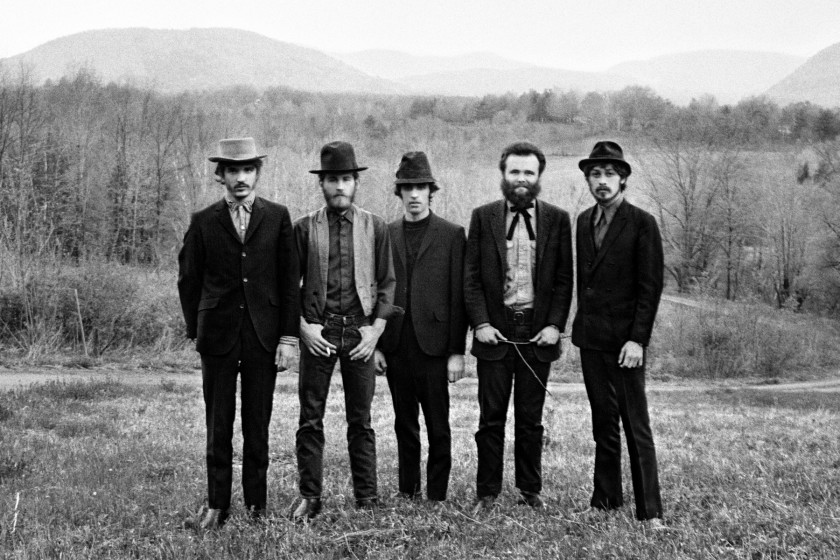
Once Were Brothers: Robbie Robertson and The Band

by George Wolf

How big of a music geek are you if you can name all five members of The Band?

They were the rare musical breed whose biggest personality was not the lead singer. Still, even charismatic guitarist Robbie Robertson remained largely anonymous next to the very rock stars his work was influencing.

Writer/director Daniel Roher makes Robertson and his memoir the anchor of Once Were Brothers, and while that does limit the film’s scope, Robertson is such an enthusiastic and engaging storyteller – and his access is so valuable – you come to understand the choice pretty quickly.

Robertson met his future Band-mates while he was still a teenager, playing guitar and writing songs for Ronnie Hawkins and the Hawks. The Hawks’ talent soon outgrew Hawkins rockabilly style, as Robertson and the boys moved on to a legendary Hawks collaboration with Bob Dylan, before cementing their legacy as The Band.

Roher and executive producer Martin Scorsese surround Robertson (looking fantastic at age 76) with praise from of a succession of legendary fans (Eric Clapton exclaims “Big Pink changed my life,”) and, of course, plenty of priceless archival footage.

Music docs are always going to be most interesting to the subject’s core following, but even casual Band fans will get bracing reminders of Robertson’s guitar virtuosity and drummer Levon Helm’s passionately soulful vocal power.

Plus, getting a peek at Dylan telling folk fans “Don’t boo me anymore!” and hearing Scorsese deconstruct his own filmmaking on the iconic concert film The Last Waltz fosters an engaging intimacy. At times, the reach extends beyond Robertson’s music history to touch on the creative process itself.

As a rock doc, Once Were Brothers blazes few trails, but the ones it travels are well worth revisiting. And though the lack of any counterpoint from surviving member Garth Hudson is noticeable, tour guide Robertson is the kind you’re ready to tip when the day is done.

Rick Danko, Richard Manuel, Hudson, Helm and Robertson, by the way, but you knew that.

Geek.

I Don’t Want to Go Out—Week of February 24

It’s here! The one movie of 2019 that everybody loved, and why not? Plus, you know what? The rest of this week’s crop ain’t half bad.

Knives Out

Brainiac: Transmissions After Zero

Scandalous: The True Story of the National Enquirer

Frozen 2

Color Out of Space

Muzzled

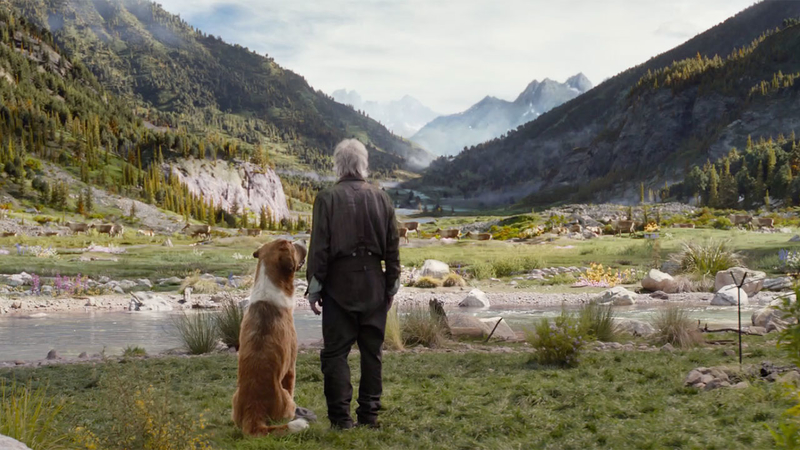
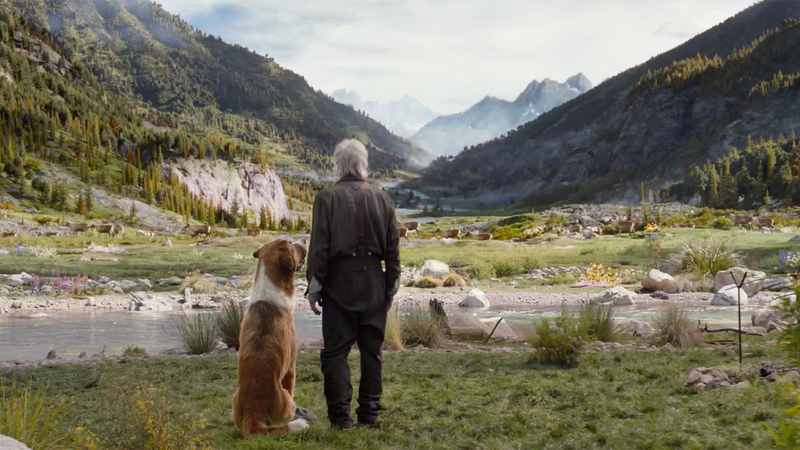
The Call of the Wild

by George Wolf

Look, we’re all thinking it, so let’s just get it out there.

Raiders of the Lost Bark.

Happy now? Okay, we can move on.

Truth is, there’s plenty of bark in this latest adaptation of Jack London’s classic novel, but not much bite to be found.

We’re still introduced to Buck, the sturdy St. Bernard-Scotch Collie mix, as the spoiled pet of a wealthy California judge (Bradley Whitford) in the late 1800s. Stolen and sold as a sled dog to French-Canadian mail dispatchers, Buck adapts to the pack mentality and the harsh conditions of the Alaskan wilderness, eventually teaming up with the grizzled Thorton (Harrison Ford) for a journey into the Yukon.

It should come as no surprise that Ford is effortlessly affecting as a world weary mountain man. What is surprising is his endearing rapport with a CGI dog (motioned-captured by Terry Notary). Ford’s narration is earnest enough to soften its heavy hands, drawing Thorton and Buck as two kindred spirits, both lost in their own wilderness.

While taking the actual wild out of The Call of the Wild seems sadly ironic, the computer-generated beasts come to fall perfectly in line with director Chris Sanders’ family-ready vision for the enduring tale.

Stripped of any bloody carnage, cultural insensitivities or harsh realities, Sanders (How to Train Your Dragon, Lilo & Stitch, The Croods) and writer Michael Green (Logan, Blade Runner 2049) fill the gaps with obvious questions, easy answers, and a flesh and blood bad guy (Dan Stevens in full Snidley Whiplash mode) who manages to be the biggest cartoon in a film full of computer animation.

Buck himself – looking fine but landing a notch below the motion capture high water of the last Planet of the Apes trilogy – is often stuck between Lassie and Scooby, heroically loyal while seeming to instantly understand everything from English to drunkenness.

With the sharp edges ground down, this Call of the Wild becomes a pleasant metaphor for the simple life, and for finding your place in it. In short, it’s a PG-rated primer, meant to hold a place until the kids are ready for the real thing.

I Don’t Want to Go Out – Week of February 17

It’s a beautiful day in the living room, what with all these excellent movie choices! Well, not every single one is a winner, but that’s what we’re here for. We’ll help you get it sorted.

Click the film title to link to the full review.

Jojo Rabbit

A Beautiful Day in the Neighborhood

21 Bridges

Frankie

Midway

Fright Club: Bad Date Horror

I can see where you might believe that these are films in which bad dates occur. While that might be a fine, future podcast and list, the fact is that today we explore the worst horror movies to watch while you are on a date.

While horror movies can sometimes make for excellent date night choices, these, we predict, will turn the date sour. They are also highly likely to douse any romantic sparks. (And if they don’t, your date is a sociopath. Be warned.)

5. Audition (1999)

The prolific director Takashi Miike made more than 70 movies in his first 20 or so years in film. Among the best is Audition, a phenomenally creepy May/December romance gone very, very wrong.

Audition tells the story of a widower convinced by his TV producer friend to hold mock television auditions as a way of finding a suitable new mate. He is repaid for his deception.

Nearly unwatchable and yet too compelling to turn away from, Audition is a remarkable piece of genre filmmaking. The slow moving picture builds anticipation, then dread, then full-on horror.

By the time Audition hits its ghastly conclusion, Miike and his exquisitely terrifying antagonist (Eihi


4. Irreversible (2002)

French filmmaker/provocateur Gaspar Noe does not play well with his audience. Every film, no matter how brilliantly put together or gloriously filmed, is a feat in masochism to watch. Later efforts, like Enter the Void and Climax, spread the misery out for its full running time, but for Irreversible, he gave it to us in two horrifying scenes.

Filmed in reverse chronological order and featuring those two famously brutal sequences, Noe succeeds in both punishing his viewers and reminding them of life’s simple beauty. While the head bashing is tough viewing, the film centers on a rape scene that is all but impossible to watch.

Noe’s general MO is to punish you through sheer duration. The scenes last so long you feel like you cannot endure another minute, and this scene certainly does that. Not shot even momentarily for titillation, and boasting a devastatingly excellent performance from Monica Bellucci, it justifies its own horrific presence. There are other films with necessary and difficult rape scenes – Straw Dogs, I Spit on Your Grave, The Last House on the Left, Henry: Portrait of a Serial Killer – but none is harder to stomach than this.

There’s no denying the intelligence of the script, the aptitude of the director, or the absolute brilliance of Monica Bellucci in an incredibly demanding role.

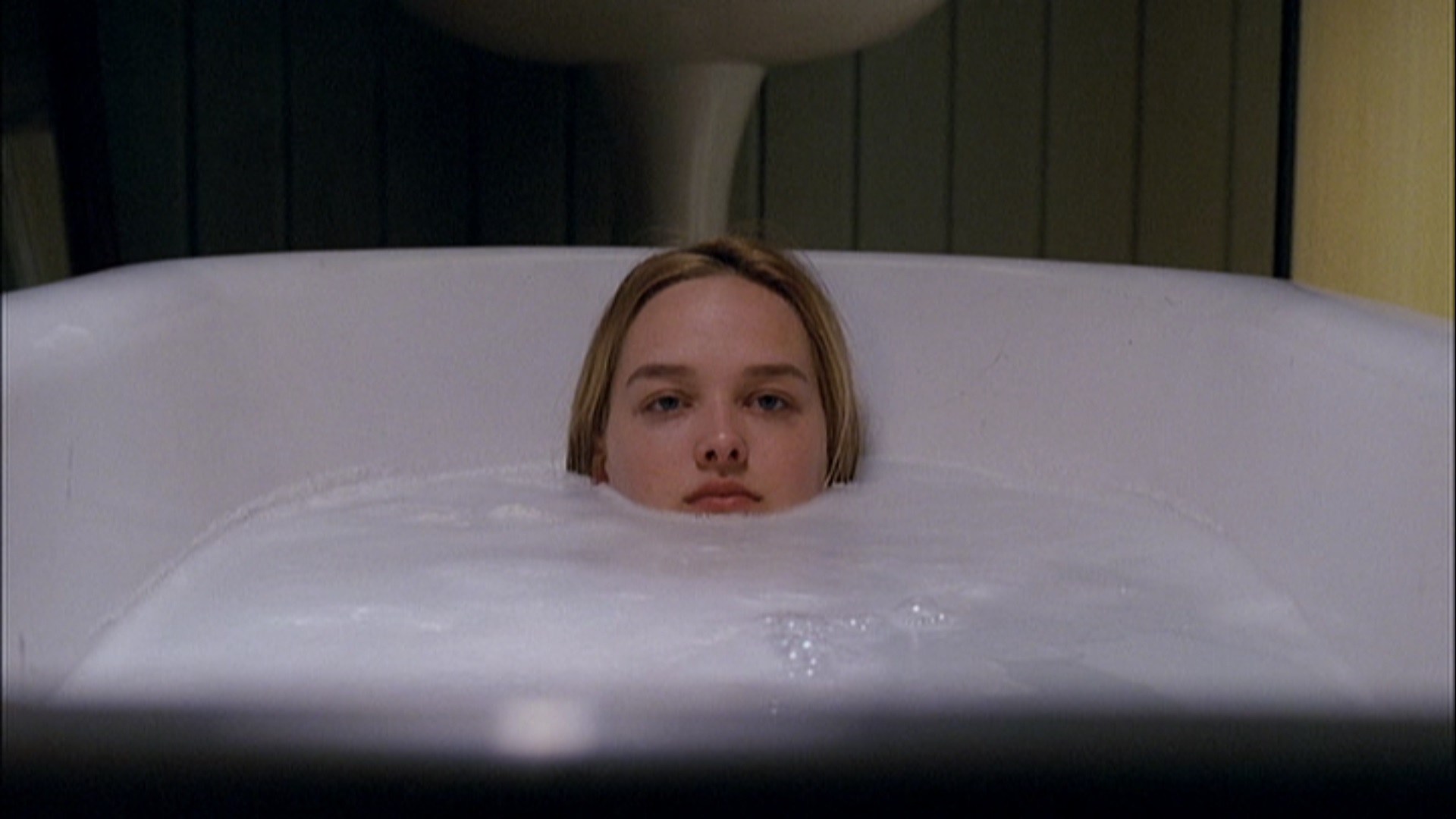
3. Teeth (2007)

Of all the films built on the hysteria of impending womanhood, few are as specific as Teeth, a film in which a pubescent discovers a sharp set where teeth ought not be. This is a dark comedy and social satire that is uncomfortable to watch no matter your gender, although I imagine it may be a bit rougher on men.

Treading on the dread of coming-of-age and turning male-oriented horror clichés on ear, Teeth uses the metaphor implicit in vagina dentata—a myth originated to bespeak the fear of castration—to craft a parable about the dangers as well as the power of sexual awakening.

Written and directed by artist (and Ohioan!) Roy Lichtenstein’s son Mitchell, Teeth boasts an irreverent if symbol-heavy script with a strong and believable lead performance (Jess Weixler).

Weixler’s evolution from naïveté to shock to guilt to empowerment never ceases to captivate.

https://www.youtube.com/watch?v=J-qd-k0Vg7s

2. Antichrist (2009)

Lars von Trier’s foray into horror follows a couple down a deep and dark rabbit hole of grief. Von Trier’s films have often fixated on punishing viewers and female protagonists alike, but in this film the nameless woman (played fearlessly by Charlotte Gainsbourg) wields most of the punishment – whether upon her mate (Willem Dafoe) or herself.

Consumed by grief, a mother allows her husband—also grieving—to become her psychotherapist as they retreat to their isolated cabin deep in the woods where they will try to overcome the horror of losing their only child.

They won’t succeed.

Like dental scenes, gynecological horror draws a particular reaction. Whether it’s the abuse scene at the beginning of Proxy, nearly any scene in the brilliant French film Inside, or the final feast in Trouble Every Day, scenes of this ilk can be tough to watch. But to watch as Gainsbourg – who’s already inflicted some serious pain on Dafoe’s character – takes the scissors to herself is next to impossible.

https://www.youtube.com/watch?v=w4U5rdi9w-U


1. A Serbian Film (2010)

This is not a movie we would recommend to basically anyone. That’s not to say it’s a bad film – it’s well directed, acted, and written. It’s just that the co-writer/director Srdjan Spasojevic is trying to articulate the soul-deadening effects of surviving the depravity of war.

The title is no coincidence – the film is meant to reflect the reality of a nation so recently involved in among the most horrific, unimaginable acts of war. It’s as if Spasojevic is saying, after all that, what could still shock us?

Milos (Srdjan Todorovic) was a porn star before the war. He’s lured back for one lucrative “acting” effort, but there’s a reason it pays so well.

The entire film is an assault, but there is one scene in this one that catapults it to the top of this list, and you probably already know what that is. Milos (Srdjan Todorovic) finally realizes the depths of his new director’s evil when he sees his latest effort: newborn porn. There is no unseeing this.

https://www.youtube.com/watch?v=yjq8iW6pQeE


Blue Streak

Sonic the Hedgehog

by George Wolf

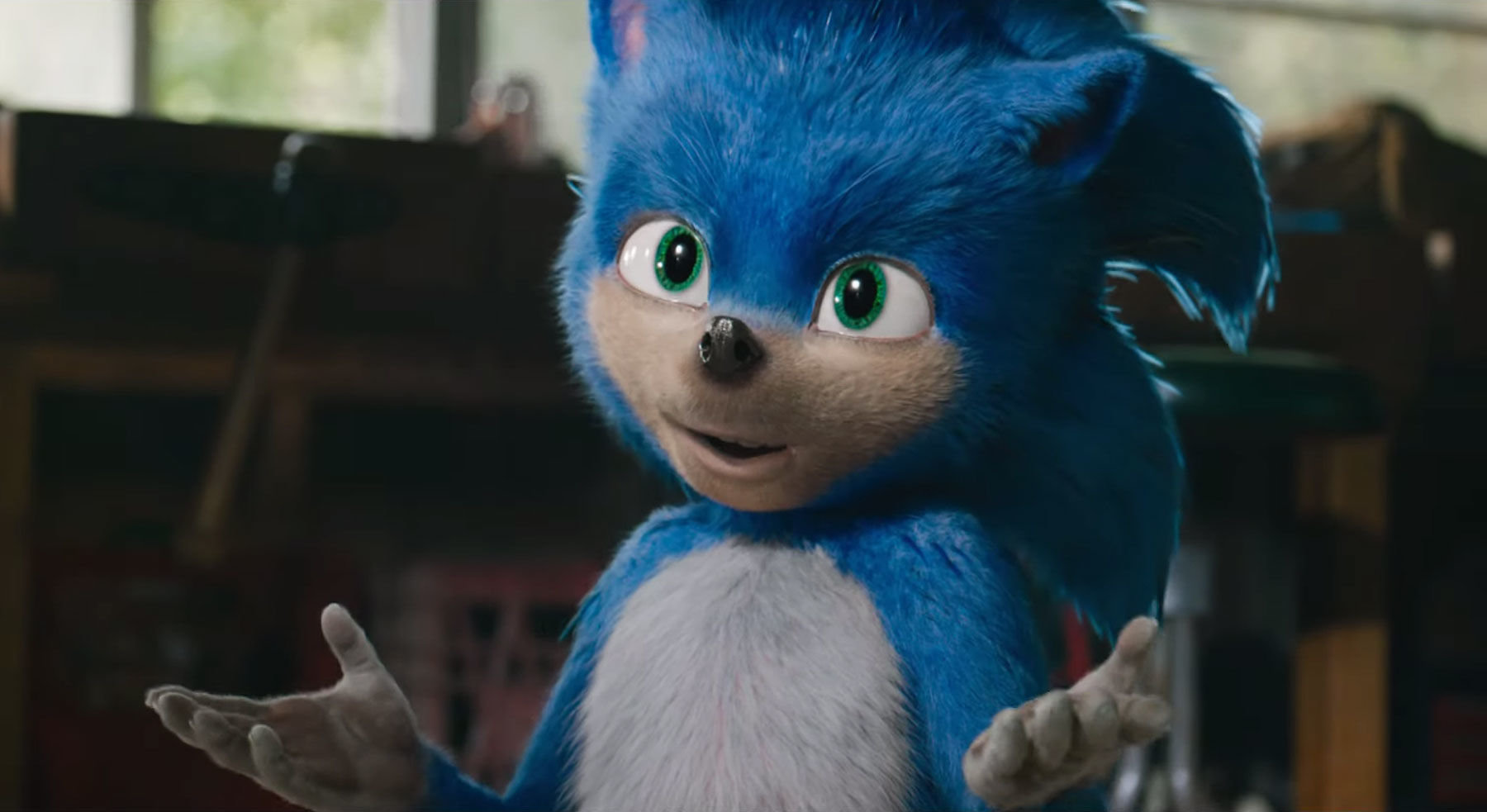
Even before the masses were recoiling in horror at the people/feline hybrids of Cats, the early look of Sonic the Hedgehog caused such a fan uproar that the little blue speedster got a full CGI makeover.

Well, he’s here now for his (otherwise) live action debut, he looks fine, and while his film doesn’t follow in Cats memorably bad paw prints, it never finds a way to be memorable at all.

Anyone who’s followed the Sega video games of the 1990s will feel right at home, as the world-hopping Sonic (voiced by Ben Schwartz) does battle with mad scientist Dr. Robotnik aka “Eggman” (Jim Carrey).

Sonic’s been quite lonely during his uneventful time on Earth, but a helping hand from an aw-shucks small town sheriff (James Marsden) sends them both on a convoluted road trip. Sheriff Tom wants to prove himself a hero, while Sonic just wants a friend.

Cue the strings – no wait! Dr. Eggman and his robot drones are closing in! Muuuahahahaha!

Carrey sets his mugging level on stun, but really, with director Jeff Fowler keeping each actor exaggerated and a script-by-committee committed to over-explanation, it doesn’t seem as comical as it should.

Still, Sonic is harmless enough to land somewhere near the top of the dung heap that is video game film adaptations. It’s got a pop culture gag or two that lands, a mid-credits stinger that shows promise for the next chapter, and a pace that never becomes overly laborious.

So after its rough start with the fanboys, you might say Sonic avoids becoming a real…..CATS-tastrophy.

I won’t, but you might.

Poles Apart

Downhill

by George Wolf

If you’re a pair of American filmmakers out to remake an exceptional foreign film from the last decade, you gotta pick a side.

Are you gonna put some bankable U.S. stars up front and just add your name to someone else’s originality, or do you have a vision that can make the story your own?

To their credit, co-writers/directors Nat Faxon and Jim Rash choose the latter path for Downhill, their take on Ruben Ostlund’s 2014 stunner, Force Majeure (Turist). Faxon and Rash won an Oscar for their The Descendants screenplay – so the boys can write – but this makeover ultimately lands as a pleasant exercise stripped of the insightful bite.

The catalyst remains the same: a traumatic event changes the way a couple sees each other. Pete (Will Ferrell) and Billie Stanton (Julia Louis-Dreyfus) are on a lavish ski vacation in Austria with their two sons. Eating lunch on the resort’s outdoor porch, the family is terrified when an avalanche appears to be heading right for them.

Bille clutches her children in fear, while Pete grabs his phone and runs.

Turns out it was a planned snow release and everyone’s fine, but the Stanton marriage has been shaken to its core, no matter how hard Pete tries to revise history with another couple (Zach Woods and Zoe Chao).

Faxon and Rash do Americanize the story well, as Billie first looks to blame the resort (“I’m an attorney!”), and Pete, continually wallowing in the loss of his father eight months prior, becomes a personification of rationalized selfishness.

But while Ostlund used the secondary couple as a device to invite us into a near clinical deconstruction of societal assumptions, Faxon and Rash introduce a new “B” story involving an aggressive resort concierge (Amanda Otto) who lives on the wild side. It’s an uneven trade of insight for zany, and can’t move the film from an uneven headspace that’s too serious for comedy but too light for drama.

Downhill does give us the chance to see Will and Julia go head to head, and that is no small treat. Ferrell is a natural as the big awkward goof trying to come to terms with himself, but make no mistake, Julia Louis-Dreyfus is the reason to see this movie.

Billie is confused, hurt and angry, and Louis-Dreyfus sells it all with total authenticity, often with little to no dialog. She finds real depth in terrain that’s often shallow (such as Billie’s flirtations with a younger ski instructor), ultimately offering more proof that, in case you’ve missed the last few decades, JLD is a flat-out treasure.

And much like Billy Ray’s updated Secret in Their Eyes five years ago, Downhill has a humdinger of an ending to deal with. In the original film, Ostlund gave us an organic twist that managed to re-frame all that came before. Faxon and Rash’s take feels a bit like hitting the Ohio slopes after a trip to Vermont.

There are similarities, but the thrill is gone.

If you’ve haven’t seen Force Majeure, Downhill is a perfectly acceptable vehicle for two well-loved stars. If you have, well, see it again.