Tag Archives: Fright Club podcast

Fright Club: OH-IO Horror

We haven’t been able to leave home in months, which means that home has kind of turned into its own horror show. For us, that’s Ohio, so we figured, why not celebrate?! In honor of our own home grown horror show, we dug into the best horror movies set right here in OH-IO!

5. Scream 2 (1997): Windsor College, OH

Updating his celebratory meta-analysis of genre clichés, Craven checked back in on Sydney Prescott (Neve Campell) and crew a couple years later, as the surviving members of the Woodsboro murders settled into a new semester in the little Ohio liberal arts school of Windsor College. The movie Stab, based on the horrors Sydney and posse survived (well, some didn’t survive) just two years ago is already out and screening on campus, but has it inspired copycat killers?

Craven, working again from a screenplay by Kevin Williamson, goes even more meta, using the film-within-a-film technique while simultaneously poking fun at horror sequel clichés in his own horror sequel.

And in the same way Scream subverted horror tropes while employing them to joyous results, the sequel – funny, tense, scary, smart, and fun – manages to find freshness by digging through what should be stale.

https://www.youtube.com/watch?v=WG0oUO4mK4A&t=29s

4. Tragedy Girls (2017): Rosedale, OH

Heathers meets Scream in the savvy horror comedy that mines social media culture to truly entertaining effect.

Sadie (Brianna Hildebrand) and McKayla (Alexandra Shipp) are looking for more followers to improve their brand, and they have been doing a lot of research to make their content more compelling. The Tragedy Girls plumb their small Ohio town’s surprising death toll with more insight than the local police seem to have. Where do they get their knowledge?

Provocative.

Hildebrand and Shipp (both X-Men; Hildebrand was the moody Negasonic in Deadpool while Shipp plays young Storm in the franchise proper) nail their characters’ natural narcissism. Is it just the expectedly shallow, self-centeredness of the teenage years, or are they sociopaths? Who can tell these days?

3. The Faculty (1998): Herrington, OH

The film exaggerates (one hopes) the social order of a typical Ohio high school to propose that it wouldn’t be so terrible if all the teachers and most of the students died violently, or at least underwent such a horrific trauma that a revision of the social order became appealing. 

Indeed, in this film, conformity equals a communicable disease. Adults aren’t to be trusted; high school is a sadistic machine grinding us into sausage; outcasts are the only true individuals and, therefore, the only people worth saving. Director Robert Rodriguez pulls the thing off with panache, all the while exploring the terrifying truth that we subject our children to a very real and reinforced helplessness every school day.

Interestingly, the infected teachers and students don’t turn into superficial, Stepford-style versions of themselves. For the most part, they indeed become better, stronger, more self-actualized (ironically enough) versions, which is interestingly creepy. It’s as if humanity – at least the version of it we find in a typical American high school – really isn’t worth saving.

2. Trick ‘r Treat (2007): Warren Valley, OH

Columbus, Ohio native Michael Dougherty outdid himself as writer/director of this anthology of interconnected Halloween shorts. Every brief tale set in sleepy Warren Valley, Ohio compels attention with sinister storytelling, the occasional wicked bit of humor and great performances, but it’s the look of the film that sets it far above the others of its ilk.

Dougherty takes the “scary” comic approach to the film—the kind you find in Creepshow and other Tales from the Crypt types—but nothing looks as macabrely gorgeous as this movie. The lighting, the color, the costumes and the way live action bleeds into the perfectly placed and articulated moments of graphic artwork—all of it creates a giddy holiday mood that benefits the film immeasurably.

Dylan Baker (returning to the uptight and evil bastard he perfected for his fearless performance in Happiness) leads a whip-smart cast that includes impressive turns from Brian Cox, Anna Pacquin, Leslie Bibb and Brett Kelly (Thurman Merman, everybody!).

And it’s all connected with that adorable menace, Sam. Perfect.

1. A Nightmare on Elm Street (1984): Springwood, OH

Teens in suburban Ohio share nightmares, and one by one, these teens are not waking up. Not that their disbelieving parents care. When Tina woke one night, her nightgown shredded by Freddie’s razor fingers, her super-classy mother admonished, “Tina, hon, you gotta cut your fingernails or you gotta stop that kind of dreamin’. One or the other.”

Depositing a boogieman in your dreams to create nightmares that will truly kill you was a genius concept by writer/director/Clevelander Craven because you can only stay awake for so long. It took everyone’s fear of nightmares to a more concrete level.

The film was sequeled to death, it suffers slightly from a low budget and even more from weak FX that date it, but it’s still an effective shocker. That face that stretches through the wall is cool, the stretched out arms behind Tina are still scary. The nightmare images are apt, and the hopscotch chant and the vision of Freddie himself were not only refreshingly original but wildly creepy.

Fright Club: Best Reboots

What were we looking for? Reboots/remakes that are superior to the original. There are more than you think. In the podcast, we run through eight horror reboots that are superior to the original, kick around another handful that are Even Stevens, and argue about several that could maybe go either way (depending on which one of us you’re talking to). So, you know, have a listen.

5. Dawn of the Dead

Zack Snyder would go on to success with vastly overrated movies, but his one truly fine piece of filmmaking updated Romero’s Dead sequel with the high octane horror. The result may be less cerebral and political than Romero’s original, but it is a thrill ride through hell and it is not to be missed.

The flick begins strong with one of the best “things seem fine but then they don’t” openings in film. And finally! A strong female lead (Sarah Polley). Polley’s beleaguered nurse Ana leads us through the aftermath of the dawn of the dead, fleeing her rabid husband and neighbors and winding up with a rag tag team of survivors hunkered down inside a mall.

In Romero’s version, themes of capitalism, greed, and mindless consumerism run through the narrative. Snyder, though affectionate to the source material, focuses more on survival, humanity, and thrills. (He also has a wickedly clever soundtrack.) It’s more visceral and more fun. His feature is gripping, breathlessly paced, well developed and genuinely terrifying.

4. Suspiria

Luca Guadagnino continues to be a master film craftsman. Much as he draped Call Me by Your Name in waves of dreamy romance, here he establishes a consistent mood of nightmarish goth. Macabre visions dart in and out like a video that will kill you in 7 days while sudden, extreme zooms, precise sound design and a vivid score from Thom Yorke help cement the homage to another era.

But even when this new Suspiria—a “cover version” of Dario Argento’s 1977 giallo classic—is tipping its hat, Guadagnino leaves no doubt he is making his own confident statement. The color scheme is intentionally muted, and you’ll find no men in this dance troupe, serving immediate notice that superficialities are not the endgame here.

3. The Ring/Ringu

Gore Verbinski’s film The Ring – thanks in large part to the creepy clever premise created by Koji Suzuki, who wrote the novel Ringu – is superior to its source material principally due to the imagination and edge of the fledgling director. Verbinski’s film is visually arresting, quietly atmospheric, and creepy as hell.

From cherubic image of plump cheeked innocence to a mess of ghastly flesh and disjointed bones climbing out of the well and into your life, the character of Samara is brilliantly created.

Hideo Nakata’s original was saddled with an unlikeable ex-husband and a screechy supernatural/psychic storyline that didn’t travel well. Screenwriter Ehren Kruger did a nice job of re-focusing the mystery.

Sure, it amounts to an immediately dated musing on technology. (VHS? They went out with the powdered wig!) But still, there’s that last moment when wee Aidan (a weirdly perfect David Dorfman) asks his mom, “What about the people we show it to? What happens to them?”

At this point we realize he means us, the audience.

We watched the tape! We’re screwed!

2. The Thing/The Thing From Another World

The 1951 original The Thing From Another World is a scifi classic, and every inch of it screams 1950s. The good guys are good, the monsters are monsters. Everything has its place. It’s reassuring.

John Carpenter’s remake upends all that with a thoroughly spectacular tale of icy isolation, contamination, and mutation.

A beard-tastic cast portrays a team of scientists on expedition in the Arctic who take in a dog. The dog is not a dog, though. Not really. And soon, in an isolated wasteland with barely enough interior room to hold all the facial hair, folks are getting jumpy because there’s no knowing who’s not really himself anymore.

This is an amped up body snatcher movie benefitting from some of Carpenter’s most cinema-fluent and crafty direction: wide shots when we need to see the vastness of the unruly wilds; tight shots to remind us of the close quarters with parasitic death inside.

The story remains taut beginning to end, and there’s rarely any telling just who is and who is not infected by the last reel. You’re as baffled and confined as the scientists.

1. The Fly

As endearing and fascinating as we find Kurt Neumann’s 1958 Vincent Price vehicle, it just doesn’t quite have the same impact once you’ve seen Jeff Goldblum peel off his fingernails.

Not because it’s gross—and it is gross AF—but because he’s fascinated by the process itself. It’s the scientist in him.

David Cronenberg knows how to properly make a mad scientist film, especially if that madness wreaks corporeal havoc. But it’s not just Cronenberg’s disturbed genius for images and ideas that makes The Fly fly; it’s the performance he draws from Goldblum.

Goldblum is an absolute gift to this film, so endearing in his pre-Brundlefly nerdiness. He’s the picture’s heartbeat, and it’s more than the fact that we like his character so much. The actor also performs heroically under all those prosthetics.

Fright Club: Best Sound Design in Horror

Aside from maybe the musical, there is no genre in film more dependent on sound for audience response. From the creaks, groans and jangling chains of old fashioned haunted house pics to the hiss and slither of modern monster movies, things can hardly go bump in the night if you can’t hear the bump. So George sat down and determined the best examples of sound design in horror.

That’s right, George is driving. Did Hope recommend any movies to consider when thinking through the best use of sound in horror? She did. Did any make the list?

They did not.

Well, turnabout is fair play and sound is definitely George’s jam. So here, friends and Fright Clubbers, are George’s picks for the best sound design in horrorl

5. It Follows (2014)

Like A Quiet Place and Us, It Follows is a perfect example of how modern filmmakers are molding the soundtrack with sound effects and even score to create the sound experience.

Writer/director David Robert Mitchell, working with Disasterpeace on a score that incorporated music, ambient sound and sound effects, develops an immersive, nightmarish environment for the imagination to flourish. The synths reflect the film’s difficult-to-pin-down time period, simultaneously reflecting a recent past as well as a currency. Meanwhile, creaky doors and blowing wind call to mind old fashioned scares.

The score almost doesn’t sound like a score, and the sound sets a different mood every time the different demon appears. Few films are this masterful in the way it brings together sound track and sound effects. Together they create an inescapable mood.

4. The Haunting (1963)

Director Robert Wise obviously knew the importance of sound coming into this film, sitting, as it does, between his two biggest efforts, West Side Story and The Sound of Music. But musicals are not the only films that really deserve close attention to sound. What you hear is even more important than what you see in a good old fashioned ghost story.

We wanted to make sure the list included at least one example of old school Foley-style sound. Wise worked with AW Watkins, 4-time Oscar nominee for sound design (Doctor Zhivago, Libel, Knights of the Round Table, Goodbye Mr. Chips).

This is a great example of old time Foley sound effects used to create the mood, making things you can’t see scary.

3. The Lighthouse (2019)

The atmosphere is thick and brisk as sea fog, immersing you early with Jarin Blasche’s chilly black and white cinematography and a Damian Volpe sound design echoing of loss and one persistent, ominous foghorn.

For everything Eggers brings to bear, from the Bergmanesque lighting and spiritual undertones to the haunting score to the scrupulous set design to images suitable for framing in a maritime museum – not to mention the script itself – The Lighthouse works because of two breathtaking performances.

But what a world Eggers and crew create for Robert Pattinson and Willem Dafoe.

2. Berberian Sound Studio (2012)

Madman Peter Strickland (In Fabric) made an entire film about sound, and it gets so much right. Not just about sound—about the era, the equipment, giallo sensibilities and moviemaking.

Strickland, working with a sound department of 34, creates a psychological experience through sound almost exclusively. The amazing Toby Jones plays Gilderoy, flown in specifically to helm the sound in a horror movie.

“This isn’t a horror movie. This is a Santini movie!”

Gilderoy’s arc is profound, and sound is our only window into what is changing him. We don’t see what he sees, only his reaction to it and the sound of it that makes his psychological breakdown believable.

1. Alien (1979)

The great soundman Ben Burtt, with an impressive team and the direction of Ridley Scott, uses silence as another instrument in the terrifying sound design for this film.

Given the tag line, that powerful use of silence is more than evocative, it’s required. But layered in, Burtt offers plenty of aural evidence that this spaceship is not like those we were used to seeing onscreen. The Nostromo is no sleek vehicle. Creeks and chains, water leaks and thudding echoes depict a dilapidated bucket of bolts, giving Alien a creaky old house atmosphere.

From the chest bursting, Ash’s unattached vocal cord gurgling to the hissing sound the creature makes as he announces his presence, the sounds in this film have been copied and retooled as often as its storyline and look. But there is only one first time.

Fright Club: Blond(e)s in Horror

We want to thank Cati Glidewell, also know as The Blonde in Front, for joining us to talk through some of the best blond(e)s in horror. There’s a lot of names here, but I think we may have proved that—with a few really bloody exceptions—blondes do seem to have more fun in these movies.

The Dudes

6. Francis Dollarhyde (Tom Noonan), Manhunter (1986)

Tom Noonan’s entire career is defined by a mixture of tenderness and menace. It begins with his unusual physical appearance, including his almost colorless locks, and ends with performances that realize everything broken and horrifying about a character—especially Francis Dollarhyde. The terrifying chemistry between Dollarhyde and a blind Joan Allen’s is heartbreaking perfection.

5. Mark Lewis (Carl Boehm), Peeping Tom (1960)

Like Norman Bates across the pond, England’s Mark Lewis (Carl Boehm) is an innocent. Boehm’s blank stare, his frightened mouse reflexes, his blond locks all contribute to a character so tender you can’t help but root for him—although it would be great if he’d stop murdering women.

4. Kakihara (Tadanobu Asano), Ichi the Killer (2001)

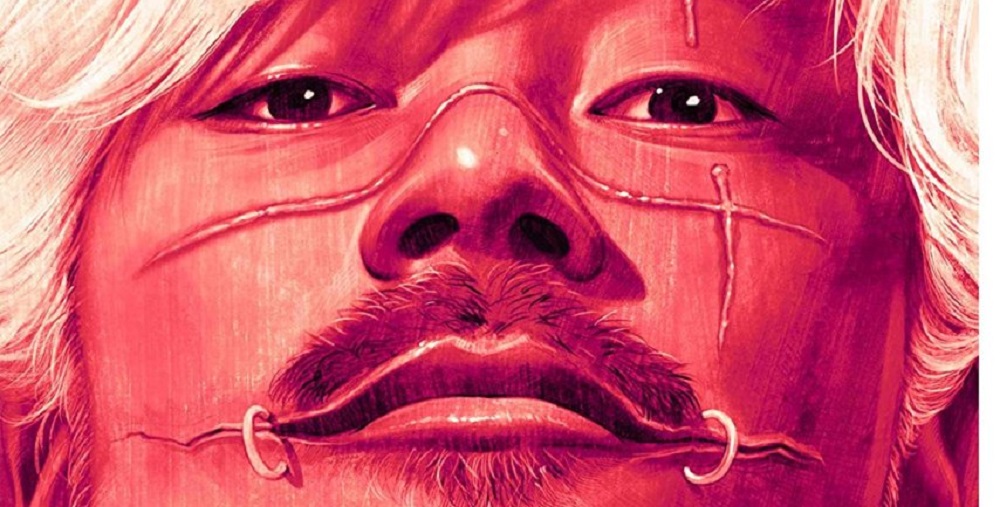
A bleach blond in a Japanese film will automatically draw the eye, but Kakihara’s not just here to catch your attention. Genius filmmaker Takashi Miike and Tadanobu Asano created this badass to upend your expectations. He’s the baddie, right? And man-child Ichi is the innocent? Or is Miike toying with you?

3. Gage (Miko Hughs), Pet Sematary (1989)

Get the Kleenex ready because the ridiculously cute Mike Hughs has a date with a semi. A toddler when he filmed this movie, Hughs really turns in a remarkable performance, whether he’s tugging your heart strings or slicing through Fred Gwynne’s Achilles tendon.

2. David (Keiffer Sutherland), The Lost Boys (1987)

Hubba hubba. The rock star duds. The homoerotic relationship with Jason Patrick. The mullett! Keiffer Sutherland’s bad boy David was so cool you couldn’t help wanting to hang out with him. Eating maggots seems like a small price to pay, really. Nobody said the cool kids’ table would be tasty.

1. John Ryder (Rutger Hauer), The Hitcher (1986)

There are those with a thing for bad boys, and then there are those with a thing for Rutger Hauer. He’s not a bad boy—he’s not even in the same zip code. His John Ryder will make you feel all kinds of weird things because he’s not your garden variety dangerous character. What he will do to you, to that nice family in the station wagon, to your new girlfriend, is more awful than anything you can think of.

The Women

6. Chris Hargeson (Nancy Allen), Carrie (1976)

When De Palma launched the ultimate in mean girl cinema, Nancy Allen delivered the ultimate mean girl. Chris Hargeson’s bloodthirsty princess energy has to convey something horrifying if she is to properly offset what poor Carrie White has to content with at home. Luckily for us (not so much for Carrie), she does.

5. Tomasin (Anya Taylor Joy), The Witch (2015)

Watching The Witch, you realize that writer/director Robert Eggers chose everything: every sound, every image, every color. And while Tomasin’s family looked like gaunt, hard working, colorless cogs in God’s wilderness wheel, Thomasin did not. Even as we open on Anya Taylor Joy, confessing her sins and begging forgiveness, she is lit from within. A beacon. It’s just that her light has caught the wrong kind of attention.

4. Casey (Drew Barrymore), Scream (1996)

The genius Wes Craven and his producer Drew Barrymore pulled an incredible and soon-to-be endlessly copied sleight of hand with Casey—the spunky female played by the biggest star in the cast. With this character, Craven introduces the meta-movie-commentary that defines this film while simultaneously upending our own unconscious investment in those tropes by killing Casey off in Act 1.

3. Carol (Catherine Deneuve), Repulsion (1965)

We went back and forth. Would it be Deneuve as gorgeous seductress Miriam in Tony Scott’s 1983 vampire film The Hunger, or innocent driven to madness Carol in Polanski’s Repulsion? (He does know how to torture innocent young women, doesn’t he?) Deneuve’s performance in Repulsion is so compelling and difficult—playing primarily alone for about half the film—that it won out, but either way, she’s a blonde to be reckoned with.

2. Pamela Voorhees (Betsy Palmer), Friday the 13th (1980)

The OG Karen (to steal a phrase from this episode’s co-host The Blonde in Front), Pamela Voorhees has a plan and she’s sticking to it. This funny business among the camp counselors needs to be addressed, corrected. Enough is enough. Betsy Palmer’s performance is spot-on, so comforting and in control before it goes completely batshit. Jason may get all the love, but Mrs. Voorhees took care of business first.

1. Carrie White (Sissy Spacek), Carrie (1976)

Like his idol Hitchcock, Brian De Palma had a thing about blondes—what that fair hair represented, what it could mean. For De Palma, it might be the bombshell of Angie Dickson’s character in Dressed to Kill, or the innocence of Carrie White. Of course, Sissy Spacek’s Oscar nominated performance in the film was what really sold this sheltered, shell-shocked little lamb, but you can’t deny she had that look.

Fright Club: Best First Half of 2020

You know what, 2020 is just going to be remembered as its own horror story. I mean, filmmakers have a lot of competition if they think they can scare us more than real life right now. Still, we’ve seen a decent batch of horror: Blood Quantum, The Droving, Time Out of Space, The Hunt and more. What more, you ask? Well, we’ll tell you. Here are our favorite horror films of the first half of 2020.

5. The Invisible Man

Instead of the existential ponderings that generally underscore cinematic Invisible Man retellings, writer/director Leigh Whannell uses this story to examine sexual politics, abuse, control and agency.

It’s a laudable aim, but the reason it works is casting.

Whannell’s script is smart, with much needed upgrades to the invisibility formula as well as the havoc wrought. But the success of The Invisible Man is almost entirely shouldered by Elisabeth Moss, who nails every moment of oppressed Cecilia Kass’s arc.

At its core, The Invisible Man is an entertaining B-movie horror propped up by contrivance. Whannell’s aim is to give the story new relevance, and thanks to Moss, his aim is true.

4. The Other Lamb

The first step toward freedom is telling your own story.

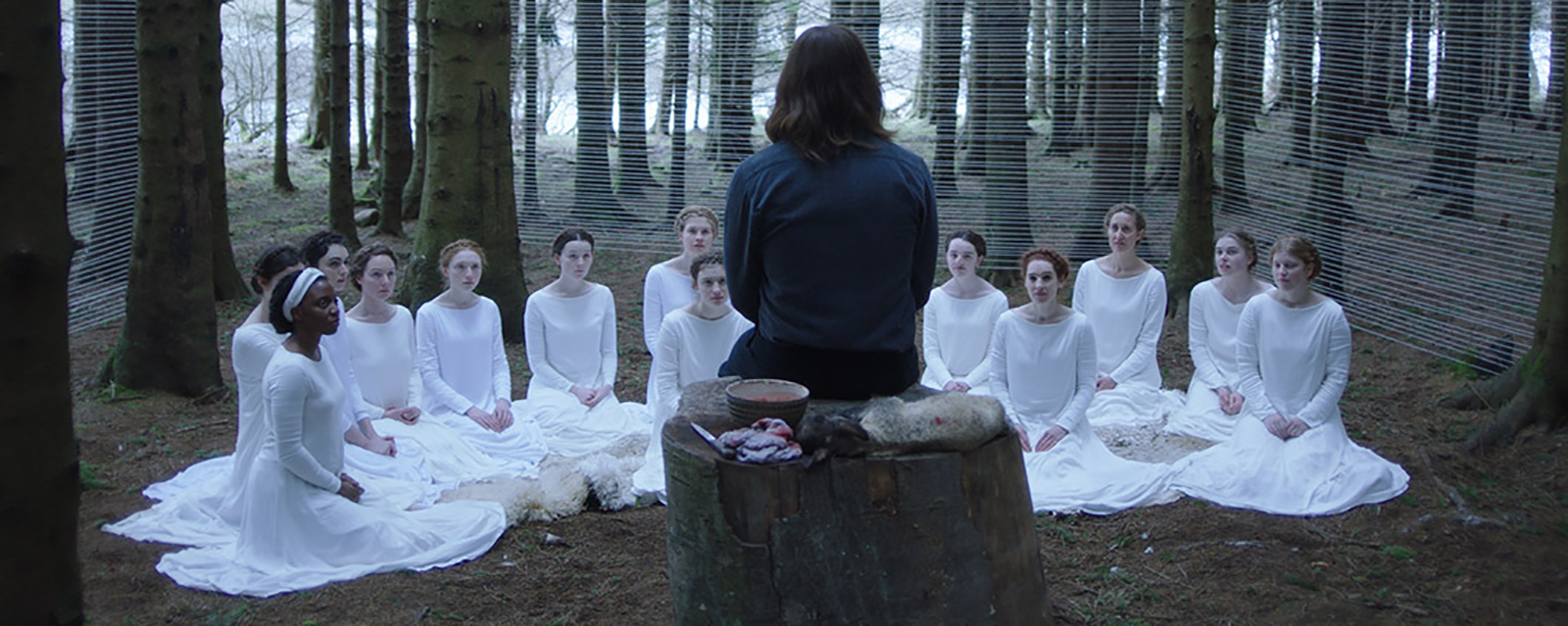
Writer C.S. McMullen and director Malgorzata Szumowska tell this one really well. Between McMullen’s outrage and the macabre lyricism of Szumowska’s camera, The Other Lamb offers a dark, angry and satisfying coming-of-age tale.

Selah’s (Raffey Cassity) first period and her commune’s migration to a new and more isolated Eden offer the tale some structure. Like many a horror film, The Other Lamb occupies itself with burgeoning womanhood, the end of innocence. Unlike most others in the genre, Szumowska’s film depicts this as a time of finding your own power.

The Other Lamb does not simply suggest you question authority. It demands that you do far more than that, and do it for your own good.

3. Gretel & Hansel

Sophia Lillis (IT) narrates and stars as Gretel, the center of this coming of age story—reasonable, given the change of billing suggested by the film’s title. The witch may still have a tasty meal on her mind, but this is less a cautionary tale than it is a metaphor for agency over obligation.

Alice Krige and her cheekbones strike the perfect mixture of menace and mentorship, while Sammy Leakey’s little Hansel manages to be both adorable and tiresome, as is required for the story to work.

Perkins continues to impress with his talent for visual storytelling and Galo Olivares’s cinematography heightens the film’s folkloric atmosphere.

There’s no escaping this spell. The whole affair feels like an intriguing dream.

2. The Lodge

Several Fiala and Veronika Franz follow up their creepy Goodnight Mommy with this “white death” horror that sees a future stepmom having a tough time getting to know the kids during a weeklong, snowbound cabin retreat. Riley Keough is riding an impressive run of performances and her work here is slippery and wonderful. As the unwanted new member in the family, she’s sympathetic but also brittle.

Jaeden Martell, a kid who has yet to deliver a less than impressive turn, is the human heartbeat at the center of the mystery in the cabin. His tenderness gives the film a quiet, pleading tragedy. Whether he’s comforting his grieving little sister or begging Grace (Keough) to come in from the snow, his performance aches and you ache with him.

There’s no denying the mounting dread the filmmakers create, and the three central performances are uniquely effective. Thanks to the actors’ commitment and the filmmakers’ skill in atmospheric horror, the movie grips you, makes you cold and uncomfortable, and ends with a memorable slap.

1. Swallow

Putting a relevant twist on the classic “horrific mother” trope, writer/director Carlo Mirabella-Davis uses the rare eating disorder pica to anchor his exploration of gender dynamics and, in particular, control.

Where Mirabella-Davis’s talent for building tension and framing scenes drive the narrative, it’s Bennett’s performance that elevates the film. Serving as executive producer as well as star, Haley Bennett transforms over the course of the film.

When things finally burst, director and star shake off the traditional storytelling, the Yellow Wallpaper or Awakening or even Safe. The filmmaker’s vision and imagery come full circle with a bold conclusion worthy of Bennett’s performance.

Fright Club: Grief in Horror Movies

Grief is among the most punishing emotions. That may be why mainstream films handle it so poorly. But horror? Horror filmmakers don’t shy away from what hurts, which may be why grief is such a ripe subject for the genre.

Filmmaker and author Samantha Kolesnik joins us to discuss some of the best grief-stricken films in horror.

6. The Nightingale (2018)

A mother’s grief is something many filmmakers see as the pinnacle in pain, the one emotion almost unimaginable in scope and depth and anguish. That’s why brilliant filmmaker Jennifer Kent begins here, using this one moment of ultimate agony to punctuate an almost unwatchable scene of brutality, to tell a tale not of this mother and her grief, but of a nation—a world—crippled by the brutality and grief of a ruling white male culture.

What happens to Clare (Aisling Franciosi) at the hands of Leftenant Hawkins (Sam Claflin), the British officer to whom she is in service, is as brutal and horrifying as anything you’re likely to see onscreen. It’s the catalyst for a revenge picture, but The Nightingale is far more than just that.

Kent’s fury fuels her film, but does not overtake it. She never stoops to sentimentality or sloppy caricature. She doesn’t need to. Her clear-eyed take on this especially ugly slice of history finds more power in authenticity than in drama.

5. A Dark Song (2016)

Writer/director Liam Gavin also begins his story by dropping us breathless and drowning in a mother’s grief. Sophia (Catherine Walker) will do anything at all just to hear her 6-year-old son’s voice again. She will readily commit to whatever pain, discomfort or horror required of her by the occultist (Steve Oram) who will perform the ritual to make it happen.

Anything except the forgiveness ritual.

What Gavin and his small but committed cast create is a shattering but wonderful character study. Walker never stoops to sentimentality, which is likely what makes the climax of the film so heartbreaking and wonderful.

4. Don’t Look Now (1973)

Perhaps what makes Nicolas Roeg’s 1973 horror the most perfect pick for this list is that the film, which deals exclusively in grief, is most interested in how it impacts a father.

Donald Sutherland and Julie Christie deliver unerring authenticity as the parents trying to recover from the death of their daughter. Roeg plays with imagery and timelines to induce an almost tear-stained blurriness on the events as they transpire.

The heartbreak in the film lies in the guilt, fear of culpability, and inability to change what has happened or what will happen. Though the film’s twist may have been what made a splash in 1973, it’s the honesty in depicting grief that’s helped it remain relevant for nearly 50 years.

3. Hereditary (2018)

Grief and guilt color every somber, shadowy frame of writer/director Ari Aster’s unbelievably assured feature film debut, Hereditary.

With just a handful of mannerisms, one melodic clucking noise, and a few seemingly throwaway lines, Aster and his magnificent cast quickly establish what will become nuanced, layered human characters, all of them scarred and battered by family.

Art and life imitate each other to macabre degrees while family members strain to behave in the manner that feels human, seems connected, or might be normal. What is said and what stays hidden, what’s festering in the attic and in the unspoken tensions within the family, it’s all part of a horrific atmosphere meticulously crafted to unnerve you.

2. Midsommar (2019)

In Midsommar, we are as desperate to claw our way out of this soul-crushing grief as Dani (Florence Pugh). Mainly to avoid being alone, Dani insinuates herself into her anthropology student boyfriend Christian’s (Jack Reynor) trip to rural Sweden with his buds.

Little does she know they are all headed straight for a modern riff on The Wicker Man.

Like a Bergman inspired homage to bad breakups, this terror is deeply-rooted in the psyche, always taking less care to scare you than to keep you unsettled and on edge.

1.Antichrist (2009)

Lars von Trier’s foray into horror follows a couple down a deep and dark rabbit hole of grief. Von Trier’s films have often fixated on punishing viewers and female protagonists alike, but in this film the nameless woman (played fearlessly by Charlotte Gainsbourg) wields most of the punishment – whether upon her mate (Willem Dafoe) or herself.

Consumed by grief, a mother allows her husband—also grieving—to become her psychotherapist as they retreat to their isolated cabin deep in the woods where they will try to overcome the horror of losing their only child.

They won’t succeed.

https://www.youtube.com/watch?v=ScUo88ylcMc

Fright Club: Best Cinematography

A poetry of dread – that’s what the best in this business can conjure with the right framing, movement, stillness. Whether it’s Dick Pope creating that just-off feel of bucolic 1950s Idaho for The Reflecting Skin or Owen Roizman forever narrowing the screen, our gaze and our options in The Exorcist, the cinematographer is horror’s true master. Mike Giolakis kept us looking around us and behind us to see where the monster might be in It Follows. John Alcott (The Shining), Chung-hoon Chung (The Handmaiden) and Mo-gae Lee (A Tale of Two Sisters) haunted and mesmerized us with color, movement and atmosphere. Has anybody done it better?

Here are our nominees for the best cinematography in horror.

https://soundcloud.com/frightclub/fc-181-best-horror-cinematography

5. Kwaidan (1964) – Yoshio Miyajima

Gorgeous. If you’re looking for something theatrical, a true marriage between cinematography and set design, Masaki Kobayashi’s Oscar nominee Kwaidan delivers the goods.

Yoshi Miyajima lenses four different ghost stories, each almost entirely shot on highly decorated sound stages, and what he captures is the feeling of make believe that gives each story the sense that it is being told, being embellished for your spooky enjoyment.

Each story is given its own look, its own personality. It’s bold and memorable filmmaking, and an absolute sight to behold.

4. Antichrist (2009) – Anthony Dod Mantle

Whether it’s the utter poetry of the opening tragedy, the claustrophobic dread of the middle section, or the lurking menace of the final reels, Antichrist is an absolute treasure trove of emotional manipulation.

At times, Anthony Dod Mantle’s cinematography feels at odds with the actual content on the screen—particularly in Act 1. But mining for beauty in pain is one of many ways director Lars von Trier succeeds in surprising and horrifying with this film.

Mantle finds a terrifying beauty in ugly thing von Trier throws at you, and the end result is a mesmerizing and brutal work.

https://www.youtube.com/watch?v=w4U5rdi9w-U&t=20s

3. Nosferatu (1922) – Fritz Arno Wagner

We needed to pay our respects to some of the earliest and most memorable work in cinema. Why F.W. Murnau’s Nosferatu? Because nearly 100 years later, there are still images that haunt your dreams.

Fritz Arno Wagner (who also lensed Fritz Lang’s glorious M) capitalizes on the unseemly, vermin-like look of Count Orlock (Max Schreck, genius) with creeping silhouettes, lurking shadows, and camera angles that emphasized his hideousness.

Whether it’s the shocking rise from the coffin, the shadow on the staircase, or the image of the sole survivor of the ship recently decimated by “the plague,” Murnau and Wagner’s images are as evocative today as they were in ’22.

2. The Lighthouse (2019) – Jarin Blaschke

The atmosphere is thick and brisk as sea fog, immersing you early with Oscar nominee Jarin Blasche’s chilly black and white cinematography and a Damian Volpe sound design echoing of loss and one persistent, ominous foghorn.

Director/co-writer Robert Eggers follows The Witch, his incandescent 2015 feature debut, with another painstakingly crafted, moody period piece. The Lighthouse strands you, along with two wickies, on the unforgiving island home of one lonely 1890s New England lighthouse.

Salty sea dog Thomas Wake (Willem Dafoe) keeps the light, mind ye. He also handles among the most impressive briny soliloquies delivered on screen in a lifetime. Joining him as second is one Ephraim Winslow (Robert Pattinson)—aimless, prone to self-abuse, disinclined to appreciate a man’s cooking.

1. Pan’s Labyrinth (2006) – Guillermo Navarro

In 2006, Guillermo Del Toro’s masterpiece may have somehow been overlooked as Oscar’s Best Foreign Language Film, but at least the Academy had the common sense to notice Guillermo Navarro’s cinematography.

He manages to create an atmosphere equally imaginative and bitterly realistic, something befitting a child’s logic. Like a fairy tale, the screen blends the magical beauty of good and evil. His vision is as hypnotic as it needs to be, as childlike as we need it to be. It’s beautiful, innocent and utterly heartbreaking.

Fright Club: Dark Ages Horror

Witches, starvation, ghouls, oppression, Church and governmental oppression—there’s a reason they call them the Dark Ages! Filmmaker George Popov (Hex, The Droving) joins us to discuss the best horror movies about the Dark Ages.

6. Black Death (2010)

What Christopher Smith (Severance) delivers with Black Death that few if any horror filmmakers tackling the same themes match is a clear eye as to the flaws and merits on both sides of the witch hunt.

Eddie Redmayne is an innocent and a believer; Sean Bean is no innocent, but he does believe. Both are part of a Christian army who get word of a village untouched by pestilence—a village where some say the dead have been raised.

What follows is a punishingly human drama about using religion to suit your own ends, about what evil we are and are not willing to accept, and about the end of innocence.

5. The Masque of the Red Death (1964)

The sixth of seven Roger Corman/Vincent Price Poe films—and maybe the best—sees Price in a role that delights in its own evil.

No Corman film has ever used color to such glorious extreme, a tactic absolutely in keeping with Poe’s text. The film works from a short story, padding with subplots (one from Poe, one from elsewhere) that work well within the story and generate a little emotional depth beneath the lurid color and debauchery.

Stay through to the end, whatever you do, but do give this one a chance.

4. Hex (2017)

Two soldiers separated from their companies during England’s Civil War chase each other into a deep forest. The rebel Thomas (William Young) is young, soft and open to the dark poetry and doom of witchcraft. He’s not long in the woods before he sees his true enemy is not the countryman behind him with his sword drawn.

Richard (Daniel Oldroyd) fights for King and Country, strident and single-minded, logic keeps him from believing until he has little choice.

There is more happening here than you realize, and it’s to the filmmakers’ credit that you only recognize the film’s purpose when they are ready for you to do so. The result is a satisfying tale with more power than just magic.

3. Army of Darkness (1992)

Easily the most fun you’ll have with a Dark Ages film, Army of Darkness is Sam Raimi’s third and silliest installment in his Evil Dead trilogy. In it, like a Connecticut Yankee, hero Ash (Bruce Campbell at his buffest) finds himself transported to dark times.

You know what he finds. Deadites.

Ash must woo the girl (and then maybe accidentally get her changed into a deadite, which will necessitate killing her), say the spell (which he may or may not entirely screw up, inadvertently raising an army of darkness), and save the day.

Endlessly quotable, utterly bananas, and just a thrill ride of Monty Python meets Three Stooges meets Ray Harryhausen fun, Army of Darkness is a treasure.

2. The Head Hunter (2018)

In a land of yore, the geography forbidding, a far off trumpet calls for the hardiest of warriors—those equipped to fight beasts.

Director Jordan Downey shows much and tells little in his nearly wordless medieval fantasy, The Head Hunter. The filmmaker parses out all the information you’ll need to follow this simple vengeance myth, but pay attention. Very little in this film is without meaning—no creepy image, no creak or slam.

In what is essentially a one man show, Christopher Rygh delivers a quiet, brooding performance for a quiet, brooding film. He cuts an impressive figure as the Vikingesque warrior at the center of this adventure and his work speaks of joyless endurance.

https://www.youtube.com/watch?v=5ZqtRbifT6Q

1.Hagazussa (2017)

Making a remarkably assured feature debut as director, Lukas Feigelfeld mesmerizes with his German Gothic poetry, Hagazussa: A Heathen’s Curse.

Settled somewhere in the 15th Century Alps, the film shadows lonely, ostracized women struggling against a period where plague, paranoia and superstition reigned.

It would be easy to mistake the story Feigelfeld (who also writes) develops as a take on horror’s common “is she crazy or is there malevolence afoot?” theme. But the filmmaker’s hallucinatory tone and Aleksandra Cwen’s grounded performance allow Hagazussa to straddle that line and perhaps introduce a third option—maybe both are true.

The film lends itself to a reading more lyrical than literal. Feigelfeld’s influences from Murnau to Lynch show themselves in his deliberate pacing and the sheer beauty of his delusional segments. He’s captured this moment in time, this draining and ugly paranoia that caused women such misery, with imagery that is perplexingly beautiful.

Fright Club: Best College Horror

We’d like to thank Gordon Maples—blogger, horror fan and all around smarty pants—for joining us to count down the best college-themed horror movies. (We might talk about some of the worst, too.)

5. Night of the Creeps (1986)

B-movie heaven, writer/director Fred Dekker’s Night of the Creeps embraces—nay, bear hugs—what has come before. With the help of Tom Atkins (at the top of his game), this alien invasion/zombie/frat movie is a hoot.

This film about alien slugs that enter the human body, nest in the brain, and reanimate the corpse looks like a lot we’ve seen before (mainly Cronenberg’s Shivers) and a lot we’d see later (mainly James Gunn’s Slither). The fact that it can be so genre-referential and still become a touchstone for other filmmakers speaks volumes about Dekker’s grasp of the genre.

4. Pledge (2018)

On its surface, Pledge may appear to be little more than a competently made fraternity horror in the tradition of Skulls. It is a cautionary tale about hazing taken to its sadistic (if likely logical) extreme.

But director Daniel Robbins’s latest horror show, from a tight script by co-star Zack Weiner, digs into issues bigger than tribe mentality. Pledge is not just about how far you’d go to belong. It asks about compliance, cowardice, and the cost and definition of success.

Where Weiner’s savvy script and Robbins’s sly direction really excel is in digging into this predictable plot to find an ugly picture of American privilege.

3. Scream 2 (1997)

Just one year after director Wes Craven and writer Kevin Williamson struck gold with their meta-horror Scream, the survivors are off to college. Too bad the horror—and the rules—follow Sidney to campus.

The film picks up on its predecessor’s infatuation with genre tropes, this time trying to apply the rules of the sequel to what’s happening, giving characters the chance to figure their own plot out in an attempt to survive this sequel.

Fun return performances and excellent newcomers (Hello Laurie Metcalf! Good to see you Liev Schreiber and Timothy Olyphant!) keep this one fresh and fun.

2. Black Christmas (1974)

Sure, it’s another case of mysterious phone calls leading to grisly murders; sure it’s another one-by-one pick off of sorority stereotypes; sure, there’s a damaged child backstory; naturally John Saxon co-stars. Wait, what was different? Oh yeah, it did it first.

Released in 1974, the film predates most slashers by at least a half dozen years. It created the architecture. More importantly, the phone calls are actually quite unsettling.

Why the girls remain in the sorority house (if only they’d had an Official Red Ryder Carbine-Action Two-Hundred-Shot Range Model Air Rifle!), or why campus police are so baffled remains a mystery, but director Bob Clark was onto something with the phone calls, as evidenced by the number of films that ripped off this original convention.

1.Raw (2016)

A college freshman and vegetarian from a meat-free family, Justine (Garance Marillier) objects to the hazing ritual of eating a piece of raw meat. But once she submits to peer pressure and tastes that taboo, her appetite is awakened and it will take more and more dangerous, self-destructive acts to indulge her blood lust.

The film often feels like a cross between Trouble Every Day and Anatomy. The latter, a German film from 2000, follows a prudish med student dealing with carnage and peer pressure. In the former, France’s Claire Denis directs a troubling parable combining sexual desire and cannibalism.

Writer/director Julia Ducournau has her cagey way with the same themes that populate any coming-of-age story – pressure to conform, societal order and sexual hysteria. Here all take on a sly, macabre humor that’s both refreshing and unsettling.

Fright Club: Best Jump Scares

We spend a lot of time ripping on weak and lazy jump scares. But today we want to acknowledge that, when done well, jump scares can be an incredibly effective tool for a horror filmmaker.

Here are our 10 favorite jump scares from horror movies.

10. It Follows (2014): tall man at the door

This movie is a freak show of scares beginning to end, and the different images the demon takes throughout is forever terrifying and fascinating. But it was the tall man at the door that really got to us.

9. Les Diaboliques (1955): alive in the tub

First of all, this is a spoiler. But the film came out 65 years ago, so if you haven’t seen it by now (we even showed it once!), that’s on you, man. It’s a classic, and a classic scare.

8. The Ring (2002): I saw her face

Again, here is a film chocker block full of utterly fantastic creeps, all told a moment at a time. But it was that first one, when we see Samara’s first victim, that set the stage and made us jump out of our seats.

7. A Tale of Two Sisters (2003): under the sink

So much nuttiness, so many confusing ideas to keep track of, such a master class piece of atmosphere building in this film. You just are not expecting jump scares in this one. And yet, as one dinner party goes wrong…

6. Hereditary (2018): signpost

Tell us you saw this one coming and we will tell you that you are a liar.

5. Carrie (1976): Carrie White’s grave

Oh holy shit. You think Sue Snell has been through enough, what with missing out on prom and watching every friend she has die in a flaming blood bath. But you would think wrong.

4. Audition (1999): What’s in the bag?

Ring ring. Ring ring. The way Takashi Miike frames this scene, lovely Asami’s hair draped in front of her, her spine showing, that loud phone – you can’t take your eyes off her, waiting for her to rouse, to answer. You might not even notice that burlap sack…

3. Jaws (1975): Hey, it’s Bruce!

Jaws has two classic jump scares, and it was hard to pick. Remember when Hooper’s digging that tooth out of Ben Gardner’s boat and then, all the the sudden, a human head! Well, that would have been enough for most movies, but after waiting nearly 2/3 of the film to see that shark, Steven Spielberg introduces his lead with authority.

2. The Conjuring (2013): bureau

James Wan’s instant classic haunted house movie also boasts more than one strong contender for this list. That hand clapping scene, showcased in the trailer, was reason enough for us to buy our tickets. But the one that did the most damage starts with a sleep walker and ends with the best jump scare in the last twenty years.

https://www.youtube.com/watch?v=GOgC_YUyTYs

1. The Exorcist III: guy in the hall

There are so many utterly priceless moments in this underrated horror show: Patrick Ewing and Fabio as angels, Sam Jackson as a blind man, that terrifying confessional scene. But there is this one flash of white that is the reason everybody who sees this movie remembers it.