Tag Archives: film

Fright Club: Best Horror Movies of 2018

Was 2018 the lamentable year in horror that some dumbasses suggest? No! There was a wild and impressive range in independent horror and blockbuster stuff, gore and comedy, psychological scares and slashers. It was a really fun year to look back on, as we do today to rank the best in horror the year had to offer. Join us, won’t you?

10. The Ritual

David Bruckner has entertained us with some of the best shorts in horror today, including work from V/H/S, Southbound, and one of our favorites, The Signal. Directing his feature debut in The Ritual, Bruckner takes what feels familiar, roots it in genuine human emotion, takes a wild left turn and delivers the scares.

Five friends decide to mourn a tragedy with a trip together into the woods. Grief is a tricky, personal, often ugly process and as they work through their feelings, their frustration quickly turns to fear as they lose themselves in a foreign forest where danger lurks.

The film works for a number of reasons, but its greatest triumph is in making the woods scary again. That environment has become such a profound cliché in horror that it is almost impossible to make it feel fresh, but there is an authenticity to the performances, the interaction among the characters, and the frustration and fear that grounds the horror. And then there is horror—intriguing, startling, genuinely frightening horror. Yay!

9. Unsane

Sawyer Valentini (Claire Foy—brittle, unlikeable and amazing) is living your worst nightmare. After moving 400 miles to escape her stalker, she begins seeing him everywhere. She visits an insurance-approved therapist in a nearby clinic and quickly finds herself being held involuntarily for 24 hours.

After punching an orderly she mistakes for her stalker, that 24 hours turns into one week. And now she’s convinced that the new orderly George is, in fact, her stalker David (Joshua Leonard—cloying, terrifying perfection).

After laying bare some terrifying facts about our privatized mental health industry, Steven Soderbergh structures this critique with a somewhat traditional is-she-or-isn’t-she-crazy storyline. Anyone who watches much horror will recognize that uneasy line: you may be here against your will, but that doesn’t mean you shouldn’t be here.

And the seasoned director of misdirection knows how to toy with that notion, how to employ Sawyer’s very real damage, touch on her raw nerve of struggling to remain in control of her own life only to have another’s will forced upon her.

He relies on familiar tropes to say something relevant and in doing so creates a tidy, satisfying thriller.

8. Mom and Dad

I brought you into this world, I can take you out of it.

It’s a joke, of course, an idle threat. Right?

Maybe so, but deep down, it does speak to the unspeakable tumult of emotions and desires that come with parenting. Wisely, a humorous tumult is exactly the approach writer/director Brian Taylor brings to his horror comedy Mom and Dad.

Why do you want to see it? Because of the unhinged Nicolas Cage. Not just any Nic Cage—the kind who can convincingly sing the Hokey Pokey while demolishing furniture with a sledge hammer.

7. Overlord

Perhaps you don’t know this, but Nazi zombies have a horror genre unto themselves: Shock Waves, Zombie Lake, Dead Snow, Dead Snow 2, Blood Creek. Well, there’s a new Nazi Zombie Sheriff in town, and he is effing glorious.

Overlord drops us into enemy territory on D-Day. One rag tag group of American soldiers needs to disable the radio tower the Nazis have set up on top of a rural French church, disabling Nazi communications and allowing our guys to land safely.

What’s on the church tower is not so much the problem. It’s what’s in the basement.

A satisfying Good V Evil film that benefits from layers, Overlord reminds us repeatedly that it is possible to retain your humanity, even in the face of inhuman evil.

Plus, Nazi zombies, which is never not awesome!

6. Revenge

The rape-revenge film is a tough one to pull off. Even in the cases where the victim rips bloody vengeance through the bodies of her betrayers, the films are too often titillating. Almost exclusively written and directed by men for a primarily male audience, the comeuppance angle can be so bent by the male gaze that the film feels more like an additional violation.

Well, friends, writer/director Coralie Fargeat changes all that with Revenge, a breathless, visually fascinating, bloody-as-hell vengeance flick that repays the viewer for her endurance. (His, too.)

Fargeat’s grasp of male entitlement and the elements of a rape culture are as sharp as her instincts for visual storytelling. Wildly off-kilter close-ups sandwich gorgeous vistas to create a dreamlike frame for the utterly brutal mess of a film unfolding.

Symbol-heavy but never pretentious or preachy, the film follows a traditional path—she is betrayed, she is underestimated, she repays her assailants for their toxic masculinity. But between Fargeat’s wild aesthetic, four very solid performances, and thoughtful yet visceral storytelling, the film feels break-neck, terrifying and entirely satisfying.

5. Halloween

David Gordon Green’s direct sequel is, above all things, a mash note to the original. Visual odes continually call back to Carpenter, often in ways that allude to an intriguing about-face the film is leading to.

Kills—more numerous and grisly than the first go round—are often handled offscreen, just the wet thud or slice of the deed to enlighten us until the corpse gets a quick showcase. The result is a jumpy, fun, “don’t go in there!” experience reminiscent of the best of the genre.

The film takes it up a notch in its final reel, as tables turn, panic rooms open and cop heads become Jack-o-lanterns. The result is a respectful, fun and creepy experience meant to be shared with a crowd.

4. A Quiet Place

Damn. John Krasinski. That big, tall guy, kind of doughy-faced? Married to Emily Blunt? Dude can direct the shit out of a horror movie.

Krasinski plays the patriarch of a close-knit family trying to survive the post-alien-invasion apocalypse by staying really, really quiet. The beasts use sound to hunt, but the family is prepared. The cast, anchored by Krasinski’s on-and-off-screen wife Emily Blunt is amazing. That you may expect.

What you may not expect is Krasinski’s masterful direction: where and when the camera lingers or cuts away, how often and how much he shows the monsters, when he decides the silence will generate the most dread and when he chooses to let Marco Beltrami’s ominous score do that work for him.

It’s smart in the way it’s written, sly in its direction and spot-on in its ability to pile on the mayhem in the final reel without feeling gimmicky or silly.

3. Mandy

Writer/director Panos Cosmatos’s hallucinogenic fever dream of social, political and pop-culture subtexts layered with good old, blood-soaked revenge, Mandy throws enough visionary strangeness on the screen to dwarf even Nicolas Cage in full freakout mode.

Like Cosmatos’s 2010 debut Beyond the Black Rainbow, Mandy is both formally daring and wildly borrowed. While Black Rainbow, also set in 1983, shines with the antiseptic aesthetic of Cronenberg or Kubrick, Mandy feels more like something snatched from a Dio album cover.

Cosmatos blends ingredients from decades-spanning indie horror into a stew that tastes like nothing else.

Surrender to it.

2. Suspiria

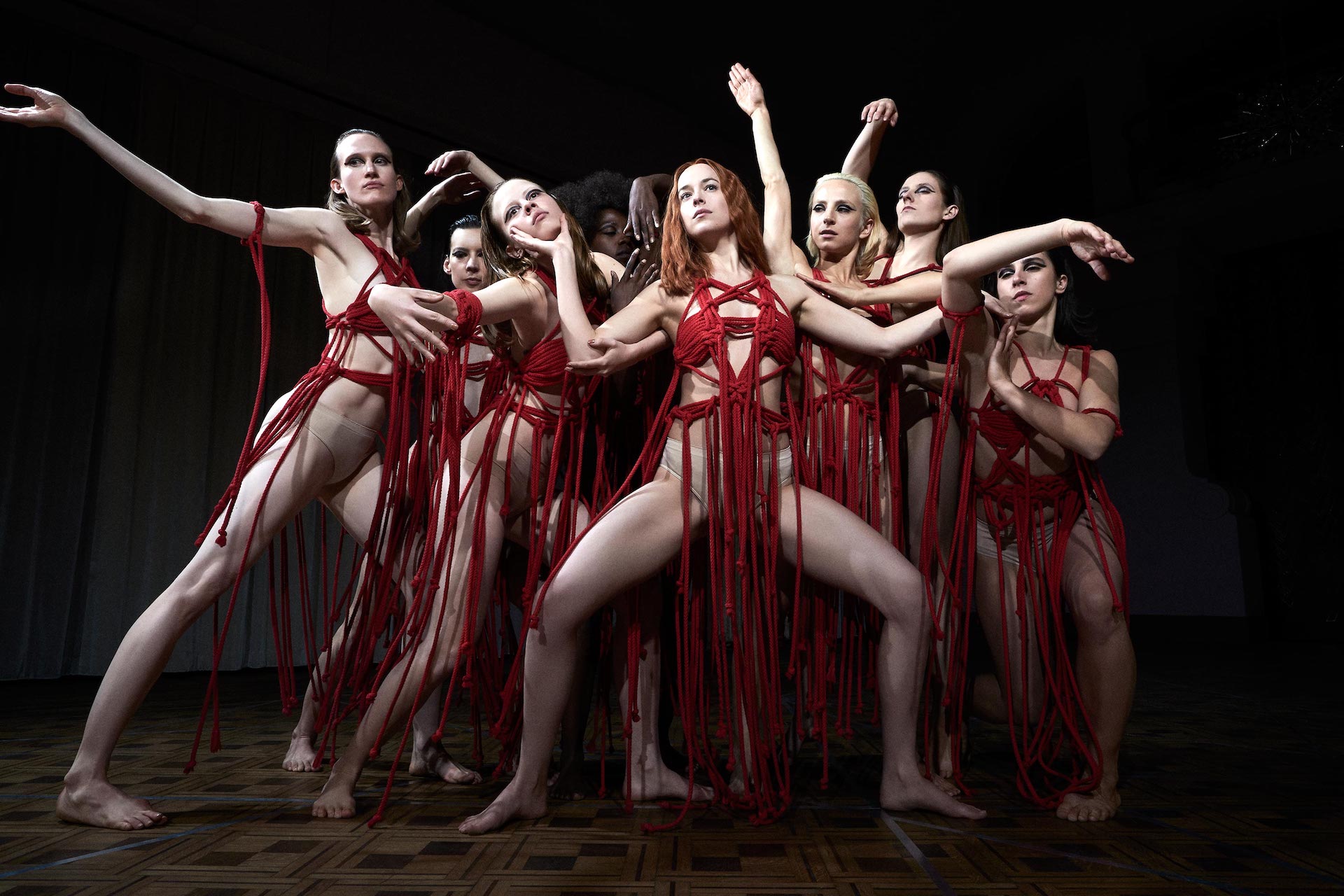
Luca Guadagnino continues to be a master film craftsman. Much as he draped Call Me by Your Name in waves of dreamy romance, here he establishes a consistent mood of nightmarish goth. Macabre visions dart in and out like a video that will kill you in 7 days while sudden, extreme zooms, precise sound design and a vivid score from Thom Yorke help cement the homage to another era.

But even when this new Suspiria—a “cover version” of Dario Argento’s 1974 gaillo classic—is tipping its hat, Guadagnino leaves no doubt he is making his own confident statement. The color scheme is intentionally muted, and you’ll find no men in this dance troupe, serving immediate notice that superficialities are not the endgame here.

1. Hereditary

Grief and guilt color every somber, shadowy frame of writer/director Ari Aster’s unbelievably assured feature film debut, Hereditary.

With just a handful of mannerisms, one melodic clucking noise, and a few seemingly throwaway lines, Aster and his magnificent cast quickly establish what will become nuanced, layered human characters, all of them scarred and battered by family.

Art and life imitate each other to macabre degrees while family members strain to behave in the manner that feels human, seems connected, or might be normal. What is said and what stays hidden, what’s festering in the attic and in the unspoken tensions within the family, it’s all part of a horrific atmosphere meticulously crafted to unnerve you.

Aster takes advantage of a remarkably committed cast to explore family dysfunction of the most insidious type. Whether his supernatural twisting and turning amount to metaphor or fact hardly matters with performances this unnerving and visual storytelling this hypnotic.

Study What You Missed

by Hope Madden and George Wolf

George had a best friend in high school whose dad used to ask about homework. If you answered that “we just had a test”, the dad wearing the shocking plaid pants would say, “Then study what you missed!”

In that spirit, here are ten films from 2018 you may have missed but are well worth tracking down in 2019:

All About Nina

Make time for a character study with a timely and tenacious bite, featuring a tremendous lead performance from Mary Elizabeth Winstead. The standup comic who uses laughter to mask pain is a well-worn path, but first time writer/director Eva Vives uses the very comfort in that cliche to point out, as we were so clearly reminded last year, how casually some trauma is dismissed.

On its surface a look at giving yourself without losing yourself, All About Nina isn’t just about Nina, and that’s what makes it truly resonant. It reminds us of the courage it takes for women to speak up, and the shame that comes with not listening.


Blaze

It seems cosmically right that a virtual unknown singer-songwriter, Ben Dickey, plays country outlaw Blaze Foley (and is terrific) in director/co-writer Ethan Hawke’s stirring tribute.

From dreaming of stardom while riding in a truck bed, to antagonizing barroom audiences, to a visit with Blaze’s once-abusive, now senile father (Kris Kristofferson), sequence after sequence rings more organic and true than most found in music biopics.

It’s clear this a passion project for Hawke, who is smart enough not to let that passion interfere with authenticity. Blaze gives Foley the re-birth he clearly earned – as a conflicted, damaged soul longing to be heard.


Blindspotting

The ambitious script is a promising debut for writers Daveed Diggs and Rafael Casal, who also star. Diggs (Tony and Grammy Award-winner for Broadway’s Hamilton) plays Colin and Casal (in his first feature) is Miles, two longtime buddies in Oakland whose lives are upended by a police shooting

First time director Carlos Lopez Estrada sometimes struggles with tone, moving from stoner comedy a la Jay and Silent Bob to heavy drama and back again, and his hand on a few of dramatic moments can get heavy.

But by the time Diggs unveils the film’s soul in a showstopping, rage-filled finale, Blindspotting reaches a memorable height, becoming both an urgent social comment and an exciting filmmaking debut.


Border

Border director/co-writer Ali Abbasi has more in mind than your typical Ugly Duckling tale. He mines this story of outsider love and Nordic folklore for ideas of radicalization, empowerment, gender fluidity and feminine rage. The result is both a sincere crime thriller and a magical fantasy.


First Reformed

Writer/director Paul Schrader delivers a nearly flawless meditation on faith and despair with First Reformed. In what may be his strongest performance, Ethan Hawke delivers a a slow slide from a pleasant façade to destructive rage, perfectly capturing every emotion, every nuance of internal crisis and its external manifestations. Schrader’s film is a masterful character study that asks thoughtful questions about how our choices will be viewed in the eyes of God.


Five Fingers for Marseilles (review by Rachel Willis)

How does one make a film that’s uniquely South African yet still feels like an American western? Director Michael Matthews and writer Sean Drummond answer that question with the stunning Five Fingers for Marseilles.

There are few villains as perfect as Sepoko, also known as The Ghost. Every moment Hamilton Dhlamini is on screen, the tension escalates. The masterful score only magnifies this malevolent figure.

With desolate landscapes, brutal violence and characters with questionable moral compasses, this is not only a magnificent Western, but an exquisite film.


Leave No Trace

In her first feature since 2010’s gripping Winter’s Bone, writer/director Debra Granik is again focused on souls living on the rural fringes and scraping out a hardscrabble, under-the-radar existence.

Driven by two haunting performances from the always underrated Ben Foster and impressive newcomer Thomasin Harcourt McKenzie, Leave No Trace replaces any of Winter’s Bone’s sinister, menacing layers with a tender, sympathetic grace that feels achingly authentic, and often heartbreaking.

The film follows its own titular advice, broaching a variety of relevant social concerns without ever raising its voice, yet cutting so deeply you may not get out of the theater with dry eyes.


Thoroughbreds

Wicked, surprising, unapologetic, cynical and buoyed by flawless performances from Olivia Cooke and Anya Taylor-Joy, writer/director Cory Finley’s Thoroughbreds is a mean little treat. It’s a fascinating look— blackly comedic and biting—at how the other class comes of age.


Thunder Road

Writer/director/star Jim Cummings is responsible for the most criminally underseen film of 2018, Thunder Road.

Cummings explores grief, mental health, small town stagnation and the genius of Mr. Bruce Springsteen in a film that is breathtaking in its tonal shifts. Simultaneously heartbreaking, funny, nuts, unpredictable and alertly honest, Cummings’s film and his performance cement him as among the most exciting cinematic voices of 2018.


Tully

The character Tully doesn’t show up ’til nearly 40 minutes in, but by then the film Tully has its anchor: a sensational Charlize Theron.

After two winners together in Juno and the criminally ignored Young Adult, writer Diablo Cody  and director Jason Reitman make their third collaboration a wonderfully natural extension of the first two. This isn’t the heartwarming comedy the TV ads want you to think it is, nor is it the casual dismissal of postpartum depression that others have charged.

It is one woman’s story, with moments of humor, absurdity and truth, a bit of cliche and even some fairy tale optimism. And with all of that, there’s enough brash boundary pushing to make Tully feel like a film we haven’t seen before, and one we’re glad that’s here.

I Don’t Want to Go Out—Week of January 1

It’s a new year! What do you want to watch? Whether you are into hip-and-twisty or not-very-good, you have options. Let us help you choose.

Click the film title for the full review.

Bad Times at the El Royale

Night School

Screening Room: And the Winners Are…

2018 was a pretty outstanding year for film. We had smart blockbusters, gorgeous indies and envelope-pushing animation. New filmmaking voices made themselves heard and old favorites returned to form. In this week’s screening room, with help of former Drexel Theatre President Kevin Rouche, we count down the best in film from the year.


Listen to the full podcast HERE.

And check out a far more expansive written review of the best 30 films of the year HERE.

Trickier Dick

Vice

by Hope Madden and George Wolf

Remember when the Vice President of the United States shot some guy in the face, and then the guy with the snoot full of buckshot apologized to the V.P. for all the trouble? That really happened!

When did the upper reaches of the Executive Branch go so brazenly corrupt, so treasonously, moronically, dumpster-fire-with-a-spray-tan wrong?

It’s not as recent as you think.

With Vice, writer/director Adam McKay remembers a time long before moronic presidential tweet storms, when the quiet, steady rise of a ruthless power broker rewrote American politics and changed the course of history.

V.P. Dick Cheney was often thought of as the de facto decision-maker in George W. Bush’s presidency, and McKay uses absurdist humor and a spellbinding cast to give that line of thinking a more weighty focus.

Christian Bale is characteristically flawless as Cheney. With added girth from (according to Bale) “eating pies” and the trademark Burgess-Meredith -as-the-Penguin speech pattern, the physical transformation alone is astounding. But it is the way Cheney’s cut throat ambition, scorched-earth power grabs and soulless devotion to ideology contrasted with his familial tenderness that Bale articulates so astutely.

Because of, or perhaps in spite of, his legacy, Cheney is a fascinating figure, and Bale makes that fact endlessly resonate.

But fittingly, Vice‘s secret weapon is Amy Adams as Cheney’s wife Lynne who commands the screen as equally as Bale. In a performance full of subtle power of ferocity, Adams casts Mrs. Cheney as a pivotal and equally ambitious partner in Cheney’s climb, publicly lessening his weakness as a politician and privately demanding his allegiance to their plan.

Bale and Adams anchor an utterly glorious ensemble (including Sam Rockwell as “W” and Steve Carrell as a dead ringer for Donald Rumsfeld) that—with the help of McKay’s blistering script and wise direction—utilizes comedy to inform, illustrate, and act as an outlet for the otherwise soul-blackening disgust one might carry around with them concerning the American political system.

In 2015, after a slew of directorial successes including Anchorman, Talladega Nights and Step Brothers, McKay redefined the term “filmmaker Adam McKay” with the blistering, cynical, hilarious, informative and angry The Big Short.

In an act of all out heroism or masochism, McKay did all he could to help us understand the housing collapse with that film. He so understood his material (dry) and his audience (confused/disinterested) that he would cut away periodically to let a bubble-bath-soaking Margot Robbie explain a bit of vocabulary.

It was perhaps his way of saying: This is really important, guys. Pay attention!

Turns out, McKay is just as pissed off about the polluting of American politics, with his conspicuous outrage and biting comic sensibilities again proving to be powerful fuel.

From the film’s false ending and sudden Shakespearean detour to the unapologetic face-shooting, Vice has a definite “can you believe this shit?” air about it, a nod to the need to laugh so you won’t start crying.

Thanks to McKay and his tremendous cast, you might just do both.

Little Women

Welcome to Marwen

by Cat McAlpine

Mark Hogancamp awoke from a vicious attack with no memory of his former life. He remembers, vaguely, that five men beat him to the brink of death, that they beat him because he drunkenly mentioned he liked to wear women’s shoes, and that one of his assailants had a swastika tattoo. The rest of his life has been left for Mark to piece together.

No longer able to draw as he once did (or even write his name), Mark finds a new art to work through his trauma. He models dolls after himself and women he knows. The dolls awaken in the town of Marwen every morning to fight five Nazis, again and again.

The real life story was the basis for the wonderful documentary Marwecol in 2010, inspiring director/co-writer Robert Zemeckis to craft his own narrative version,

Steve Carell does his level best as Mark, and connects with an impressive range. But he’s better than this film, and he’s better than this script.

Also occupying the town of Marwen is a mysterious Belgian witch whose obsessive grasp on Captain Hogie (Mark) is so obviously a metaphor for his addiction that she literally disappears from scenes by morphing into the pills Mark takes each morning. And yet, half way through the film, when he’s asked what real life woman the witch is based on, Mark says in wonderment “I don’t know. I don’t know where she came from.” Someone in my theatre laughed.

Welcome to Marwen’s greatest struggle is that it cannot commit to what it wants to be. Half of the film takes place with Mark’s dolls in Marwen, fully animated and pursuing comical fits of violence. The other half of the film follows Mark in real life as a lovable weirdo whose addiction to his medication and rampant PTSD don’t allow him to live far beyond the model village built in his yard.

The dissonance in the film comes from a holding back of sorts. It never gets quite as weird or fantastical as it could. The real world plot of Mark’s life is boring and predictable. The whole film feels like a concession between Zemeckis’s vision, and what he thought the audience might want to see. Instead, he ends up with something from an alternate universe Hallmark channel.

Worst of all, is the film’s bizarre commoditization of women. Mark fashions dolls from the hobby shop into sexier, more violent versions of women he knows in real life. None of these women seem upset or worried about their doll counterparts, disturbing though they are. Especially when one of the dolls is molded after his favorite porn star.

The film leads by making a joke of calling the women “dolls”, and then uses this joke to consistently refer to them as such moving forward. Twice Welcome to Marwen milks a joke out of a doll’s shirt being ripped open to expose her chest. Mark says he wears women’s shoes because he loves women so much, it helps him connect with their essence. His G. I. Alter Ego, Captain Hogie, screams in a triumphant moment, “Women are the saviors of the world!”

So. Mark can be celebrated for being brave enough to wear women’s shoes, but women’s clothing reduces them to sexualized objects.
Mark’s life seems to be defined by his failure to find a woman to love. His entire fantasy world is based on the idea that women can and will save him. The idea of women is celebrated, but women themselves are only treated as vehicles for romance or items waiting to be idealized. And there’s more. But a review should only be so long and disappointed.

Women aren’t here to fix you, or to save you. And they certainly couldn’t save Welcome to Marwen.

JLo Goes Low

Second Act

by Brandon Thomas

1998 was a good year to be a fan of Jennifer Lopez. She had just come off of a great turn as Selena Quintanilla in Selena, and her performance as Karen Sisco in Out of Sight made even more people stand up and take notice. Unfortunately, in the following years, movies like The Wedding Planner, Maid in Manhattan and Gigli showed that the promise of 1998 was an outlier. Second Act continues that storied tradition of mediocrity.

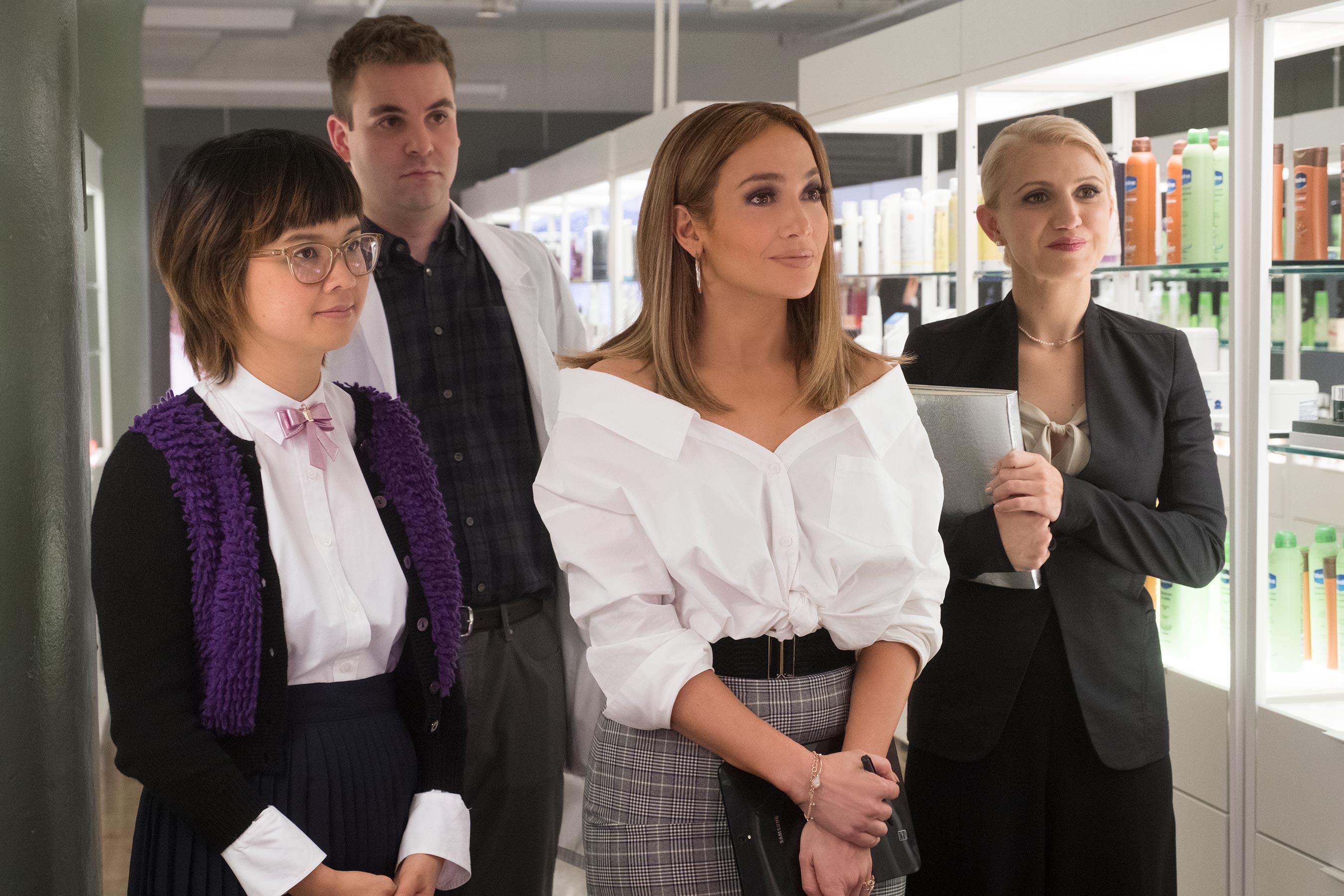
On the surface, life looks pretty good for Maya (Lopez). She has a job she excels at and enjoys; has a great partner (Milo Ventimiglia); and is surrounded by supportive family and friends. After she’s passed over for a promotion due to her lack of a college education, Maya’s confidence in her life choices start to crumble. When her genius nephew spruces up her resume with a few white lies, Maya lands an opportunity that allows her to use her natural skills, but also forces her to pretend to be someone she’s not.

Second Act is a confusing mix of several different kinds of comedies. There’s the romance straight out of the romantic comedy, pratfalls and potty humor from the Apatow camp, and a gee-whiz camaraderie angle that left me wondering if magic pants were about to come into play.

None of these approaches works.

Lopez is completely out of her element with the physical comedy. She sells tripping over a barrier about as convincingly as Denise Richards did playing a nuclear physicist in The World Is Not Enough. Not helping is her complete lack of comedic chemistry with co-stars Leah Remini, Treat Williams and Dave Foley. When the top comedic performance of the movie is delivered by Charlyne Yi… there’s a problem.

The film’s entire structure is supported by the worst kind of cliches: Maya’s lie and the hoops she has to jump through to keep the lie alive; the workplace competition that was tired in 2013 when The Internship did it; and a lazy second act reveal so bad it’d feel out of place in a Hallmark Christmas movie. Second Act is a Frankenstein’s monster of plot points from already terrible movies.

This is a movie that your mom who sees one movie a year will probably love. For the rest of us, it’s the worst movie of 2002 that somehow got released in 2018.

The Other Queen Movie

Mary Queen of Scots

by Rachel Willis

From a technical perspective, everything about director Josie Rourke’s film, Mary Queen of Scots is nearly perfectly realized.

Saoirse Ronan is resplendent as Mary, the rightful queen of Scotland and contested heir to the throne of England. Margot Robbie is equally enlivening as Mary’s cousin, better known as Elizabeth I.

The film begins with Mary’s return to Scotland at the age of 18 following the death of her husband, the Dauphin of France. As she assumes her rightful throne from her half-brother, she is quickly met with opposition. John Knox (David Tennant), a Protestant minister – and also one of the leader’s of Scotland’s Reformation – immediately dismisses her rule as she is both Catholic and a woman.

From Knox’s initial dissent, more threats emerge, primarily from the English queen, Elizabeth I.

Dual narratives tell the story of Mary and Elizabeth’s rivalry. Through letters, the queens express solidarity, but behind the scenes, Elizabeth worries. Her most loyal advisor, William Cecil (Guy Pearce) stokes those fears. But his genuine affection for Elizabeth is a glaring contrast to Mary, who frequently stands alone.

Much history is condensed in the two hour running time. Because of this, the movie flows smoothly, but history is glossed over, changed, or omitted entirely. While this works, it’s also misleading. Mary’s trusted advisor, David Rizzio, is reduced to a minstrel who is more handmaiden than advisor.

It’s not unusual for a fictional film to mold history to fit a story, but the most disappointing aspect is the portrayal of Mary. The film asserts that Mary was a good queen with a good heart who was an innocent victim of the people around her. This begs the question: Was Mary truly an innocent – a pawn at the mercy of scheming men? Or was she a ruler like any other? One who made mistakes, bad choices, and whose ambition was outmatched by another’s power?

The history surrounding Mary has always been controversial – it’s impossible to know exactly what she knew and what she plotted. But by portraying Mary as a victim, the film reduces her to a caricature rather than a woman – a queen – with agency.

It’s a disappointing decision in an otherwise stunning film.

Beautiful Ben

Ben is Back

by Hope Madden

Family can be a nightmare during the holidays, eh? Well, if you think your Fox-News-spouting uncle is a problem, you need to meet Ben.

Yes, Ben is Back, the damaged teen at Christmas drama from writer/director Peter Hedges, is clear Oscar bait. It is, after all, a family drama starring two of the Academy’s favorite thespians, Julia Roberts and the filmmaker’s own son, Lucas Hedges.

Lucas Hedges plays Ben, the eldest son of Holly (Roberts), who surprises his family—mom, sister Ivy (Kathryn Newton), half siblings Lacey and Liam (Mia Fowler and Jakari Fraser, respectively) and stepdad Neal (Courtney B. Vance)—on Christmas Eve. Ben’s been away in rehab, and not everyone is as thrilled at the prospect of reliving Christmas Horrors Past as Holly seems to be.

Though filmmaker Hedges’s script has a few rough edges, one of its great strengths is its limits. Ben is Back chooses not to spell out every aspect of Ben’s addiction, his descent, his likely court-determined recover program. These are wise omissions as they make the slow reveals more powerful and leave you feeling less manipulated.

What unspools as a tense family drama takes a wild left turn by act three, when Ben’s shaky present and dark past come crashing into Holly’s living room only to make off with the family’s beloved mutt. The balance of the film sees mother and son drive deeper into an ugly abyss of sexual predators, junkies and criminals to have poor Ponce back for the siblings by Christmas morn.

Once the borderline thriller storyline takes flight, Hedges Senior flails a bit with pacing and tone. Hedges Junior and Roberts, however, lose nothing.

The voyage into the underbelly of Holly’s lovely suburbia offers not only some insight into the realities of drug addiction and our current opioid crisis, but allows these two talents the chance to mine their characters’ psyches.

Hedges never overstates the emotions roiling barely beneath the surface. He is almost simultaneously overjoyed, anxious, guilty, dishonest, tender, vulnerable, loyal, broken and resilient. There is nothing showy in his performance as he conveys with clarity the confusing mix of emotions and motives that surface from moment to moment.

Roberts, who has solidified her status as formidable character actor in own second act, takes command of this film and never gives an inch. She owns every scene, and equals Hedges in her own ability to swing—sometimes gently, sometimes seismically—from one emotion to the next. Again, there is nothing inauthentic or overly dramatic in this performance.

The film itself dips too often into maudlin traps. And though the third act is far from awful, the filmmaker’s insights for family dynamics and dysfunction are stronger.

He can cast the shit out of a movie, though.

The Dunce and Future King

Aquaman

by Matt Weiner

A movie that brings together Willem Dafoe, Nicole Kidman, Julie Andrews and Dolph Lundgren is inevitably going to have a lot going on. That’s certainly the case for James Wan’s Aquaman, a weird mix of origin story, Arthurian myth and anti-racist appeal to coexistence. If that sounds like a lot for the frat bro character from 2017’s Justice League, well… it is. But thankfully it’s also never boring.

The new movie takes place after the events of Justice League, allowing half-man/half-Atlantean Arthur Curry (Jason Momoa) to resume his day job of serving as a one-man Coast Guard and drinking. Flashbacks piece together Curry’s life story: his father (Temuera Morrison) fell in love with the queen (Kidman) of the underwater kingdom Atlantis, who later had to choose between endangering her taboo love child or returning to the kingdom.

A series of tragedies pushes Curry on his hero’s journey, with enough family strife between him and his half-brother Orm (Patrick Wilson) to fill a Greek play. Together with the Atlantean princess Mera (Amber Heard), Curry strikes out in search of a golden MacGuffin along with his destiny, even finding time to pick up an archenemy for good measure (Yahya Abdul-Mateen II as Black Manta).

How much of a comfort it is that Aquaman is one of the better recent superhero movies depends on where you fall on the debate over whether distinctive directors should get picked for more of these big comic book projects (and given a long leash)—or if you wish we lived in a universe where they could pursue these visions without yoking themselves to Disney/Marvel or DC.

It is to the film’s benefit that Wan, veteran of horror franchises Saw, The Conjuring and Insidious, manages to tie Curry’s predictable Arthurian ascent to the most disturbing Lovecraftian horror this side of Hellboy. And it’s almost shocking to see the cotton candy brightness of Atlantis after the pummeling color palettes of Batman v. Superman and Justice League.

With his nonstop pace, steady stream of exotic settings and action that never gets bogged down in its own seriousness, Wan’s entry in the genre hits the mark as his loving homage to vintage Spielberg and Lucas—plus tentacles. Best of all, it’s a refreshing reminder that you shouldn’t need a flowchart and multi-phase corporate synergy to make a good popcorn movie.

Which is good because it doesn’t look like these franchises are going anywhere anytime soon, so if any other directors are looking to wed their creative vision to the corporate motherships then maybe I can learn to be more tolerant of the products they give birth to. It’s a message that sounds oddly familiar.