Tag Archives: film

Family Matters

Mirai

by Brandon Thomas

Confession: I’ve never seen an entire Japanese animated film.

Spirited Away? Nope.

Howl’s Moving Castle? Sorry.

Akira? Not even a single frame.

I don’t have any kind of unreasonable hatred for this type of film, but I’ve never had much interest either. Thankfully, Mirai was a nice introduction for this anime novice.

Kun is a typical toddler. He enjoys playing with his toys, looking at books, and being the center of attention to his mom and dad. That changes when his baby sister, Mirai, is brought home. Confused by the changes happening around him, Kun retreats to a world where he is able to meet family members at different periods of their lives.

What struck me first about Mamoru Hosoda’s Mirai is how the film doesn’t shy away from letting Kun behave like a real kid. He’s selfish, loud and cannot control his emotions. He’s not the easiest protagonist to like at first. The delightful part is seeing Kun grow, and learn to put these bad behaviors to bed.

Mirai is interested in looking at how difficult it is to be a family. It’s tough for parents to bring home another baby when they already have one at home. Cleaning still needs to be done, dinner still needs cooking, life still happens… and that can cause friction. Likewise, it’s hard to be a kid in this kind of dynamic. One minute, you’re the center of mom and dad’s universe, and the next – you’re not.

Kun’s travels through time via the garden never feel like cutesy spectacle, as each of his meetings is rooted in character. Kun learns about empathy, and that his own parents struggled with things when they were younger. By becoming more in touch with previous generations, Kun is able to fully realize his place in his own family.

Emotional yes, but there’s still plenty of fun to be had with Mirai. Kun finds himself turned into a half-boy half-dog at one point, and takes an exciting motorcycle ride with his great-grandfather at another. There’s a joyfulness to Kun’s interactions with this fantastical world that’s perfectly childlike.

Mirai might lack the belly laughs that accompany a Pixar movie, but the message is just as potent. Once the credits start to roll, that message is what sticks with us.

I Don’t Want to Go Out—Week of January 14

It’s Halloween all over again! Two above-average spookfests and one longshot Oscar contender ensure that just about everything this week in home entertainment is a tasty treat.

Click the movie title for the full review.

Halloween

Goosebumps 2: Haunted Halloween

https://www.youtube.com/watch?v=6EbOgr4aTvM

The Old Man and the Gun

The Bookshop

Screening Room: Upside, Basis of Sex, Replicas and More

A lot of movies, some of them quite surprising, to talk about this week in the screening room: The Upside, Replicas, On the Basis of Sex, A Dog’s Way Home, El Angel and Rust Creek. Plus, we peek at new releases in home entertainment and tease next week’s features.

Listen to the full podcast HERE.

Change My Mind

Replicas

by Hope Madden

Sometimes, dead is better.

That Stephen King quote flashed through my mind as I watched Replicas, Jeffrey Nachmanoff’s SciFi thriller starring Keanu Reeves.

Reeves is William Foster, a scientist working nobly to put human consciousness into robots because this way we can save so many dying soldiers. I’m confident they would totally want to come back as robots.

Foster quickly loses his family in a car accident, his bestie (Thomas Middleditch) conveniently dabbles in cloning, and the mad duo concoct a plan to combine their specialties and bring the Foster family back to life.

Back one step: Will Foster loses his family in a car accident. This requires Reeves to emote.

I would call that Problem #1, but I already covered the plot.

Nachmanoff and writers Chad St. John and Stephen Hamel deserve credit for quietly upending the ages-long moral conundrum at the center of any cloning/Frankenstein/AI film. Good for them for opting out of Judeo Christian finger-wagging.

Also, Alice Eve—when she’s allowed to do something besides look good sleeping—offers a nuanced and often funny performance that makes the most of the moral quagmire the story articulates.

How capable is Reeves at lobbying back answers to her profound and life-altering accusations?

I think you know.

Reeves has proven to have some heretofore unimagined talents via recent supporting turns in The Bad Batch and Neon Demon. His hollow performance in John Wick works strangely well, too. But as a scientist struggling with enormous moral choices and debilitating grief? It is distracting enough that I almost didn’t notice those plot holes I kept falling into.

That King quote didn’t flash through my mind as I thought about the Foster family and their existential paradox. I was thinking about me having to sit through this movie.


https://www.youtube.com/watch?v=ze_ANsckvS0

Hillbilly Elegy

Rust Creek

by Hope Madden

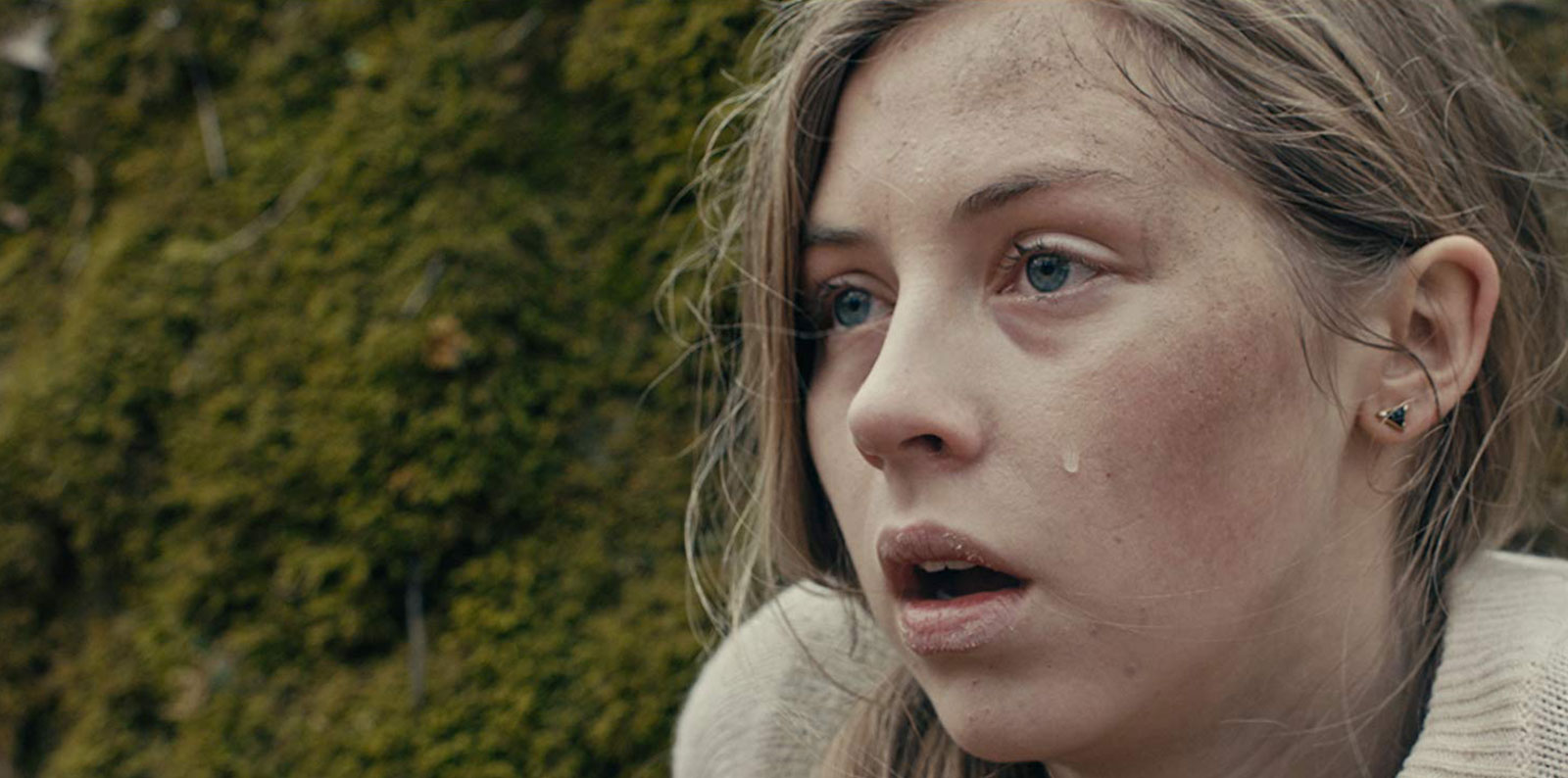
College co-ed (Hermione Corfield) follows her GPS into the backwoods of Kentucky, and hits a dead end before bumping into some less-than-helpful locals: tussle, injury, escape into the woods.

I don’t know how many times you’ve seen that very film, but I have probably seen it twice already this week. (It’s a problem, I know.)

This woman-in-peril pairing with the “city folk lost in the backcountry” formula equals one very tired experience.

The fact that filmmaker Jen McGowan, working from a script by Julie Lipson, offers us a victim/heroine who fights and thinks is not quite enough to save Rust Creek from drowning. But McGowan’s tricky, and she has more surprises packed in her double-wide than you might think.

The film, on its surface, asks us to rethink the victim in a hillbilly thriller. But Rust Creek cuts deeper when it requires that we—and the heroine, for that matter—rethink the hillbilly.

Michelle Lawler’s cinematography sets a potent mood, enveloping the proceedings in an environment that is in turns peaceful and gorgeous or treacherous and brutal, and she does it with natural, almost poetic movement.

This imagery allows the Kentucky woods to become the most vibrant character in the film, although those tree-covered hills are peopled by a few locals worthy of notice—not all, but a few.

Jay Paulson—best known to normal people for his brief stint on Mad Men, best known to my people as the porn-obsessed psychopath in Robert Nathan’s Lucky Bastard—cuts an intriguing, lanky figure as Lowell.

Slyly fascinating from the moment he takes the screen, Paulson shares an uncommon onscreen chemistry with Corfield. The smart, human relationship they build as they bide their time and cook some meth may be reason enough to see Rust Creek.

McGowan doesn’t burst as many clichés as she embraces, unfortunately. Still, the biggest obstacle facing her as she maneuvers her tropes to serve a (hopefully) unexpected purpose is that her protagonist is the least interesting character in the movie. This is not necessarily Corfield’s fault. She does what she can with limited resources. Sawyer is just the fuzziest character, and the one with the least articulated arc.

That means the resolution packs less of a wallop than it should, but certain moments and characters will linger.

The Heisenberg Sincerity Principle

The Upside

by Matt Weiner

The man who can’t feel a thing meets the man who hasn’t cared for anybody but himself. You will not believe what happens next.

Actually, if you’ve seen any inspirational movie about overcoming adversity in the last half century, you will totally believe what happens next. There is one big surprise in The Upside, though, and it’s how committed the leads are to making it way less cynical than it has every right to be.

I’m not sure it’s enough to redeem a film that’s been done dozens of times, but at least it makes this entry highly watchable. For this version, Bryan Cranston and Kevin Hart star as the odd couple from different walks of life who learn valuable lessons from each other in unexpected ways.

After being paralyzed from the neck down and losing his wife to cancer in short succession, billionaire investor Phillip Lacasse (Cranston) has given up on life. A chance encounter with street-smart parolee Dell Scott (Hart) brings a burst of fresh air into Lacasse’s narrow world, and Dell is hired on as a live-in aide.

Lacasse sees potential in Dell and appreciates having someone who treats him as a person, not merely someone to be pitied or ignored. It’s an admirable sentiment, and the chemistry between Cranston and Hart is the most winsome part of the movie. And a good deal more enjoyable than the contrived romantic subplot with Nicole Kidman, who gets to put her real accent to good use but not much else.

Cranston and Hart play off each other so well that it makes you wonder why not put that talent to work with a less hidebound story? The Upside is an adaptation by Neil Burger of the 2011 French film The Intouchables, which was wildly popular despite suffering from the same clichés. The script for the remake by Jon Hartmere manages to make the story a little more subtly endearing than colonial when Lacasse, doing his best platonic Henry Higgins, teaches Dell to appreciate fine art and opera. Just a little.

But banish those nagging doubts from your mind. The Upside pleads to be taken as all text, no subtext. This is, after all, a movie that turns themes, lessons and even symbolism into neatly packaged dialogue. You won’t hear anything new, but a lot of it is genuinely funny and well-delivered.

And who am I to judge the French for shopworn sincerity? They’re not the country that gave an Oscar to Crash.

I Don’t Want to Go Out—Week of January 7

Holidays are over, work is already a drag, who wants to just snuggle up and watch a movie? There is one great one available this week. Also one that’s got some promise, even if it derails. Then there’s one that’s frustrating because we really wanted to like it.

Click the film title for the full review.

Mid90s

The Oath

Hell Fest

Familiar Pattern

Escape Room

by Hope Madden

Man, I really liked Escape Room back in 1997 when it was called Cube.

Director Adam Robitel, who managed to do something fresh and upsetting with his 2014 feature directorial debut The Taking of Deborah Logan, here contents himself with borrowing … lifting…no, this is downright larceny.

In Vincenzo Natali’s underfunded but groundbreaking Canadian horror, Cube, six strangers—each with unique skills and backgrounds—find themselves trapped in a building and must unravel each room’s puzzle only to escape to the next room/deathtrap.

I don’t know if you’ve seen the trailer for Escape Room, but Robitel and screenwriters Maria Melnik and Bragi F. Schut have certainly seen Cube.

Cripplingly shy brainiac Zoey (Taylor Russell) is one of a handful of random strangers to receive a puzzle box in the shape of a cube. Let’s just assume that’s a nod toward the film’s source material and not a different, terrible rip off of Hellraiser.

By solving the puzzle, Zoey—and, sprinkled all over town, others—win the opportunity to attempt the most elaborate escape room ever constructed.

Actually, the architecture is weirdly familiar.

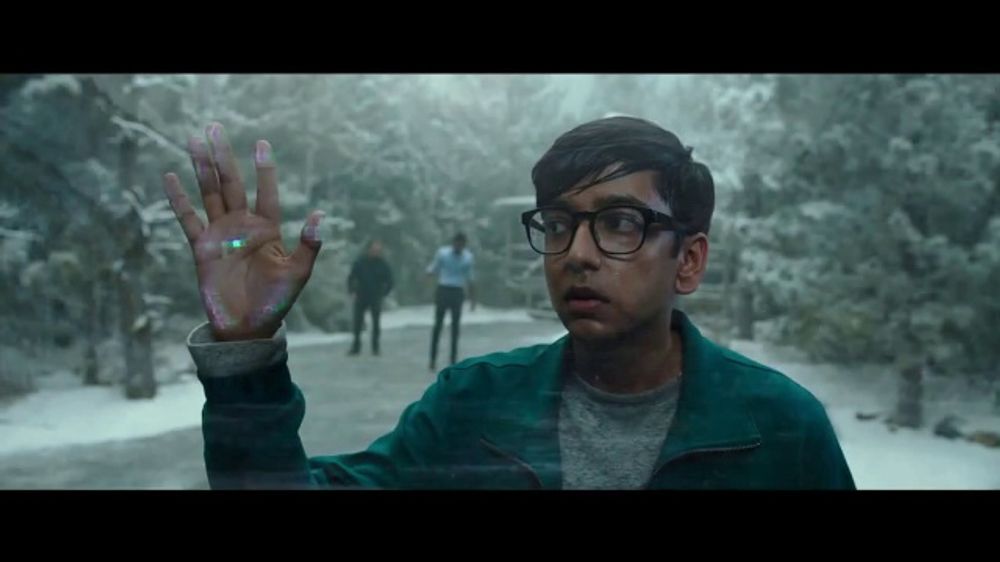
If you can get past the plagiarism and lazy theft–please add Final Destination and Saw to the list of the aggrieved—you will note that Russell and the entire cast performs quite well. Deborah Ann Woll (True Blood) impresses as a bit of a badass, while Nik Dodani endears in a small role and Tyler (Tucker and Dale vs Evil) Labine is adorable, as is almost always the case.

Many of the set pieces are pretty cool, too. One upside-down billiards room bit, in particular, holds your attention. But the game cast and sometimes fun sequences can only overcome the film’s weaknesses for so long.

Even if all these antics are new to you, the film’s predictable climax and disappointing waning moments are bound to leave you feeling that this movie could have been better.

It was once.

Sit Tight, Take Hold

Thunder Road

by Hope Madden

Thunder Road is the best film you almost certainly missed in 2018. You should rectify that situation post haste.

Jim Cummings writes, directs and stars as Officer Jim Arnaud, a man at a crossroads. Who else would be at the center of a film named for a Springsteen tune?

Like one of the year’s other most insightful and original indie gems, Hereditary, Thunder Road opens at a funeral. Also like Ari Aster’s breathless exploration of familial loss and dysfunction, Thunder Road establishes the tone for the film, the mental state and general disposition of the lead, and an unusual perspective with its opening scene.

But Cummings takes his meditation on grief and existential dread in very different directions.

As both a filmmaker and a performer, Cummings walks a tonal tightrope strung just that side of hysteria. Equally earnest and absurd, comical and heartbreaking, the film and the lead turn compel your attention, your empathy, your discomfort and your love.

You will love Officer Jim Arnaud by film’s end, not regardless but because of his epic failures and bottomless reserve of vulnerability. It is impossible not to root for him, not to feel his humiliations, not to admire his corrective measures no matter how ridiculous they are.

The filmmaker’s assembled a wonderful supporting cast. Nican Robinson, in particular, bursts through best friend/partner clichés to develop a tender character whose wearied facial expressions say more about his years of friendship than Cummings’s pitch perfect dialog could manage.

Macon Blair, Kendal Farr and Jocelyn DeBoer all bring a wonderfully familiar but nuanced small town resignation to their scenes that suits the film’s overall tone and creates an ecosystem where Jim Arnaud could certainly exist.

Cummings’s film is hilarious and unblinking, uncomfortable yet kind, and above all things, forgiving. A lot of filmmakers have taken inspiration from Springsteen’s lyrics and brought a dying blue collar American to the screen. None have done the Boss justice the way Cummings has.

Sharing the Pen

Liyana

by Rachel Willis

“Once upon a time, there was a girl….”

That girl is Liyana, a fictional character brought to life by the children living at Likhaya Lemphilo Lensha, a home for orphans in Swaziland.

During a storytelling workshop at the children’s home, author Gcina Mhlophe guides the boys and girls through exercises that allow them to imagine a collective story. Together, they weave a tale of a young girl facing enormous challenges.

Directors Amanda Kopp and Aaron Kopp focus primarily on five children, Phumlani, Nomcebo, Sibusiso, Mkhuleko and Zweli; their voices are the ones we hear throughout the film. By keeping these five at the center, we’re given a chance to get to know their personalities. Each tells the story in their own way. While the plot is the same, the details are unique to each child.

As the creative narrative unfolds, the audience is given glimpses into the lives of the children at Likhaya Lemphilop Lensha. We learn that many of the details of Liyana’s life reflect the children’s realities. HIV takes both of Liyana’s parents; her twin brothers are kidnapped in the dead of night by three vicious men. But Liyana faces each tragedy with determination; her hope and her fearlessness reflect the inner feeling of the children telling her story.

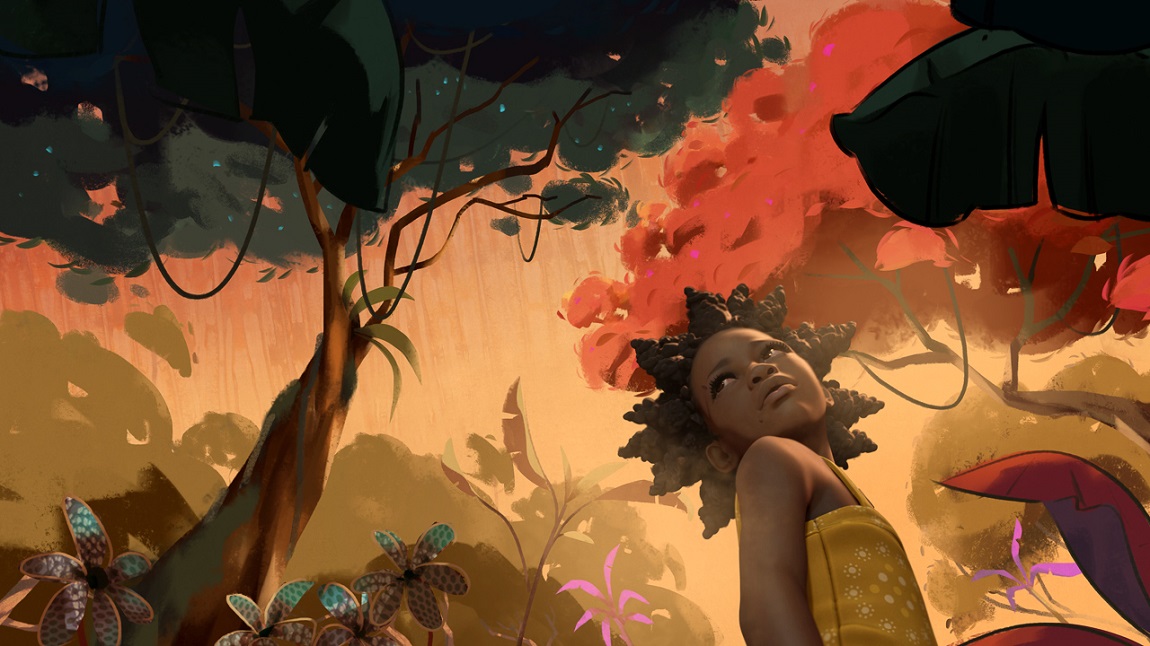
Liyana’s story is brought to life through a combination of the children’s words and gorgeous illustrations that animate the narrative. The film’s strengths lie in this weaving of the day to day realities of life with the vibrant story the children narrate.

The film’s most moving moments are when we’re allowed to spend time with the children. Watching them work in the garden, herd cattle, dance and play games is when the documentary shines. Though the children’s story is wonderful, it might have been a more powerful film if the directors had struck a better balance between fantasy and reality.

However, the indomitable spirit of children is the heart of the film. All of them have faced adversity, sadness and despair, but each has hope and it shines throughout the documentary. Liyana celebrates that wondrous courage.