Tag Archives: documentary

Hidden Figures

The Invisibles

by Rachel Willis

In 1943, the infamous Joseph Goebbels declared Berlin was “free of Jews.” However, 7000 Jewish residents remained in hiding in Germany’s capital. Director Claus Räfle brings this dark history to life with his docudrama, The Invisibles.

Focusing on the lives of four young Jewish men and women, Räfle showcases their struggles through a combination of dramatic reenactment and interviews.

The dramatic elements of the film play like any well-written, well-acted drama. The actors enliven the words of the survivors, whose interviews are interspersed throughout the film. Newsreel footage from the days of the war also help paint the picture for modern viewers.

It’s an interesting choice to retell the more dramatic elements of history through reenactments, but because of Räfle’s attention to detail and the actors’ commitment to the story, it works fairly well. Räfle understands how to balance the dramatic with the interviews,  frequently reminding us we’re watching a story about real people.

The strongest performance comes from Max Mauff, who portrays Cioma Schönhaus. By forging documents, Cioma manages to stay behind in Berlin when his parents are sent to a concentration camp. Because of his skills, soon friends ask for help with their own documents. His work gains the attentions of Dr. Franz Kaufmann, a member of the Third Reich, who assists Jewish men and women in escaping Germany., and he enlists Cioma’s help in creating fake passports and papers. Cioma’s work saves the lives of scores of other Jewish men and women.

Räfle tries to balance Cioma’s story with the stories from his other interviewees, Ruth Ardnt, Hanni Lévy and Eugen Friede, but he never quite manages to bring the same level of detail to their histories. Though Eugen participates in a resistance movement distributing leaflets to citizens, that fact almost feels like an afterthought. Ruth works in the house of a Nazi officer, who knows who she is, but the tension of such a situation is never fully explored.

In addition to the four survivors profiled, there are a number of men and women who assist in hiding Ruth, Hanni, Cioma, and Eugen. It’s hard to keep track of the names of those who risked their lives to do the right thing, which is unfortunate since their actions were critical in keeping people alive.

The Invisibles might have been better served by simply letting the survivors tell their stories in their own words, but even with the choice to dramatize the history, it’s a sensitive, emotional portrayal of one of the darkest times in human history.

The Good News

The Gospel of Eureka

by Rachel Willis

Eureka Springs, Arkansas has long been considered a magical place. In the mid-19th century, its springs were known for their “healing” waters. It’s home to Christ of the Ozarks, a two million pound, 65-feet tall statue of Jesus Christ, as well as The Great Passion Play. The play is the largest-attended outdoor drama in the country and depicts the last days of Christ.

There is also a large LGBTQ population at home in Eureka Springs. With The Gospel of Eureka, directors Michael Palmieri and Donal Mosher explore the city of Eureka Springs and the people who live there.

We meet several people in Mosher and Palmieri’s film, but the most endearing are Lee Keating and Walter Burrell, the owners of Eureka Live Underground, a bar that boasts “the largest beer garden in Eureka Springs”. Both Lee and Walter are devoutly Christian, though they differ in opinion on some of the specifics.

We also spend time with some of the performers in The Great Passion Play. They’re open to sharing their devotion with the audience. We see the great deal of preparation that goes into such a elaborate production.

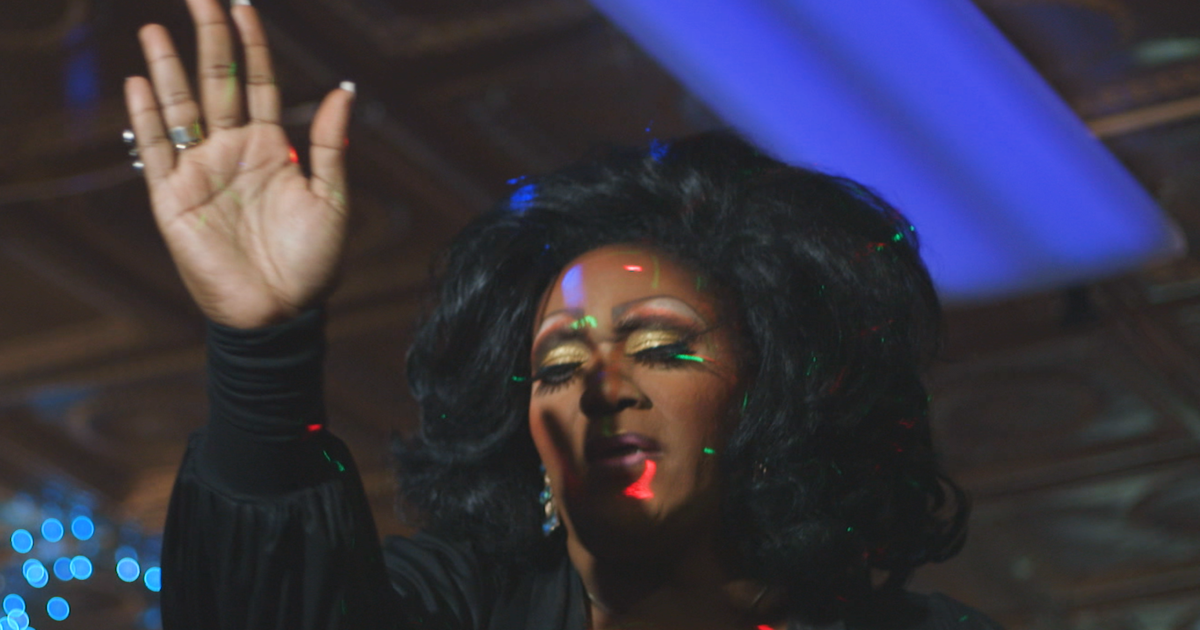
We’re also privy to scenes from The Great Passion Play, but they’re interspersed with moments from a drag show at Eureka Live Underground. Many of the performers incorporate religious songs into their acts. It may seem dichotomous from the outside, but this is what makes Eureka Springs the place it is.

That’s not to say Eureka Springs is a perfect place. The narrator makes sure to include some of the town’s darker history – lynchings, beatings, and murder – but it was also the first city in Arkansas to issue marriage licenses to same-sex couples, and the film itself is anchored around the run up to a vote regarding Non-Discrimination Ordinance 2223. For a city with a deeply ingrained Christian culture, it’s a toss-up as to how the vote will turn out.

With so many aspects to explore, Palmieri and Mosher try to tie it together, but most of the time the film is unmoored. It’s not always clear how pieces fit into the whole story. As a simple portrait of a city, it’s a lovely film. However, if the directors were trying to make a larger point, that goal is wanting.

Aging Gracefully

They Shall Not Grow Old

by Hope Madden

For those of us who haven’t experienced it, war is nearly impossible to fathom: the horror, terror, inhumanity and chaos of it. Filmmakers have been trying to make sense of it for audiences since film began.

Peter Jackson may bring us as close to comprehension as any director has, not by dramatizing war or by reenacting it, but by revisiting it.

The Oscar winning director and noted World War I fanatic sifted through hundreds of hours of decomposing footage, restoring the material with a craftsmanship and integrity almost as unfathomable as war.

He then recreated sound and audio, employing lip readers and researchers to guarantee the quality was a match for the beautiful restoration.

Over this he layered audio, pieces from BBC interviews with WWI veterans conducted in the 1960s and 70s—candid, moving and oh so British.

These he braids together into a cohesive whole, taking us from the wide-eyed patriotism that drew teenagers to volunteer, through their training and then—with a Wizard of Oz-esque moment of color, depth and clarity—into battle.

At about the 10-minute mark of They Shall Not Grow Old, the obsessive maestro differentiates this film from any war doc you’ve ever seen.

Quite unlike the disastrous 48 frame per second gimmick Jackson employed for The Hobbit, the restoration, colorization and even 3D here all serve a singular purpose: to immerse you in these moments, these lives, these battles.

The fact that this immersion pulls you 100 years into the past is beyond impressive, but the real achievement is in the intimacy and human connection it engenders.

The clarity of the faces, the tremor in the voices, the camaraderie and filth and death—all of it vivid as life. It’s as informative as it is enthralling, an equally amazing achievement in filmmaking and in education.

Watching Jackson’s Tolkien films betrays the filmmaker’s perfectionism, vision and—perhaps above all—deep respect and love of the source material. The same shines through the images of these young men. And though, as the storyteller here, his respect borders on awe, he never for a moment stoops to sentimentality or emotional manipulation. He is not trying to make you feel something. He is trying to tell a lost story, and one that has no business being lost.

Fall Down and Geek Out

The Great Buster

by Brandon Thomas

Physical comedy is as important to the history of cinema as the cameras themselves. Charlie Chaplin, The 3 Stooges, Jim Carrey and the cast of Jackass all kept the time-honored tradition of taking a blow for the sake of a laugh. Even everyday folk got into the act by sending their accident-filled home movies to TV’s America’s Funniest Home Videos.

For many fans, historians and critics, Buster Keaton was the best of them all.

Keaton started in the biz by performing alongside his parents in their traveling vaudevillian show. His adept ability to sell a pratfall like no one else made their act enormously popular. A fortuitous meeting with Fatty Arbuckle introduced Buster to the art of filmmaking, and by the time Keaton reached his mid-30s, he’d directed, starred in and produced multiple feature and short films.

With The Great Buster, director Peter Bogdanovich (The Last Picture Show, Paper Moon) delivers an absolute love letter to Keaton and his career. The film not only touches on Keaton’s highs in the 1920s, but also on his low points when he lost all creative and financial control of his projects. Alcoholism, infidelity, divorce and family estrangement all plagued Keaton during the downturn in his career.

Bogdanovich wisely spends most of the time discussing and reveling over Keaton’s work. Bogdanovich himself narrates the film, and his adoration of Keaton is evident in his voice as he touches on everything from Keaton’s masterworks in the 1920s to his commercial work in the 1960s. Filmmakers and actors such as Mel Brooks, James Karen, Quentin Tarantino and Johnny Knoxville also share how their affinity for Keaton helped shape their careers.

The film really takes hold when the more “film geek” elements are at play. Specific scenes and/or gags from Keaton’s work are broken down, analyzed and fawned over by Bogdanovich and fellow filmmakers. The film even backtracks to spend the last third pouring over the classics that Buster created in the 20s, leading right up to the invention of talkies.

Like recent documentaries De Palma and Milius, the love and affection for the subject and their creations is all over The Great Buster. Bogdanovich has crafted a precise and professional movie, but, more importantly, he’s infused the film with respect and admiration.

https://youtu.be/NLiRLN_EKu8

Sharing the Pen

Liyana

by Rachel Willis

“Once upon a time, there was a girl….”

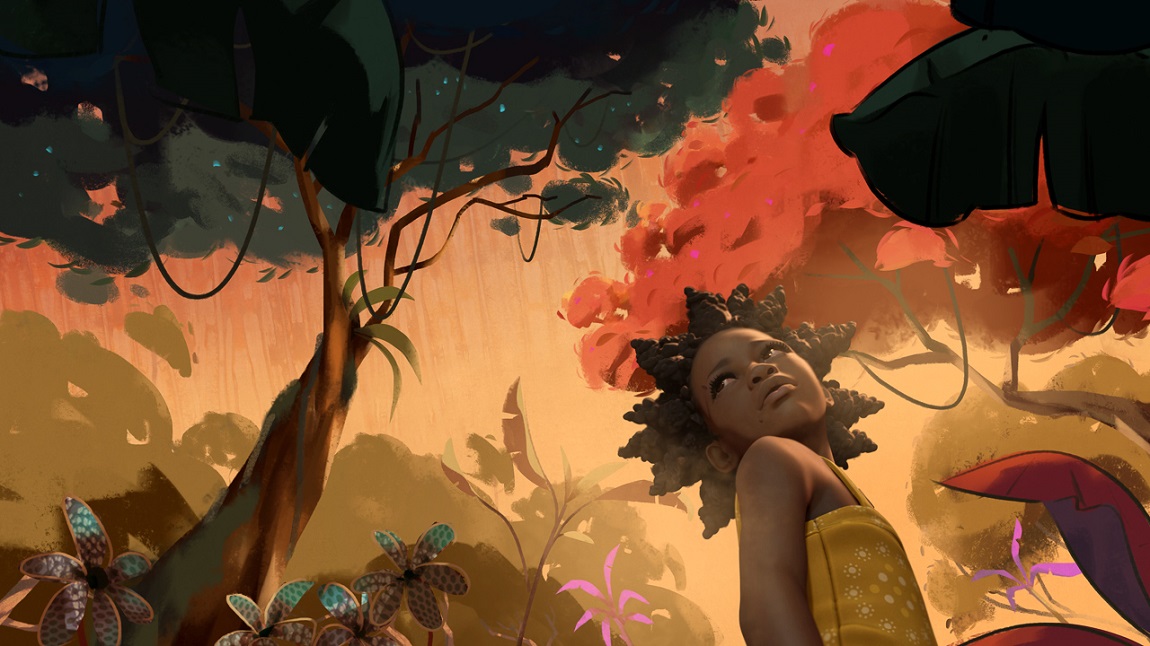
That girl is Liyana, a fictional character brought to life by the children living at Likhaya Lemphilo Lensha, a home for orphans in Swaziland.

During a storytelling workshop at the children’s home, author Gcina Mhlophe guides the boys and girls through exercises that allow them to imagine a collective story. Together, they weave a tale of a young girl facing enormous challenges.

Directors Amanda Kopp and Aaron Kopp focus primarily on five children, Phumlani, Nomcebo, Sibusiso, Mkhuleko and Zweli; their voices are the ones we hear throughout the film. By keeping these five at the center, we’re given a chance to get to know their personalities. Each tells the story in their own way. While the plot is the same, the details are unique to each child.

As the creative narrative unfolds, the audience is given glimpses into the lives of the children at Likhaya Lemphilop Lensha. We learn that many of the details of Liyana’s life reflect the children’s realities. HIV takes both of Liyana’s parents; her twin brothers are kidnapped in the dead of night by three vicious men. But Liyana faces each tragedy with determination; her hope and her fearlessness reflect the inner feeling of the children telling her story.

Liyana’s story is brought to life through a combination of the children’s words and gorgeous illustrations that animate the narrative. The film’s strengths lie in this weaving of the day to day realities of life with the vibrant story the children narrate.

The film’s most moving moments are when we’re allowed to spend time with the children. Watching them work in the garden, herd cattle, dance and play games is when the documentary shines. Though the children’s story is wonderful, it might have been a more powerful film if the directors had struck a better balance between fantasy and reality.

However, the indomitable spirit of children is the heart of the film. All of them have faced adversity, sadness and despair, but each has hope and it shines throughout the documentary. Liyana celebrates that wondrous courage.

A Star Is Spun

Maria by Callas

by Christie Robb

It’s an ambitious project to document the life of an international celebrity almost entirely in her own words. And that’s the task undertaken, not entirely successfully, by director Tom Volf in Maria by Callas.

The life of the mid-century opera singer is captured primarily through taped interviews, diary entries, letters to friends (read by the opera singer Joyce DiDonato), and, of course, recordings of Callas’s phenomenal performances.

We see the polished surface of a star born to humble beginnings in New York who rose to command stages across Europe and the Americas. It’s almost two hours of sweeping updos, elaborate costumes, chic evening wear, dripping jewels, swaddling furs, impeccable makeup, and pristine manicures.

Volf tracks Callas’s career from the 50s through the 70s, and lingers on close ups of Callas’s arias. She’s a waif—all bouffant hair, expressive eyes, and bird-like bones. You wonder how such a big voice can possibly come from such a tiny frame. She’s magnetic. Passionate. Commanding.

The singing is interspersed with autobiographical tidbits provided by Callas. But these are only sketches. Although she states again and again that she would give up her career to raise a family and it’s clear that at some point around her late 20s or early 30s she got married, the first time she utters her husband’s name in the documentary it’s to discuss their impending separation. We are left to wonder how genuine she is in saying that she’d give up her career for domestic life and how much she felt compelled to say that, given the prevailing gender norms of the years in which she was famous.

Much of the autobiography portion is consumed with Callas’s operatic 10 plus year affair with Greek shipping magnate Aristotle Onassis, which occurred both before and after his marriage to Jackie Kennedy. Through interviews and letters you can see Callas’s attempt to put a positive spin on what must have been quite a tumultuous relationship. Even while he is pulling away from her, Callas writes to a friend, asking for agreement on how he has changed for the better.

The final moments of the movie show Maria kicking back in Florida. Her hair is down for the first time. She’s wearing loose lounge wear instead of a corseted bodice. Her hair flows down her back, and she’s sporting thick glasses that magnify her myopic eyes. It’s clear how much effort has gone into the package of the public Callas persona.

The contrast between the woman and the artifice would have been more effective with a bit more exposition. It’s an admirable goal to have Callas in control of her own narrative, but to do so leaves out information that would be helpful to provide context to this life. For example, Maria’s rivalry with an older sister who was considered to be the pretty one in the family. The scandalous headlines. The qualities of her vocal talents. The year Maria decided to lose some weight mid-career and lost nearly 80 pounds. How the weight loss may have contributed to her vocal decline. How her changing voice impacted her attempted late-career comeback. Without the biographical backstory, the documentary seems too surface level.

If you don’t know a lot about Callas, do your research beforehand and come for the music and her arresting performances.

Wolf Pack Mentality

Meow Wolf: Origin Story

by Rachel Willis

If you’ve never heard of Meow Wolf, an 88-minute documentary about their beginnings may seem pointless, but I promise it’s worth it. By the time the credits roll, you’ll be looking into the price of plane tickets to Santa Fe.

Santa Fe, New Mexico is one of the world’s most vibrant arts centers. Home to hundreds of galleries and dozens of museums, it’s known worldwide for its art markets, events and performances.

And it’s also home to Meow Wolf, an art collective comprising a handful of anarchistic artists who saw too much bourgeois capitalism in the local art scene. Seeking to break away from the idea of art as commodity, these creative individuals banded together to create something new, unique and entirely collaborative.

Using animations, archival footage and interviews with founding members of the collective, directors Jilann Spitzmiller and Morgan Capps create a visually engaging documentary. It would have to be to capture the spirit and brilliance of the art and artists behind Meow Wolf.

The major theme of the film, which is the major dilemma for Meow Wolf, is maintaining artistic integrity while creating a marketable product. From the very beginning of Meow Wolf’s inception, most of the group’s members were opposed to anyone trying to impose too much order into the creation process.

Spitzmiller and Capps document the bitter fights, the fissions within the group, and ultimately, the success when they manage to work together to find common ground. With a collective, each member is involved in the creation process. Each member has a say, and each person contributes to the final product.

Documenting a few of Meow Wolf’s early successes, the film culminates with their most ambitious endeavor: the House of Eternal Return. A 20,000 square feet interactive, immersive art installation, it’s one of the most incomparable and wondrous projects you’ll have the pleasure of viewing from conception to completion onscreen.

That George R.R. Martin of Game of Thrones fame helped fund the project only adds to its charm.

Watching Meow Wolf create ambitious, quirky projects is like watching a great band write game-changing songs. There are tense moments, fights and losses, but when things come together you’ll come as close as one can to true magic.

From the Corners to the Council, Baltimore under a Microscope

Charm City

by Matt Weiner

If the Midwest is often treated as America’s test market for new products, Baltimore makes a good case as America’s stand-in for how our cities have been neglected, in ways both passive and pernicious. With Charm City, Marilyn Ness sketches the big picture by zooming in on one city neighborhood.

Ness centers the documentary around those most affected by the violence and lack of opportunity in the city, spending time on the streets with the irrepressible Clayton “Mr. C” Guyton. Mr. C runs a neighborhood community center, providing a mix of social services, inspirational sermons and a contagious hope that things must get better.

Also represented is the Baltimore Police Department, whose officers are buckling under constant overtime in an attempt to stem the record murder rate. Politicians get their due through the eyes of Brandon Scott, a reform-minded city councilman (and the youngest person elected to the position).

At first it seems like Ness’s framing is nuanced to a fault. She studiously highlights the interactions on all sides as an almost routine drudgery. Or as routine as life can be when you’re in a constant struggle for resources just to survive.

But haunting the periphery is the death of Freddie Gray, which took place just months before the film begins. Ness limits her interviews to the more optimistic and eager officials and officers, but even relatively benign interactions are impossible to separate from the wider conversations happening around criminal justice reform in cities and police departments all over the country.

As frustrating as it can be when Ness sticks to her granular talking head shots, there’s a still a message—even if that message to viewers is often that you’re going to need to do some extra homework on this.

And it’s effective. It’s heartbreaking when the people on Mr. C’s block abruptly suffer the loss of one of their own. It’s bracing to hear them refuse to give up even though they feel like everyone else has abandoned them. It’s useful to see how city officials view doing the right thing, and how quickly that impulse crashes against a public health epidemic that cannot be theirs alone to fix.

There have been plenty of superb recent documentaries about criminal justice in America, including Ava DuVernay’s 13th and Erik Ljung’s The Blood Is at the Doorstep. Charm City probably shouldn’t be the only film to watch if you’re looking to go deeper on the subject, but it’s a fine and no less urgent place to start.

Blinding Us with Science

Science Fair

by Rachel Willis

One year back in high school, my school decided participation in the science fair would be compulsory. I resented this since the last thing I wanted to do was “science.”

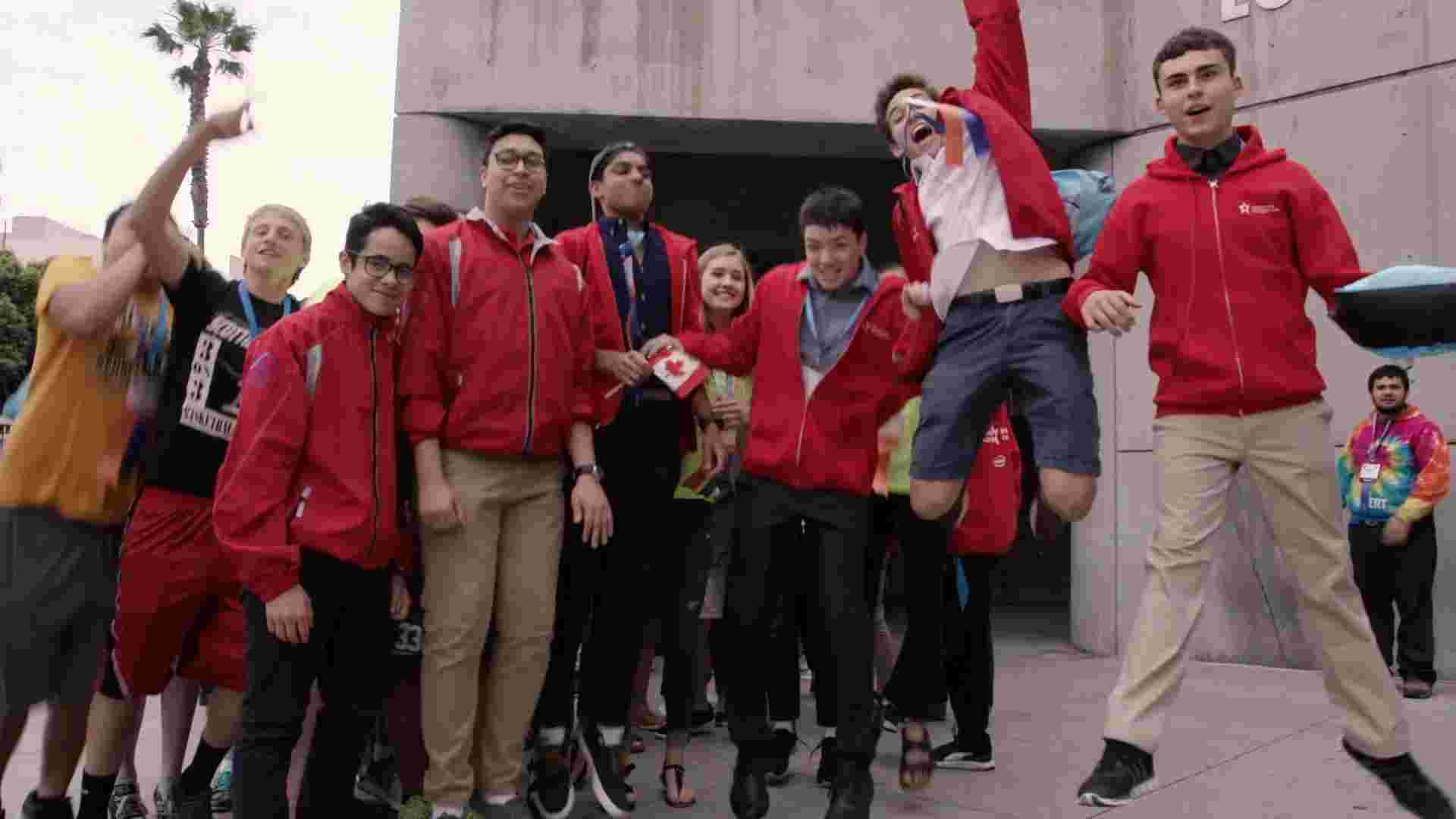
Watching the teenagers profiled in documentarians Cristina Costantini and Darren Foster’s film Science Fair, I start to understand the appeal of sincere participation in regional, national and international science fairs. If I had seen film the year I participated, I might have taken it more seriously.

What these kids invent, build and research makes my greenhouse in a shoe box look prosaic. From research into ways to prevent Zika transmission to monitoring and testing for arsenic in groundwater, these kids are smart, ambitious, and driven.

The crème de la crème of science fairs is the International Science and Engineering Fair (ISEF). To qualify for participation in ISEF, first these students must win their area science fairs, which can be state-wide or regional competitions. However they make it to ISEF, the teenagers who qualify have already faced stiff challenges from their fellow science enthusiasts.

To help the viewer understand the pressure these kids face, former ISEF winner Jack Andraka sheds light on the stress of presenting to judges. Projects that students have worked on for months, even an entire year, must be broken down into ten minute presentations to a handful of judges who will decide if their project is worth the prestigious Gordon E. Moore Award.

It’s hard to pick a  favorite. All of the teenagers profiled are charming and their desire to win is infectious. You wish they could all win.

Science Fair follows the familiar structure of other films depicting students engaged in fierce competition – First Position, Spellbound, and Make Believe. We’re given time to get to know the students profiled, to watch them hard at work on their craft, and then we follow them through the competitions as they fight their way to the finish line.

Costantini and Foster make a point to profile students from varied backgrounds. Some of the kids attend private schools especially focused on STEM education. Others attend public schools so focused on athletics that science achievements are completely ignored. The directors want to make a point that science is for everyone and anyone can achieve the level of success that these students find.

In a country that frequently devalues science and scientists, this documentary reminds us that these kids are our future.

That future is very bright.

God Save McQueen

McQueen

by Rachel Willis

The life of iconic fashion designer Alexander McQueen is the subject of director Ian Bonhôte’s documentary, McQueen. With writer and co-director Peter Ettedgui, Bonhôte creates a richly artistic dive into the controversial designer’s life and art.

Dividing his portrait into sections, Bonhôte uses home videos, archival footage, interviews with family and friends, and scenes from the catwalk to highlight McQueen’s unique—and oftentimes controversial—work.

As Bonhôte highlights with sensitivity and warmth throughout the film, fashion is an expression of McQueen’s experiences. It’s clear McQueen puts his feelings into his designs, and his collections become deeply personal. “I would go to the far reaches of my dark side and pull these horrors out of my soul and put them on the catwalk,” he says of his art.

The fondness with which people speak of McQueen in the documentary’s many interviews offers a picture of someone who made an impact beyond his creative output. His friends, many of whom were part of his design team, speak of the dedication and drive behind his designs. There is a love for McQueen that shines throughout the film.

However, the darkness in McQueen, at first kept to the catwalk, begins to come through in his personal life. As his success grows, the energy behind his work grows darker. Some of his long-time collaborators end their working relationship with him, something he takes personally. For McQueen, there was no such thing as a work-life balance.

It’s clear through the course of the film that the world of haute couture is a stressful one, and no one seemed to take on more than McQueen. In an interview, he mentions assembling 14 collections a year. It’s a staggering number given how much time, energy, and effort must go into each piece of clothing, not to mention the hair, makeup, and set design that made up McQueen’s unique and stunning exhibitions. What’s unclear is if McQueen’s inner turmoil drove him to work nonstop or if it was the work that fueled his inner chaos.

Bonhôte and Ettedgui produce a mesmerizing narrative. From McQueen’s early apprenticeships with tailors to his meteoric rise as one of the most sought-after designers, the filmmakers cultivate an interest in a subject that many may be unfamiliar with. They highlight the art in fashion design, utilizing footage from many of McQueen’s collections to show this artistry.

Coupling the fashion world and McQueen’s creativity with a captivating score, the documentary pulls the viewer in from the first moment and never lets go. It’s a fascinating, compassionate portrait of an imaginative genius.