Tag Archives: documentary

Don’t Cry, Sad Clown

Misery Loves Comedy

by Hope Madden

Is every clown really a sad clown? In his debut as a documentarian, actor Kevin Pollak seeks to find the answer to that question by asking it (or variations of it) to 50 or so of the brightest comic minds of the day.

Who? Tom Hanks, Amy Schumer, Martin Short, Jimmy Fallon, Janeane Garofalo, Judd Apatow and dozens of other stand-up comics and comedic writers and performers. What Pollak wants in return is a glimpse into the shared psyche of the funnyman.

Who were their influences? When did they realize they were funny? What’s it like to bomb onstage? To kill? They’re interesting enough questions and sometimes the answers are fun to watch, but the sheer volume of responses almost requires that the film remain superficial.

His doc would have benefitted had Pollak narrowed down the interviewees, perhaps focusing solely on stand-up comics. We also hear from film directors, sit-com actors and one radio morning show. The breadth only draws attention to the lack of depth.

And yet, there are ways in which the cast feels very narrow. The group is – whether inadvertently or not – pretty white and male. Pollak may simply have raided his own personal phone book, calling in favors from friends for the film, but the result is breathtakingly one sided. He talks with 5 or 6 women, one of whom (Whoopi Goldberg) is not white. He also talks to one male (Kumail Nanjani) who isn’t white.

So, 40+ white guys tell us about the context of being funny. Presumably this is not because of some deeply held belief of Pollak’s, but that doesn’t excuse it. Forget that whatever thesis he may be trying to put forward is irredeemably skewed by this, the fact that anyone could direct a documentary about stand-up comedy without including the point of view of one African American male – no Chris Rock, Eddie Murphy, Kevin Hart, Dave Chappelle, Tracy Morgan – is astonishing.

Plus, honestly, the film itself is almost never actually funny. He talks to fifty funny people about being funny yet catches almost no comedy on film. What?

In the end the film is dedicated to the memory of Robin Williams, and I’m sure Pollak’s heart was in the right place. It’s just that nothing else was.

Verdict-2-0-Stars

Secret of Their Lack of Success

Revenge of the Mekons

by Hope Madden

Is there a more punk rock concept than anarchy?

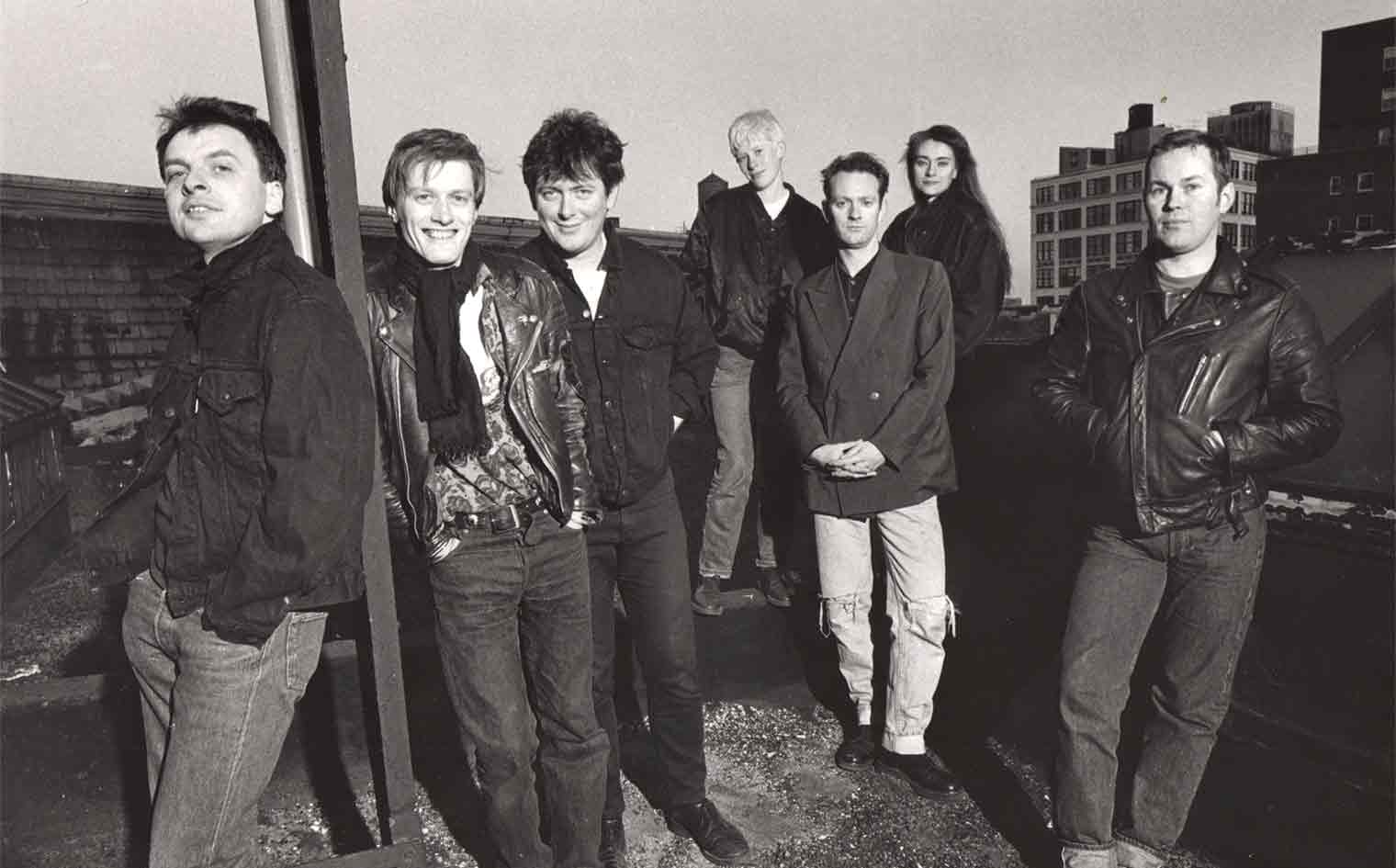
The answer is no, and that is what makes The Mekons the most punk rock band ever, regardless of the fact that their music is more of a folk/honkytonk/punk blend.

Born of Britain’s punk scene in ’77, the band consisted of an art college collective who, characteristically, had no musical ability at all. Naturally, they were immediately signed to a label.

Now, nearly 40 years later, the band is still together, still recording, still touring, regardless of the fact that they’ve been repeatedly dropped by labels and have never achieved even a moderate level of success.

Joe Angio’s documentary Revenge of the Mekons enjoyable catalogs the band’s journey from talentless punks with a philosophy to brilliantly listenable artists with integrity and the same philosophy.

The film marks the evolution of a band that constantly reinvents itself, each new direction a natural progression from the last while also being a fascinating surprise. They find the “voice of the people” foundation in wildly varying styles of music and, rather than abandoning their previous style, they marry it with the next. The result is always fresh because the Mekon’s natural style is, as founder Jon Langford calls it, “bloody minded.” Whatever genre they adopt, it naturally changes. Just like, as the film points out, when the Ramones started recording they were trying to sound like the Beach Boys.

But it’s the band’s almost comical indifference to financial or popular success that sets the film apart. Says Ed Roche of the Mekon’s label Touch and Go Records, “Every critic loves the Mekons. Unfortunately, they get free records.”

Rock docs almost invariably follow the same format: humble beginnings, meteoric rise, trouble handling success, crash and maybe the glimmer of a resurgence, depending on the film and subject. To spend 95 minutes cataloging all the ways a band manages to avoid success is fascinating – it’s like the story of Anvil, except that the Mekons aren’t even trying to succeed.

What they are doing is focusing solely on their own artistry, which can be a pretentious thing to watch for a feature length running time, but the band does not possess an ounce of pretentiousness. They are what they are. They do what they do. Like them or don’t, it doesn’t matter to them.

How punk rock is that?

Verdict-3-5-Stars

Inspiring or Exploitative?

Farewell to Hollywood

by Christie Robb

In Farewell to Hollywood, documentary filmmaker Henry Corra presents us with the last two years in the life of co-director Regina Nicholson, a young woman struggling against osteosarcoma for the second time.

The movie is troubling. And not just because of the cancer.

Originally diagnosed just after her sixteenth birthday, Regina “Reggie”was an aspiring filmmaker that met the much older Henry at a film festival. Her life’s goal was to make a full-length feature. She sets out to do this with Henry, but early into the project her cancer returns.

The resulting film is an arty home movie of the end of Reggie’s life.

In the film, Reggie’s family initially seems to welcome Henry, excited that he’s taking an interest in their daughter’s dreams. But, as the cancer becomes more aggressive, relations between the grown-ups becomes strained. Reggie’s parents tell Henry to back off. Attached to the point of obsession, Henry presses on Reggie to give him more of her time. Her parents threaten to cut off Reggie’s medical insurance and Henry finds her a home in South Pasadena, taking over as her medical caretaker.

To what extent does Henry exacerbate the family drama? To what extent does he provide essential support?

Because the narrative is given to us through Henry’s editing, it’s difficult to say whether Henry has crossed the line into Perv Town. (There are moments that provoke a major sense of unease.) Or whether Reggie’s parents are smothering and emotionally manipulative to the point of denying her the chance to live in the limited time she has left. Or both.

There’s little input Reggie seems to have on the film. At no point does she clearly turn the camera on Henry. Her chops as a filmmaker are glossed over. We see her bedroom, her stacks of DVDs, her walls plastered with movie posters. We see scenes from her favorite movies, but despite her co-authorship credit, she comes across as more subject than author.

But as a subject, what we do see is a driven, resilient young woman following her dream, joking her way through medical procedures while dealing with excruciating pain and needy adults—interspersed with lots of clips from Pulp Fiction.

In the end, Reggie shares her death beautifully and it was a privilege to know that for 19 brief years she was a part of this world.

Verdict-2-5-Stars

Come Fly with Me

Above and Beyond

by Hope Madden

Roberta Grossman’s documentary Above and Beyond is full of surprises, but perhaps the most shocking thing of all is that it took almost 70 years for a filmmaker to decide to tell this story.

In 1948, a number of American pilots fresh from their WWII duties were courted for a new war effort. They were asked to fight in Israel’s war for independence, becoming the burgeoning nations first ever air force.

Grossman’s tale brims with excitement, derring-do, intrigue and impossible odds – not to mention all the hoo-rah you can squeeze into 90 minutes. Her film benefits from a truly unbelievable story that Grossman wisely mines for more than just sky high heroics.

The American pilots were all Jews who’d fought in WWII only to return home to the same anti-Semitism they’d faced as kids. While they saw the effort to aid the struggling new nation as their chance to subvert yet another Holocaust, for most of these men the fight became one of a personal and cultural relevance they could not have imagined.

Archival footage, reenactments and interviews with surviving pilots and their families are rarely balanced so well or to such entertaining effect. Where so many historical documentaries sink under reverential solemnity or textbook-like staleness, Grossman’s whips past with a combination of surprised laughter and amazed silence.

It’s impossible not to be charmed by these sweet old men and their war stories, but my favorite part was listening to comic genius Paul Reubens (Pee-wee Herman) recount the stories of his father’s participation in the effort. Nutty!

While there are dry spots and flat moments, Above and Beyond boasts a giddy excitement about the whole effort, which is held aloft by the fascinating historical material and anchored with the moving spiritual realizations the battle brought to the pilots.

The film’s most painful flaw is Grossman’s myopic view of the struggle. Above and Beyond aches for some perspective concerning the Palestinian refugees and the lasting struggle facing the region since Israel’s established statehood. It’s an unfortunate oversight because without it the otherwise fascinating, informative and entertaining film feels incomplete.

Verdict-3-5-Stars

Dismantling the Master’s House

Concerning Violence

by Hope Madden

Concerning Violence – a remarkable documentary that looks at the global ramifications of Europe’s history of colonizing African nations – is not for the faint of heart or the slow witted. You may feel like you have to take notes. Director Goran Olsson (The Black Power Mixtape 1967-1975) challenges viewers with unadorned footage and undiluted narration, but for those who can tough it out, the film is as rewarding as it is upsetting (and theoretical).

Olsson’s handiwork can hardly be considered smooth or ornate. He has 9 clips to share (titled Nine Scenes from the Anti-Imperialistic Self-Defense) – news footage highlighting conflicts in Angola, Rhodesia, Liberia and other African nations burdened by colonization. He structures the pieces with onscreen type representing his thesis outline, then connects them with text from Frantz Fanon’s The Wretched of the Earth, a nonfiction work that has inspired anti-colonialist movements the world over. Don’t expect a soothing voiceover or talking head footage to help you fit together the pieces. Rather, expect images of revolution paired with quotes from a 1961 text and little else.

Often enough, Olsson makes the scrappy simplicity of his approach work well, giving the images onscreen the attention they deserve. The footage he’s chosen varies enough to offer a multidimensional image of the effects of colonization: the sense of entitlement in the colonizer; the generations-deep weight of oppression, poverty, limitation and powerlessness in the colonized; the frightening exhilaration in the struggle for independence; the inevitable bloodshed.

Fanon’s words are insightful, often lofty and theoretical, but frequently startling with unexpected, brutal turns of phrase that ensure you’re still paying attention. Olsson knows when to pepper in these more provocative remarks and Lauryn Hill’s narration beautifully underscores the points, whether idealistic or disturbing.

Still, Fanon’s words discount any evil in the inevitable violence of anti-colonialism, although we know that any act of coordinated violence draws true evil to it, and evil participates hand in hand with the noble. In this way, the film oversimplifies the struggle.

The film also fails to contextualize its subject in modern concerns, and that’s a major failing. Olsson rarely pulls punches in his film, yet he seems almost afraid to connect the dots to current political, economic and social conditions. He also starts the film off on weak footing with a bewildering preface that seeks to soften Fanon’s grim themes as it also throws a sideways glance toward the film’s omission of complicating gender politics.

Still, this is a big, big story. Concerning Violence is not meant to entertain, and as an informative look at the repercussions of colonialism, it’s an impressive piece containing certain images you won’t soon forget.

Verdict-3-5-Stars

Those Meddling Kids


Teenage

by George Wolf

“Those who get the youth, get the future.”

It takes a few minutes to get a handle on Teenage, but don’t let go. His methods may be a bit  outside the norm for documentaries, but director/co-writer Matt Wolf (no relation) ultimately creates a captivating look at the evolution of the teenage experience.

Mixing classic newsreel footage with fictional recreations and celebrity narrators (Jena Malone,Ben Whishaw) Wolf overcomes moments of pretension to deliver a vibrant collage of history lesson, art film, and political statement.

The film reminds us that, hard as it may be for Beliebers to belieb, “teenager” wasn’t always a thing. Starting with the period before child labor laws and working forward, Wolf illustrates how societies in both Europe and America slowly began to recognize adolescence as a separate, and viable, stage of life.

Phrases such as “our music made the feet of the world dance” may be a bit dramatic, but then, so are teens. The dramatic details the film provides, from the birth of the Boy Scouts to Vietnam, do much to overcome the heavy handed moments.

Wolf seems to realize he’s bitten into a big subject, one he can’t begin to encompass at the pace he settles into. While some historical periods do get short shrift, Teenage becomes an effective highlight reel, one that sparks your curiosity for more.


Verdict-3-5-Stars


Is the Viewer who is Watching Confused?

Is the Man Who Is Tall Happy?

by Hope Madden

There are some who would take an interview with Noam Chomsky – philosopher, cognitive scientist, linguist, all around smartypants – and try to simplify it, make it easier for the audience to understand.

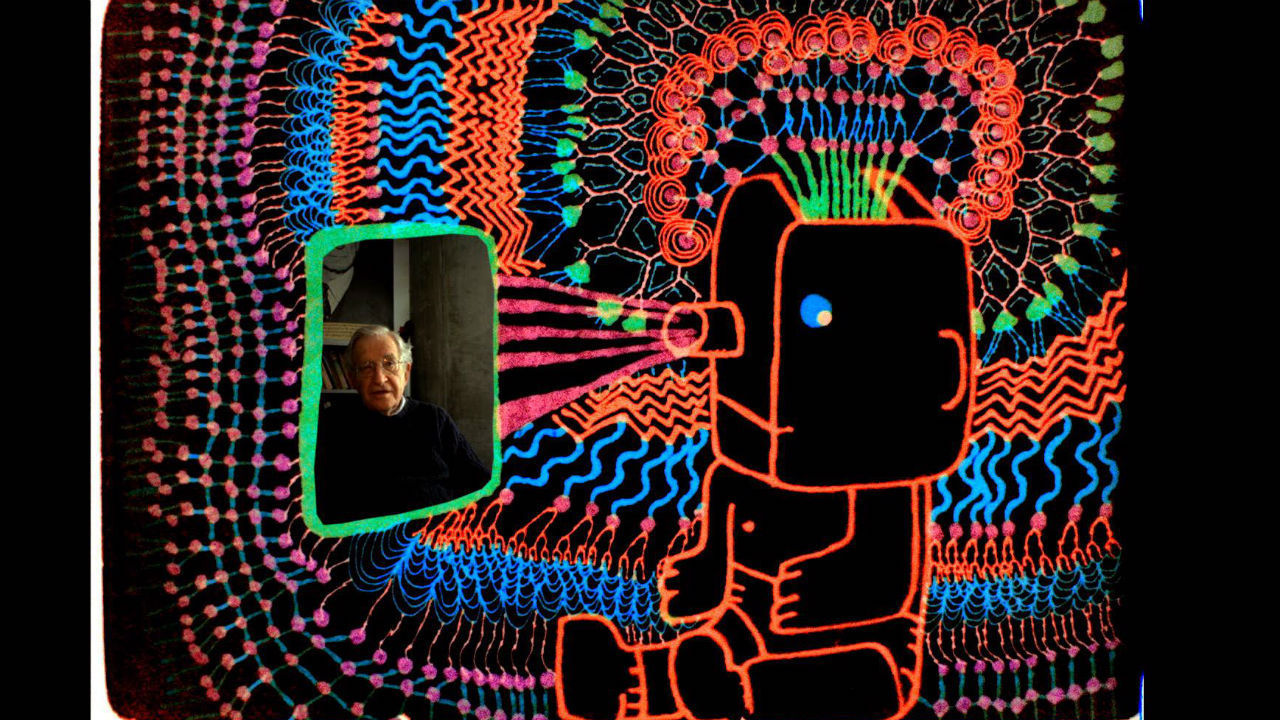
Not Michel Gondry. The French filmmaker best known for the wonderful Eternal Sunshine of the Spotless Mind pairs Chomsky interviews with his own wildly abstract, hand-drawn animation with a purpose that is certainly not clarity.

In his documentary Is the Man Who Is Tall Happy?, Gondry invites the audience to puzzle through the words of the genius who believes the world is a mystery and that we are all the better for it. The director, therefore, goes out of his way to ensure that we are befuddled, because, according to Chomsky, that’s the only way to go through life. If we believe we understand, then we don’t probe, question, challenge.

So, Gondry creates a challenge. Indeed, the obstacles to comprehensibility are either alarming or hilarious. Abstract animation can be tough to understand. So can Gondry’s thick French accent. So can Chomsky. Gondry piles on with intentionally distracting camera noise and, on occasion, the obscuring volume of background music.

If all this seems frustrating, strangely enough, that’s not the effect Gondry achieves. Eventually, the filmmaker’s wonder and the subject’s challenges to puzzle out what’s happening wash over you, and you let go of your own instinct to predict what comes next in order to comprehend what is happening. You achieve your own sense of wonder at the befuddlement of it all.

The secret is Gondry himself, who is trying and failing to keep up. It’s endearing, but it’s also a relief. You’re not the only one.

People looking for an informative document of Chomsky’s life will be wildly disappointed. This film is not about what you want to see. It’s about what Gondry always wanted to ask Noam Chomsky if he ever got the chance. Plus cartoons!


Verdict-3-5-Stars