Tag Archives: documentary

Zappa Plays Zappa

Eat That Question: Frank Zappa in His Own Words

by Hope Madden

“There is no word nor any sound that you can make with your mouth that is so powerful that it will condemn you to the lake of fire at the time when you hear it. Any word that gets the point across is a good word.”

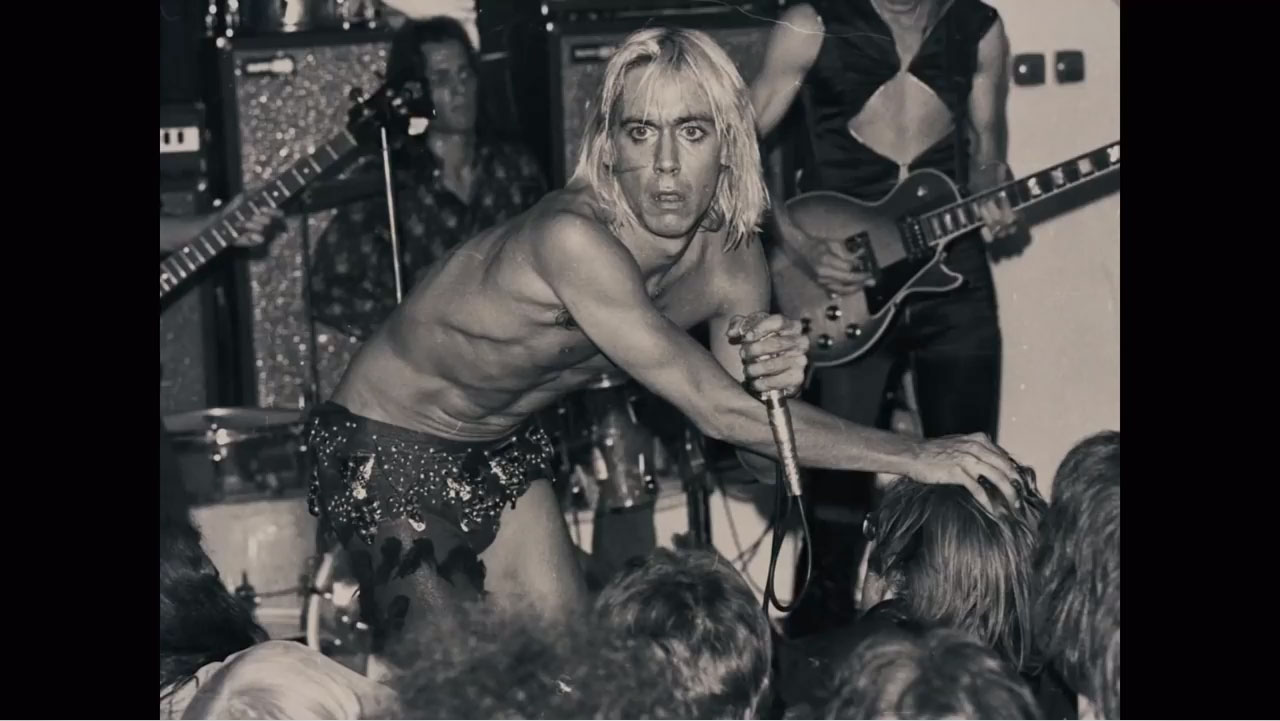
So says Frank Zappa – a singular, curmudgeonly, cynical voice that echoed around the fringes of American culture for far too short a time. Known more for his personality than his music – each of them equally ingenious and caustic – Frank Zappa became a peculiar kind of icon. He was associated with a hippie culture he disdained, linked to extreme liberalism though he was a conservative, and for many he stood for the hedonistic rock star lifestyle that would corrupt our youth, though he was a loyal family man.

Frank Zappa was a conundrum.

Eat That Question: Frank Zappa in His Own Words underscores every seemingly inconsistent element of that mad genius, sharing nothing but interviews from the musician over the course of his career. Documentarian Thorsten Schutte crafts a portrait free from the analysis of others – no friends of the family, no insights from the director himself. Zappa is best understood – if he can be understood at all – on his own terms.

Whether it’s archival footage of a young, clean shaven Frank appearing on the Steve Allen Show to play a symphony of dissonance on a bicycle, the iconic mess of hair and cynicism that marked his most productive time with The Mothers of Invention, or the bitter elder statesman dealing with Tipper Gore’s PMRC, you see Zappa as he saw himself.

There’s something appropriate about Schutte’s structure. Why should we care about someone else’s opinions on Frank Zappa? He certainly didn’t. And Schutte doesn’t try to paint a pretty picture. These aren’t one-sided images set to glorify. Frank Zappa was a dick. Geniuses often are.

Like Bob Dylan, Zappa was disinterested in the effects of his artistic decisions on his fans. He alienated at will, forever cursing the American public’s lack of discernment. “People are not accustomed to excellence,” was one of his more generous statements about his lack of popularity at home.

“The thing that sets Americans apart from the rest of the cultures of the world is we’re so fucking stupid,” is one of his less generous thoughts.

Pulling an even-handed, honest documentary that sheds light on this particular individual could not have been easy. It must have been tempting to pick and choose – Zappa the wild man, Zappa the political mind, Zappa the underappreciated genius. But Schutte balances those, throwing in the ugly with the funny with, in one especially uncharacteristic and moving segment, the tender.

Frank Zappa had a larger effect on American culture than you may realize. Have you seen those tee shirts – So Many Books, So Little Time? He said that. You should get to know him. Here’s how.

Verdict-4-0-Stars

Barr and/or Bust

Roseanne for President!

by Matt Weiner

You can’t argue that Roseanne Barr has lost her timing. As we enter what political scientists call the “Holy mother of God there isn’t enough whiskey in the world” phase of the election season, Roseanne for President! looks back at the comedian’s 2012 attempt to run for president as the Green Party nominee.

Spoiler alert: Roseanne Barr did not win the 2012 presidential election. What’s frustrating though is how Barr — and the film, directed by Eric Weinrib — never really settle on what the point of it all was. She claims it’s a serious run at the presidency, which quickly turns into a half-hearted battle for the Green Party nomination, which finally becomes a successful attempt to qualify as the nominee of yet another third party. In three states. Yes, three. (The surest sign that even Barr gave up on everything has to be when she freely admits to voting for Barack Obama due to convoluted write-in rules.)

And yet all of this could have still been fertile material for a comedian as gifted as Barr. Instead, we see her literally phoning in her efforts throughout the race: Barr might be the first presidential nominee to campaign almost entirely via Skype. Be prepared for lots of awkward video conferences from a computer in her Hawaii home, peppered with anti-capitalism rants that sound genuine but disjointed.

While short on introspection, the film allows some moments of inspiration. It’s hard not to want to reach out and hug Farheen Hakeem, Barr’s campaign manager keeping things running in the Mainland. Hakeem is comically undaunted by the challenges of running a third party campaign with no staff and a candidate who doesn’t campaign in person.

Hakeem is also Exhibit A for anyone trying to argue that Barr’s run had merit. The documentary constantly undercuts its own seriousness, though, by landing way more in Christopher Guest territory than Michael Moore. (This is especially odd because director Weinrib has worked on multiple Moore films, but here deploys none of Moore’s visual diversions that could have helped add some context around the nomination process instead of more Skype rants.)

The real tragedy is that talking heads like Sandra Bernhard, Rosie O’Donnell and Tom Smothers aren’t being used for a documentary about Roseanne herself. Barr’s brother, Ben-David, also talks movingly about the family’s outsider upbringing as Jews in Salt Lake City. These all-too-brief scenes show how Barr’s subversive and genuinely radical comedy career deserves a better showcase than this.

Verdict-1-5-Stars

YouTube Royalty

Presenting Princess Shaw

by Hope Madden

Raw talent is a rare find. Ophir Kutiel, or Kutiman as he’s known, realizes this. That may be why he spends countless hours scouring YouTube, pulling this guitar solo and that piano concerto to mash into one of his globally admired compositions.

With Samantha Montgomery he found more than the usual diamond in the rough. Her YouTube feed oscillates between confessional monologues and heartfelt, powerful acapella songwriting. What she posts as Princess Shaw to her small online audience is vulnerable and emotionally fearless, her story of artistic and emotional struggle becoming both timeless and utterly of this moment.

Following the two artists as their work collides is Ido Haar’s documentary Presenting Princess Shaw. It’s a refreshingly unadorned look at the lonely life of an artist.

The core story contains everything that makes a documentary wonderful. There are things here you probably did not know existed – like Kutiman’s truly wonderful art, for instance, a form of composition that is fascinating to watch being made.

There is also the secret admirer angle, the underdog tale, the story of an artist being discovered, all of which are themes that can be easily manipulated into a compelling film regardless of form.

And so Haar is to be congratulated for his craftsmanship, utilizing all the themes available to him to compel the audience’s attention while simultaneously creating a raw aesthetic that matches Princess Shaw’s own material.

How authentic is his film? It’s hard to know how Haar ended up filming the songstress at the exact moment she learns of Kutiman’s intervention, but if her emotional response is faked, she’s as strong an actor as she is a songwriter.

As impossible as it is to watch this film without rooting for success and riches to find Princess Shaw, the film itself is more of a celebration of artistry as its own often painful, internal, and emotional reward – catharsis or therapy, even. It’s also a beautiful tribute to artistic camaraderie.

Verdict-4-0-Stars


Rise of the Phoenix

A Ballerina’s Tale

by Hope Madden

Misty Copeland has a fascinating story to tell. Unfortunately, director Nelson George is the one telling it. From the title to the structure, from the focus to the finale, A Ballerina’s Tale is a needlessly homogenized package of what could have been an amazing film.

Earlier this year – this year! – Copeland became the first African American prima ballerina in the 75 year history of the American Ballet Theater.

Why did it take so long? What did Copeland possess to not only reach the absolute height of her craft, but to overcome classical ballet’s longstanding prejudices about body type as well as skin color? Where did she come from? How did she get here?

If you’re looking for answers to those questions, well, this is not the film for you.

To a certain degree, George seems to understand the historical significance of Copeland’s achievement. He deserves credit for spending time talking with Copeland and even more insightful voices about the staunchly white face of ballet. He also devotes attention to the unhealthy physical aesthetic imposed on ballet dancers, as well as the punishment their bodies take. He just doesn’t really help us see how these things relate to Copeland or her struggles.

George meticulously avoids coverage of Copeland’s difficult childhood and rocky road toward dance, perhaps to keep the focus on challenges she faced once she’d made it to ABT, but in doing so he sketches too vague a picture of the courage and talent she needed to excel as she has. And though he mainly films during the period where she struggled to overcome a potentially career ending injury, he remains so removed from her trials that he sucks all drama from the events.

This is not really the story of a changing paradigm in classical ballet – there’s not enough history or enough documentation of contemporary impact to make that claim. It’s certainly not a clear version of Copeland’s personal journey toward the pinnacle of her career. It’s not even a dance movie – aside from a handful of snippets, we’re provided no real footage of Copeland’s skill as a ballerina.

The struggles, triumphs, and historical significance of Misty Copeland’s life story has all the drama of a great movie. Too bad A Ballerina’s Tale does not.

Verdict-2-5-Stars

Day 16: The Nightmare

The Nightmare (2015)

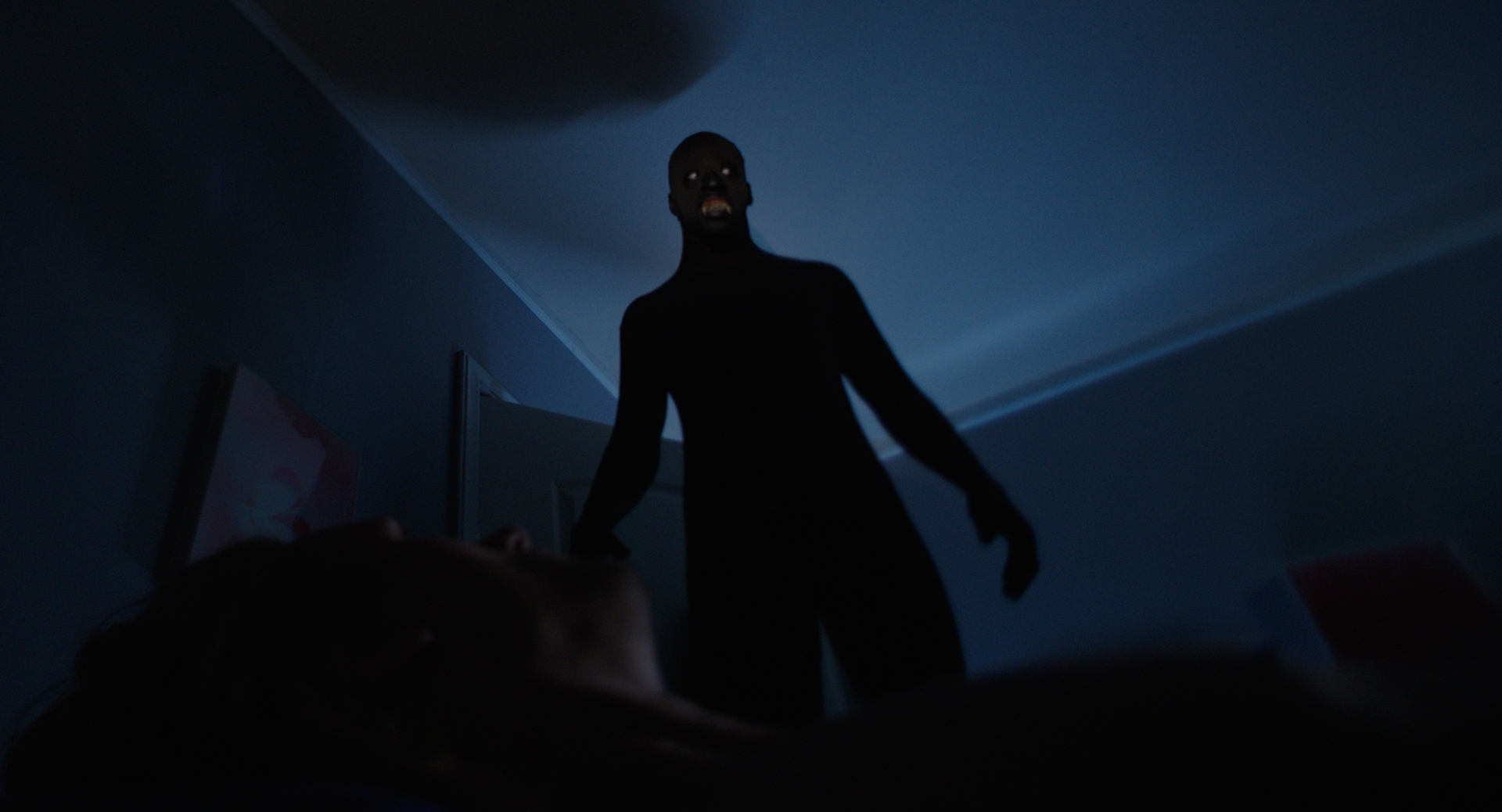
An effective scary movie is one that haunts your dreams long after the credits roll. It’s that kind of impact that most horror buffs are seeking, but even the most ardent genre fan will hope out loud that Rodney Ascher’s new documentary, The Nightmare, doesn’t follow them to sleep.

His film explores sleep paralysis. It’s a sleep disorder – or a label hung on the world’s most unfortunate night terrors – that’s haunted humanity for eons. Most sufferers never realize that others share their misery.

Sleep paralysis is the phenomenon that inspired Wes Craven to write A Nightmare on Elm Street. It’s a clear creative root for Insidious, Borgman, and scores of other horror movies. But it isn’t fiction. It’s a sometimes nightly horror show real people have to live with. And dig this – it sounds like it might be contagious.

Ascher’s a fascinating, idiosyncratic filmmaker. His documentaries approach some dark, often morbid topics with a sense of wonder. His films never seem to be pushing an agenda, he doesn’t seem to have made up his mind on his subject matter. Rather, he is open, which, in turn, invites the audience to be open.

It’s not all earnest sleuthing, though, because Ascher is a real showman. What’s intriguing is the way he draws your attention to his craftsmanship. His dramatic touches never feel amateurish, but they don’t really feel like a cinematic wink, either. Instead they seem intentional, as if he may just be playing.

Coyness suited his Shining documentary Room 237 pretty brilliantly. Here it feels almost like a way to release the tension, remind you that you are, indeed, watching a movie… a heartbreaking, terrifying movie.

We spend a great deal of time watching horror movies, and we cannot remember an instance in our lives that we considered turning off a film for fear that we would dream about it later. Until now.

Listen weekly to MaddWolf’s horror podcast FRIGHT CLUB. Do it!

A Life Extraordinary

He Named Me Malala

by Christie Robb

Malala Yousafzai was a remarkable person years before becoming the youngest Nobel Peace Prize recipient at the age of 17. What is impressive about her is not her having survived a head shot by a Taliban gunman in 2012; it’s her courage and strength in speaking out in nonviolent protest. It is her continuing support of children’s right to an education despite the threats to her life and the lives of her family members.

Oscar-winning director Davis Guggenheim (An Inconvenient Truth) presents Malala’s story in his new documentary, He Named Me Malala.

As you might guess, the central relationship explored in the film is between Malala and the man who named her, her father Ziauddin. He named his baby girl after Malalai—a female folk hero that roused dispirited Afghani fighters to war against the British and was shot and killed in the attempt—quite something to live up to.

Ziauddin himself seems something to live up to. A rebel schoolteacher who refused to be silent under increasing Taliban restrictions, he fostered a love of learning in Malala and taught her to raise her own voice against oppression when the voices of so many women and girls were strangled.

The tension of Guggenheim’s film builds slowly throughout, even as the storyline bounces around from stories of the Yousafzai family, to the Taliban’s rise to power in the Swat valley, to Malala becoming an anonymous schoolgirl blogger for the BBC at age 11, to her present day activism, to Malala’s decision to break her anonymity and appear on camera in Pakistan speaking in support of girls’ education. Finally, the tension peaks with footage of the bus on which Malala and two of her friends were shot, not by a gunman, as her father says, but by an “ideology.”

However, the movie is not simply an encomium to an internationally famous humanitarian. Guggenheim shows Malala not just as the extraordinary public figure that she has become, but also as a teenage girl who tussles with her younger brothers, stresses about grades, and crushes on sports figures. Guggenheim also makes some effort to show the mixed response Malala gets in Pakistan, where some people think she’s just a mouthpiece for her father or an agent of Western Imperialism.

And he explores the question of whether Ziauddin, this man who slapped this famous name on Malala, really forced her into this public life without her buy-in. Twice Guggenheim includes Ziauddin’s worry that, upon waking from her coma, Malala would accuse him, “I was a child, you should have stopped me.” And Malala raises her voice to say that she’s made her own choices. That she, “…chose this life and now… must continue it.”

It’s an amazing life and one worth watching.

Verdict-4-0-Stars

Don’t Cry, Sad Clown

Misery Loves Comedy

by Hope Madden

Is every clown really a sad clown? In his debut as a documentarian, actor Kevin Pollak seeks to find the answer to that question by asking it (or variations of it) to 50 or so of the brightest comic minds of the day.

Who? Tom Hanks, Amy Schumer, Martin Short, Jimmy Fallon, Janeane Garofalo, Judd Apatow and dozens of other stand-up comics and comedic writers and performers. What Pollak wants in return is a glimpse into the shared psyche of the funnyman.

Who were their influences? When did they realize they were funny? What’s it like to bomb onstage? To kill? They’re interesting enough questions and sometimes the answers are fun to watch, but the sheer volume of responses almost requires that the film remain superficial.

His doc would have benefitted had Pollak narrowed down the interviewees, perhaps focusing solely on stand-up comics. We also hear from film directors, sit-com actors and one radio morning show. The breadth only draws attention to the lack of depth.

And yet, there are ways in which the cast feels very narrow. The group is – whether inadvertently or not – pretty white and male. Pollak may simply have raided his own personal phone book, calling in favors from friends for the film, but the result is breathtakingly one sided. He talks with 5 or 6 women, one of whom (Whoopi Goldberg) is not white. He also talks to one male (Kumail Nanjani) who isn’t white.

So, 40+ white guys tell us about the context of being funny. Presumably this is not because of some deeply held belief of Pollak’s, but that doesn’t excuse it. Forget that whatever thesis he may be trying to put forward is irredeemably skewed by this, the fact that anyone could direct a documentary about stand-up comedy without including the point of view of one African American male – no Chris Rock, Eddie Murphy, Kevin Hart, Dave Chappelle, Tracy Morgan – is astonishing.

Plus, honestly, the film itself is almost never actually funny. He talks to fifty funny people about being funny yet catches almost no comedy on film. What?

In the end the film is dedicated to the memory of Robin Williams, and I’m sure Pollak’s heart was in the right place. It’s just that nothing else was.

Verdict-2-0-Stars

Secret of Their Lack of Success

Revenge of the Mekons

by Hope Madden

Is there a more punk rock concept than anarchy?

The answer is no, and that is what makes The Mekons the most punk rock band ever, regardless of the fact that their music is more of a folk/honkytonk/punk blend.

Born of Britain’s punk scene in ’77, the band consisted of an art college collective who, characteristically, had no musical ability at all. Naturally, they were immediately signed to a label.

Now, nearly 40 years later, the band is still together, still recording, still touring, regardless of the fact that they’ve been repeatedly dropped by labels and have never achieved even a moderate level of success.

Joe Angio’s documentary Revenge of the Mekons enjoyable catalogs the band’s journey from talentless punks with a philosophy to brilliantly listenable artists with integrity and the same philosophy.

The film marks the evolution of a band that constantly reinvents itself, each new direction a natural progression from the last while also being a fascinating surprise. They find the “voice of the people” foundation in wildly varying styles of music and, rather than abandoning their previous style, they marry it with the next. The result is always fresh because the Mekon’s natural style is, as founder Jon Langford calls it, “bloody minded.” Whatever genre they adopt, it naturally changes. Just like, as the film points out, when the Ramones started recording they were trying to sound like the Beach Boys.

But it’s the band’s almost comical indifference to financial or popular success that sets the film apart. Says Ed Roche of the Mekon’s label Touch and Go Records, “Every critic loves the Mekons. Unfortunately, they get free records.”

Rock docs almost invariably follow the same format: humble beginnings, meteoric rise, trouble handling success, crash and maybe the glimmer of a resurgence, depending on the film and subject. To spend 95 minutes cataloging all the ways a band manages to avoid success is fascinating – it’s like the story of Anvil, except that the Mekons aren’t even trying to succeed.

What they are doing is focusing solely on their own artistry, which can be a pretentious thing to watch for a feature length running time, but the band does not possess an ounce of pretentiousness. They are what they are. They do what they do. Like them or don’t, it doesn’t matter to them.

How punk rock is that?

Verdict-3-5-Stars

Inspiring or Exploitative?

Farewell to Hollywood

by Christie Robb

In Farewell to Hollywood, documentary filmmaker Henry Corra presents us with the last two years in the life of co-director Regina Nicholson, a young woman struggling against osteosarcoma for the second time.

The movie is troubling. And not just because of the cancer.

Originally diagnosed just after her sixteenth birthday, Regina “Reggie”was an aspiring filmmaker that met the much older Henry at a film festival. Her life’s goal was to make a full-length feature. She sets out to do this with Henry, but early into the project her cancer returns.

The resulting film is an arty home movie of the end of Reggie’s life.

In the film, Reggie’s family initially seems to welcome Henry, excited that he’s taking an interest in their daughter’s dreams. But, as the cancer becomes more aggressive, relations between the grown-ups becomes strained. Reggie’s parents tell Henry to back off. Attached to the point of obsession, Henry presses on Reggie to give him more of her time. Her parents threaten to cut off Reggie’s medical insurance and Henry finds her a home in South Pasadena, taking over as her medical caretaker.

To what extent does Henry exacerbate the family drama? To what extent does he provide essential support?

Because the narrative is given to us through Henry’s editing, it’s difficult to say whether Henry has crossed the line into Perv Town. (There are moments that provoke a major sense of unease.) Or whether Reggie’s parents are smothering and emotionally manipulative to the point of denying her the chance to live in the limited time she has left. Or both.

There’s little input Reggie seems to have on the film. At no point does she clearly turn the camera on Henry. Her chops as a filmmaker are glossed over. We see her bedroom, her stacks of DVDs, her walls plastered with movie posters. We see scenes from her favorite movies, but despite her co-authorship credit, she comes across as more subject than author.

But as a subject, what we do see is a driven, resilient young woman following her dream, joking her way through medical procedures while dealing with excruciating pain and needy adults—interspersed with lots of clips from Pulp Fiction.

In the end, Reggie shares her death beautifully and it was a privilege to know that for 19 brief years she was a part of this world.

Verdict-2-5-Stars

Come Fly with Me

Above and Beyond

by Hope Madden

Roberta Grossman’s documentary Above and Beyond is full of surprises, but perhaps the most shocking thing of all is that it took almost 70 years for a filmmaker to decide to tell this story.

In 1948, a number of American pilots fresh from their WWII duties were courted for a new war effort. They were asked to fight in Israel’s war for independence, becoming the burgeoning nations first ever air force.

Grossman’s tale brims with excitement, derring-do, intrigue and impossible odds – not to mention all the hoo-rah you can squeeze into 90 minutes. Her film benefits from a truly unbelievable story that Grossman wisely mines for more than just sky high heroics.

The American pilots were all Jews who’d fought in WWII only to return home to the same anti-Semitism they’d faced as kids. While they saw the effort to aid the struggling new nation as their chance to subvert yet another Holocaust, for most of these men the fight became one of a personal and cultural relevance they could not have imagined.

Archival footage, reenactments and interviews with surviving pilots and their families are rarely balanced so well or to such entertaining effect. Where so many historical documentaries sink under reverential solemnity or textbook-like staleness, Grossman’s whips past with a combination of surprised laughter and amazed silence.

It’s impossible not to be charmed by these sweet old men and their war stories, but my favorite part was listening to comic genius Paul Reubens (Pee-wee Herman) recount the stories of his father’s participation in the effort. Nutty!

While there are dry spots and flat moments, Above and Beyond boasts a giddy excitement about the whole effort, which is held aloft by the fascinating historical material and anchored with the moving spiritual realizations the battle brought to the pilots.

The film’s most painful flaw is Grossman’s myopic view of the struggle. Above and Beyond aches for some perspective concerning the Palestinian refugees and the lasting struggle facing the region since Israel’s established statehood. It’s an unfortunate oversight because without it the otherwise fascinating, informative and entertaining film feels incomplete.

Verdict-3-5-Stars