Tag Archives: documentary

Richard Turner’s Full Deck

Dealt

by Alex Edeburn

To simply label Richard Turner a “blind magician” would be to insult a man whose pursuit of perfection is all the more admirable considering his impairment. Turner, the subject of Dealt, is much more than a spell-binding “card mechanic.” He is also a father, a husband and an all-around legend within the magic community.

The film, directed by Luke Korem, introduces Turner and what he is best known for: his card tricks. Or, rather his card mechanics. Turner specifies that he is a card mechanic which means he can “fix” a card game—something he can without any vision at all.

Korem pulls TV spots featuring Turner dating back to the late 1970s. From these television appearances, we witness how one man has managed to capture our attention over the years with his impeccable abilities.

His jovial attitude is disarming, even as he explains how he will bend the card game. He uses his mechanics to cheat you, yet all the while explaining how he is doing so. You can’t help but smile while he succeeds.

The film really shines, though, when it shifts focus from the mesmerizing card tricks to Turner’s family. We get a glimpse of a man who relies so much on his wife and child to assist him throughout the journey of his life.

Turner also shares a strong bond with his younger sister, who is also visually impaired. She proves to be a point of strength for him, helping him begin to shed the stigma of his blindness.

The film is a brief look into a rather compelling and friendly character. Richard Turner and his family definitely stick around with you once the film is over—a film that will have you buying a deck of cards and trying out some tricks on your friends and family, just like Richard did when he started.

100% Pure Adrenaline

Take Every Wave: The Life of Laird Hamilton

by Christie Robb

Imagine the most fun you’ve ever had in your life. Then prepare to watch a dude who is having 100 times more fun Every. Single. Day. That’s Laird Hamilton, pro surfer and quite possibly the luckiest guy alive.

The documentary Take Every Wave: The Life of Laird Hamilton details the life of the 53-year-old adrenaline addict who, though disdainful of participating in any one-on-one competition with mere mortals, affords an ocean-front, surfing day everyday lifestyle by falling into modeling gigs with Vogue, landing roles in some bodacious surf movies, and nabbing sponsorships from choice beachwear companies.

Nice work if you can get it. (Especially if you refuse to lower yourself to auditions.)

As the movie starts, you are introduced to an aging Poseidon who trains aggressively to combat the injuries sustained in a lifetime of wipe-outs: arthritis in the hip, a fused arch in one foot, numerous shoulder injuries, and an ankle that has been crushed seven separate times. His goal is to ride a foilboard on the biggest waves of his life.

The foilboard is something Hamilton pioneered—a surfboard that hovers several feet above the water, suspended via a strut using hydrofoil technology developed by America’s Cup engineers.

But this isn’t the only novelty that Hamilton’s been into over the years. Over the course of the documentary you get to watch the glint in his eye as Laird recounts how he big-dogged his way through the line-up at some of Hawaii’s top big wave surf spots, figured out how to use industrial strength Velcro to strap himself to his surfboard (allowing for X Game-style tricks), adopted the sport of windsurfing in its infancy, and co-invented tow-in surfing. (You know, when a jet ski tows you improbably far out so you can surf a 40 to 50 foot wave that’s located directly in front of a cliff face.)

You also see the envious and sometimes irritated faces of Laird’s friends and family as they recount his sometimes douchey exploits and marvel at the fact that his body is still basically intact while some of his contemporaries sport gnarly scars and spin yarns about the times they were playing with him and almost died.

Via a mix of vintage footage, interviews, and camerawork worthy of the cover of National Geographic, Take Every Wave provides an epic escape into the radical world of an almost uncomfortably handsome and fortunate top athlete.

Dina Getting Married

Dina

by Rachel Willis

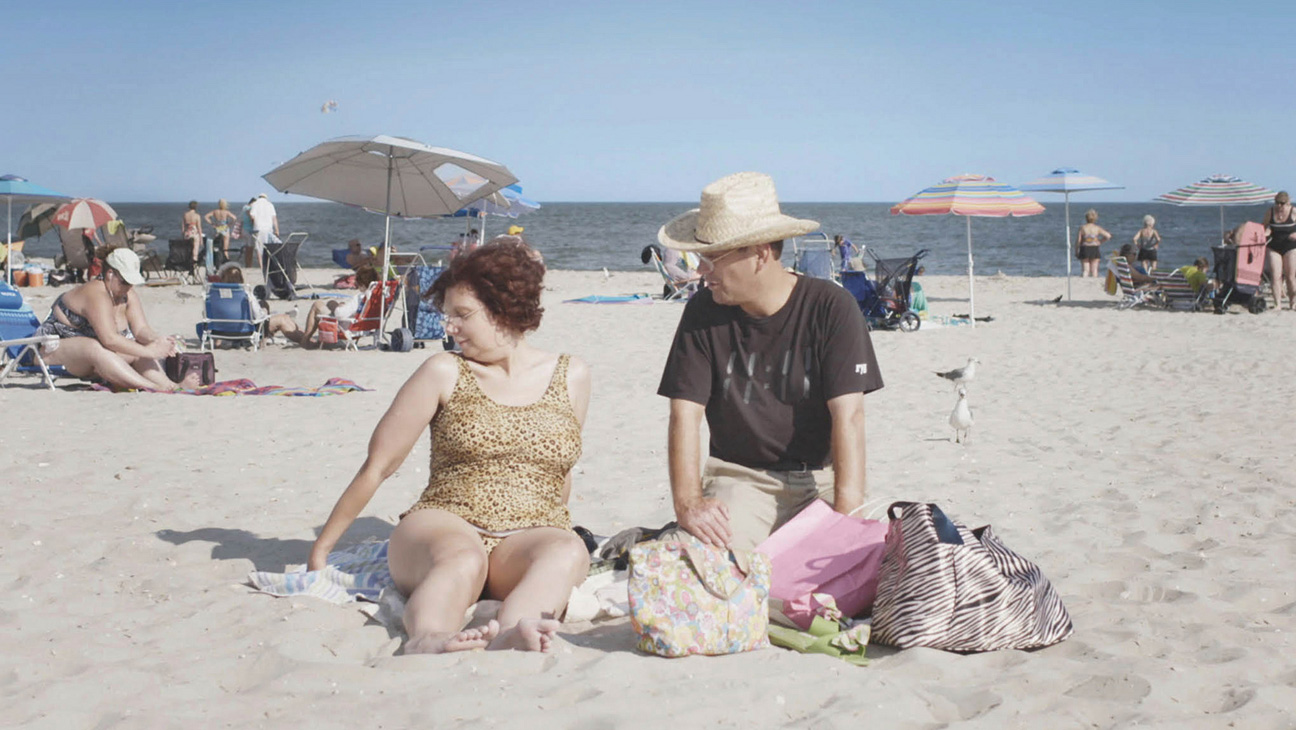
Charming is the first word that comes to mind while watching the Antonio Santini and Dan Sickles documentary, Dina.

From the first moment, the audience is given an unfiltered look into Dina’s world. At a dentist appointment, she reveals her discomfort to the hygienist who offers to hold her hand while the dentist drills. It seems an odd moment to begin this intimate look at a woman’s life, but as the film unfolds, it’s a piece that fits into the larger puzzle that is Dina.

After a few more scenes in which we’re privy to Dina’s day-to-day routines, her fiancé, Scott, is introduced. In most ways, Scott and Dina are just like any other couple preparing for and anticipating their wedding day: there’s excitement, some trepidation, and a few hurdles to work through if they’re going to succeed in the long run.

But Scott has Asperger Syndrome and Dina has “a smörgåsbord” of mental disabilities (per her mother). Still, Santini and Sickles show us that Dina and Scott are a couple like any other.

At times, as the film navigates the sexual side of the couple’s relationship, it tends toward voyeurism. As they page through a copy of “The Joy of Sex” and Dina relays her sexual frustrations, the film skirts the line.

But the directors approach the subject with sympathy and compassion. The openness Dina and Scott have reveals the comfort between subject and documentarians. Never does the film feel exploitative or mocking.

It’s easy to like Scott and Dina and the more time spent with them only deepens the affection.

It’s a testament to the filmmakers, who make the audience feel like they’re spending time with old friends. It’s also a testament to Dina herself. Her past is one of hardship. She’s a widow and a survivor of a terrible ordeal at the hands of a boyfriend. But she is full of optimism and warmth.

Scott and Dina are exceedingly polite to each other, but the warmth behind their words reveals their love. In fact, the world would probably be a lot better if we all treated our friends, family and spouses the way Dina and Scott treat each other. While they have their problems, as every couple does, their polite natures, their openness, offers hope that their marriage will stand the test of time.

As a love story, Dina is exactly what the audience wants it to be.

Humanity in the Time of Displacement

Human Flow

by Alex Edeburn

The “overview effect” is a phenomenon known only to astronauts who experience a shift in consciousness when looking back at the Earth while in orbit. Edgar Mitchell, a member of the Apollo 14 mission, once described the effect as “instant global consciousness, a people orientation, an intense dissatisfaction with the state of the world, and a compulsion to do something about it.”

Director Ai Weiwei’s attempts to recreate this profound effect with his stunning and timely documentary, Human Flow.

The film is a sprawling examination of the millions of refugees around the world and allows us to bear witness to the lives of that increasing number of displaced people. It is a film that serves to humanize those who are suffering and who are too often maligned in this unfortunate age of travel bans and Brexits.

Weiwei’s artistic eye for calming cinematography paired with the brutal theme of the film forces us to assess all that we’re witnessing over the course of two and a half hours.

We’re lured in by the harrowing beauty of the Greek coastline in winter, only to then come to terms with the situation at hand once the camera exposes the countless life preservers that litter the rocky beach. There is much to consider with this film, including the continuous ticker of information providing alarming statistics regarding this global crisis.

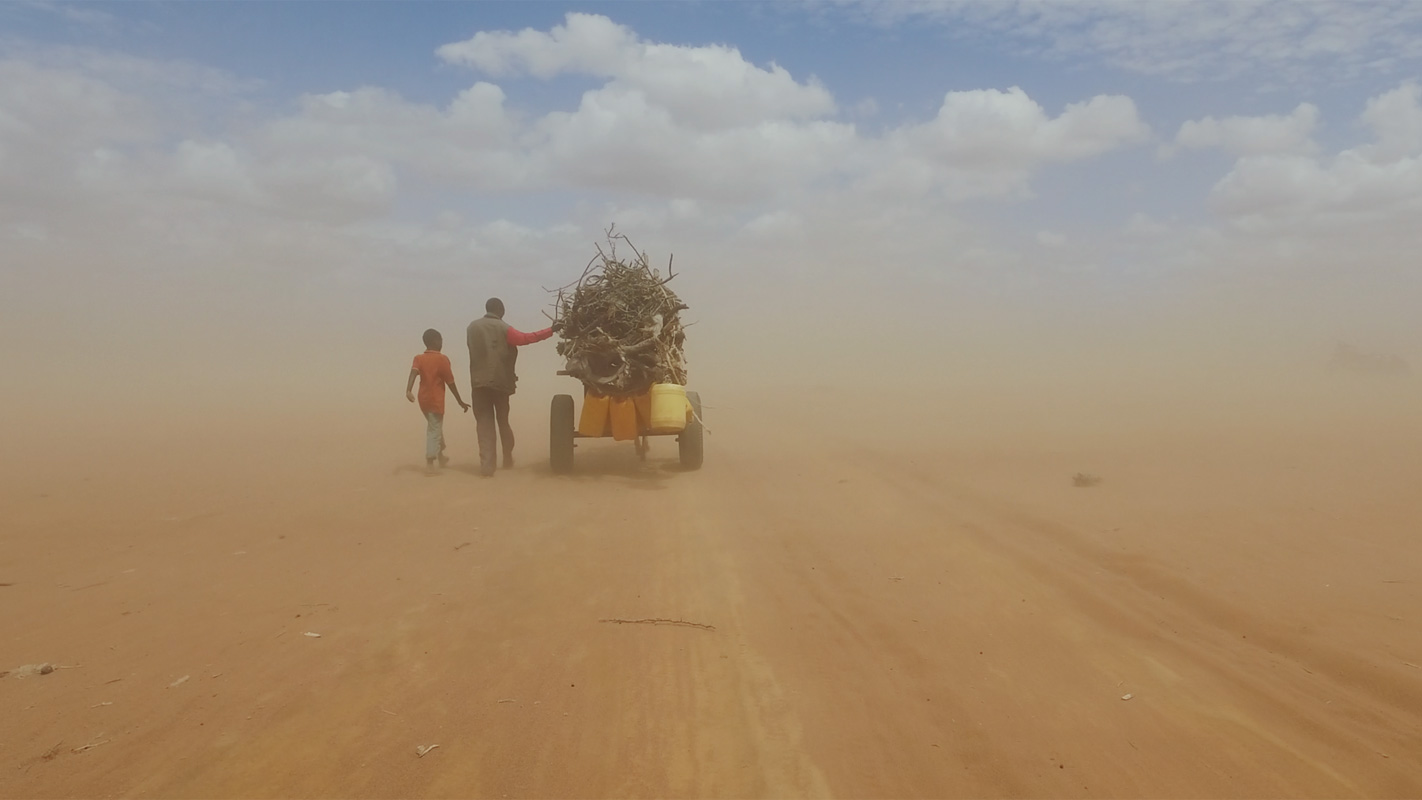
Human Flow does not contain itself to one specific region or group of displaced people, but rather addresses all the ongoing plights such as the Rohingya fleeing ethnic cleansing in Myanmar, those escaping famine in East Africa, and the supposed “bad hombres” crossing America’s southern border.

Ai Weiwei’s documentary is not trying to prove any point or win any argument regarding this highly politicized and misunderstood crisis. Rather, he presents a film that works in earnest to be objective through the statistics it provides and the subjects it highlights.

Human Flow is a powerful film that puts faces to the 65 million people we are quick to dismiss as nothing more than refugees, rather than see them for what they actually are: humans.


Sounds of America

Rumble: The Indians Who Rocked the World

by Rachel Willis

The history of indigenous people in America is one of erasure. Their contributions are overlooked, rewritten, or simply forgotten. In Rumble: The Indians Who Rocked the World, Catherine Bainbridge (and co-director Alfonso Maiorana) seeks to shed light on the American Indian musicians who helped form the sound of American music.

The documentary explores many aspects of indigenous influence in American music. It profiles individual artists, including Link Wray, Buffy Sainte-Marie, and Charlie Patton, among others, but also examines how traditional Indian music, specifically the music of the Mississippi delta, shaped rock and roll, blues, and the big band sound of the 1930’s.

With each artist profiled, there is a shift in narrative style. In some ways, this works as many of the musicians represent different genres of music. The shifts help to better highlight the hand indigenous peoples have had in multiple areas of American music. However, it also gives the film an episodic feel. One wonders if the material would have been better served as a multi-part television documentary.

Interviews with music historians and ethnologists help explain the evolution of traditional indigenous music into different aspects of rock and roll and blues. Vocal styles heard in recordings from 1907 can be heard again in the early blues of Charlie Patton. Many Americans consider these sounds to be the traditional sounds of African music, but the reality is more complex. The true history is one that blends cultures, with a heavy emphasis on American indigenous music. When one hears the comparison, it’s hard not to hear the traditional music of the American Indian in the blues.

Musicians like Iggy Pop, George Clinton, and Steve Van Zandt are also interviewed. They provide a context in which the early American Indian musicians influenced scores of famous bands and musicians. At times, it feels they’re revealing a secret that many in the music world know to the rest of us. They’ve known all along where the indigenous musicians fit into the history of music and they’re finally opening the eyes of the rest of us.

While the music history is interesting, the most important aspect of the film is what it gives to indigenous communities. It emphasizes their role in American history. It gives Indian kids heroes to emulate. It shows the rest of us that the culture of the American Indian exists within the fabric of what makes us all Americans. It’s the kind of documentary that deserves a wide audience.

Going the Distance

The Farthest

by Rachel Willis

Forty years ago, the first of two vessels was launched into space to begin the unmanned Voyager mission. To commemorate NASA’s monumental achievement, Emer Reynolds explores the operation from its beginnings in 1972 to present day in the documentary, The Farthest.

A lot of effort goes into the creation and execution of a space odyssey, and Reynolds brings the story to life through interviews with NASA scientists and engineers. There’s a lot of ground to cover, from the meeting with Nixon to approve the budget, to the technology on board the Voyager vessels, to the inclusion of the famous Golden Record, and Reynolds seeks to examine all of it during the documentary’s two-hour run time.

Because there are forty years of history to explore, oftentimes The Farthest feels like an overview. Rather than focusing on one aspect of Voyager, be it the rudimentary technology aboard the vessels or the first images of the planets farthest from the sun, the film instead follows the Voyager timeline.

By doing this, there is a lot of information glossed over, but Reynolds still manages to inject a touching poignancy into the documentary. The men and women who worked on Voyager are full of passion and wonder, and they convey this to the audience.

Arguably the most interesting aspect of the film, the most interesting aspect of Voyager, is the inclusion of the Golden Record.

As Voyager 1 and 2 were designed to go beyond our solar system into interstellar space, a decision was made to include a record of life on Earth. The records (one in each space craft) include images of Earth, music, and mathematical equations in an attempt to encapsulate what it means to be an earthling. The Farthest spends more time with the Record than any other aspect of Voyager, but in light of how far Voyager 1 and 2 have traveled, and how far they may still go, the idea that the Golden Record may end up in the possession of alien life is a wondrous prospect.

As Voyager 1 and 2 continue their journies, The Farthest celebrates the men and women who built them and sent them into the farthest corners of our galaxy and beyond.

Verdict-4-0-Stars

Striking Gold

Dawson City: Frozen Time

by Hope Madden

If art imitates life, then can the discarded art of a period tell us an insightful story of a forgotten time and place? Documentarian Bill Morrison thinks so, or his latest, Dawson City: Frozen Time, suggests as much.

A pastor and part-time backhoe operator in Dawson – a small town in the Yukon – unearthed a trove of nitrate film reels from the silent era while digging up the land behind Diamond Tooth Gertie’s gambling hall in 1978.

Adding a minimum of spoken explanation or context, all of which is quarantined to the opening and closing of his film, Morrison pieces together footage from the find with sometimes startlingly gorgeous photos and other craftily placed film bits, as well as onscreen type, to weave his tale.

His film tells of Dawson’s fascinating history – the romantic, dangerous kind usually reserved for Wild West legends. (Maybe something worthy of the name Diamond Tooth Gertie?)

Dawson was the last stop for a film, a location so remote and far flung, distributors refused to pay the postage to have their movies returned. Theater managers disposed of most of it in the same way the townspeople disposed of everything at the time – down river during the thaw.

But one crafty bank manager – because it was in the bank that many reels were held – decided to use it as landfill beneath the town’s ice rink. The permafrost kept the reels from deteriorating entirely, and their water damage only adds to the odd and dreamy style Morrison uses to sketch out this history.

Immersed in Alex Somers’s often hypnotic score, the film is a meticulously crafted near-silent film itself – a work full of insight on history and art. Perhaps too meticulous. Feeling every minute of its 2-hour run time, Frozen Time is often so bogged down in minutia that the bigger, more fascinating picture can get lost.

Though his documentary does share insights into Dawson’s labor, expansion, culture, science and the displacement of native peoples, Morrison is interested in more than the progression of the town.

His doc is also about film as art, and the ways that art can be manipulated to tell a compelling story. The filmmaker, relying heavily though not exclusively on reels uncovered by Frank Barrett’s backhoe, edits together images from wildly varying movies having nothing to do with Dawson. He uses these to articulate, in clever and sometimes wryly funny fashion, the history unfolding.

Verdict-3-5-Stars

Gonna Break Into Your Heart

American Valhalla

by Hope Madden

An aging musical icon wants to end his career on a fresh note and reaches out to an esteemed industry powerhouse to help him.

A modern master gets a text from his childhood hero, reminding him in a rush of all that informed the direction of his life.

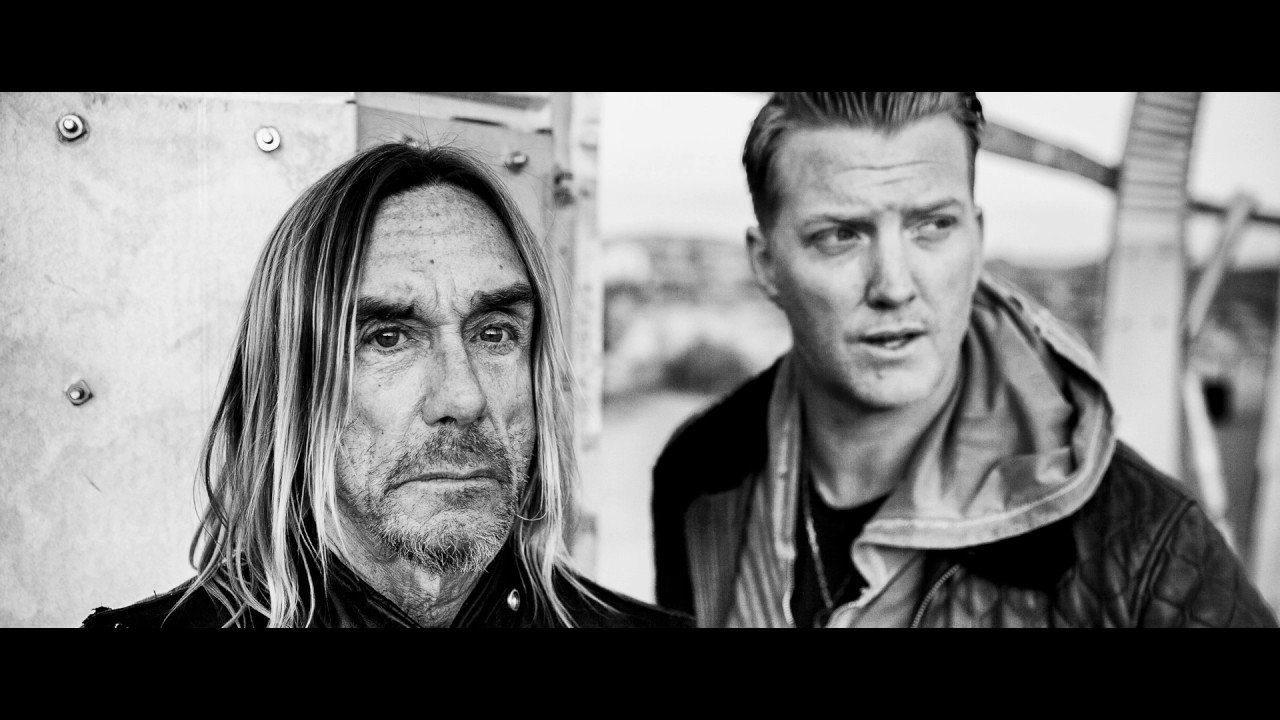
In what could easily have been a simple marketing tool – a documentary to support Iggy Pop’s last album, Post Pop Depression – American Valhalla instead offers a look at the creative process. But, more than that, it’s a glimpse into the kind of rock star adoration we’ve all felt, and an image of the all-too-human object of that worship.

In this case, the adored is punk rock godfather Iggy Pop; the adoring, Queens of the Stone Age front man Josh Homme, (who also co-directs).

Reading directly from their own journals written during the planning, recording and touring process, Homme, Pop and the rest of the band narrate the clashing emotions, nerves and anxieties that fueled this partnership and the ensuing album and tour.

Pop, now in his late sixties, is a small, crooked, humble guy, and still every bit a spectacle. His raw, unpredictable humanity is etched in the deep lines and huge eyes that haunt his famous face.

Homme – every inch Pop’s physical opposite, tall, sleek and handsome – opens himself up on camera in a way that’s disarming. Between Pop’s honest humility and Homme’s almost paralyzing adoration, the film somehow strikes a deeply sweet note. It’s validation for the overwhelming awe your own personal heroes can inspire. At the same time, it’s a touching reminder that even our heroes are deeply human.

Homme, directing with Andreas Neumann, shows great instincts visually. The documentarians cut between live footage, portraits and stills, creatively framed talking heads, and lonesome vistas. The pieces weave together to create an image that’s simultaneously haunting and energetic.

The music also happens to be outstanding.

Most surprising may be the film’s sweet, open heart. It’s a mash note for fans – all fans, but particularly Iggy Pop fans. If this is, indeed, to be Pop’s final hurrah, it is a lovely way to go out.

Verdict-4-0-Stars

Wheels on the Bus

Free to Ride

by Hope Madden

A movie about bus stops, eh? It may seem like a trivial topic for a film, but Free to Ride does what many solid documentaries do: it points to the profound relevance of the seemingly ordinary.

With their impressive debut as feature length documentarians, director Jamaal Bell and writer/producer Matthew Martin craft an even-handed but powerful tale of a modern civil rights victory.

In 2009, the Dayton community activist group LEAD decided on their next cause: three bus stops between Dayton and Beavercreek, OH.

After the building of I675, Beavercreek hit a bit of an economic boom. This meant jobs, many of which were filled by residents of nearby Dayton. Public transit commuters found themselves in the unfortunate situation of walking the 1.1 mile trek from the nearest RTI stop, across a busy overpass not meant for pedestrians.

Commuters wanted more bus stops. LEAD wanted more bus stops. RTI wanted to put in more bus stops.

Beavercreek said no.

Why? A lot of reasons were given about crime and traffic and listening to constituents. LEAD felt that these reasons were coded. Beavercreek’s population is less than 5% African American, while Dayton’s is about 40% African American.

Regardless of reason, rejecting the new bus stops did two things. It endangered the people commuting from Dayton to Beavercreek and it limited the employment opportunities, among others, of the citizens of Dayton.

What follows is a provocative look into small town politics, discrimination and community activism.

Free to Ride offers a surprisingly balanced, thoughtful documentation of an issue much larger than it might appear. Through city council meeting footage and in-person interviews, the film sheds light on the bigger picture without feeling preachy or sensationalistic.

The solution to the problem was not only clever but groundbreaking, offering the film a historical heft that it might not otherwise have. More than that, we not only glimpse the tenacity and passion of community activists, we actually get to see corporate executives and government officials tear up. Nice!

Credit the filmmakers, both researchers at The Ohio State University’s Kirwan Institute, for approaching the topic with a clear eye and a background in research. Free to Ride finds more power in fact and understatement than it could have with sensationalism or sentimentality.

Verdict-3-5-Stars

http://gatewayfilmcenter.org/free-to-ride/

More Coffee, Marge

David Lynch: The Art Life

by Hope Madden

Filmmaker David Lynch is nearly as enigmatic a cultural fixture as his films. Indeed, as is the case with most of his cinematic output, you might be tempted to assume that his own folksy exterior covers something dark and lurid.

The new documentary David Lynch: The Art Life does what it can to confirm that impression. While it hardly resolves anything in a concrete way, if Lynch’s art imitates the artist, then this film imitates both.

Co-directors Jon Nguyen, Rick Barnes and Olivia Neergaard-Holm recorded Lynch as he mused on childhood stories and the events that led him into the world of art and film. The audio is used to narrate footage – some recent, some archival – working together to illuminate the artist and his work. To a point.

Nguyen, who produced the doc Lynch about the making of the auteur’s 2006 film Inland Empire, has created another appropriately Lynchian film.

Once again there is a sweetness, almost innocence, about the filmmaker that feels wildly at odds with the darkness and macabre of the art we watch him create – and at the same time, seems fitting.

Much of the film is spent with Lynch in his studio as he molds, spreads and sculpts materials for art pieces. His artwork is far more immediately disturbing than his films, which tend to situate the horrifying inside a landscape of beauty. On canvas, the horror is right up front.

The work and process behind it give the film a wonderfully tactile quality and the team of directors frame and shoot the proceedings in a style Lynch himself would appreciate.

The doc takes us through Lynch’s artistically formative years and ends somewhat abruptly around the time of Eraserhead. The goal is not to document his life’s work, nor even to truly shed light on the conundrum of his particular artistry.

Instead it is a fascinating and beautifully filmed piece of what you might expect. You’ll find a lot of cigarette smoke and Coke bottles, unassuming odd-duckery and gruesome imagery.

But if you’re hoping for insight into what exactly inspires David Lynch’s fears, obsessions and grim work, be warned: The Art Life does more to continue the mystery than to solve it.

Verdict-3-5-Stars