Tag Archives: documentary

You Can Dance If You Want To

Cunningham

by Hope Madden

“The audience was puzzled.”

Such was modern dance legend Marce Cunningham’s wry, almost tickled description of one reaction to a performance. An enigmatic presence on and offstage, he makes for a fascinating if ultimately unknowable center to documentarian Alla Kovgan’s new documentary.

With Cunningham, the filmmaker seeks to reignite the peculiar audience response the dancer/choreographer’s performances once garnered, and perhaps drive wider appreciation for his work.

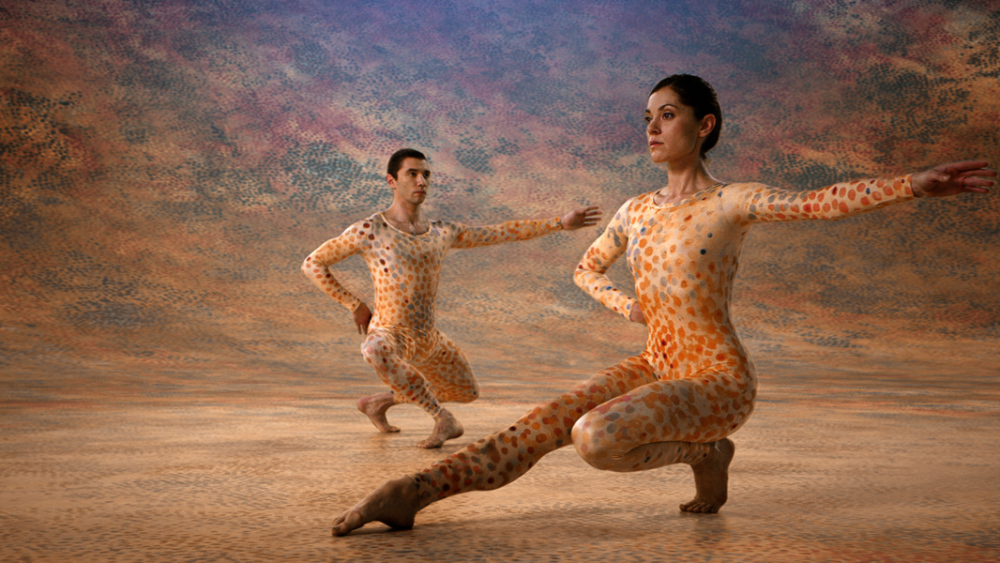
Kovgan chronicles the ways in which Cunningham challenged the traditional concept of dance, combining ballet and modern choreography and creating works without relation to music. His avant garde approach drew the attention and collaboration of other boundary-pushing artists of the time, including Andy Warhol, Robert Rauschenberg, and Cunningham’s eventual life partner, John Cage.

Speaking of his interest in Cunningham’s work, Cage says, “I would like to have an art that was so bewildering, complex and illogical that we would return to everyday life with great pleasure.”

Kovgan goes about exploring not only that very work but the mind and imagination behind it through an appealing combination of archival footage, audio and onscreen text, as well as re-stagings of some of the artist’s most memorable pieces.

The result is provocatively piecemeal, a visually arresting if intentionally untidy image of Cunningham’s life and work. Most often, Kovgan’s style suits the content beautifully, but other times it’s a misfit.

Where Wim Wenders employed 3D to immerse the viewer in the dance of Pina, Kovgan is as concerned with the surrounding as the movement. She stages performances on rooftop, in meadows, among trees and within train tunnels. While the combination creates a vibrant visual impression, it steals emphasis from the movement itself, which feels out of step with Cunningham’s most basic philosophy.

Kovgan takes chances, capturing the dance from above, close up, far away, and at odd angles. This sometimes creates a vibrant, off kilter sensibility that complements the material. At other times, you wish you could see more of the dancers, feeling as if you’re missing something amazing in favor of needless close up footage of a face.

It’s a small knock, honestly, with dances this arresting and accompanying material this compelling. Kovgan’s respect for the work as well as the life of her subject is clear and she’s captured much of that spirit.

Sleepless in Mexico City

Midnight Family

by Hope Madden

For a population of 9 million, Mexico City keeps only 45 official ambulances. Private ambulances compete with each other to fill the need for additional resources. Midnight Family rides along with the Ochoas, one family making their living transporting the injured to government and private hospitals around the city.

Do they have training? The equipment they need to tend to a medical emergency?

Hell, they may not even have gas.

The nuance of the act of goodwill or commerce tightens the film’s emotional grip. As one member of the team worries over an infant while police question the father, clearly unable to pay for these services, it’s obvious that the Ochoa family takes its life saving mission seriously.

At the same time, every action is calculated: how to beat another ambulance to an accident, how to evaluate each situation to best secure payment, which hospital will be the most forthcoming with payment, which police are willing to alert them to accidents in return for a bribe.

It all sounds seedy until you realize what would happen to the injured without them.

And while you’re weighing the ghoulish balance between money and mercy, director Luke Lorentzen shows you just how a high speed chase should be filmed as 17-year-old Juan races and weaves his ambulance through traffic to beat another unit to the scene. (Honestly, you’d think a group of people this well-informed on the ills of Mexico City’s healthcare situation might be a little less daring!)

Juan is all business, a savvy worker with ambition and wisdom to share with his little brother Josue, who rides along at night instead of getting ready to go to school. In these moments, when family members cobble together enough cash for a dinner of tuna on saltines before going home to shower without hot water, the larger context and struggle takes shape.

An urgent portrait of a system in collapse, Midnight Family also uncovers one family’s raft of hope amid an ocean of desperation.

Tusk

When Lambs Become Lions

by Rachel Willis

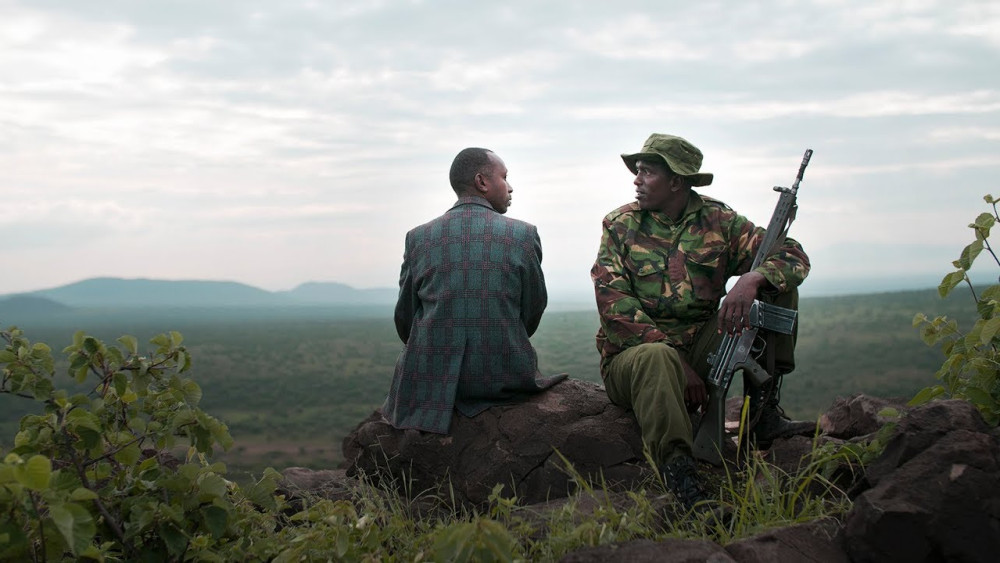
In examining the world of poaching, director Jon Kasbe has crafted a very personal story with his documentary, When Lambs Become Lions.

At the heart of Kasbe’s film is ‘X’, a poacher whose trade is ivory. Working with a small team, X hunts elephants, hoping to harvest the ivory before he is discovered by rangers whose job is to protect the area wildlife. If caught, the rangers will have no mercy. The punishment for poaching is death, and it might be a brutal one.

Wisely, Kasbe doesn’t show the more barbarous aspects of poaching. In this way, he lets the human element of the story take center stage. However, the natural world infuses the documentary with life. When a unit of rangers comes across a lone bull elephant feeding in the trees, it’s hard not to be infected by the same wonder that infuses the rangers. The elephant is oblivious to the war that wages around him, even though he and his kind are at the center.

On the opposite end of the poaching spectrum is Asan, X’s cousin, and a ranger. The rangers’ line of work is grueling and dangerous. Though heavily armed, they run the risk of being ambushed and murdered. They spend their time patrolling the vast landscape, hunting for poachers. On top of these dangers, we learn Asan and his unit of rangers haven’t been paid in months. With a pregnant wife and son at home, the situation for Asan is becoming desperate.

It’s impossible not to sympathize with Asan’s plight, and Kasbe wants the audience to understand why people make the choices they do when tough decisions are in front of them. In this way, he helps us to understand that poaching may be reprehensible, even vile, but the situation is far from ideal. If the rangers were paid on time, if the market for ivory dried up, there might be a situation in which the battle for the natural world would no longer need to be waged.

Kasbe lets the story unfold without judgment. We follow X and Asan as they interact with their families, there are a few particularly touching moments between the men and their sons, and as their jobs take them into the wilds of Kenya. The parallels between the two men are not lost on Kasbe. Both strive to take care of their families, and it’s easy to see why a person might turn to poaching when the venture is more lucrative than the alternatives. 

As Asan’s wife hopes, perhaps our children will be better educated, giving us a future where these choices will no longer need to be made.  

Diamonds in the Soles

The Kingmaker

by Hope Madden

Is there anything more dangerous than a sense of entitlement? This belief in being owed something unearned—a theme that’s played in a number of filmmaker Lauren Greenfield’s documentaries about the absurdly wealthy—takes on a more sinister stench in her latest, The Kingmaker.

With surprising access and intimacy, Greenfield delivers a behind-the-scenes look at the Marcos family’s return to power in the Philippines. It’s a dark, almost surreal image of what passes for reality in this post-truth world and it is depressing A.F.

We spend most of our time with Imelda Marcos, best known for being the first lady of the Philippines during Ferdinand Marcos’s dictatorship, and for owning thousands of pairs of shoes.

“Martial law, that was the best years of Marcos because that’s the time he was able to give the Philippines sovereignty, freedom, justice, human rights,” Imelda wistfully remembers of the period during which 14 of 15 newspapers closed, 70,000 people were incarcerated—half of them tortured—and 3200 people were killed.

But according to Imelda, “There are so many things in the past that we should forget. In fact, it’s no longer there.”

These days, Marcos devotes herself to supporting her son Ferdinand “Bongbong” Marcos’s political aspirations. As Greenfield follows along on Bongbong’s vice presidential campaign, she frequently pauses to reiterate some salient points from the last time a Marcos ran that country.

Two journalists and a teacher share their stories of torture, including rape, under the regime. In an almost surreal yet bracingly telling piece of filmmaking, Greenfield also spends time with the islanders most effected by Imelda’s fondness for exotic animals.

Marcos reframes her capacity to loot her nation to serve her own pathological spending habits as mothering, love. Indulgence is love. Grotesque, criminal self-indulgence at the expense of her nation’s citizens? Well, she claims that never happened, but if that Monet painting that she definitely did not purchase with ill-gotten money has been found, can she get it back?

The corruption hangs from this family like a mink stole, and The Kingmaker doesn’t deliver the same empathetic shock value to be found in Greenfield’s 2012 doc The Queen of Versailles. Instead, we watch as a nation forgets its horrifying history and, swept up in the “everybody loves a bully” philosophy that seems to have overtaken the entire world, sits complicit as a family of criminals and looters takes its seat again at the head of the nation’s table.

https://www.youtube.com/watch?v=Udbf4xQwWag

Insidious

Where’s My Roy Cohn?

by Hope Madden

There’s a tendency in horror cinema, after a villain has established his evil nature in a film or two, to turn the story around and find out what made him a monster. In that vein, Matt Tyrnauer’s documentary Where’s My Roy Cohn? is the madman’s origin story.

Horror fan that I am, I’ve still never been intrigued by what made Jason Jason, why Michael Myers was driven to murder, what caused Leatherface to don the mask. But it turns out, this horror story is more about the sequel, Son of Cohn.

“Where’s my Roy Cohn?” is a tantrum yelped by Donald Trump, unhappy about his attorney general at the time. And the title speaks volumes, about the kind of attack dog Cohn had been as a lawyer, and about the toxic legacy he’s left behind, right down to the oval office.

A fastidious student of the unlikely individual and his or her cultural impact, Tyrnauer made fascinating docs for years about little known citizens with big stories (Scotty and the Secret History of Hollywood and Citizen Jane among them). And though his latest certainly bears some of the markings of Tyrnauer’s previous films, the only person who saw Roy Cohn as a little guy with big ideas was Roy Cohn.

 It’s tough to overstate the ruthless, amoral impact Cohn has had on American politics and culture. Though Tyrnauer shows traces of compassion when underlining Cohn’s self-hating behaviors (whether as a Jew or a homosexual), the filmmaker’s assessment of his cancerous affect is evident.

Cohn was the prosecuting attorney who pushed the Rosenbergs toward the electric chair before he became McCarthy’s advisor, mouth piece and thug. Then on to New York, where his mafia entanglements (he represented John Gotti, Tony Salerno and Carmine Galante) only aided in his close professional and personal relationship with Donald Trump.

A bizarre connector between the worlds of Studio 54, the mafia and the Archdiocese of New York, Cohn’s party photos articulate some kind of bacchanal populated by members of each of these affluent, influential and decadent groups. It would be impressive it weren’t so ominous and seedy.

He also owned the news, dictating stories to the New York Post from his kitchen table and bringing Rupert Murdoch to the oval office with his own dear friend, Ronald Reagan.

Roy Cohn is dead, but as Where’s My Roy Cohn? makes dismayingly clear is that his ghost still haunts us.

Punk History

Desolation Center

by Rachel Willis

Director Stuart Swezey has a personal interest in telling the story of Desolation Center and the five truly unique events they coordinated in the mid-1980s. As one of the primary figures involved in the organization of these events, he has a lot of information on the subject.

And we’re lucky that Swezey decided to delve into his catalog of archival footage because there is a lot of amazing material presented in his documentary, Desolation Center. Through primary source material, interviews with the musicians and artists who performed, and event attendees, the documentary is an engaging historical look at a definitive moment in punk music history.

A brief history of the Los Angeles punk scene in the 1980s opens the film. The police department in Los Angeles was quick to break up punk shows, storming into venues and raiding the scene, interrupting shows and arresting concert goers. It was this perpetual harassment that led Swezey to the idea that they hold a show in the desert.

From the archival material, you get a sense of the intimacy of the first show. There are fewer than one hundred people in attendance, but a truly unique and awesome experience is conveyed through the existing video. From footage of the ragtag group of punk fans traveling on buses to the desert concert (which featured Minutemen and Savage Republic), the audience gets a glimpse at how monumental this was for the people who attended, performed, and organized the event.

The best part of Desolation Center is the archival photos and videos from the shows. Though the first show is small, word of mouth spreads, and the second desert show is bigger as evidenced by the footage from the second event. The second show’s line up included Berlin’s industrial band, Einstrüzende Neubauten and performing artist Mark Pauline, whose shows were astonishing if not entirely safe (at one point he attempts to blow a boulder from the side of a mountain during the show, but thankfully for those in attendance, it’s an unsuccessful endeavor).

Footage from the next three shows – which take place on a boat, back in the desert, and in a warehouse, and include bands like Sonic Youth and Meat Puppets – help the audience understand the experience. The shows are extraordinary events, and while watching the documentary, one feels lucky to be given the chance to see the astounding performances.

The interviews, at times, help the audience understand what it felt like to be a part of Desolation Center. Other times, they overinflate the experience. Swezey’s best course of action would have been to let the footage speak for itself, but his choice to include so many interviews may have been due to the film disintegrating over the years – some of the vintage film has clearly seen better days.

However, Desolation Center is a fascinating documentary and a great addition to the illustrious – and infamous – history of punk rock.

…And Let’s Give It Acid Blood!

Memory: The Origins of Alien

by Hope Madden

“The reek of human blood smiles out at me.”

It’s an unusual opening line for a documentary about that icon of SciFi horror, Alien. And yet, Memory: The Origins of Alien is an unusual documentary.

Alexandre O. Philippe takes you deep into our collective psyche, our “cauldron of stories,” to explore the alchemy behind the lingering success and haunting nature of Ridley Scott’s film. Though the story starts long before Scott’s involvement.

Philippe begins by mining writer Dan O’Bannon’s influences and preoccupations.

“I didn’t steal from anyone,” he said. “I stole from everyone.”

A Nebraskan whose father once staged an alien landing, O’Bannon’s out of the ordinary young life and preoccupation with comics fueled his short screenplay, “Memory.” But it was his battle with Crohn’s disease that inspired that pivotal scene that moved the tale from short to feature.

Then came H. R. Giger, whose “Mythology of the future” offered visual entryway to the world the film would imagine. Joined eventually by Scott, who saw their genius and raised it. Philippe’s joy at displaying the way these three imaginations coalesce to form the greater vision spills off the screen.

But why, after 40 years, is Alien still a heart-pounding success?

If you buy the film’s thesis—and Philippe does make a good case—we basically had no choice.

Alien is both the lovechild of H.R. Giger, Dan O’Bannon and Ridley Scott—each as seemingly necessary for this product as the next—and the culmination of primal images and ideas mined from the collective unconscious.

This is more than undulating fandom aimed at the object of adoration. It’s a deep, immersive dive into how Alien evolved to become the  masterpiece that it is and why the film remains as haunting today as it was when John Hurt’s chest first burst in 1979.

Queen Bee

Honeyland

by Hope Madden

Cinematic in structure, narrative in its storytelling, all of it expressed with a visual flair that give it the sense of poetry—Honeyland is no ordinary documentary.

Filmmakers Tamara Kotevska and Ljubomir Stefanov offer a master class in fly-on-the-wall documenting with their patient, beautiful story of a lone beekeeper. Or is Honeyland actually an analogy for the human race and our relationship with this planet?

It’s both.

The Sundance winner offers no exposition, no context, no question and answer. Content to simply observe, Honeyland follows Hatidze Muratova, a Macedonian beekeeper. Loving long shots establish both the rugged terrain and the isolation of Hatidze’s days as she begins the yearly cycle of transporting a hive, caring for it and reaping the benefits of that patient, diligent work.

The filmmakers’ respect for Hatidze drives the doc, which never labels or trivializes its subject, never patronizes.

The solitude and the quiet of Hatidze’s days spent with bees and evenings with her bedridden mother soon make way for chaos and cacophony, as Hatidze’s lonesome dot of Macedonian land makes room for Hussein Sam and his nomadic family.

Kotevska and Ljubomir abandon the long shot in favor of mid-range filming and close ups crowded with jumping children, bickering siblings, chickens and cattle. The campers, the kids, the lifestock, the noise—all of it caught with affection and trepidation by both the filmmakers’ camera and Hatidze’s smiling eye.

Somewhere on the edge of this rush of sound creeps Hatidze, curious and cautious but smiling. Little by little she and this family form a community. She even becomes something of a mentor in the beekeeping tradition to one of the young sons, forming a sweet and eventually heartbreaking relationship.

Heartbreaking because rush and need, ambition and impatience all combine with selfish interests to convince the Sam family that beekeeping is also for them. Shortcuts lead to a natural imbalance and soon Hatidze faces the crisis left behind when the natural environment is used for profit rather than nurtured for balance.

Beautifully filmed with natural light to create a sort of visual lyricism, Honeyland becomes an allegory for our times. It’s hard not to be invested in Hatidze’s story, in her bees, as if our own future depends on them.

Dearly Beloved

Toni Morrison: The Pieces I Am

by Hope Madden

Before Toni Morrison was old enough to understand the F-word her mother had her washing off the sidewalk, she understood the confrontational nature and the power of words.

Timothy Greenfield-Sanders’s documentary Toni Morrison: The Pieces I Am benefits from the Octogenarian Nobel and Pulitzer prize winner’s characteristically mesmerizing ruminations on her life. As she sits and recounts memories, moments and, most fascinating, glimpses of her writing inspirations, the documentary blossoms.

Compared to the composed and thoughtful interview footage with the likes of Dick Cavett and others from across her career, Morrison’s interaction for Greenfield-Sanders’s camera has a playful quality.

She charms when recounting her personal history: “When I got to Howard, I was loose,” she recalls happily. “I probably overdid it. I don’t regret it.”

Her confidence when considering her life in publishing is awesome. “Navigating a white male world was not threatening. It wasn’t even interesting.”

And when she speaks about her writing—just, wow: “My sovereignty and my authority as a racialized person had to be struck immediately with the very first book. The white world was peripheral if it existed at all.”

It comes as no surprise that someone with such breathtaking mastery of the language would be as beguiling when speaking as she is in writing, and the veteran documentarian knows when to just turn the camera toward his subject and let it roll.

Sure, some context has to be provided. We get biographical information. We see snippets of news shows, hear from famous fans (Oprah, Angela Davis, Sonia Sanchez, Walter Moseley—Toni Morrison has impressive fans). But honestly, this is when Greenfield-Sanders’s documentary gets away from him.

Allowing the audience some background they may not have concerning Morrison’s struggle to be appreciated in her own time, or the bold and culturally imperative choices she made as an editor, or the global reaction to her novels feels necessary. It also feels superficial.

Worse still, it feels like a cheat—like these were moments that could have been spent listening to Toni Morrison tell us something. Anything. This is particularly stinging when we’re finally allowed a sentence or two about how Beloved was inspired. Morrison tells of a vision that suggests there is something genuinely magical, something otherworldly, about her process.

It’s a hint, but it’s impossible not to want more, not to feel as though we could have chucked all that gushing from fans, all those archival interviews, all those photos from Howard and just listen to Toni Morrison tell us a story.

Run Through It

The River and the Wall

by Rachel Willis

Director Ben Masters has an interest in the land along the Rio Grande. In making The River and the Wall, he hopes to show us what makes the area so special.

Along with four companions – two wildlife filmmakers, an ecologist/ornithologist, and a Rio Grande river guide – Masters embarks on a weeks-long, 1200-mile trip from El Paso, Texas to the Gulf of Mexico. They travel along the Rio Grande, the potential site of a border wall that, if erected, would have a lasting, devastating impact on the land.

Most of the film screens like an adventure tale. The companions travel by mountain bike and mustang in places where the river is too shallow for boats. When the river is passable, they journey by canoe. By making the trip in this way, they hope to show the difficulty of the journey in numerous places. It’s an imperfect attempt to emphasize the unlikelihood that immigrants would choose these routes when attempting to cross into the United States.

Along the way, we meet people on both sides of the border. If there are people who live in these areas who are in favor of the wall, Masters and team don’t meet any. From people living in Mexico to ranchers in Texas, everyone recognizes the potential negative consequences to the proposed wall. Even the area U.S. representatives in Congress, Beto O’Rourke, a Democrat, and Will Hurd, a Republican, are opposed to the wall. Hurd states that building a wall “is the most expensive, least effective” method for border security. It’s a rare show of bipartisanship that should give those opposed to the wall some hope.

The cinematography is essential in a film that wants to impart upon the audience the beauty, vastness, and treachery of the land, and the crew is up to the challenge. Numerous shots highlight the diversity of the landscape as the five friends make their way along the river.

In some ways, The River and the Wall effectively states its case that the area around the Rio Grande should be protected. Ecologist Heather Mackey mentions over 150 bird species live in the area, some of which are only located in this area. A wall would disrupt migration patterns, bulldoze protected natural areas, and in effect, cede nearly 1 million acres of U.S. land to Mexico.

However, it is unlikely the film will change the minds of those in favor of the wall. Most likely because they won’t even bother to see it.