Get to know Jeff Nichols. The Arkansas native is batting 1000, writing and directing among the most beautiful and compelling American films being made. His latest, Midnight Special, is no different. But then again, it is very, very different.
You should know as little as possible going into this film because Nichols is the master of slow reveal, pulling you into a situation and exploiting your preconceived notions until you are wonderfully bewildered by the path the story takes.
Suffice it to say, Nichols mainstay Michael Shannon, as well as Joel Edgerton, are armed men in a seedy motel. They have a child in tow (Jaeden Lieberher – wonderful). Local news casts a dark image of the trio, but there’s also a Waco-esque religious community looking for the boy, not to mention the FBI. So, what the hell is going on?
Nichols knows, and he invites your curiosity as he upends expectations. The film toys with the clash between logic and the supernatural, not unlike the themes of Nichols’s masterpiece Take Shelter (also starring a magnificent Shannon). While moments of Midnight Special will feel more reminiscent of memorable films in the SciFi vein, what this filmmaker does with his subject is beautifully novel.
The film, like all of Nichols’s work, is deeply rooted in traditions and atmosphere specific to the American South, and the filmmaker boasts a deep and easy skill as a storyteller. He’s also truly gifted with casting.
Lieberher, who showed amazing natural talent in 2014’s St. Vincent, again offers a beautifully restrained central figure. Edgerton and Kirsten Dunst are likewise wonderful, both turning in nuanced performances that reflect Nichols’s uncanny way of dealing with the extraordinary in the most naturalistic way.
But Michael Shannon, a remarkable talent no matter what film he graces, anchors the film with a heartbreaking, award-worthy performance.
Midnight Special is just another gem of a film that allows Nichols and his extraordinary cast to find exceptional moments in both the outlandish and the terribly mundane, and that’s probably the skill that sets this filmmaker above nearly anyone else working today. He sees beyond expectations and asks you to do it, too.
Long on style, short on plot, Mickey Keating’s Darling benefits from meticulous sound design, craftful framing, a strong lead performance, and your patience.
Darling – the closest thing to a name we ever get for the film’s lead – will be caretaker for the oldest brownstone in town. The enigmatic mistress of the house, played with icy skill by Sean Young, shouldn’t even be telling the new caretaker about the troubles with the last girl…
Yes, this sounds familiar, but Keating is not attempting to hide from comparisons to Stanley Kubrick’s 1980 classic The Shining. From Darling’s insistent score to its long, narrow hallways and more, this film embraces and celebrates its Overlook inspiration.
The tale itself is nothing if not artfully ambiguous. Darling’s descent into madness begins within moments of the fade in, and Keating’s screen titled chaptering (Chapter 1: Her; Chapter 2: Invocation; etc.) draws conspicuous attention to one way to read his film – as that of a house haunting its guest. Or was the guest mad all the while? Are there demons afoot, or did Darling bring the crazy with her?
This waffling between what may be happening onscreen works as well as it does because of the pliability of Keating’s lead, Lauren Ashley Carter (The Woman). Carter carries the film in its entirety with a performance that oscillates between wide-eyed terror and brittle rage. It’s an impressive turn from a performer who is becoming a true genre talent.
Carter and Keating mine the solo female going mad angle to conjure memories of Polanski’s Repulsion, and Carter’s unreliable point of view character rings a few of the same notes as Debra Kerr’s letter perfect performance in 1961’s The Innocents.
If atmosphere and style aren’t enough to carry a film for you, however, Darling will wear thin. Keating feels no compulsion to satisfy your curiosity, nearly overwhelming his film in ambiguities.
Stylish, visually resplendent in black and white, though not especially satisfying, Darling is more of an introduction to two strong new voices in the genre – Keating and Carter – than a memorable horror effort, but it’s definitely worth a look.
“Hell is not a place you see. You carry Hell with you at all times.”
Cheery stuff, that! If you’ve ever wondered what hell might look like, first time feature director Can Evrenol has some ideas to share. They are vivid. You’ll swear they even have an odor.
Evrenol’s Baskin is a loose, dreamily structured descent into that netherworld in the company of a 5-man Turkish police unit. (Baskin is Turkish for “police raid.”) The serpentine sequencing of events evokes a dream logic that gives the film an inescapable atmosphere of dread, creepily underscored by its urgent synth score.
We are trapped along with this group of somewhat detestable, somewhat sympathetic men as they respond to a call for backup in an “off the map” nearby area. What they find is deeply disturbing.
Unless you really like frogs. If so, then – hooray! Frogs!
The rest of it, though? Horrifying.
Evrenol’s imagery is morbidly amazing. Much of it only glimpsed, most of it left unarticulated, but all of it becomes that much more disturbing for its lack of clarity.
The cast is uniformly solid with the exception of Mehmet Cerrahoglu, who may leave you speechless. The director has taken to calling him the new Michael Berryman – a name genre fans will recall as the haunting, hulking, hairless menace in Wes Craven’s The Hills Have Eyes and their nightmares.
Cerrahoglu’s remarkable presence authenticates the hellscape of these characters’ descent. Evrenol’s imaginative set design and wise lighting choices envelope Cerrahoglu, his writhing followers, and his victims in a bloody horror like little else in cinema.
There are moments when Baskin feels like a classier, more stylishly made Nightbreed, but there’s no camp factor here. Just a surreal exploration of the corruptibility of the human soul, and its final destination.
Baskin may infuriate viewers looking for a tidy package, and it may underwhelm gorehounds intrigued by reports of audience walk outs. Be that as it may, the film represents a vital new voice in the genre (Evrenol), not to mention a potentially iconic new face in horror and bad dreams (Cerrahoglu).
If the title Video Massacre Volume 1 conjures the image of some Eighties VHS compilation of B-horror, then perfect. You’re ready for the viewing.
An assortment of 20 shorts filmed by Brooklyn filmmakers, the series boasts a nice mix of polish and camp, all surrounded by the joyously self-referential framing story of demon-ghost Belfy and the hostages he’s forcing to watch the shorts.
Humor – frequently of the toilet variety – gives the film its tone, and the individual shorts are sequenced to offer the experience a good pace. While a handful of the films feel too amateurish, most of them boast excellent production values. It’s clear these were made on tight budgets, but the filmmakers across the board know how to match cinematic technique to the tone of the short.
One animated piece and the fake trailer for “The Shitting” rank among the most entertaining, and two “experiments gone awry” efforts are the most fun. You can also expect a lot to go wrong in the woods.
More than anything, the film feels like a mash note to the genre, right down to the twist ending. (Pay close attention to the credits inside the film. Priceless!)
Join us as we host a Midwest premier of Video Massacre Volume 1 at Gateway Film Center this Saturday, 4/2, at 9:30pm and stick around after for a Q&A with some of the directors:
Grier Dill, director: Trashed, Fungus Adventure
Brett Glass & Grier Dill, director: Brood X
Brett Glass, director: frame story
Joseph Colmenero, director: The Coffin
Winnie Cheung, director: Exit Interview
Suzi Sadler, director: The Retreat
Cale Hughes, director: Jackolantern
Krisha is not only a powerful character study awash in piercing intimacy, it is a stunning feature debut for Trey Edward Shults, a young writer/director with seemingly dizzying potential.
And then there’s the startling turn from Krisha Fairchild, Shults’s real-life Aunt, who after decades of scattershot film and voice work, delivers a jaw-dropping lead performance full of such raw authenticity you begin to feel you are treading where you don’t belong.
That’s no accident. Shultz draws heavily on his own painful family history to bring the story of Krisha (Fairchild), who is attending a big Thanksgiving dinner after 10 long years of estrangement from her loved ones. Slowly, we’re introduced to other family members (some also played by Shults’s relatives) and learn that Krisha is a recovering addict who has done some very bad things.
She’s come to make amends, and most importantly, to try and salvage any chance of a relationship with her son (played by Shults himself).
Expanding his own short film from 2014, Shults is remarkably assured in constructing his narrative. Nothing is spoon fed, rather we grasp what we know about Krisha and her family through guarded conversations and quiet, private moments. From the awkwardness of forced holiday small talk to the inevitable request for the “techy” relative to fix a computer, the scene is unmistakably real. Then, as old wounds become new, the film strikes with a humanity so deeply felt we expect to see our own faces in those family albums left out on the table.
The direction is equally graceful. Calling to mind recent work from Cuaron and Inarritu, Shults gently leads his camera away from character activity to linger on the surroundings, just long enough to call to mind the part they play in Krisha’s fragile psyche.
It is all an artful complement to Fairchild’s intense, blistering portrait of a woman quite literally under the influence. From the truly unnerving opening shot through the next 82 minutes, taking our eyes off of her is nearly unthinkable.
Krisha is a timely reminder what undiscovered talents can achieve despite their limitations of budget, cast or location.
At one point in I Saw the Light, Marc Abraham’s biopic of legendary country performer Hank Williams, the singer tells us, “Everybody has a little darkness in them. I show it to them and they don’t have to take it home.”
It’s a fascinating scene. Too bad it doesn’t describe the film we’re seeing.
The reliably talented Tom Hiddleston lost some pounds as well as his Brit accent to take on the role of the lanky Alabaman. While his performance is not perfect, it is quite good. Between the surprisingly effective singing and the occasionally haunted expression, Hiddleston brings Williams to charming if conflicted life.
Hiddleston is joined by the equally talented Elizabeth Olsen, and the two attempt to animate the volcanic relationship between Williams and wife Audrey. Their chemistry keeps the rocky pairing believable and fascinating, and Olsen’s spitfire performance shows fearlessness.
No, the problem with I Saw the Light is definitely not the cast. But make no mistake, there are serious problems here.
In perhaps the best scene in the film, Williams unveils his most recent effort, the iconic Your Cheatin’ Heart. Heartbroken, ill, and spent, the singer whispers the final line and Abraham cuts to his wife Billie (Maddie Hasson). This might have been a powerful choice if we had spent any time with or been given any information about this particular wife and her allegedly cheatin’ heart.
Abraham (Flash of Genius), who adapted the nonfiction book by Colin Escott, meanders through the musical legend’s personal life while entirely neglecting his music. The film never feels like it is moving forward, offers no real context or reflection on Williams’s personal struggles, and is exasperatingly slight when showcasing his artistry.
Williams tells us in the film that when a country singer sings a sad song, you know that he knows sadness.
Man, I bet that’s true. Too bad I don’t hear his sad songs, nor do I see him battle sadness. I do see him drink, show up too drunk to perform, and marry several times. That may be the fodder for a country song or two, but a satisfying biopic on one of the most influential songwriters in modern music? Nope.
Just who is this “Sloopy,” and how did a song about her become not just an Ohio State University anthem, but the state government-approved official rock song of Ohio?
It’s a fun story, actually, and enjoyably told in Hang On Sloopy: The Movie, scheduled to headline the star-studded opening of Columbus Documentary Week at the Gateway Film Center Thursday night (3/31).
The Gateway is hosting a special event screening of the film at 7:30 pm, complete with a live performance by the OSU men’s glee club, an intro by former Buckeyes football coach Earl Bruce, and a Q&A after the movie with producer Dave Winham, former OSU marching band director Dr. Paul Droste and current band director Dr. Christopher Hoch.
The Ohio-made documentary follows the unlikely story of the 1965 hit by The McCoys (led by Ohio native Rick Derringer) from its run at the top of the pop charts to its current status as TBDBITL’s gameday staple. “It’s a rockumentary about how a university and a whole state fell in love with a ‘60s pop song,” said Whinham, who will meet moviegoers and answer questions. “It’s a surprising and touching story that takes you through the decades at OSU and here in Columbus.”
As a Buckeye bonus, every $20 ticket purchase comes with a complimentary DVD copy of the film.
Get more details about the Documentary Week schedule HERE.
We’re on a music kick. Last week we looked at the best rock star horror movies, so it seemed only natural to move on to the best horror musicals this week. At our house, this particular sub-genre might serves as a kind of bridge between the two of us, since Hope generally hates musicals while George appreciates them. And though it is true that Hope can find some love in her heart for a musical with a side of bloodletting, it turns out that George only likes actually good musicals. Which is to say, they disagree a bit on this list.
Dude, 1974 must have been nuts. Brian De Palma’s first and only musical is a Phantom of the Opera/Faust/The Picture of Dorian Gray mash up (with some Frankenstein, The Cabinet of Dr. Caligari, and more than a little Rocky Horror thrown in for good measure). That’s a heady mix, and while the film was nominated for an Oscar for its music, it isn’t exactly the classic you might expect.
A campy skewering of the soulless music industry, Phantom sees tiny Seventies staple Paul Williams as the Satan-esque Swan, a music executive with a contract for you to sign. Poor Winslow (William Finley) is just as wide-eyed about his music as all those would-be starlets are about their chances for fame and fortune in this evil world of pop super stardom.
Like many horror musicals, the film works best as a comedy, but Finley’s garish visage once he makes his transformation from idealistic musician to mutilated Phantom is pretty horrifically effective. The film as a whole is a hot Seventies mess, but that’s kind of the joy of it, really.
4. House (Hausu) (1977)
If Takashi Miike’s Happiness of the Katakuris were to marry Pee-wee’s Playhouse, this would be their offspring.
A spoof of sorts, Hausu tells the story of six uniform-clad high school girls named Gorgeous, Fantasy, Sweet, Melody, Kung Fu, and Mac. The nomenclature alone should clue you in on the film’s lunacy. The giggling sextet spend spring break at an aunt’s spooky house – or, in fact, a cheaply made set of an aunt’s spooky house. Not a single thing that follows makes sense, nor is it really meant to.
Expect puppets, random musical sequences, remarkably bad backdrops, slapstick humor, and an amazingly sunny disposition given the sheer volume of human dismemberment. The trippy nonsense wears a bit thin eventually. Luckily director Nobuhiko Obayashi’s film clocks in at under 90 minutes, so the screen goes dark before the novelty wears off.
3. Sweeney Todd: The Demon Barber of Fleet Street (2007)
Here’s a bizarre idea for a musical: The barber upstairs kills his clients and the baker downstairs uses the bodies in her meat pies. Odd for a Broadway musical, yes, but for a Tim Burton film? That sounds a little more natural.
Burton’s Sweeney Todd: The Demon Barber of Fleet Street is a full-on musical – Burton’s first – and every inch a stage play reproduction. For many films, this would be a criticism, but Burton’s knack for dark artificiality serves the project beautifully, and he achieves the perfect Dickensian Goth tone. His production is very stagy and theatrical, but never veers from his distinct, ghoulish visual flair.
As in most of Burton’s best efforts, Sweeney Todd stars Johnny Depp in the title role. Depp is unmistakably fantastic – consumed, morose, twisted with vengeance – and he’s in fine voice, to boot.
The supporting cast boasts a liltingly nefarious performance by Alan Rickman. As the judge whose sent an innocent Todd off in shackles, raped his wife, then took custody of his daughter, whom he leeringly admires, Rickman is wonderful as always. His duet with Depp on “Pretty Women” is the film’s real musical gem.
With Burton’s help, Depp found another dark, bizarre anti-hero to showcase his considerable talent. With Depp’s help, Burton gorgeously, grotesquely realized another macabre fantasy.
2. The Happiness of the Katakuris (2001)
Takashi Miike is an extremely prolific director. He makes a lot of musical films, a lot of kids’ movies, a lot of horror movies, and then this – a mashup of all of those things. Like Sound of Music with a tremendous body count.
The Katakuris just want to run a rustic mountain inn. They’re not murderers. They’re lovely – well, they’re losers, but they’re not bad people. Buying this piece of property did nothing to correct their luck, either because, my God, their guests do die.
You might call this a dark comedy if it weren’t so very brightly lit. It’s absurd, farcical, gruesome but sweet. There’s a lot of singing, some animation, a volcano, a bit of mystery, more singing, one death by sumo smothering, and love. It sounds weird, truly, but when it comes to weird, Miike is just getting started.
https://www.youtube.com/watch?v=XDfMXwRapNc
1. The Rocky Horror Picture Show (1975)
Surely you expected no other atop this list because, honestly, nothing else comes close. The most iconic of all horror musicals, The Rocky Horror Picture Show boasts the best soundtrack, the best performances, the best mad scientist, and quite possibly the most fun there is to be had (legally) at the movies.
I’m afraid you’ve touched on a rather tender subject there.
Tim Curry is utter perfection as Frank-N-Furter (A Scientist). The entire balance of the cast is also amazing, but no matter how many times you watch Curry step out of that elevator, abuse his servants, or seduce his houseguests, it never gets old.
Creator Richard O’Brien’s raucous, once controversial film about a sweet transvestite, a slut, an asshole, and a couple of domestics who sing, time warp, throw rice, animate monsters, swap partners, and finally put on a show is still as much fun as it ever was.
Once a subversive take on the classic musicals and sci-fi films of the 30s and 40s, Rocky Horror is now a high-camp icon of its own.
Might be time again to grab some stock in Windex, because now it turns out that elixir of wonders could be just the thing for a bum hip.
The Windex thing was just a part of the charm that drove My Big Fat Greek Wedding to insane box office in 2002. But beneath the idiosyncrasies, it connected through a sweetly natural sense of family, and easy humor delivered by people that looked and felt real, not just a Hollywood-approved facsimile.
MBFGW2 brings back those familiar characters, but this time the authenticity is lacking.
The gang is still in Chicago and as we catch up, Toula (Nia Vardalos,) is back helping at the family restaurant while her “Anglo” husband Ian (John Corbett) has become a high school principal. Their 17 year-old daughter Paris (Elena Kampouris) is shopping for colleges, and though Toula wants her baby close to home at Northwestern, Paris is thinking it’s time to get some distance from her smothering Greek family.
Meanwhile, Toula’s father Gus (Michael Constantine) is obsessed with tracing his ancestry back to Alexander the Great, and his search leads to a startling revelation: Gus and his wife Maria (Lainie Kazan), together for 50 years, were never legally married!
What’s the Greek word for “contrived”?
True, another big Greek wedding is kind of a requirement here, but the sitcom-ready setup underscores all that ails part 2. Vardalos’s original script seemed to come straight from her heart, but this time her writing manages very little that isn’t obvious and calculated. Director Kirk Jones (Nanny McPhee, Everybody’s Fine) adds plenty of over-exaggerated reaction shots, and not much else.
Genuinely funny lines are hard to come by, while the attempts to address real family issues such as empty nests, sexual preference and stale marriages are given only the broadest strokes, reduced to a line or two of conflict followed by hurried resolution. The level of frenetic family antics is desperately upped, and Ian’s ever -present laid back attitude grows suspect.
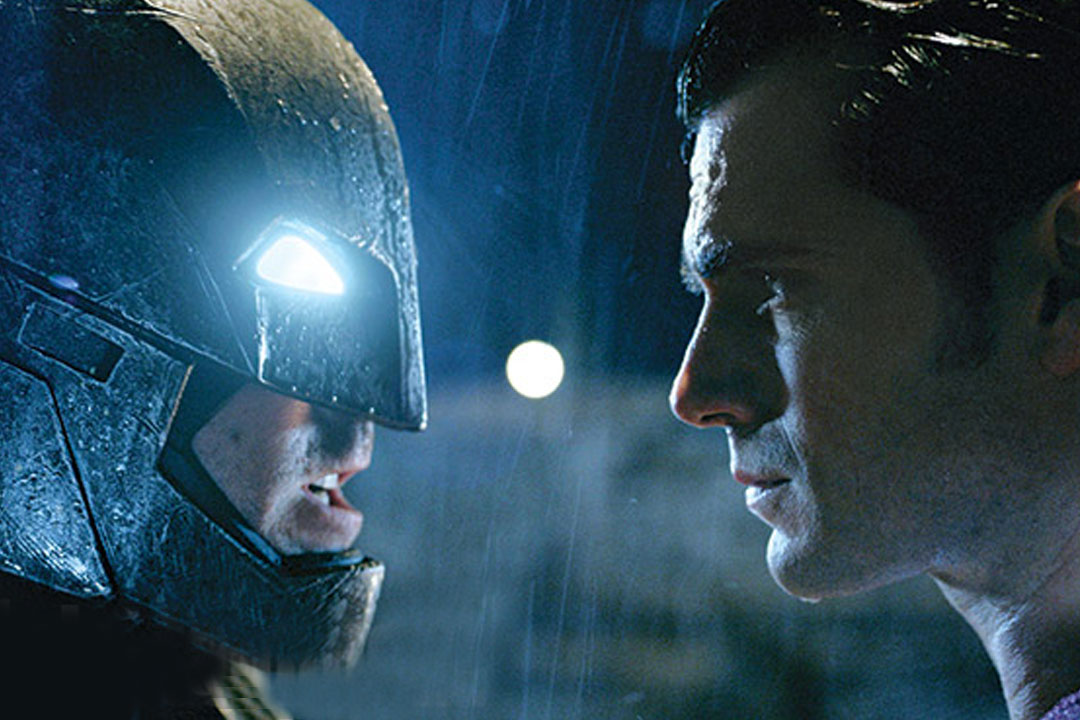
With Batman v Superman: Dawn of Justice, director Zack Snyder battles his own penchant for excess while combining the Marvel formula of assembly with the damaged psyche of Christopher Nolan’s Batman trilogy. And while Snyder is dealing with a few less avengers, his film makes Nolan look downright drunk on human kindness.
Utilizing an ambitious script from Chris Terri (Argo) and David S. Goyer (all three of Nolan’s Batman films), Snyder is not shy with metaphor or message. As spectacular events unfold in Metropolis and Gotham, we’re given an unflinching rumination on how 9/11 has changed us.
Terrorism, paranoia, torture, and toothless media are woven into more standard superhero tenets. This is a battle between God and man, and the film also has plenty of moments worthy of a classic Greek tragedy.
So there’s a lot going on here? Sometimes too much. Ideas are plentiful and often repeated, as are dream sequences and Snyder’s patented wide angle slow-motion set pieces. And really, do we need another ‘young Bruce Wayne watches his parents get shot’ sequence?
Speaking of Master Wayne…after all the uproar, Ben Affleck makes a fine caped crusader, as the hero’s square-jawed intensity fits perfectly into Affleck’s low-emotion comfort zone. The great Jeremy Irons brings some welcome badassed-ness to the role of Alfred, effortlessly stealing scenes and laying claim to the film’s most surprisingly interesting character.
In the other corner, Henry Cavill continues to impress as Clark Kent/Superman, finding a subtle nuance in the role that makes his ache for humanity ring true. Amy Adams gives us a Lois Lane that is smarter and sexier than ever, and her chemistry with Cavill brings a new depth to the iconic super couple.
To the delight of arch villain Lex Luthor (Jesse Eisenberg, over the top), the Dark Knight and Man of Steel finally come to blows, and it is glorious. In fact, their battle makes the film’s final act feel a bit superfluous, save for the cheer-inducing entrance of the new Wonder Woman (Gal Gadot).
The ironic twist to her slightly-more-appropriate-for-crime-fighting outfit is the instant reminder of just how masculine the entire superhero universe remains. Still, there is enough mystery here to hold out hope that Wonder Woman’s upcoming stand alone film will be one of overdue substance.
After the rubble finally settles, Dawn of Justice is just that, as we get glimpses of the other “meta-humans” that will take their places in the upcoming Justice League franchise. Batman v Superman wanders, but it’s enough of an epic to make following it worthwhile.