Fright Club: Best One-Watch Horror

With this episode we hit the big 200, so we wanted to celebrate in the most masochistic way possible. No! We wanted a really great topic (George’s choice) and a really great guest – filmmaker and co-founder/programmer of Nightmares Film Festival, Jason Tostevin.

Together we talk through the very best horror movies we could not watch a second time no matter what.

5. A Serbian Film (2010)

This is not a movie we would recommend to basically anyone. That’s not to say it’s a bad film – it’s pretty well directed, acted, and written. It’s just that the co-writer/director Srdjan Spasojevic is trying to articulate the soul-deadening effects of surviving the depravity of war. The film title is no coincidence – the film is meant to reflect the reality of a nation so recently involved in among the most depraved, horrific, unimaginable acts of war. It’s as if he’s saying, after all that, what could still shock us?

Like Pier Paolo Pasolini’s notorious 1975 effort Salo, or the 120 Days of Sodom – also a depiction of the depravity left behind after war – A Serbian Film overwhelms you with horrifying imagery.

https://www.youtube.com/watch?v=ddwrbcMmzlc

4. An American Crime (2007)

In 1966, Gertrude Baniszewski, along with three of her children and two neighbor boys, was convicted of what’s commonly considered to be the most heinous crime ever committed in the state of Indiana. The senior investigator described the prolonged abuse and murder of 16-year-old Sylvia Likens as the most sadistic case he’d investigated in his 35 years on the force.

In 2007, two films were released depicting the horror. The Jack Ketchum-penned The Girl Next Door found a larger audience, but co-writer/director Tommy O’Haver’s An American Crime is the far superior film.

Elliot Page offers a full, layered performance, making Sylvia a realistic character – someone you might have known in high school. Of course, that makes it even harder to stomach what becomes of her. The entire cast—an impressive ensemble—does stunning work, but the dark magic here is Catherine Keener. Giving one of the best performances of her already stellar career, Keener guarantees that it will be a long time before you recover from this movie.

3. The Painted Bird (2019)

If you paint the wings of a sparrow (or stitch a star to his jacket) the rest of the flock will no longer recognize him. The other birds will swarm and peck him until he plummets back to the earth. This is just one of the horrific lessons a young boy learns as he desperately searches for anywhere or anyone safe in war-torn Eastern Europe.

What follows is a brutal parade of the worst humanity has to offer. Domestic abuse, graphic violence, multiple instances of animal abuse and death, rape, child abuse and rape, and more. Then the war crimes start around hour three.

The Painted Bird is a test of endurance. It’s also a beautifully shot, well-performed, and incredibly moving piece of cinema. You simply have to be willing to go where it wants to take you. And all of those places are dark and darker.

2. Irreversible (2002)

French filmmaker/provocateur Gaspar Noe does not play well with his audience. Every film, no matter how brilliantly put together or gloriously filmed, is a feat in masochism to watch. Later efforts, like Enter the Void, spread the misery out for its full running time, but for Irreversible, he gave it to us in two horrifying scenes. While the head-bashing is tough viewing, the film centers on a rape scene that is all but impossible to watch.

Noe’s general MO is to punish you through sheer duration. The scenes last so long you feel like you cannot endure another minute, and this scene certainly does that. Not shot even momentarily for titillation, and boasting a devastatingly excellent performance from Monica Bellucci, it justifies its own horrific presence. There are other films with necessary and difficult rape scenes – Straw DogsI Spit on Your GraveThe Last House on the LeftHenry: Portrait of a Serial Killer – but none is harder to stomach than this.

1. Nothing Bad Can Happen (2013)

This film is tough to watch, and the fact that it is based on a true story only makes the feat of endurance that much harder. But writer-director Katrin Gebbe mines this horrific tale for a peculiar point of view that suits it brilliantly and ensures that it is never simply a gratuitous wallowing in someone else’s suffering.

Tore (Julius Feldmeier) is an awkward teen in Germany. His best friend is Jesus. He means it. In fact, he’s so genuine and pure that when he lays his hands on stranded motorist Benno’s (Sascha Alexander Gersak) car, the engine starts.

Thus begins a relationship that devolves into a sociological exploration of button-pushing evil and submission to your own beliefs. Feldmeier is wondrous—so tender and vulnerable you will ache for him. Gersak is his equal in a role of burgeoning cruelty. The whole film has a, “you’re making me do this,” mentality that is hard to shake. It examines one particular nature of evil and does it so authentically as to leave you truly shaken.

The Lady Is A Vamp

Jakob’s Wife

by George Wolf

Her name is Anne Fedder. But Jakob’s Wife pretty much sums up the nearly invisible routine Anne (Barbara Crampton) is living.

Jakob Fedder (Larry Fessenden) is the well-known pastor of a small town church, and Anne is well known as his wife. Anne’s life seems to have only gotten smaller during her thirty-year marriage, and if pressed, she’d probably admit she wouldn’t mind a little shakeup.

A late-night meeting with old boyfriend Tom (Robert Rusler)? Intriguing, but his seduction skills got nuthin’ on The Master (Bonnie Aarrons, aka The Nun), who’s waiting on them both.

The next morning, Jakob gets the first clue that things will be changing.

“Did you make breakfast?” he asks.

Anne answers, “I’m not hungry.”

At least not for pancakes. After The Master’s touch, Anne is a brand new woman, sporting fresh hair and makeup, tight, low-cut dresses and provocative new appetites.

It’s no wonder this has been a passion project for Crampton (who’s also a producer), and she makes the extended feminist metaphor ring gloriously true.

Director/co-writer Travis Stevens (Girl on the Third Floor) wraps the bloodlusty tale in a fun retro vibe of ’80s low-budget practical, blood spurting gore, but it’s Crampton (and the chemistry with her fellow horror vet Fessenden) who truly elevates this beyond the standard vampire playbook.

To see a female character of this age experiencing a spiritual, philosophical and sexual awakening is alone refreshing, and Crampton (looking fantastic, by the way) makes Anne’s cautious embrace of her new ageless wonder an empowering – and even touching – journey.

Stevens revels in the B-movie underpinnings, stopping short of tackling any systemic issues inherent in a woman’s longtime restlessness. The focus stays intimate, and only on how Anne’s new freedom affects Jakob and their local community (which remains nameless, though filming was entirely in Mississippi).

But with Crampton and Fessenden so completely in their element, Jakob’s Wife is an irresistibly fun take on the bite of eternity. Here, it’s not about taking souls, it’s about empowering them. And once this lady is a vamp, we’re the lucky ones.

Dramatic Art

Reefa

by Brandon Thomas

Based on a true story, Jessica Kavana Dornbusch’s Reefa explores a short period in the life of street artist Israel “Reefa” Hernandez.

As the film opens, the Hernandez family is about to get what many immigrant families can only dream of: their Green Cards. Originally from Colombia, the Hernandezes are in the United States – Miami to be specific –  as asylum seekers. Young Israel Hernandez has a potent love of art, and has become quite a well-known graffiti artist around the city. As Israel begins to think more about his future away from Miami and his family, the complexities of life as a young immigrant make themselves more and more evident. 

Reefa is the kind of film that proudly wears its heart on its sleeve. This has both positive and negative sides to it. The movie is charming and gets a lot of mileage out of the fantastic chemistry between the actors playing the Hernandez family. The same can be said of the cabal of young people playing Israel’s friends. These are the kinds of scenes that don’t necessarily move the narrative forward, but they do allow the characters to come alive in a way that many melodramatic plot threads do not.

While the majority of Reefa is tonally light, there’s an overarching sense of dread that cannot be ignored: whether it’s the constant state of worry felt by Israel’s parents over their status as refugees or the threat of an overzealous police officer who lets his disdain for immigrants be known. You know tragedy is coming – you just don’t know how. 

The film occasionally dips its toe into After School Special territory. The real story of Israel Hernandez is compelling enough, and the more embellished aspects added to the film have a phony feel to them. The shoe-horned romance between Israel and a New York model, Frankie (Clara McGregor), lacks any spark. The eventual conflict that arises in their relationship only highlights many of the weaker story issues in the script. 

The performances are generally quite good with Tyler Dean Flores impressing as the titular character. Veteran character actor Jose Zuniga (Con Air, Alive) delivers in a small, but impactful, role as Israel’s demanding father. The rest of the cast doesn’t leave the same impression, but they do well with the material provided. 

While not the most successful film it could be, Reefa still ends up serving as a touching tribute to a young man taken too soon.

Love Letter to a Genre

Sensation

by Phil Garrett

Martin Grof’s Sensation is a low-tech science fiction mystery/thriller that pulls together familiar plotlines and devices including a protagonist with a mysterious family history, people with superhuman abilities, research facilities, unknown threats, and the dynamic of the real world vs. the dream world. The film feels more than inspired by films such as Christopher Nolan’s Inception and Tenet, along with the superhuman sub-sub-genre.

The plot centers around Andrew (Eugene Simons, Game of Thrones), a young man with no knowledge of his family history, including his father’s identity. Andrew is drawn into a patchwork mystery after a strange and confrontational meeting with Dr. Marinus (Alastair G. Cumming), who delivers Andrew’s DNA test results. He is then followed by mysterious men in matching gray hats who disappear from the film as quickly as they appear. Marinus confronts him and explains that Andrew’s life is in danger and only by joining a secret research program to explore his superhuman sensory powers will he be safe.

Safe from whom? Good question. The veil of vagueness seems to be part of Grof’s attempt to build tension, but it plays as a trope in the boldest of terms, whether through familiar scenarios or bald dialogue that could be delivered by characters in any similar movie. 

Andrew heads off to a secret research facility in the remote English countryside at an appropriately gothic manor estate. There he meets the “enigmatic” Nadia (Emily Wyatt, the Rise of the Footsoldier franchise) who runs the program. We’re introduced to the research group, all of whom have different super-senses like Andrew, all drawn together for special training to learn, focus and sharpen their abilities, and all in danger from unknown forces.

Sound familiar? The double-secret secret of their powers? They can “receive information” via their senses, which is highly valued by, you guessed it, that vaguely defined threat.

The film weaves its way through scenes and sequences that, again, seem more than inspired by other films, delivered with that mix of vagueness and baldness we’ve become familiar with. The dramatic action plays out fairly flatly with huge exposition dumps dropped in at just the right time. The story heads down a spiral of interwoven plots and subplots that are not fully baked, culminating in a protracted final act that tries hard to be inventive but feels like a different movie altogether.

Story aside, the cinematography visual style – ranging from foreboding interiors of the manor house to the sharp, vibrant streets of London – is well put together and effective for the low-tech nature of the film, often elevating the storytelling. The score is impressive but sometimes used as a crutch for dramatic tension. Eugene Simons and the ensemble should be given credit for their work in trying to bring some emotional truth to the film.

Hard-core genre fans may be interested in this exploration of familiar territory, but overall, Sensation plays like a love letter to a genre, and ends up a fractured, amalgamated narrative that works hard to be entertaining and intriguing but doesn’t quite get there.

Into the Woods

In the Earth

by Hope Madden

If there’s one Ben Wheatley film people don’t seem to like, it’s 2013’s A Field in England. That film feels a lot like an experiment made with limited resources about strained friendship and hallucinogenic substances.

Wheatley’s latest, In the Earth, is a lockdown film—a kind of experiment made with limited resources about strained friendships and hallucinogenic substances. Wait, wait—it works better this time!

Made during and ostensibly about the pandemic, Wheatley’s film finds more terror in avoiding the virus than other lockdown films have found dealing directly with it. We open, Romero-like, with hazmat suits and government facilities, but that makes way pretty quickly to a dreamlike—one might even say enchanted—trek into the woods.

Scientist Martin (Joel Fry, Yesterday) joins park ranger Alma (Ellora Torchia, Midsommar) in an infection-free zone of forest to make a 2-day trip on foot into the depths of the woods. They are here to check in on a scientist (Hayley Squires, In Fabric) who’s been incommunicado. But we all know that you should never go into the woods no matter the reason.

Honestly.

In its best moments, the film feels a bit like the director shaking off the style-over-substance films he’s made lately. (I’m looking at you, Rebecca.) Instead, he leans toward the genre-bending, lower-budget thrillers like those that got him noticed in the first place: Down Terrace, Sightseers, and especially Kill List.

And, yes, A Field in England.

In the Earth blends ecological terror, pagan ritual horror and Lovecraftian SciFi into a dreamlike episode. Performances are wonderful, and when Wheatley gets gritty, watch out. (Oh, Martin and his poor foot!)

Fry’s energy in the film is so thoroughly honest. Martin is not really outdoorsy, he’s a little butt hurt about something, and he’s probably not that used to human company. And thus, his character is entirely articulated before he even speaks.

Torchia’s grounded, handy performance makes a perfect counterbalance, which prepares us for the two wildcards (played brilliantly by Reece Shearsmith and Squires).

It’s expert casting within top-notch visual storytelling. It’s also a bit exasperating, especially its closing moments. The drug-fueled mayhem and madness work to an extent, but also feel a bit like a narrative cheat.

For longtime Wheatley fans, In the Earth feels like a return to form – or at least a step in that direction. It delivers a couple of good wallops, too.

It’s no Kill List, though.

This Old House

The Banishing

by Hope Madden

Filmmaker Christopher Smith has repeatedly proven a knack for horror.

Whether he locks us up in the tunnels beneath London with Franka Potente (2004’s Creep), transports us to the Dark Ages with Sean Bean and Eddie Redmayne (2010’s Black Death), or forces us on a weekend corporate team building of death (the sublime 2006 horror comedy Severance), Smith takes an audience somewhere we probably shouldn’t go.

The Banishing drops us in rural England, just days before WWII. Marianne (Jessica Brown Findlay, Downton Abbey) and her young daughter arrive at a beautiful-if-creepy estate where Marianne’s husband Linus (John Heffernan) has just been appointed Vicar.

Naturally, the house is haunted. The Church says one thing, but this odd redhead from town (Sean Harris, the picture of subdued weirdness) whispers another.

The Banishing is really the first Smith film to walk such familiar ground. His screenplay, co-written with David Beton and Ray Bogdanovich, takes inspiration from England’s infamous Borley Rectory—allegedly the nation’s most haunted house.

The direction that inspiration leads is rarely in question. Smith trots out a lot of familiar ideas, though he does package them well. Some incredibly creepy images accompany Marianne’s deepest fears, and Smith puts horror’s beloved old mirror prop to exceedingly spooky use.

Performances are solid as well. Findlay, in particular, finds depth and genuineness in the frequently portrayed role of the woman to be deemed insane in lieu of dealing with the supernatural.

Smith sometimes crosses over effectively into the inner working of the mind, and these scenes feel freshest and most engaging. They are overwhelmed, unfortunately, with stale plot devices.

The result feels very un-Christopher Smith-like (if there is such a thing). He’s been a tough filmmaker to pinpoint because each of his movies varies so wildly from the last. The Banishing looks and feels unlike anything else he’s done. Too bad it feels so much like what everyone else has.

This Is My Town

Our Towns

by George Wolf

If all politics is local, then Our Towns is the most political film you’ll see this year.

Because authors James and Deborah Fallows had one rule as they traveled the country looking for towns with interesting stories. Never, ever talk about the national political climate.

The Fallowses, both longtime writers, reporters and academics, have lived and traveled all over the world. Their 2018 bestseller Our Towns: A 100,000 Mile Journey Into the Heart of America was based on their extensive reporting for The Atlantic on the civic and economic renewal of America’s towns.

Oscar-nominated directors Steven Ascher and Jeanne Jordan (Troublesome Creek: A Midwestern) put the gentle, reassuring authors front and center for an easygoing documentary from HBO that touts possibilities over partisanship.

From the influx of refugees in Sioux Falls, South Dakota to the twenty percent unemployment of Columbus, Mississippi; from the end of logging in Bend, Oregon to the climate change fears in Eastport, Maine, we see how these towns have adapted and thrived.

And, by the way, what we see is gorgeous, thanks to the drone footage from Bryan Harvey and the cinematography from him and Ascher.

The solutions – diversity, investment, innovation, local engagement – may not be revelations, but the surprise comes in seeing how some communities have actually been able to move these ideas from buzzwords to policy.

The film skirts specifics, as well as the deep ideological divisions that stand in the way of such progress, but even that seems true to the stated goal of locality. It never wavers, even in the face of celebrity. Because even though you clearly see actor Jeff Daniels playing guitar and singing with a band in Charleston, West Virginia, his national fame is completely ignored, as it should be.

It is not lost on The Fallowses that their book research coincided with a national recession and their film project debuts during a global pandemic. But even with such large-scale challenges, they say the building blocks for recovery are the same, and they start in our own neighborhoods.

For 97 minutes, Our Towns shows you that underneath all of our ugliness, there are success stories we can look to for examples of hope and possibility.

And now feels like a pretty good time to see them.

Tin Soldiers

Moffie

by Samantha Harden

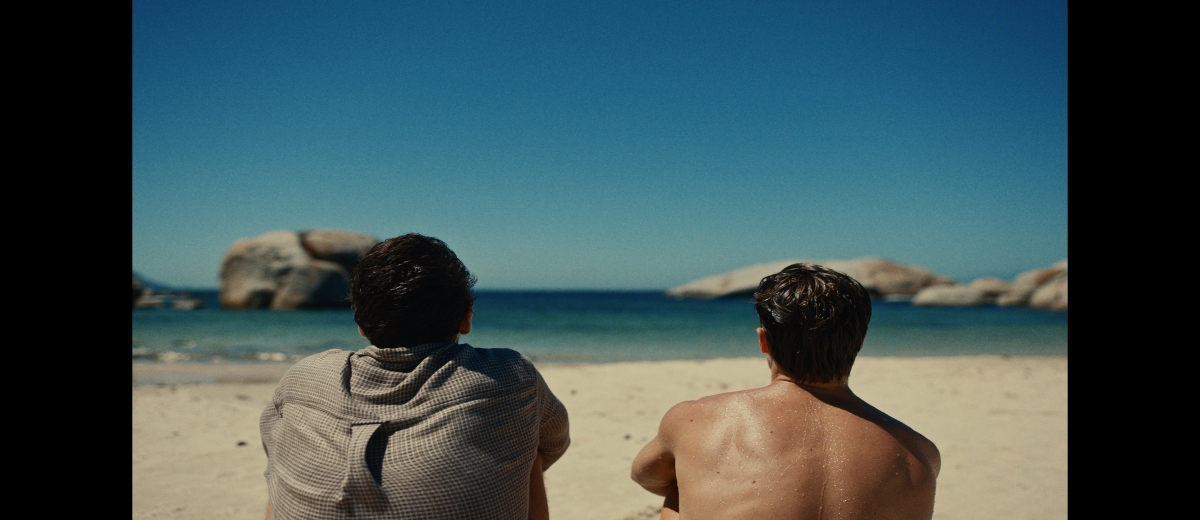
“Moffie” is a derogatory term used in South Africa meaning an “effeminate homosexual man.” Moffie is also the name of the South African-British biographical war film.

The film was written and directed by Oliver Hermanus. With help from his co-writer Jack Sidey, the two created a love story that encapsulates struggles, racism and homophobia. You feel stressed right from the beginning.

The year is 1981, South Africa’s white minority government is entangled in conflicts at its borders with communist-led Angola. All white men between the ages of 17 and 60 must complete two years of mandatory military service.

Nicholas Van der Swart (Kai Luke Brummer) was drafted into South Africa’s military, but he knows he is different from the other men serving. Another recruit develops an intimate relationship with Van der Swart and they realize that they are both in danger. 

This is just an incredible performance by Brummer. You could feel his emotions, the worry and the sadness and most of all, fear. Throughout the movie you rarely saw even the slightest smile. 

The first scene begins with suspenseful music that feels as though it belongs in a horror movie. Of course for young Nick, it is a horror movie.

But once Nick meets Dylan Stassen (Ryan de Villiers) and begins to fit in (at least a little), the music changes to classical opera. Later the music makes another change, and then another, and another. Braam du Toit’s score continues to change throughout the film to match Nick’s moods, an excellent detail.

Moffie not only has an aesthetically pleasing score but it is an aesthetic pleasure of the highest order, on nearly every level. 

The movie is so bright and beautiful even if the story is heartbreaking. In a flashback we see young Nick at the public pool with his parents. The camera follows him underwater and for a moment, Nick is happy and carefree. 

We see Nick again underwater, but this time he isn’t a carefree young child anymore. Now Nick is a soldier in the South African military and he just lost a friend. The world has been cruel to Nicholas Van der Swart, Moffie captured that cruelty. 

Everything Adults Do

Voyagers

by Hope Madden

If you have ever wondered what Lord of the Flies might look like in space, Neil Burger thinks like you.

The generally mediocre director (The Upside, Limitless, Divergent, etc.) follows a manned vessel in search of the next planet we can ruin. Or not. Maybe our better natures will win out.

Voyagers is the journey toward that new home. The crew doesn’t really know Earth—they were the result of specifically engineered donors, raised indoors so they wouldn’t miss open spaces, and will spend their whole adult lives on the ship. Their children will, too. But their grandchildren will be the first generation to see the new planet.

Naturally, this is only going to work if nothing kills them and they don’t kill each other before future generations can exist.

Scientist and father figure Richard (Colin Farrell) will shepherd them through as much of the journey as he can, but the future of the human race is in the hands of these young people.

Essentially a YA space fantasy, Voyagers is not without its charms. Tye Sheridan and Fionn Whitehead lead a cast of convincingly naïve geniuses. The conflict is obvious (especially for those who read Golding), but Burger zigs and zags enough to keep your interest. The director’s knack for encapsulated action and his sharp cast’s baser instincts create some B-movie thrills.

The nature versus nurture argument gets a quick nod, but Burger (who also wrote) isn’t especially preoccupied with the why. The immediacy of the fact that it just is requires more attention.

Science fiction tends to be heavily allegorical and heavily borrowed—Voyagers is certainly both of these. Although the execution feels a bit like a neutered version of Claire Denis’s brilliant 2018 cosmic horror High Life, the story itself looks to the distant future to illustrate our present (and very, very recent past).

Hope Madden and George Wolf … get it?