Waiting for the Worms

Dune

by Hope Madden

Denis Villeneuve’s vision for Frank Herbert’s Dune is as gorgeous and cinematic as you might expect from the filmmaker behind Blade Runner 2049 and Arrival. The worlds, the interiors, the exteriors, the space crafts, the spice, the worm — each articulated with a sense of wonder, as if the director himself was awestruck by what he saw.

That vision is hampered by a number of things, but the cast is not among its faults. Though Part One contains too many glorified cameos, even those are handled with care.

But let’s start at the top. Timothee Chalamet, whose genuine vulnerability makes him the perfect emo savior, is a natural for Paul. There is depth and almost humor to the performance. Even with only the first part of his journey completed by the end of the 2 hour and 35 minute film, his arc is clearly underway.

Oscar Isaac is so wonderfully Oscar Isaac as Paul’s noble but human father, and Rebecca Ferguson is exquisitely tortured as Paul’s mother. Sharon Duncan-Brewster, Josh Brolin, Jason Momoa and especially Javier Bardem all leave impressions with minimal screen time.

But the film has two problems, they are both pretty substantial, and they are both the story.

Problem #1 is that Dune Part 1 is half a film. You can make a multi-part story and still have several lovely, complete, standalone films. Kill Bill did it. Dune did not. It ends at the halfway point and that is exactly how it feels: 2 and a half hours to halfway there.

The second concern is that the source material is a white savior film. By casting almost exclusively people of color as the indigenous Fremen people of the conquered planet Arrakis, Villeneuve was at least facing the issue directly. That same laudable decision also exacerbated the situation, however, by turning Dune from a metaphorical white savior story into a literal white savior film, as the very white Chalamet takes on the mantle of messiah to lead the Fremen toward salvation.

He’s a dreamy messiah whose hair is forever mussed and hanging in his big, brown (for the moment) eyes, sure. But we know where this is going, even if we have no idea when we’ll get to see it arrive as Dune Part 2 is not yet filming.

It’s a lot of very attractive waiting for something to happen, which is maybe the best Dune synopsis I can think of.

Sweet Hats, Plenty of Cattle

The Harder They Fall

by George Wolf

Who doesn’t love a good Western?

If you’re the one, I’ve got two reasons not to saddle up with The Harder They Fall.

  1. It’s a Western
  2. It’s good

Ruthless Rufus Buck (Idris Elba) is getting out of jail, and that’s mighty interesting news to Nat Love (Jonathan Majors), who has no love for Rufus.

Nat has a serious score to settle, so he re-assembles his old gang, led by sharpshooter Bill Pickett (Edi Gathegi), and sets out on horseback. Along the way, Nat rekindles a flame with saloon owner Stagecoach Mary (Zazie Beetz) and earns the trust of Mary’s silent-but-deadly bodyguard Cuffie (Danielle Deadwyler).

And even though Nat is a wanted man, Marshall Bass Reeves (Delroy Lindo) decides he’d rather be on the team that finally takes Buck down.

But Rufus has some pretty solid support in his corner, too. Treacherous Trudy Smith (Regina King) speaks softly but shows no mercy, while quick draw legend Cherokee Bill (LaKeith Stanfield) leads a posse of men helping Rufus kick Sherrif Wiley Escoe (Deon Cole) out of Redwood and take over the town.

And that town ain’t big enough for both Buck and Love.

Director and co-writer Jeymes Samuel (aka The Bullitts) plants his flag early, with onscreen text telling us that he may not be telling a true story, but these people did exist. So while you may be reminded of Tarantino (or his many shared influences), this film’s history isn’t alternative. Samuel and his committed ensemble are here to remind us that it’s the whitewashed Hollywood version of the Old West that’s fiction.

Yes, these dusty roads are well traveled and the dialog can be a bit musty (“love is the only thing worth dying for…”), but there’s so much stylish bloodshed, gallows humor and terrific acting in every frame that the film wins you over on pure entertainment value alone.

Plus, it looks fantastic. Samuel frames the landscape with gorgeous panoramas, while wrapping some nimble camera movements and pulsing rhythms around those steely stare downs, frantic shoot ’em ups, freshly-pressed hats and dusters and plenty of other delicious period details.

The Harder They Fall is big, bold, visionary fun. It takes characters, races and lifestyles that have been hijacked by history and reclaims them all with the brashness of an early morning bank job.

This crew ain’t shootin’ blanks, and they rarely miss.

Cop Shop

At the Ready

by Rachel Willis

At Horizon High School in El Paso, Texas, students have the opportunity to learn and train for careers in law enforcement. From Border Patrol to the El Paso PD, director Maisie Crow examines the opportunities and dilemmas the students face as they follow this path in her documentary, At the Ready.

The film follows three students, two seniors at Horizon and one recent graduate, keeping the focus on how these teenagers participate not only in the Law Enforcement classes, but the school’s criminal justice club.

Mason, a transgender youth, joins the club because it’s portrayed as a place where a student gains a family. Indeed, we see former members of the criminal justice club returning to the school to interact with and encourage current members. A family is something Mason is desperate to find, as he is mostly on his own. With divorced parents, and a father often away for his job, Mason struggles with his loneliness, as well as his inability to reveal who he truly is to his parents, classmates and teachers.

The familial aspect of the classes is conveyed through the actions of not just the students, but many of the teachers – those profiled are all retired law enforcement personnel. However, we see that for some of the teachers, there is a hypocrisy to what they teach. They struggle to convey the realities of a career in law enforcement: the stress on one’s family, the fear, and the trauma that comes with the territory.

Many of the students are children of immigrants. For them, working for Border Patrol is an opportunity to not only protect the border, but to help others trying to enter the country. The reality of the situation is another focus of the film: Trump’s border policy of separating children from their families is something many of the students struggle with. Christina, a recent graduate, finds herself questioning the ethical morality of such a policy. When the border policy changes with the whims of those in D.C., it’s the people on the ground who have to deal with the fallout of inhumane regulations.

Crow does a good job of keeping the focus on the subjects in the film without injecting too much bias. You’re encouraged to make up your own mind as you connect with people on screen.

Many well-done documentaries will not only hold your interest, but make you think. This one does both. 

Performing Without a Safety Net

Runt

by Christie Robb

It’s a truth universally acknowledged that high school students are dumb.

It’s not their fault. The part of the brain that supports decision-making isn’t fully developed until the mid-twenties. And that’s ideally why society surrounds the impulsive little beasties with grownups who can model positive behavior and counsel them about their choices.

Director William Coakley’s Runt shows a good kid, Cal, trying to navigate the tightrope of high school and arrive safely at art school. But he’s working entirely without a safety net.

His single-parent mom is either at work or asleep. His teachers are the kind of folks who will yell at him for being obvious when he breaks and lets the jocks cheat off him. His best friend is an increasingly self-destructive embarrassment. His manager at the supermarket is always on his butt. The only living being that has his back at all is his dog, Runt.

Right from the jump, you know this isn’t going to end well.

Over the course of the film, Cal’s relationship with the jock bullies becomes increasingly violent. The tea of toxic masculinity that they are all steeping in leaves no room for apologies. The cycle of violence feeds on the overall negative energy until, toward the end, it feels like you are watching the birth of a supervillain.

Cameron Boyce as Cal is fantastic. You can see all the nuances of the different emotions that play over his features. The mixture of pride, shock, and guilt that flash across his face after he impulsively does something that Cal never thought he would do is awe-inspiring. The entertainment industry truly lost a promising talent when Boyce died in 2019.

The film’s ending somewhat undercuts what seems to be the intended message. There’s a tinge of romanticism in the very final moments that gives Cal’s violence a more heroic feel than what the rest of the movie seems to be going for.

But as a portrait of what’ll make an art kid snap, it’s pretty good.

More than Gore

Smoke and Mirrors

by Brandon Thomas

The word “Savini” conjures up a lot of historic imagery in the minds of horror fans. From the zombies in George Romero’s Dawn of the Dead to the ground-breaking slasher effects in the original Friday the 13th, Tom Savini has been involved in some of the most iconic horror movies of the last 40 years. In the documentary Smoke and Mirrors, director Jason Baker moves past the well-known effects work, and digs into the personal and the passions of the horror icon.

We’re living in a time where documentaries focusing on filmmakers and other notable TV and movie personalities have become ubiquitous. A lot of these are quite good, but usually end up checking many of the same boxes. Talking heads do a lot of the heavy lifting, and the main subject’s participation isn’t always guaranteed. Thankfully, Savini himself is front and center in Smoke and Mirrors

Having Savini so involved gives Smoke and Mirrors a larger sense of legitimacy. There’s also a notable difference in focus that might not have happened had the film relied solely on interviews and secondhand accounts. Instead of offering retreads of effects stories he’s told dozens of times before, the film gets deeply personal with Savini. From touching on tragedy he experienced as a child, to the horror he witnessed in Vietnam, Savini doesn’t hold back when discussing the trials he’s faced in his life. 

A particularly surprising bit for me was learning just how passionate Savini was – and is – about acting. He comes alive when talking about the stage productions he was a part of and how that opened doors he never dreamed of. There’s a twinge of “What if…” sadness surrounding Savini’s acting career that he delicately dances around due to personal obligations. 

Smoke and Mirrors goes out of its way to highlight Savini’s character over his career. The interviews that are peppered in all end up in the same place: talking about what an amazing guy Tom Savini is. The importance of his contributions to cinema is never forgotten, but the value of the man over the work takes center stage.

Tricks and Treats

Halloween Kills

by Brandon Thomas

Confession time: John Carpenter’s Halloween is my favorite movie of all time. After years of okay to terrible sequels, I was more than a little shocked when David Gordon Green’s 2018 legacy sequel turned out as well as it did. By slavishly adhering to Carpenter’s original mythology, Green made something that fit nicely alongside the 1978 original.

Halloween Kills is still Green doing his best Carpenter impression, but it’s Carpenter dialed to a brutal, bloody 11.

After a harrowing flashback to the events of Halloween night 1978, Halloween Kills picks up right where the 2018 film left off. Laurie Strode’s house is in flames and The Shape (James Jude Courtney) is trapped in the dungeon-like basement. Unfortunately, first responders don’t know that, and they free the murderous Michael Myers from his burning tomb. As the town of Haddonfield descends into chaos, survivors of The Shape’s original rampage – Tommy Doyle (Anthony Michael Hall, The Breakfast Club), Lindsey Wallace (Kyle Richards, Halloween), and Marion (Nancy Stephens, Halloween), lead a mob through the small town. Recovering in the hospital from her fight with Michael, Laurie Strode (Jamie Lee Curtis), her daughter, Karen (Judy Greer, Adaptation) and granddaughter, Allyson (Andi Matichak, Halloween 2018) try to come to terms with the people they’ve lost. 

Halloween Kills is an astonishingly brutal film. The Shape rampages through scenes like he’s never done before. This brutality will probably turn off a lot of fans who enjoyed the relative tameness of Green’s first Halloween. I’m impressed with how effectively Green handles the on-screen carnage while still keeping The Shape in the shadows and scary. That air of mystery is important and keeps the character from becoming too humanized.

The new cast additions are fun but largely wasted. Hall runs around and shrieks his way through scenes like a kid after too many candy bars. Stephens and Charles Cyphers as Brackett are more or less glorified cameos. Only Kyle Richards manages to make any kind of positive impression. Like the rest, her scenes are brief, but Richards brings a better sense of gravitas and fear to her encounter with The Shape.

Greer is once again MVP and easily walks away with the movie. She carries all of the grief of the Strode women but none of the irrational rage. Curtis is regulated to the sidelines for the majority of the film – spouting off gobbly goop dialogue so nonsensical, it would make the late Donald Pleasence proud. It’s a cynical move that was clearly made so that Laurie and Michael’s final face-off can be the focus of the upcoming Halloween Ends.

The biggest problem with Halloween Kills is that it just moves too fast. Scenes begin and end without a chance for the audience to catch up. The pace makes it hard to simply sit with the new characters and get to know them. Their entire existence is to move the plot forward at breakneck speed.

I sound pretty sour on Halloween Kills, but the truth is that I admire a lot of the chances the film takes. It’s a mean movie that allows The Shape to be bloodier than ever. Kills also points a finger at our heroes and the residents of Haddonfield, as it implicates them as spiritual partners in these murders. This isn’t a deep film, but it is one with more than set pieces on its mind.
Halloween Kills will be divisive. One thing it isn’t, though, is boring.

Scenes from Another Marriage

Bergman Island

by Hope Madden

A lot can go wrong when a filmmaker toys with meta-filmmaking. The movie can become cloyingly clever, it can lose the audience in its self-indulgence, it can become more of a trick than a film.

While Mia Hansen-Løve’s Bergman Island is arguably as self-indulgent a film as you will find, she risks all these trappings but falls to none.

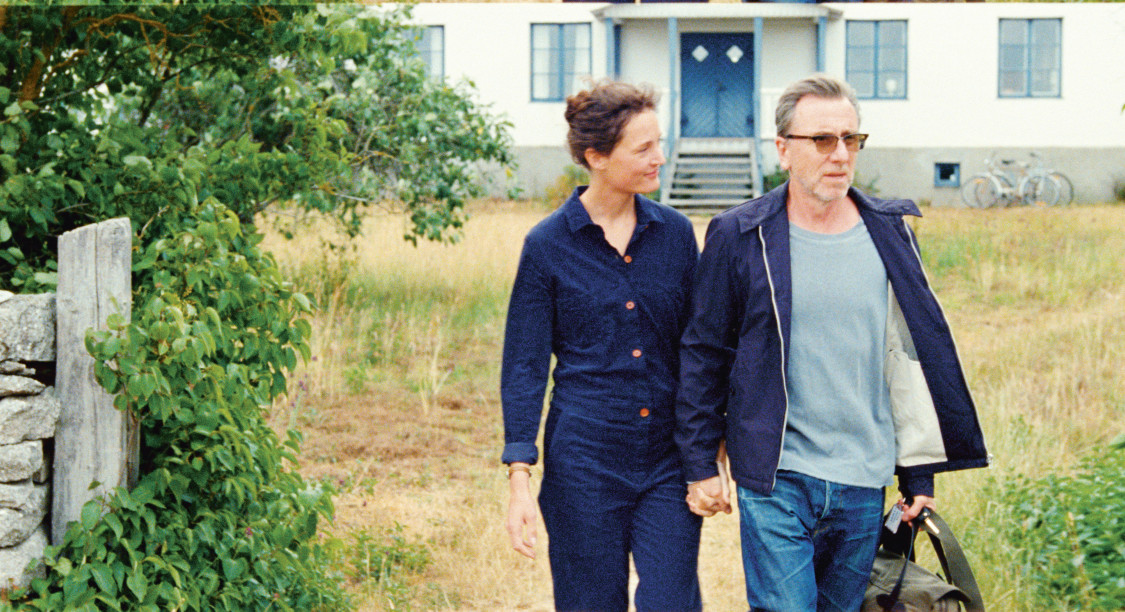
Her movie follows two filmmakers, Chris (Vicky Krieps) and Tony (Tim Roth), who leave their daughter with Chris’s mom so they can devote themselves to some solid writing time. They travel to Fårö island, where Ingmar Bergman lived, worked and shot some of his most famous films.

Bergman Island feels extremely personal in the way that it mirrors, to what degree it’s hard to know, Hansen-Løve’s real-life relationship with filmmaker Olivier Assayas and their devotion to the work of Bergman. There’s also a very intimate sense of the way one filmmaker’s inspiration from the same source can look so very different from another’s. And, of course, there is a kind of dreamy link between generations of filmmakers.

Most importantly, though, this is the story of a couple. Casting is one of Hansen-Løve’s greatest strengths here because, without the committed and vulnerable performances she draws from Krieps and Roth, the film could easily have folded in on itself. It does not, not for a moment.

Roth’s distance as a partner speaks not only to Tony’s ego and insecurity but to his support and understanding – Tony recognizes that this process will be prickly and leaves as much room as he thinks his partner may need to create.

This subtlety becomes a sly maneuver, as you begin to understand the story Chris works on.

The entire tale unfolds on the breathtaking island, where Chris’s stories — her real-life story with Tony, as well as the story within a story she writes — benefit from the windswept beauty of the island.

Bergman Island tells you a lot but leaves it to you to decide what it’s saying. Whatever tale you decipher, your time on the island is well spent.

Their Own American Dream

Hard Luck Love Song

by Rachel Willis

Working from the Todd Snider song, “Just Like Old Times,” writer/director Justin Corsbie (with co-writer Craig Ugoretz) brings the lyrics to life with his debut feature film, Hard Luck Love Song.

Basing a film on a song isn’t unheard of, but it isn’t very common either – probably for a lot of reasons. The biggest one being most story songs rely on character tropes to allow their listeners to connect to the characters. In this case, the antihero and the hooker with a heart of gold.

And even then, a film can succeed in adapting a song to the big screen if the background story and characters are fleshed out in believable ways. Unfortunately, Corsbie and Ugoretz don’t pull this off.

I find it hard to believe that in this day and age anyone could be hustled playing pool – didn’t everyone see Color of Money? But apparently, the scam still flies –because when we meet Jesse (Michael Dorman), it’s the way he makes his living. New to town, living in the Tumble Inn, Jesse is seeking to work over the locals.

There’s some slow action in the first half of the film. A pool tournament that starts as a montage begins to drag as the final three games play out between Jesse and Rollo (Dermot Mulroney). After a particularly ill-advised hustle, Jesse’s celebratory scene is indulgent and tacks on to an already slow opening act.

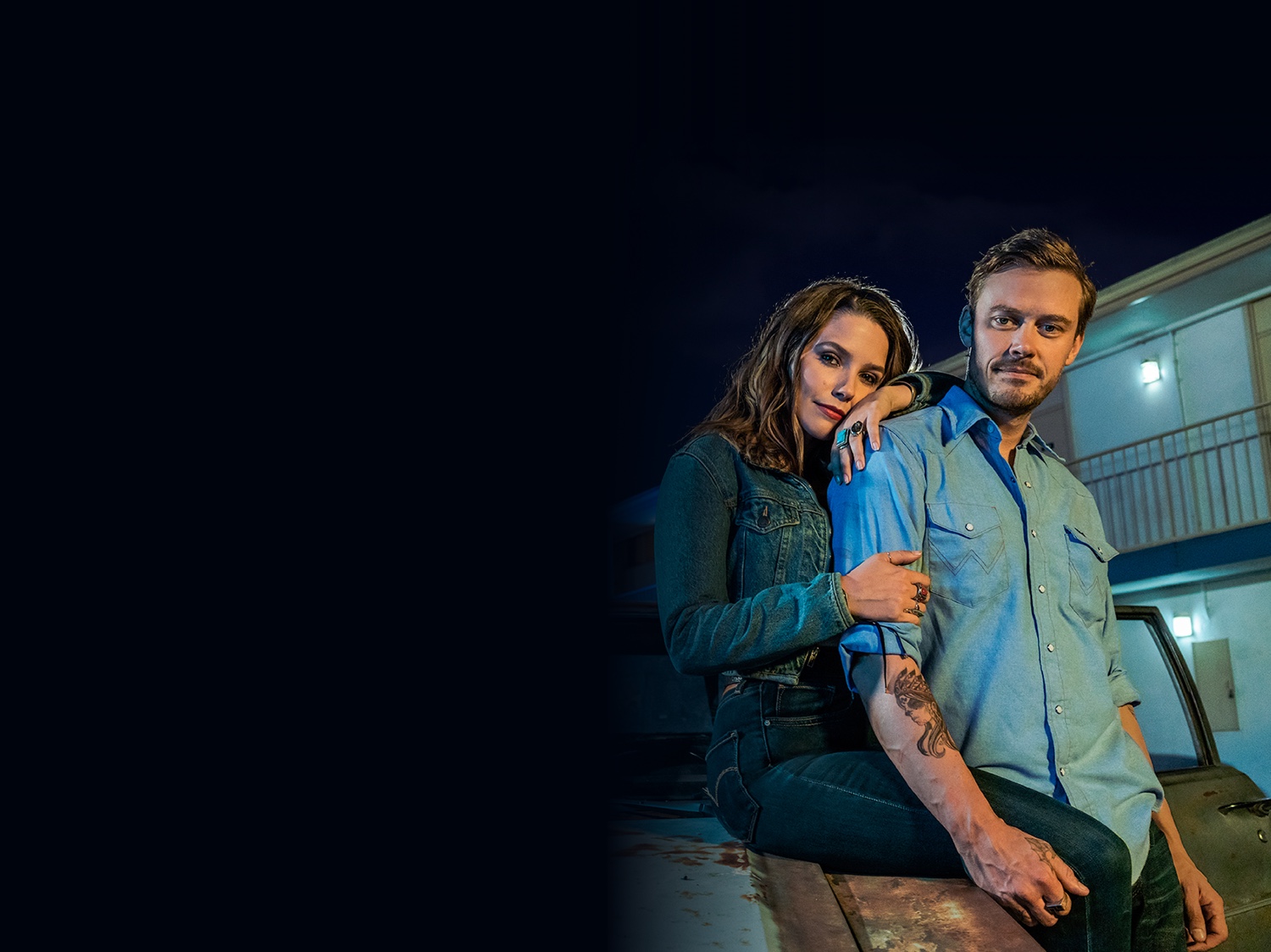
The story starts to pick up when an old flame (Sophia Bush) enters the picture, nearly halfway through the film. However, this is also when the movie begins to take on a different life, setting a new tone and coming closer to the meat of the song on which it’s based. If the film had continued to set a new stage in each act – treating each piece as a vignette in Jesse’s life – this may have worked. However, when elements of the first act are reintroduced into the final act, it’s jolting.

The third act is the least satisfying segment – relying heavily on stereotypes and songs to carry it along. It’s also when the film goes completely off the rails. Had the tone of the story not been so serious throughout, perhaps the conclusion could have landed more skillfully. As it is, the tonal shift is so abrupt that it feels as if we’re watching another movie altogether.

If you’re unfamiliar with Snider’s song, a live recording plays over the end credits. You’ll wonder why the filmmakers set such a serious tone when you hear Snider’s playful rendition. Perhaps if more of the song’s humor had made it into the film, the result would have been more satisfying.

Once Upon a Time in the Northwest

Freeland

by Matt Weiner

While the trendy seasonal debate is about what makes for a Christmas movie, Freeland—a taut, character-driven thriller written and directed by Mario Furloni and Kate McLean—offers a fresh spin on neo-westerns. (Pacific Northwesterns, in this case.)

Humboldt County pot farmer Devi “Dev” Adler (Krisha Fairchild) finds her longstanding operation (and serene way of life) thrown into an existential crisis, not by any shock-and-awe DEA raid but rather the slow bureaucratic death of refusing to comply with the new proper legal channels.

With the state cracking down on illicit growing operations, Dev is increasingly cut off from potential buyers both in and out of state. The changing business landscape also lays bare how emotionally removed she has become. Both her seasonal staff and her ex-lover Ray (John Craven) see the inevitable, even if Dev cannot: a way of life in the Northwest is coming to an end and a new one has already started to replace it.

Dev’s desperate slow burn fuels much of the tension, with Fairchild turning in yet another career-defining performance half a decade after 2015’s Krisha. Whether it’s reflecting with Ray on what they’ve lost since their commune days in the 1970s or shooting withering stares at the new generation of harvesters and corporate players, Fairchild brings an aching vulnerability to the no-nonsense Dev.

While much of the action is from Dev’s emotional breakdown, the directors also slow down long enough to take in the northwest vistas. It’s easy to see why Dev refuses to change her way of life, even as every piece of what that used to be gets stripped from her one by one.

It would be monstrous to argue that legalization isn’t a net good for incarceration and the drug war (and congrats to drugs on the recent wins).  But Freeland throws into intimate focus another side of the legalization vs. decriminalization debate, in which the biggest winners look suspiciously like the same forces that are always ahead in every aspect of American life.

Freeland swaps 19th-century railroads for 21st-century agribusiness, but you don’t need a player piano to hear the familiar requiem.

Through the Looking Glass Darkly

The Blazing World

by Hope Madden

Creepy twin stuff, Udo Kier, alternate realities—yes, The Blazing World. I am in.

Co-writer/director/star Carlson Young takes us on a strange journey as Margaret Winter, haunted twin who lost her sister ten years ago. Struggling to get by, she relents and visits her needy mother (Vinessa Shaw) and difficult father (Dermot Mulroney), who are packing up Margaret’s childhood home for sale.

And that is the last normal thing that happens.

Working with cinematographer Shane F. Kelly (Boyhood), Carlson conjures a beautifully melancholic world, one that almost seems like our world but only if you squint. The colors and music suggest a vibrant but eerie dreamscape, the ideal spot for Margaret to lose herself – and maybe find her sister.

The title suggests Margaret Cavendish’s 17th Century feminist utopia, but Young’s script (co-written with Pierce Brown) takes only the loosest inspiration. Rather than the tale of a woman learning to lead in another realm, this The Blazing World reimagines one life’s greatest traumas as fantastical games to be overcome.

Carlson herself does a solid job of shouldering heroine duties, and she surrounds herself with talent. While Shaw and Mulroney deliver wild and eerie performances, it is Udo Kier you’ll remember best. Of course it is! As gamesman, devil and guide, he charms in his wearily creepy way.

Young’s writing can’t quite keep up with her knack for casting, though. While several scenes in and of themselves stand out spectacularly, and the weaving together of the various images creates a strange and intoxicating flavor, the underlying story is just too slight and the metaphors somewhat tortured.

Hope Madden and George Wolf … get it?