Excellent week in lazybags theater. Stay inside and watch the best film of 2019, one hell of a performance, and an unreasonably underseen action flick in which Schwarzenegger gets off the funniest line of his career.
It’s the hap-happiest time of the year! Oh, our favorite thing about Oscar nominations is the excuse it gives us to dredge up those old horror flicks lingering in every good and bad actor’s past. This year’s crop was especially ripe, too. Here are the handful that made the final cut.
5. Al Pacino & Charlize Theron: The Devil’s Advocate
(1997)
A guilty pleasure, this one. Theron’s screen debut just two
years earlier came from an uncredited role in the clearly inferior Children
of the Corn 3, but she has no lines in that and how do we pass up a two for
one like this movie?
Al Pacino plays to type as Satan, disguised as NY lawyer
John Milton who invites unbeaten Florida lawyer Kevin Lomax (Keanu Reeves) to
join the firm (after Lomax knowingly gets a child molester acquitted). Lomax
and his saucy wife Mary Ann (Theron) head north, but Milton keeps Kevin working
late and Mary Ann becomes isolated and then paranoid and then possessed.
Theron’s performance is solid throughout and Pacino’s a lot
of fun chewing scenes and spitting them out. Reeves is Reeves. But this is such
a ludicrous, over-the-top morality play—one that Theron plays for drama and Pacino
plays for camp—that Reeves’s goofball in the middle feels somehow right.
4. Tom Hanks: He Knows You’re Alone (1980)
Tommy’s first show biz performance came by way of Armand
Mastroianni’s bride stalker, He Knows You’re Alone.
The first problem with the film is the plot. It is
absolutely impossible to believe that any knife wielding maniac is scarier than
a bride just 24 hours before her wedding. She’d kick his ass then slit his
throat, all the while screaming about seating arrangements.
The bride thing is a weak gimmick to introduce a slasher, so
we watch a shiny knife catch the light just before slicing through some friend
or acquaintance of bride-to-be Amy (Caitlin O’Heaney).
In the film that’s little more than a smattering of ideas
stolen from Wes Craven and John Carpenter, surrounded by basic stock images and
sounds from early 80s slashers, the only thing that stands out is Hanks. In an
essentially useless role, Hanks introduces the idea of comic timing and natural
character behavior. Too bad we have to wait a full hour for his first scene,
and that he only gets one more before his girlfriend’s head finds its way into
the fish tank and he vanishes from the film.
3. Renee Zellweger: Texas Chainsaw Massacre: The Next
Generation (1995)
Written and directed by Kim Henkel, Tobe Hooper’s
co-scriptor for the original, Texas Chainsaw Massacre: The Next Generation
amounts to one bizarre cabaret of backwoods S&M horror. You’ll think for a
while it’s a regular ol’ slasher, what with the unlikable teens, broken down
car, and bad decision-making. But if you stick it out, you’ll find it tries to
be something different – something almost surreal, kind of madcap. It doesn’t
work, but it counts that they tried, doesn’t it?
A profoundly unconvincing set-up involves Renee Zellweger as
well as several colleagues no longer in the acting profession. They deliver
teen clichés while wandering into a truly weird situation. The four prom-goers
are terrorized by Matthew McConaughey, now leader of Team Leatherface, and his
bizarre band. It’s not necessarily weird in a good way, but weird is rarely
ever entirely bad.
There’s a visit from a limo-driven S& M maestro of some
kind, paranoid delusions of Big Brother control, a more clearly cross-dressing
Leatherface, but absolutely no tension or terror, and shocking little in the way
of horror, either, regardless of Freaky Limo Guy’s line: I want these people to
know the meaning of horror.
(Hint: they should watch the original.)
https://www.youtube.com/watch?v=PNsgi_n-hro
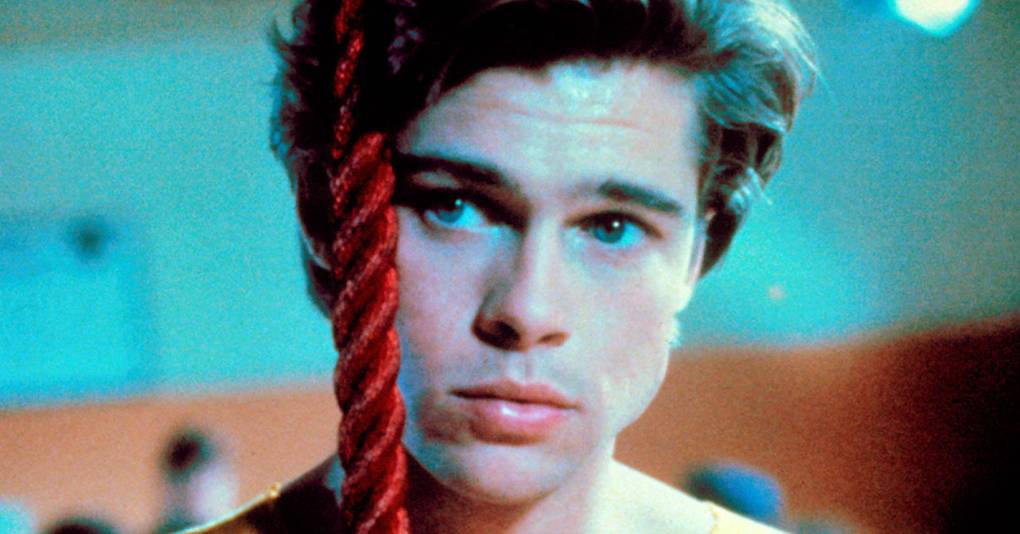
2. Brad Pitt: Cutting Class (1989)
Someone’s killing off folks at the nameless high school
where Pitt, as Dwight Ingalls, portrays the horny, popular basketball star
repressing rage concerning his overbearing father. Perhaps he’s bottling up
something more?
Sexual frustration, no doubt, as he spends every second on
screen trying to get somewhere with girlfriend Paula (Jill Schoelen, frequent
flier on bad 80s Horror Express).
Usually, when you look back on a superstar’s early career
and find low-budget horror, one of two trends emerges. Either the superstar
stands out as clearly the greatest talent in the film, or else they just cut
their teeth on a very small role. Sometimes both. In Pitt’s case, well, at
least he looks like Brad Pitt.
Still, it’s fun to see him try on some tics and
idiosyncrasies he’ll come to rely on in later, better roles. (Like Pitt’s
Oceans character Rusty Ryan, Dwight eats in every scene.)
The freakishly uneven tone, the film’s episodic nature, each
scene’s seeming amnesia concerning other scenes’ actions, and the whiplash of
comedy to psychological thriller to comedy all add up to an exercise in incoherence.
1. Laura Dern: Grizzly II: The Concert (1987)
Here’s the crowning jewel for nearly any Skeletons in the Closet feature. It
features not just a current nominee, but one past winner and ever-the-winner
Charlie Sheen. It’s hard to come by and even harder to watch. The sequel to William
Girdler’s 1796 forest-astrophe Grizzly was filmed in 1983 and never
completed, but sort of, kind of released anyway in 1987. Every death scene ends
just before the death itself, because the bear side of the struggle was never
shot. So, we get a lot of bear’s eye view of the victim, but never a look at
the bear side of the sequence. It’s surreal, almost.
Sandwiched somewhere between the non-death sequences is a never ending
faux-eighties synth pop concert. The concert footage is interminably long, nonsensical
enough to cause an aneurism, and awful enough to make you grateful for the
aneurism. You will lose your will to live. So, why bother? Because this
invisible grizzly puppet kills Charlie Sheen, Oscar nominee Laura Dern, and
George Clooney. (Dern and Clooney are making out at the time, which actually
probably happened).
Way back in 1961, Jack Clayton directed Deborah Kerr to an Oscar nomination with the atmospheric thriller, The Innocents, a nerve-jangling screen version of Henry James’s oft-adapted novel The Turn of the Screw.
Respectful of the book without being a slave to it, Clayton perfectly
balanced that ever-important horror theme: is this woman insane or is something
supernatural afoot? The novel’s been remade for TV and the big screen dozens of
times in countries the world over. Given that, director Floria Sigismondi must
have something new to say with her latest, The Turning.
She certainly has a hell of a cast.
Mackenzie Davis has impressed in every film she’s made, regardless
of the fact that most of those films have gone utterly unnoticed by moviegoers.
She quickly morphs into whatever is needed—badass, emotional wreck, whimsical
youth, badass again—without losing an authentic human grounding. She’ll need
that as Kate, the new live-in nanny.
Finn Wolfhard (It) and Broklynn Prince (The Florida Project) portray her charges, Miles and Flora. Both kids are amazing. Wolfhard masters the contemptuous sneer of the privileged but still convinces as a tender, protective older brother.
Prince, so entirely stunning in Florida Project,
again owns the screen. Her timing is spot on and her sassiness magnificent. In
a smaller role as prim housekeeper Mrs. Grose, British TV actor Barbara Marten delivers
the perfect mix of brittle and caustic.
Not one of them manages a convincing argument as to why this
film was made.
It’s been ten years since director Floria Sigismondi made a
feature. A groundbreaking music video director, Sigismondi moved primarily to
television after her impressive 2010 feature debut, The Runaways. For The
Turning, her eye for setting and framing are clearly on display and, again,
the performances are strong. There’s just not much she can do with this script.
Written by Carey W. and Chad Hayes (The Conjuring),The
Turning suggests no solid reason for its existence. Every scene is rushed,
every revelation unearned. Early red herrings prove pointless (cheats, even, as
they make no narrative sense in retrospect).
Worse yet, Sigsimondi fails to develop any real tension or
sense of dread and there’s not a single scare in the entire film.
I knew better than to get excited about a January release, but it’s hard not to hold out hope with this group of artists. Give yourself the gift of the Clayton version instead.
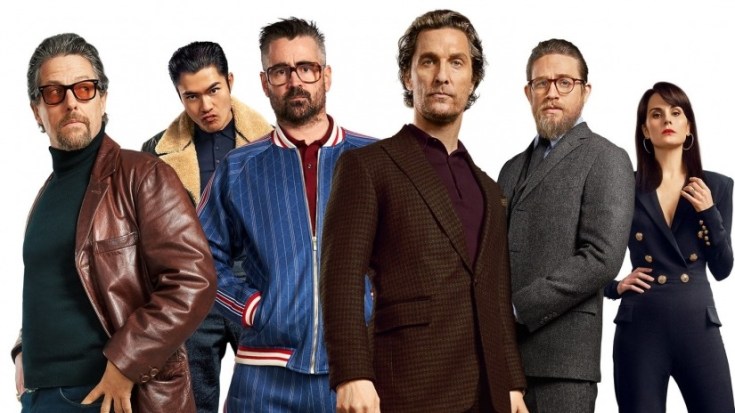
If nothing else, Guy Ritchie and his Gentlemen are not lacking in self-confidence. This is a film, and a filmmaker, anxious to prove the old guys can still cut it, and that any young upstart who thinks otherwise has a painful lesson coming.
Ritchie returns to the testosterone-laden, subtitle-needin’ bloody British gangster comedy terrain of Snatch and Lock, Stock and Two Smoking Barrels – the early films that still define him – for a stylish ride through a violent jungle with a man who’s not sure he still wants to be King.
Matthew McConaughey is Mickey Pearson, an American Rhodes Scholar who put his brains to work in the drug trade, utilizing a string of expansive British estates to build an underground network that controls the supply of “bush” aka “supercheese” aka weed.
But now it seems he’s ready for a quiet life of leisure with wife Roz (Michelle Dockery), and offers to sell his entire operation to brilliant criminal nerd Matthew (Jeremy Strong) for a sizable sum.
As Matthew is mulling, Roz smells “fuckery afoot,” and she smells wisely.
There’s plenty, and a PI named Fletcher (Hugh Grant) thinks he has it all figured out, so much so that he visits Ray (Charlie Hunnam), Mickey’s number two, with an offer to save Mickey’s hide…in exchange for a hefty fee.
Ya follow? There’s plenty more, and it’s all spelled out via the screenplay Fletcher has conveniently written. As Fletcher joyously outlines the plot to Ray (and us) over scotches and steaks, Ritchie uses the device to play with possible threads, backtrack, and start again.
The Gentlemen is not just meta. As the double crosses and corpses mount, it becomes shamelessly meta, a sometimes engaging, other times tiresome romp buoyed by slick visual style and committed performances (especially Grant and Hunnam), but marred by self-satisfaction and stale humor that might have been less tone deaf a decade ago.
You get the feeling that after a marriage to Madonna and some big Hollywood franchise films (Sherlock Homes, Aladdin), Ritchie is out to prove he hasn’t gone soft with a little raucous, chest-beating fun.
But while The Gentlemen does show Ritchie’s way with a camera can still be impressive, its best parts only add up to a fraction of their promise.
HP Lovecraft has influenced horror cinema in ways too varied
and numerous to really articulate. But true Lovecraft is tough to bring to the
screen for a number of reasons, chief among them that his madness tends to
involve something indescribable: a color no one’s ever seen before, a sound
entirely new to the human ear, a shape that defies all laws of geography and
logic.
Alex Garland pulled inspiration from Lovecraft’s 1927 short Colour
Out of Space for his brilliant 2018 mindbender, Annihilation.
But for direct adaptations, Richard Stanley’s newest may be the best.
Naturally, the film’s success is due in large part to
Nicolas Cage’s performance, because who descends into madness quite as
entertainingly?
Cage plays Nathan Gardner. Nathan and his wife (Joely
Richardson), their three kids and their squatter (Tommy Chong – nice!) live a
quiet life in the New England forest not far from Arkham. A meteorite changes
all that.
Cage basically strums a favorite old tune, landing somewhere on his “nice guy gone insane” spectrum just this side of Brent (Mom and Dad) and Red Miller (Mandy). In fact, the voice that begins emerging once the meteorite hits is gleefully reminiscent of Peter Lowe from Vampire’s Kiss (a call back I can get behind).
Is that the only reason to see the movie? No. Tommy Chong is
a hoot, Richardson gets one especially creepy carrot chopping scene, and things
go a little Cronenberg just when you want them to.
There’s a lot wrong with the film, too. Scenes are sloppily
slapped together, one rarely leading to the next. The film’s budget is betrayed
by its FX and supporting performances are not especially strong.
But Stanley’s long-awaited comeback (this is his first narrative feature since being fired from The Island of Dr. Moreau in 1996) infuses Lovecraft with a much needed dark streak of comedy and entrenches his tale of madness within a loving family dynamic, offering an emotional center to the story that the author rarely delivered.
The film lacks the vibrant subversiveness of Mom and Dad and comes nowhere near the insane vision of Mandy, so Cage fans might be only mildly impressed. Lovecraft fans, though, have reason to be excited.
Shudder launches a new series this week, The Dead Lands.
Ep 1: Tell the Dead I’m Coming
by Rachel Willis
For anyone who thinks the zombie genre has been thoroughly
mined of ideas, you might be pleasantly surprised by the New Zealand horror
drama, The Dead Lands.
The best thing about writer/creator Glenn Standing’s show is that it’s more than a tale of the dead coming back to life. Rooted in the indigenous Maori culture and religion of New Zealand, the setting is Aotearoa “in the time of the stories.” As the credits play, we’re shown the gorgeous natural splendor of this world while the camera rolls over scenic vistas.
The peaceful atmosphere is destroyed as the credits end and
the camera focuses on a bloody wahaika. A scene of carnage unfolds, and we’re
introduced to Waka Nuku Rau (Te Kohe Tuhaka), a person “more monster than man.”
As the narrative opens, we learn this monstrous man may be the only hope for
restoring the balance between the living and the dead. When Waka is barred from
entering the afterlife, he returns to earth to seek honor to atone for his many
crimes.
The opening episode of The Dead Lands is a bit
clunky. There’s a lot to set up in the space of 44 minutes. The pacing stumbles
as much of the focus of this episode is devoted to helping the audience
understand what has gone wrong in Aotearoa. The veil between the living and
dead is falling away, and the dead seek to harm the living. Why this is
happening is the heart of show’s mystery.
However, the weaker elements are far overshadowed by the stronger moments and the promise of what’s to come. Waka is a thoroughly engrossing character. Unfortunately, we’re only given a glimpse of his morally repugnant past. Perhaps his history will be explored in future episodes, but when Waka runs into Mehe (Darneen Christian), a woman seeking his help, he comes across as a curmudgeon rather than someone to be feared.
Though Waka has an agenda behind his agreement to help Mehe,
he never seems untrustworthy. He’s a character easy to like when, based on what
we’ve been told, he should be someone who makes us question our own moral
compass.
As Mehe, Christian is a bit stiff compared to the charismatic Tuhaka, but their relationship has the potential to grow into something truly captivating to watch.
There is more than enough intrigue to attract viewers to this show and keep them interested.
Ep 2: The Sins of the Fathers
by Rachel Willis
Where the first episode tends to drag, the second episode of
The Dead Lands opens in a sprint. Beginning with a human sacrifice, new
characters are introduced: villains both living and dead, members of Mehe’s
tribe who might not be trustworthy, and others who might have the answers Waka
and Mehe seek.
The mystery of who “broke the world” becomes the central
focus in this episode, though many thrilling scenes are devoted to the politics
of Mehe’s tribe.
After an attack on her tribe in Tell the Dead I’m Coming,
her brother, Rangi, and the rest of the tribe sought refuge with their uncle, a
powerful shaman who might have insight into what has caused the imbalance
between the worlds of the living and the dead.
Though their uncle welcomes them with open arms, there is
something sinister afoot. Mehe is suspicious, and in this episode, Darneen
Christian better embodies her character.
While Waka still has his mission, Mehe is given her own
hero’s journey to complete. By giving our two main characters their own
challenges and desires, the opposite nature of the characters is heightened.
Waka is a man who cares for no one, while Mehe is devoted to the well-being of
her tribe.
Despite their opposite natures, the chemistry between the
two flourishes as Waka’s connection to Mehe deepens. Though Waka professes to
dislike her, it’s clear she’s the closest human connection he’s ever had. There
are even a few comedic moments shared between the two, and those liven the
otherwise tense atmosphere.
Though still plagued by a few missteps, particularly some strange cinematography choices, the second episode successfully builds upon the first. With The Sins of the Fathers, the show has found its footing.
It’s been 17 years since we last checked in on Detective Mike
Lowery (Will Smith) and his goofy partner Marcus (Martin Lawrence). One of them
has intimacy issues. One of them always wants to retire. They drive recklessly
around Miami and wreak general havoc.
In those 17 years, Generation X has gotten old.
Marcus has a grandbaby now and wants to retire again. Then Mike is almost killed, so now Marcus really wants to retire. That means frustrated Mike, desperate to reestablish his manhood by finding the guy who tried to kill him, must team up with Miami PD’s new superteam, AMMO.
That’s right, AMMO, which stands for literally the most attractive
group of police officers in the history of crime. They’re tech-tactical. They
have a drone and shit, and no one would ever notice a drone flying into the
abandoned warehouse while they do an arms deal.
But Mike don’t play that. He’s old school. And old. You know
he’s old because he’s always wearing long sleeved shirts and jackets in Miami.
Is Bad Boys for Life ludicrous? Oh, hell yes. Luckily its casual sexism and jingoism are offset by its refreshing pro-violence stance.
Directors Adil El Arbi and Bilail Fallah—whose Shakespearean take on Brussels gang violence, Black, is well worth finding—offer no such lyrical balance of carnage and emotion here. It’s actually hard to imagine a film franchise so single-mindedly opposite of their insightful gangster drama.
It’s clear the marching orders were: get the bad boys back together, blow stuff up and trade quips! Fine, but who ordered all the forced ridiculousness and tonal whiplash?
Saddled with a breathtakingly by-the-numbers script by committee (Chris Bremner, Peter Craig and Joe Carnahan), the directing duo punctuates dramatic moments with comic relief while they distract from a weak story with nonsensical car chases and explosions, and when all else fails, fall back on daddy issues.
Don’t look at the credits and you’d swear Michael Bay directed this movie. (Bonus: Bay has a cameo.)
The film broaches interesting themes as one partner turns to God while another turns to bloodthirsty vengeance in the face of death. But Lawrence, ever the sloppy sidekick, makes clear that spirituality and peace are only fodder for jokes and neither partner will regain his manhood until there’s a massive weapon between his legs and he’s shooting Mexicans out of the sky.
Will Mike learn to love? Will he whip his tech-savvy and law abiding new team into shape (that is, help them to embrace lethal and mainly illegal justice)?