Category Archives: Outtakes

Movie-related whatnot

Villain Diaries: Jason Voorhees

Hi, Mom.

I know I said I didn’t want to go to camp this year. I said nobody ever talks to me. Nobody ever asks me to swim or hike, or play truth or dare, or arm wrestle. Nobody offers me an enchilada. I said I didn’t like it. I said it was boring, but what I really meant was that it was lonely. I didn’t want to have to spend the whole summer—again!—with no friends. I said nobody likes me here. I said I would miss you.

But you said, “Jason, they’re just as scared of you as you are of them! They can’t like you if they don’t know you, so just march right up to them and show them who you are. Show them what you’re made of. You might even see what they’re made of.”

You were right, Mom. As always! I love it here. I am having the best summer, just like you said I would. Thanks for always having my back. I still miss you, though! 

Jason
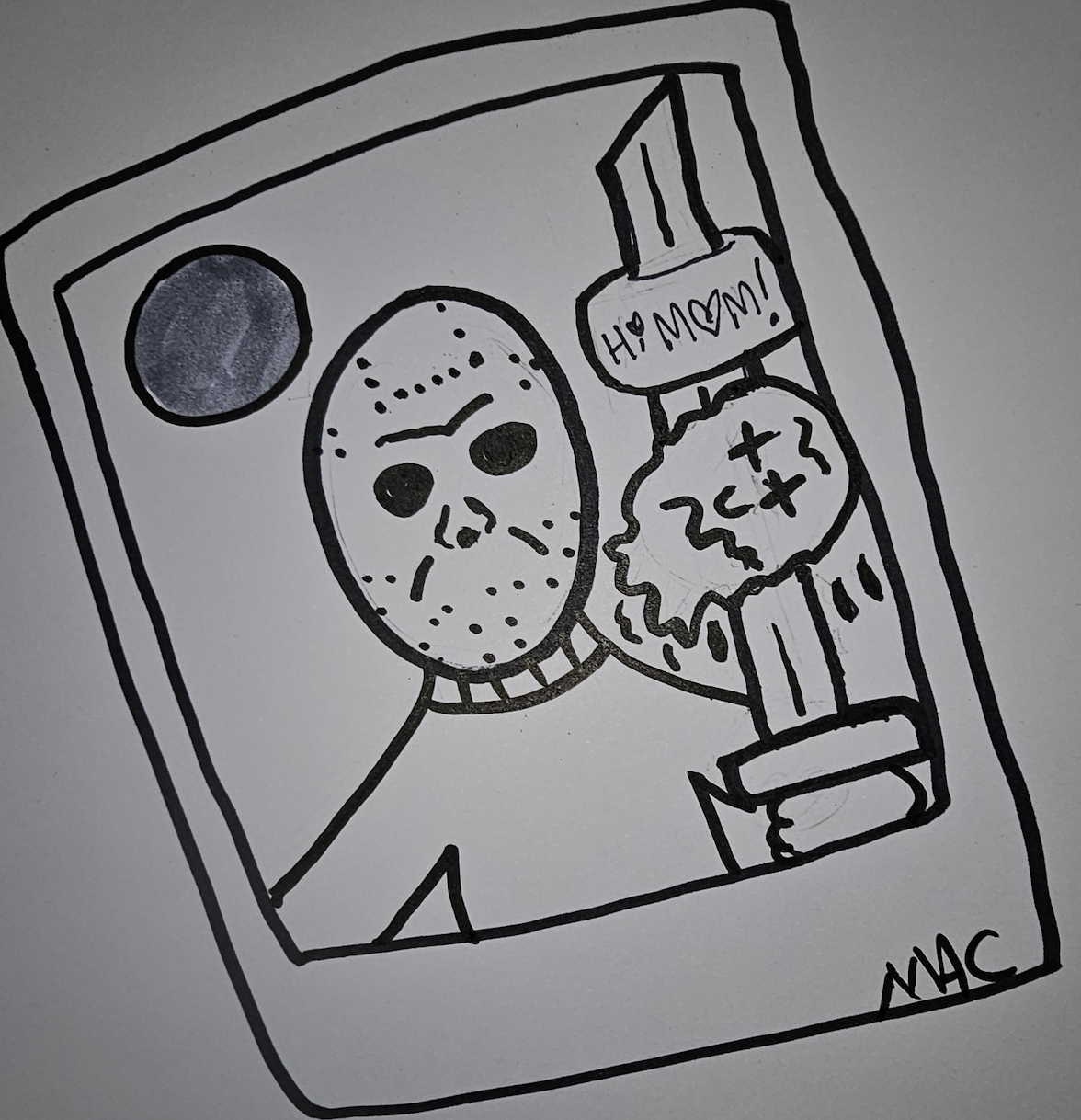
*by Hope Madden. Video in partnership with Mills James Productions. Voiceover by Dave Man Bjorklund. Art by Michael Anthony Carroll.

Disclaimer: Villain Diaries is a non-commercial work of fan fiction and parody. All characters, names, and elements from the film belong to their respective copyright and trademark holders. I don’t own them and I’m not affiliated with, endorsed by, or sponsored by the creators, studios, or rights holders. This piece is an original creative commentary inspired by their work. It is shared for free, for entertainment and critical purposes, and earns me no money. If you’re a rights holder and have concerns, please contact me at maddwolf95@gmail.com and I’ll respond promptly.

Migrant Fairy Tale

Her Will Be Done

by Hope Madden

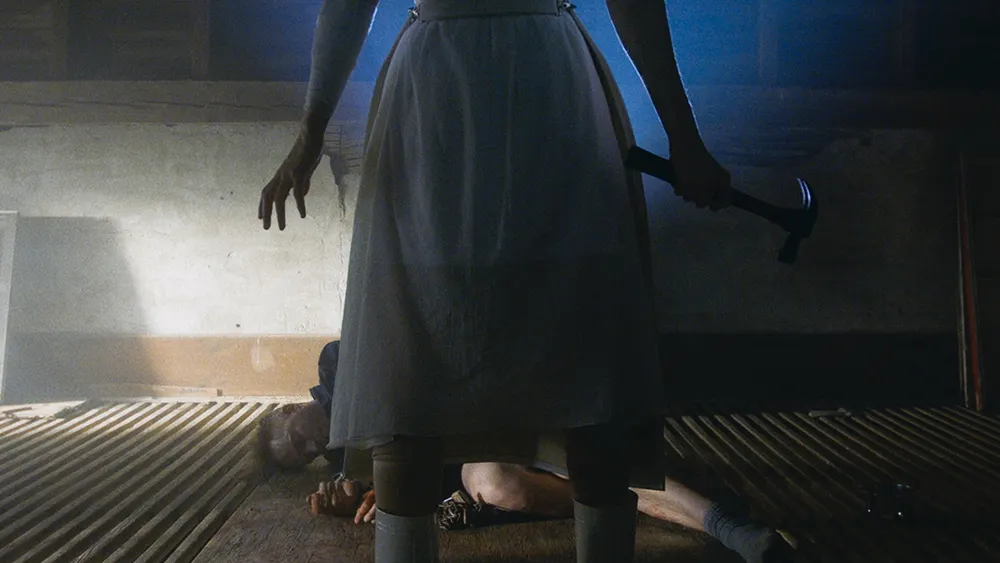
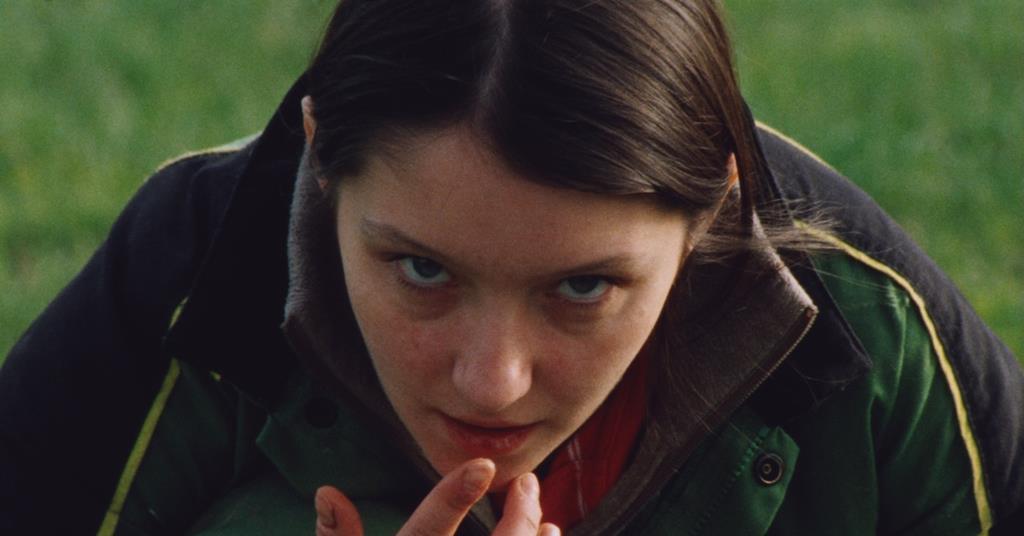
Julia Kowalski grounds each moment of Her Will Be Done in an utterly authentic day-to-day. Every chore, every mismatched but sturdy layer of clothing, every slap of a rubber glove or boot makes you ache with Naw (Maria Wróbel) for something more than the French farm life of a Polish migrant.

But that’s 20-year-old Naw’s life, with her kind but religious father (Wojciech Skibinski) and her two rowdy brothers (Przemyslaw Przestrzelski and Kuba Dyniewicz). Naw yearns to be a veterinarian, or to do anything that gets her out of this house, this life. Even if she believes, as her father does, that she carries her mother’s curse.

The realism of Kowalski’s approach keeps you guessing: are Naw’s episodes medical? Supernatural? Just plain rage? The filmmaker mixes messages, confounds clues, and transfixes you in the mystery, mainly through Wróbel’s convincing, wide-eyed observational performance.

Wróbel’s quite wonderful, rarely speaking, communicating the entire arc of the character with her enormous, searching eyes. Thanks to the performance it’s easy to question Naw’s reality and to worry about the way she interprets the reality around her.

Naw’s life of quietly raging frustration takes quite a turn when the neighbor’s daughter (Roxane Mesquida)—scandalous for some reason Naw’s father won’t tell her—moves back home.

From this moment, Kowalski spins a folk horror rooted in misogyny, patriarchy, religion, power, and superstition. All of this as observed by the sheltered, innocent Naw. It’s like a fairy tale where the beautiful fairy finds herself somehow in Naw’s miserable world rather than vice versa, and the filmmaker mines that concept to create a kind of backward folktale.

In its best moments, Her Will Be Done conjures Marcin Wrona’s 2015 treasure Demon. At other moments, the understated realism calls Emma Benestan’s feminist horror Animale to mind. Kowalski, who writes with Simon Beaufils, complicates characters, makes them tough to predict. And yet, the bones of both reality and fairy tale dictate what must be.

Denied Pregnancy and Delayed Justice

Baby Doe

by Matt Weiner

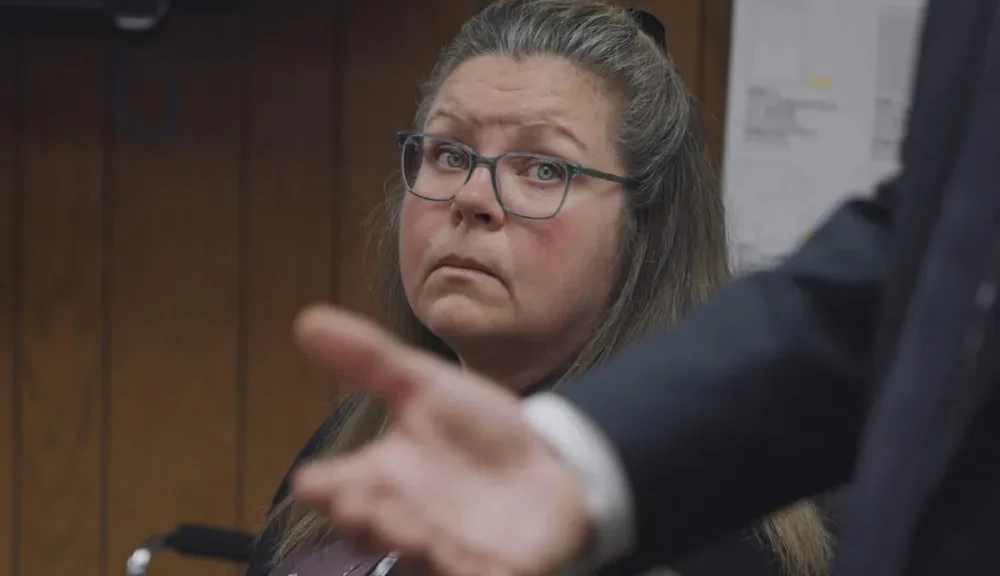
There’s no true crime mystery at the heart of director Jessica Earnshaw’s riveting documentary Baby Doe. Gail Ritchey gave birth in 1993 and left the newborn in the woods in Geauga County, a conservative rural suburb outside of Cleveland, Ohio. The case was a local sensation that went unsolved until 2019, when DNA evidence led investigators to arrest Ritchey for murder.

What follows from that arrest is a challenging examination of the criminal justice system, its treatment of women and their mental health and how we view those accused of what popular culture (and pulpier true crime fare) dub acts that are “especially heinous,” told through a blend of contemporary footage and intimate access to the Ritchey family and their legal team.

Earnshaw’s camera becomes an ever-present member of the extended Ritchey family as they grapple with an unthinkable crime. Ritchey’s high school sweetheart and now husband Mark was unaware that Gail was even pregnant with their child at the time, and Earnshaw doesn’t shy away during interviews as Mark and Gail both reckon with their deeply conservative Christian upbringing that may have contributed to Gail’s state of mind at the time.

As Ritchey’s defense team confers with experts on how to get a jury to sympathize with Ritchey, Earnshaw touches on other high-profile cases on the subject of “denied pregnancy.” This is where the documentary takes yet another surprising—and enraging—turn, with medical experts on one side offering up compelling and deeply moving testimony on the under-discussed condition. On the other side, there is Ohio law, which in this case bars Ritchey and her team from using any of this as part of her defense. Instead, her lawyers must focus on the argument that the baby was stillborn.

Earnshaw’s raw interviews ultimately weave a sad, winding narrative that starts with Ritchey’s overbearing father and ends up in a suburban Cleveland jury room filled with male jury members and a reproving judge. It’s difficult to shake the sense that whatever is happening in that courtroom, it’s not about justice.

We do at least find more tender moments and even grace outside of the trial. Some of this comes from likely sources (a welcoming church, spearheaded by a caring pastor’s wife). But one of these moments comes from a surprising figure near the end of the film, one of the few men outside of the Ritchey family who sees Gail as someone who is more than the acts she has committed.

These moments, rare as they are, hardly make up for a criminal justice system that seems both unequipped and uninterested in understanding the mental health of why some people do what they do. Thankfully, Earnshaw is, and she tells the story beautifully in a way that suggests if sympathy is impossible, we can still find room for empathy.

Coming Outback

The Deb

by Rachel Willis

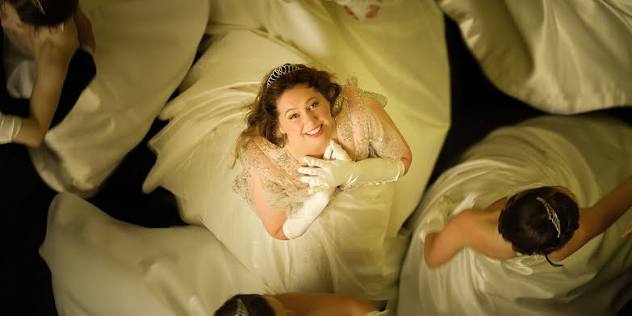
After pulling a feminist-themed stunt at school, Maeve (Charlotte MacInnes) is banned to the bush; more specifically, the small town of Dunburn where her cousin Taylah (Natalie Abbott) lives in Rebel Wilson’s directorial debut, The Deb.

Maeve arrives in town to find all Taylah wants from life is to make a splash at the upcoming debutant event. Nothing is more archaic to Maeve than this spectacle of femininity and purity.

The wants of both girls are relayed through song, and while each song is catchy, they are also uninspired. In fact, none of the songs in the movie stand out nor do any of the choreographed dance numbers that give us time to meet the people of Dunburn. They are unnecessary filler in an otherwise absorbing story.

Dunburn’s resident mean girl Annabelle (Stevie Jean) and her fellow mean girls (The Pixie Cups) are fun in a catty sort of way as they do their best to make Taylah’s life hell.

Rebel Wilson co-stars as Annabell’s mother. Her character is a combination of Amy Poehler’s Mean Girls cool mom, and a stereotypical parent-manager who tries to bully her kid toward superstardom.

As Maeve adjust to life in Dunburn, she harshly judges Taylah and everyone in the bush for their behavior, their quaintness, their dreams and desires. She is as cruel in her own way to Taylah as the Pixie Cups. Though Maeve aspires to feminist equality and the end of the patriarchy, she doesn’t recognize her own role in perpetrating classist and patriarchal beliefs.

But the film isn’t too interested in taking a deep dive into the problems Maeve seeks to address with her stunts and TikTok videos. Instead, the audience is treated to a fun musical that has a simple lesson or two for the mean girls of the world.  

What the Hell?

Boorman and the Devil

by George Wolf

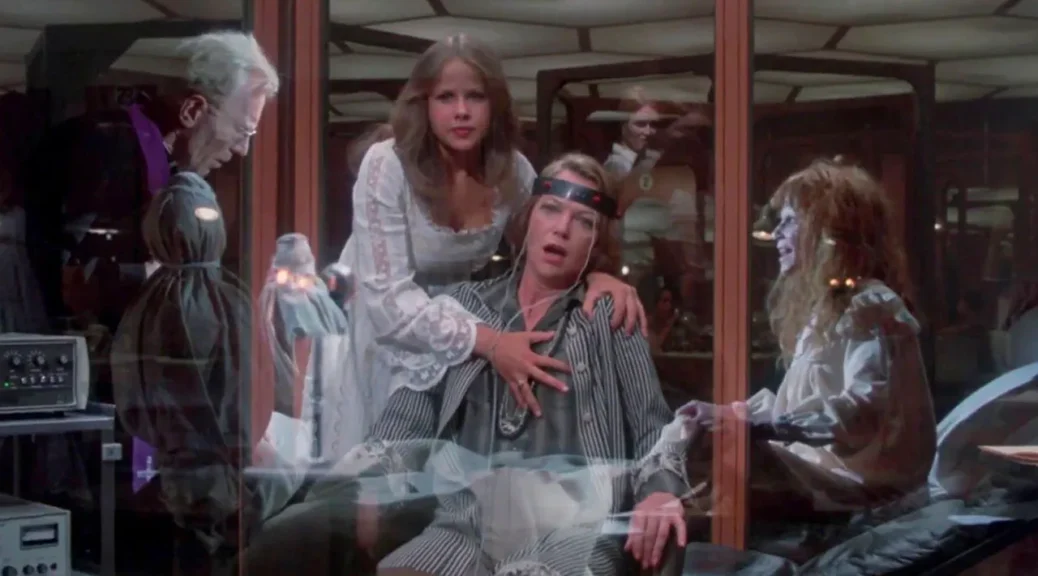
There was a new list floating around social media this week, and it ranked the 25 all-time worst movie sequels. 1977’s Exorcist II: The Heretic was nowhere to be found. That will probably surprise a bunch of people, including some that are part of Boorman and the Devil, a fascinating look behind one of the most infamous productions in film history.

John Boorman was fresh off of an Oscar nomination for Deliverance when he accepted the gig to follow up the phenomenon that was The Exorcist. Looking back, the now 92 year-old Boorman realizes Stanley Kubrick was correct when he warned the only way to follow Friedkin’s classic was to bring even more shock value.

Boorman chose an approach that focused on light over dark. Plus “the Synchronizer,” a tap-dancing Linda Blair and James Earl Jones in a locust getup.

It was a complete disaster. But director David Kittredge’s look back is so captivating, the urge to give The Heretic another look will be strong.

Boorman’s candor about the pain of failure is refreshingly honest, and the way that Kittredge surrounds it with insightful commentary from filmmakers such as Karyn Kusama, Mike Flanagan and Joe Dante creates an engaging filmmaking conversation.

Kittredge also shows some sharp editing skills, weaving in specific moments from the film to create wry commentary on the battles going on behind the scenes. Linda Blair would show up late, Richard Burton would leave early and Oscar-winner Louise Fletcher wound up exasperated.

Plus, there was the battle over the script re-writes, some ballooning budget and production schedules and Boorman’s case of Valley Fever that shut the whole thing down for five weeks.

Was there a Devilish curse at work?

Kittredge makes sure you appreciate all the things Boorman did right, and hear from a few critics who insist The Heretic is more triumph than tragedy. Either way, Boorman and The Devil is an essential and entertaining breakdown of one infamous film, and the devil-in-the-details of the filmmaking process itself.

Only a Pawn in Their Game

The Snare

by Rachel Willis

When scholarship student Dani (Cassady McClincy Zhang) is picked up for carrying a miniscule number of illegal pills, her life is forever altered in writer/director Merlin Camozzi’s film The Snare.

The two detectives (Royce Johnson and Elizabeth Stahlmann) who take Dani in are quick to accuse her of intent to sell. She insists she only got the drugs to celebrate her recent graduation. Whether they believe her doesn’t matter. They see someone they can use for their own ends.

Camozzi has crafted a stunning portrayal of the mental toll inflicted on confidential informants (CIs) who will do almost anything to avoid a prison sentence. In Dani’s case, a conviction would mean losing her scholarship to college. For a poor student who is reliant on this, it’s a devastating consequence for a minor mistake.

The psychological abuse inflicted on Dani by the two cops is appalling. They are absolutely convincing in their efforts to bend Dani to their will. By exploiting her, they hope to land a whale. And because she has everything to lose, she is easily backed into a corner.

The scenes between Dani and the detectives are sometimes maudlin and their effect is diminished by this. However, McClincy Zhang convinces us of the hopelessness Dani feels. She knows what they want her to do would hurt people she cares about, but the detectives use the desperation against her. It leaves the viewer with an overwhelming sense of being between a rock and a hard place.

Camozzi does an excellent job of showing Dani’s world. This is a world where children are abandoned by their parents or have parents who work multiple jobs to stay afloat. The relationship Dani has with her mom (Lucy Walters) and brother, Bison (Joaopaulo Malheiro) is convincing and sincere.

The film states it is based on a true story, and while it is not specific to any one person, it is an overarching look at the flaws in the system of CIs.  It’s sobering to realize children as young as 13 might find themselves in a situation like Dani’s. The film makes you wonder if the system is worth the price.

House of Spirits

Blood Shine

by Hope Madden

Writers/directors Emily Bennett (who also stars) and Justin Brooks explore the concepts of sadism and masochism as vehicles for filmmaking in their spare, effective, bloody feature Blood Shine.

Bennett is the delicately lovely Clara, all alone in a big old farmhouse out in the middle of nowhere. We meet Clara as she answers her door late at night to the recently out-of-work Keith (Brendan Sexton III — Session 9’s tragic, mulleted, and tragically mulleted Jeff!).

It’s an effective prelude to the film to come of a zealot, a vessel, and an awful lot of blood given that the balance of the film consists mainly of two people.

The second of those two people, Brighton West (David Call) is a horror film director. Like Keith, Brighton West is not such a great guy. Call is convincing enough that it’s tough to care what happens to Brighton, but Blood Shine gives both Call and Bennett opportunities to surprise.

Though the film nods to Silence of the Lambs, American Psycho, Audition and some of the dreamier horror indies of the Seventies, that’s more in specific shot decisions than story. Bennett and Brooks have carved out something unique within the isolated zealot storyline and created a character in Clara that highlights Bennett’s skill as an actor.

The small but strong supporting ensemble—extended cameos, really—include Toby Poser and Larry Fessenden. Both are characteristically wonderful, each bringing a presence that alerts viewers to creepiness afoot.

The brings in filmmaking as a device, but it isn’t pieced well into the narrative and winds up feeling tacked on and unnecessary. But the one-on-one between Clara and Brighton, and Bennett’s increasingly brittle performance, compel attention.

It’s an effective lead up to a passable climax. Blood Shine is more invested in the journey than the destination. That journey is a dark one disguised in whites, between two people we shouldn’t care about heading in a direction we shouldn’t want them to go.

Way Down in the Hole

Bury the Devil

by Hope Madden

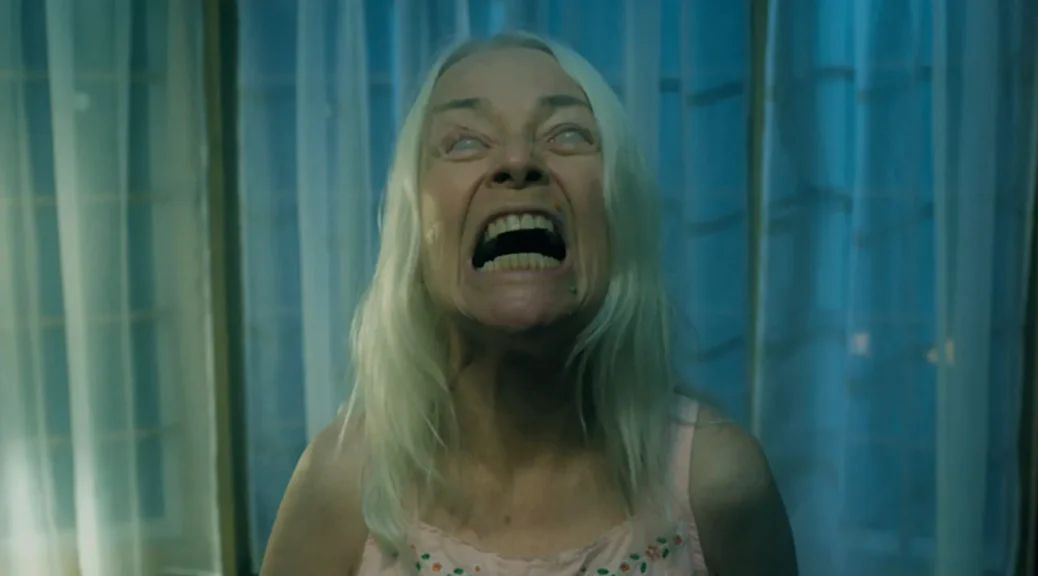
Things don’t often go well for live-in nurses in horror movies. Whether the caregiver is a loved one (Undertone, Relic, The Taking of Deborah Logan) or a professional (I Am the Pretty Thing That Lives in the House, The Dark and the Wicked), the patient always seems to bring with them an additional presence.

So, I guess Julia (Emmanuelle Lussier Martinez) only has herself to blame. If she’d watched more horror, she might have known that her latest gig in a gorgeous lakeside home with Evelyn (Dawn Ford) would take more from her than her time and compassion.

Writer/director Adam O’Brien’s Bury the Devil creates a great, spooky atmosphere. Long takes and a prowling camera give the film a haunted quality, and O’Brien makes the most of his limited budget with a small but talented cast and this stunning location.

Ford takes advantages of the opportunities afforded her, gliding from wistful old woman to confused dementia sufferer to something sinister and back with ease. She commands the screen as patients in these films rarely do.

Likewise, Martinez carves out a believable character—not the martyr or conniver, just a working nurse on her first night in a new home.

The writing is occasionally pushy, trying too hard to wedge information into conversations without forced exposition. We exist only in the present tense. There are no flashbacks or days marked on the screen to help us along. Instead, O’Brien drops us into Julia’s first night and possibly Dawn’s last. It’s a structure that keeps the film moving and surprising, but it doesn’t offer a lot of opportunity to expand the story.

The gaps in the mythology weaken the climax. What you don’t know and couldn’t possibly understand without some guidance leaves you guessing at too much. That guesswork keeps the finale from feeling like a resolution, like pieces finally fit into a puzzle. It’s not enough to ruin the movie, but it’s enough to keep it from leaving a mark.

Correct-a-Mundo

The Legend of Juan Jose Mundo

by Rachel Willis

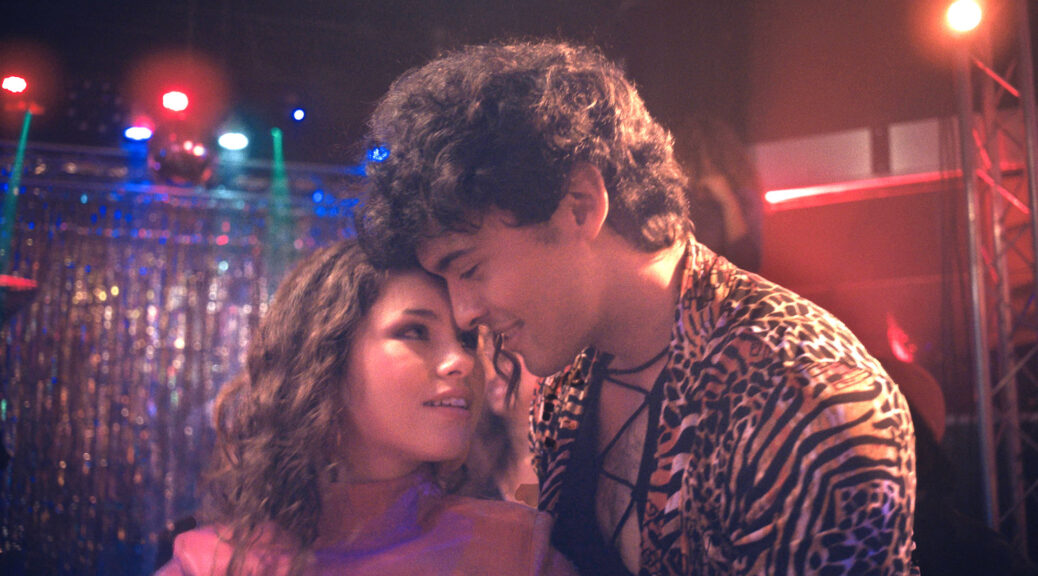
Do you remember what it’s like to be in high school and to be desperately in love with someone who doesn’t see you that way? Writer/director Michael Walker and his co-writer Susan Gomes sure do. What’s even better about their film The Legend of Juan Jose Mundo is that they remember being young and in love in the glamorous 1980s.

High school junior Julie (Anna Miroden) is upset when she finds out the Spanish exchange student she was expecting is being replaced by a boy named Juan (Alexandro Byrd). It’s not too hard to anticipate that Julie’s discomfort will give way to youthful lust. But of course, as easy as she seems to hit it off with Juan, he only has eyes for seemingly every other girl in school.

The formula might be familiar, but the film itself is a gem. Miroden is the perfect every girl. She’s the ideal balance of cute and insecure. Even when boys do like her, she freezes before anything can happen. She also has the conundrum of wanting the boys to like her, but only the “right” boys. When those boys don’t like her, it feels like none of them do, even when several show her how untrue that is.

As a perfect mirror to Julie’s insecurity, Juan is the model of confidence. He flirts and hooks up with countless girls. His legend grows within the school, and even Julie’s best friend Suzanne (a fantastic Hannah Kepple) is swept up in his wake.

But despite any mistakes or poor decisions the characters make, it’s impossible not to like them. Each one brings a level of realism that has you rooting for them to make better choices and figure out how to navigate the choppy waters of adolescence. There isn’t a dud among the cast, and the writing gives even ancillary characters enough to bring them to life.

This film has a lot of heart and puts many teen comedies from the 80s to shame.

Don’t You (Forget About Mom)

Don’t Say Good Luck

by Hope Madden

There is a sweet, delightfully messy coming-of-age film at the heart of director Julia Hart’s Don’t Say Good Luck.

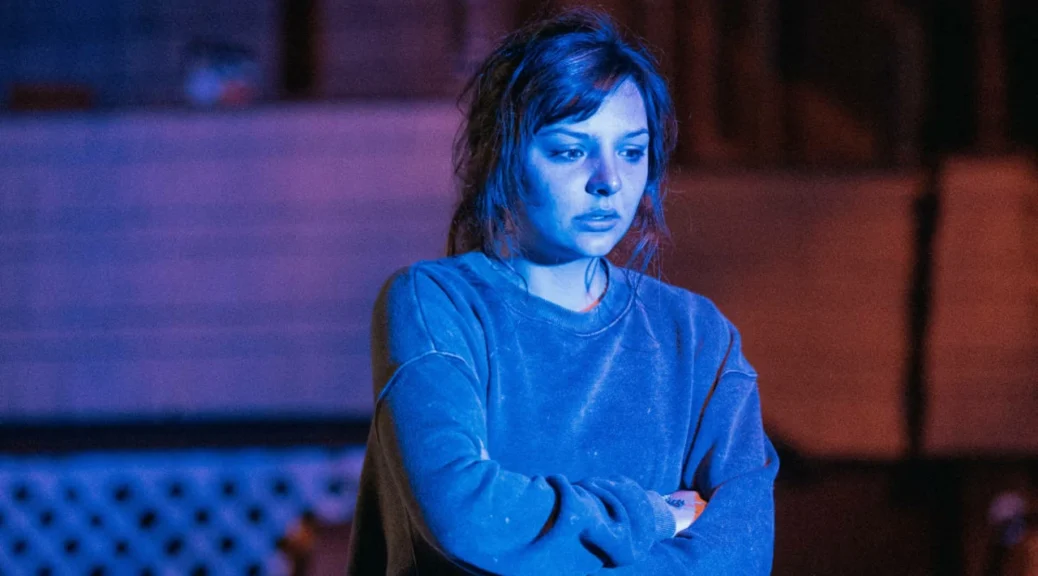
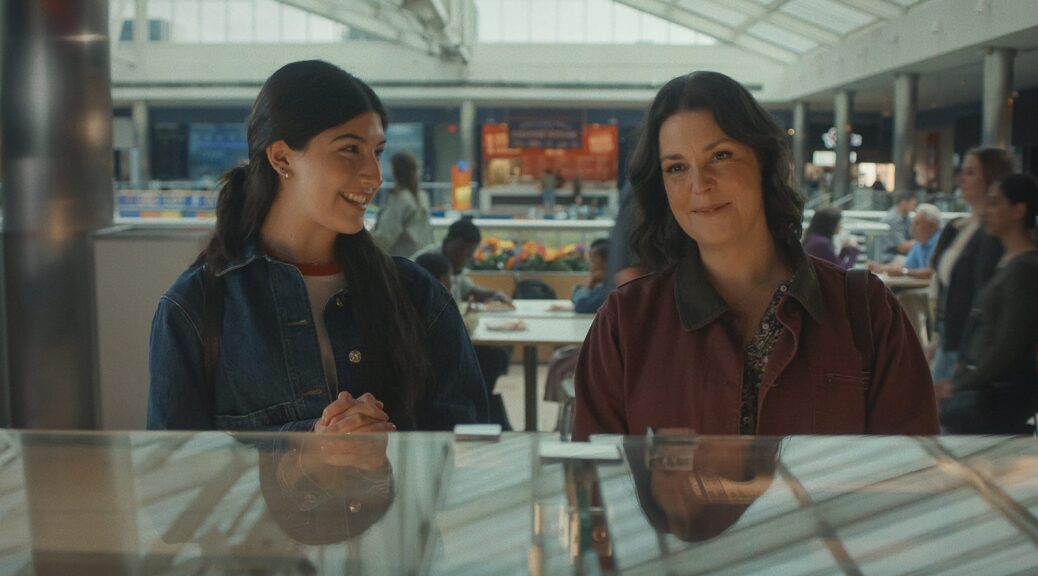
As high school sophomore Sophie (Sunny Sandler) nervously auditions for the school musical, navigating friendship and crush and theatrical nerves, her relationship with her mom takes a hit. What’s refreshing about Don’t Say Good Luck is that each of Sophie’s high school sources of angst takes a back seat to her issues with her mom, rather than vice versa.

In your average John Hughes film, troubles at home are the backdrop for our plucky teen hero. Hart, who co-wrote the script with Laura Hankin and Jordan Horowitz, reframes priorities. The film is about Sophie and her mom (Melanie Lynskey).

Hart goes so far as to soften the villainous stereotypes Hughes trained us to expect. By rounding out the more minor characters and refocusing attention away from high school angst and toward family relationships, Don’t Say Good Luck abandons the age-old trope that teens are on their own, their parents just don’t understand.

It’s nice. Beyond that, it’s often moving.

Lynskey is characteristically wonderful, and she and Max Greenfield present a very natural, endearing, weary bond as parents going through something tragic. The chaos of their lives—a busy high schooler, twin boys, a deli they co-own where they both work—feels lived in.

Add, in minor supporting roles, the great Bebe Neuwirth and Steve Buscemi, and you’re looking at an impressive ensemble, ostensibly there to buoy Sandler, whose father and mother (Adam and Jackie Sandler) produce.

Sunny Sandler does a fine job in the spotlight. She’s fine, like her sister Sadie Sandler was fine in Roommates. She’s probably not strong enough to anchor this film, but she doesn’t sink it, either.

Still, there’s a refreshing untidiness about Don’t Say Good Luck that keeps you off kilter and helps the climax hit harder. The film lacks cynicism, believes teenage girls do dumb things but are not dumb people, and sees depth where other films choose not to. It’s an enjoyable high school dramedy, and one that acknowledges its audience’s humanity.