Tag Archives: Australian movies

Coming Outback

The Deb

by Rachel Willis

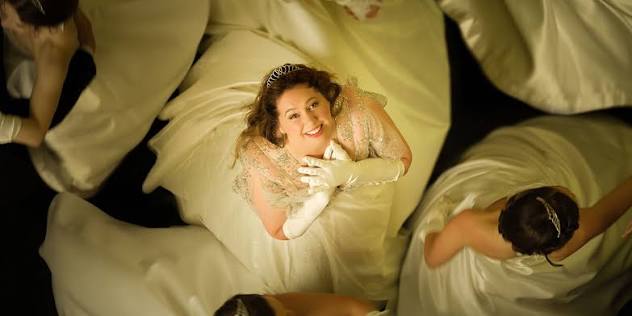
After pulling a feminist-themed stunt at school, Maeve (Charlotte MacInnes) is banned to the bush; more specifically, the small town of Dunburn where her cousin Taylah (Natalie Abbott) lives in Rebel Wilson’s directorial debut, The Deb.

Maeve arrives in town to find all Taylah wants from life is to make a splash at the upcoming debutant event. Nothing is more archaic to Maeve than this spectacle of femininity and purity.

The wants of both girls are relayed through song, and while each song is catchy, they are also uninspired. In fact, none of the songs in the movie stand out nor do any of the choreographed dance numbers that give us time to meet the people of Dunburn. They are unnecessary filler in an otherwise absorbing story.

Dunburn’s resident mean girl Annabelle (Stevie Jean) and her fellow mean girls (The Pixie Cups) are fun in a catty sort of way as they do their best to make Taylah’s life hell.

Rebel Wilson co-stars as Annabell’s mother. Her character is a combination of Amy Poehler’s Mean Girls cool mom, and a stereotypical parent-manager who tries to bully her kid toward superstardom.

As Maeve adjust to life in Dunburn, she harshly judges Taylah and everyone in the bush for their behavior, their quaintness, their dreams and desires. She is as cruel in her own way to Taylah as the Pixie Cups. Though Maeve aspires to feminist equality and the end of the patriarchy, she doesn’t recognize her own role in perpetrating classist and patriarchal beliefs.

But the film isn’t too interested in taking a deep dive into the problems Maeve seeks to address with her stunts and TikTok videos. Instead, the audience is treated to a fun musical that has a simple lesson or two for the mean girls of the world.  

Best Served Cold

Rage

by Brandon Thomas

Revenge tales are a messy affair. Forget the buckets of blood you’re liable to wade through (metaphorically – of course). No, vengeance cinema revels in discomfort – the more emotionally taxing, the better. Put all of that together in a two-and-a-half-hour movie, and you’ve got something that’s pretty hard to sit through.

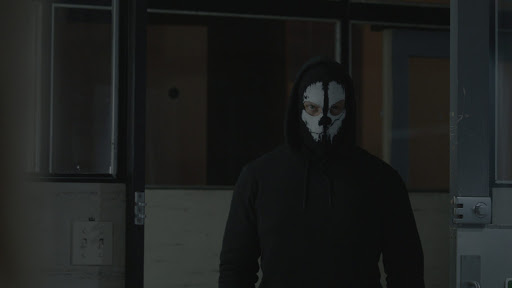
That’s what director John Balazs’s film Rage delivers.

Noah (Matt Theo) and Madeline’s (Hayley Beveridge) marriage is already on shaky ground when we meet them. Petty grievances populate their interactions, and the physical component of their relationship is all but forgotten. Their bond is forever fractured when a violent home invasion leaves Noah comatose, Madeline traumatized, and another family member dead. As the two begin to pick up the pieces, the realization that one of their attackers is still out there spurs them into irrational action. 

There’s no shying away from the brutality of violence here. There’s no celebration of it either. Gratuitous isn’t quite the right a word to describe anything in Rage. The violence is meant to make us wince and squirm, not cheer and pump our fists. 

While the ferocity comes in short bursts, the emotional impact is given far more time to breathe. The trauma suffered by Noah and Madeline takes up the bulk of the film’s running time, and it’s here where the real pain is inflicted. Madeline’s near-catatonic state in the latter half of the film is more disturbing than any physical scar could be. 

Rage occasionally abandons Noah and Madeline’s point of view to follow the detective (Richard Norton from Mad Max: Fury Road) working their case. Focusing on the police procedural side of the story takes away some of the urgency around the couple’s crumbling relationship, and, at times, threatens to stop the film dead. As the tension and drama surrounding Noah and Madeline’s actions increase later in the film, it only goes to highlight how unnecessary the police point of view ultimately is. 

Rage isn’t the first film to comment on the never-ending cycle of violence that vengeance can create. It is, however, one of the few films to spend more than a fleeting moment on the emotional ramifications of random brutality.