Don’t Say Good Luck
by Hope Madden
There is a sweet, delightfully messy coming-of-age film at the heart of director Julia Hart’s Don’t Say Good Luck.
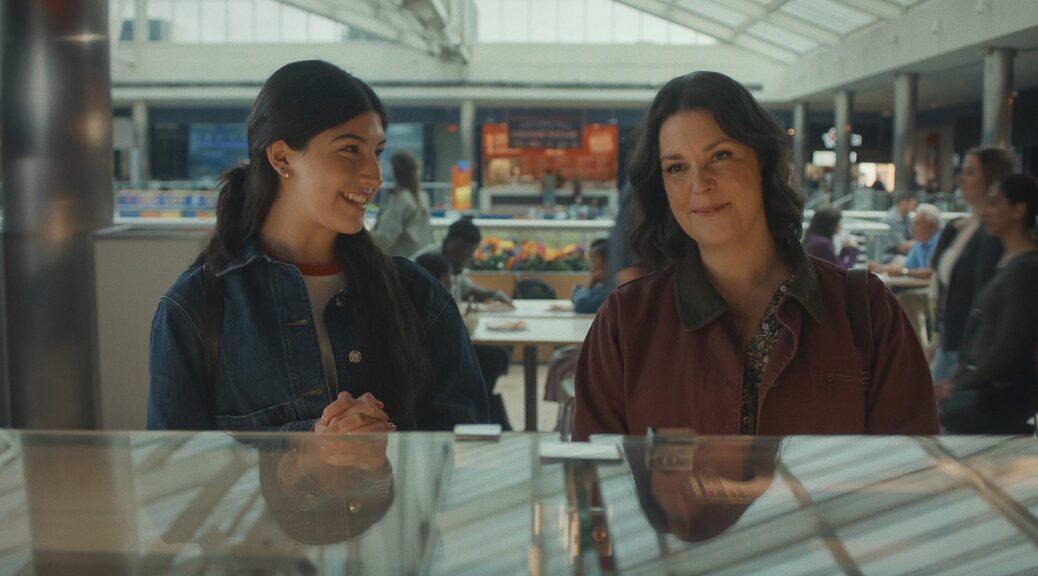
As high school sophomore Sophie (Sunny Sandler) nervously auditions for the school musical, navigating friendship and crush and theatrical nerves, her relationship with her mom takes a hit. What’s refreshing about Don’t Say Good Luck is that each of Sophie’s high school sources of angst takes a back seat to her issues with her mom, rather than vice versa.
In your average John Hughes film, troubles at home are the backdrop for our plucky teen hero. Hart, who co-wrote the script with Laura Hankin and Jordan Horowitz, reframes priorities. The film is about Sophie and her mom (Melanie Lynskey).
Hart goes so far as to soften the villainous stereotypes Hughes trained us to expect. By rounding out the more minor characters and refocusing attention away from high school angst and toward family relationships, Don’t Say Good Luck abandons the age-old trope that teens are on their own, their parents just don’t understand.
It’s nice. Beyond that, it’s often moving.
Lynskey is characteristically wonderful, and she and Max Greenfield present a very natural, endearing, weary bond as parents going through something tragic. The chaos of their lives—a busy high schooler, twin boys, a deli they co-own where they both work—feels lived in.
Add, in minor supporting roles, the great Bebe Neuwirth and Steve Buscemi, and you’re looking at an impressive ensemble, ostensibly there to buoy Sandler, whose father and mother (Adam and Jackie Sandler) produce.
Sunny Sandler does a fine job in the spotlight. She’s fine, like her sister Sadie Sandler was fine in Roommates. She’s probably not strong enough to anchor this film, but she doesn’t sink it, either.
Still, there’s a refreshing untidiness about Don’t Say Good Luck that keeps you off kilter and helps the climax hit harder. The film lacks cynicism, believes teenage girls do dumb things but are not dumb people, and sees depth where other films choose not to. It’s an enjoyable high school dramedy, and one that acknowledges its audience’s humanity.



