Category Archives: New In Theaters

Reviews of what’s out now

Living Out Loud

I Swear

by George Wolf

Honestly, I didn’t know that much about I Swear until Robert Aramayo’s amazing performance won a BAFTA Award earlier this year. Now, after seeing it, I have to wonder why officials from BAFTA and the BBC didn’t take more of its lessons to heart.

The film follows the life of Scottish Tourette’s campaigner John Davidson, and opens with Davidson yelling “F*&$ the Queen” moments before Queen Elizabeth herself presented him with an MBE for services to the Tourette’s community.

As a teenager, Davidson developed Tourette’s with coprolalia, a complex vocal tic which causes “the involuntary, uncontrollable utterance of obscene words, sexual/racial slurs, taboo phrases or profane language.” The condition brought isolation within his community and his own family, leading Davidson to move in with the family of a friend, where he found the unconditional support that launched his journey to help others.

Aramayo’s turn as Davidson is simply astonishing. Beyond the physical and vocal authenticity, Aramayo crafts an endlessly sympathetic arc of frustration, acceptance, perseverance and triumph. Heartbreaking but ultimately joyful, Aramayo’s is a deeply felt performance that fills each scene with a humanity that buoys the film.

Writer/director Kirk Jones (Waking Ned Devine) is careful to keep events accurate, drawing from the 1989 doc John’s Not Mad, actual clinical trials, and Davidson himself. Nothing here feels overwritten or sensational, as Jones allows the terrific actors (including great support from Maxine Peake as John’s surrogate mother and Shirley Henderson as his actual mum) to work specific moments for emotional depth.

The message of education, patience and understanding is meaningful and lasting. And it reminds you that, with more of each, there was certainly a way to host Davidson at the BAFTA ceremony and still safeguard other attendees and the television audience from the slurs that occurred.

But I Swear can stand on its own merits. It is a film that is able to turn simple human compassion into a crowd-pleasing event. May it play to large, humanity-pleasing crowds.

Death Do Us Part

Over Your Dead Body

by George Wolf

Why would Jason Segel plot to kill Samara Weaving?

Has he not seen Ready or Not? Borderline? Azreal? Ready or Not 2?

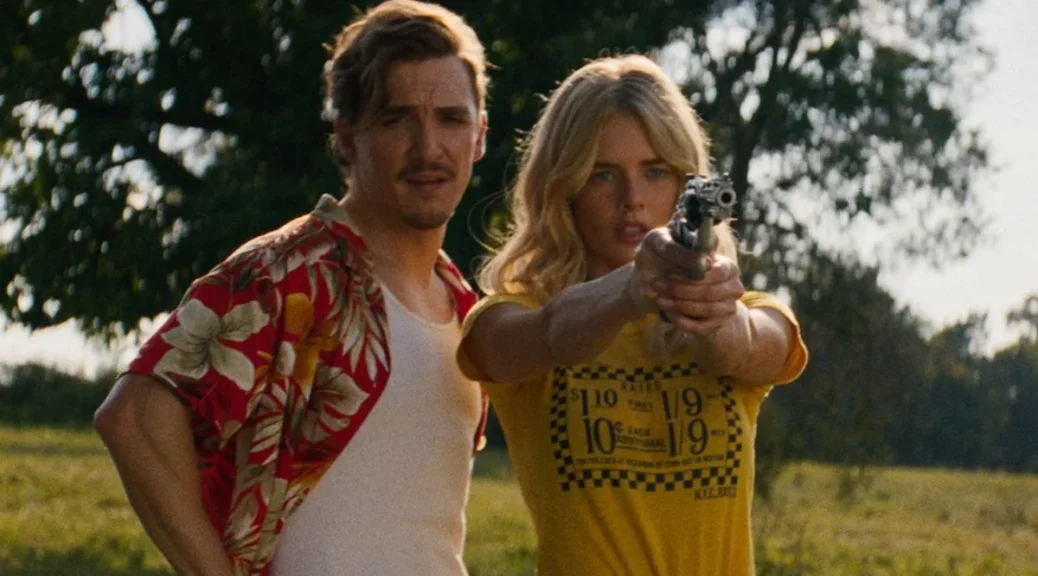
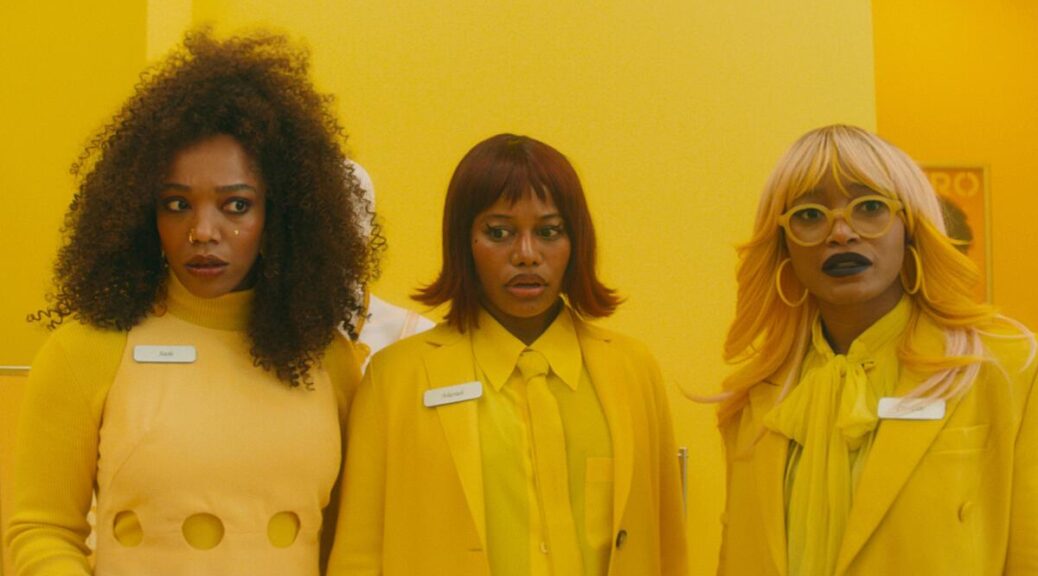
Segel is surely smart enough to play nice, but Dan – his character in Over Your Dead Body – is not. Dan and Lisa (Weaving) are off on a secluded weekend in a cabin by the lake. After 7 years together, they can barely say a cordial word, but this time Dan is laying the sweetness on pretty thick.

He’s cooked up a great dinner, along with a great alibi. Because after a nice boat ride on the lake, Lisa will sleep with the fishes.

Or not. Because Lisa has a plan of her own. And so do some convicts on the run (Timothy Olyphant, Keith Jardine) and the corrections officer who helped bust them out (Juliette Lewis).

Power shifts, violence and blood splatter ensue!

Writers Nick Kocher and Brian McElhaney, fresh off the hilariously unhinged Pizza Movie, adapt the 2021 Norwegian film The Trip with a healthy scoop of witty cynicism atop one good ol’ American mean streak.

Segel and Weaving make an excellent pair of frassasins (friendly assassins), he of the emasculated man child and she of the exasperated younger wife wondering what she saw in this guy. Neither is blameless in the demise of the marriage, and the two actors make the deadly bobbing and weaving (pun intended) a surprising, squirm-inducing delight.

Those squirms only increase once the three fugitives enter the fray, and comic director Jorma Taccone (Popstar, MacGruber) forays into body horror with a respectable aversion to sparring the rum or the wisecracks. What starts out as an in-the-moment sendup of how couples avoid therapy takes a nasty turn in the second half. The threat of violence inherent in the premise makes for a smoother transition, but make no mistake: Taccone leans into that R-rating with some serious bloodshed.

If you’re fine with that, Over Your Dead Body is an entertaining genre blast that’s pretty hard to ignore. And by pretty, I mean pretty funny.

And pretty gross.

Walk Like an Egyptian

Lee Cronin’s The Mummy

by Hope Madden

So, Lee Cronin’s The Mummy. You may be wondering, who is Lee Cronin? Do I even know that guy?

You probably do, if you saw 2023’sEvil Dead Rise, the story of a family trapped in their apartment as their mother turns Deadite and tries to murder them all.

You may have missed his 2019 Irish horror, The Hole in the Ground, where a changeling takes the shape of a woman’s young son, traps her in a house and tries to kill her.

Now Cronin takes on a mummy’s curse, trapping a family inside a house with their daughter, who is now a monster out to kill every one of them. By the third time, you have to think that the idea of an evil entity taking over the body of a loved one is a real fixation for the filmmaker. Lucky for us!

Jack Raynor and Laia Costa are the parents of three: little Maud (Billie Roy), tween Sebastian (Shylo Molina), and their oldest, Katie (Emily Mitchell, then Natalie Grace). Katie went missing in Cairo 8 years ago, but she’s been found and she’s ready to come home. It’ll just take some adjusting.

The trailer for the film gave it the look of a PG13 horror—quick cuts, jump scares, and black vomit. I’m pleased to report that this is not the film at all. Cronin mines the situation for grief and sorrow before descending into body horror. It’s a wild line he crosses, manipulating your emotions and then throwing gross-out body fluid horror all over the deviled eggs.

It’s nasty. Like almost early Peter Jackson nasty.

And Cronin is not afraid to take the film places you may not want to go. The darkest, sloppiest comedy butts up against emotional horror so moving you may want to look away. Or if that doesn’t make you divert your eyes, the pus, eyeballs, tongues, and unspecified body fluids will.

It’s a mixed bag, this one, and it gets a little tedious toward the end. Plus, Cronin doesn’t always balance the tone effectively. This is very much an R-rated horror, at times taking itself too seriously and at others, delivering some of the nastiest comic gags you’ve ever seen during a funeral.

I was unsettled at times and grossed out at others, but I must say, I was thoroughly entertained.

Anything But

Normal

by Hope Madden

Do you know what’s especially fun about watching Normal? It’s not seeing Bob Odenkirk crack heads and blow stuff up. I mean, that’s always fun, but it’s nothing new. Nor is it new to see what fresh fisticuffs and cutlery mayhem writer Derek Kolstad (John Wick [all four], Nobody [both], Ballerina) can dream up. We’ve seen his dreams. They’re somewhat similar.

What is especially fun about watching the star of Nobody and its writer team up again to drop a middle aged schmo into a sudden and unexpected explosion of violence is that Ben Wheatley is directing. We haven’t seen Ben Wheatley get really nuts in a bit.

Odenkirk, who co-writes the script with Kolstad, is Ulysses. He used to be a real sheriff, but now he takes interim sheriff gigs around the country and leaves rambling accounts of his days on his estranged wife Penny’s voicemail.

His latest assignment: Normal, Minnesota.

The town of about 1500 people and one moose looks…strangely prosperous. Not like the small towns shuttering due to a poor economy. When two good hearted, down-on-their-luck bank robbers roll into town, Ulysses gets a glimpse of the what’s really going on.

That leaves us with about 45 minutes of handguns, rifles, Tommy Guns, knives, fists, rocket launchers, chains, dynamite, and knitting needles. Plenty of time for Wheatley to help us remember what a blast he had directing 2016’s Freefire.

Odenkirk’s ideal as the begrudgingly heroic schlub, and Normal surrounds him with eclectic characters and solid comic performances. But there’s no question the relish Wheatley takes in wry, witty bursts of extreme violence, each gag its own punchline, is what delivers the film’s fun.

There’s a touch of Fargo, a smidge of Hot Fuzz, a bit of the filmmaker’s own Freefire, and maybe a hint of his Sightseers. These borrowed flavors blend favorably with the inescapable familiarity of the concept—Bob Odenkirk, badass—as well as Kolstad’s routine action beats.

Normal is a ton of bloody fun that you’ll kind of remember later but you’ll laugh and enjoy yourself now.

A Fish Called ChaO

ChaO

by Matt Weiner

If you’re boycotting a certain mustachioed plumber this weekend because he went to space instead of the underwater levels, you’re in luck. You can have your own lushly drawn animated movie where an everyman hero goes on an adventure with a princess.

ChaO takes place in a futuristic version of Shanghai where humans and mermaids coexist, but it’s an uneasy peace. Engineer Stephan (Ōji Suzuka) has a plan to create a safe alternative to the screw propeller on ships, which would save ocean life from harm and even death.

Higher-ups at his shipping company are skeptical until mermaid royalty Princess ChaO (Anna Yamada) appears out of the blue to insist that she and Stephan get married. Nobody is more surprised by this than Stephan, despite ChaO’s mysterious assurances that Stephan swore to her they would be married some day.

While Stephan has doubts about the whirlwind romance, the pair are buoyed along by executives at the shipping company—who see a chance to mend relations with the mermaid king—and the nosy public, titillated by the intricacies and logistics of a human-mermaid relationship.

These broad strokes of a story from writer Hanasaki Kino don’t get much more detailed than that. It’s a literal “fish out of water” tale that throws in the odd car chase and robot fight to pad out the runtime. These elements don’t add anything to the underlying mystery of Stephan’s genuinely moving backstory, but the detours are also brief.

Thankfully when ChaO sticks to the budding romance between Stephan and the princess, the film gets back its sea legs. And the real draw is the gorgeous animation from director Yasuhiro Aoki and Studio 4ºC.

This is Aoki’s first feature film, but his decades of experience in the animation industry turn this slight tale into a distinctive visual feast. Every scene is stuffed with witty details and stunning backdrops. There’s a fluidity to the characters as well, both human and merman, that gives everyone a natural expression and constant motion that complements the thorny human-aquatic relations. For all the film’s erratic plotting and odd digressions—including an HR nightmare of an office subplot, parents beware—the animation is so singular and captivating that it makes up for everything else.

Generational Drama

Jimpa

by Rachel Willis

Director Sohpie Hyde’s film, Jimpa, opens with a narrative that lays the groundwork for a family drama about what acceptance truly means.

Jimpa (John Lithgow) is an older gay man who left his family in Adelaide, Australia to move to Amsterdam during the height of the AIDS epidemic. There’s a recap of this history from two perspectives, Jimpa’s daughter, Hannah (Olivia Colman), and his nonbinary grandchild, Frances (Aud Mason-Hyde).

The film centers around Hannah and Frances spending time with Jimpa, as Hannah looks to make a film about her parents and their conflict-free partnership when Jimpa came out as gay.  

Colman and Hyde make it clear that Hannah is afraid of conflict, so much so, she rushes to mitigate everyone’s words. Her explanations for others may sound good, but in her urgency to avoid conflict, she steals their agency. And yet, there are times when Hannah fails to step in when it could most help her teenager.

Jimpa is disrespectful of Frances’s choice to identify themselves as non-binary. He introduces them as his “grandthing” and mocks their “sudden” lack of gender. Though grandthing is said with a certain amount of affection, it’s painful to watch because Frances looks up to their grandfather as a hero.

There’s also a collision of age. The older gay men have trouble understanding the younger generation’s motivations and language, fail to recognize the struggles of feeling like an outsider when things are (in their minds) so much better now.

Jimpa feels more like a lesson in gender and sexual politics than a cohesive narrative film. This can be done gracefully, but Hyde’s approach is too heavy handed.

Jimpa‘s second half takes an unexpected path that serves the film well. Hannah confronts and addresses her true feelings, allowing Coleman and Mason-Hyde to shine. Hyde finally gives Mason-Hyde the opportunity to be more than their gender identity.

Though the film’s opening act is defined by a kind of clunkiness, Jimpa’s final moments are handled with enough tenderness to make up for a lot of that.

Downbound Train

Exit 8

by Hope Madden

Horror video game movies are having a moment. And the simpler the video game, the more unsettling the film adaptation.

Though the unendurable Return to Silent Hill  might have sapped your will to live, both Iron Lung and The Mortuary Assistant honored their games’ uncomplicated storyline and reliance on viewer attention to generate dread and entertainment.

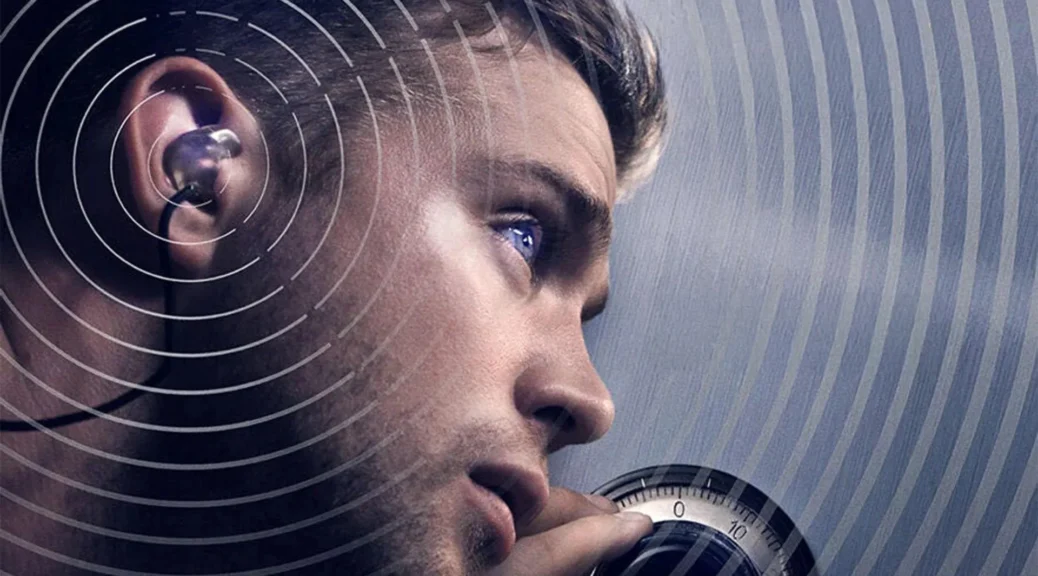
Perhaps the simplest and most unnerving is Genki Kawamura’s Exit 8, a captcha experiment in proving your humanity.

A minutes-long opening POV sequence announces the film as a video game, the first-person experience wearing thin just as Kawamura’s cinematic style alters. What has altered it?  Our hero, faced with a deeply human choice, enters the bowels of the metro and loses his phone signal.

Kazunari Ninomiya is “Lost Man.” Buds in his ears, his eyes on his phone, he’s almost entirely unconnected from humanity. Even with no reception, he’s so oblivious that it takes him quite a while in the underground passages to realize he’s walking in circles, forever finding himself back at the exact same spot in search of Exit 8.

Finally, he notices an information sign. If you see an anomaly, backtrack immediately. If there’s no anomaly, keep moving forward.

The monotony and claustrophobia build as white tiled, fluorescently lit hallway after hallway deliver oppressive tension. As the numbers ascend—Exit 1, Exit 2, Exit 3—you may find yourself yelling at the screen. Slow down! Don’t get sloppy now! Because if Lost Man misses one anomaly, one misplaced doorknob, one altered advertisement, it’s back to Exit 0 and the whole nightmare begins again.

And nightmare it is. Blackouts, crying babies, frozen smiles, giant hairless rats with human noses are some of the more obvious anomalies.

It would all become too monotonous to bear were it not for the chapter breaks, which allow us to shift perspective briefly. Yes, the other two characters—Walking Man (Yamato Kôchi) and The Boy (Naru Asanuma)—are likewise trapped in the labyrinthine underground. But their presence offers some clues beyond the surface level anomalies, some hint at the quest to find our humanity.

Kawamura doesn’t dig too deep for character development, but the spare setting and liminal hellscape bring it forth. Exit 8 seems not like a game you play again and again. Likewise, the film is unlikely to be one you revisit every spooky season. But it is a uniquely challenging effort and another surprising win for horror video game adaptations.

When Sorrow Comes

Hamlet

by Hope Madden

Filmmaker Aneil Karia concerns himself with the curious, sometimes questionable responses of individual men to escalating tensions. After 2020’s Surge followed a remarkable Ben Whishaw through a harrowing, disorienting descent, Karia won an Oscar for the short film The Long Goodbye. The live action short kept its eyes on Riz (RIz Ahmed) as the dystopian present came for him and his family.

If one man’s reaction to an overwhelming situation is Karia’s passion, Hamlet seems like a proper inspirational match.

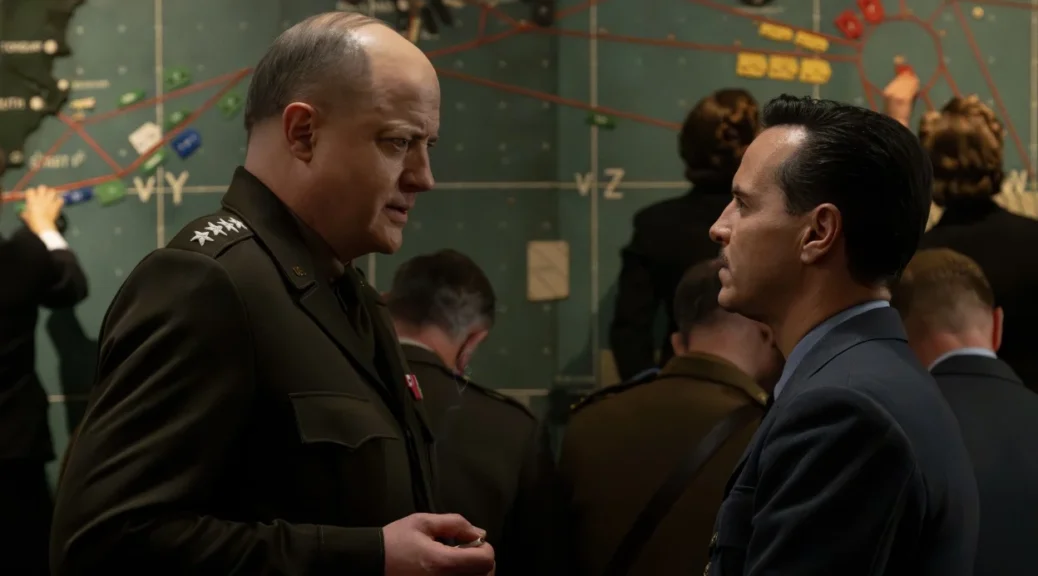
Paired again with his Long Goodbye collaborator, Karia sets Shakespeare’s great tragedy in modern London. Hamlet returns from abroad for his father’s (Avidjit Dutt) funeral. The family’s ruthless development company, Elsinore, must now change hands to the patriarch’s brother, Claudius (Art Malik), who intends to marry his widowed sister-in-law, Gertrude (Sheeba Chaddha).

Though much streamlined, the Bard’s drama is not rewritten for the times. Karia’s instincts for visual storytelling provide enough imagery to understand the modernized context, and Shakespeare’s dialog proves timeless as ever.

Karia’s dizzying visual style gives Hamlet’s psychological descent an urban flavor, while graffiti and billboards provide cheeky reference points. The entire ensemble, especially Chaddha, excel. But you will not be able to look away from Riz Ahmed.

The role of Hamlet has been a make-or-break role for actors for four centuries. Ahmed makes it look effortless, so convincing is he in the grief of losing a father, the horror of a mother’s betrayal, and the pressure of tradition.

Joe Alwyn (Hamnet – guy likes this story, I guess!) as Laertes and Morfydd Clark (Saint Maud) as Ophelia bring depth and pathos to minimized characters.

Michael Lesslie adapts the tragedy. Though the writer’s gone on to blockbusters and superheroes, his first feature length script was Justin Kurzel’s impressive 2015 take on Macbeth. Once again, Lesslie proves adept at pruning what’s necessary only for the stage, giving his director room to tell the tale cinematically.

Reconsidering the cultural background within a South Asian culture doesn’t just freshen up the familiar. It impresses the universality and timelessness of the original work upon the viewer. The play within a play—Hamlet’s gift at the wedding—is the film’s showstopper. But Karia imaginatively stages some of the play’s most remembered scenes, adding vitality and action that takes advantage of the freedom from the stage while still amplifying the hero’s anxiety.  

Content Re-creator

Faces of Death

by George Wolf

It’s almost quaint now to remember the word-of-mouth infamy achieved by the original Faces of Death in 1978. By the mid-80s it was a cult favorite at the video store, with a lurid promise to unveil shocking video of real fatalities.

Though the non-stock footage was faked (yes, even the monkey scene), hyperbolic stories of the film’s effect continued to gain traction and the sequels were cranked out.

This new Faces is not one of those. Writer/director Daniel Goldhaber smartly brings that pre-viral legend into the internet age, tucking the bloody hunt for a serial killer inside the dulling nature of modern-day voyeuristic fetishes.

Barbie Ferreira stars as Margot, who works as a website content moderator for a company promising to protect “the young and innocent.” Though she occasionally flags a video for violations, most make it through – which is just how her manager prefers it. But when Margot sees some videos of murders that look alarmingly real, it sets her off on the trail of a killer (Dacre Montgomery) intent on recreating scenes from the original Faces of Death.

Though employees at Margot’s firm are strongly discouraged from researching the videos they moderate, she begins sleuthing. What Margot finds, of course, is an internet audience eager for the brutality, and online footprints that aren’t difficult for a tech savvy psycho to follow.

Stupid decisions (especially by young people) are a staple of horror films, and Margot makes a maddening amount. But Goldhaber (How to Blow Up a Pipeline) is able to mirror most of them alongside the questionable bargains we’ve made as a web-obsessed society.

“It’s an attention economy, and business is booming.”

Our killer (Montgomery gives him both Silence of the Lambs and Red Dragon vibes) knows his audience, and Goldhaber gives the funny games he plays with both his victims and Margot a nice sense of tension. Sure, you may want to slap some sense into most of these people, but then again, is your own browser history MENSA worthy?

The rough patches in the story go down easier thanks to the savvy, in-the-moment winks Goldhaber flashes while telling it.

Why has the explosion of technology that holds so much positive potential continued to reveal the worst parts of ourselves? If you give the people what they want, how culpable are the people that want it?

Michael Haneke may have asked the question more eloquently, but Goldhaber and Faces of Death have more trashy, finger-wagging fun.

Blame Canada

Hunting Matthew Nichols

by George Wolf

Is this a faux documentary? A true crime thriller? Found footage horror? It’s all of that, at least some of the time.

You know what, just don’t worry about it and enjoy the clever way Hunting Matthew Nichols tips its hat to a variety of genre influences.

Director and co-writer Markian Tarasiuk plays himself as a documentary filmmaker out to solve an over-two-decades-old missing persons case. Canadian teens Matthew and Jordan went missing on Halloween night of 2001, and now Matthew’s sister Tara (Miranda MacDougall) is teaming with Markian to get to the bottom of what really happened.

Early on, we come along on an engaging hunt for clues. A succession of solid supporting performances bring welcome authenticity to Tara’s fact-finding interviews, until a surprise discovery turns the film on its found footage ear.

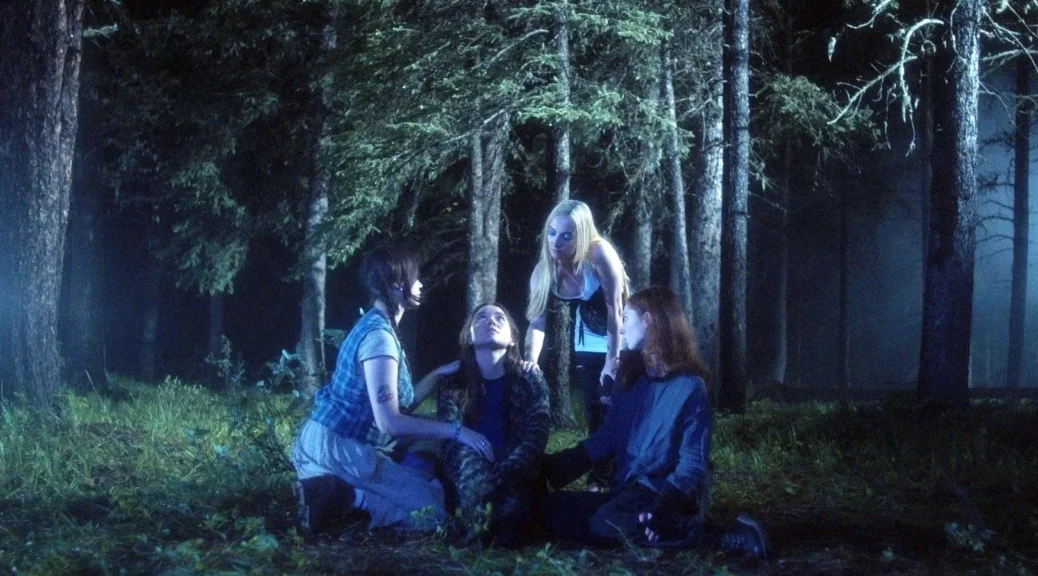
The missing kids were big fans of the Blair Witch Project, and took a camcorder into Black Bear Forest to uncover the local legend of Roy McKenzie. This turns out to be a slyly organic way of acknowledging the big comparisons that will follow, and to setup the type of in-your-face finale that more than a few BWP naysayers may have preferred.

The ride is well-paced and impressively assembled, and the payoff is satisfying enough to make you forget about who’s manning the camera or why we’re watching reactions to a shocking videotape instead of the tape itself.

But this Hunt is a fun one, and it comes complete with a mid-credits stinger that flirts with the possibility of another chapter.

If so, count me in.